
Travelers who enjoy spectacular views can easily score a home run at any of these skywalks located around the world. Stunning vistas of mountains, oceans and jungles exist as far as the eye can see. An overview of the world’s most amazing and terrifying skywalks:
10. 5 Fingers
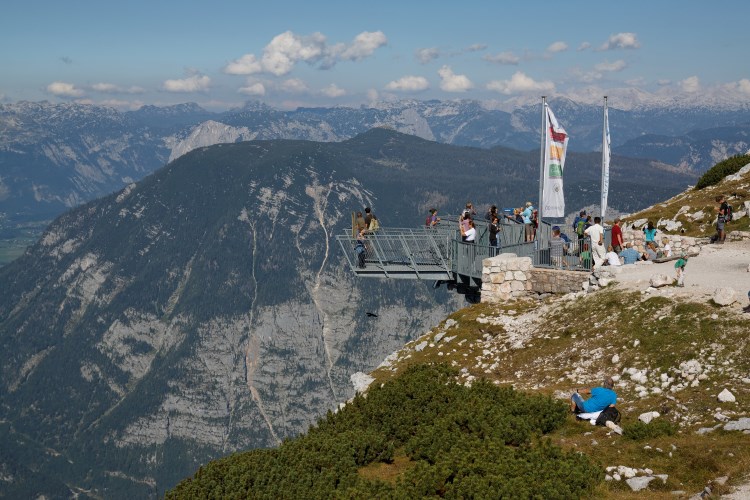
The 5 Fingers at Krippenstein provide another unique opportunity to view nature at its finest, in this case the Austrian Alps. This observation deck got its name because the platforms that jut out from it resemble a hand with five fingers. Each platform performs a different function. One has a metal picture frame that visitors can stand in for photos, while another has a hole in the bottom to better see what’s below. Unlike other skywalks, visitors can access this one for free.
9. Tamborine Rainforest Skywalk
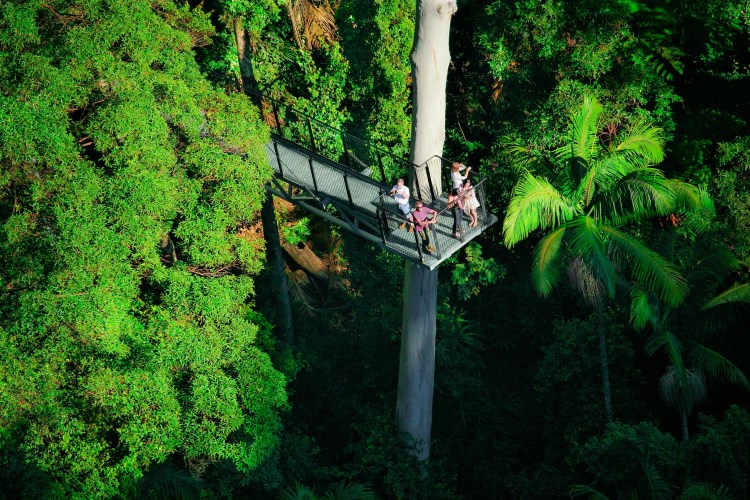
The Tamborine Rainforest Skywalk may be located Down Under but it’s way up there when it comes to great views of a rainforest. Located on privately owned land on Mt. Tamborine in Queensland, Australia, this 1.5 km (0.9 mile) rainforest walk includes forest floor trails, a skywalk over the forest canopy and cantilevered bridge over Cedar Creek. The walk takes about 45 minutes, including sops to view birds and colorful insects; portions of it are wheelchair accessible.
8. Oryukdo Skywalk
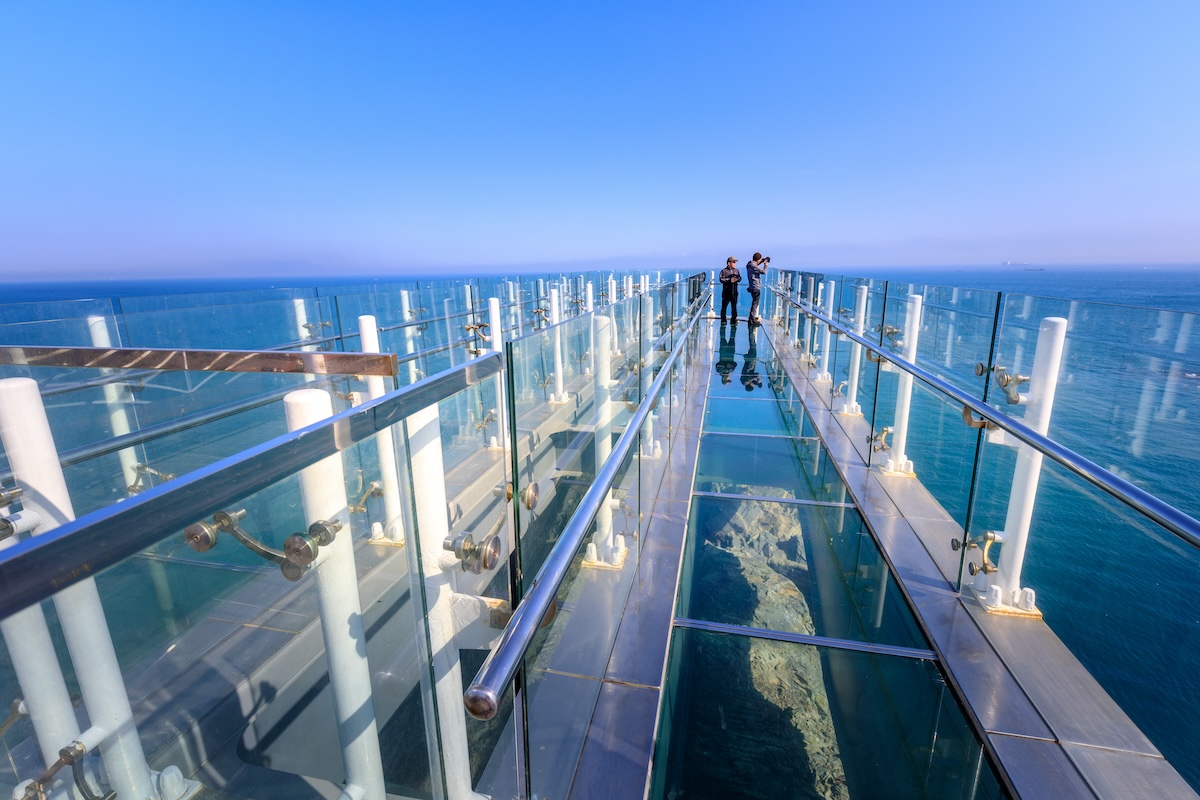
Walking on water takes on new meaning at the Oryukdo Skywalk. Open only since 2013, this South Korea’s skywalk already is attracting thousands of visitors a day who come to see Oryukdo Island. This U-shaped skywalk extends almost 10 meters (30 feet) into the ocean, with its glass floor making visitors feel they are walking on the water. This seaside skywalk is located on a 30-meter (100-foot) high cliff in the Nam-gu district of Busan. The skywalk is part of a coastal walking path at Igidae Park.
7. Langkawi Sky Bridge
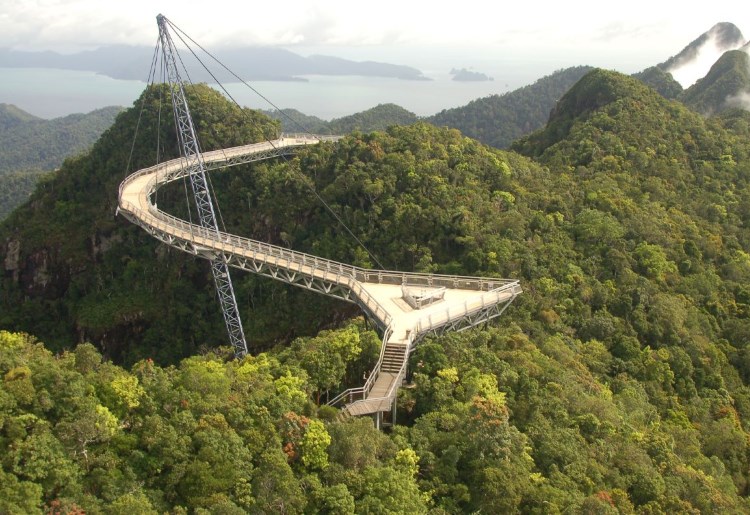
The Langkawi Sky Bridge is different from other skywalks in that it doesn’t jut out from a cliff overlooking a canyon. Instead, it is built at the top of Malaysia’s Machinchang Mountain, about 90 meters (300 feet) above the jungle. That doesn’t mean the views from this observation deck are any less spectacular, however. Visitors have stunning views of the ocean and other islands in this archipelago. A single pylon supports the 125-meter (410-foot) long skywalk. The sky bridge is closed for renovations now, but is expected to reopen in 2015.
6. Glacier Skywalk
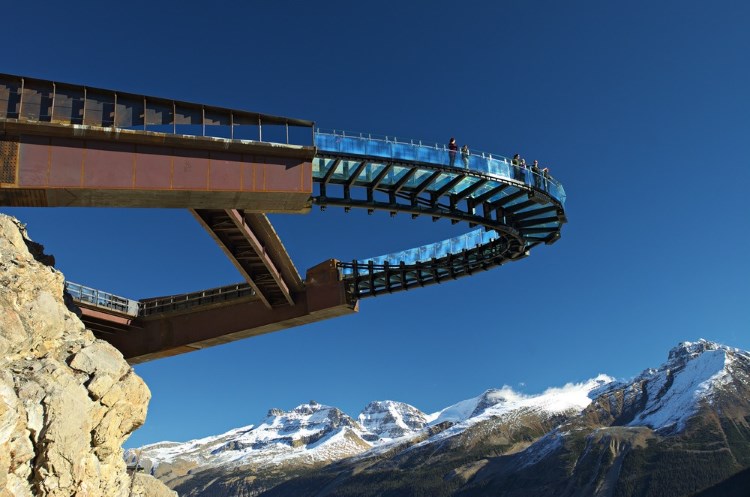
Nature’s grandeur surrounds those who tackle the Glacier Skywalk near Jasper, Alberta, Canada. The glass-bottomed skywalk, just a few minutes’ ride from Columbia Icefields, extends 280 meters (918 feet) above the Sunwapta Valley. The skywalk juts out from a cliff, showcasing one of the world’s most unique ecosystems. Visitors who look down will see ancient rock formations; if they look out or up they’ll see spectacular views of the rugged Canadian Rockies dotted with glaciers.
5. Tiefenbachkogl Viewing Platform
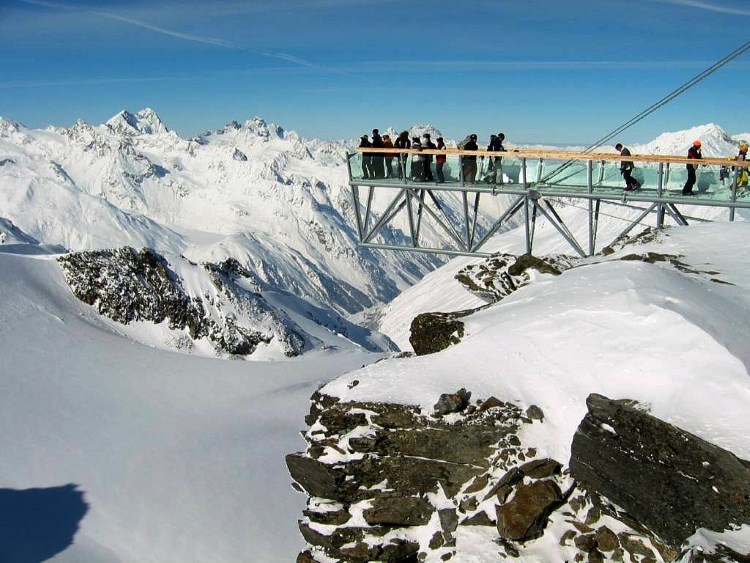
The Tiefenbachkogl Viewing Platform offers splendid views of the Tyrolean Alps in Austria. Located near the ski resort of Solden, Tiefenbachkogl Mountain has a viewing platform that offers 360-degree views of the surrounding mountains, glaciers and valleys. Tiefenbach is reached via a gondola ride that continues through a long tunnel to other mountains and glaciers. The mountain is popular with intermediate-level skiers who can zip down the mountain after enjoying the scenic views.
4. The Ledge
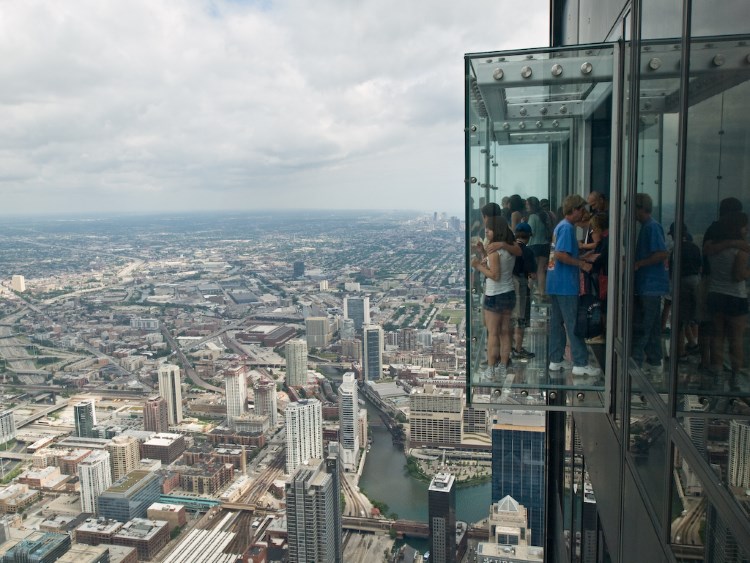
The Ledge offers something few other skywalks can: the opportunity to view four states from one location. The Ledge is located 412 meters (1,353 feet) above the ground in Chicago’s Willis Tower, the highest building in the Western Hemisphere. Not only that, but glass viewing boxes extends out from the Skydeck. Cars and pedestrians seem smaller than ants to visitors looking down from such lofty heights. The Skydeck is located on the 103rd floor of the building once known as the Sears Tower.
3. SWFC Skywalk
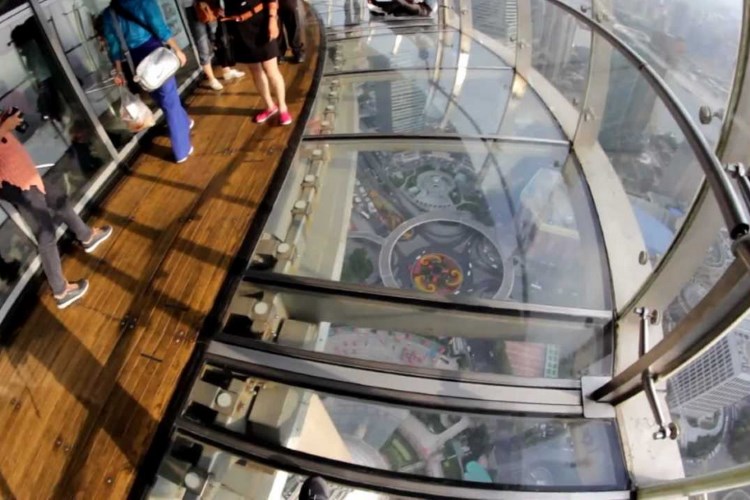
Shanghai has some of the world’s most innovative architecture and what better place to view it than from the skywalk at Shanghai World Financial Center. The building actually has three observation decks. The highest, on the 100th floor, is 474 meters (1,555 ft) high. Skywalk 100 as it is called is 55 meters (180 feet) long and is the world’s highest observatory. The stunning views from the transparent glass and floors are even more unforgettable at night when Shanghai lights up like a million Christmas trees.
2. Chamonix Skywalk
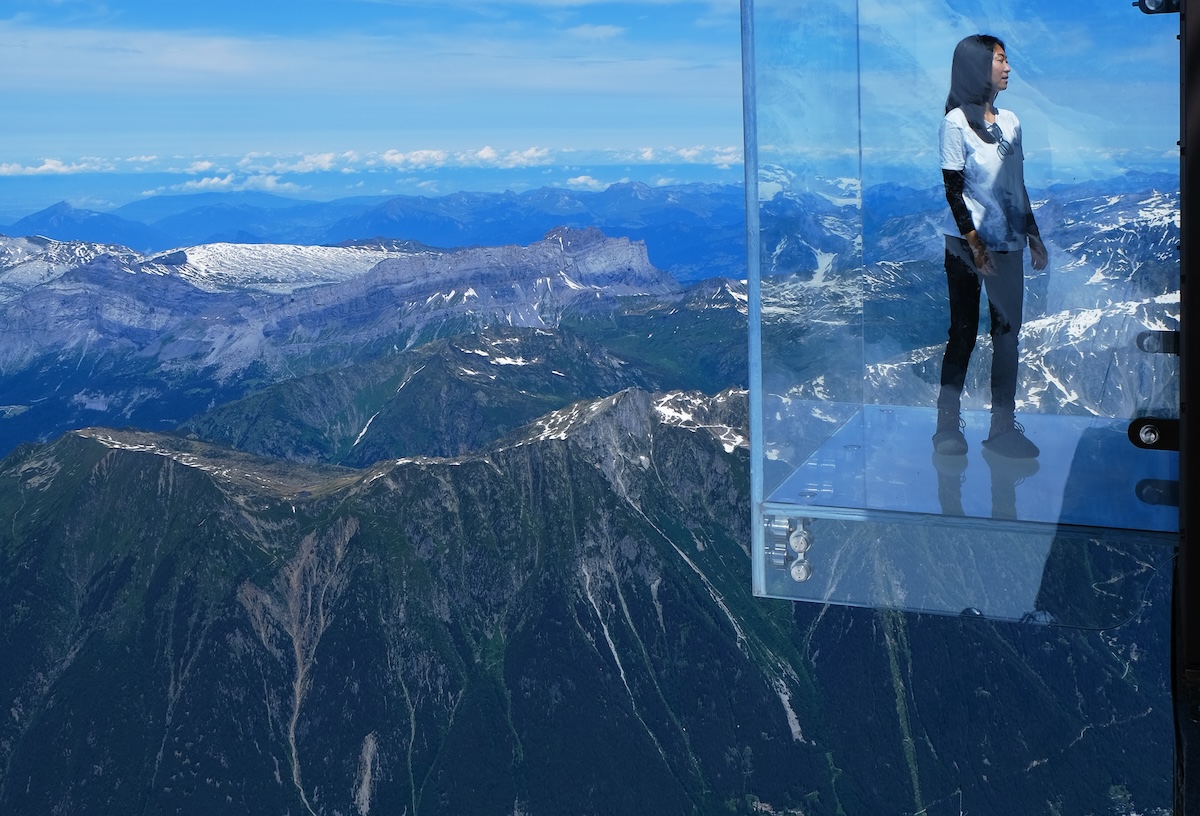
Stepping into a glass room may not be that confining especially when it comes to stepping into the Void Located on the Aiguille du Midi mountain in the French Alps, this “Step into the Void” skywalk claims to be the highest in Europe. In any case, it’s not for the faint of heart, since once a person steps into this glass-bottomed room, it’s 1,000 meters (3,400 feet) straight down to land. The Void is open April to November; admission is included in the Chamoinix – Anguille du Midi cable car ride.
1. Grand Canyon Skywalk
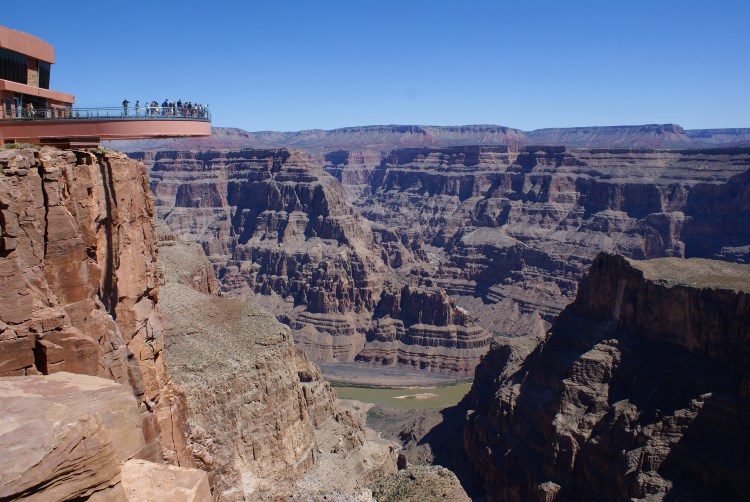
The Grand Canyon is one of nature’s most awesome wonders. Viewing this natural wonder from a glass skywalk 1,200 meters (4,000 feet) above the canyon floor only adds to the awesomeness. Though only open a few years, the skywalk is already considered one of the tops in the world. The skywalk is owned and operated by the Hualapai Tribe, which sets the rules for visitors, one of which does not allow personal belongings, including cameras, to be taken onto the skywalk.