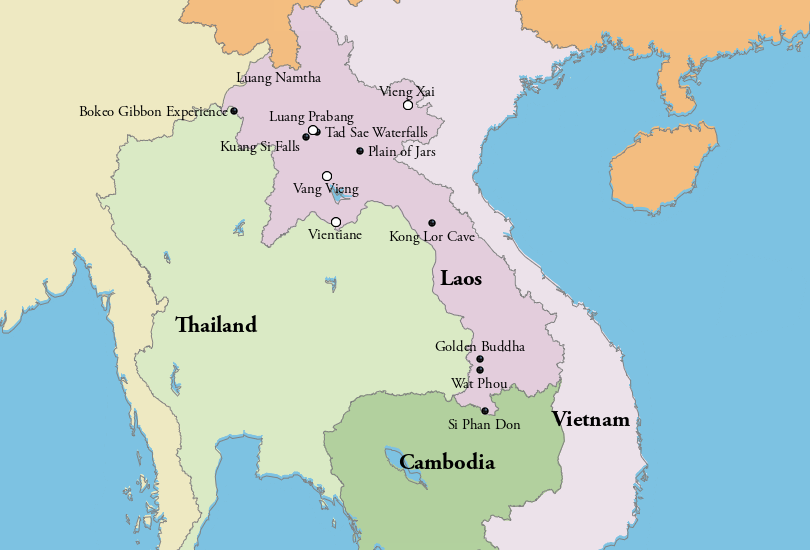
Laos is a mountainous and landlocked country in South-East Asia that has long been isolated from the outside world. A visit to Laos is, in many ways, a trip back in time. Travelers are drawn here by a laid-back lifestyle that has disappeared elsewhere in the region. Even the capital Vientiane feels like a relaxed riverfront town.
Not only will you have the chance to explore the lush jungles, rolling hills, and flowing rivers that make up the landscape, but you’ll also be able to immerse yourself in traditional Laotian culture. Other things to do in Laos include visiting elaborate temples and rural countryside villages, as well as charming villages and towns that are waiting to be explored.
As the country opens up, with an increasing number of roads and bridges being built the tourist attractions are becoming more and more accessible. Laos is simply one of those places that will capture your heart for years to come.
15. Trekking in Luang Namtha
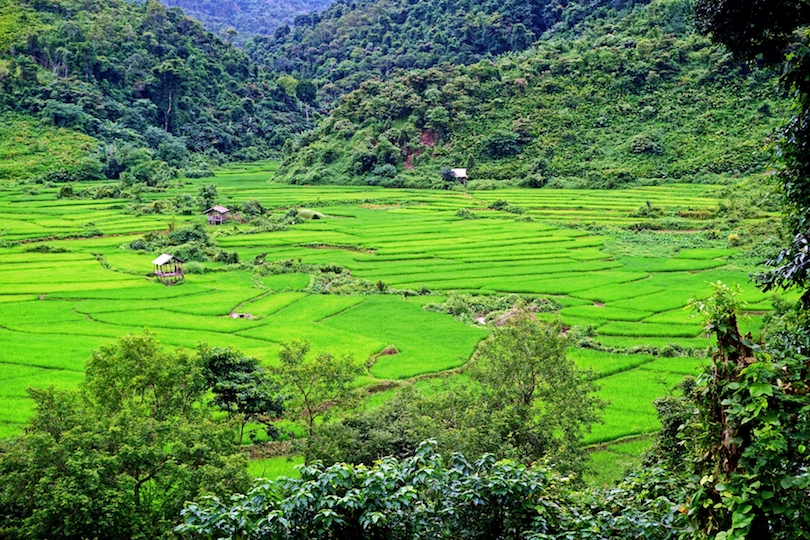
Wander deep into the heart of the jungle and discover the natural beauty of Luang Namtha. Located in the northeastern region of Laos, Luang Namtha is known for its dense forests, flowing rivers, and lush valleys. If you’re looking for adventure, a multi-day trek is the best way to experience the landscape with your own eyes.
There are different trails and trekking companies in Luang Namtha to choose from, but most journeys take three to five days. You’ll also have the opportunity to camp outdoors and visit minority villages along the way.
14. Kuang Si Falls
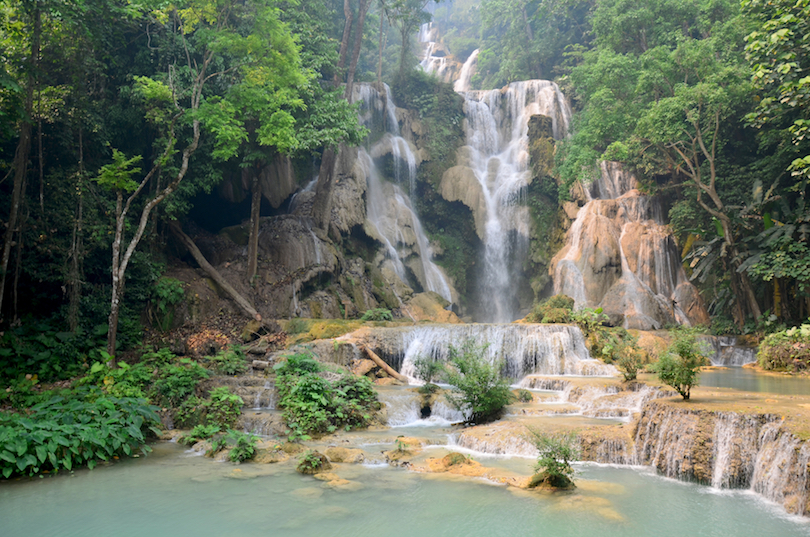
The cascading Kuang Si Falls is the definition of serenity. This three-tiered waterfall is set deep in the heart of the jungle, surrounded by green vegetation and jagged limestone cliffs. A shimmering turquoise pool sits at the base of the falls, inviting you to partake in a refreshing dip.
It’s also possible to hike to the top of Kuang Si Falls for epic views over the countryside. Despite the rocky terrain, the hike only takes 15-minutes, which is easily worth the effort to see one of the most panoramic views in Laos.
13. Golden Buddha
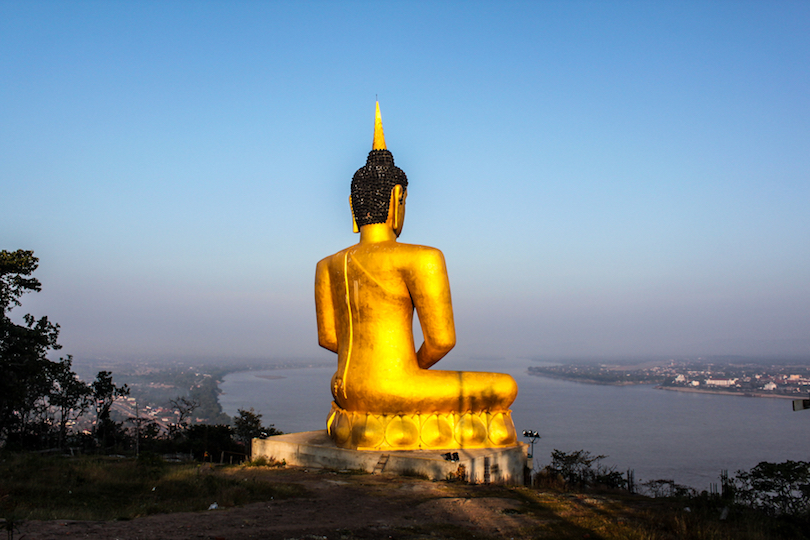
When in Pakse, it’s hard not to notice the giant golden Buddha that overlooks the Mekong River. As you make your way up the hill to the Buddha, you’ll notice many other statues along the way, including the Snake God statue that guards and protects the Buddha statue.
To reach the Buddha, you’ll need to cross Nippon Bridge from Pakse by foot, bike, or taxi. You’ll find the giant Buddha perched on top of a lotus flower facing the Mekong River and the city center that lays across from it. It’s a stunning sight to see at any time of the day, although sunrise and sunset are guaranteed to be even more breathtaking.
12. Kong Lor Cave
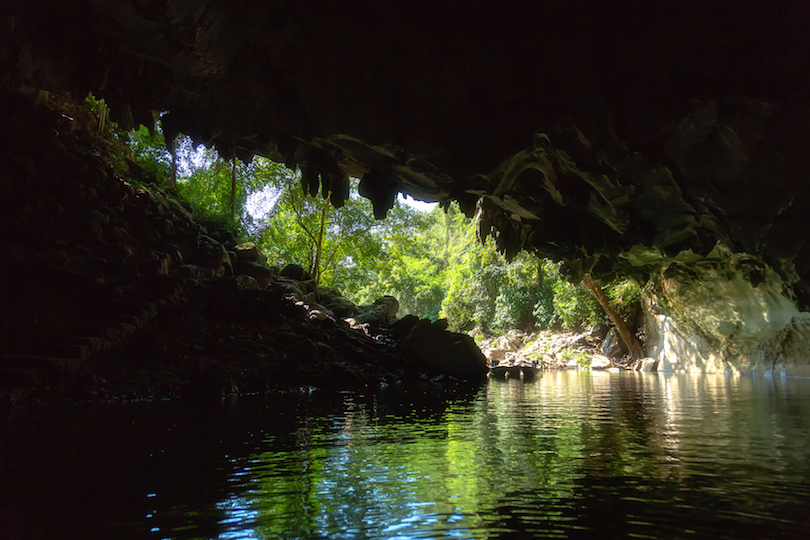
Tucked away inside the uncharted wilderness of Phu Hin Bun National Park is the Kong Lor Cave. This geological wonder is carved straight into the limestone rock and is filled with giant stalactites and walls that stretch over 300-feet high.
The only way to access the cave is via the Nam Hin Bun River, which means you’ll need to hire a speed boat for the journey. Once you disembark, you’ll be able to admire the dark chamber of the cave’s interior. Multi-colored lights illuminate some places, so you can see the details of the stunning and eery Kong Lor Cave.
11. Bokeo Gibbon Experience
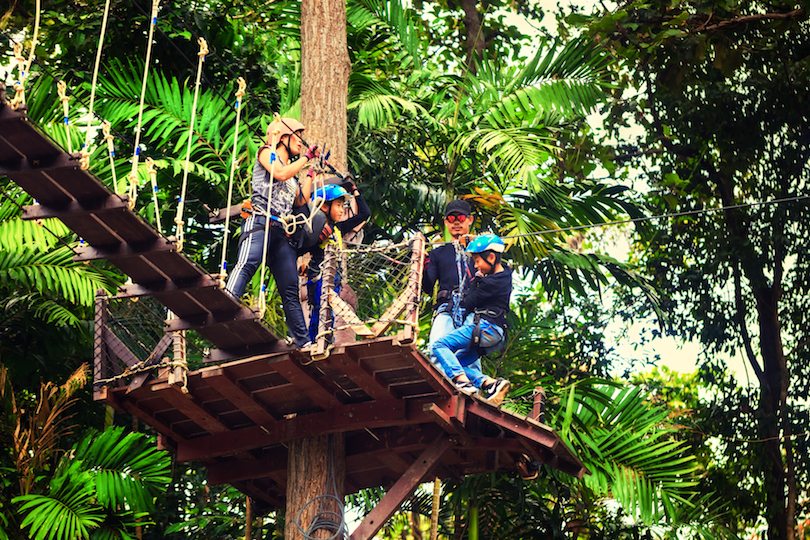
The thrilling Bokeo Gibbon Experience is possibly one of the most unique things to do in Laos. You’ll have the opportunity to stay in one of the world’s highest treehouses while getting up close and personal with wild gibbons!
Your Bokeo Gibbon Experience starts with a trek through the dense jungle, where you’ll encounter gibbons, along with other wildlife like deer, leopards, pigs, and even tigers. You’ll then spend the next few nights sleeping atop the canopies in one of the suspended tree houses. The Bokeo Gibbon Experience also includes an exhilarating zip line ride through the jungle.
10. Xieng Khuan
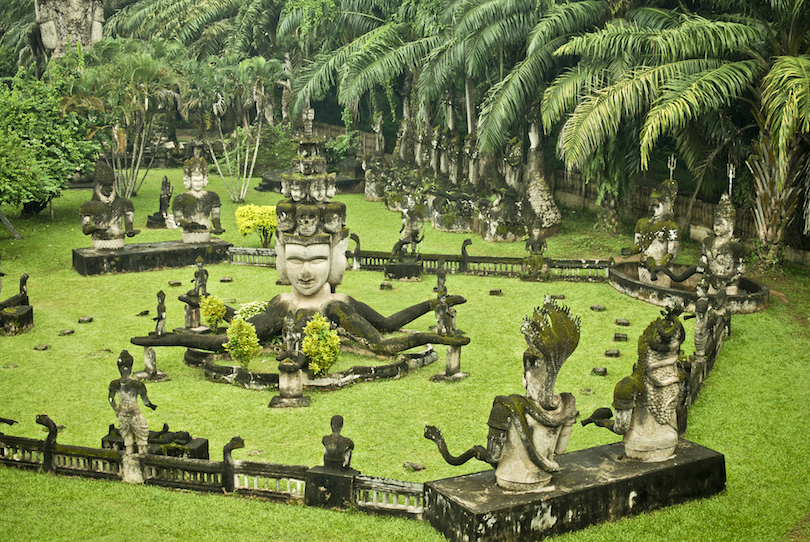
Although it’s not really considered a temple, Xieng Khuan (or Buddha Park) is still a fascinating place to visit to see numerous religious figures and statues. Located southeast of Vientiane next to the Thai border, Buddha Park houses over 200 different Buddhist and Hindu statues, many of which are made from concrete.
As you stroll through this bizarre park, you’ll see statues of humans, gods, demons, and animals. Walk through the open mouth of the 10-foot tall demon head and ascend the staircase from “hell” to “heaven.” There’s also a giant 130-foot-long sculpture of a reclining Buddha, which sits at the center of the park.
9. Tad Sae Waterfalls
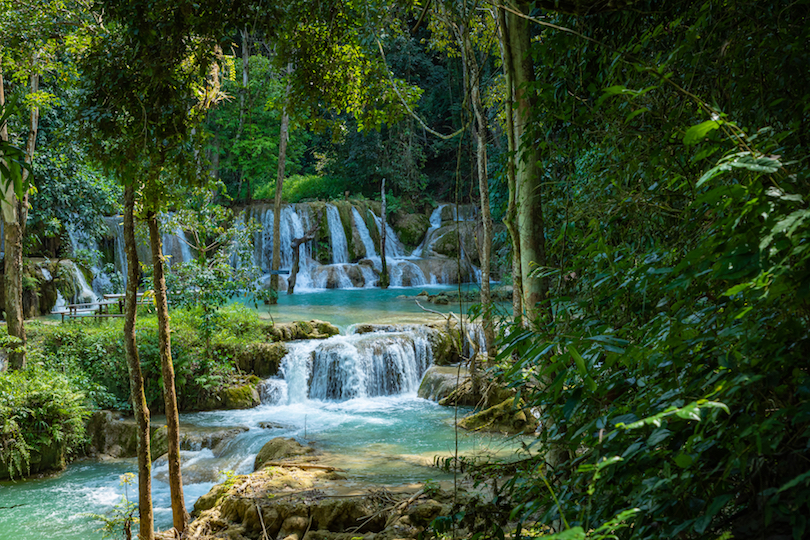
For an afternoon of relaxation, head to the tranquil Tad Sae Waterfalls. The entire cluster of falls is surrounded by a green jungle, which adds to the beauty as the water pours over the yellow limestone rocks.
The falls cater to a more local crowd, and you’ll find plenty of Laotian families congregating here for a swim or picnic. Take a soak in the crystal-clear pools, or simply sunbathe on one of the provided sun loungers. You’ll also find full facilities like restaurants, shops, and cafes nearby.
8. Wat Xieng Thong
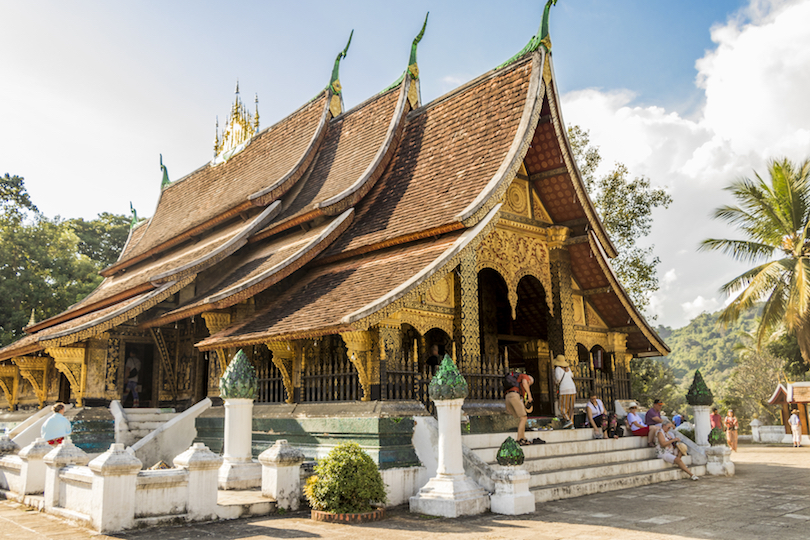
As one of Laos’ most renowned temples, Wat Xieng Thong is a must-see if you’re traveling to Luang Prabang. Built by King Setthathirath in 1559, it was initially used by royalty for religious events and festivals.
This Buddhist temple is one of the most elaborate temples in the country and a stunning testament to traditional Laotian art. Inside, you’ll find gold stenciling of mythological creatures and deities painted over the dark red and black walls. There are also intricate gilded motifs carved into the walls and doors of the different halls.
7. Pha That Luang
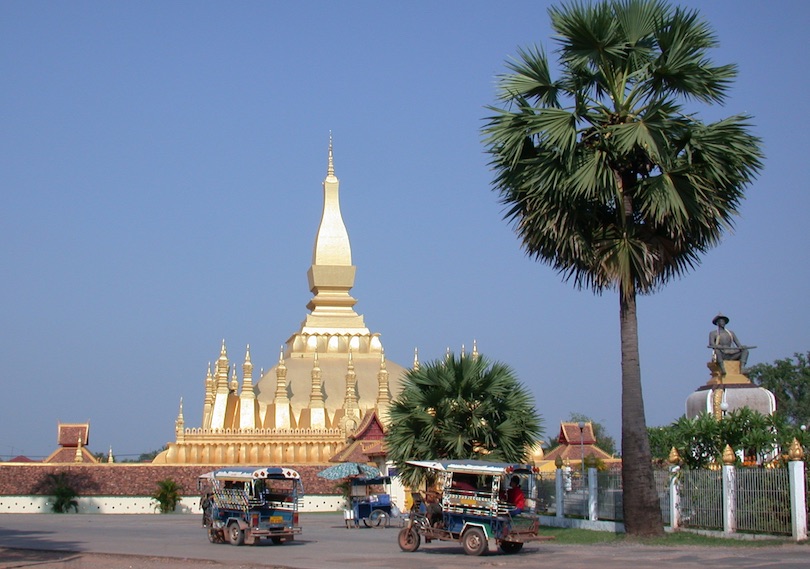
The spectacular Pha That Luang stupa sits at the heart of Vientiane and is one of the most beloved symbols of Laotian culture. The three-tiered stupa extends over 140-feet above ground and is covered in both solid and painted gold. It was constructed in 1566 after Vientiane became the capital of the Lan Xang Kingdom.
Pha That Luang is a religious pilgrimage site for many Buddhists, who believe the stupa contains the breast bone of Buddha. Around the stupa, you’ll also find different temples, which are elegantly adorned with red roofs and gold facades.
6. Wat Phou
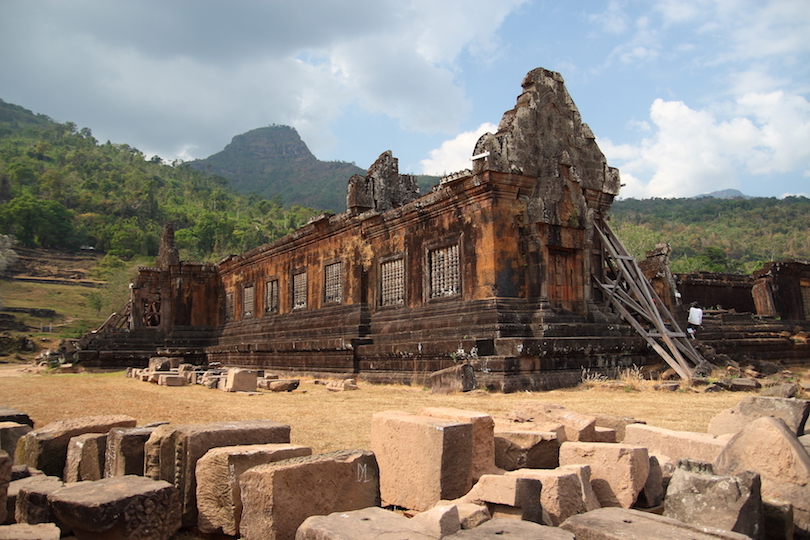
Nestled at the base of lush Phou Khao mountains are the remains of Wat Phou. This complex of ancient Khmer Hindu temples was supposedly built in the 10th and 11th-centuries honoring Lord Shiva. It’s now a Theravada Buddhist place of worship, and one of the most popular tourist attractions in Southern Laos.
Although many of the structures are starting to crumble, you can still marvel at the grand architectural remains. The main pathway that leads to the sanctuary is lined with boundary markers, and two palaces can be seen on either side. Once you’re in the sanctuary, you’ll see several Buddha images, stone carvings, and a library room.
5. Vieng Xai Caves
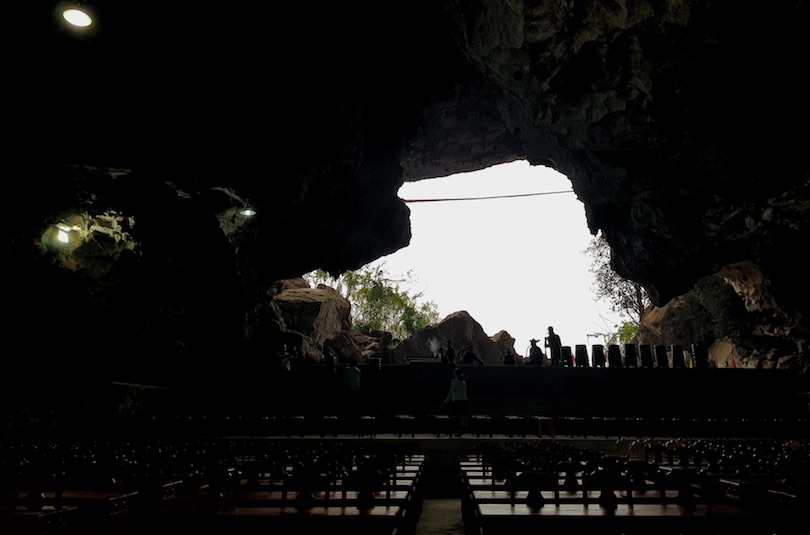
Located in the sleepy village of Vieng Xai, the Vieng Xai Caves are far off the beaten path for most tourists. Despite its stunning landscape, the caves are actually known for housing over 20,000 soldiers and civilians during the Indochina War. For over nine years, these people lived, worked, and developed an entire community inside the 100 or so caves.
Although you can only visit a handful of them now, it’s still a worthwhile journey to understand more about Laos’ tumultuous history. You’ll be able to see meeting rooms, houses, and theaters that were built in the underground caves.
4. Si Phan Don
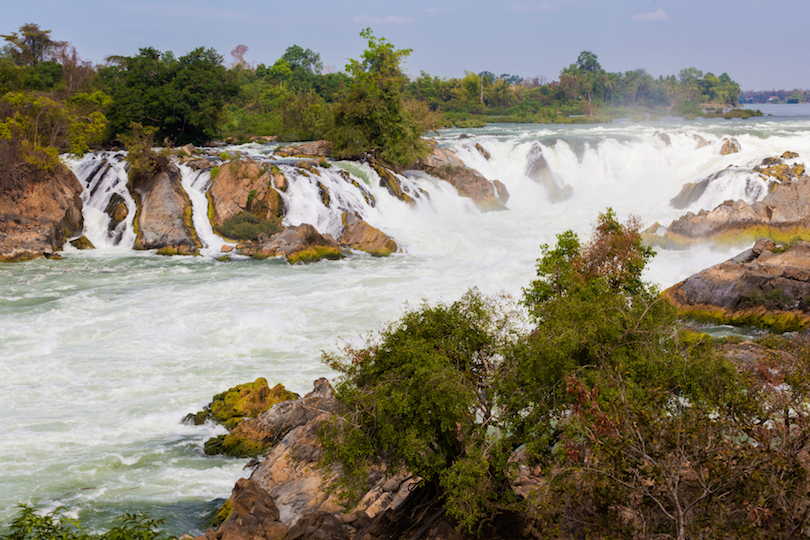
Dotted along the Mekong River is the archipelago of Si Phan Don. Many of the islands in Si Phan Don are submerged by the river during monsoon season, although there are three main islands (Don Khong, Don Det, and Don Khon) that most people choose to visit.
Exploring the islands of Si Phan Don is a great way to immerse yourself in Laotian culture. You’ll find traditional homes, shops, and restaurants set up along the banks of the Mekong River.
3. Plain of Jars
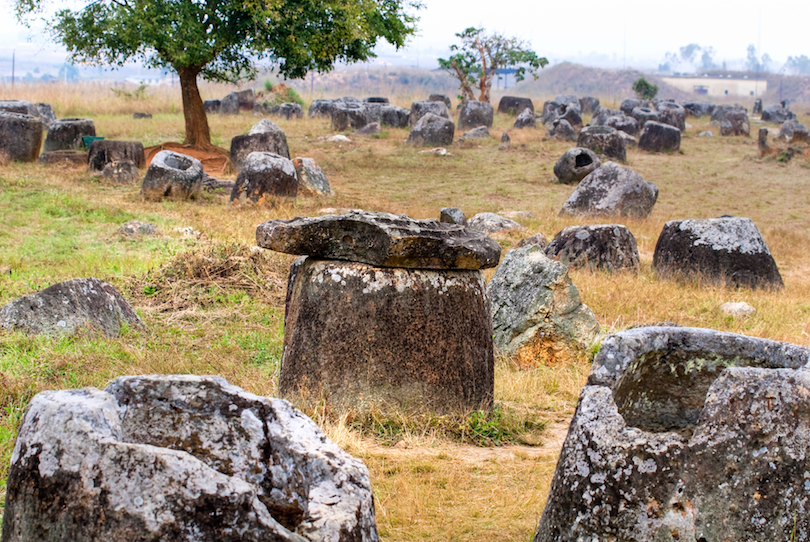
The mysterious Plain of Jars is one of the most unusual attractions in Laos. Scattered around the Khouang plain in the Lao Highlands are hundreds of stone jars, many of them weighing up to 14 tons.
Historians have debated the true age or origin of the jars. However, they are believed to be between 1,500 and 2,00 years old and originally used to store alcohol or food. Some people even believe that the jars were used as urns.
2. Tube the Nam Song
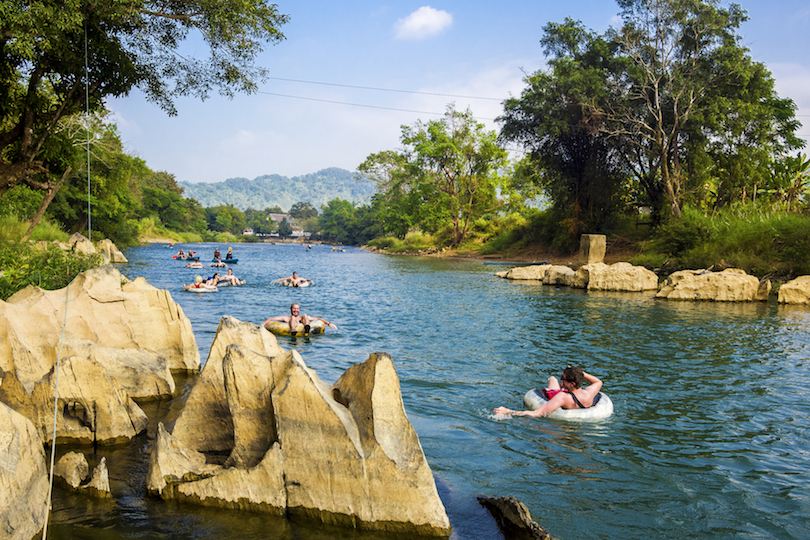
Soak in the scenic landscape of Vang Vieng with a relaxing float down the Nam Song River. It’s a popular attraction for both locals and backpackers, who come to enjoy the cool waters, and possibly a beer or two.
As you tube down the river, you can stop at one of the numerous bars that line the banks. You can spend the afternoon there partying, or you can take a bucket of booze back to your tube to continue the float.
1. Luang Prabang Old Town
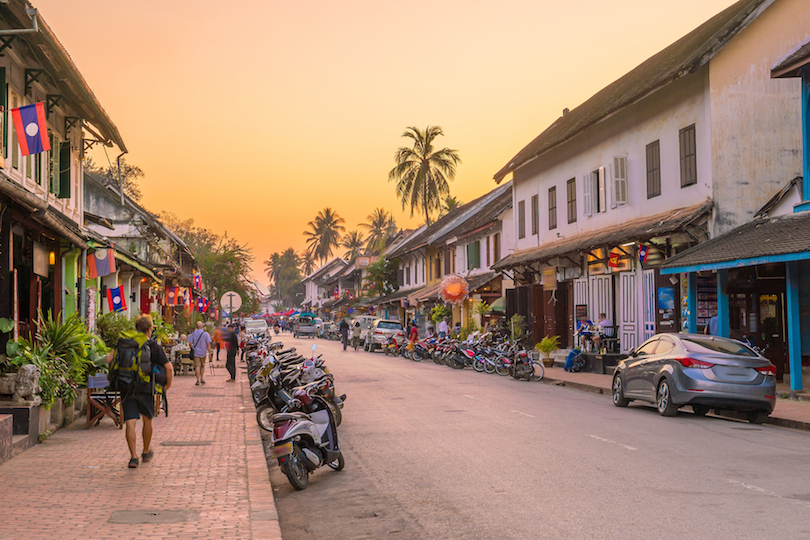
If you’re interested in French colonial villas, ornate Buddhist temples, and bustling night markets, make sure to spend a few days in Luang Prabang Old Town. This charming village is teeming with cultural activities that are guaranteed to delight all types of travelers.
Surrounded by lush hills and karst mountains, Luang Prabang is visually stunning on its own. However, it’s worth walking the quiet streets and exploring the different buildings and sights that await you around each corner.