
The country’s historic capital is an eccentric mix of forested hills, colorful warehouses and meandering waterways. Around each corner lies a section of the city as attractive as the last.
There’s nothing drab about Trondheim in Norway. The mix of pastel and reds across the old buildings blend in with the historic streets, some entirely pedestrianized.
It combines to create a city that’s fabulous to walk around. A place where aromas and visual stimuli compete for your attention. Days can be spent dancing between cafes and museums, while a singular Gothic cathedral consistently beckons you forward.
Some of the best things to do in Trondheim can be found in the vibrant harbor, marinated in a classic maritime aura. Here gulls fly, entranced by the fresh catch, and the old boats groan out with the tales of yesteryear.
Nidaros Cathedral
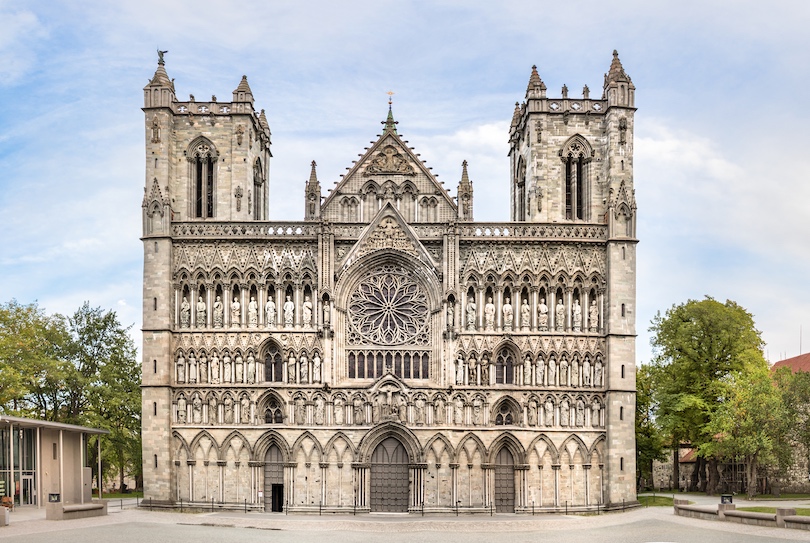
One of northern Europe’s most significant pilgrim sites, the Nidaros Cathedral, is a Gothic masterpiece. Built over the tomb of the Viking ruler, Olav the Holy, the cathedral immortalized this historic figure who would become Norway’s eternal king.
The cathedral lies in Trondheim’s center, taking a physical and literal place in the heart of local life. The build dates back to 1070 and beyond a vital pilgrim destination has become the place of royal blessings and coronations.
During the summer, visitors can explore the opulent interior before wandering up 172 steps to the top of the dark, narrow tower where splendid views of the city center unfold before you.
Bymarka
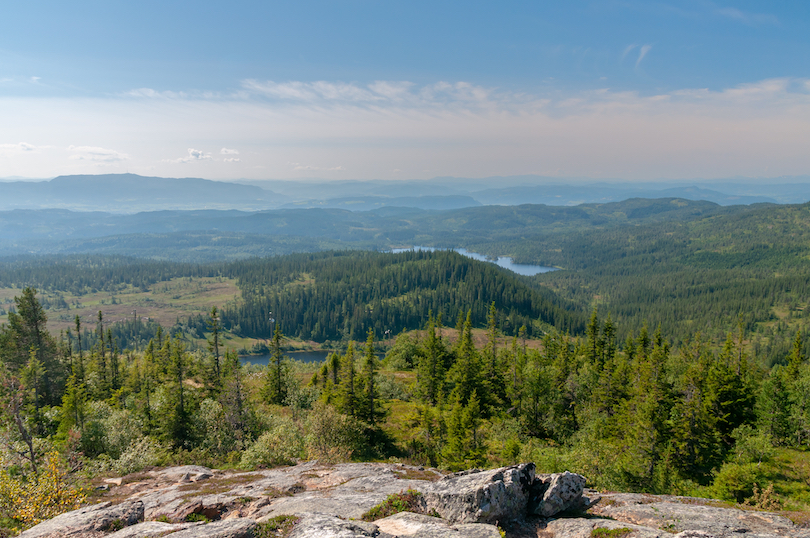
Just a stone’s throw from the city center, Bymarka offers a serene retreat into nature. Trails meander through sprawling woodlands and open plains, offering a range of terrain suitable for various activities.
Whether you’re seeking a leisurely stroll, a challenging hike, or beautiful lake views, Bymarka provides a network of trails catering to different skill levels and interests. One prominent landmark is Gråkallen. This distinctive rounded dome serves as a frequent reference point for navigating the hiking paths of Bymarka. It’s visible even from the city itself.
The hike to Gråkallen is easily accessible and ideal for those seeking a shorter yet slightly challenging trail. Covering a mere 1.5 kilometers, the ascent to the summit rewards hikers with breathtaking vistas of Trondheim city.
Archbishop’s Palace
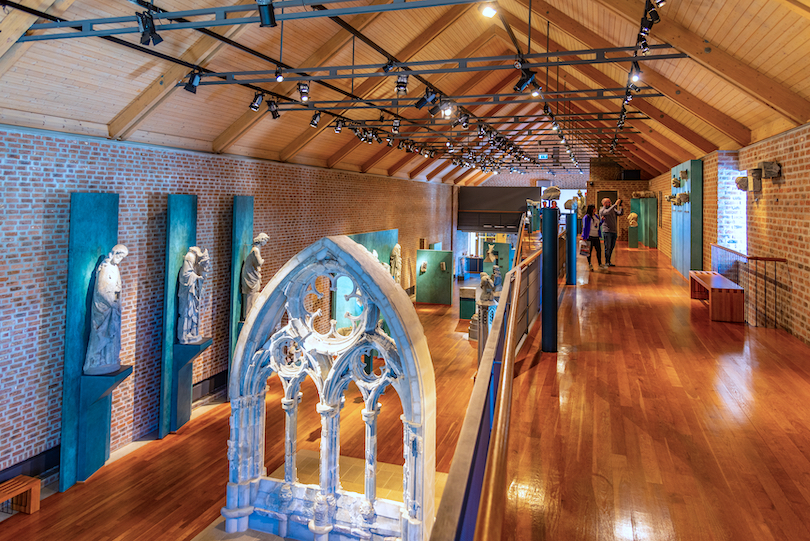
Holding great significance as the residence of the archbishops during medieval times, The Archbishop’s Palace (Erkebispegården) showcases the power and influence of the church in Norway’s past. In 1983, a fire destroyed two of the large wooden structures within the Archbishop’s Palace. The museum you see today was constructed atop the building’s remains.
The museum houses a myriad of artifacts, predominantly excavated from the cathedral grounds and its surroundings. Each tells the compelling tale of this historical site across the ages. Particularly captivating are the remnants of the Old Mint. Displayed just as it was found, it is the smallest and northernmost mint on earth.
The exhibits are thoughtfully curated, providing detailed explanations in both Norwegian and English.
Visit Munkholmen Island
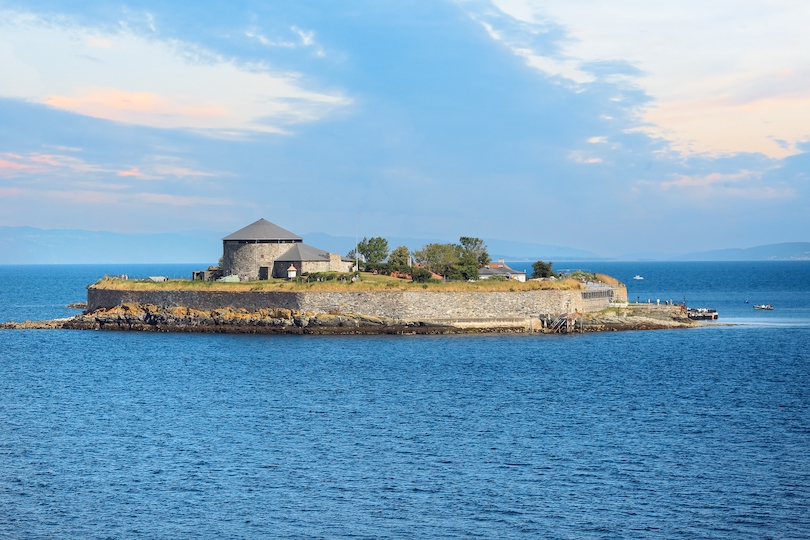
Found in Trondheim’s harbor, Munkholmen Island holds centuries of tales within its rocky shores. During the Viking era, Munkholmen Island served as Trondheim’s execution grounds. In the early 11th century, Benedictine monks constructed one of Scandinavia’s earliest monasteries on this site. Later the monastery was converted into a fortress, and then a prison.
There are two boat options from the Ravnkloa fish market. The first navigates through the Nidelva River and explores the harbor canals. The second is a simple round-trip ferry ride exclusively to the island, this being the cheaper option.
Visitors can spend their time getting lost in the history of the island, sipping a coffee at the charming cafe, and on warmer days, taking a few hours to soak in the sun by the water.
Rockheim

A vibrant and immersive museum, Rockheim is dedicated to the country’s contemporary music history. Rockheim embarks upon gathering, preserving, and narrating the story of Norwegian pop and rock music spanning from the 1950s to the present era.
The primary exhibition, known as the ‘Time Tunnel’, takes visitors on a journey that begins on the 6th floor and progresses through the decades as they descend each level.
The museum’s interactive experience rooms provide hands-on opportunities to engage with music. Here, you can explore the art of guitar playing, experiment with mixing hip-hop loops, try your hand at DJing, or leave your mark through graffiti on the wall.
Wrap up your museum exploration by browsing the museum shop, where you can purchase replicas, posters, games, or books.
Sverresborg Trondelag Folk Museum
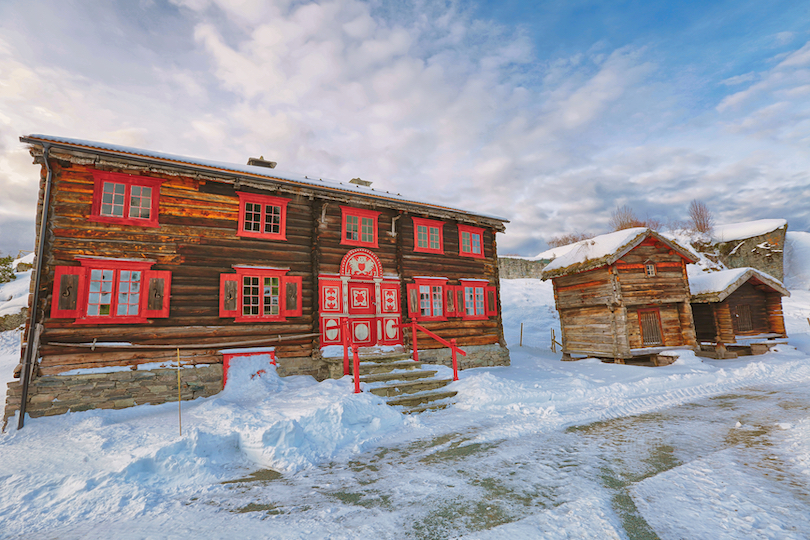
A living testament to Norway’s rich cultural legacy, Sverresborg Trondelag Folk Museum is situated just outside Trondheim’s city center. This open-air museum provides a fascinating glimpse into Norway’s past, from medieval times to today.
The indoor exhibition, Livsbilder, meaning Images of Life, features artifacts from the past 150 years. This includes items such as school supplies, clothing, and ornate sleds. The museum also consists of an outdoor exhibition, with more than 60 period buildings that visitors can enter. These are placed around the ruins of King Sverre’s castle, offering spectacular views of the city.
Guides can provide a wealth of information about the houses and the history of Trondheim spanning the last millennium. Learn about the relocation of Norway’s oldest wooden church, dating back to around 1150. Witnessing its exceptional preservation is a truly captivating experience.
Fun fact, if your name is Sverre, you can enter the museum free of charge!
Bakklandet
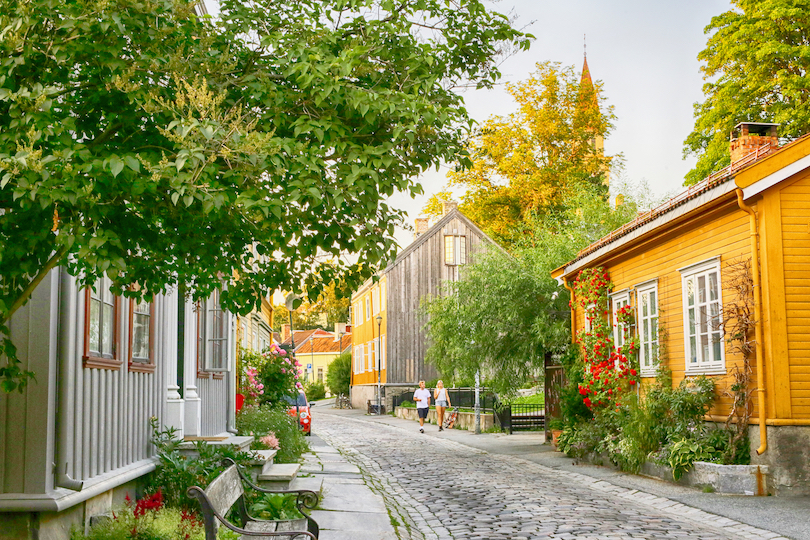
Located on the east side of the city, Bakklandet is an old and charming area that has a rich history and culture. The streets of Bakklandet are lined with cobblestones and colorful wooden houses, creating a beautiful storybook-like atmosphere.
With plenty of shops, restaurants, and cafes to explore, you can easily spend a day getting lost within the streets. Stop by Baklandet Skydsstation, which is known for its classic cuisine and lively bar. Housed within an 18th-century building, it has earned recognition from National Geographic as “possibly the coziest café in Scandinavia.”
No visit to Bakklandet is complete without enjoying a meal at one of the many restaurants. Sample traditional Norwegian dishes like fishcakes, reindeer stew, and lutefisk.
Bakklandet is home to some of Trondheim’s notable landmarks, such as the iconic Old Town Bridge. Pro-tip the bridge is a fantastic spot to get a postcard worthy view of this historic neighborhood.
Kristiansten Fortress
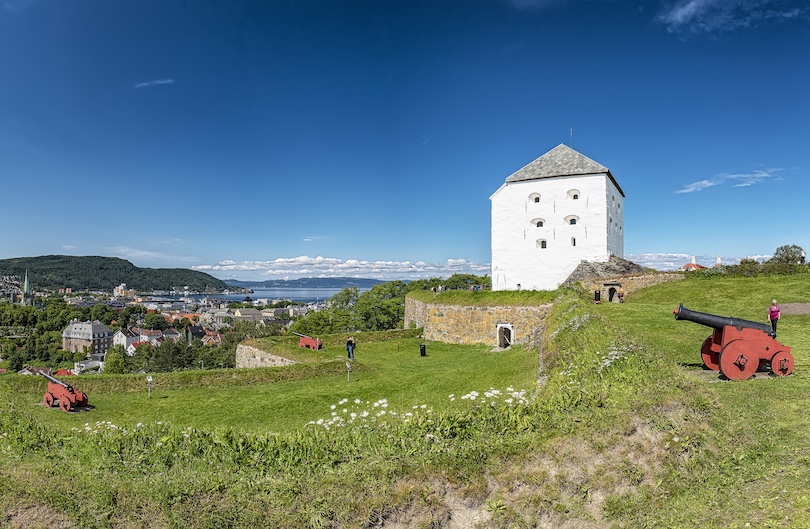
Perched atop a hill overlooking Trondheim, Kristiansten Fortress stands as an enduring symbol of the city’s past and offers a picturesque perspective of its present. Constructed in the 17th century, this well-preserved fortress was built during the reign of King Christian V of Denmark-Norway as a defensive stronghold against Swedish invasions.
The fortress is accessible either by a short hike or a quick bus ride from the city center. Its proximity and historical importance make it a popular destination for history enthusiasts or those looking for a stunning panoramic view of Trondheim.
With a museum within its walls and plenty of history available by QR codes around the fort, there are plenty of ways to learn more. Its flag, a visible landmark from many parts of the city, is raised when the fortress is open to visitors.
Old Town Bridge
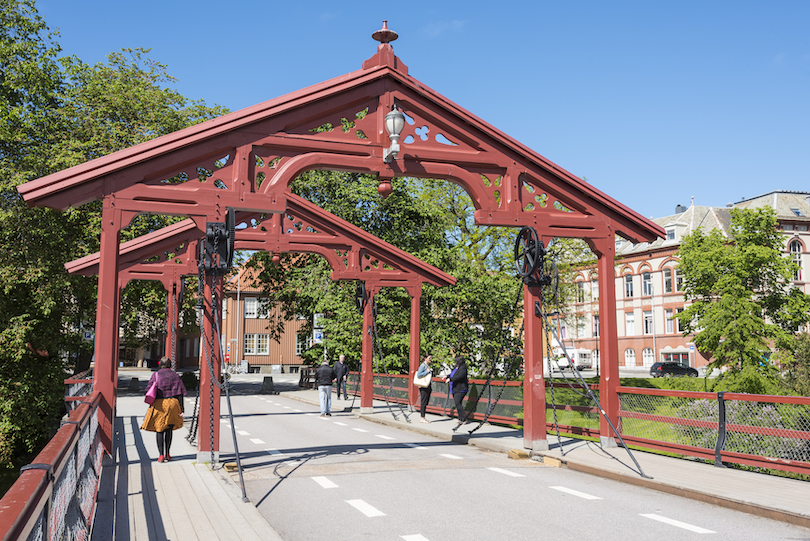
Built at the same time as the Kristiansten Fortress, the Old Town Bridge is known as the Likkens Portal. This translates to the Portal of Happiness, something you’ll surely feel as you first gaze on the ancient bridge.
Originally made of wood, the gates that protected the entrance to the fortress stand as they have for over 300 years. The Old Town Bridge is effortlessly charming, a historical centerpiece of Trondheim.
Beyond that, it provides exceptional views across the water of the colorful neighborhood of Bakklandet, the Nidelva River below, the fortress and distant spires of the Nidaros Cathedral.
With cars banned, the bridge is now pedestrian-only, providing plenty of time to take it in. As you do, you’ll no doubt begin to understand the charming vibe of Trondheim itself.
Stiftsgarden
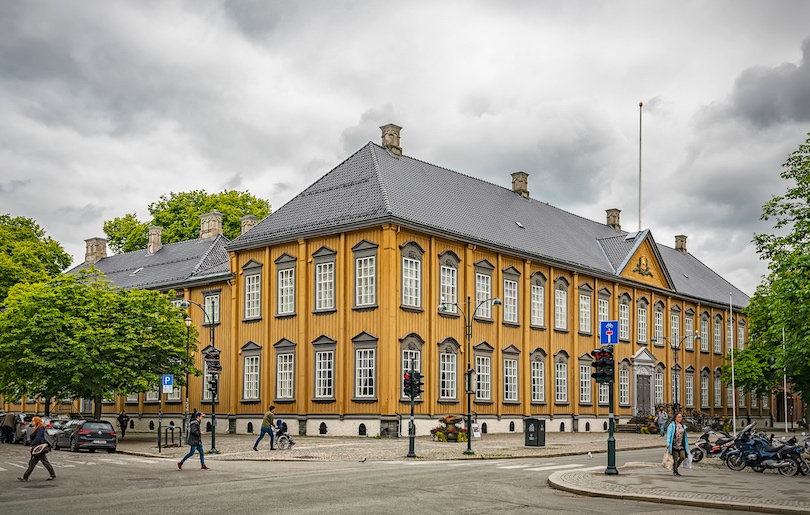
Built in the 18th century, Stiftsgården remains one of the largest wooden buildings in Scandinavia. As the official royal residence in the city of Trondheim, visitors will be captivated by the building’s magnificent façade, dripping with elegant architectural details.
Upon entering, you’re instantly transported through time. The halls and rooms are adorned with artifacts and furniture spanning various periods of Norwegian history. Guided tours offer a fascinating glimpse into the building’s rich past, narrating stories of its construction and detailing the lives of the royal inhabitants. Continue to hear the significant events that have unfolded within its walls.
You will want to plan your visit accordingly, however, as Stiftsgarden only opens its palace doors for a few months over the summer season.