
Best known for one of the most pivotal moments in American history, this small town draws visitors with its preserved battlefields, historic landmarks, and powerful sense of heritage. Monuments, museums, and memorials throughout the area bring the past vividly to life.
Gettysburg is home to Gettysburg National Military Park, the site of the decisive Battle of Gettysburg fought from July 1 to 3, 1863. Widely regarded as a turning point in the American Civil War, the battle is also remembered for Gettysburg Address, delivered by Abraham Lincoln.
Visitors can tour the battlefield, explore historic homes, and discover museums filled with artifacts and exhibits connected to the war. Beyond its historical attractions, Gettysburg also features a charming downtown with local shops and restaurants that add to its appeal.
Gettysburg National Military Park
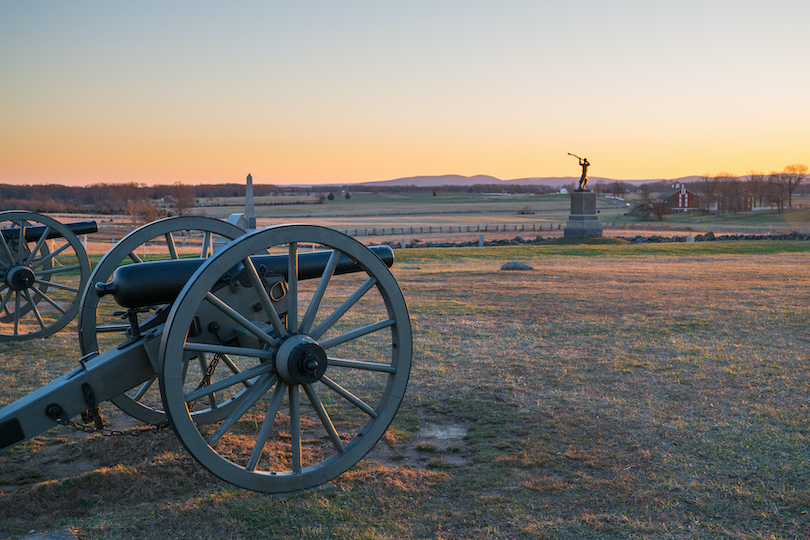
As about 1,400 monuments and statues now dot the battlefield, it could take days if not weeks to see all of the Gettysburg National Military Park. One of Pennsylvania’s most popular places to visit, the park tells the story of one of the bloodiest and most important battles in American history.
From July 1 to 3 1863, fierce fighting between Union and Confederate forces took place both in and around the town. At the end of the battle, tens of thousands of troops were either captured, killed or wounded. This decisive victory for the North marked the turning point of the Civil War.
As you stroll about its forests and fields, you’ll gain a greater understanding of the largest land battle ever fought in North America. Besides reading informative plaques, seeing its majestic monuments and visiting the town’s many museums, it is well worth taking a guided tour of the battlefield. This is because your expert guide will take you to significant spots and explain all the ins and outs of the Battle of Gettysburg.
David Wills House
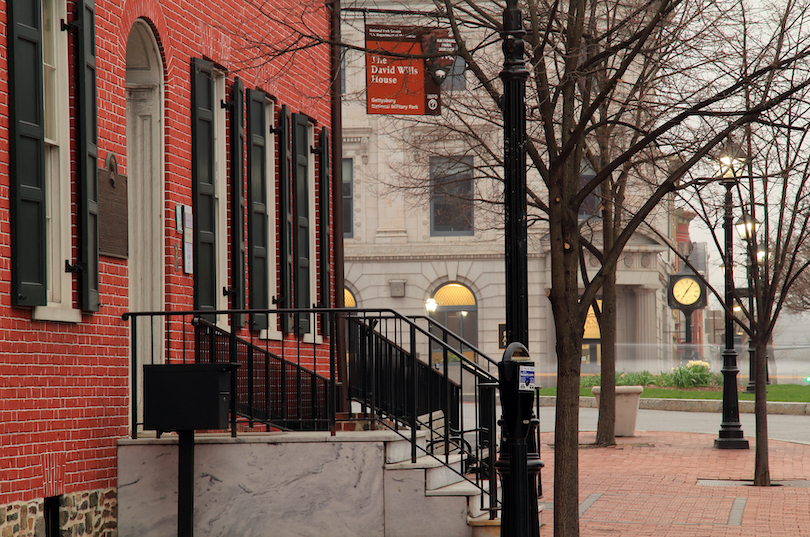
An interesting and educational place, David Wills House is located slap bang in the center of the town. Now restored to its 1863 appearance, it contains artifacts and exhibits that examine the aftermath of the famous battle.
After the fierce onslaught, the local lawyer’s home acted as a centre for people cleaning up the city and caring for the wounded. Its historic rooms, displays and photos now shine a light on their heroic efforts and the emotionally-draining tasks they undertook.
Most noteworthy, however, is the small room where Abraham Lincoln slept and penned his carefully crafted Gettysburg Address. Aside from learning about one of the most influential speeches in US history, you can see a superb statue of Abe, original furnishings and period pieces.
Gettysburg Diorama
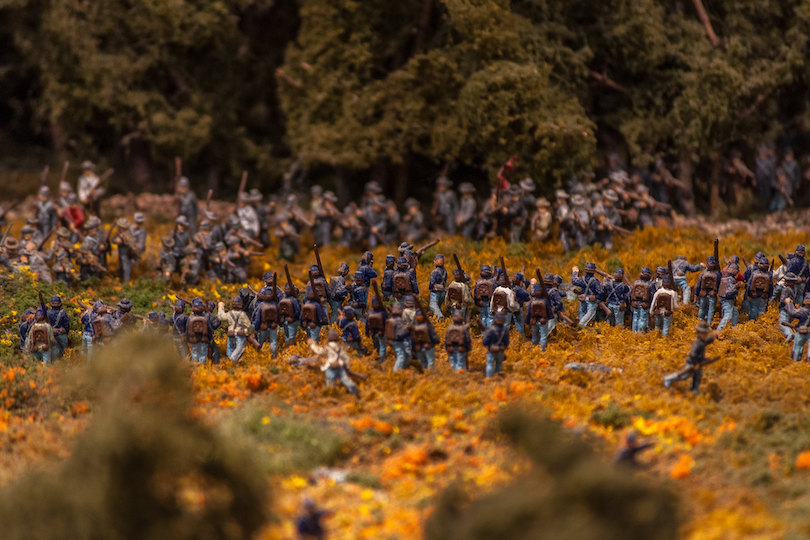
With its extensive layout and intricate details, the ginormous Gettysburg Diorama offers a bird’s eye view of the battle. A remarkable recreation, its sprawling set features more than 20,000 soldiers, buildings, horses and cannons.
The largest diorama of its kind in the country, the massively popular attraction is housed within the Gettysburg History Center. It depicts the three days of fighting right down to the tiniest detail, and a soundtrack narrates key events, figures and troop movements.
As you peer at the diorama you can take in the fine features of its town, terrain and troops clasping their tiny guns. Surround sound and strobe lighting effects also help bring the historic events to life. As it is so well-done, many people recommend visiting it before heading to the actual battlefield.
Dobbin House Tavern
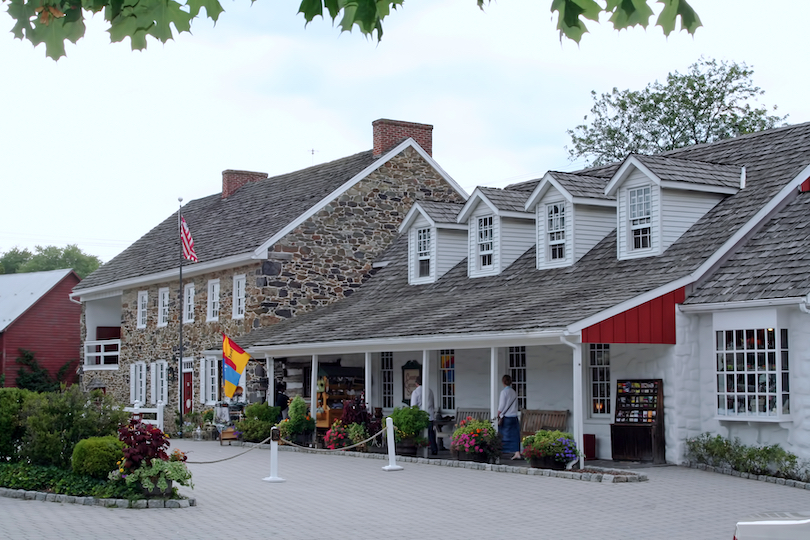
Just up the road from the Gettysburg Diorama at the northern end of the cemetery is Dobbin House Tavern. Thanks to its historic charm and lively ambiance, the atmospheric old alehouse is a fantastic place to grab a drink or bite to eat.
Named for its original owner Reverend Alexander Dobbin, it is the oldest standing structure in town having been erected in 1776. Due to its delightful rustic decor and rooms packed with centuries-old artifacts, dining at the tavern really is a unique experience.
During and after the battle, it acted as a temporary field hospital and later possibly even harbored fugitive slaves on the Underground Railroad. In addition to enjoying excellent cuisine, guests can also stay overnight at its cozy B&B.
Gettysburg National Cemetery
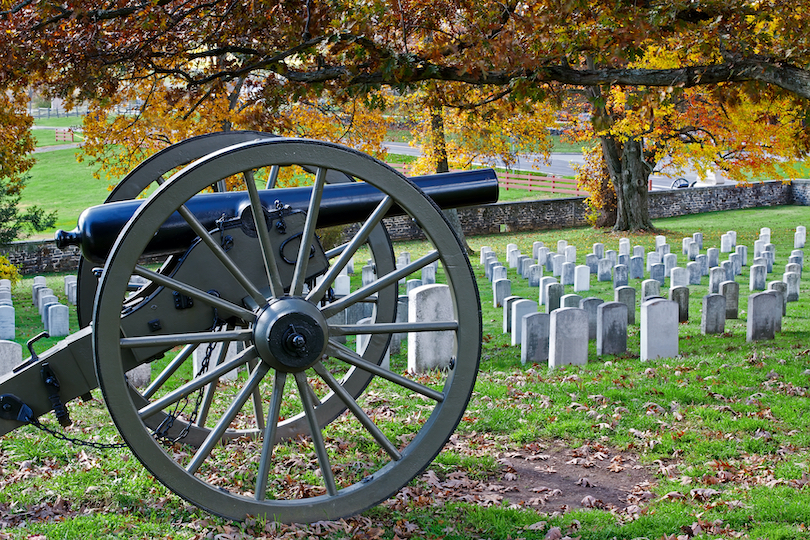
Set just south of the center you can find the gorgeous green Gettysburg National Cemetery. Home to moving monuments and impressive memorials, it is a poignant yet important place to amble around.
After the end of the fierce battle, part of the land was turned into a cemetery for both the Union and Federal casualties. Since 1863, veterans of the Spanish-American War and WWI among others and their families have been interred at the serene site. While strolling along its peaceful paths, you pass endless rows of graves with over 6,000 people thought to be buried amidst its lush lawns and trees.
The centerpiece of the cemetery is the striking Soldiers’ National Monument. Standing at sixty feet, the grand granite memorial is ringed by concentric circles of well-maintained graves with the whole ensemble making for some fabulous photos.
Little Round Top
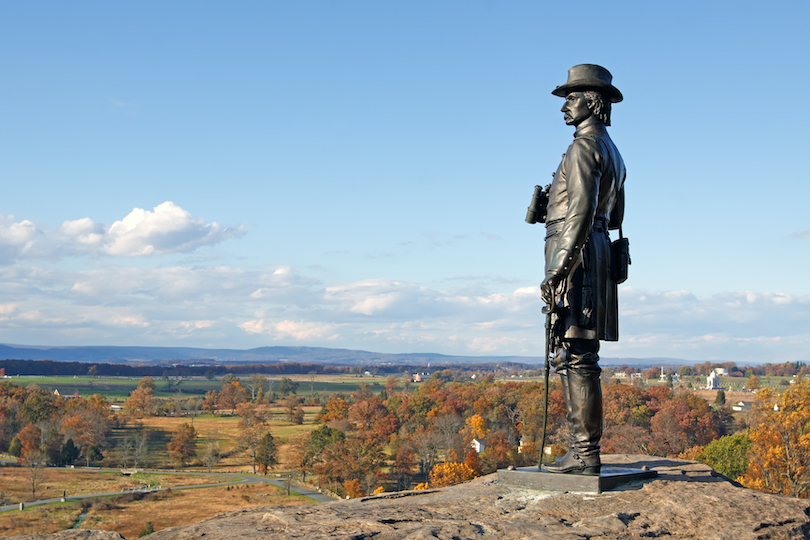
Now covered with monuments, Little Round Top was once the scene of the most decisive encounter of the battle. From atop the small, rocky hill, you can take in commanding views of the battlefield and learn about the Confederate’s unsuccessful assault on the distinctive landmark.
Located alongside the even larger Big Round Top, its rugged, steep slope and rocky summit formed the southeastern edge of the battle site. The Union forces under Colonel Strong Vincent successfully defended its high ground on the second day of fighting. Its most famous and influential engagement saw soldiers charge downhill bayonets first and turn the tide of the entire war.
From its soaring summit, you can bask in breathtaking views of the battlefield and get a feel for the rough terrain upon which they fought. There are also plenty of informative monuments and markers to read.
Jennie Wade House
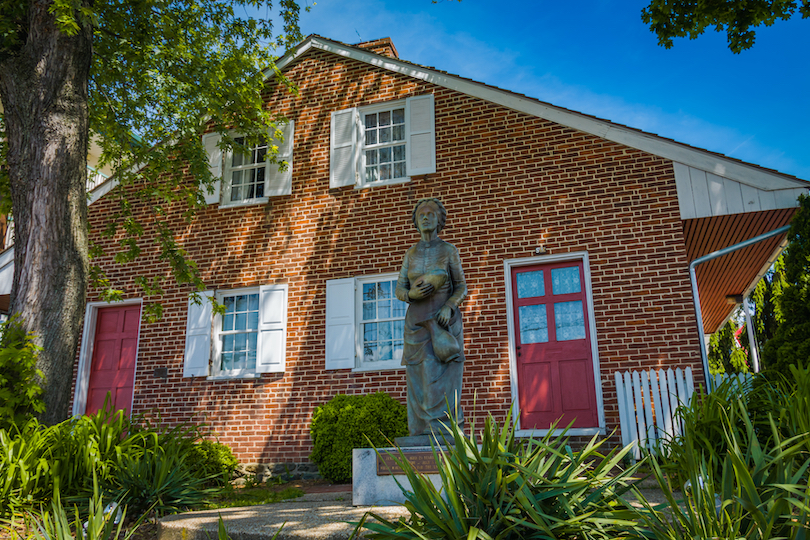
Walk just a bit further down the same street and you’ll come across the Jennie Wade House near the entrance to the cemetery. Dedicated to Gettysburg’s only civilian casualty of the battle, it also looks at domestic life during the Civil War.
Now preserved as a historic house museum, its small rooms are home to original furnishings, period pieces and informative displays. On top of this, costumed guides are on-hand to teach visitors more about civilian and domestic life in Gettysburg during the four years of the war.
The most striking part is seeing the holes in the walls of the stray bullets that killed Jennie Wade on the last day of battle. Outside is a superb statue of the unfortunate woman who was baking bread for Union forces when she died.
Downtown Gettysburg
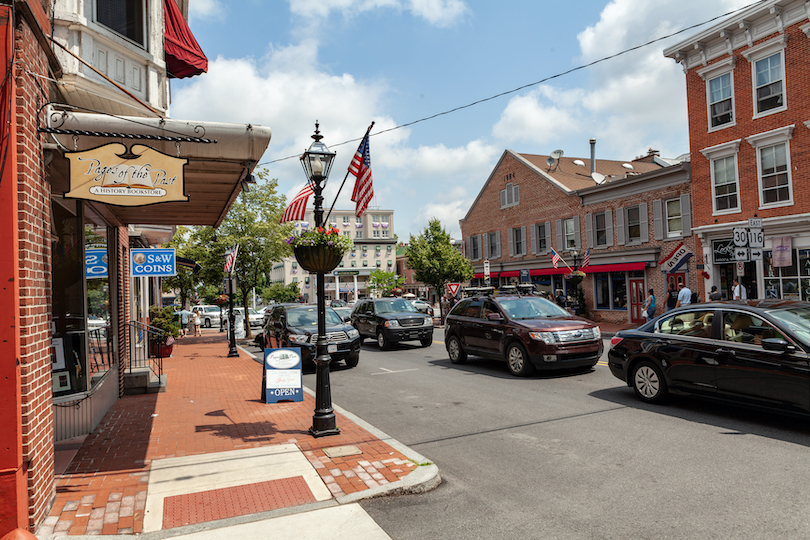
Despite its smallish size, Downtown Gettysburg is a very pleasant place to explore with a lot to see and do. Set right in the heart of town, its quiet yet charming streets are lined by countless shops and local restaurants.
While many establishments and eateries border both sides of its main street, Lincoln Square acts as the attractive area’s undisputed center. Here you’ll find a splendid statue of the former president and the interactive exhibits of David Wills House. Other museums, art galleries and theaters can also be found nearby.
On top of all its enticing attractions, downtown has a wealth of unique boutiques and chain stores to peruse. Cozy coffee shops and restaurants are also dotted about, as are a handful of bars and B&Bs.
Sachs Covered Bridge
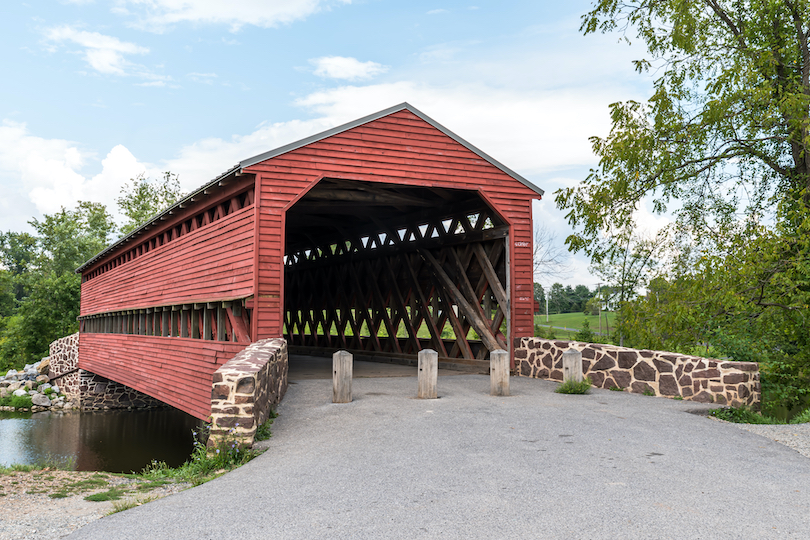
Just ten minutes drive to the southwest is the Sachs Covered Bridge; one of the most photographed landmarks in the region. Spanning the tranquil Marsh Creek, its brilliantly bright red exterior stands out delightfully against all the lush foliage and trees around it.
Used by both Union and Confederate armies during the Civil War, the picturesque bridge was built around 1854. Renovated and remodeled several times over the years, it sports a terrific Town-truss style and stretches a hundred feet in length.
Aside from wandering over the pedestrians-only bridge, you can snap photos of its fine features or pose for pics before it. Although a little hard to find, the National Historic Landmark and its bucolic setting are well worth checking out.
Devils Den
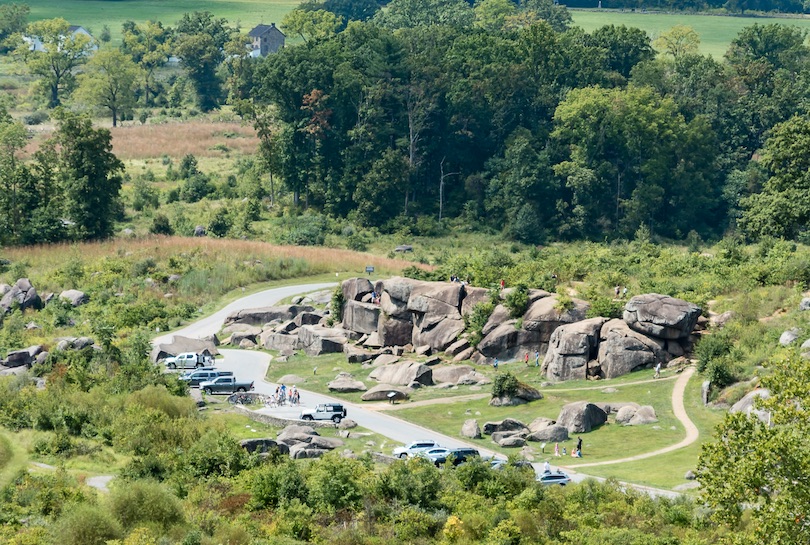
Not far from Little Round Top on the battlefield is another remarkable rock formation for visitors to clamber about. Known as the Devils Den, the hill has hulking great boulders to explore with cannons, memorials and walkways being dotted about.
During the Battle of Gettysburg, both artillery and infantry used the gigantic rocks as cover as they honed in on targets. Despite this, the name actually comes from a nineteenth-century local belief that a huge snake had a den nestled away amongst them
Nowadays, you can walk between the boulders, read informative plaques and learn more about how the battle played out. As it is located right in the middle of the military park, you can easily visit the Devils Den alongside other important monuments and landmarks.
Eisenhower National Historic Site
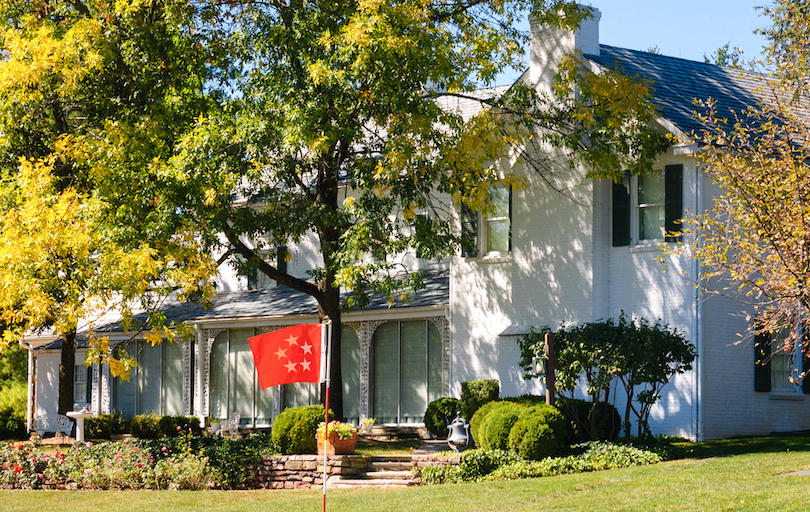
One of the few sites unrelated to the Civil War is the Eisenhower National Historic Site not far from the Sachs Covered Bridge. The former home and farm of America’s 34th president, its green grounds and massive main house really are a treat to tour around.
Before retiring to the picturesque property in 1961, it acted as a weekend retreat and meeting place for important world leaders. Dwight and Mamie would live out the rest of their days on the peaceful farm which was preserved as a National Historic Landmark and museum in 1980.
After having explored the huge house full of original artifacts and exhibits on their lives, guests can amble around the farm’s paddocks, outbuildings and reception center.