
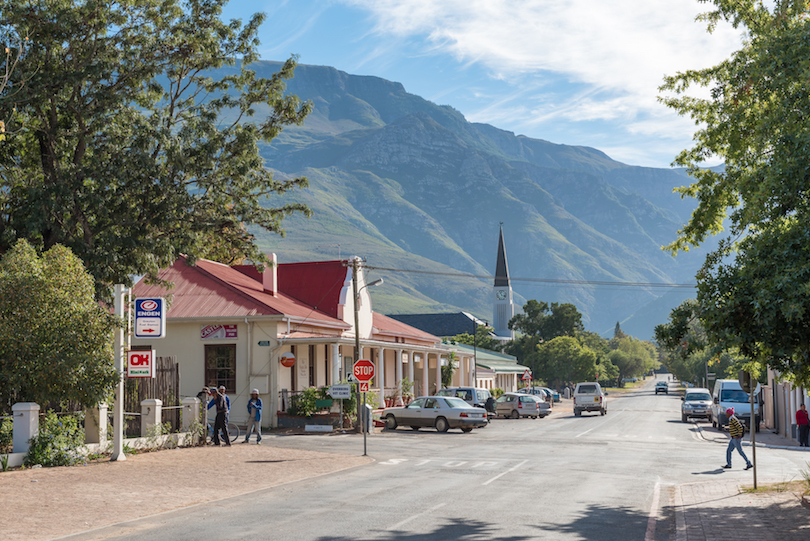
South Africa may be home to big cities known to many around the world, but the heritage and culture of this melting pot of a country can be best seen in the many villages and small towns scattered in the valleys and plains of its vast countryside, known as the ‘karoo’.
Dutch settlers, French refugees, British colonists, many other Europeans as well as the indigenous people of this country have contributed to a whole host of pretty settlements, some known for their incredible natural landscapes, others known for their relics of South Africa’s colonial past.
Farmland, national parks, vineyards, open wilderness, mountains and the majesty of the Atlantic Ocean are not only the backdrops to but also the beating hearts of these towns and have defined their populations from foundation to present day. Here are some of the most charming small towns in South Africa.
16. Nieu-Bethesda
 © Grobler Du Preez / Dreamstime
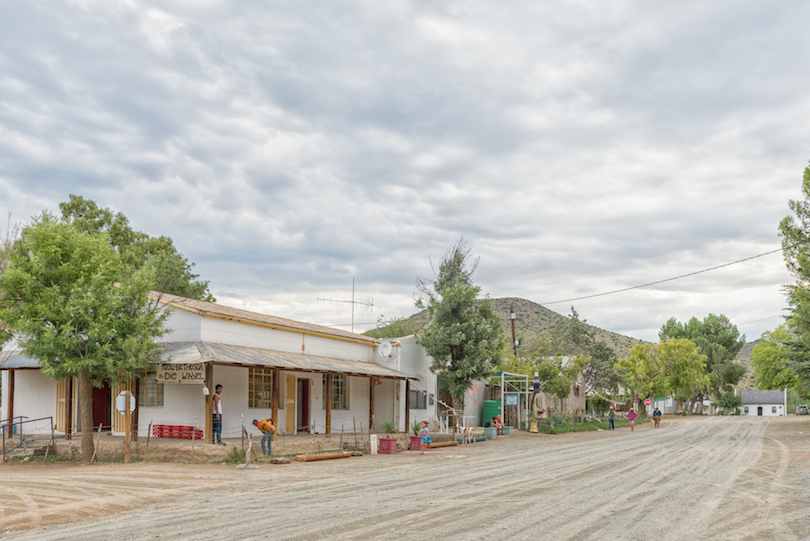
Though a historic town in itself Nieu-Bethesda, being founded in Eastern Cape province in 1875, is quite famous in South Africa for one tourist attraction in particular and that is The Owl Museum.
Founded by recluse outsider artist Helen Martins in the house she inherited from her parents, Martins began collecting statues of owls and other animals and decorating the house with them, inspired by biblical texts and poetry. According to her last wishes the house remains open for visitors, and is a great place to come for something that isn’t hiking or wine tasting.
15. Clarens
 © Grobler Du Preez / Dreamstime
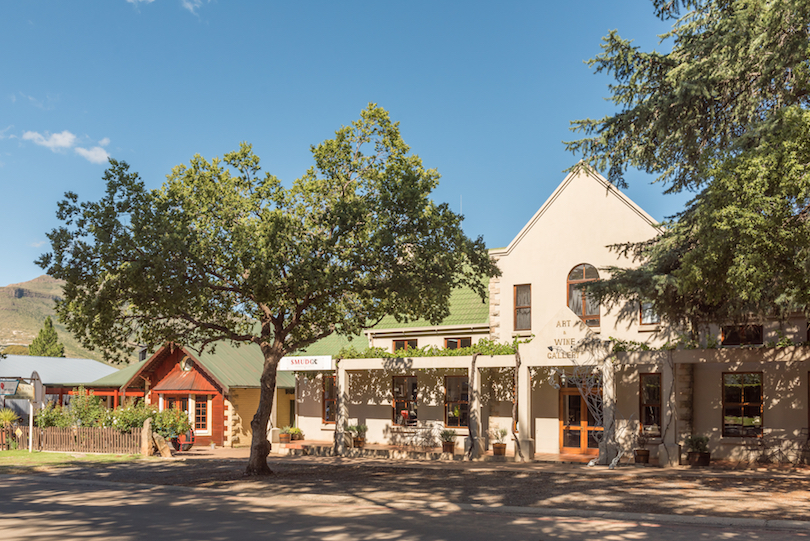
Dating back to the early 20th century, Clarens is located in the Free State province and is named after the Swiss town of the same name where prominent Boer figure and president of the Transvaal Republic (from 1952 until 1900) was in self-exile.
The village is surrounded by the Rooiberg mountain range and to the southeast are the purple and blue Maluti mountains, making for a particularly picture-perfect setting in verdant countryside. With the discovery of many dinosaur fossils here, Clarens is a great town to come to learn about dinosaurs and the geology of the Earth millions of years ago.
14. Paternoster
 © Grobler Du Preez / Dreamstime
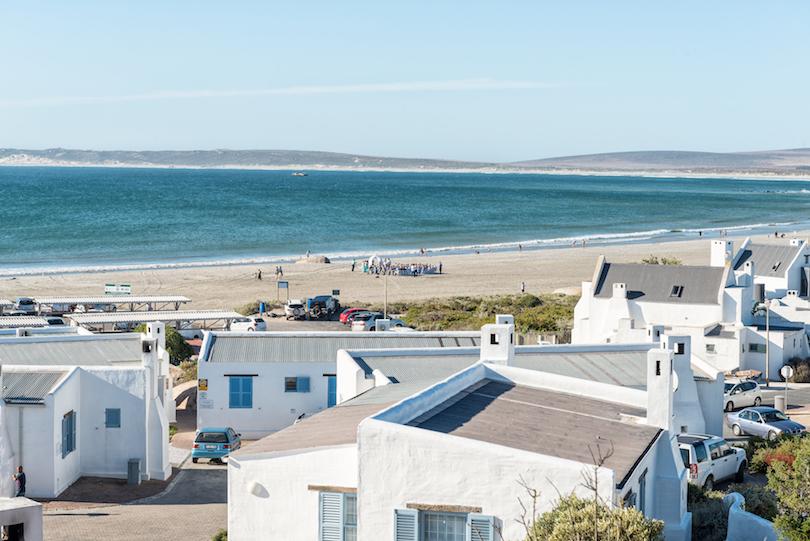
One of the oldest fishing villages in South Africa, the Western Cape town of Paternoster is known for its lobsters, white-washed fisherman’s cottages, and for its dramatic beach – considered one of the most beautiful on the country’s West Coast.
With the sea at their disposal, visitors here can snorkel, kayak, scuba dive and kitesurf, among other activities. At nearby Cape Columbine is South Africa’s last manually controlled lighthouse, which is a rare sight anywhere in the world.
13. Hogsback
 © Toscawhi / Dreamstime
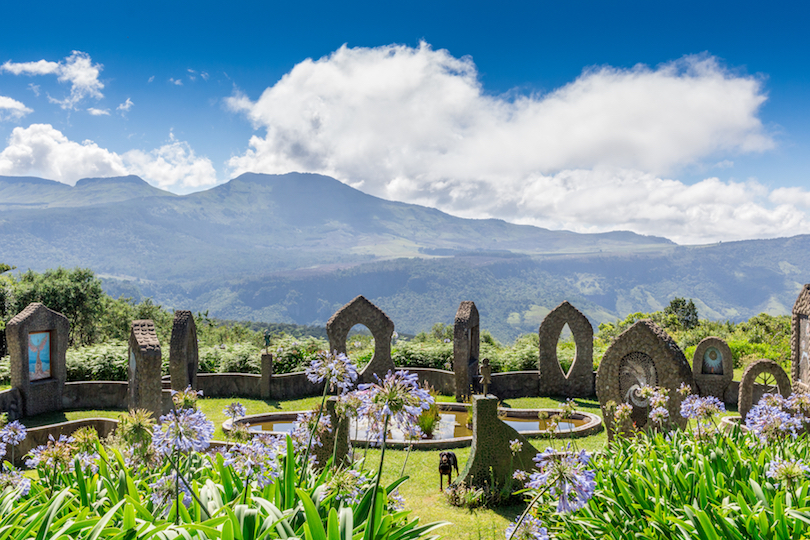
Situated in the Amathole Mountains of the Eastern Cape province, the small village of Hogsback is in prime position for exploring the surrounding area, forests, mountain trails and rivers that offer beautiful waterfalls and trout fishing.
Numerous hiking trails lead through forested areas and up into the hills, making this a popular destination for outdoors types. Interestingly it is said that J.R.R. Tolkien was inspired to create Middle Earth by the scenery around Hogsback – particularly ‘Mirkwood’ – since the writer was born in South Africa. True or not, here you can at least imagine!
12. Montagu
 © Grobler Du Preez / Dreamstime
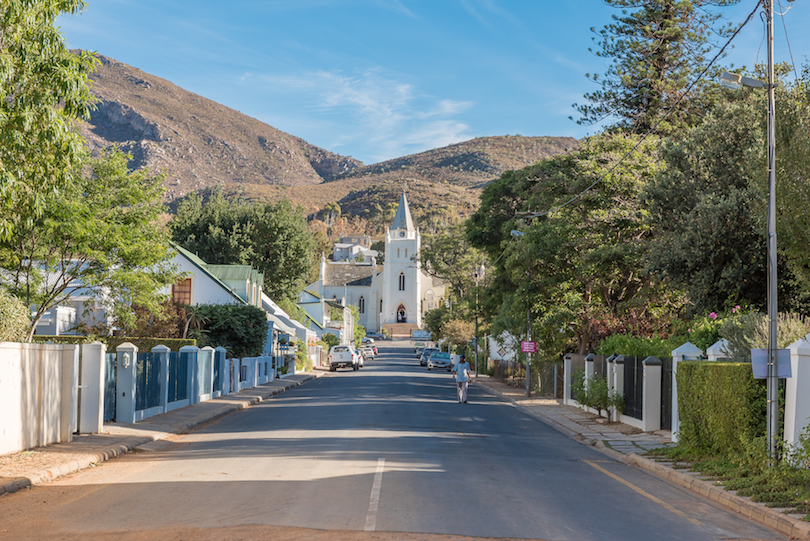
Founded on a farm called ‘Uitvlugt’ in 1851, the town of Montagu is a haven of residential perfection, with whitewashed houses and a very photogenic Dutch Reformed Church in town; elsewhere there’s the Montagu Museum which was founded in 1907 and is itself a National Monument.
It is located in Western Cape, and looks particularly charming in its position nestled at the foot of the Langeberg mountains. The rock formations around here make it very popular with rock climbers and hikers alike.
11. Cullinan
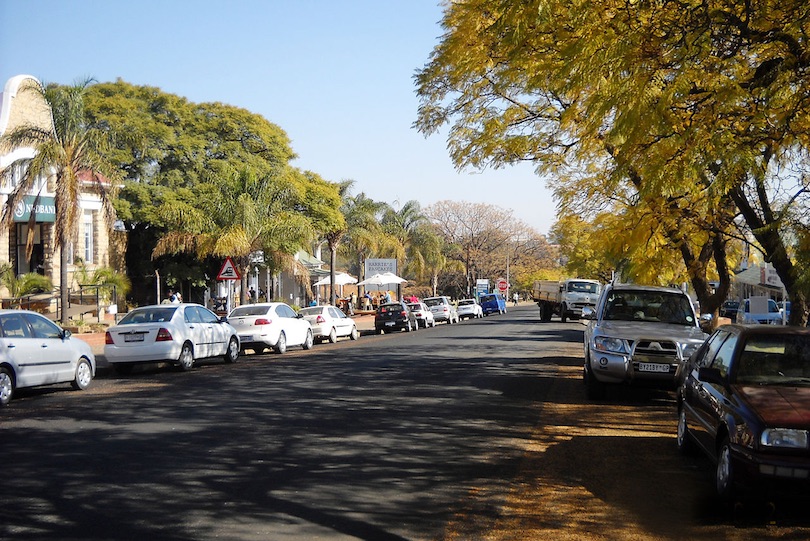
The heritage sandstone cottages of Cullinan in Gauteng province make wandering around this famous town a lovely experience, with many of the old buildings now playing host to restaurants and shops.
The town is named after diamond magnate Sir Thomas Cullinan (the largest diamond ever found is also named after him), and as such features tours of its mines and mining area. The rugged terrain surrounding Cullinan is also popular with more adventure minded visitors.
10. Genadendal
 © David Steele / Dreamstime
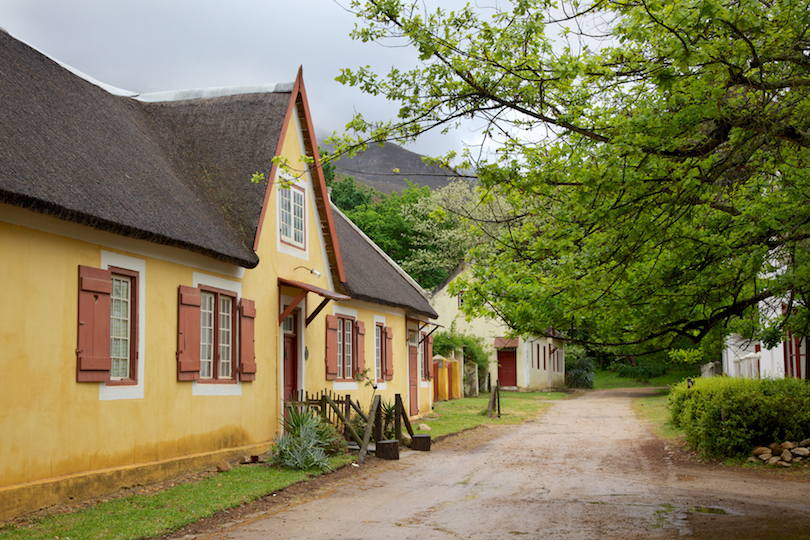
Meaning ‘Valley of Grace’ in Afrikaans, Genadendal is located at a dramatic location in the Riviersonderend Mountains, which is just 90 minutes’ drive from Cape Town. The town was originally called Baviaanskloof and was built up around the site of the oldest mission station in South Africa, the Moravian Mission Station which was founded here in 1738.
The sign outside the village invites people to ‘visit the historic square and mission and step back in time’ – so your time is best spent here wandering around this tiny but atmospheric slice of South Africa.
9. Clanwilliam
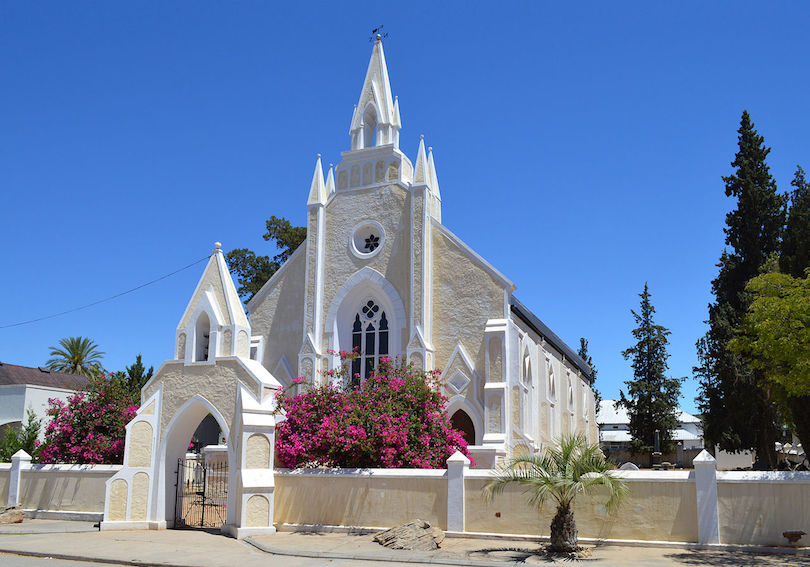
This town in the Olifants River Valley, Western Cape, with the Clanwilliam and Bulshoek dams, is particularly picturesque. With a population of 7,600, Clanwilliam is a small town that dates back to the 1660s when Dutch pioneers named the Olifants River after the numerous elephants they discovered on its banks.
The first farm arrived in the valley in 1732, when the town was known as Jan Disselsvlei, but the name change occurred in the early 1800s with the arrival of British colonists. Today Clanwilliam is known for its cluster of pretty buildings, including the 1864 Dutch Reformed Church, its rooibos tea, and the prime hiking in its nearby hills.
8. Greyton
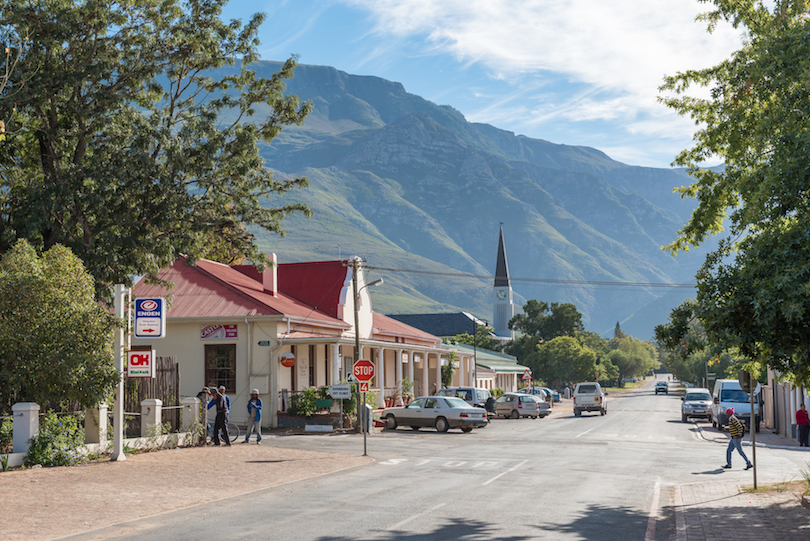 © Grobler Du Preez / Dreamstime
This little town is a rural charmer, where you might encounter a wandering donkey or cow as you explore this quintessentially South African countryside settlement. Like so many in the country, this place began life as an agricultural village in 1854 and soon grew into the town it’s known as today: quaint and quiet.
The town also has several nice restaurants and cafes to sample when the heat gets too much – a combination of old-world charm and modern conveniences that keeps even South Africans coming back for chilled weekend breaks.
7. Graaff-Reinet
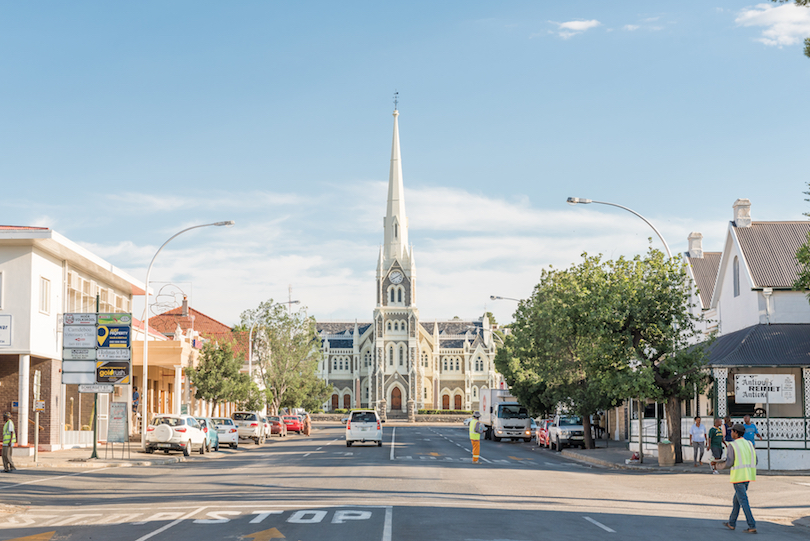 © Grobler Du Preez / Dreamstime
One of the oldest towns in South Africa, Eastern Cape’s Graaff-Reinet earns a place on this list because it is packed full of heritage buildings for you to admire on your visit. Relatively large compared to many other towns that we have featured, the residential buildings here are whitewashed and screaming for photos to be taken of them, particularly those on Parsonage Street and Somerset Street.
The Dutch Reformed Church, built in the late 19th century, towers above everything and is an impressive sight.
6. Jeffreys Bay
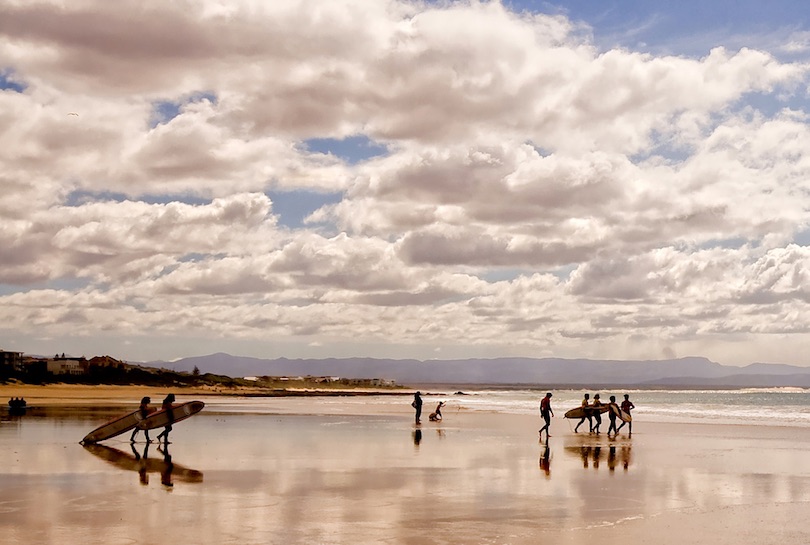
A coastal town in Eastern Cape province, Jeffreys Bay (more commonly known as ‘J-Bay’) has made a name for itself as something of a surf mecca; in fact, it’s known as the prime surfing location anywhere in South Africa.
There’s even a Surf Museum in town, complete with exhibitions and surfboard displays, tracing not only just the history of the sport but the development of surfing in the town itself; this grew out of the town’s hippie community of the 1960s and ‘70s, and now J-Bay finds itself one of the fastest growing urban areas in the country: surfing fans should visit now!
5. Pilgrim’s Rest
 © Vampy1 / Dreamstime
This town is the place to come if you want to learn more about the gold rush in South Africa, being the second (after Mac-Mac) to attract prospectors to find their fortunes in 1873. Not very much has changed here, so Pilgrim’s Rest – located in Mpumalanga province – is a very charming place to visit.
It’s practically a living museum, but there are also some quirky things to see here – one being the Royal Hotel, with a bar located in an ex-church which was transported here from Cape Town.
4. Prince Albert
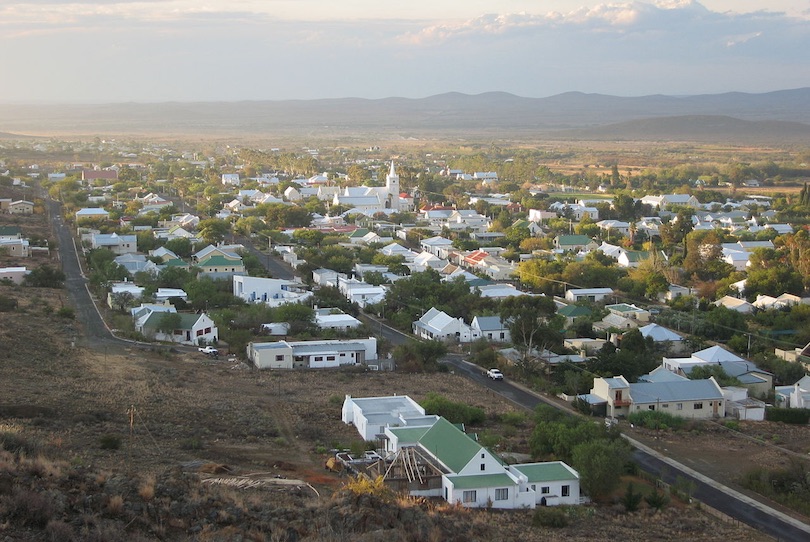
Located on the edge of the Great Karoo – an unimaginably vast wilderness area like Australia’s Outback – the town that would become Prince Albert was founded in 1762. Its long history means there are fine examples of Cape Dutch, Karoo and Victorian architecture scattered around town, with 13 of them designated as National Monuments.
Good quality restaurants, art galleries, and the very famous art deco Showroom theater. It’s not far from here to extremely scenic Swartberg Pass, a road which has run through the mountains of the same name since 1881.
3. Hermanus

This Western Cape town is famous for its wine, whale-watching and beaches. The most well known beaches in town are Voëlklip Beach and the broad Grotto Beach, which look out onto Walker Bay – a protected area that’s where up to 70 whales a time can be spotted.
Each year between August and September hundreds of whales travel to the shallow waters of Walker Bay, which has a place on the Top Ten Whale-watching Locations according to WWF. Combined with its dramatic coastal scenery this makes Hermanus a great place to visit.
2. Tulbagh
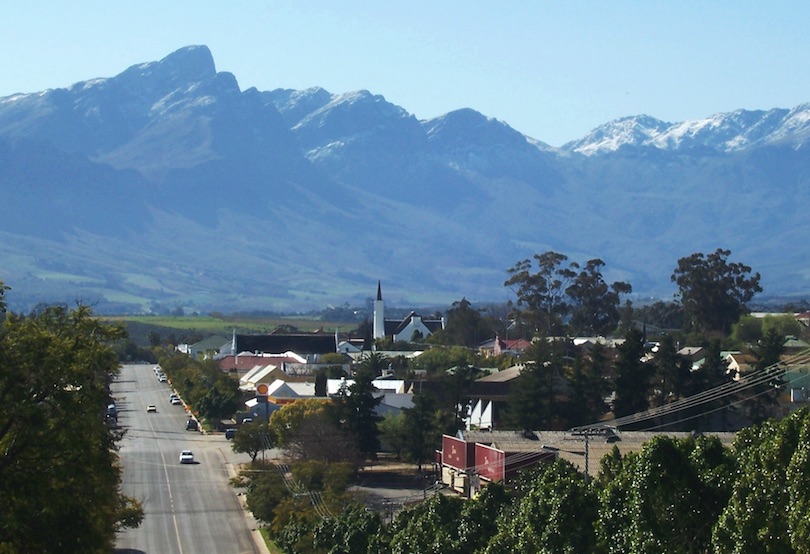
The old town of Tulbagh (it was founded in 1699) is a veritable mecca for those interested in being surrounded by historical architecture; having been home to an equal number of Huguenots and Dutch settlers, there are a mix of styles at work here and as such a long list of heritage buildings to discover and admire.
This town is something of a hidden gem, being as picturesque as it is with dramatic mountains looming in the distance – and it’s also a wine-producing region, which makes this beautiful town even better!
1. Franschhoek
 © Atosan / Dreamstime
Primarily famous for its centuries-old vineyards is the town of Franschhoek, but it’s the unspoiled Cape Dutch architecture that make this settlement one that is very charming to visit. The town gets its name from the Dutch ‘Fransche Hoek’ meaning ‘French Corner’, due to the fact that many French Huguenots fleeing religious persecution in Europe made their way here from 1688; the town is also one of the oldest in South Africa.
On a visit to this town, filled with pretty architecture, you can learn about the history of the French and Dutch colonial settlers as well as go on wine tours.