
Mother Earth clearly has a flair for dramatic architecture, and nowhere does she show off more spectacularly than with natural arches. These incredible rock formations take millions of years to create, carved by wind, water, and time into sculptures that would make any architect weep with envy.
From the red rock country of Utah to remote desert locations most people can’t even pronounce, these natural masterpieces prove that the planet’s best artist works without blueprints or construction crews. Some arches frame perfect views of surrounding landscapes, while others stand alone as monuments to geological patience and persistence, and these are the best of the best.
23. Owachomo Bridge, Utah
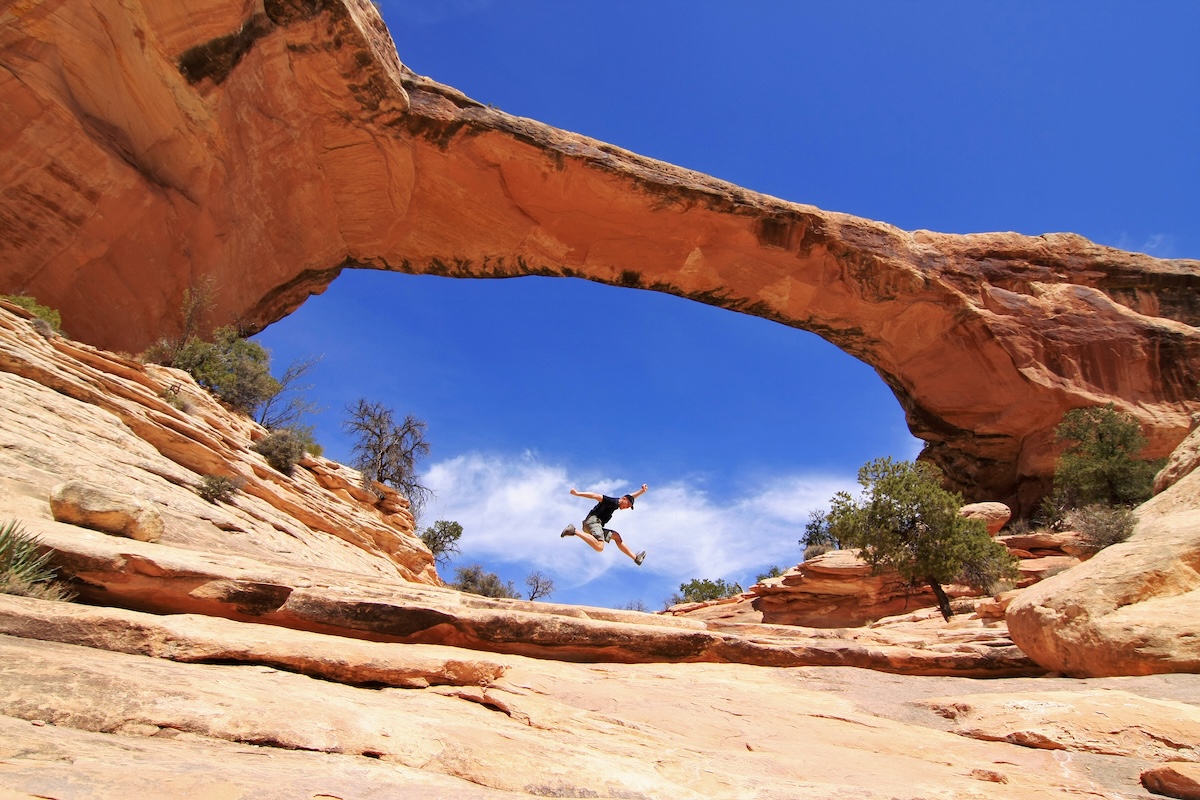
This graceful sandstone span in Natural Bridges National Monument gets its name from a Hopi word meaning “rock mound,” though locals often call it the most photogenic arch in southeastern Utah. Owachomo stretches 180 feet across and stands 106 feet high, creating elegant proportions that photographers absolutely love.
The bridge sits at the end of an easy hiking trail that winds through juniper and pinyon pine forests. Owachomo’s slender profile makes it appear almost delicate, though this “fragile” arch has withstood countless desert storms and will likely outlive several more generations of admirers.
22. Moon Hill, China

This massive limestone arch near Yangshuo creates a circular opening that frames the sky so perfectly it earned its celestial name. The arch sits 380 meters above sea level and requires a steep climb through lush subtropical vegetation, but the panoramic views of the Li River valley make every sweaty step worthwhile.
Local rock climbers consider Moon Hill a premier destination, with routes that challenge everyone from beginners to experts. The surrounding karst landscape features countless other limestone formations, but none quite match Moon Hill’s perfect symmetry.
21. Ayres Natural Bridge, Wyoming

This red sandstone arch spans La Prele Creek in a setting so picturesque that early settlers established a park around it in 1920. The bridge stretches 30 meters across and rises 15 meters above the creek, creating a natural shelter that Native Americans used for centuries before European arrival.
Ayres Natural Bridge proves that not all impressive arches require desert settings or challenging hikes. The creek flowing beneath adds a soothing soundtrack, while cottonwood trees provide shade during hot Wyoming summers when temperatures can reach uncomfortable levels.
20. Durdle Door, England

This limestone arch along Dorset’s Jurassic Coast juts into the English Channel, creating one of Britain’s most photographed coastal formations. The arch formed over millions of years as waves carved through layers of Portland limestone, leaving behind this spectacular natural gateway that frames endless ocean views.
The beach beneath Durdle Door attracts swimmers brave enough to handle chilly English waters, while the clifftop hiking trail offers spectacular views along the UNESCO World Heritage coastline. Nearby Lulworth Cove provides additional geological wonders, but Durdle Door remains the star attraction.
19. Acacus Tedrart Arch, Libya

Deep in the Saharan wilderness of the Acacus Mountains, this sandstone arch dominates. The arch sits within a UNESCO World Heritage site that protects thousands of ancient rock art paintings depicting when this desert region supported abundant wildlife and human settlements.
Reaching this remote arch requires serious desert expedition planning, but adventurous travelers find themselves virtually alone with one of Africa’s most spectacular geological formations. Political instability has made visits challenging recently, adding to this arch’s mystique and exclusivity.
18. London Bridge, Australia

This towering limestone stack along Victoria’s Great Ocean Road once connected to the mainland before the ocean decided to redecorate in 1990. The dramatic collapse stranded two tourists on the newly created island, requiring helicopter rescue and creating international headlines.
The Port Campbell National Park setting showcases the raw power of ocean erosion, where waves continuously sculpt the coastline into new formations. Nearby attractions include the Twelve Apostles and Loch Ard Gorge, but London Bridge offers the most compelling story of nature’s unpredictable timing and tourists’ questionable decision-making skills.
17. Shegeng Chuandong Arch, China

This colossal sandstone arch in Guangxi Province spans an incredible 400 feet, making it one of the world’s largest natural arches. The opening reaches heights of 280 feet, creating a massive stone gateway through karst mountains that tower over traditional Chinese villages below.
The surrounding landscape features countless other limestone formations, caves, and underground rivers that create a geological wonderland. Tourism remains limited due to the remote location, preserving the authentic rural atmosphere where water buffalo still plow fields and traditional architecture dominates village skylines rather than modern development.
16. Natural Bridge, Virginia

This 215-foot limestone span holds the distinction of being owned by Thomas Jefferson, who purchased the formation and surrounding land in 1774 for twenty shillings. Jefferson called it “the most sublime of nature’s works” and carved his initials into the rock wall, proving that even founding fathers couldn’t resist a little vandalism.
The Monacan Indian Nation considered the bridge sacred long before European arrival, believing it connected earth and sky in a spiritual gateway. Today, visitors can walk beneath the arch and explore surrounding caverns, though the commercial development surrounding this natural wonder sometimes distracts from Jefferson’s “sublime” description.
15. Darwin’s Arch, Galapagos

This dramatic volcanic arch rises from the Pacific Ocean near Darwin Island, creating a natural monument to the scientist who revolutionized our understanding of evolution. The arch serves as a cleaning station where hammerhead sharks gather in massive schools while manta rays glide through the surrounding waters.
The remote location requires serious diving expedition planning, but underwater photographers consider Darwin’s Arch the holy grail of marine encounters. Whale sharks, dolphins, and countless tropical fish species congregate around the arch’s volcanic base, creating biodiversity hotspots like no other.
14. The Cathedral, Tadrart Rouge, Algeria

This sandstone arch rises from Algeria’s red desert landscapes in the Tadrart Rouge region with cathedral-like proportions that inspired its religious name. The arch’s soaring heights and intricate rock formations showcase millions of years of wind erosion, while ancient petroglyphs decorate nearby canyon walls with artwork predating written history by thousands of years.
The surrounding Saharan wilderness requires experienced desert guides and careful expedition planning. The arch’s isolation means visitors often experience complete solitude among geological formations that demonstrate the desert’s incredible artistic capabilities when given enough time and patience.
13. Mesa Arch, Utah

This delicate sandstone arch in Canyonlands National Park transforms into pure magic during sunrise when the rock glows brilliant orange and frames distant mountain peaks perfectly. Photographers arrive in darkness to capture the brief moments when sunlight illuminates the arch’s underside, creating images that launched thousands of Utah tourism campaigns and desktop wallpapers.
The easy hiking trail makes Mesa Arch accessible to most visitors, though sunrise photography sessions can resemble wildlife documentaries about territorial behavior among camera equipment.
12. Arch of Cabo San Lucas, Mexico

This granite formation marks the exact point where the Pacific Ocean meets the Sea of Cortez, creating one of Mexico’s most recognizable landmarks. The arch rises from crystal-clear waters that Jacques Cousteau called “the world’s aquarium” due to incredible marine biodiversity including sea lions, tropical fish, and migrating whales during winter months.
Water taxis ferry visitors from Cabo’s marina to the arch’s base, where snorkeling and swimming opportunities abound in protected waters. The adjacent beach, accessible only by boat, offers secluded relaxation away from Cabo’s party atmosphere.
11. Double-O-Arch, Utah

This unique formation in Arches National Park features two arches stacked vertically, creating a geological oddity that defies typical arch formation patterns. The larger lower arch spans 71 feet while the smaller upper opening adds an extra surprise for hikers who make the moderately challenging trek through desert terrain to reach this remote formation.
The trail to Double-O Arch passes several other spectacular formations including Landscape Arch, creating a greatest-hits tour of geological wonders. Desert wildflowers bloom spectacularly during spring months, adding colorful contrast to red sandstone formations.
10. Great Arch of Tabuk, Saudi Arabia

This massive sandstone arch in northwestern Saudi Arabia spans an incredible 300 feet and rises 250 feet above the desert floor. It sits within landscapes that rival Utah’s red rock country, though political restrictions have kept this wonder largely hidden from international travelers until recent tourism developments.
Ancient trade routes passed beneath the arch for centuries, providing shelter and landmarks for caravans crossing the Arabian Peninsula. Saudi Arabia’s new tourism initiatives finally allow international visitors to experience these incredible formations that remained largely unknown outside geological circles for decades.
9. Morning Glory Natural Bridge, Utah

This graceful arch earned its name from the delicate morning glory flower shape created by its opening, though reaching it requires a challenging hike through rugged canyon terrain that tests most visitors’ determination. The bridge spans 243 feet and stands 94 feet high, creating impressive proportions that reward hikers willing to navigate boulder fields and wash crossings.
Flash flood dangers make timing crucial for this adventure, while summer temperatures can reach dangerous levels in the exposed canyon environment. Spring and fall offer the best conditions for experiencing this hidden gem safely.
8. Tianmen Shan, China

This colossal natural archway cuts through Tianmen Mountain near Zhangjiajie, creating what locals aptly call “Heaven’s Gate.” The arch measures 430 feet high and 190 feet wide, making it one of the world’s largest natural arches. Getting there involves a white-knuckle cable car ride followed by climbing 999 steps carved directly into the cliff face.
Daredevils have flown planes through the opening during publicity stunts, though most visitors settle for walking through this geological masterpiece. The surrounding Zhangjiajie region inspired the floating mountains in Avatar, making this entire area something to behold.
7. Rainbow Bridge, Utah

This sandstone giant spans 275 feet and rises 290 feet above the canyon floor, creating the world’s largest natural bridge and a sacred site for several Native American tribes. The arch sits in one of America’s most remote locations, accessible only by boat across Lake Powell or challenging multi-day hiking expeditions through desert wilderness that tests even experienced backpackers.
The Navajo Nation considers Rainbow Bridge sacred and requests visitors observe respectful behavior around this geological cathedral. The arch’s perfect symmetry and massive scale create an almost spiritual experience that justifies the significant effort required to reach it.
6. Arch at Praia da Marinha, Portugal

This golden limestone arch along Portugal’s Algarve coast creates one of Europe’s most photographed beach scenes, where turquoise waters lap against honey-colored cliffs topped with Mediterranean vegetation. The arch frames a perfect crescent beach that regularly appears on “world’s best beaches” lists, though getting down to the sand requires navigating steep clifftop paths.
The surrounding coastline features numerous sea caves, hidden coves, and additional rock formations that make this area a paradise for coastal exploring. Boat tours offer different perspectives of the arch while providing access to otherwise unreachable beaches.
5. Pravcicka Brana, Czechia

This massive sandstone arch in Bohemian Switzerland National Park spans 85 feet and stands as Europe’s largest natural arch. The arch gained international fame, appearing in the Chronicles of Narnia films, though its dramatic beauty attracted visitors long before Hollywood discovered its cinematic potential.
Dense forests surround the arch, creating mystical atmospheres enhanced by frequent morning fog that swirls through ancient trees. The hiking trail winds through rock labyrinths and past medieval castles, making the journey as spectacular as the destination.
4. Landscape Arch, Utah

This impossibly delicate ribbon of stone stretches 306 feet across Devil’s Garden in Arches National Park, creating the longest natural arch in North America. The formation appears so fragile that strong winds seem capable of toppling it, though geological surveys suggest this slender bridge will survive several more centuries of desert weathering.
Recent rock falls have closed trails that once allowed closer approach, but the current viewing area still provides spectacular perspectives of this geological marvel. The arch demonstrates nature’s incredible engineering capabilities, supporting its own weight despite being only six feet thick at its narrowest point.
3. Pont d’Arc, France

This limestone giant spans 200 feet over the Ardèche River in southern France, creating a natural bridge that prehistoric humans painted with some of Europe’s oldest cave art in nearby Chauvet Cave.
Canoe trips through the arch offer unique perspectives while providing access to crystal-clear swimming holes and riverside beaches perfect for picnicking. The surrounding region features numerous other caves, hiking trails, and charming Provençal villages that make this area ideal for extended exploration.
2. Aloba Arch, Chad

This absolutely massive sandstone arch rises from the remote Sahara Desert in Chad’s Ennedi region, spanning an incredible 400 feet and reaching heights of 394 feet, making it potentially the world’s largest natural arch. The formation sits in landscapes so isolated that few humans have ever witnessed its incredible proportions firsthand.
Reaching Aloba requires serious expedition planning through one of Africa’s most challenging desert regions, where political instability and extreme remoteness limit access to only the most determined adventurers. This geological giant remains largely unknown despite its record-breaking dimensions.
1. Delicate Arch, Utah

This graceful sandstone sculpture has become Utah’s unofficial symbol, appearing on license plates and tourism campaigns, yet somehow retains its magic despite overwhelming popularity. The arch stands 65 feet tall and spans 45 feet, creating perfect proportions that photographers have captured from every conceivable angle since the 1940s.
The three-mile round-trip hike crosses slickrock terrain that provides dramatic views of the surrounding red rock wilderness and distant snow-capped peaks. Despite heavy visitation, standing beneath this iconic formation still creates those spine-tingling moments that remind you why some geological masterpieces achieve legendary status and inspire people to travel thousands of miles just to witness their beauty.