
You spot it before you even know what you’re looking at. A silhouette on the horizon—stone, spire, and sky tangled together—rises out of flat sand and shifting water, almost too sharp and deliberate to be real. And then, the scale hits you. Mont-Saint-Michel perches off Normandy’s coast, a granite island topped by a medieval abbey that’s pulled travelers in for over a thousand years.
More than three million people show up every year, making this the most-visited spot in France outside Paris. The reason’s obvious. Mont-Saint-Michel is where wild tides, improbable architecture, and centuries of human stubbornness all collide in one dramatic outline. You’ll wind through fortified gates, climb steep cobblestone lanes, pass stone houses and tiny crêperies, and finally reach the abbey at the top, with wide-open views of the bay.
The whole experience is intensely physical. You walk this place. You feel the pitch of the streets, catch the wind rolling off the flats, and notice how the light changes across the wet sand at low tide. Here’s what you’ll want to know before you go—tidal quirks, village corners, and, honestly, where to stop for a decent meal.
A Tidal Island Between Normandy And Brittany
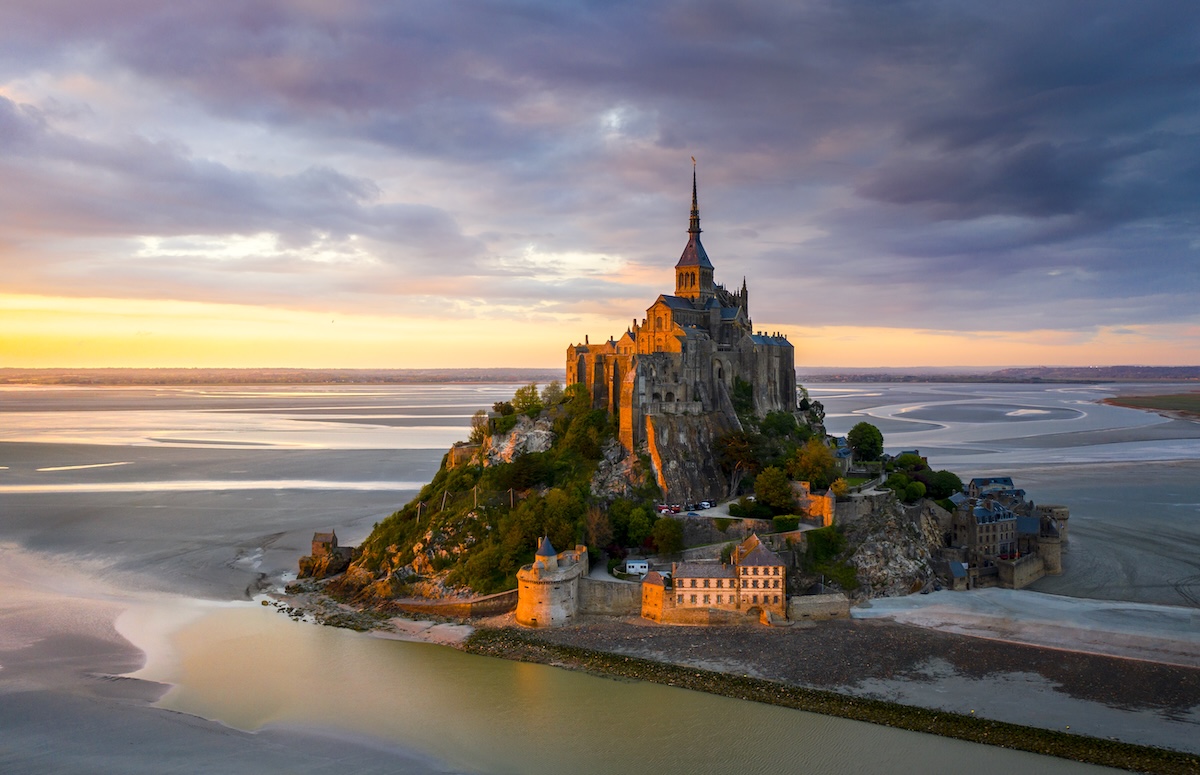
Mont-Saint-Michel sits about a kilometer off France’s northwest coast, right at the mouth of the Couesnon River near Avranches. Technically, it’s Normandy’s, but the Brittany border is so close that both regions have fought over cultural bragging rights for ages. The river used to shift its course, and local legend says whichever side the Couesnon hugged, that’s who got to claim the mount.
The tides here are wild—some of the most extreme in Europe. Water levels swing up to 14 meters (that’s around 46 feet). When the tide’s out, the bay turns into a huge stretch of wet sand and exposed mudflats. When it’s in, water completely surrounds the island, and the whole place transforms. Medieval pilgrims called it “Saint Michael in peril of the sea,” and honestly, that still fits when you watch the water come charging back.
Architect Dietmar Feichtinger designed the pedestrian bridge that now links the island to the mainland—it opened in 2014. You’ll park about 2.5 kilometers away, then walk or grab a shuttle. This bridge is part of a bigger effort to bring back the tidal flow after years of silting from the old causeway. It’s working. The mount feels like a true island again, especially at high tide. Checking the tide schedule isn’t just a suggestion; it’ll decide what you see and when you see it.
What To See As You Walk Up Through The Village
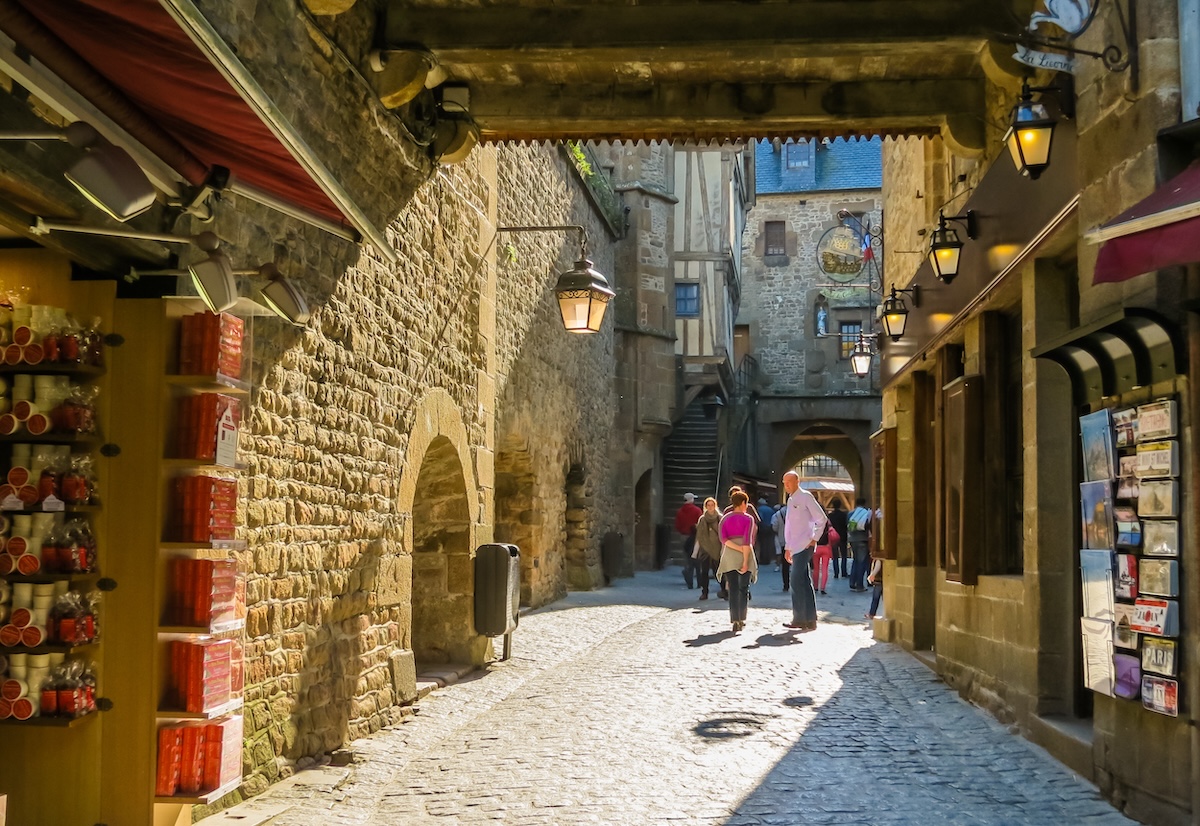
You step into Mont-Saint-Michel through the Porte de l’Avancée, the first of several thick medieval gates. These walls actually defended the island from English sieges during the Hundred Years’ War—they weren’t just for show. Arrow slits, guard towers, and heavy stone ramparts ring the lower edge, and you can wander along some stretches for wide-open bay views. Over 60 buildings here count as historic monuments, so honestly, even the tiniest details along the way feel loaded with history.
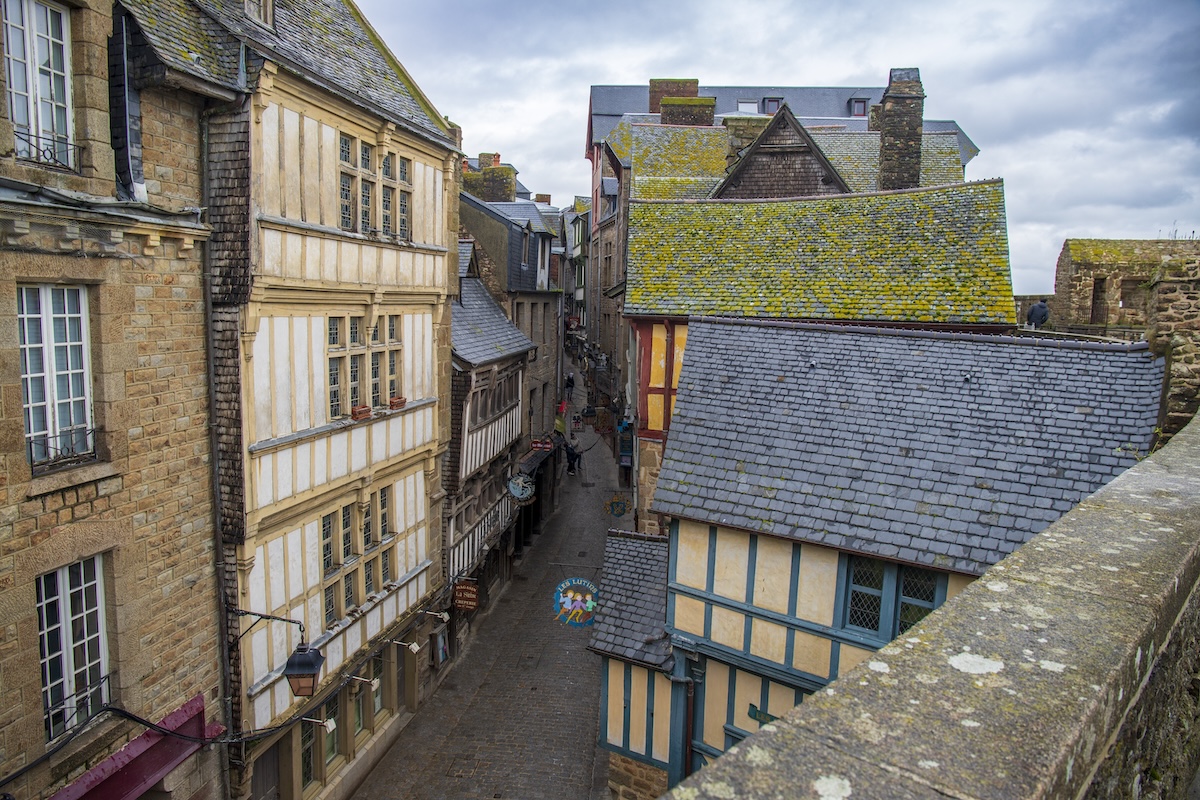
Once past the gates, the Grande Rue pulls you uphill through a narrow tunnel of stone houses, a bunch of them from the 15th or 16th century. At street level, you’ll spot little shops selling butter cookies, postcards, and that famous salt-marsh lamb. Up above, timber beams and weathered granite fronts hint at what the village looked like before crowds started showing up. If you keep glancing upward while you walk, the abbey spire pops in and out between rooftops, almost nudging you onward.
La Mère Poulard sits near the bottom of the main street, serving its fluffy, almost legendary omelet since 1888. It’s a bit of an institution, but wow, those prices. If you want something quieter, smaller crêperies and cafés hide along the ramparts, offering bay views and a break from the crowds. Early mornings or after 5 p.m., the lanes calm down a lot. That change—from the midday crush to the hush of dusk—sticks with you long after you leave.