
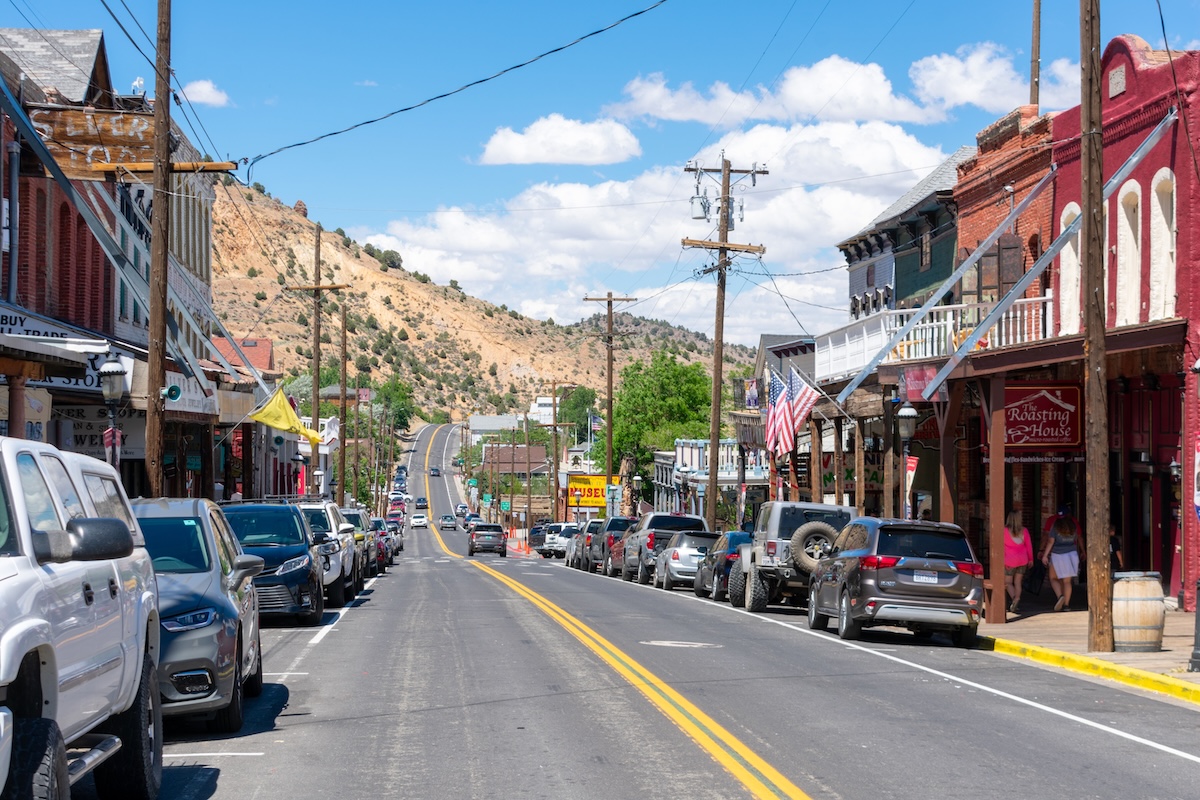
Somewhere in the high desert east of the Sierra Nevada, a narrow main street lined with Victorian-era facades and wooden boardwalks runs along the slope of Mount Davidson. The saloons still pour drinks. The storefronts still do business. The mines that once made this place the wealthiest city in the American West still tunnel beneath your feet.
Virginia City, Nevada, sits about 35 miles southeast of Reno at roughly 6,200 feet in elevation. Fewer than 900 people live here year-round, but the town draws visitors steadily, especially from late spring through fall. If you’re planning a day trip or a slow weekend in northern Nevada, this old boomtown offers something hard to find elsewhere: a 19th-century mining city that never got bulldozed, rebuilt, or turned into a theme park. The buildings are original. The history seeps from the walls. And the town still works as a real, if small, community.
It’s not just one attraction that makes Virginia City worth the drive. The real draw is walking through a streetscape that looks and feels so much like it did in the 1870s, when silver money was reshaping this whole part of the West.
Why This Historic Town Still Feels Authentic
The entire Virginia City Historic District holds National Historic Landmark status—so you know the scale of what’s been preserved here isn’t ordinary. C Street, the main commercial stretch, often lands on lists of top historic main streets in the country, and honestly, it deserves the praise.
You pick up on it the moment you step onto the boardwalk. The storefronts aren’t reproductions. They’re the same brick and wood structures that went up during the Comstock-era boom, patched and cared for over the years instead of being torn down. Saloons along C Street still have original bars, tin ceilings, and floors smoothed by more than a century of boots.
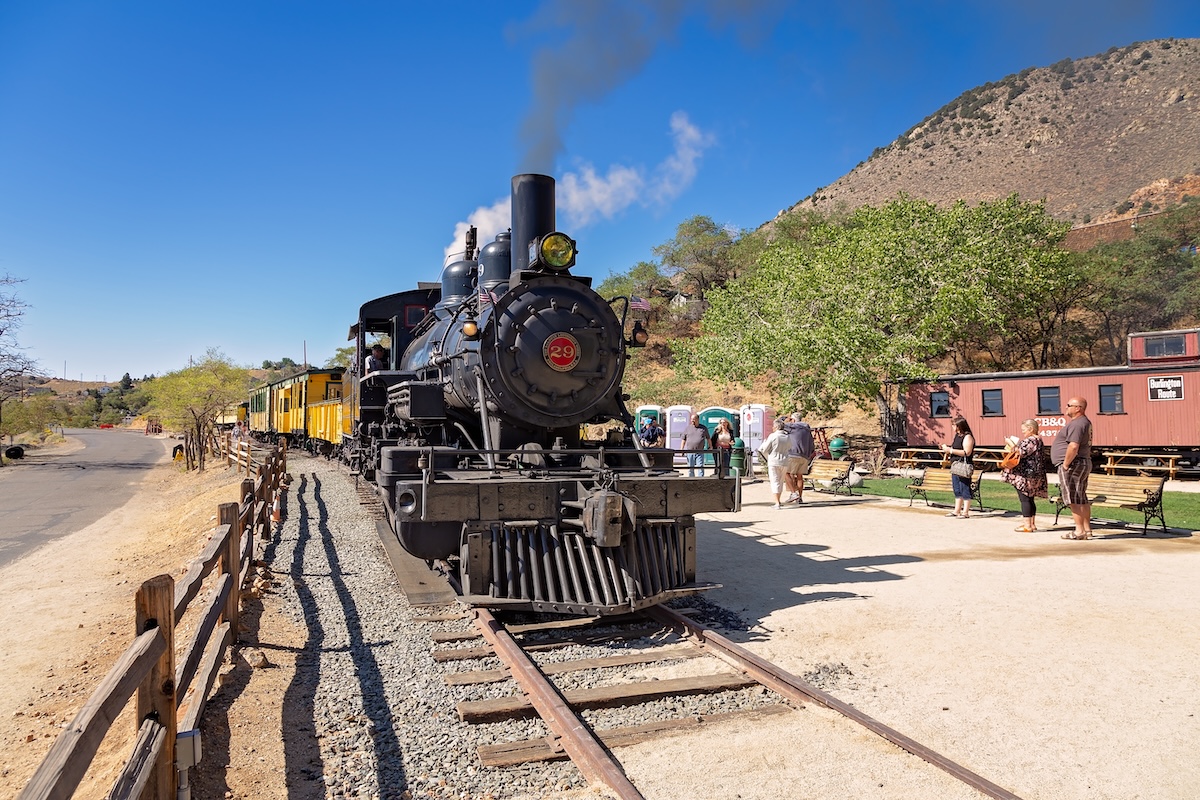
The town never got polished into a museum piece. Some shops are still run by miners’ descendants. Restaurants range from laid-back grills to a dining room inside the Gold Hill Hotel, which claims to be the oldest continuously operating hotel in Nevada. You can hop on the Virginia and Truckee Railroad and ride the same route that once hauled ore and passengers between Virginia City and Gold Hill.
What really grounds the place is its size. You can walk end to end in half an hour, and the dense cluster of preserved buildings means you’re never far from something genuinely old. There aren’t any strip malls on the edges, and chain restaurants haven’t crowded in. The dry hills dropping away toward the valley below serve as a reminder that you’re standing somewhere shaped by geography and mining, not by modern sprawl.
The Comstock Lode And The Boom Years
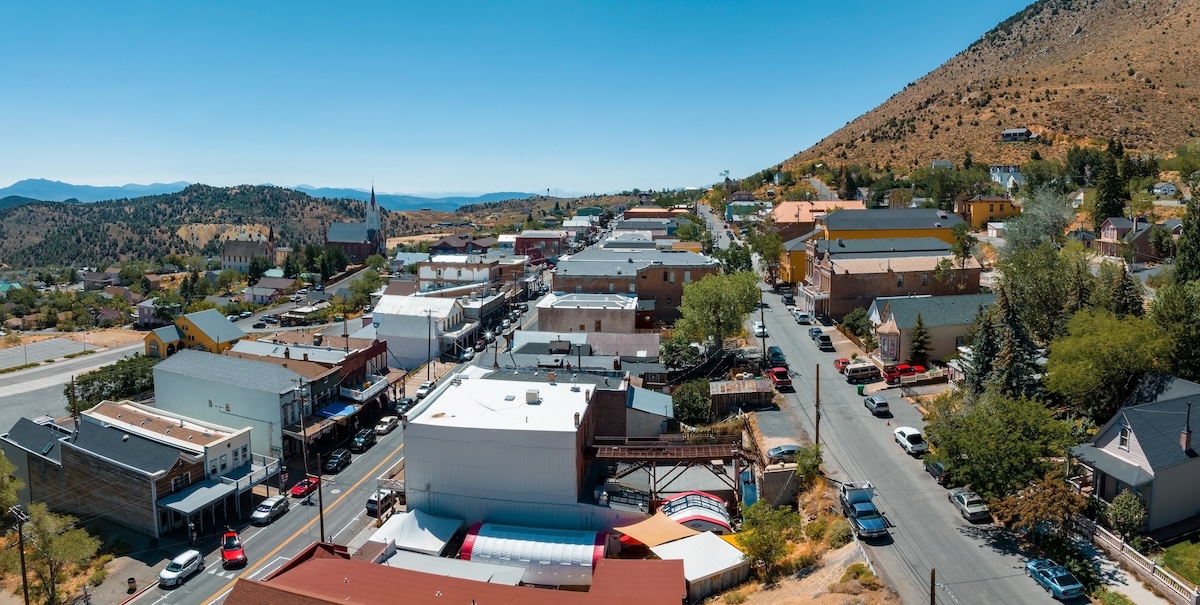
In 1859, prospectors digging around Gold Canyon on the eastern slope of Mount Davidson stumbled onto something wild. They didn’t just find another placer deposit—they uncovered the Comstock Lode, the first big silver ore body in the United States. Word got out fast, and suddenly thousands of miners, speculators, and merchants were pouring in, almost overnight.
By the mid-1870s, Virginia City had ballooned to at least 25,000 residents. It was actually one of the biggest cities west of the Mississippi back then. The population boom helped push Nevada into statehood in 1864, just five years after the discovery. From 1859 to 1919, mines along the Comstock Lode churned out more than $700 million in gold and silver—money that bankrolled a lot of San Francisco’s early growth and even shaped the national economy during and after the Civil War. It’s kind of wild to think about that much wealth coming out of the ground.
Evidence of that era is still everywhere. The Fourth Ward School, a gorgeous four-story Second Empire building finished in 1876, is now a museum. You can tour the Mackay Mansion, where silver magnate John Mackay once lived. Mine shafts run more than 3,000 feet below the streets, and a few spots offer underground tours. If you’re even a little claustrophobic, it’s a trip—but it really gives you a sense of the scale.
The boom ran for about two decades before the richest veins dried up. Virginia City shrank fast, but people never completely left. That ongoing life gives the town a lived-in feel—something you just don’t get in the true ghost towns scattered all over the Nevada desert.