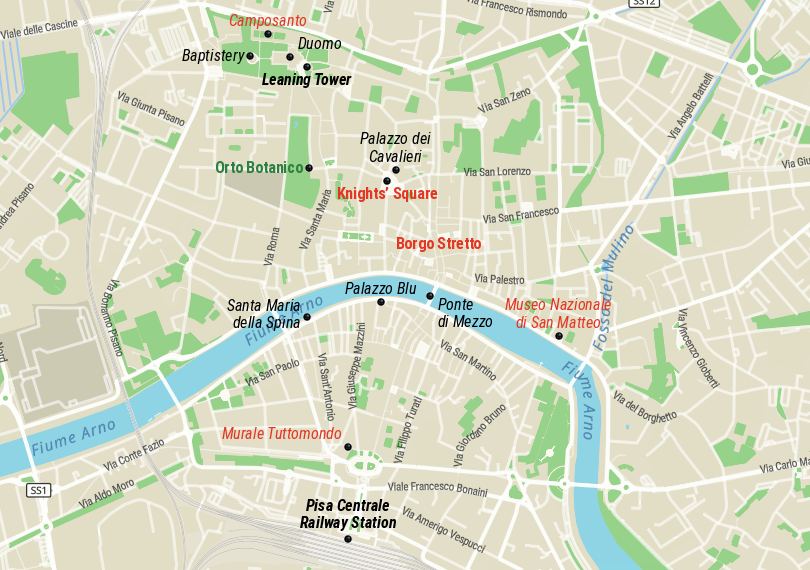
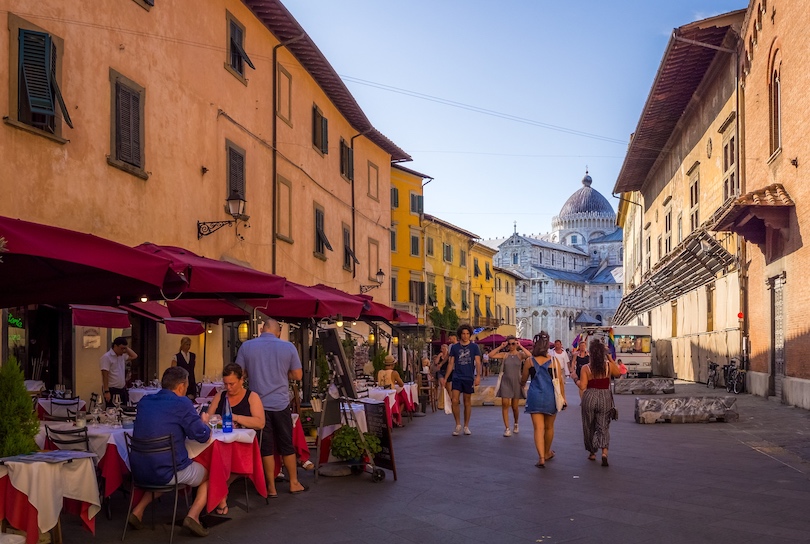
Famous for one of the world’s most recognizable landmarks, this historic city has far more to offer than most visitors realize. Beyond the crowds gathering around its iconic tower, there’s a relaxed atmosphere, elegant architecture, and a lively local energy shaped by its large student population.
Located in western Italy, Pisa was once a powerful Roman port and major maritime republic. Its wealth helped create magnificent churches, palaces, and piazzas, most famously in the Piazza dei Miracoli, home to the Leaning Tower of Pisa, cathedral, baptistery, and Camposanto cemetery.
Outside the main tourist area, Pisa feels noticeably calmer and more authentic. Gothic churches, lively bars, local restaurants, and nearby beaches give the city a charm that deserves far more than just a quick afternoon visit.
17. Museo Nazionale di San Matteo
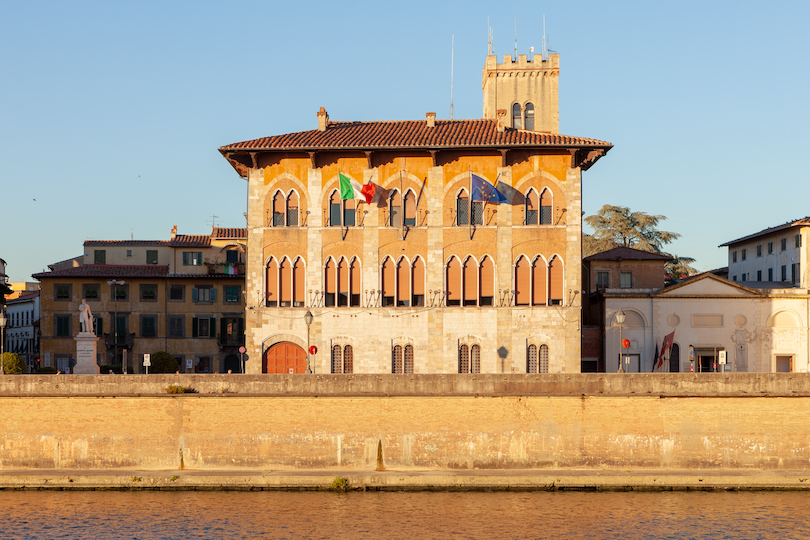
Packed with interesting old religious artifacts and artworks, the Museo Nazionale di San Matteo lies along the north bank of the Arno River. Set just a short stroll from the central Ponte di Mezzo, its rich collection occupies part of a Benedictine monastery.
Absolutely fascinating to peruse, its rare sculptures, ceramics and illuminated manuscripts cover the twelfth to eighteenth centuries. Its glittering treasures also include some phenomenal paintings and masterpieces by Donatello and Nicola Pisano among many others. Intricately carved and colorfully painted crucifixes can also be found in the rooms bordering the lovely building’s quiet little cloister.
Although it boasts so many breath-taking artworks, the museum’s galleries are unfortunately seldom visited by tourists. This actually made it even more special to us as there weren’t all the large crowds that you’d usually find in Florence for instance.
16. Ponte di Mezzo
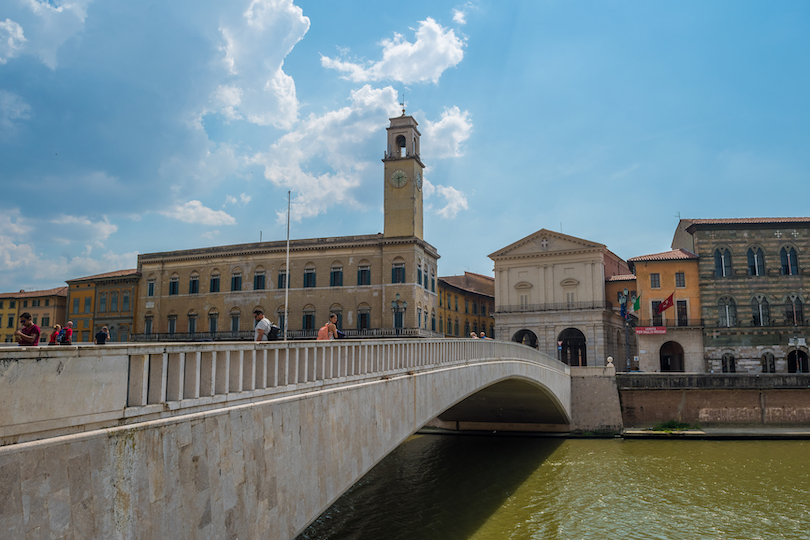
While the simple bridge isn’t much to look at, Ponte di Mezzo provides arguably the best views over the Arno. Other than snapping some photos and selfies here, it is also the main way to get from one side of the city to the other.
Over the millennia, countless wood and brick bridges have spanned the river with the latest one only dating to 1950. After being destroyed during WWII, it was built out of reinforced concrete and coated in shining white Verona stone. From atop it, you can gaze over the colourful rows of buildings, gently curving their way alongside the reflective river. They look particularly majestic at sunset or softly lit up at night.
Each June, the bridge hosts the exciting Gioco del Ponte or Battle of the Bridge historic re-enactment. Originally fought with clubs and shields, this now sees costume-clad citizens attempt to push an iron cart past their opponents to the other side of the bridge. Accompanying the slow-moving show is an elaborate parade with people marching and milling about in medieval costumes.
15. Marina di Pisa
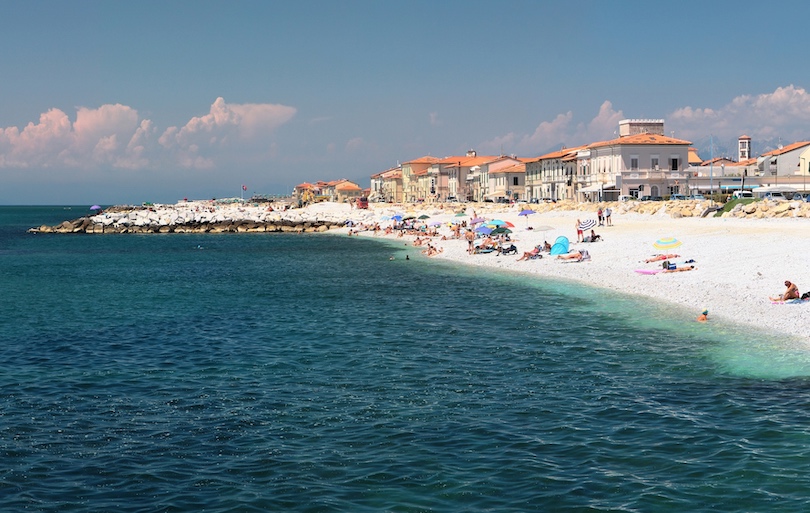
Although people don’t usually associate it with the sea, it takes just forty minutes to reach the pretty Marina di Pisa. Once you’ve seen the Leaning Tower and Duomo, it makes for a nice change from the historic center.
Perched alongside the Mediterranean, the small settlement was developed as a seaside resort in the late 1800s. Since then, both locals and tourists alike have flocked here in summer for its promenade, pebble beach and sea views. It has a very relaxed ambience while some attractive Art Nouveau villas can also be found alongside its yacht-filled marina.
Asides from taking the bus or car, you can also cycle along the Arno to the marina at its mouth. Once you arrive after your picturesque ride, there are plenty of seafront restaurants and cafes to check out. After days spent exploring old Italian cities, we thought its little beach was a great place to relax and unwind.
14. Palazzo dei Cavalieri
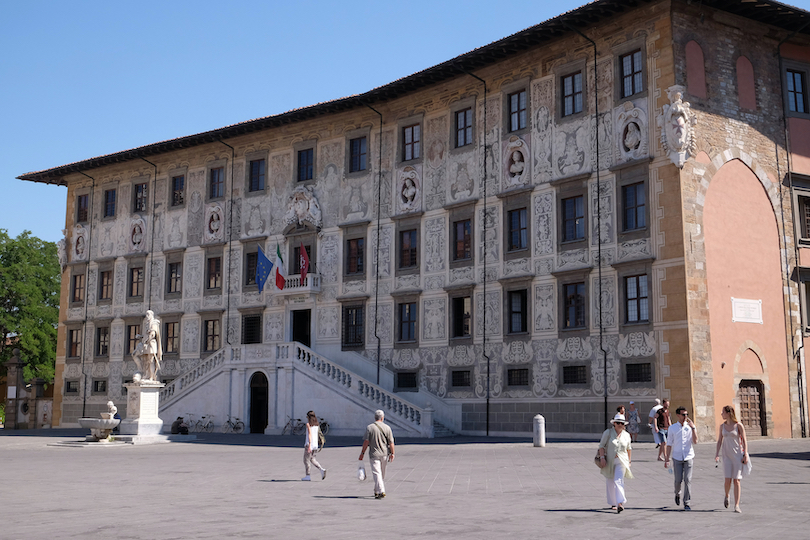
Back in the center of town is one of Pisa’s most striking buildings: the impressive Renaissance-style Palazzo dei Cavalieri. Now the main building of the Scuola Normale Superiore, it dominates one side of the equally arresting Knight’s Square.
Built in 1564 by the prominent painter and writer Giorgio Vasari, it originally served as a headquarters for the Knights of St. Stephen. Coating its fantastic facade are various busts and crests representing allegorical figures and zodiacal signs. This complex ‘sgrafitti’ scheme includes both the Medici Coat of Arms and sculptures of the Grand Dukes of Tuscany.
Also known to some as Palazzo della Carovana, it has a refined double-ramp staircase leading up to the entrance. Along with the enormous yet elegant facade behind it, this makes for some fabulous photos and viewing.
13. Orto Botanico
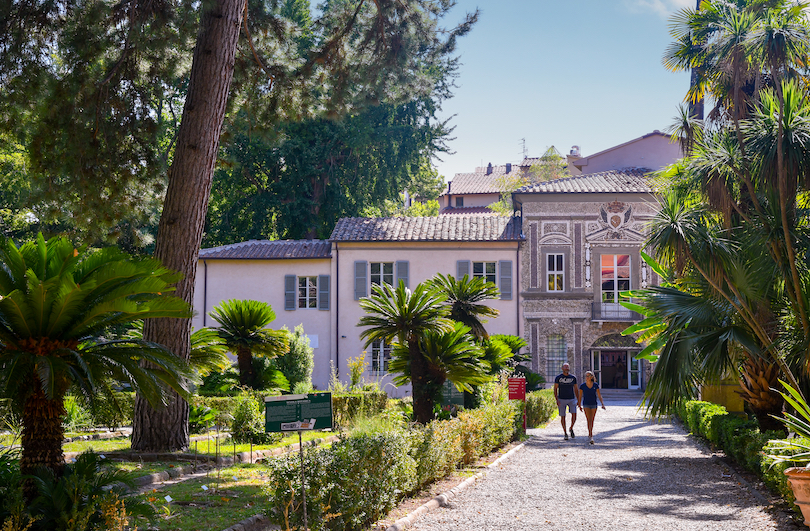
Just a short walk away are the lush grounds and landscaped gardens of Orto Botanico. The largest green space in the city center, its paths, flowerbeds and fountains are a treat to amble around slowly.
Remarkably the first university botanical garden in Europe, it was founded in 1544 under Cosimo I de’ Medici. Now divided into several sections, it includes everything from a leafy arboretum and fragrant herb gardens to flower-filled greenhouses and twinkling water features. Besides amazing old ginkgo trees and magnolias planted centuries ago, you can also see rare succulents and spiky cacti.
On top of all the verdant foliage, there is the seashell-studded facade of its sixteenth century botany school to examine. While here, you can also explore its excellent museum and wander about one of the earliest iron-frame hothouses in Italy.
12. San Piero a Grado
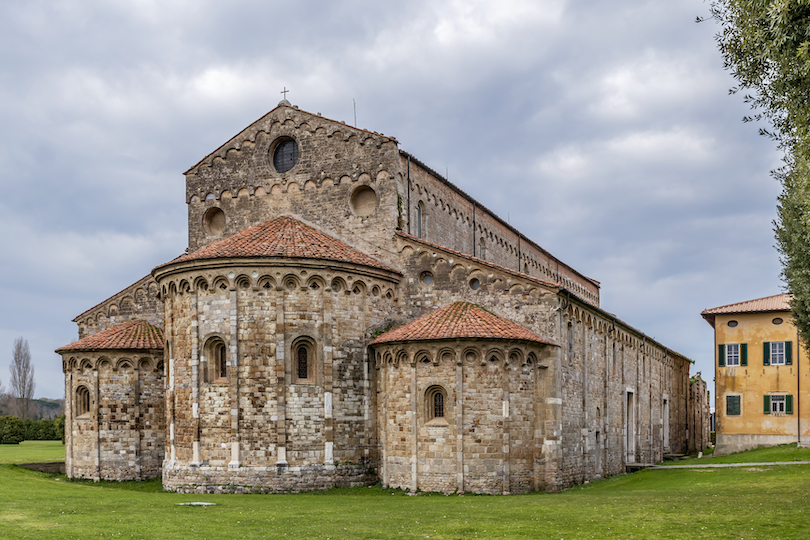
If you do visit Marina di Pisa, it is well worth stopping at San Piero a Grado along the way. Set almost exactly halfway between the seaside resort and city center, the basilica has a stupendous old interior for guests to admire and photograph.
Located at what was once the port of the Pisan Republic, the simple-looking church was constructed in the tenth century. According to legend, it was here that Saint Peter first alighted in Italy in 44 AD. A number of even earlier Roman buildings and the remains of a Paleo-Christian church have also been unearthed here.
While the church is nice but not that special to look at, the fading frescoes within are its real highlight. These convey just how old it is as colourful fragments lie next to almost perfectly preserved religious scenes. Below its graceful arches and painted saints, visitors can see the foundations of other older buildings excavated at the site.
11. Go to the beach at Marina di Vecchiano
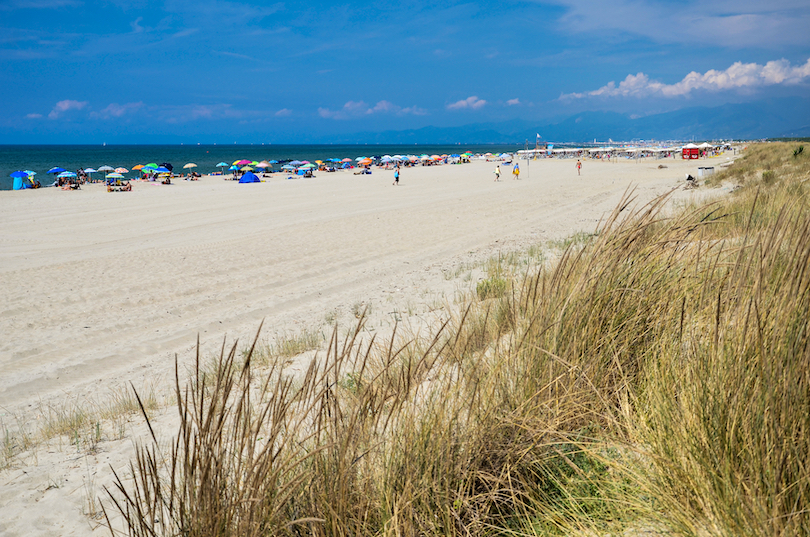
For those after yet more sun, sea and sand, the magnificent Marina di Vecchiano is the perfect place to go. Lying just twenty minutes’ drive northwest of Pisa, its beach is ideal for lounging on lazily after days spent sightseeing.
Quite wild and untouched, its golden sands stretch more than four kilometers in total along the west coast of Italy. Backed by the massive Migliarino San Rossore Massaciuccoli Natural Park, it extends from the mouth of the Serchio river to Torre del Lago.
Other than sunning yourself and swimming in the sea, you can explore the park’s dunes, forests and marshes. Scattered about are a few restaurants and cafes where you can rent sunbeds, parasols and enjoy some snacks and drinks. Ice cream sellers also patrol up and down its soft sands in summer.
10. Borgo Stretto
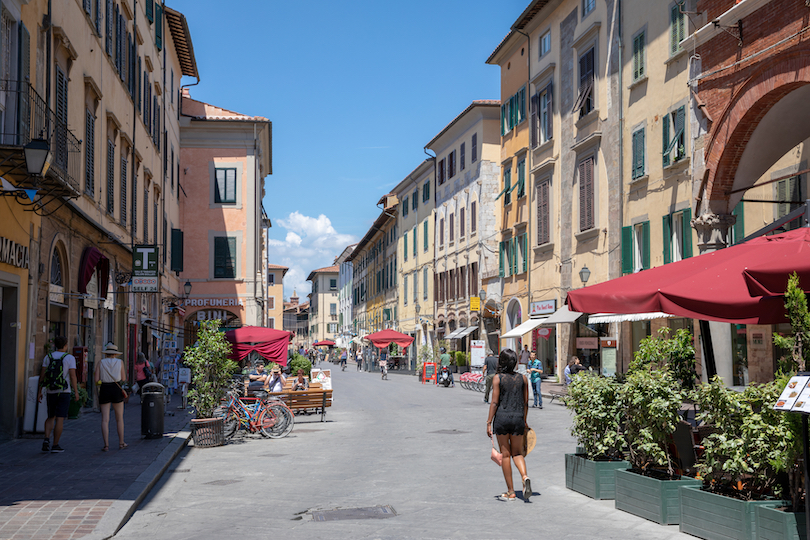
One of the city’s main streets, Borgo Stretto is lined by loads of bustling businesses and beautiful old buildings. From Piazza Garibaldi and Ponte di Mezzo, its enchanting arcades take you ever closer to the Leaning Tower of Pisa.
Along with Corso Italia and Piazza XX Settembre on the opposite side of the bridge, it creates a large pedestrian area that is considered to be the heart of the city. Overlooked on either side by colorfully painted old buildings, the narrow street’s arcades now house countless shops, cafes and bars.
Mostly known for its exquisite architecture, lively ambience and high-end shops, it also borders some interesting historic sights. These include the tenth century San Michele in Borgo church and a rather plain house where Galileo once lived. A splendid statue of the infamous Italian astronomer which we much preferred does lie nearby, however.
9. Murale Tuttomondo di Keith Haring
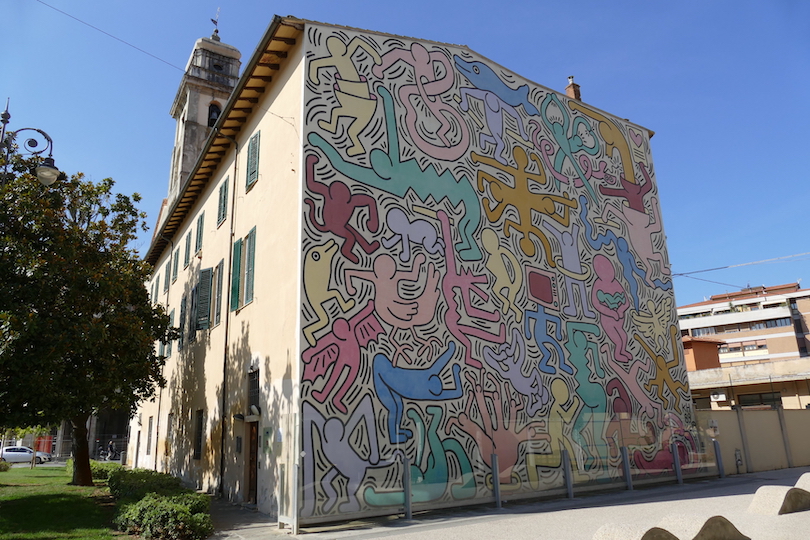
In stark contrast to all the city’s centuries-old sights, Murale Tuttomondo is an eye-catching modern masterpiece. Painted by Keith Haring in 1989, it covers the entire back wall of the Sant’Antonio Abate church, just off Piazza Vittorio Emanuelle II.
After a chance encounter with an Italian university student, the imaginative American artist decided to create a mural in Pisa. The colourful piece depicts thirty figures, jiggling about all over the place in Haring’s signature cartoon-like style. Meant to represent peace and harmony, it has animals, humans and other anthropomorphic images all dancing together as one.
The gigantic artwork ended up being one of his most impactful – and last too – as he sadly died less than a year later. Just 31, he left an indelible mark on the art world and the city streets of Pisa too.
8. Palazzo Blu
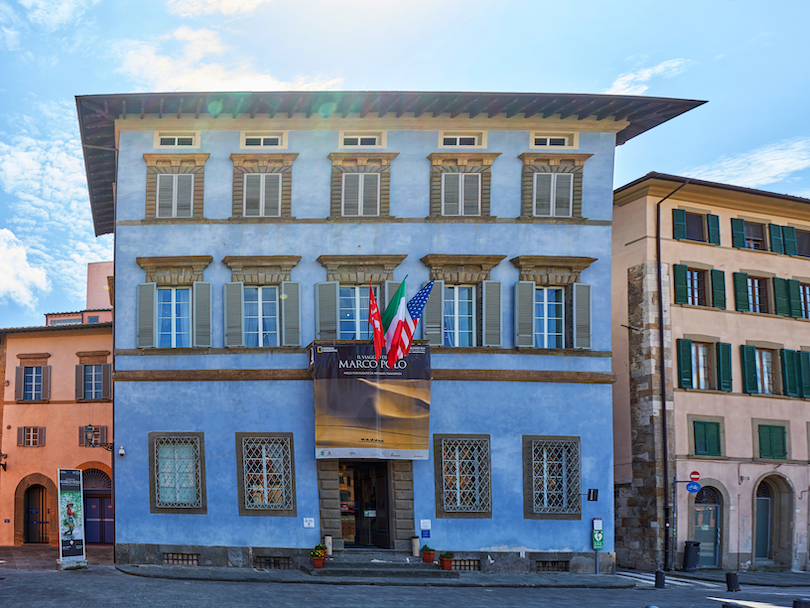
Instantly recognizable due to its arresting azure color, Palazzo Blu hosts an outstanding collection of Italian artworks. In addition to its paintings and photos, fine furniture and archaeological findings, it puts on plenty of temporary exhibitions too.
So named due to its brilliant blue color, the historic palace overlooks the Arno, right in the centre of town. Also referred to as Palazzo Giuli Rosselmini Gualandi, it mostly dates to the fourteenth century, though some parts are even older.
At the cultural center, guests can explore the ancient mansion’s immaculately maintained suites and peruse its permanent collection. Asides from admiring its stately apartments and glittering treasures from centuries gone by, you can catch terrific temporary exhibits too. These focus on various topics such as photos from Italy’s fascist era and the avant-garde Macchiaioli movement.
7. Santa Maria della Spina
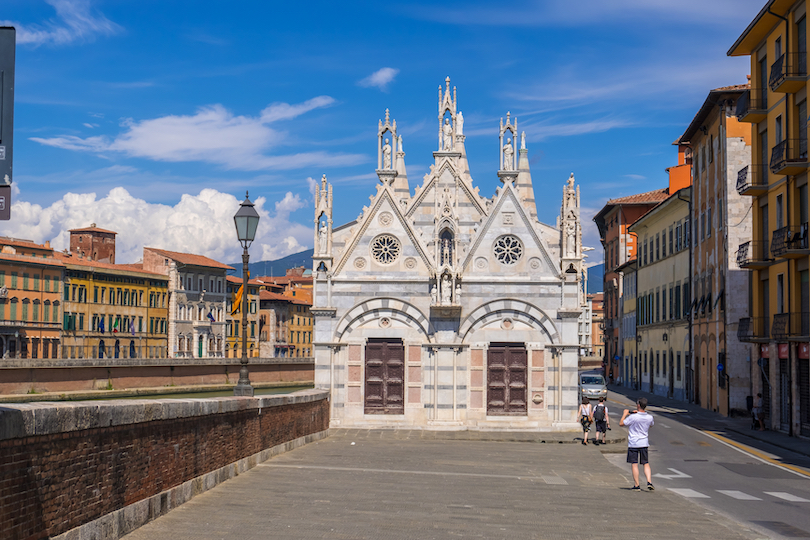
Just a couple of minutes’ walk along the Arno from the palace is the utterly captivating Santa Maria della Spina. After the Leaning Tower and Duomo, it is arguably the city’s most ornate and impressive architectural gem.
Originally erected around 1230, the small Pisan Gothic-style church was built to house a rare relic – a thorn or spina from Christ’s crown of thorns. Due to the river’s rising waters, it was eventually rebuilt stone by stone in a higher spot in 1871.
While it no longer contains the prized relic from the Holy Land, we were still astounded by its elegant architecture. As well as elaborately crafted spires and statues, the marble-clad church boasts several small rose windows and wonderful tabernacles. Inside is much simpler as only a few fine sculptures adorn its green and white striped walls. Overlooking everything is a marvelous painted ceiling added in when it was renovated in the late nineteenth century.
6. Museo Delle Aviotruppe
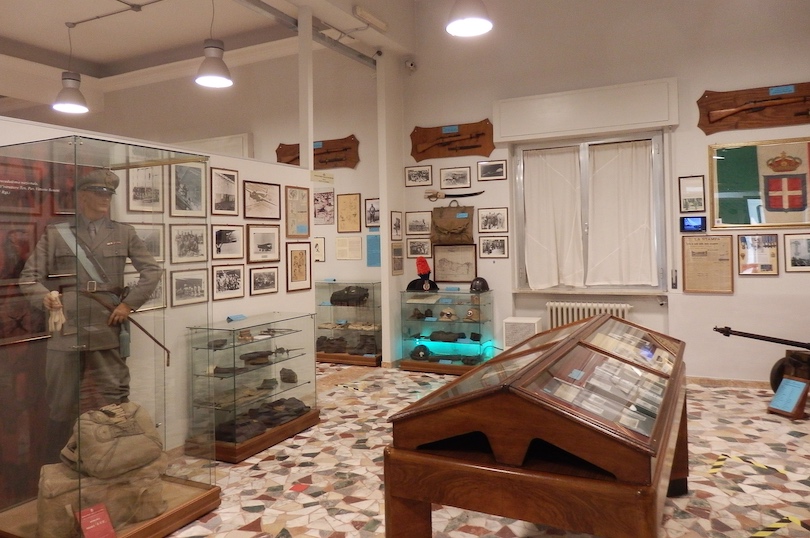
If you head just a little further on from the Leaning Tower of Pisa, you’ll come across the magnificent Museo Delle Aviotruppe. An absolute must for military history aficionados, its galleries are full of old weapons, uniforms and vehicles from various conflicts.
Originally established in 1971, it now displays an extensive collection of more than 3,000 interesting artifacts. While it mostly focuses on the history of the Italian Air Force and the two world wars, other rooms cover their UN missions in Afghanistan, Kosovo and Libya.
Very well-done, its informative displays are a delight to amble about with medals, machine guns and costume-clad mannequins all featuring. There are also loads of cool helicopters, camouflaged jeeps and armored personnel carriers scattered about that you can clamber in.
5. Knights’ Square
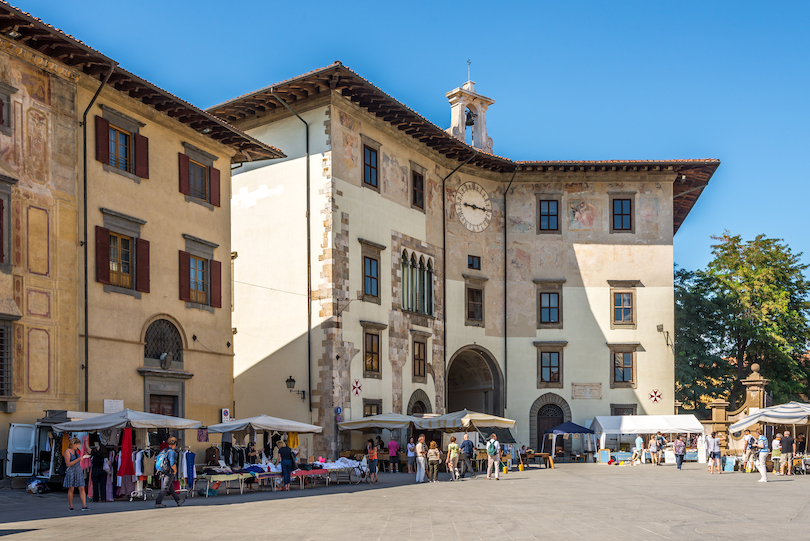
One of the most popular and picturesque places in Pisa, the Knights’ Square is surrounded by lots of stunning buildings. The political center of the city in medieval times, its pretty palazzi’s fine facades now make for some fabulous photos.
Located in the same spot as the ancient harbor of Pisa’s forum, it was redesigned by Giorgio Vasari in 1558. Lining it are not just the resplendent Palazzo dei Cavalieri and Church of Santo Stefano but the Palazzo dell’Orologio and small Church of St. Rocco too. There is also a superb statue of Cosimo I de’ Medici lying at its heart.
All together, its collection of atmospheric old buildings certainly makes for quite the sight. You can’t enter many though as they form part of the university. Twice a month, an excellent antiques market also takes over the square at the weekend.
4. Camposanto
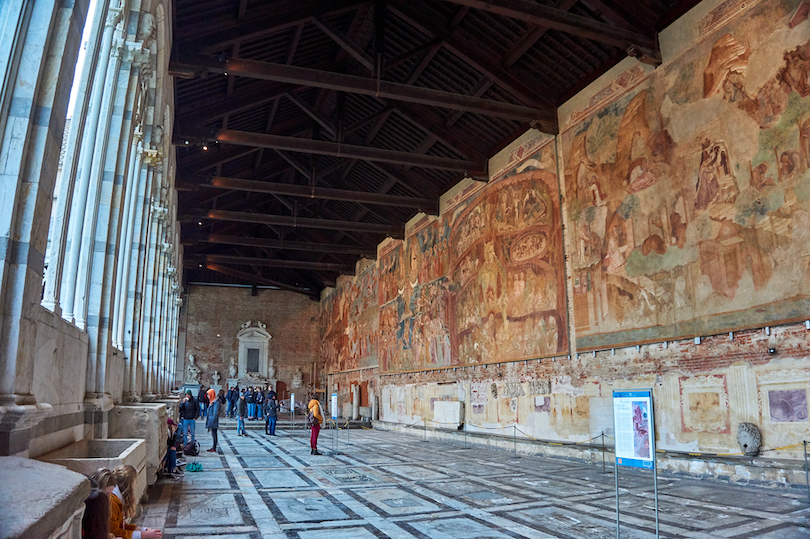
Right next to the city’s three most famous sites is Camposanto; a monumental cemetery containing tons of ancient Roman sarcophagi and phenomenally old frescoes. Occupying the northern side of Cathedral Square, its cloistered quadrangle really is lovely to wander around.
Founded in 1277, it surrounds what is purported to be sacred soil shipped from Golgotha – the site of Jesus’ crucifixion. Bordering Camposanto or ‘holy field’ are marvelous marble cloisters and covered walkways, all decked with colourful frescoes. All in all, these remarkably cover a greater surface than that of the Sistine Chapel.
Other than admiring their striking scenes and all the brilliant blind arches, you can check out its three charming chapels. Although everything was severely damaged during WWII, you just have to see the incredible complex if you can.
3. Baptistery
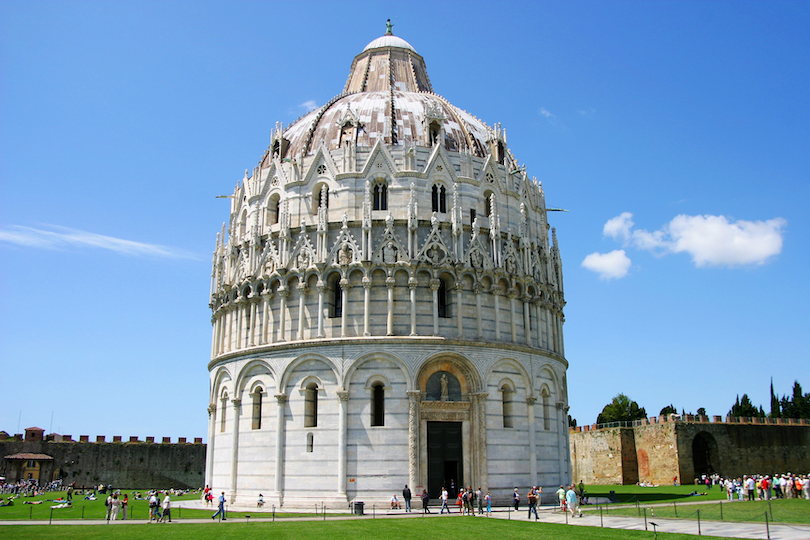
Just a stone’s throw from the cemetery is the beautiful Baptistery which is the biggest in the whole of Italy. Together with the Duomo and Leaning Tower alongside it, its enormous dome dominates the centre of the Piazza dei Miracoli.
Built between 1152 and 1363 to replace an older baptistery, it exhibits a mesmerizing mix of Gothic and Renaissance-style features. A few centimeters taller than the Leaning Tower, it was designed by Diotisalvi and later worked on by Nicola Pisano. Cladding its ornately crafted exterior are countless statues, arches and other abstract floral and graphic decorations.
Often praised for its acoustics, the baptistery’s much simpler interior is most known for its delightful marble pulpit. Surrounded by sturdy columns keeping up the cupola, its reliefs depict various scenes from the New Testament in great detail.
2. Duomo di Pisa
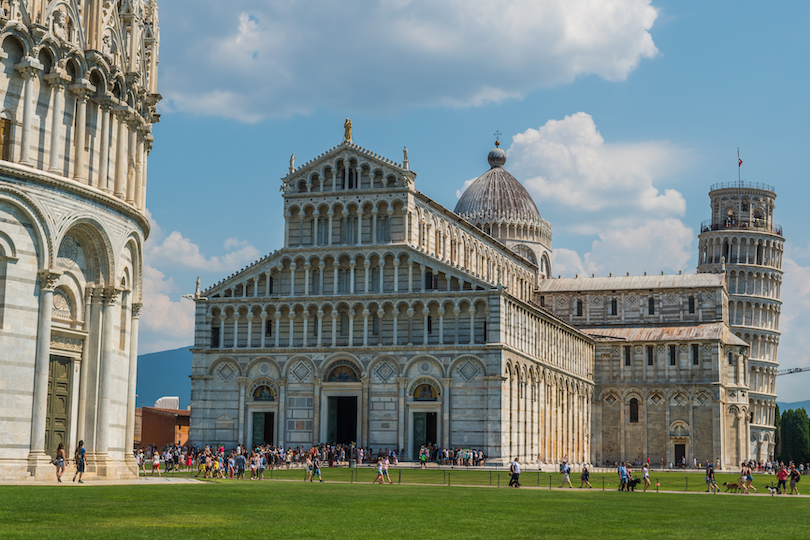
While most people’s eyes are instantly drawn to the famous tower right next to, the Duomo di Pisa is every bit as impressive. Sparkling in the sun, its richly decorated exterior with all its multicolored mosaics and marble makes for a spectacular sight.
Displaying some absolutely exceptional Romanesque-style architecture, the colossal cathedral was consecrated in 1118. Perched atop its central nave is a hulking great dome while its fetching facade overlooks three heavy bronze doors below.
We were amazed just walking inside as two rows of imposing columns lead you to its glittering altar backed by gorgeous paintings. Above is a gold leaf coffered ceiling while important chapels, tombs and artworks lie to either side. Add in Giovanni Pisano’s elaborate pulpit and the Duomo easily rivals the cathedrals found in nearby Siena, Florence and Lucca.
1. Leaning Tower of Pisa
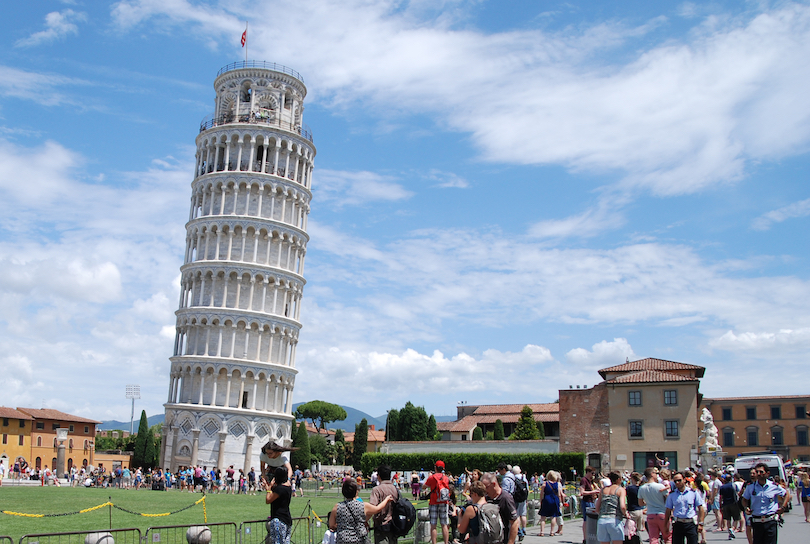
Renowned around the entire world, the Leaning Tower of Pisa is of course the city’s standout symbol and sight. Located alongside the Duomo and Baptistery, the iconic landmark is crowded around by tourists at almost any time of day.
The last addition to Piazza dei Miracoli, the tilting tower actually serves as the Duomo’s free-standing campanile. Completed between 1173 and 1372, the breath-taking bell tower was slowly erected over three stages to stop it sinking even further into the soft ground.
Aside from ogling at its amazing architecture and taking some fun photos propping it, you can climb the world-famous tower. Although quite pricey, we didn’t regret it at all as the views over the complex and city are so wonderful. Make sure to visit again in the evening to see the Leaning Tower, Duomo and Baptistery all majestically lit up against the dark night’s sky.