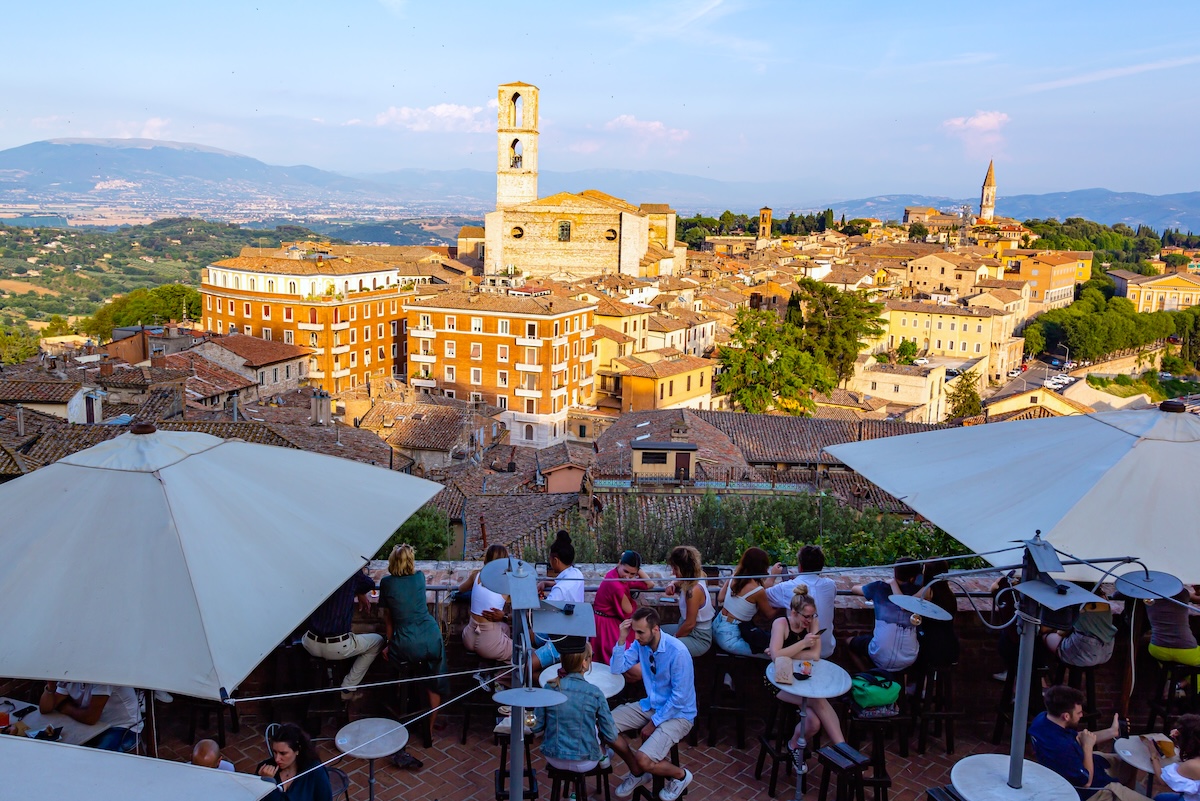
Hilltop streets, medieval arches, and sweeping views give this historic city a timeless atmosphere. Wandering through its cobbled lanes feels like stepping into a quieter and more traditional side of Italy.
Set in the heart of Italy, Perugia is considered one of the highlights of the Umbria region. Known for its Etruscan and medieval heritage, the city is filled with ancient walls, historic buildings, and impressive religious landmarks.
Perugia is also famous for chocolate thanks to the renowned Perugina brand. Alongside its sweet traditions, visitors can enjoy excellent Umbrian cuisine, lively piazzas, and a relaxed atmosphere that makes the city easy to fall in love with.
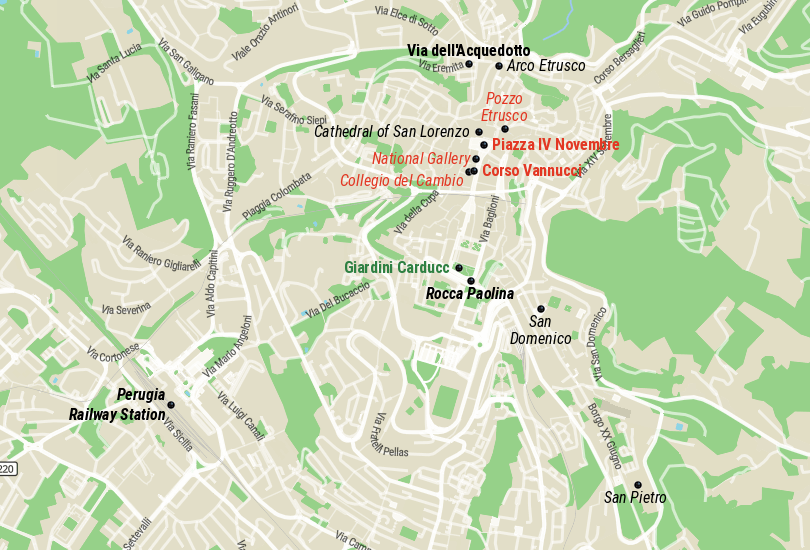
17. Basilica of San Domenico
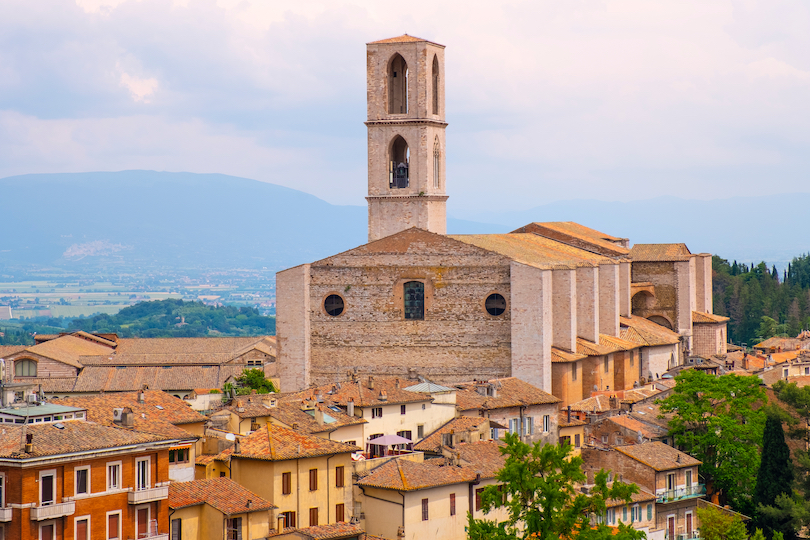
One of the most impressive sites in Perugia is The Basilica of San Domenico.
The magnificent religious edifice dates back to the 14th century. However, the basilica has undergone various renovations over the centuries, incorporating several architectural styles – from Romanesque to Gothic – to create a striking experience.
The basilica’s exterior has quite the wow factor, featuring intricate sculptures and a beautiful rose window that captivates visitors before they enter. Once inside, one can marvel at the stunning frescoes and impressive artworks that decorate the interior, including the magnificent wooden choir stalls.
The revered site is also notable for its sacred relic – the preserved body of Saint Dominic, renowned for being the founder of the Dominican Order.
16. Collegio del Cambio
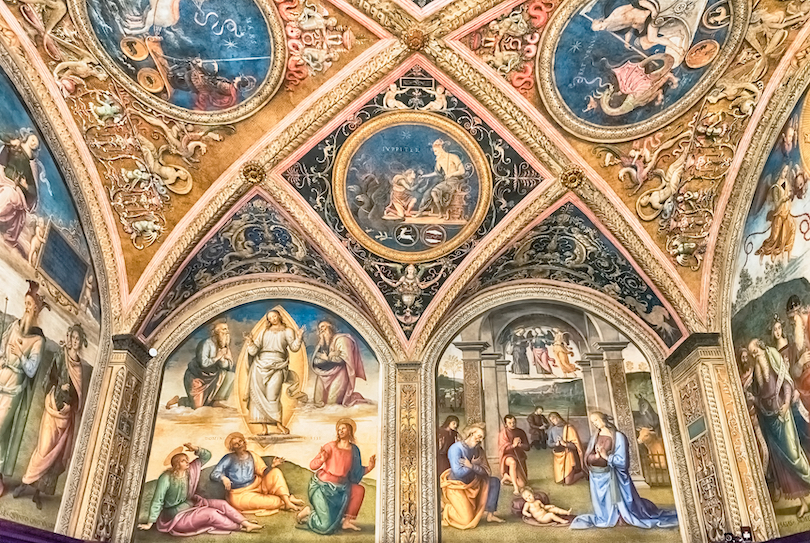
For those interested in experiencing the opulence and artistic brilliance of the Italian Renaissance, a visit to the Collegio del Cambio inside Palazzo dei Priori is a must.
Dating back to the 15th century, the Collegio del Cambio served as the seat of the money-changers’ guild, playing a crucial role in Perugia’s economic history.
Inside, it is notable for its awe-inspiring frescoes which were created by the renowned artist Pietro Perugino. The walls are adorned with intricately detailed scenes from classical mythology and religious narratives, showcasing the masterful craftsmanship of the Renaissance period. Enchanting ceiling frescoes further enhance the grandeur of the space, evoking a sense of wonder and admiration.
The Collegio del Cambio also boasts an ornate wooden bench known as the ‘studiolo’, which served as the private chamber for the guild’s meetings. The carvings and decorative elements on the bench represent a fusion of artistic styles, making it a true masterpiece.
15. Arco Etrusco
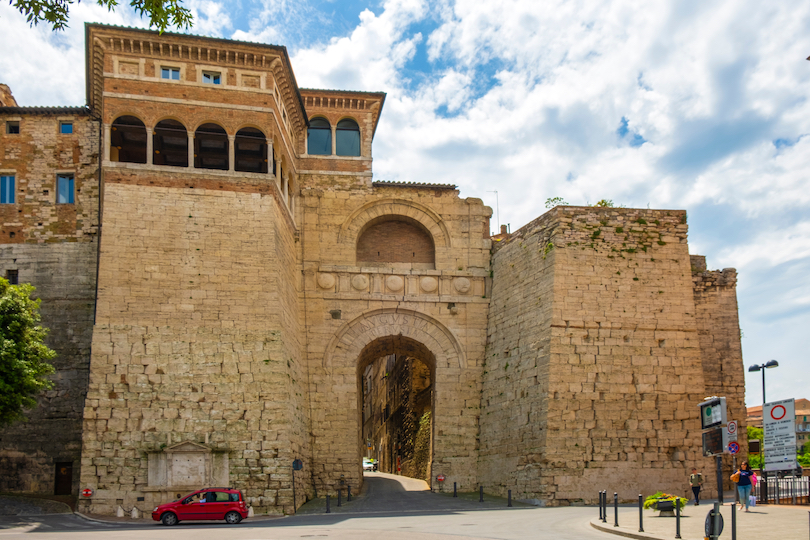
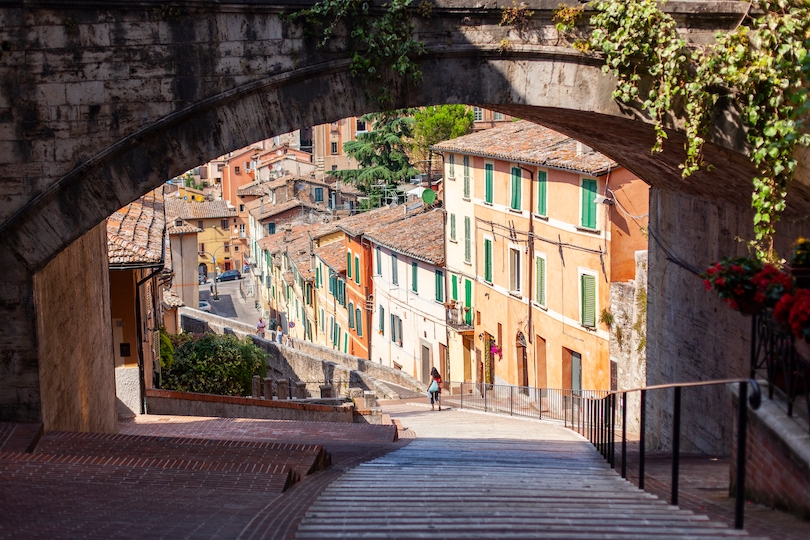
The Arco Etrusco is another notable site we recommend you visit during your visit to Perugia.
This majestic arch, also known as the Etruscan Arch, is one of the city’s most iconic landmarks and a testament to its rich Etruscan heritage. It was constructed over 2,300 years ago, serving as one of the main entrances to the Etruscan city of Perugia.
Built using large blocks of local stone, the Arco Etrusco showcases impressive engineering and craftsmanship. Its distinctive, slightly leaning shape adds to its charm and historical allure.
Aside from its historical significance, the Arco Etrusco also offers breathtaking views of the city and surrounding landscapes. Climbing up the nearby stairs will reward you with a splendid panorama that stretches over the picturesque rooftops and rolling hills of Perugia.
14. Via dell'Acquedotto
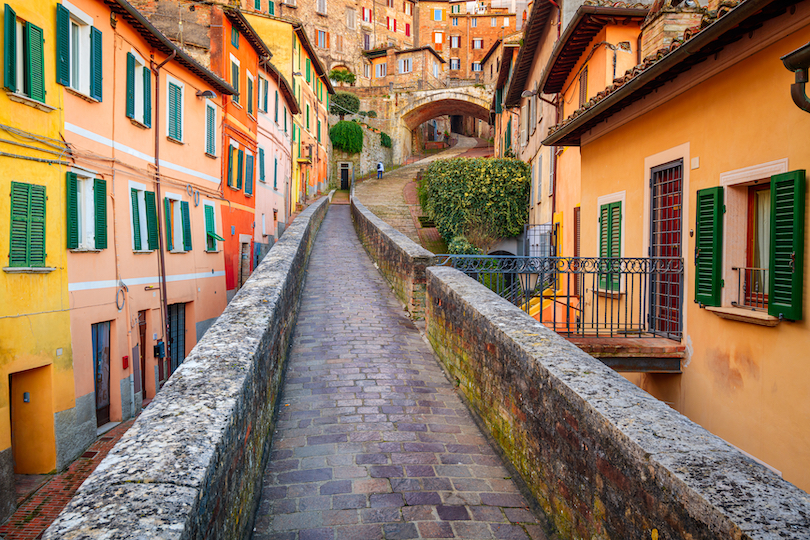
Visiting the Via dell’Acquedotto takes you on a fascinating journey through history and architecture.
This charming street is renowned for its well-preserved medieval aqueduct, which once served as a vital water supply for the city. The aqueduct dates back to the 13th century and showcases impressive arches and stone masonry, offering a glimpse into the engineering marvels of the past.
Strolling along Via dell’Acquedotto, visitors are treated to picturesque views of the ancient structure that winds through the city, providing unique photo opportunities. The street’s quaint ambiance, with its cobblestone paths and historic buildings, creates a sense of timelessness that captivates travelers. As you walk through it, you get a sense of what life must have been like for residents hundreds of years ago.
Historical significance aside, Via dell’Acquedotto is now a vibrant area full of charming cafes, boutiques and artisan shops that are well worth exploring.
13. Take a Wine Tour
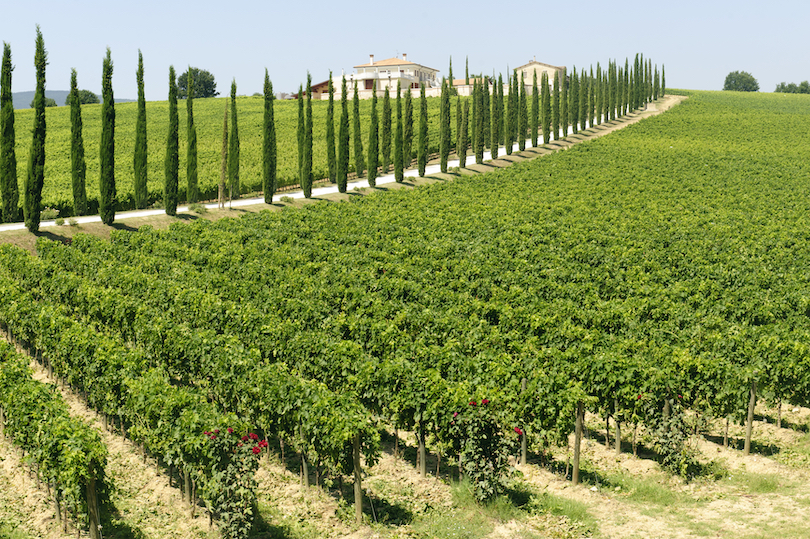
Whilst the area is famous for chocolate, Perugia and the surrounding Umbrian countryside boast a long history of winemaking, dating back to ancient times.
The region’s climate and fertile soil create the perfect conditions for cultivating diverse grape varieties, resulting in exceptional wines. Subsequently, if you love wine, you should consider going on a wine tour.
Typically this consists of exploring picturesque vineyards, visiting traditional wineries, and learning about the winemaking process from passionate local producers. From full-bodied reds like Sagrantino to crisp whites like Grechetto, each wine reflects the area’s unique terroir and cultural traditions.
We’ve been on a couple of wine tours, which enabled us to try some delightful varietals. They also gave us a profound appreciation for the culture and passion that defines every sip of Umbrian wine.
12. Giardini Carducci
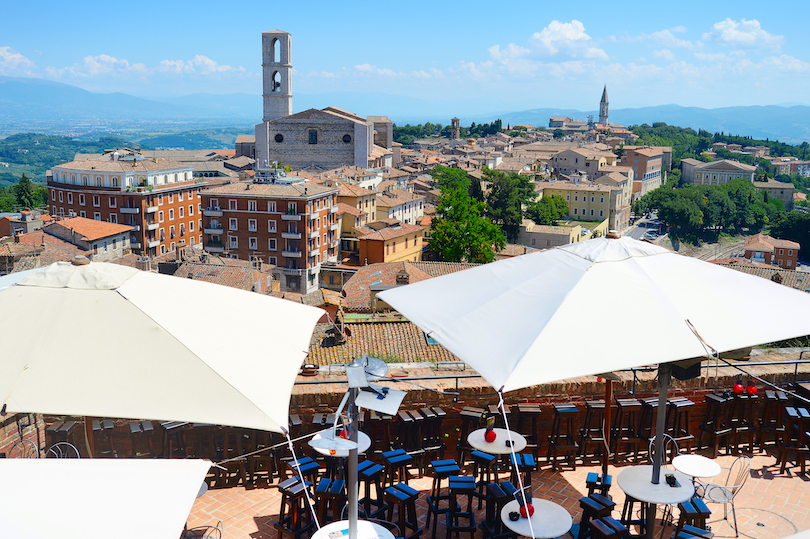
Giardini Carducci is one of our favourite places in Perugia, as it offers a terrific combination of lush greenery and superb city views.
Named after the renowned Italian poet Giosuè Carducci, the charming public park opened in the 19th century. Originally a botanical garden, it has evolved into a beloved green oasis where locals and tourists seek moments of serenity.
Strolling through Giardini Carducci, visitors will discover vibrant flowers, lush trees, and well-maintained lawns, all carefully curated to provide a tranquil escape. Benches and shaded areas offer perfect spots for relaxation, making it an ideal place for picnics or simply unwinding with a book.
Its elevated location adds to the park’s appeal, presenting magnificent panoramas of Perugia’s historic rooftops and landmarks. It’s a great place to be at sunset when the colors of dusk are spectacular.
11. Pozzo Etrusco
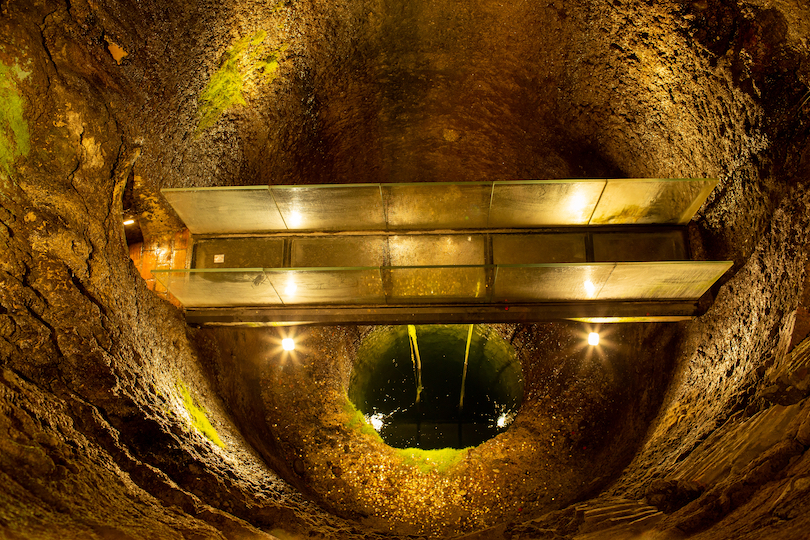
Pozzo Etrusco is another notable attraction you should make a point of visiting whilst in Perugia.
Alternatively known as the Etruscan Well, this remarkable underground structure is believed to have been built during the 3rd or 2nd century BCE by the Etruscan civilization. It is a cylindrical well carved from the local stone that descends 37 meters into the earth. Boasting an intricate double-helix staircase that allows visitors to access the water source, its design ensures efficient water retrieval without interruption during maintenance.
Descending into the well reveals the true extent of the magnificence of the structure. Whilst there, you can’t help but be impressed by the architectural prowess of the Etruscans and the effort and ingenuity required to create such a structure without modern tools.
10. Tempio di Sant’Angelo
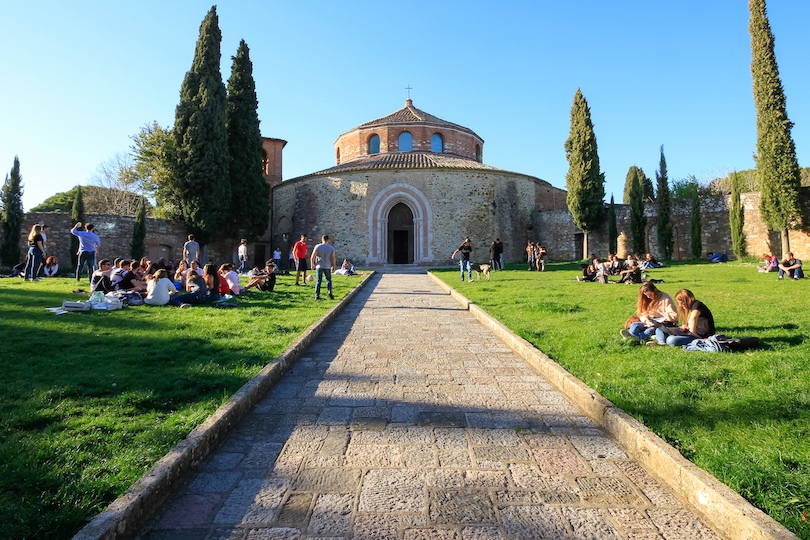
The Tempio di Sant’Angelo is an ancient church that stands on an old Roman temple site. Its rich history intertwines with various other civilizations – including the Lombards – that date back to the 5th century.
Featuring a simple yet elegant Romanesque design, the church’s exterior is dominated by the striking bell tower that stands resplendent beside it. Once inside, visitors are greeted by exquisite frescoes and beautifully carved wooden elements that represent the artistic richness of the different periods.
The highlight of the Tempio di Sant’Angelo is its unique crypt which is accessible through a hidden staircase. This crypt is a remnant of the ancient Roman temple and is an awe-inspiring place of historical significance and spiritual reflection. Whilst inside it, you’ll marvel at the layers of history preserved within its walls.
9. Day Trip to Lake Trasimeno
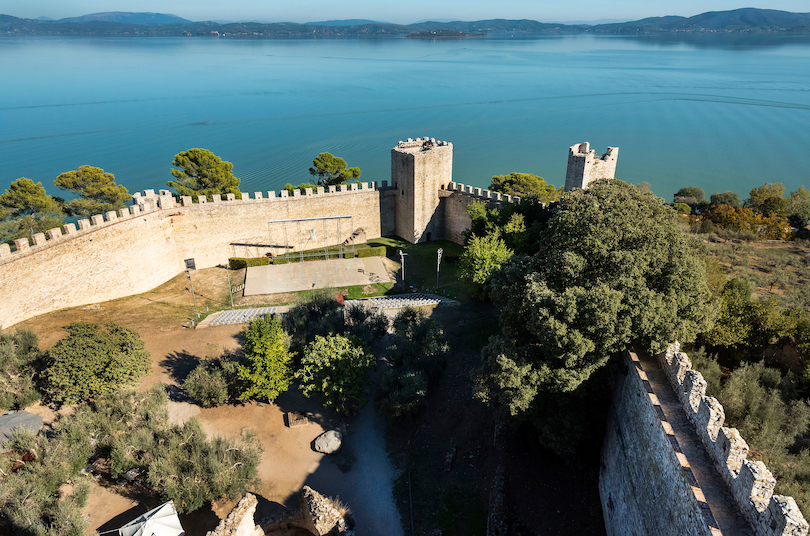
If your schedule permits, we recommend a day trip to Lake Trasimeno, one of Italy’s most enchanting natural wonders.
Surrounded by the picturesque landscapes of Umbria, Lake Trasimeno is the largest lake in central Italy. It is synonymous with a significant battle in Roman history, where Hannibal’s forces defeated the Romans in 217 BCE.
Today, its shores are dotted with charming towns and villages, offering a perfect blend of relaxation and exploration. Tourists can indulge in leisurely walks along the waterfront, take boat rides to the idyllic Isola Maggiore or Isola Polvese, and soak in the tranquil atmosphere amidst lush nature.
With its peaceful ambiance, shimmering waters, and gorgeous views the lake offer an excellent change of scene from the bustling city of Perugia.
8. Cathedral of San Lorenzo
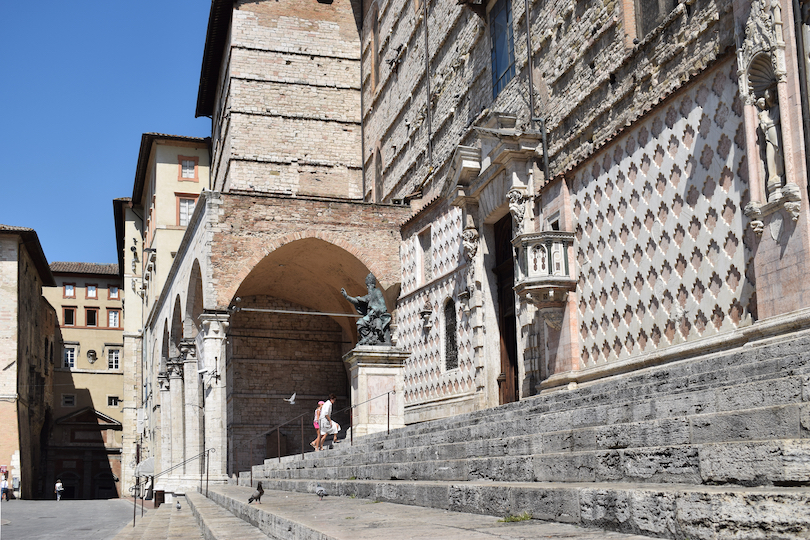
Another significant religious building of note in Perugia is the Cathedral of San Lorenzo. This magnificent Roman Catholic cathedral is a masterpiece of Gothic and Renaissance styles, symbolizing spiritual devotion and artistic brilliance.
Dedicated to Saint Lawrence, the church forms part of a more extensive architectural complex, variously referred to as the Island or Castle of San Lorenzo. You’ll need to spend a day if you want to explore it all.
Defined by its spiritual atmosphere and artistic grandeur, the church features a breathtaking collection of frescoes, paintings, and sculptures by renowned artists, including Perugino and Pinturicchio. However, its main highlight is a ring, supposedly from the Virgin Mary’s finger, housed in the ornate Cappella del Santo Anello (Chapel of the Holy Ring).
7. Corso Vannucci
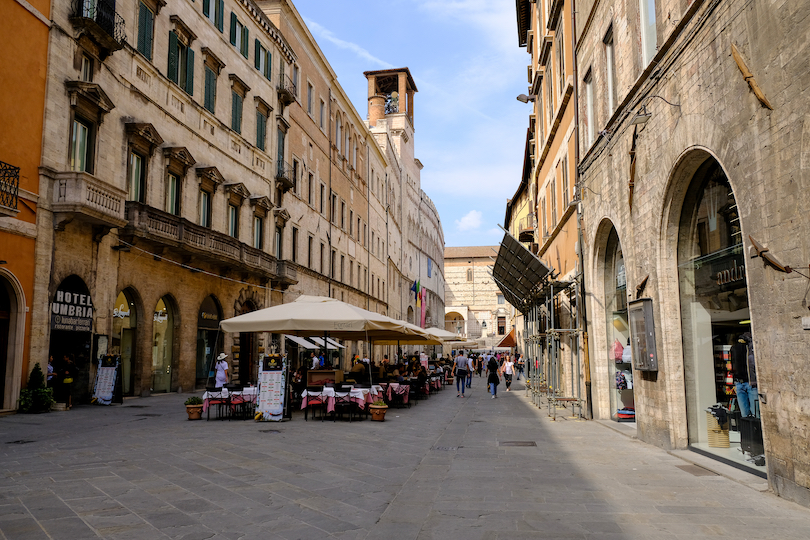
At some point in your visit to Perugia, you’ll likely come across Corso Vannucci.
This historic street is Perugia’s main thoroughfare and features elegant medieval and Renaissance buildings that house charming cafes, boutique shops, and cultural landmarks.
Named in honor of the renowned Italian Renaissance architect and artist Pietro Vannucci, the cobblestone street has a lively atmosphere that bustles with activity.
The street leads to the city’s central square, Piazza IV Novembre, where the stunning Fontana Maggiore and Palazzo dei Priori stand proudly, exuding the essence of Perugia’s historic charm. The vibrant energy of locals and the timeless beauty of the architecture and art make it a terrific place for people-watching.
There are several notable cafes where you can do that whilst enjoying the local speciality of Pecorino and Caciotta Cheeses and our particular favorite, Prosciutto di Norcia.
6. Day trip to Assisi
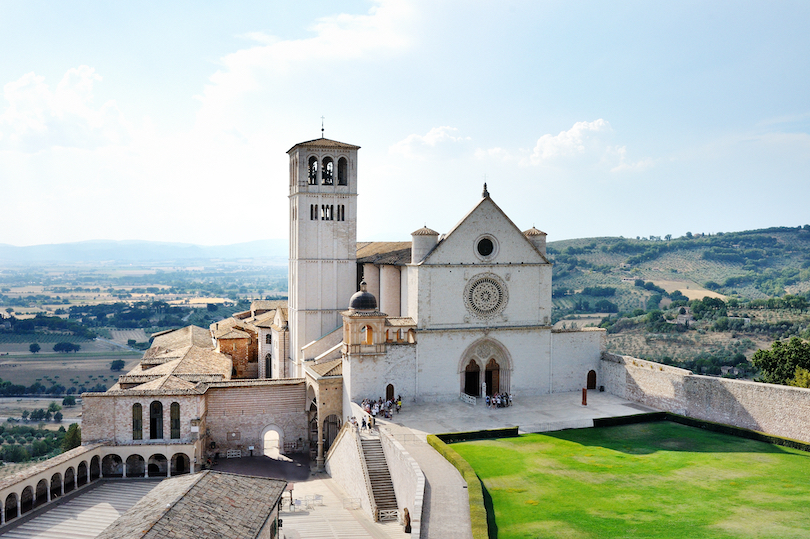
If time permits, another must-visit destination for a day trip is to visit Assisi.
This spectacular medieval town, nestled on the slopes of Monte Subasio, boasts a rich history dating back to ancient Roman times. It is best known for its association with St. Francis of Assisi, the patron saint of animals and the environment.
The town’s centerpiece is the stunning Basilica of San Francesco d’Assisi, a remarkable masterpiece adorned with frescoes by renowned artists such as Giotto. Visitors can also explore the Basilica of Santa Chiara and the imposing Rocca Maggiore, offering panoramic views of the picturesque landscape.
Elsewhere, Assisi’s quaint streets and charming piazzas provide a perfect setting for leisurely walks and discovering local crafts and delicious Umbrian cuisine.
5. Basilica di San Pietro
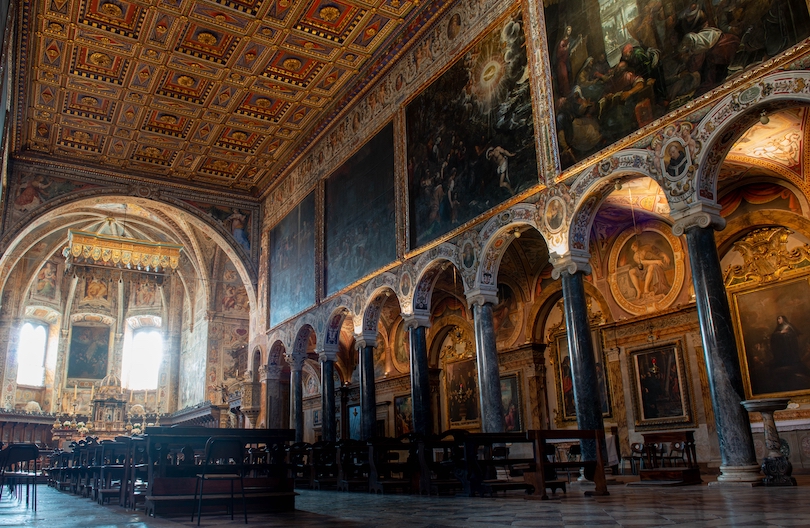
If you can only visit one religious structure in Perugia, make it the Basilica di San Pietro.
This magnificent church, commonly called the Basilica of St. Peter, dates back to the 10th century and is a shining example of Romanesque architecture in the region.
The basilica’s exterior showcases a harmonious blend of pink and white stone, creating an impressive facade that captivates visitors instantly. Inside, the grandeur continues with stunning frescoes and intricate sculptures, highlighting the artistic prowess of the era.
One of the most striking features is the majestic Gothic-style Cappella di Sant’Ubaldo, dedicated to St. Ubald of Gubbio, with its awe-inspiring stained glass windows and elaborate altar.
Whilst inside the church, the palpable sense of history and spirituality invites a moment of quiet reflection amidst the artistry of the structure.
4. Casa del Cioccolato
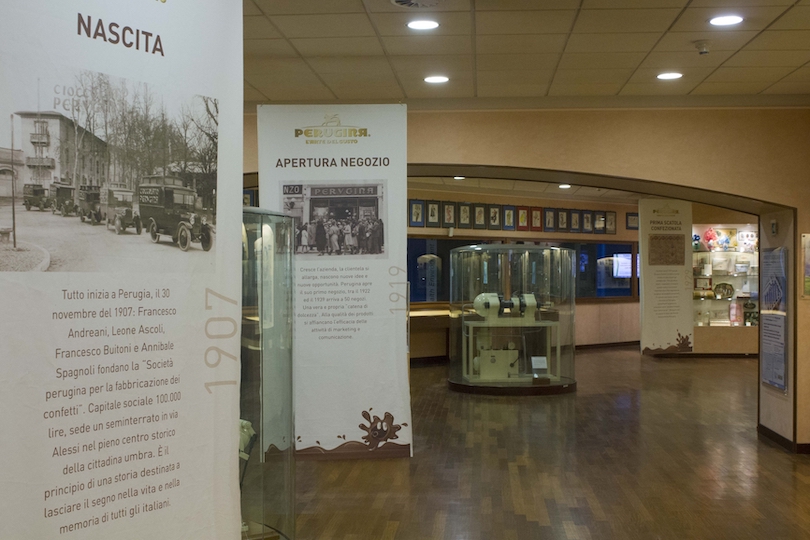
If you love chocolate, you’ll want to make the Casa del Cioccolato your first port of call in Perugia.
This delightful attraction takes you on a delectable journey into the world of chocolate in tribute to Perugia’s renowned chocolate-making tradition, tracing its roots back to the 19th century.
The Casa del Cioccolato features interactive exhibits where visitors can learn about the history of chocolate, the production process, and the art of chocolate-making. Watching skilled chocolatiers at work and witnessing the transformation of cocoa beans into mouthwatering treats is a true delight.
The highlight of the visit is the opportunity to savor a wide array of premium chocolates, including the famed Baci Perugina. The onsite shop offers an assortment of delectable chocolates, ensuring visitors can take home the perfect sweet souvenir.
3. National Gallery of Umbria
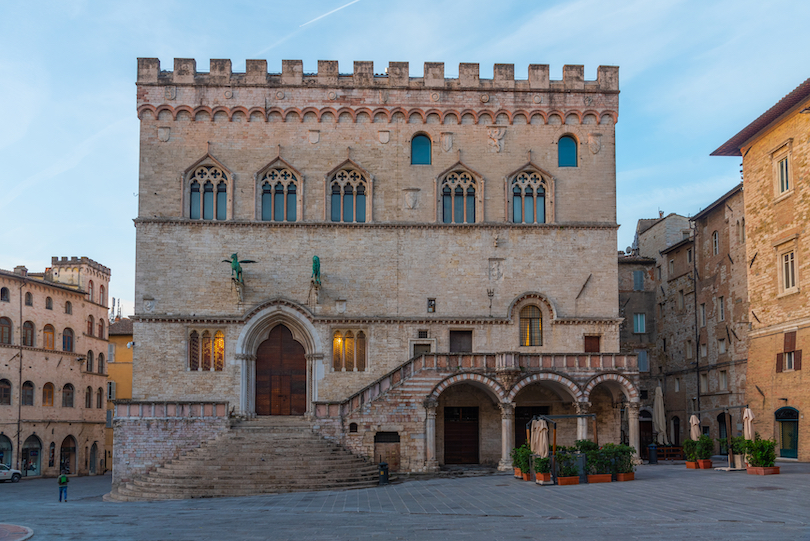
A trip to the National Gallery of Umbria is a must for anyone who loves culture and art.
Housed within the historic 13th-century Palazzo dei Priori, this gallery showcases an extensive collection of paintings, sculptures and decorative arts from the Middle Ages to the Renaissance.
The museum’s remarkable artworks include masterpieces by celebrated artists such as Perugino, Pinturicchio and Beato Angelico. Collectively, the displays take you on a fantastic journey through the evolution of art in Umbria.
The gallery’s impressive collection includes religious and secular themes which reveal the artistic and cultural influences that shaped the region over the centuries.
Overall, for those who love art, the collection’s diversity is sure to impress. Comprising everything from intricate religious altarpieces to intimate portraits, it is a terrific way to appreciate the artistic achievements of Umbria’s creative past.
2. Piazza IV Novembre
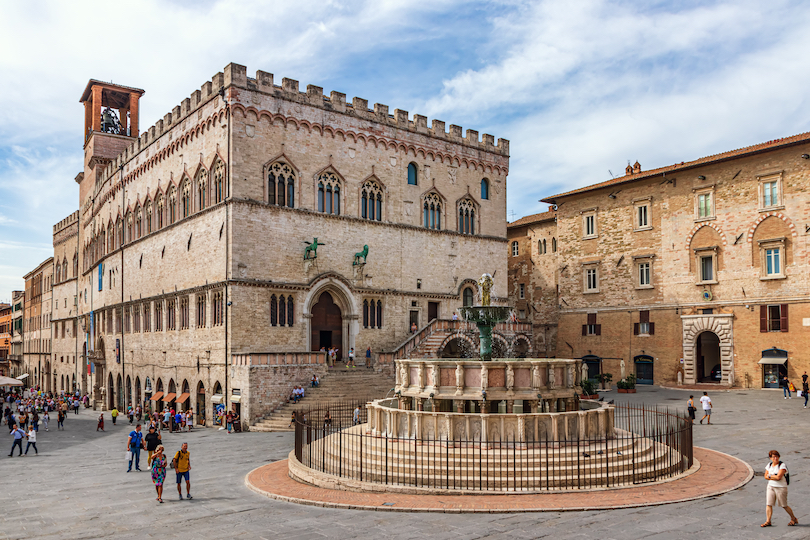
The Piazza IV Novembre is the main central square of Perugia. Located in the heart of the city, it serves as a vibrant gathering place for locals and tourists.
Named in honor of Italy’s national holiday, Piazza IV Novembre is surrounded by some of Perugia’s most significant landmarks. So it is a good starting point for first-time visitors to the city.
The stunning Fontana Maggiore, an intricately sculpted medieval fountain, takes center stage. Flanking it is the Palazzo dei Priori, a historic town hall, and the Cathedral of San Lorenzo, a splendid Romanesque-Gothic church.
The square’s bustling atmosphere is a delightful fusion of historical charm and modern activity, with cafes, restaurants, and shops lining the perimeter. Overall, it’s a place that truly captures the essence of this enchanting central Italian city. So take the time to soak it all in.
1. Rocca Paolina
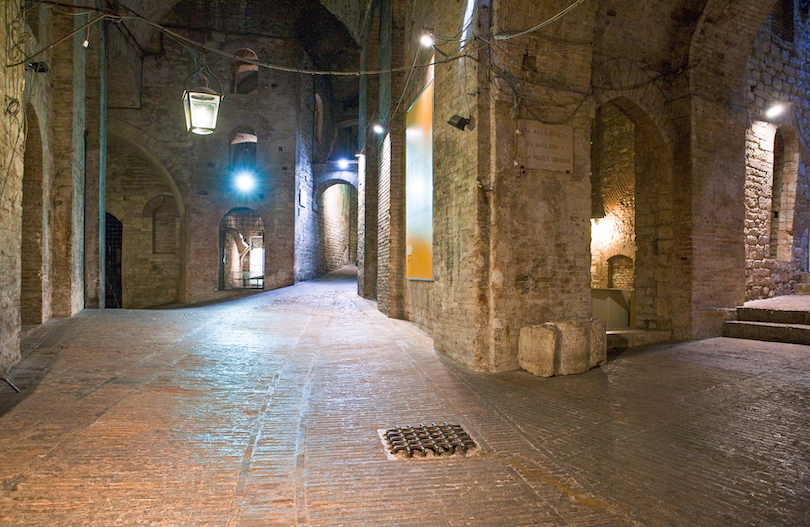
One of the most imposing sites in Perugia is the Rocca Paolina.
Built atop the ruins of an ancient neighborhood, Pope Paul III commissioned this impressive fortress in the 16th century to assert papal dominance over a rebellious city.
Once standing as a symbol of papal power, it features massive stone walls, hidden underground passages, and the remnants of buildings from the medieval era. However, the upper part of the fortress was famously destroyed by locals after Perugia gained its independence, leaving only part of the massive subterranean structure intact.
Today, visitors can explore the underground halls and passages, evoking a sense of mystery and intrigue. The modern city has been built above the ruins, creating a fascinating interplay between the ancient and contemporary urban landscapes.