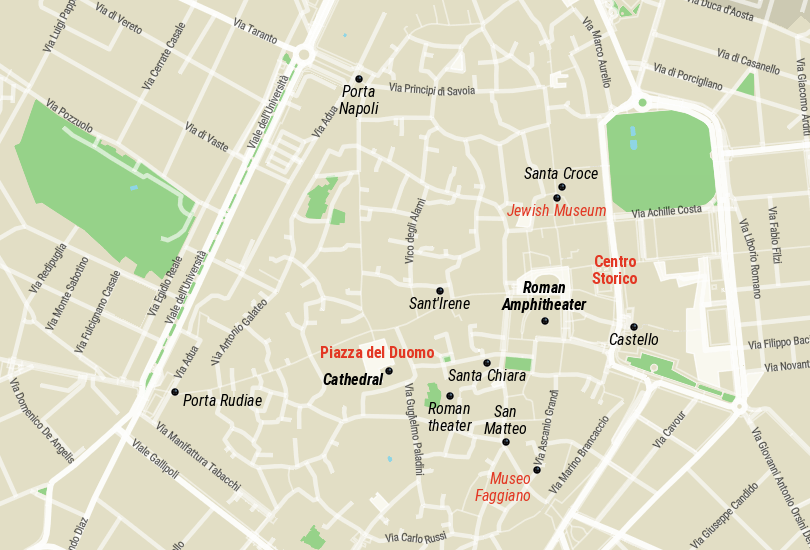
Ornate churches, sun-washed piazzas, and intricately carved stone facades define one of southern Europe’s most captivating historic cities. Often overlooked in favor of more famous destinations, it offers a chance to experience rich history and culture without the overwhelming crowds.
Lecce, tucked away in the heel of the Italian boot, is widely celebrated as a masterpiece of Baroque architecture. Nicknamed the “Florence of the South,” the city is filled with remarkable buildings, ancient relics, and a vibrant culinary scene that reflects the traditions of the surrounding Apulia.
With so many historic landmarks, architectural wonders, and cultural experiences to enjoy, visitors will find no shortage of things to do in Lecce. From exploring centuries-old churches and palaces to discovering local cuisine and lively piazzas, this enchanting city offers a memorable glimpse into the heritage of southern Italy.
Chiesa di Sant’Irene
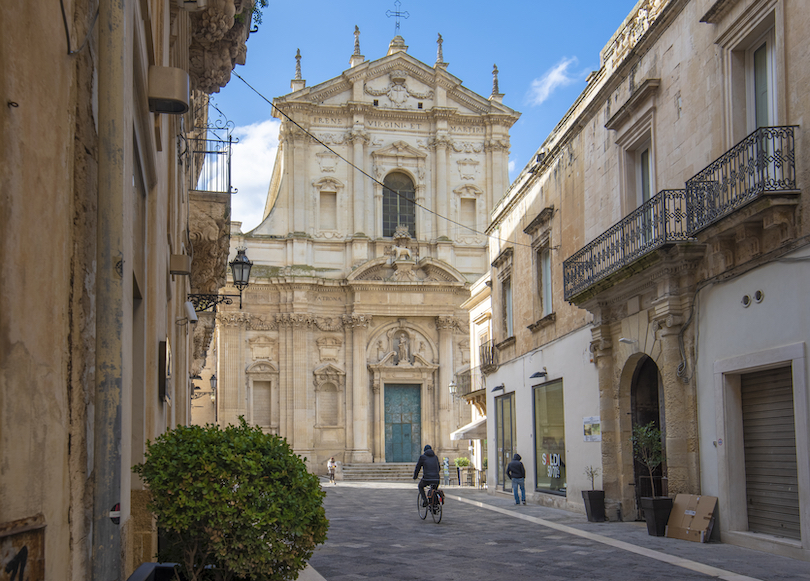
The Chiesa di Sant’Irene is one of the numerous impressive religious structures in Lecce. Constructed between 1591 and 1639, it is dedicated to the patron saint of the city.
Located in the city center, not too far from the Basilica di Santa Croce and the Duomo, the church’s facade boasts an impressive statue of Saint Irene. Above it resides Lecce’s official emblem – an oak tree and a shelf wolf.
Inside the church, the artwork is just as beautiful as the Basilica and Duomo. It also has a huge altar which dates back to the latter part of the 17th century and is dedicated to Saint Cajetan. What we like best about visiting this church is that it is never overly busy. This allows us to take our time to really appreciate it.
Castello
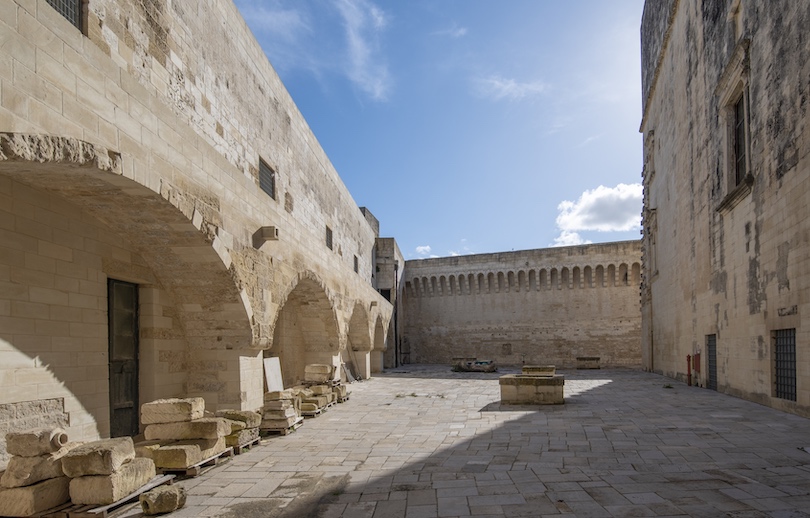
If you are into fortifications, the Castello is worth checking out.
Built around the 16th century, the castle of Charles V served as the main defense of the city. A notable feature of engineering, it remains in excellent condition, with most of its towers and walls still intact.
Whilst it is impressive now, back in the day, it would have been very intimidating for any would-be attackers. It is easy to imagine the four-cornered, high-wall structure being fully guarded on its diagonal towers, as you walk around its grounds.
You’ll no doubt take lots of photos of the structure when you visit it. But don’t leave without checking out its Papier-Mache Museum. It has some very interesting displays made by highly skilled artists.
Chiesa di Santa Chiara
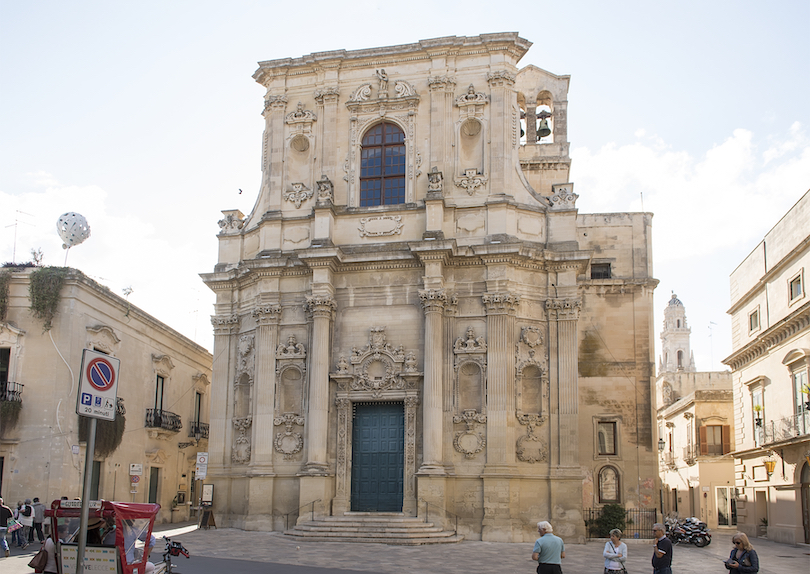
We have had the pleasure of seeing quite a few churches around the world over the years. But few made as much of an impression on us as the Chiesa di Santa Chiara did.
While many other structures are grandiose, the Santa Chiara has an intimate setting which instantly charmed us. Inside we were also immediately captivated by its striking altar, which has magnificent columns incorporated into it.
What we liked most though, was that the Catholic church showcases several ornate sculptures and religious artworks that are beautifully decorated. Their stunning colors and intricate detailing blew our minds, and we couldn’t help but marvel at the incredible talent that the people who created it must have possessed.
Porta Rudiae
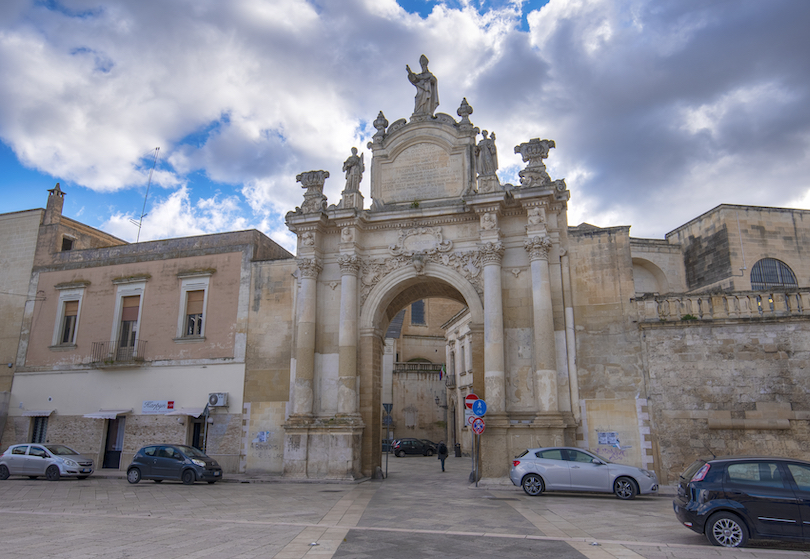
Lecce is noted for its three historic gates, the oldest of which is the Porta Rudiae. You’ll see this as you enter the Centro Storico, and you’ll want to take lots of photos of it for your Instagram.
The structure is very impressive. It features a statue of Sant’Oronzo, the patron saint of Lecce, who keeps a watchful look out for the town on top of it. The current gate was rebuilt in 1703 after the original one collapsed. But thankfully, this one is still standing firm some 520 years later!
One of the best places to view the bridge is at the ‘Bar Rudiae’, which is just outside it. We often enjoy an espresso there – which is always delicious and surprisingly cheap – before heading into the old town.
Trip to Gallipoli
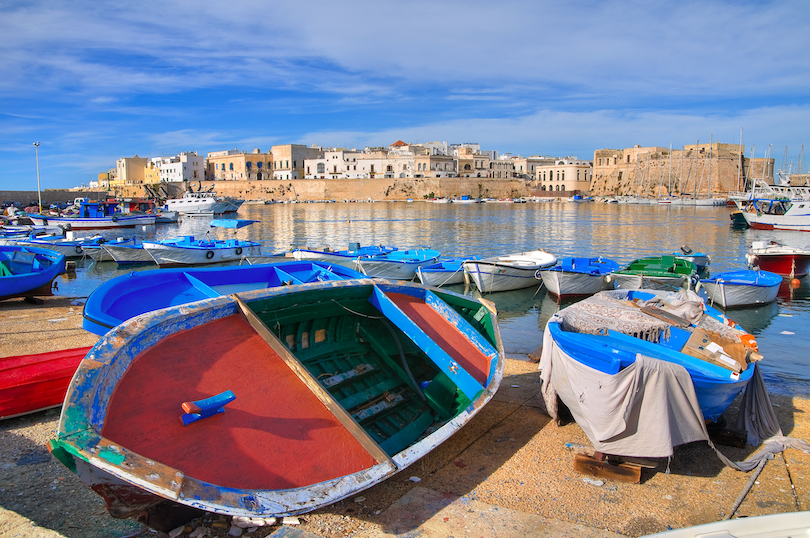
If you happen to be in Lecce for a few days, we recommend you make the trip to Gallipoli. This beautiful coastal town is just a 30-minute car ride away or a 90-minute train ride. But it is worth the journey to see this stunning ancient walled city.
Dating to Ancient Greek times, this spectacular area sits along the coastline of the Ionian Sea. It is only accessible by a bridge that was built in the 16th century, which connects the mainland to the old town.
Set on a small island, you’ll be fascinated by Gallipoli’s warren of side streets, which are resplendent with stunning architecture. One of its main attractions is a 13th-century castle, which now showcases terrific views of the water from its rooftop.
Roman Theater
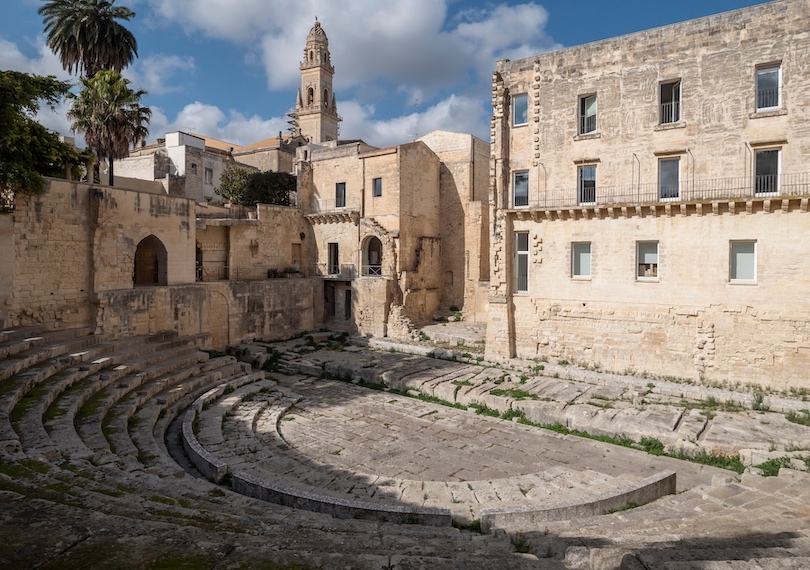
It says much about Lecce that though it is quite small, it can be easy to miss some of its more notable attractions.
One such example is Teatro Romano. Tucked away among the baroque city’s narrow streets, this stunning Roman Theater used to accommodate 4000 spectators but was only discovered in 1929. However, it can be traced back to around 43 B.C. to the Augustan Age.
You can view the theater from Via Arte della Cartapesta, which is a small street on the left of Chiesa Santa Chiara. But if you want to head inside, you can do this at the Via degli Ammirati entrance. It will cost you €3, and we recommend going in the morning before the crowds arrive.
Santa Maria di Cerrate
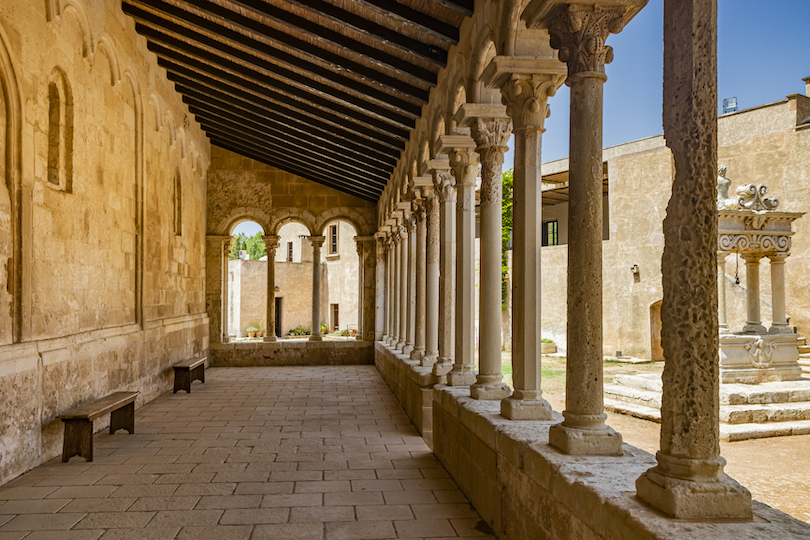
If you are planning a visit to the Santa Maria di Cerrate, you will want to get there on a sunny day. The sight of the sun bouncing off the church’s limestone walls against a backdrop of a cerulean sky is quite breathtaking.
Representing one of the best examples of Romanesque architecture you’ll find in and around Lecce, the 12th-century abbey has some notable features.
These include a fountain, an altar and several frescoes that give an insight into what life was like for those who lived here. Much of the site is still awaiting restoration, but it is worth coming here to see what those efforts entail. It is best to do this on a guided tour.
Chiesa di San Matteo
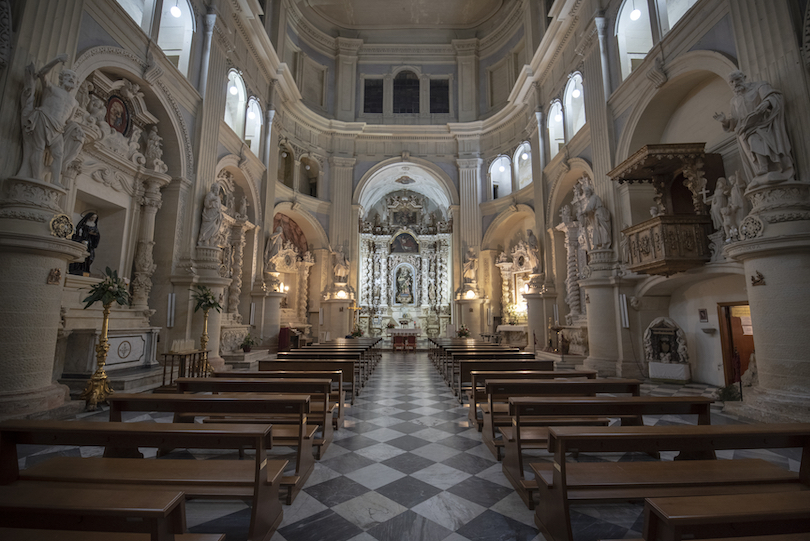
In many other cities around the world, the Chiesa di San Matteo would be the main tourist attraction. But it says much about Lecce as a travel destination that it sometimes gets overshadowed by its Basilica and Cathedral.
That said, we urge you to visit it because it has one of the most unusual and enchanting facades of any religious structure we have been to. Completed in Baroque architecture in 1667, it features a stunning design where its walls curve to form a sweeping arch. It is also adorned with ornate statues and sculptures that give it a real ‘wow’ factor.
Inside the church, nine wonderful altars impress with their depiction of various fables and figures of religious significance.
Porta Napoli
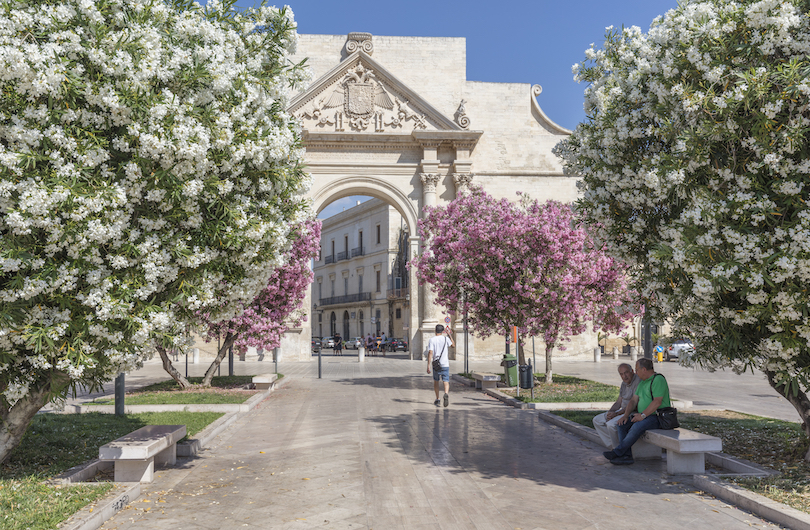
While the Porta Rudiae is the oldest of Lecce’s three city gates, the Porta Napoli is its main one. It was constructed in honor of King Charles V back in 1548 and is notable for its fabulous Baroque design and striking white stone aesthetic.
What we most enjoy about this imposing gateway is that it is a living piece of history. We are not sure how many people have walked under its archway over the years, but you get a real connection with your ancestors as you do so.
Another structure you’ll want to take lots of snaps of, there are four spectacular columns at the archway’s center. Each one has a triangular pediment that conveys the insignia of Lecce and Charles V.
Trip to Otranto
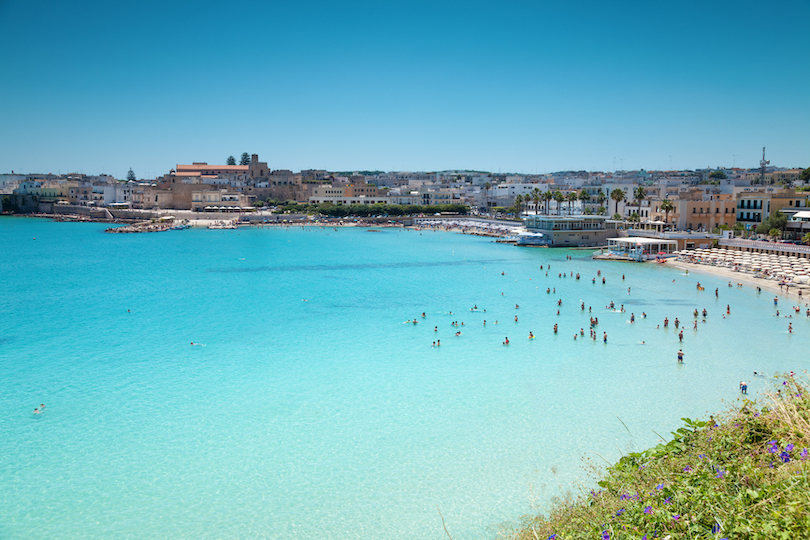
As Lecce is situated on Italy’s famous dog leg, a visit there provides a good base to explore any of the beautiful towns that are dotted along its coastline.
If you have time available, do yourself a favor and head to Otranto. It is just a 40-minute drive to Lecce and is a fantastic destination for a day trip.
While many people choose to visit the stunning 15th-century Aragonese Castle, we like to head straight to its golden stretch of beach. It provides us with a welcome spot to sunbathe and swim in the sea. It also has some excellent cafes and restaurants that serve up delicious Sagne ncannulate (a local type of pasta) and Pasticciotto (a shortcrust cream-filled pastry), which we just love!
Piazza del Duomo
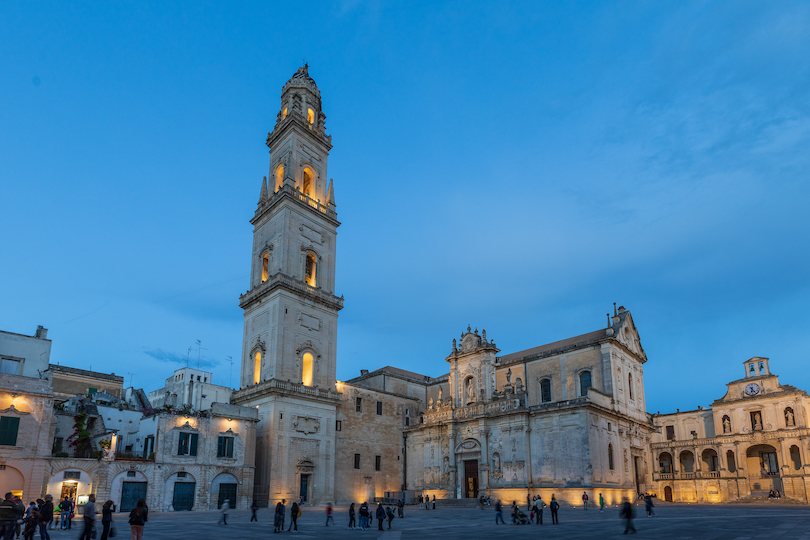
One of our favorite things to do in Lecce is sit in one of its many beautiful squares, usually with an espresso, and just people-watch.
There are lots of different places you can go to, most of which reside against a charming backdrop of splendid architecture. However, the one we tend to gravitate to the most is the Piazza del Duomo.
Situated in the middle of the old town, we love its ambience. The baroque Lecce Cathedral and the quaint library add a certain grace to the area. While the square is also lined with several shops, cafes, bars and restaurants.
All are well worth visiting, but after doing that, be sure to sit for a while in the town square. You’ll get a unique insight into life in Lecce.
Basilica di Santa Croce
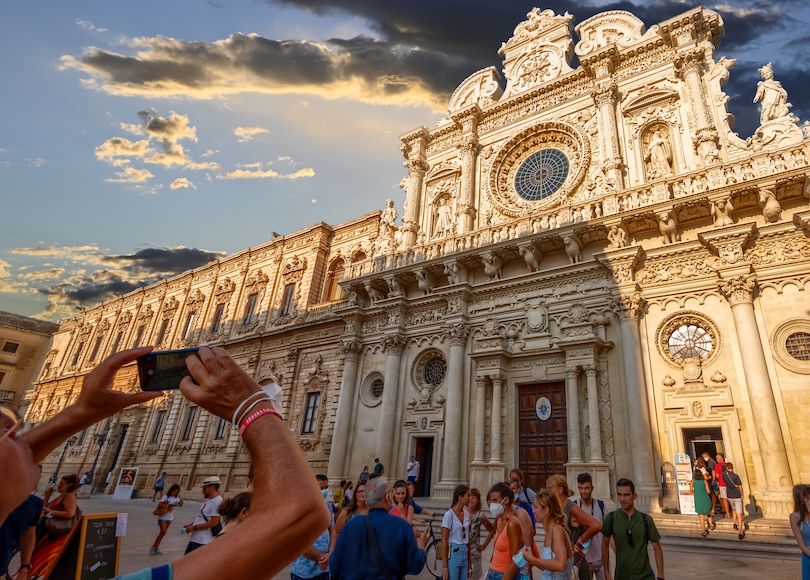
They say good things come to those who wait. Well, that certainly seems true of the Basilica di Santa Croce, which took almost 200 years to construct!
Blessed with the most intricate detail, the magnificent cathedral boasts a jaw-dropping baroque exterior that features numerous sculptures, including animals to saints. While its interior is defined by grandiose white columns, each of which has a striking candelabra in between them. Another fantastic feature is the magnificent rose window which is accompanied by intricate carvings.
Even if you are not religious, you should appreciate how much of a masterpiece the Basilica is and the vision and artistry that went into creating it. You will need to spend a bit of time there to fully appreciate its composition.
Duomo di Lecce
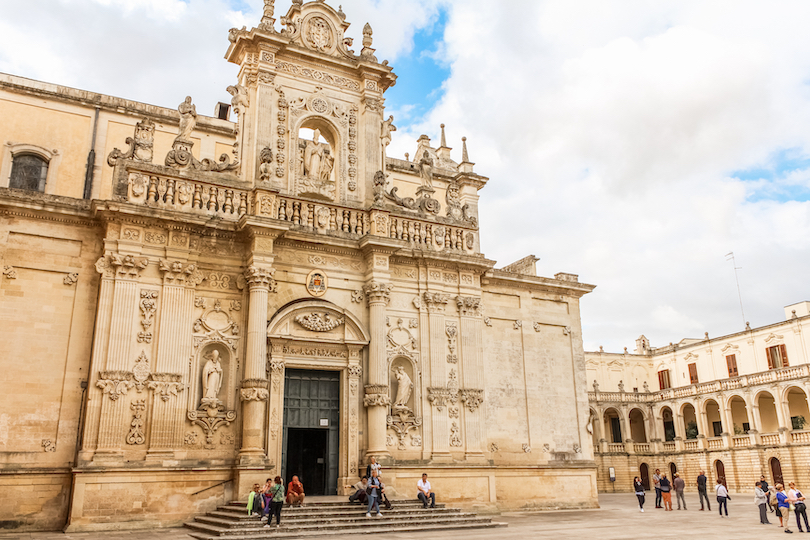
Once you have seen the Basilica di Santa Croce, you should make a point of visiting the Duomo di Lecce. Both are on par with being important religious structures in the city.
Situated in the Piazza del Duomo, the cathedral was completed in the late 17th century. It features a similar Baroque design to the basilica, boasting an elegant northern façade of sculptures and stone statues. Additionally, it has a wonderful bell tower too, which we found captivating due to its design and distinctive presence.
Within the church, there are twelve chapels, each one of which honors a different religious figure or saint. Its interior is also notable for its opulent gold artwork and arches, as well as a ceiling which showcases extraordinary historical artworks.
Roman Amphitheater
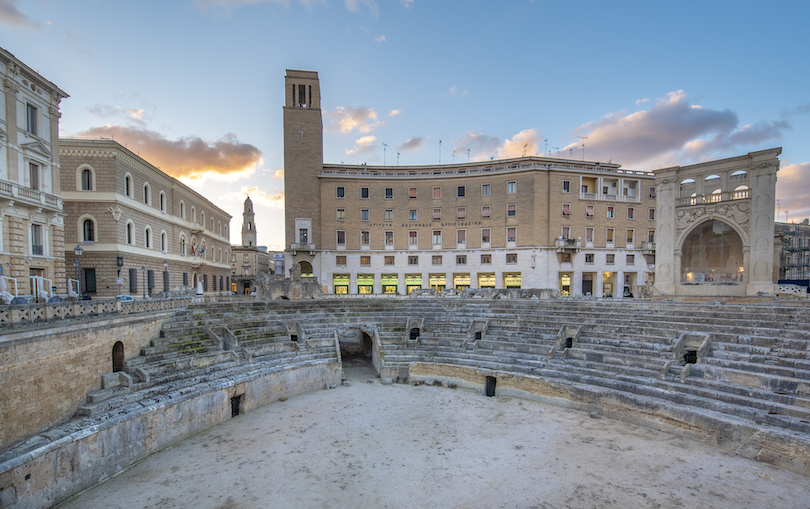
The Roman Amphitheater is another structure that, for years, lay undiscovered. Dating to the 2nd century, it was only found in 1901 when workers started to dig the foundations for a proposed bank.
Fast forward 120 years, and it has been estimated that only a third of the amphitheater has been uncovered. The ancient structure resides on the southern section of the Piazza Sant’Oronzo, and experts believe it could have seated up to 25,000 people in its heyday.
To gain a full appreciation of it, visitors can explore the stairs, columns, walls and seats of the amphitheater, much of which are still in very good condition. They can even watch live performances at the site if they head there when a show is put on. Next time we’ll coincide our visit to do so.
Centro Storico
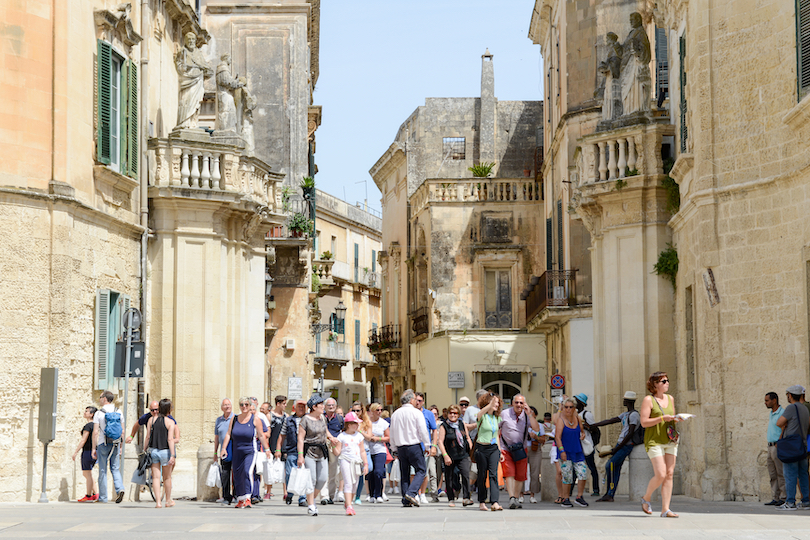
Full disclosure. Lecce’s old town was our favorite place in Puglia!
At just a few square kilometers, the Centro Storico is easy to explore on foot, and its real joy comes from discovering something new every time you go there. We spent hours strolling through its narrow streets, marveling at the honey-colored limestone buildings and fascinating monuments that speak of Lecce’s historic past.
By day the old town is quite sleepy, and people go about their business quietly. However, it comes alive at night as locals enjoy an evening stroll (which they call their passeggiata) around the Piazza Sant’Oronzo. Before having dinner or drinks at charming cafes, restaurants and bars, beautifully illuminated with outdoor, strung-up lights. The atmosphere is intoxicating!