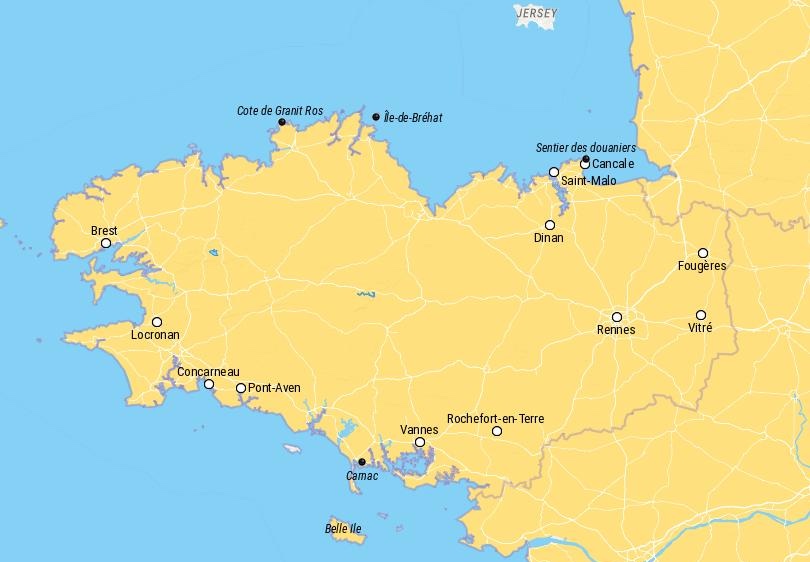
Defined by a strong sense of tradition and shaped by the sea, this coastal region captivates visitors with its rugged beauty and timeless charm. Dramatic shorelines, rolling countryside, and age-old customs come together to create a place that feels proudly distinct.
Brittany lies in northeastern France and is renowned for its picturesque fishing villages tucked into Atlantic bays, as well as its green inland landscapes dotted with medieval towns and fairy-tale castles. From peaceful forests and open moorland to remote beaches and striking coastal scenery, its diverse terrain offers something for every kind of traveler.
The region is equally rich in history and legend, with deep Celtic roots still evident in local language, traditions, and cuisine. Crêperies throughout Brittany serve savory buckwheat galettes and indulgent sweet crêpes, while centuries-old religious festivals known as pardons bring communities together in vibrant displays of faith, folklore, and traditional dress.
With its blend of natural beauty, cultural depth, and authentic local life, Brittany rewards those who take the time to explore it slowly, revealing a side of France that feels wonderfully untouched and full of character.
17. Vitre
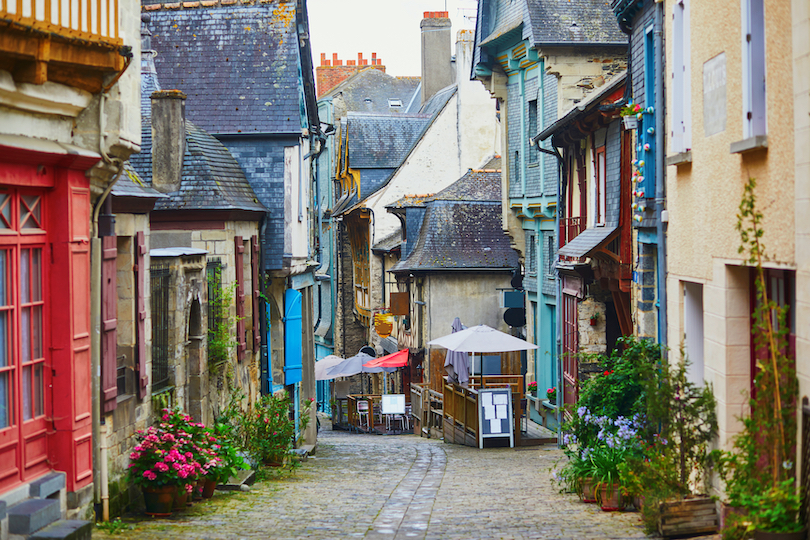
Vitré, situated on the Vilaine River’s left bank, is one of our favorite towns in Brittany because of its medieval structures that remain in remarkable condition.
Its narrow streets are lined with houses made of half-timber, creating a charming old-world feel that we find intoxicating. The most beautiful of these streets is Rue de la Baudrairie, where many ‘baudroyeurs’ (aka saddlers) used to operate.
Elsewhere, the Château de Vitré, perched on a rugged tor, is a testament to the town’s feudal past. Fortified with multiple towers, the castle was constructed in the 11th century and expanded around the time of the Middle Ages. Today, it is a museum of history and art, displaying works from the 1500s to the 1900s, gilded reliquaries, and an apothecary shop that dates back to the 1700s.
Just outside of Vitré, the 15th-century Château des Rochers Sévigné is a distinguished manor house set in extensive parkland. Once the residence of Madame de Sévignéof, a noted epistoler, it is open for guide-led tours. It also has a collection in its museum that provides a fascinating insight into her life.
16. Fougeres
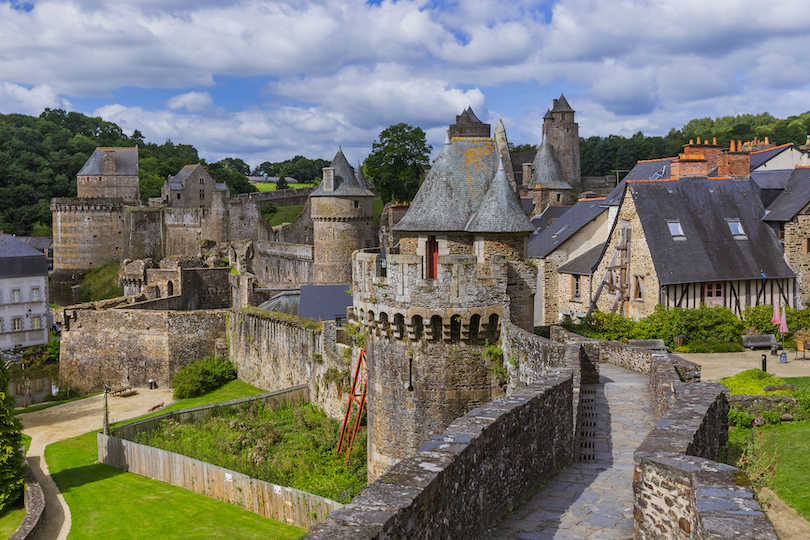
Fougères, a charming town 50 km northeast of Rennes, offers a perfect example of Brittany’s rich medieval heritage.
Presiding over the town is the Château de Fougères, a fairy-tale castle built between the 12th and 15th centuries that transports visitors back to the feudal era. The château is notable for the 13 towers accompanying its fortification circuit, which you will want to take many photos of. It also presents reenactments and spectacles that colorfully bring the medieval period to life.
Enclosed by quaint half-timbered houses and lively outdoor cafés and restaurants, the walled old town is also captivating. There you will find the Eglise Saint-Sulpice, a Gothic church with a Flamboyant Gothic interior, while the Hôtel de Ville (Town Hall), which dates from the 14th century, is also worth a visit. The Musée Emmanuel de la Villéon, housed in one of those half-timbered houses, displays the works of the Impressionist painter born in Fougères.
Uniquely, the town also boasts the Musée des Métiers de la Chaussure, a shoe museum housed in a century-old shoe factory. Emelda Marcos, eat your heart out.
15. Pont-Aven
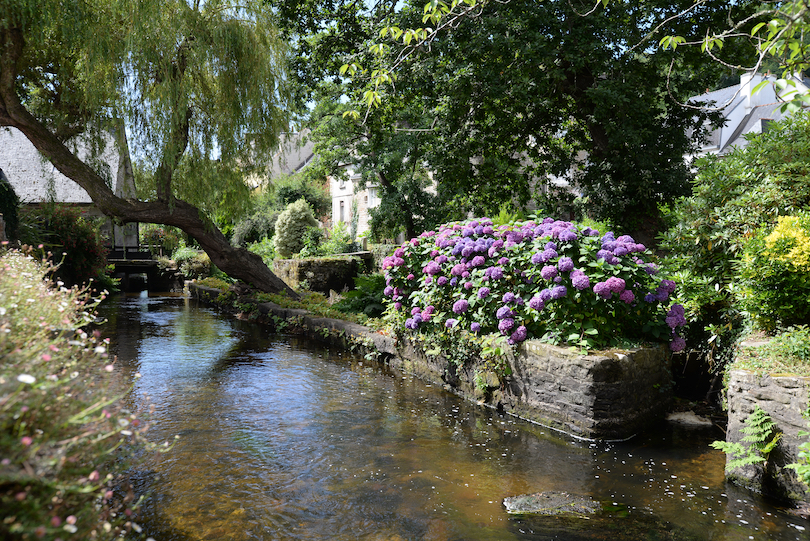
If you are into art, you will want to visit Pont-Aven, a charming artists’ community about 15 km east of Concarneau.
Taking its name from the scenic river that runs through it, the village is best known for its association with post-Impressionist painter Paul Gauguin and the Pont-Aven art movement.
You’ll get an excellent feel for this at The Musée de Pont-Aven, which displays many paintings by artists from the famous Ecole de Pont-Aven. However, for those interested in physically seeing the scenes that inspired their great artworks, a Painters’ Trail map is available at the tourist office. That will direct you to where to go.
Pont-Aven is a lovely place to visit any time of the year, but early August is perfect because of the Fête des Fleurs d’Ajonc (The Gorse Flowers Festival). During this summer festival, townspeople dress in old-fashioned regional costumes while the streets come alive with traditional Breton dancing and bagpipe music.
14. Rennes
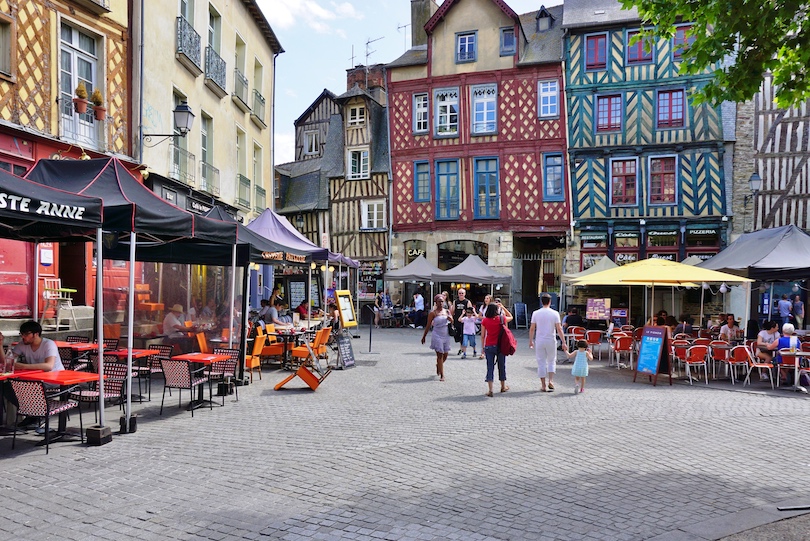
Once the capital of Brittany, Rennes is now a vibrant university town and a hub for the region’s economy and culture.
While it has a history of destruction and rebuilding, it has emerged as a modern city, with streets laid out at right angles that are perfect for walking.
Check out the Place de la Mairie, where visitors can admire the iconic 18th-century Hôtel de Ville. Similarly, Eglise Saint-Sauveur, a stunning church built in the 17th & 18th centuries, is worth visiting. So is the grandiose Place du Parlement de Bretagne, which houses the Court of Appeal.
Another notable spot is the Romanesque abbey church of Notre Dame en Saint-Melaine, a few blocks northeast. It features a lavishly sculpted facade and an ornately embellished cloister that will intrigue you with its meticulous detail.
13. Cancale
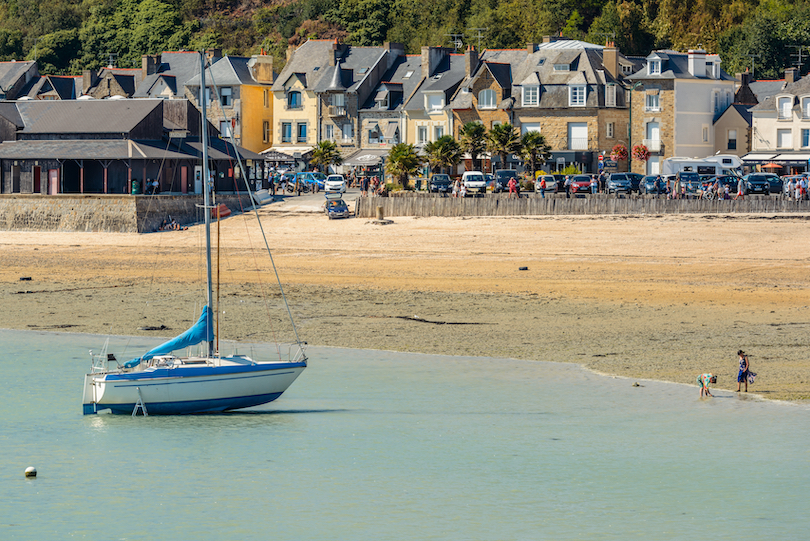
If you love seafood, you’ll want to visit the small fishing village of Cancale, on the Bay of Saint-Michel.
A seafood lover’s paradise, visitors can enjoy the day’s fresh catch at one of the many restaurants located at La Houle Port. For an immersive oyster experience, you should head to La Ferme Marine de Cancale, a working farm with guided tours.
The town also has a rich history, which visitors can learn more about at the Musée des Arts et Traditions Populaires. Housed within the Eglise Saint-Méen, an 18th-century church, it has fascinating exhibits about Cancale’s fishing and seafaring history and a collection of traditional costumes and locally made craftworks.
For those who want to experience its breathtaking natural beauty, take a refreshing walk along the coastline on the Sentier des Douaniers. It offers stunning views of the dramatic cliffs and beaches that will break you out in goosebumps.
12. Côte de Granit Rose
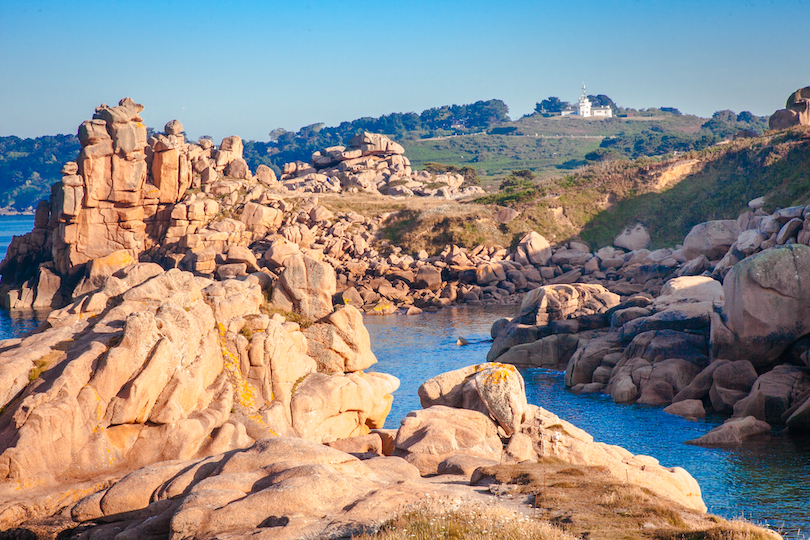
The Côte de Granit Rose is one of Brittany’s most picturesque areas.
Translating in English as ‘The Pink Granite Coast’, it stretches between Perros-Guirec and the port of Ploumanac’h. It is best known for its imposing rock formations – the Rochers de Ploumanac’h – which resemble recognizable figures such as Napoleon’s hat and a rabbit.
One of the best ways to see the coast is by hiking along a section of the spectacular Sentier des Douaniers. We spent a wonderful couple of hours taking in the beautiful views of the pink granite landscape and turquoise waters as we did it. We also spent quality time on a warm, sunny day at the Plage Saint-Guirec, a sandy sheltered beach perfect for swimming.
If you are into bird-watching, you can also take a boat trip from Perros-Guirec to Brittany’s largest bird sanctuary, which resides on the Sept-Îles archipelago.
11. Ile de Brehat
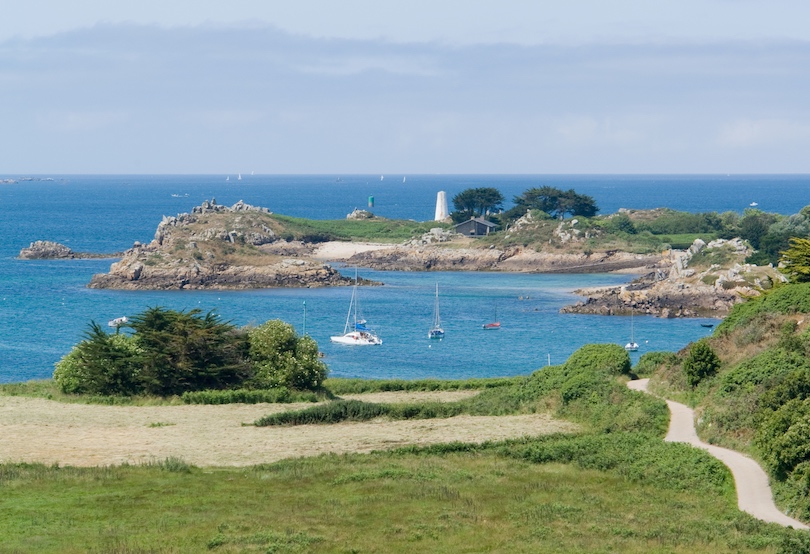
When you need a change of pace or scene during your visit to Brittany, Île de Bréhat is an ideal destination.
A small, car-free island measuring only 3,5 km in length, it boasts incredible natural beauty, mild weather, and serene surroundings.
During your time there, you can explore its multiple trails on foot or by bicycle. Taking in views of the striking red granite cliffs and vibrant wildflowers as you do so.
To get there, you can take a ferry from Pointe de l’Arcouest in Ploubazlanec, which offers a scenic 10-minute transit with plenty of opportunities to record an Instagram reel. The village there also offers a charming range of cafés, restaurants, and hotels, which enable you to stay a night or two.
10. Brest
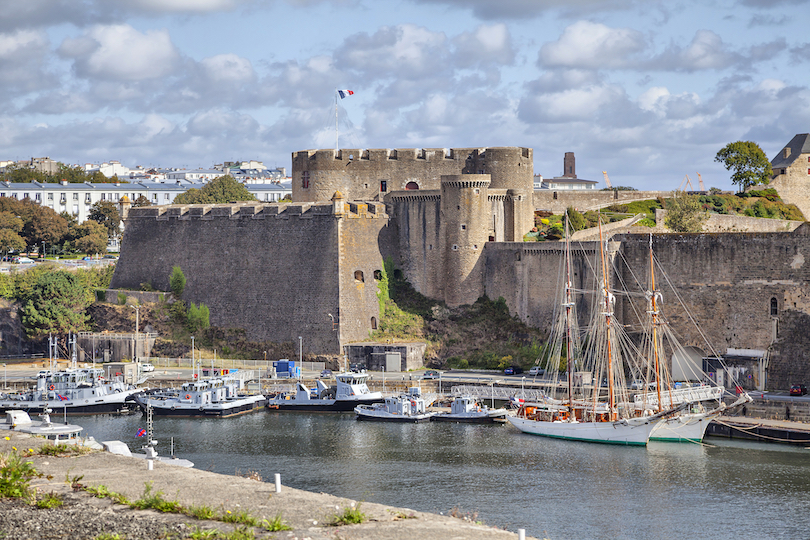
Brest is a vibrant port city in the Finistère region of Brittany, with much to offer visitors.
The city has several top-notch museums boasting a rich mix of history and culture. They include the National Maritime Museum, where you can learn about Brest’s naval past, and Musée des Beaux-Arts, which houses Italian and French old masters and more modern art.
It also features landmarks like the striking Pont de l’Iroise bridge and the Tour Tanguy, a medieval tower now serving as a museum. At the same time, nature lovers should enjoy exploring the Océanopolis aquarium and the nearby Parc Naturel Régional d’Armorique. While Brest also has a lively restaurant and nightlife scene for those wanting to paint the town red.
9. Concarneau
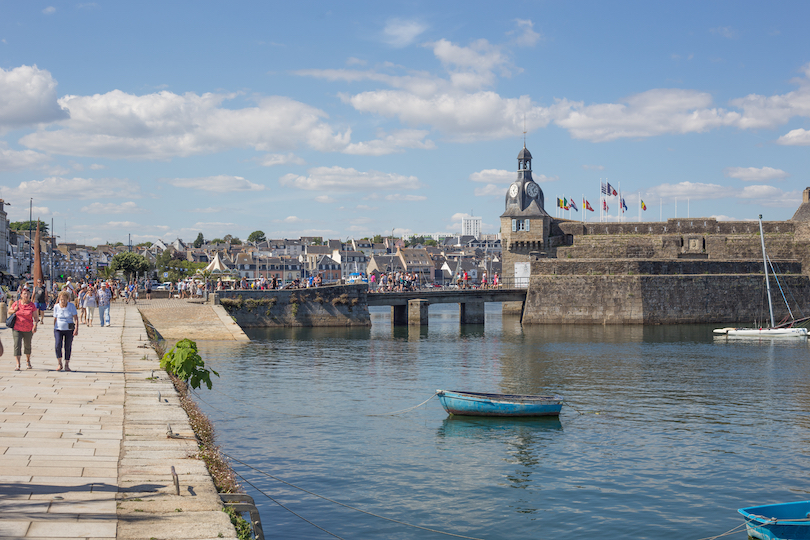
Sitting at the Moros River’s mouth, the town of Concarneau is the third-largest of France’s fishing ports. It is known for its historic fortified ‘ville close’, enclosed entirely by sturdy towers and walls of granite dating back to the 14th century.
If you choose to visit there, you can immerse yourself in its medieval ambience. The best way to do this is by strolling through its narrow, old-world which features houses displaying vibrant geraniums and historic stone buildings.
The city also has plenty of exciting shops and buzzy cafes and restaurants. Additionally, it has some lovely sandy beaches, including the family-friendly Plage des Sables Blancs and Plages de la Corniche to spend time at.
For those who want a fix of culture, the Musée de la Pêche displays a host of fishing-related exhibits. It also has a documentation center showcasing publications, books, and other materials about fisheries and general maritime activities.
8. Vannes
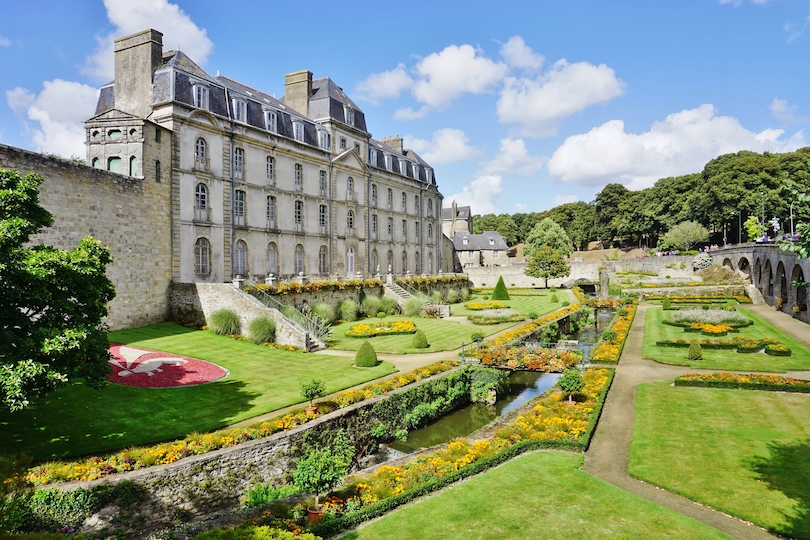
The charming town of Vannes is roughly halfway between Nantes and Brest in the Gulf of Morbihan.
It is worth visiting here to see its historic old town, nestled within ancient walls and centered around the Cathédrale Saint-Pierre.
The cathedral is an impressive structure that dates back to the 13th century, boasting a gorgeous rotunda-shaped chapel in the Italian Renaissance style. Inside are breathtaking 17th-century tapestries and a spectacular treasury.
You will also get an exceptional view of the cathedral and the surrounding area from the Promenade de la Garenne. While the Musée d’Histoire et d’Archéologie is worth popping in to as well.
Housed within the 15th-century Château Gaillard, the museum there showcases the heritage of Vannes through an extensive collection of archaeological finds, paintings, and objets d’art.
7. Belle Ile En Mer
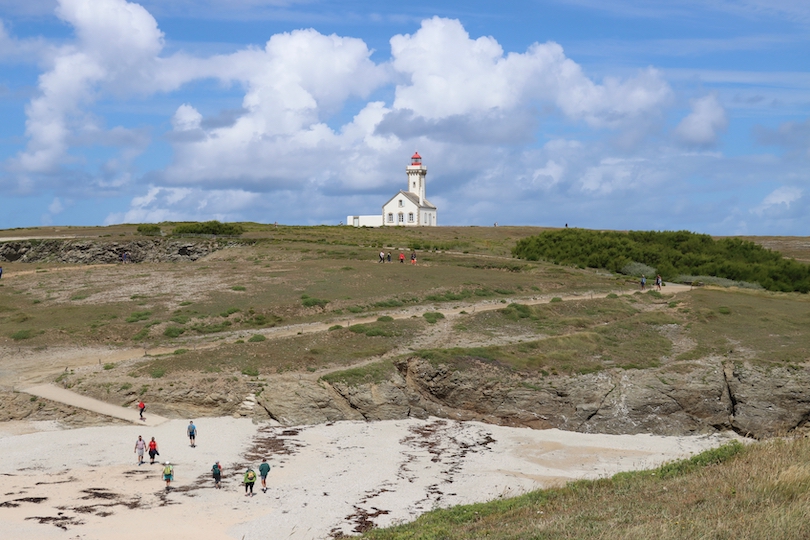
Belle-Île-en-Mer is a stunning natural paradise on Quiberon Bay in southwest Brittany.
The largest of the Breton islands is known for its magnificent coastline and quaint villages, making it a terrific destination for those wanting a quiet and relaxing getaway.
Tourists can reach Belle-Île-en-Mer through a 45-minute ferry boat ride from Quiberon or a private taxi boat ride during the high season.
Once there, you can wander around the island’s main town of Le Palais, which bustles with restaurants, hotels, art galleries, and artisans’ workshops. Overall, it is a pleasant place to explore, shop and taste lovely local cuisine.
Several beautiful beaches, including Plage des Grands Sables, are also on the island. Many of which are perfect for swimming, sunbathing, and watersports.
6. Locronan
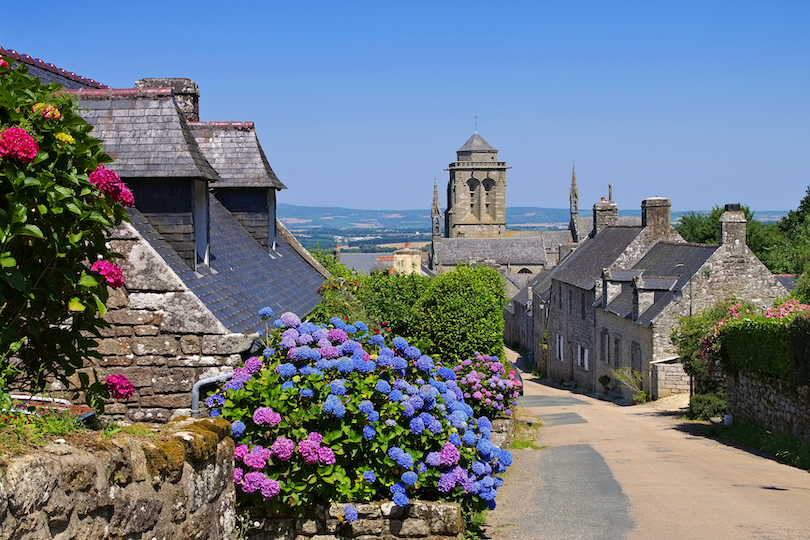
Located in the scenic Finistère region of Brittany, Locronan is one of France’s more alluring towns. Rich in character, it boasts stately Renaissance homes and a stunning church that dates to the 15th century, transporting visitors back in time.
The town is best known for the ‘troménie’, which might take the form of Breton pardons or a pilgrimage festival. On a six-yearly basis, it hosts the Grande Troménie, a spectacular 11-km religious procession where thousands of people walk together in prayer.
If your visit doesn’t coincide with that, it is worth coming to Locronan to visit the nearby Chapelle Sainte-Anne-la-Palud, another pilgrimage destination. It has a striking granite painted statue that honors Saint Anne, who was tragically executed back in 1548.
For those not interested in religious sites, the well-sheltered sandy beach near Sainte-Anne-la-Palud is the perfect place to enjoy breathtaking sunsets.
5. Carnac
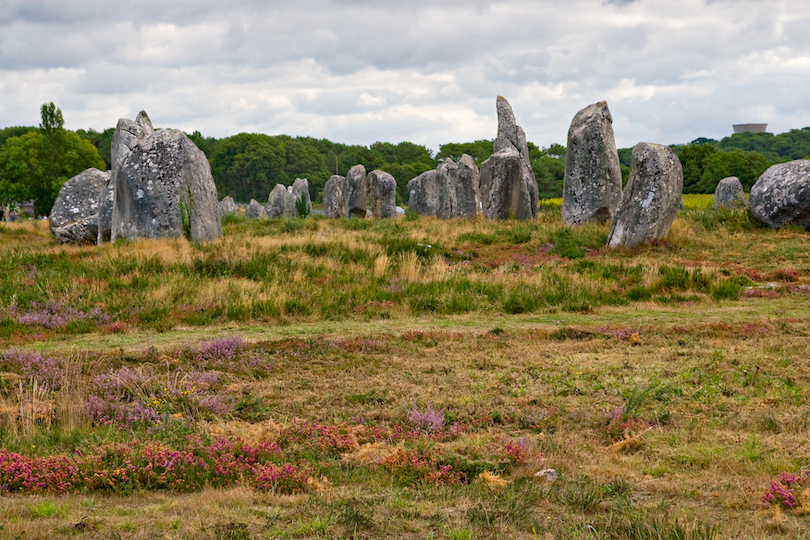
Predating Stonehenge, the Egyptian Pyramids and Knossos, Carnac is a popular destination for those interested in Neolithic sites.
Its main highlight is the ‘Circuit des Alignements’, which incorporates standing circles and rows of stones reaching up to six meters in height. Additionally, the Tumulus Saint-Michel is a remarkable megalithic monument crowned by a small chapel.
The town’s name comes from the Celtic word ‘carn’, meaning a stone monument. Whilst there, visitors can go on a self-guided or guided tour of these landmarks and visit the famous Musée de Préhistoire. One of Europe’s top prehistoric museums, it displays objects discovered at local archaeological sites dating back to 450,000 BC.
4. Rochefort-en-Terre
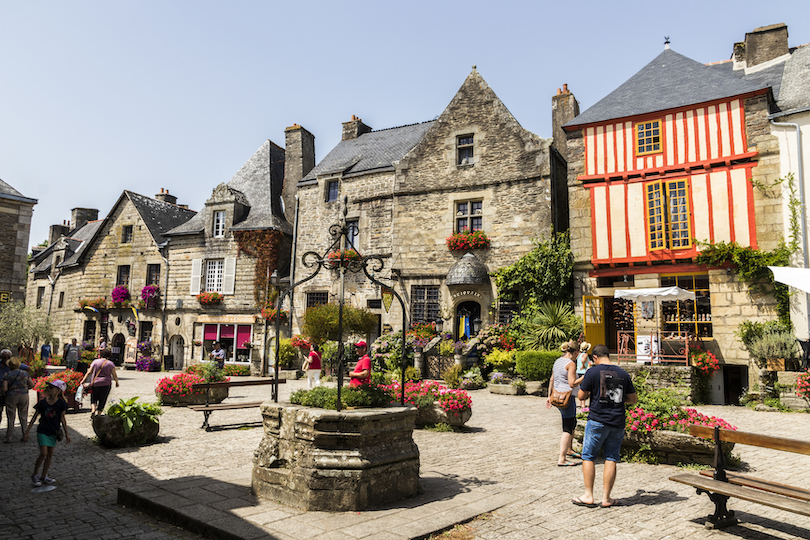
Rochefort-en-Terre, located just 30 kilometers from Vannes, is a picturesque village that ranks as one of the most beautiful in France.
Known for its colourful and vibrant floral displays, the town’s narrow streets are resplendent with potted flowers and geraniums that create an air of sophistication and charm. The town also features several artists’ ateliers and delightful half-timbered and old stone houses worth exploring.
One of its main highlights is the 17th-century Château de Rochefort-en-Terre. Originally a horse stable, the château was renovated by American painter Alfred Klotz in the early 20th century. Unfortunately, the castle’s interior is not open to visitors. However, as it is surrounded by a leafy park which you can freely wander through, you can admire its impressive exterior.
3. Saint-Malo
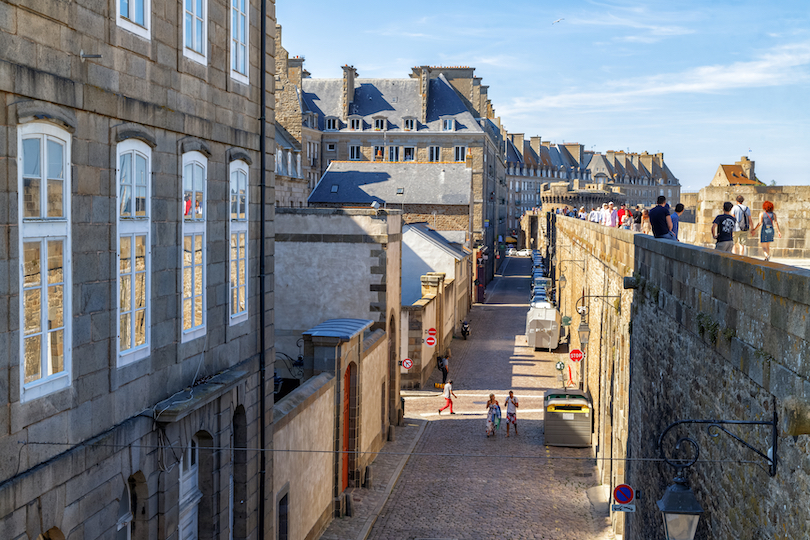
Saint-Malo is a remarkable Breton port that was once an island near the mainland.
Built as a citadel, the city is renowned for its well-preserved medieval fortifications that give it a unique character. Although its historic center was largely destroyed during World War II, the old walls, the 14th- and 15th-century Château de Saint-Malo, and the 12th-century Cathédrale Saint-Vincent survived the bombing.
The city was later rebuilt in its original style, with granite houses that look ancient and atmospheric old cobblestone streets that have survived the centuries. Visitors can explore narrow pedestrian lanes that lead to bustling public squares and side streets filled with numerous restaurants and crêperies.
On the west side of the ramparts, the Plage de Bon-Secours is a fantastic beach that has a seawater swimming pool which showcases breathtaking views of the Bay.
2. Sentier des Douaniers
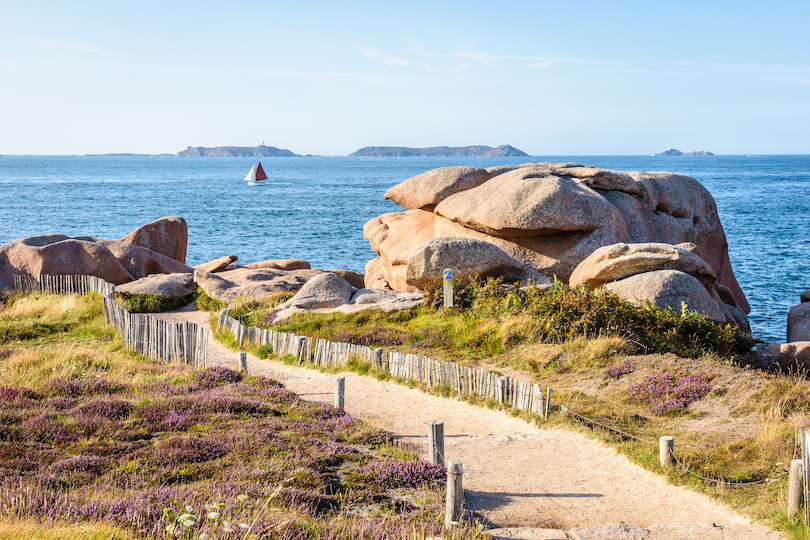
When discussing the Côte de Granit Rose, we briefly mentioned the Sentier des Douaniers as a good way of seeing the Rochers de Ploumanac’h. But there is a lot more to see on it than just that.
Also known as the Customs Officers’ Path or the GR34, the famous coastal trail runs along the entire coast of Brittany. The path follows the coastline, allowing hikers to discover various attractions, including lighthouses, forts, megalithic monuments, and picturesque fishing villages. The trail also passes through several natural reserves and protected areas, offering opportunities to see rare wildlife and unique ecosystems.
Overall, the trail is around 2,000 km long and can take anywhere from a few days to several weeks, depending on how much of it you want to explore. It is divided into several sections, each offering a different, fascinating experience, from the northern coast’s windswept cliffs to the south’s sandy beaches.
1. Dinan
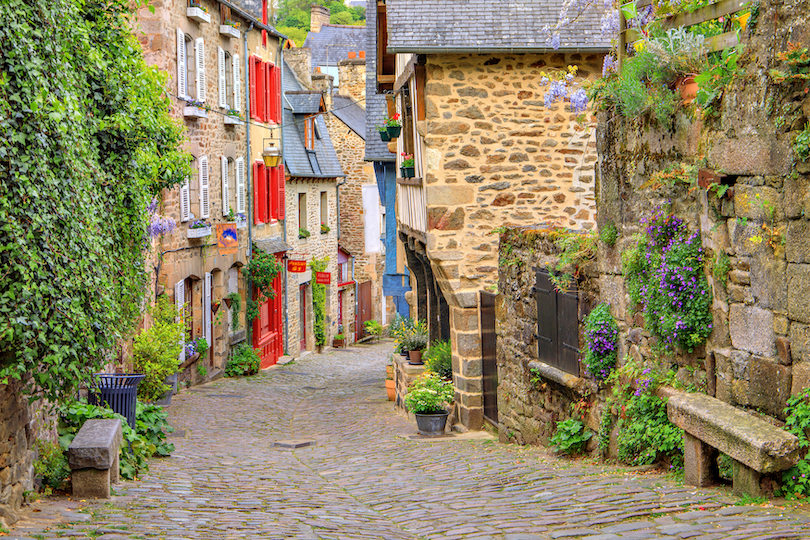
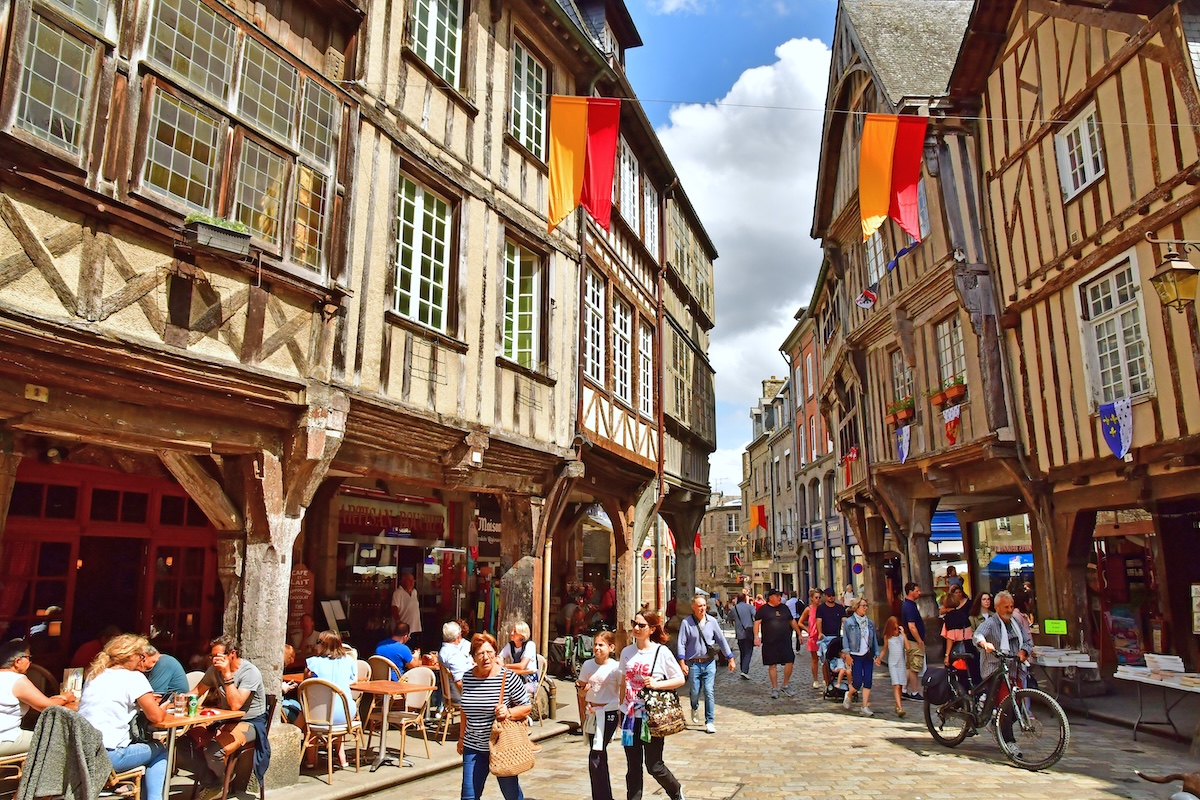
Nestled on a hill between Dinard and Saint-Malo on the left bank of the Rance River, Dinan is another stunning French town.
Notable for the ancient walls surrounding it, the settlement features a collection of late-medieval to Early Renaissance houses. It also accommodates the magnificent 14th-century Château de Dinan castle. That features a dungeon, 15th-century fortifications that were virtually impenetrable and formidable towers, highlighting the austerity of the Middle Ages.
Visitors can also attend Les Soirées there – evening events hosted in the castle, to experience the world of Jean IV, the Duke of Brittany, his knights, and servants.
The Basilique Saint-Sauveur elegantly blends various architectural styles and is another must-see attraction. You can also take a relaxing boat trip down the Rance River to Dinard or Saint-Malo to view both places from a different perspective.