
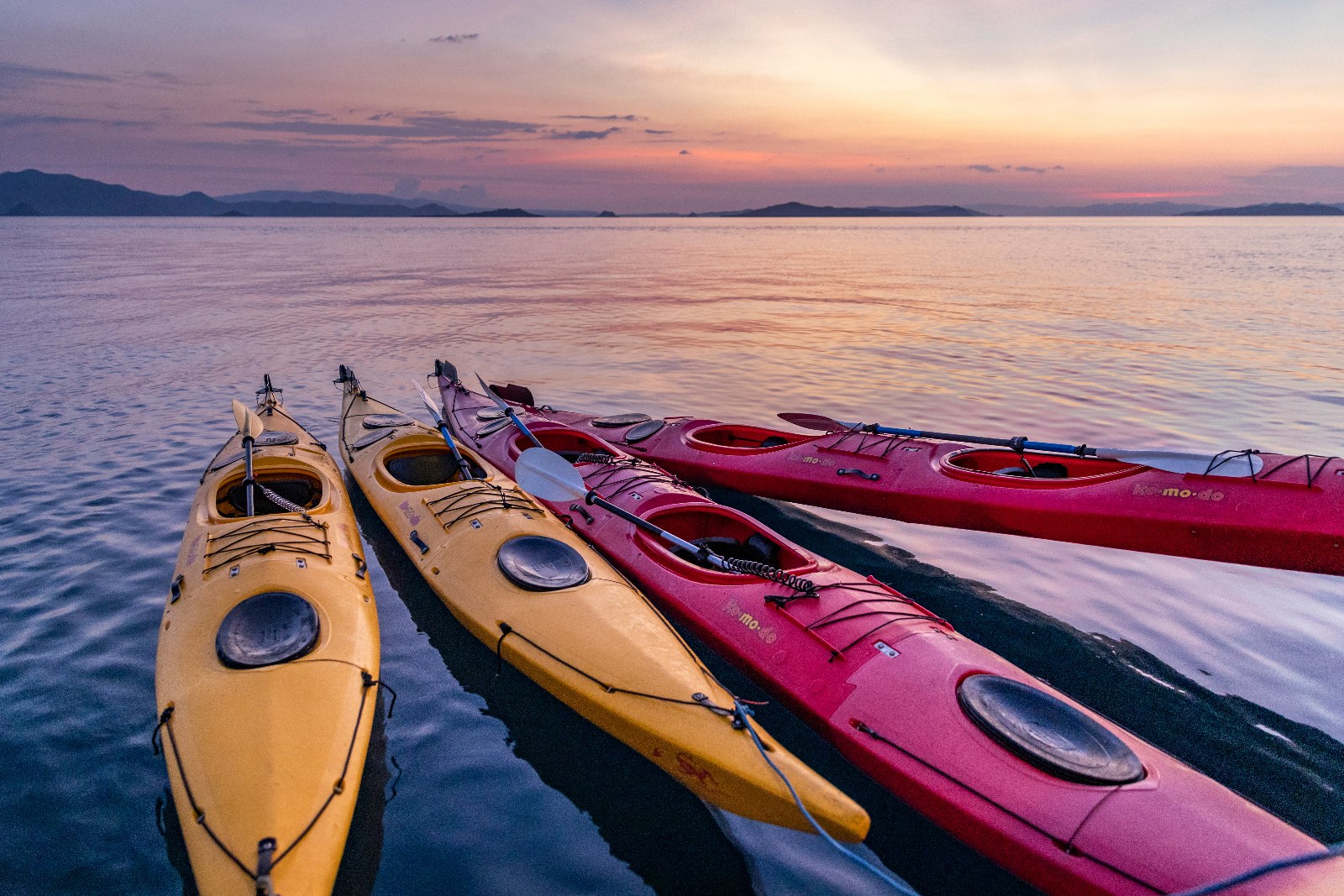
Long before fiberglass or rotomolded plastic, Arctic hunters built kayaks from driftwood frames and stretched sealskin, sizing each boat to the paddler’s own body. A qajaq was part of its owner’s gear the same way a coat was. That idea of a boat that fits you and goes where bigger vessels can’t still defines the sport.
Sitting a few inches above the water changes how you see a place. Cliffs look taller, wildlife treats you as a slow, quiet log, and you can slip into caves, mangrove tunnels, and shallow coves that tour boats sail right past.
The spots worth your vacation days use that low, quiet vantage best. Some are glassy flatwater for a lazy afternoon. Others are serious whitewater or multi-day expeditions that ask for real skill, cold-water gear, and a licensed guide.
Milford Sound, New Zealand
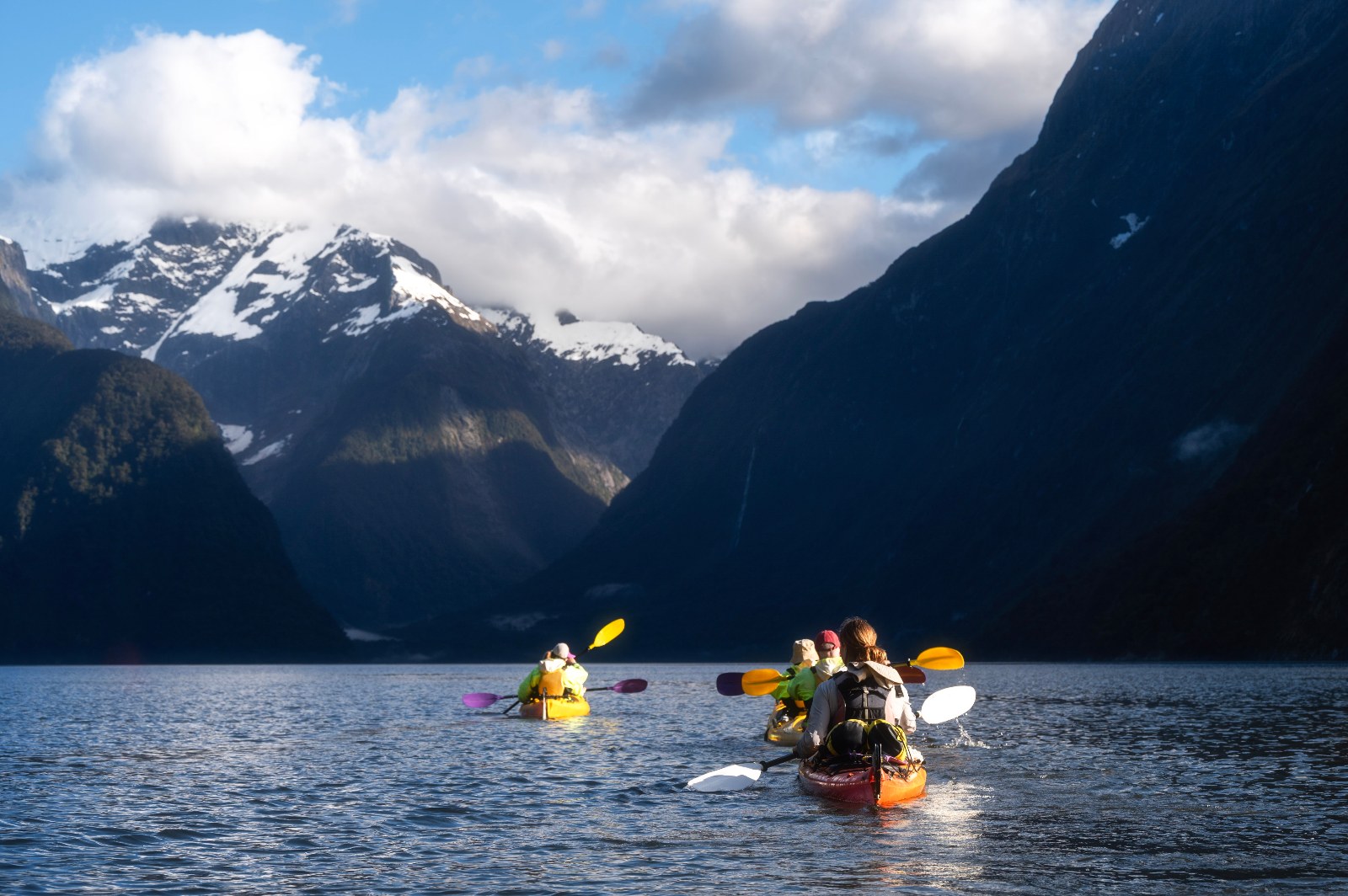
Milford Sound gets so much rain that you’ll want to hope for a wet day. The area averages close to seven meters of rainfall a year, and after a downpour hundreds of temporary waterfalls pour off the cliffs. Mitre Peak rises about 1,692 meters straight from the water, so your kayak feels absurdly small beneath it.
Technically it’s a fiord, since glaciers carved it, and the name “sound” is a historical mix-up. A layer of tannin-stained fresh water floats on top of the salt water, which darkens the surface and lets deep-water corals grow unusually shallow. Paddling out from Deepwater Basin with a guide, you’ll often share the water with fur seals lounging on rocks and the occasional pod of bottlenose dolphins cruising toward the Tasman Sea.
Antarctic Peninsula
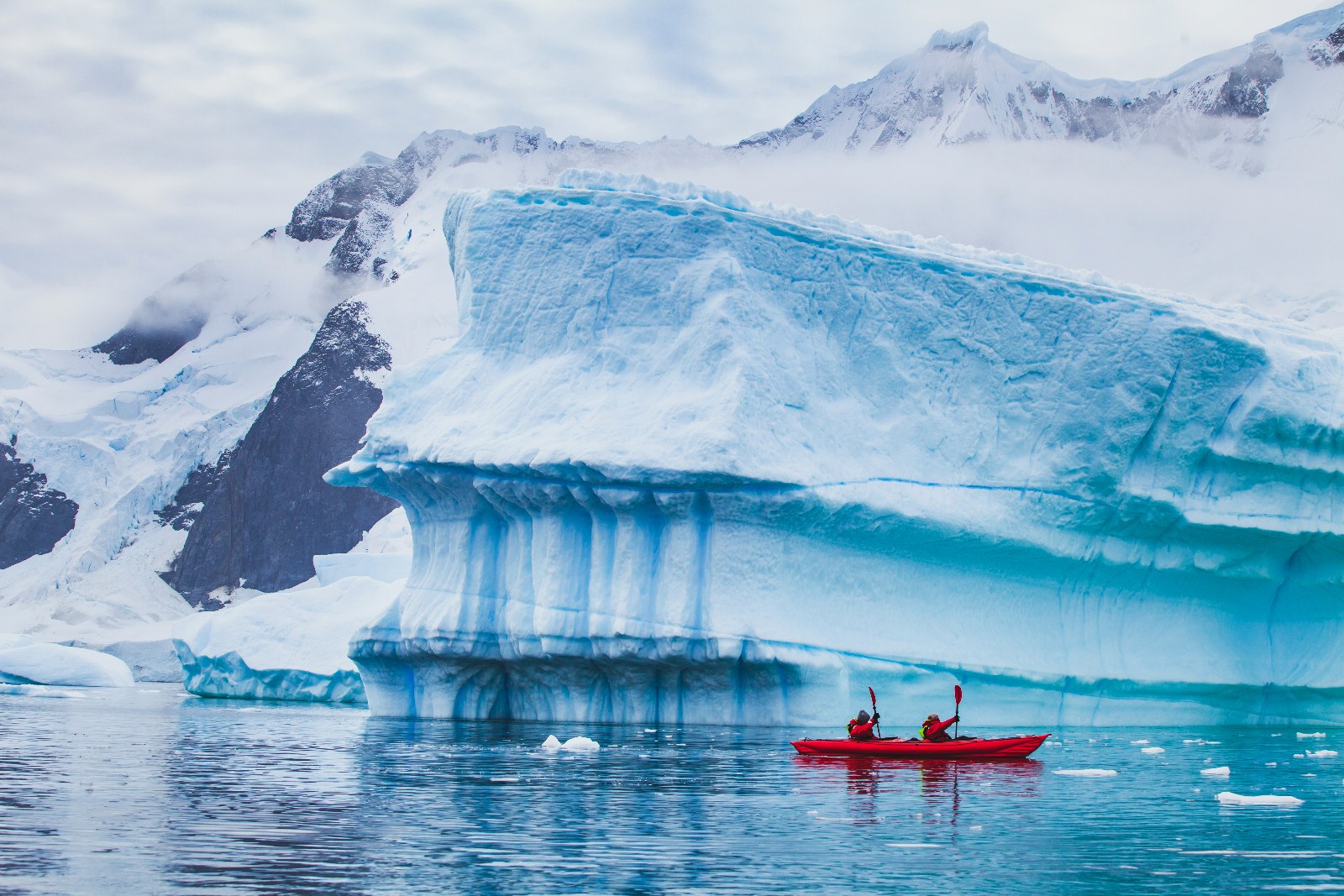
Your kayak trip here starts on an expedition ship, because there’s no other way in. Most voyages sail from Ushuaia, Argentina, cross the Drake Passage, and run from roughly November to March, when the peninsula’s waters open up enough for small boats. Kayak programs sell out fast and cost extra, so book the paddling add-on when you book the cabin.
Once you’re out, the scale gets strange. Icebergs the size of apartment blocks drift through Paradise Harbor, gentoo penguins porpoise past your bow, and humpback whales surface close enough that you hear them exhale before you see them. Leopard seals sometimes investigate boats, which is why guides keep groups tight. You’ll paddle in a drysuit, and outings depend on the weather each morning, so some days the ship’s crew calls it off entirely.
Nærøyfjord, Norway
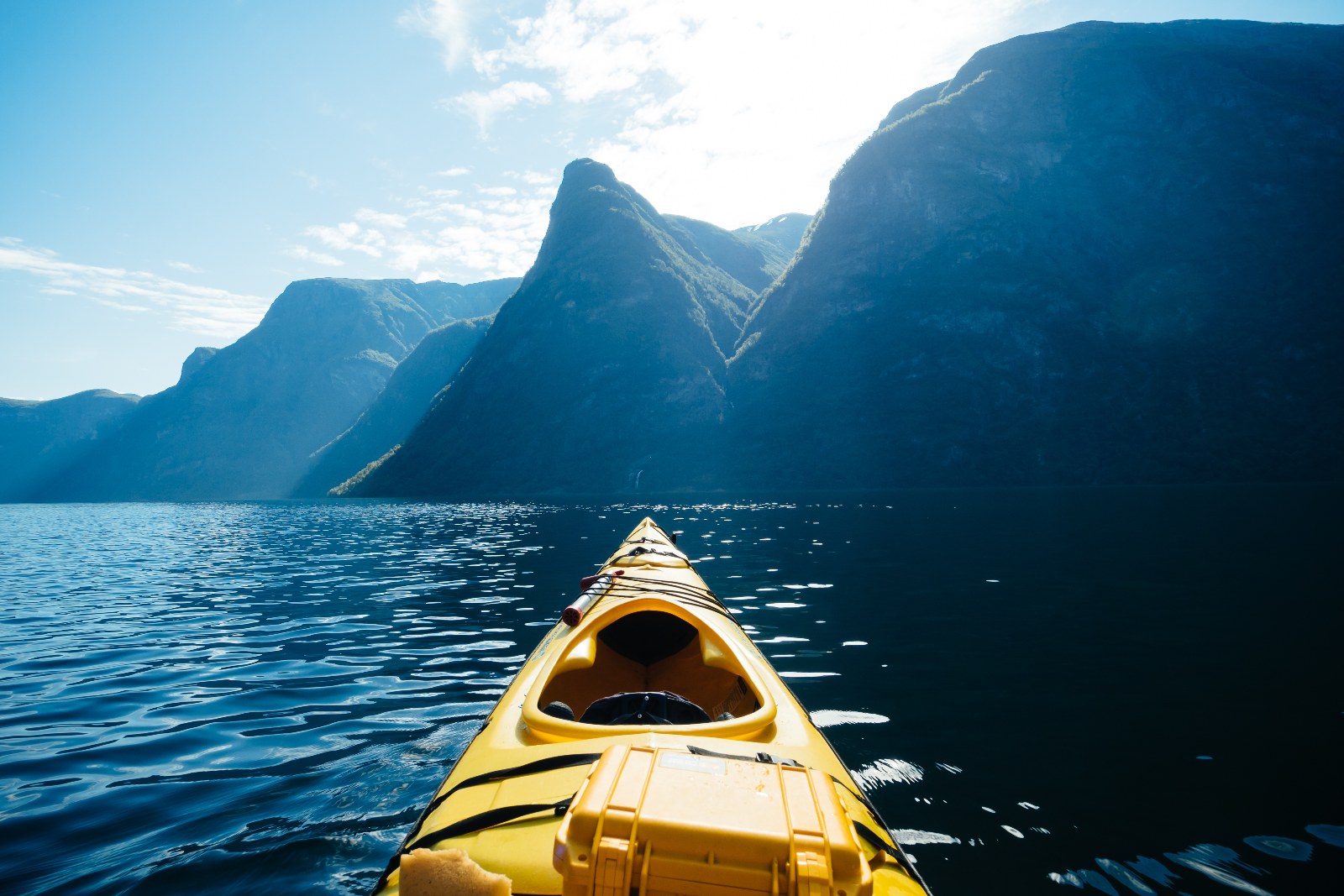
At its narrowest point, Nærøyfjord squeezes down to about 250 meters wide, with mountains climbing roughly 1,700 meters on either side. That tight geometry is why UNESCO listed it in 2005 alongside Geirangerfjord as part of the West Norwegian Fjords. In a kayak, the walls feel close enough to touch, and waterfalls drop from ledges you can’t see the top of.
Most paddlers launch from Gudvangen, a tiny village at the head of the fjord, and head toward the junction with Aurlandsfjord near Flåm. The water stays calm on most summer days because the fjord is so sheltered. Ferries and cruise boats do pass through, so you’ll want to hug the shore when they appear. Old farms cling to the slopes, some once reachable only by boat or ladder.
Stockholm Archipelago, Sweden
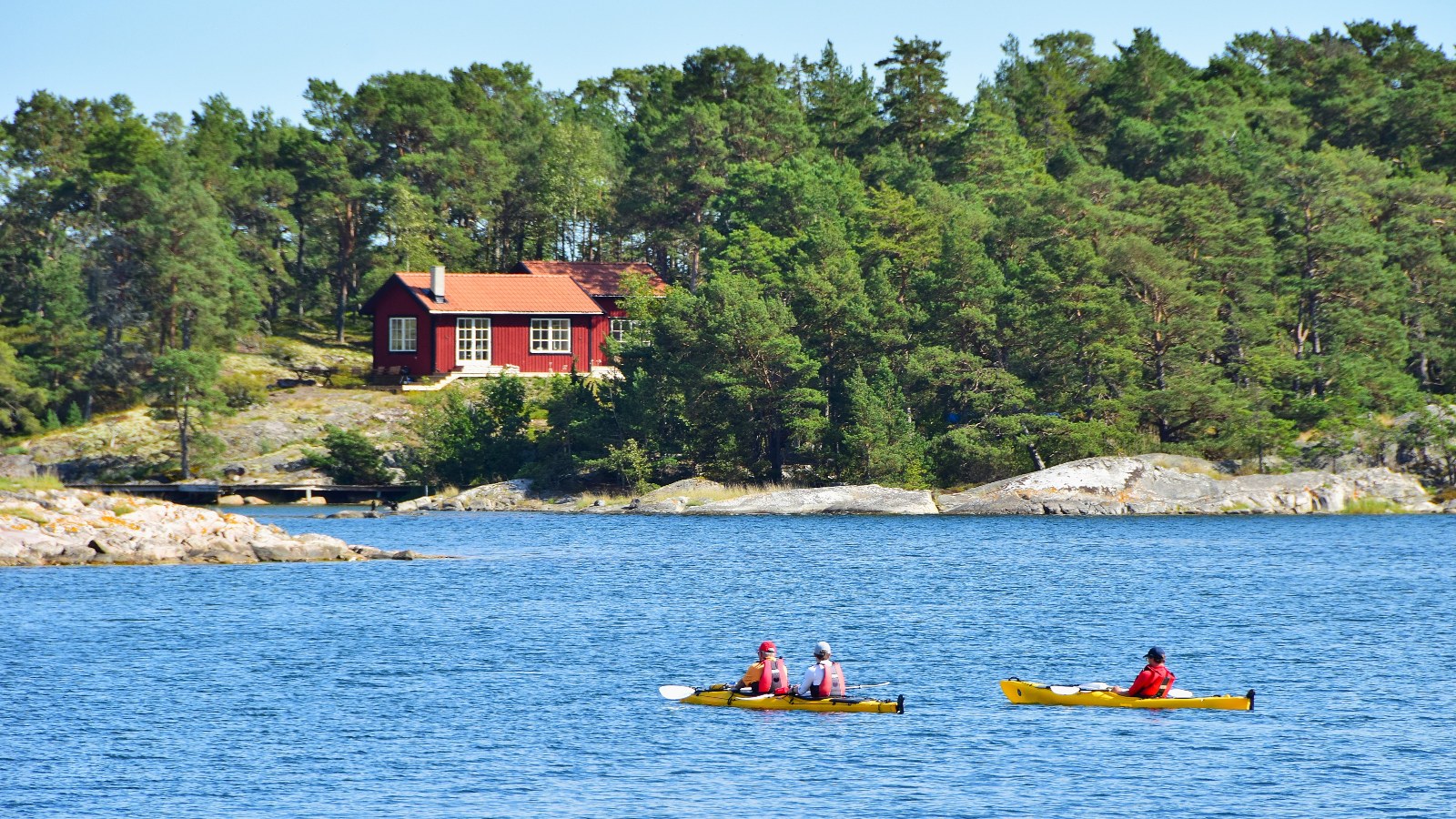
Sweden’s right of public access, allemansrätten, turns this archipelago into one of the easiest places on earth to plan a self-guided kayak trip. You can land on most uninhabited islands and pitch a tent for a night, as long as you stay out of sight of homes and leave nothing behind. With around 30,000 islands, islets, and rocks to choose from, finding a quiet spot takes about ten minutes.
The scenery is smooth pink granite, pine trees, and red summer cottages. Outfitters in Vaxholm and Stavsnäs rent boats and gear, and the outer islands get wilder and more exposed the farther east you go. Around Midsummer, the sky barely darkens, so you can paddle at 11 p.m. in soft blue light and still find your campsite without a headlamp.
Dalmatian Coast, Croatia
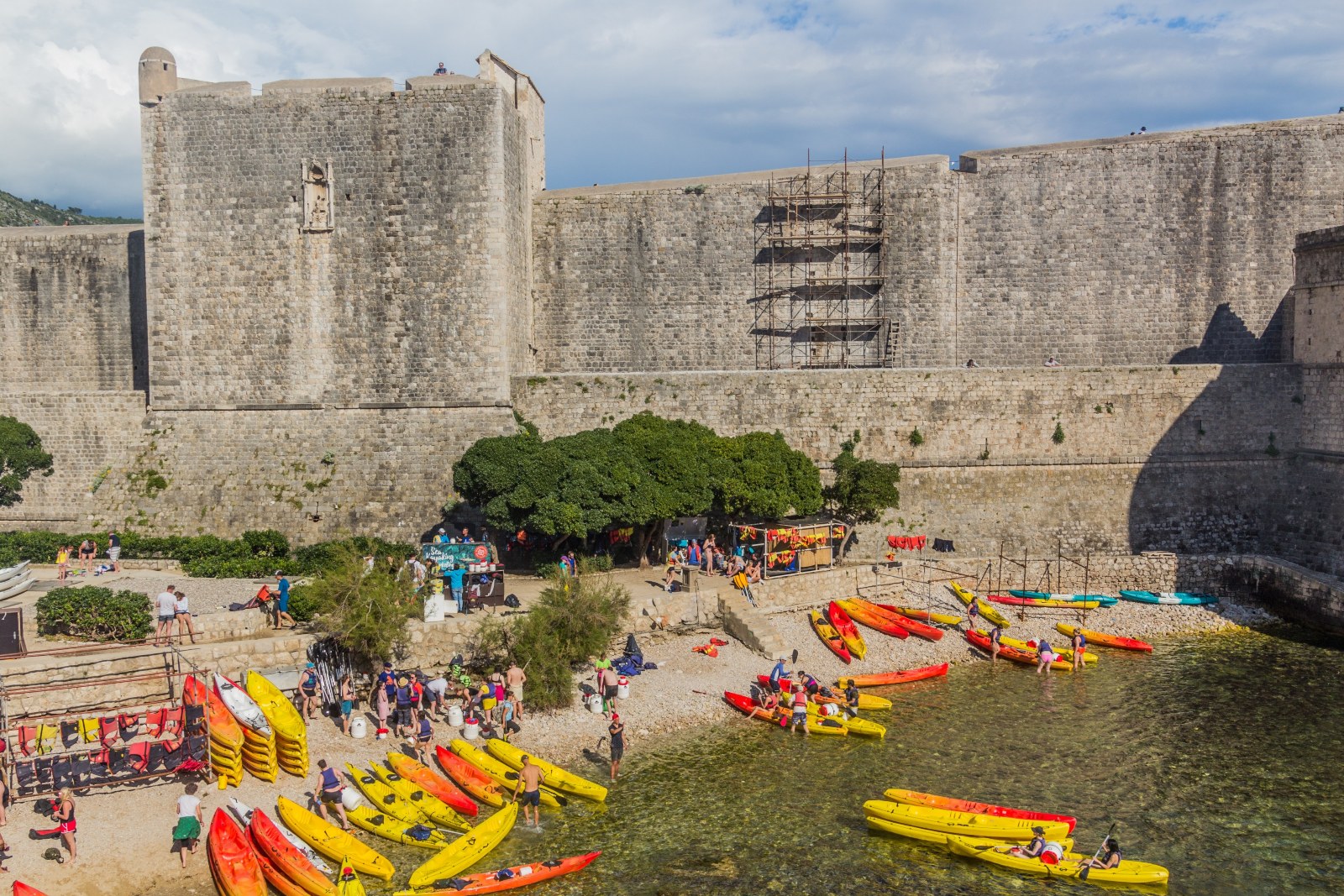
Circling Dubrovnik’s medieval walls by kayak gives you a view most visitors pay to see from the top. Half-day trips leave from below the old town, paddle past the fortress of Lovrijenac, and loop around Lokrum Island. Many stop at Betina Cave, a small beach tucked under the cliffs where you can swim in water so clear you can count pebbles on the bottom.
Head north and the options multiply. The Elafiti Islands make good day hops, and the Pakleni Islands off Hvar have pine-shaded coves and limestone shelves for snorkeling. The Adriatic stays mostly calm in summer, though the bura wind can whip up whitecaps fast, so local guides keep an eye on the forecast. Expect company in July and August; June and September feel far less crowded.
Soča River, Slovenia
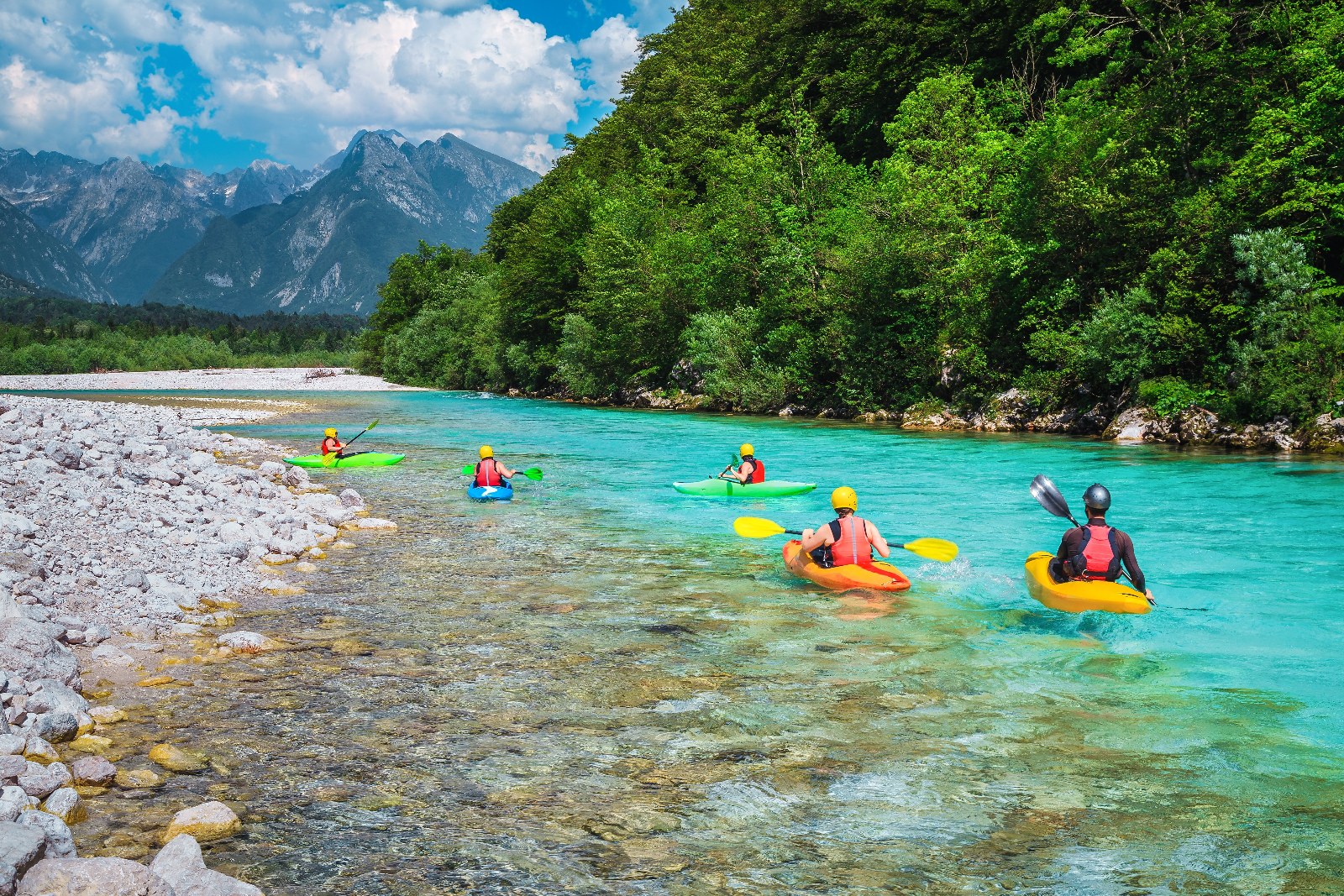
The Soča’s color looks edited, and it isn’t. The river runs a vivid emerald-turquoise through the Julian Alps thanks to limestone bedrock and glacial clarity. Bovec is the base town, packed with outfitters running everything from beginner-friendly Class II stretches to tight Class IV runs for experienced paddlers.
The valley has a darker past. During World War I, the Isonzo Front saw twelve battles fought along this river between Italy and Austria-Hungary, and Ernest Hemingway set part of A Farewell to Arms here. You’ll pass old trenches and military cemeteries on the drive in. The water stays around 10°C even in summer, so wetsuits are standard, and your hands will remind you of that number on every roll.
Tara River Canyon, Montenegro
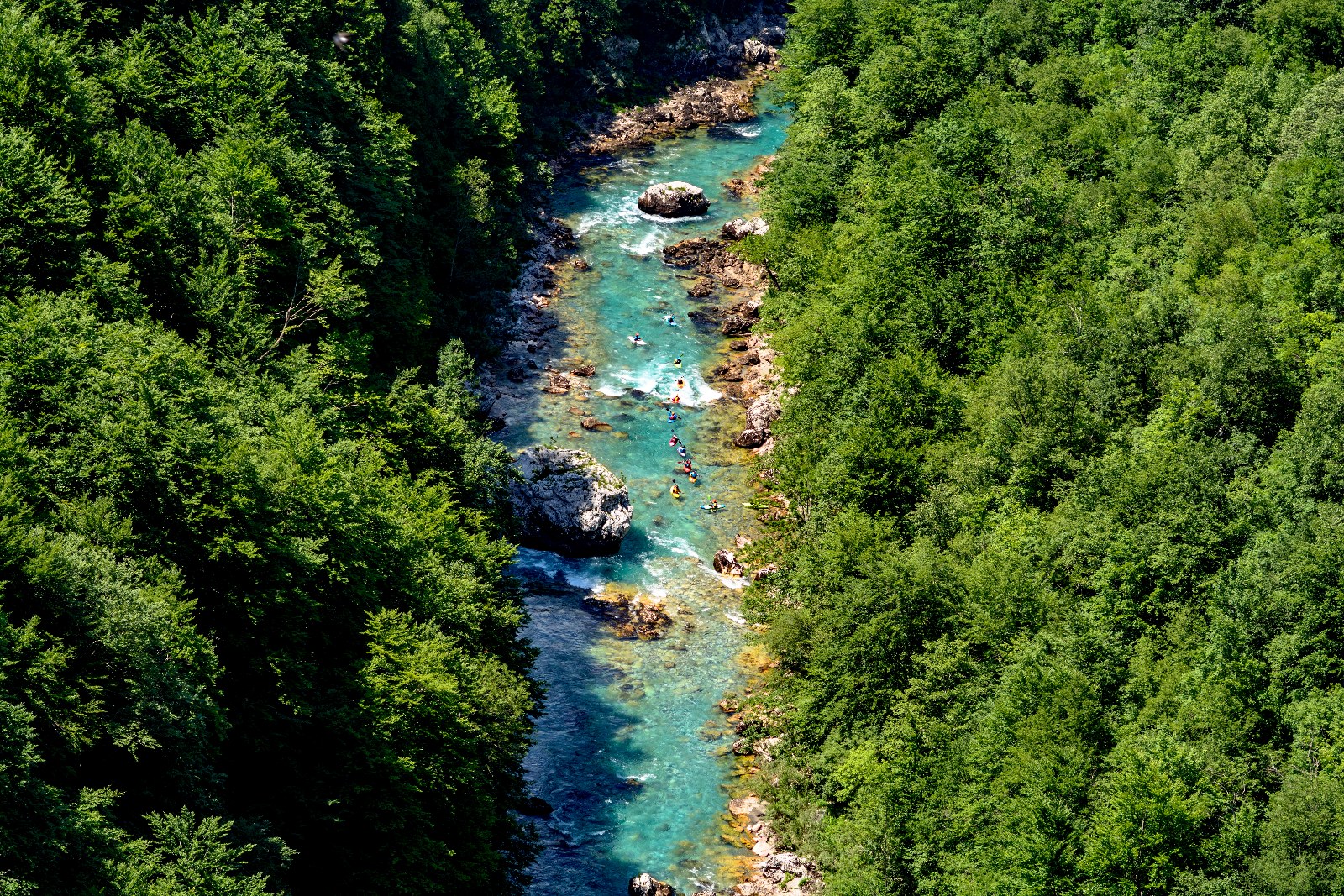
Europe’s deepest canyon reaches about 1,300 meters at its deepest point, and the Tara River runs right through the bottom of it. The canyon sits inside Durmitor National Park, a UNESCO site, and stretches roughly 80 kilometers. The Đurđevića Tara Bridge, finished in 1940, arches 150-plus meters above the water and makes a good landmark at the start of many trips.
Rafting dominates the commercial scene here, but kayakers come for the spring snowmelt, when rapids run fastest and the water is a cold, clean blue. By late summer, flows drop and the river becomes friendlier for intermediate paddlers. Trips often finish near Šćepan Polje on the Bosnian border, with a night at a riverside camp serving lamb and local rakija.
Ardèche Gorge, France
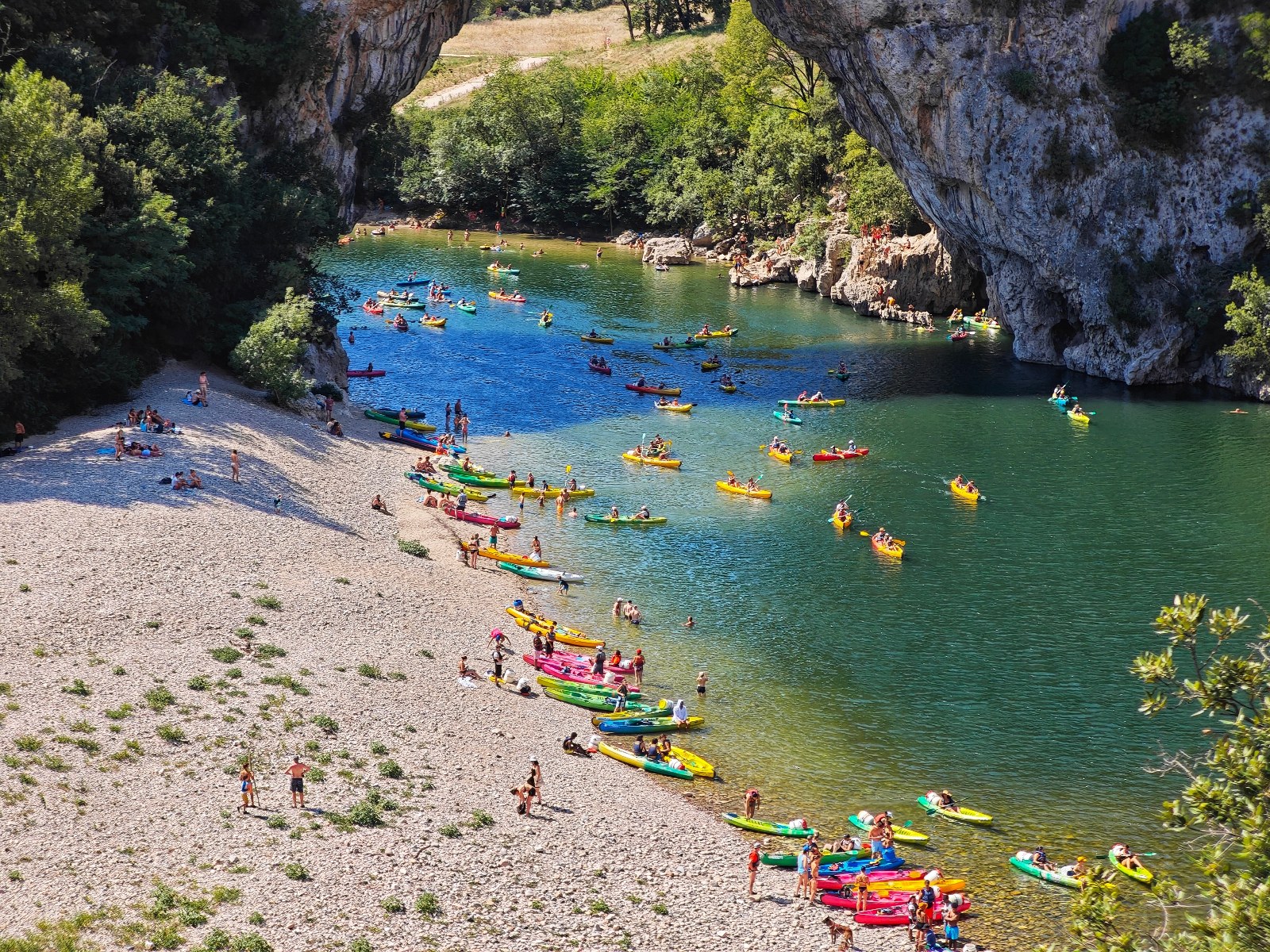
You can paddle under a 54-meter natural stone arch here. The Pont d’Arc marks the start of the Ardèche Gorge, a 30-kilometer limestone canyon running from Vallon-Pont-d’Arc down to Saint-Martin-d’Ardèche. Rental shops line the road, and the river is mellow enough for families, with small rapids and plenty of gravel beaches for lunch.
The full run takes most people two days, with an overnight at the Gaud or Gournier bivouac sites, which require reservations in advance. Summer weekends get busy enough that you’ll be dodging other canoes on the easy rapids. Paddle in late May or September for a quieter river. The Chauvet Cave, with some of the world’s oldest known cave paintings, sits nearby; you can visit its replica, Chauvet 2, after the trip.
Sea of Cortez, Mexico
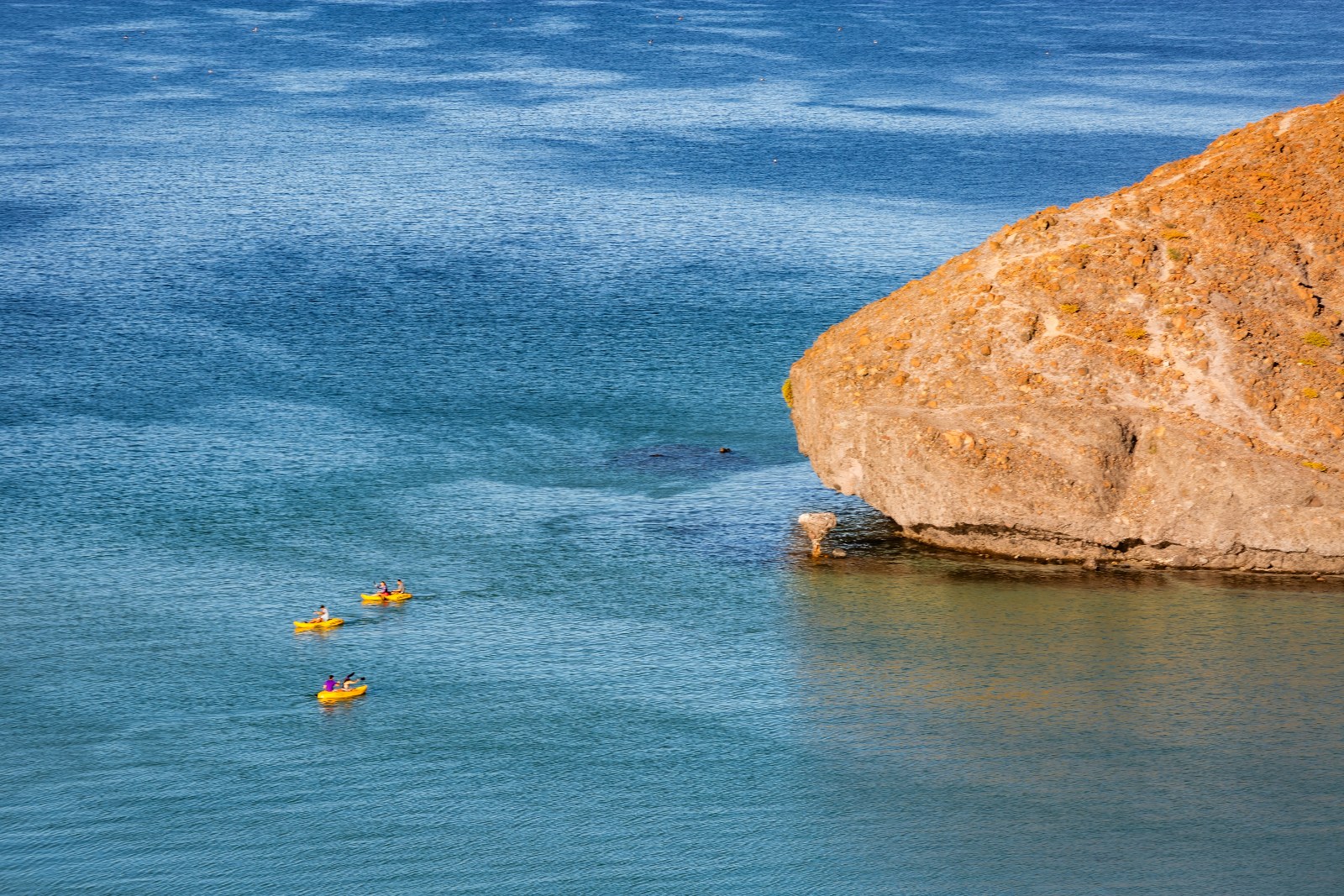
Jacques Cousteau reportedly called this the world’s aquarium, and he wasn’t overselling it. The Sea of Cortez holds hundreds of fish species, along with whales, dolphins, and sea lions. Kayaking season runs from about October through April, when temperatures cool and the desert islands are at their best.
Two areas draw most paddlers. Espíritu Santo, near La Paz, offers multi-day island camping and a stop at Los Islotes, where young sea lions swim around snorkelers like oversized puppies. Farther north, Loreto Bay National Marine Park has red-rock islands and calm morning water. Winter northerlies can blow hard for days, so outfitters build weather days into their itineraries, and you’ll want to as well.
Na Pali Coast, Kauai
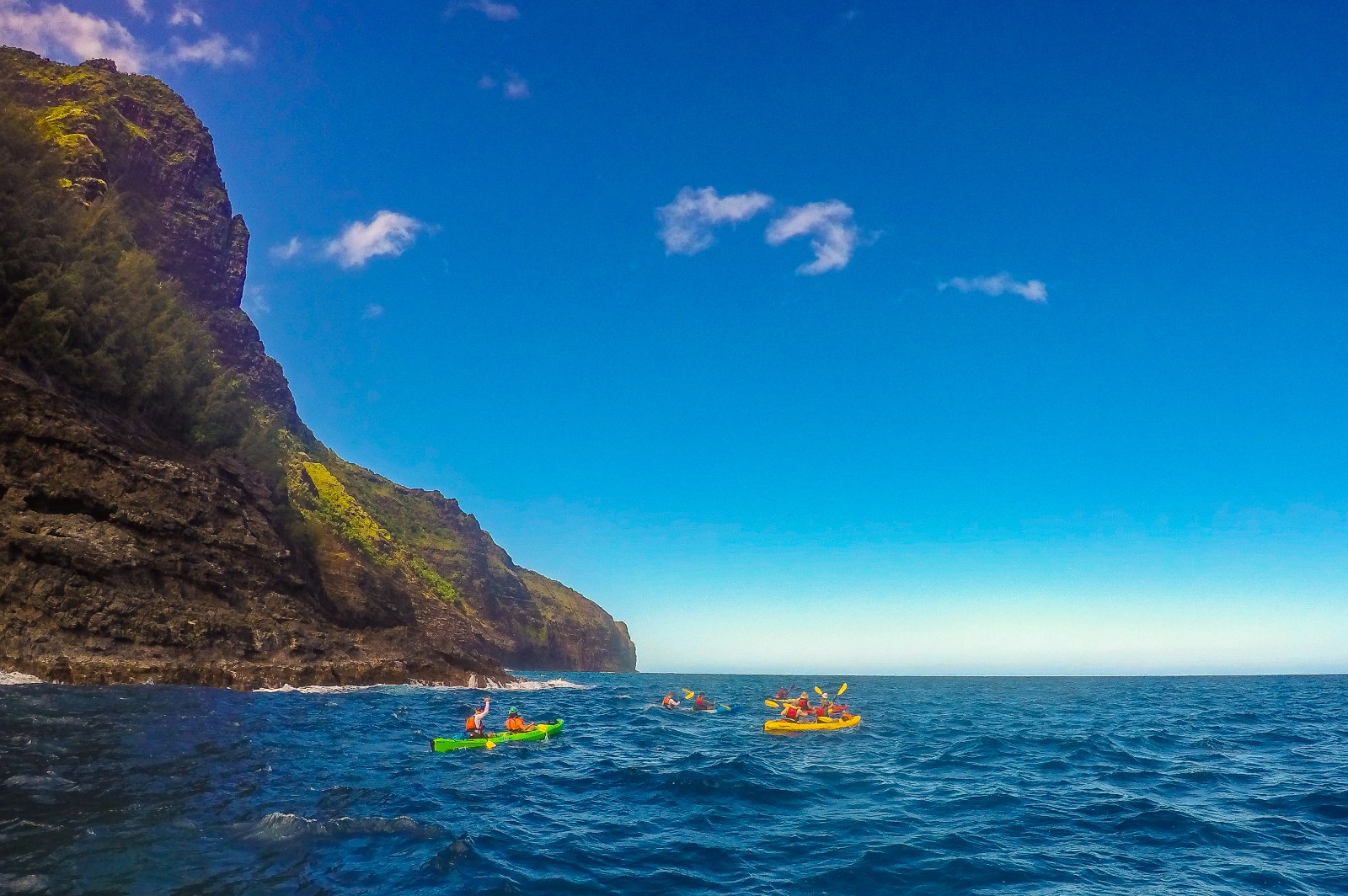
Na Pali is one of the hardest day paddles in Hawaii, and people still line up for it. The full trip covers roughly 17 miles along a coastline with no road, from Haʻena down to Polihale, past cliffs rising up to 4,000 feet. You’ll pass waterfalls, hanging valleys, and the Open Ceiling Cave, a sea cave with a collapsed roof.
Commercial trips run only in summer, roughly May through September, because winter swells turn this coast dangerous. Even in summer, expect open-ocean chop, plenty of sun, and a long day of paddling with few places to land. Guides usually hold a beach stop at Milolii or Nualolo Kai, with permits required for landing. Prepare for spinner dolphins and green sea turtles, and bring serious sunscreen.
Johnstone Strait, British Columbia
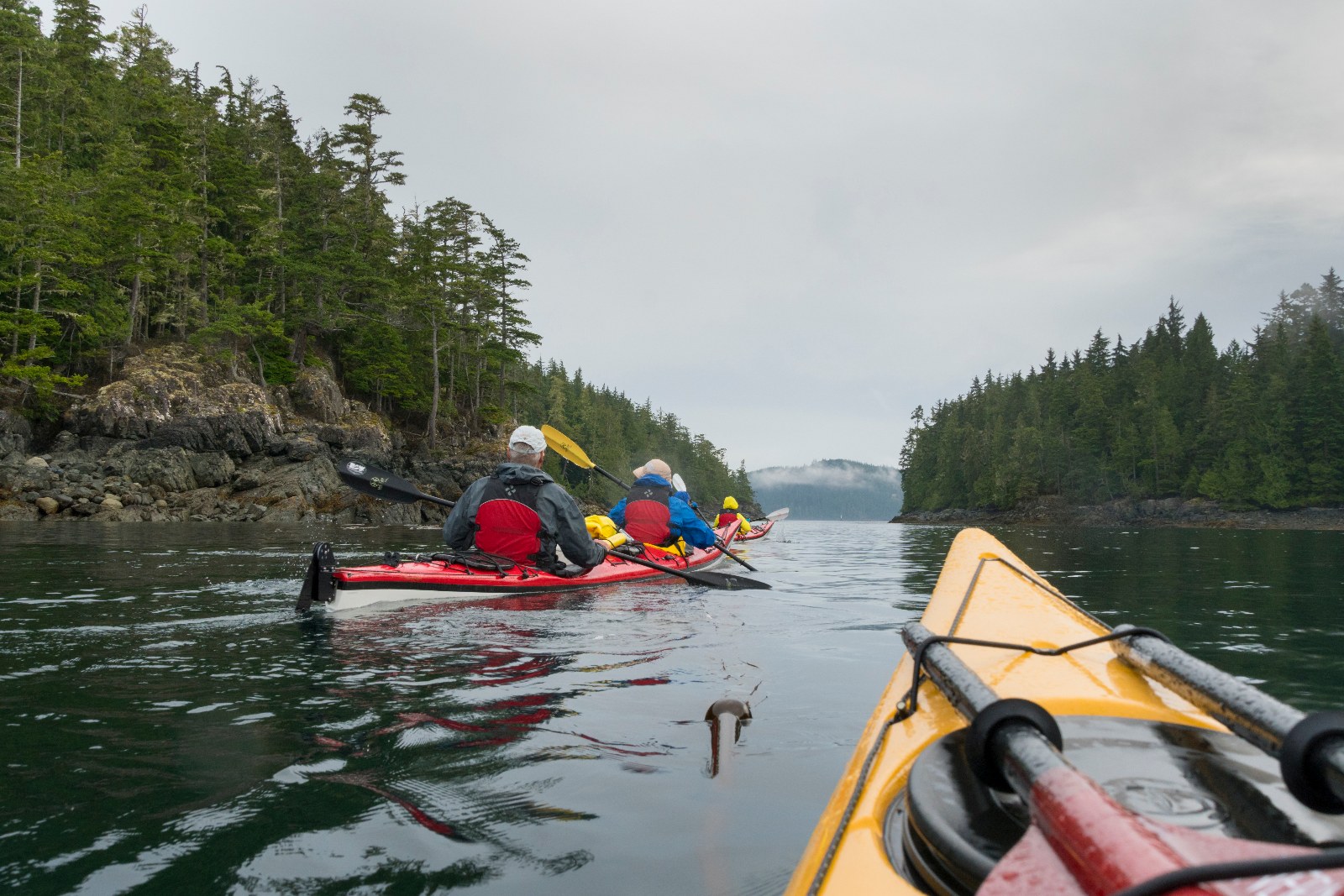
Orcas are the reason you come to Johnstone Strait. Every summer, northern resident killer whales follow salmon runs through this channel between Vancouver Island and the mainland. July through September offers the best odds, and many multi-day trips launch from Telegraph Cove, a former cannery town built on boardwalks.
Robson Bight Ecological Reserve protects beaches where orcas rub their bodies on smooth pebbles, a behavior seen in few other places. Boats, including kayaks, must stay out of the reserve, so you’ll watch from the edge. Camping happens on rocky beaches near old-growth forest, and you’ll often hear whales blowing at night. The water stays cold year-round, and fog and currents mean you’ll need tidal planning or a guide.
Apostle Islands National Lakeshore, Wisconsin
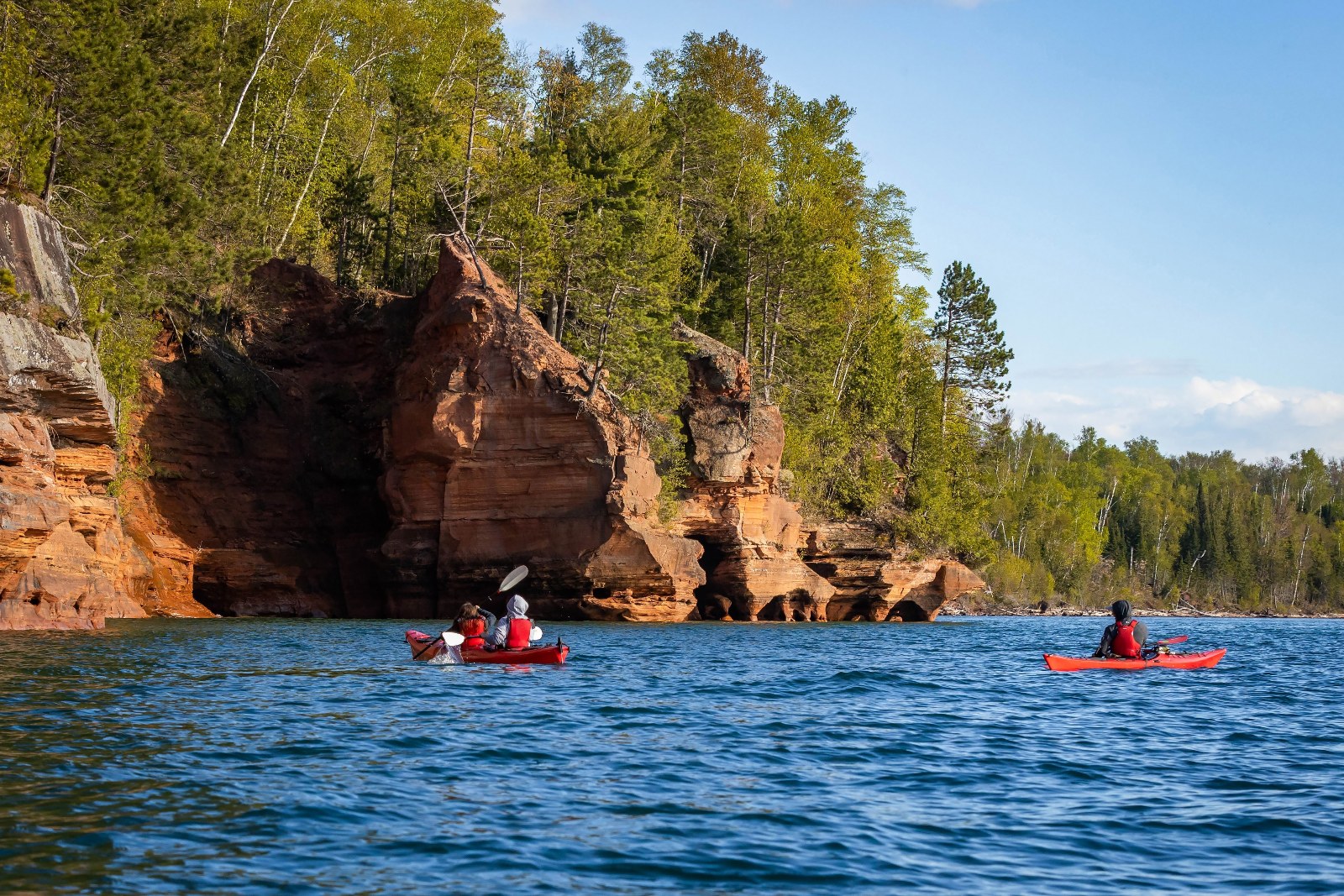
Lake Superior carved the Apostle Islands’ sandstone into arches and sea caves, and the best of them line the mainland near Meyers Beach. You can paddle in and out of these red rock chambers in a few hours. The national lakeshore covers 21 islands, with lighthouses, old fishing camps, and campsites for longer trips.
Superior is a big, cold lake that behaves like an ocean. Water temps stay in the 50s for much of summer, and wind can build waves quickly, so the park recommends paddling with experience or a guide. On calm days, the caves glow orange in morning light. In cold winters, the same caves freeze into ice formations that you can walk to on the frozen lake, when the ice is safe.
Everglades National Park, Florida
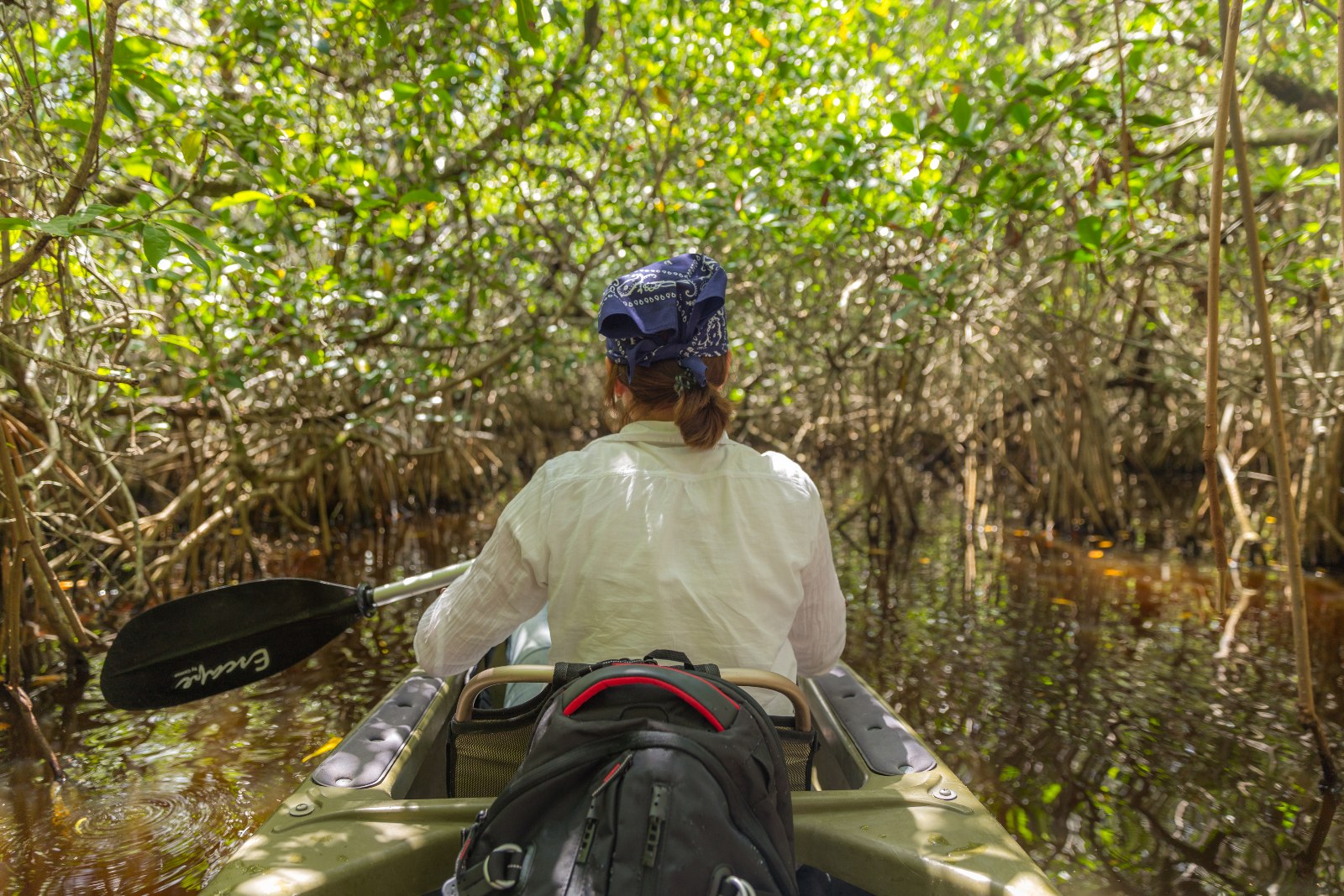
The Everglades’ Wilderness Waterway covers 99 miles between Flamingo and Everglades City, and it might be the strangest canoe trail in the country. You’ll paddle through mangrove tunnels, open bays, and the Ten Thousand Islands, sleeping on beaches, ground sites, or chickees (elevated wooden platforms built over the water).
Go in the dry season, roughly December through April, when mosquitoes ease off and temperatures cool down. Wildlife here includes manatees, dolphins, roseate spoonbills, and both alligators and American crocodiles, the only place in the world where the two share habitat. You’ll need a backcountry permit for overnight trips. Shorter day paddles, like the Nine Mile Pond loop near Flamingo, give you a taste without the navigation challenge.
Colorado River through the Grand Canyon
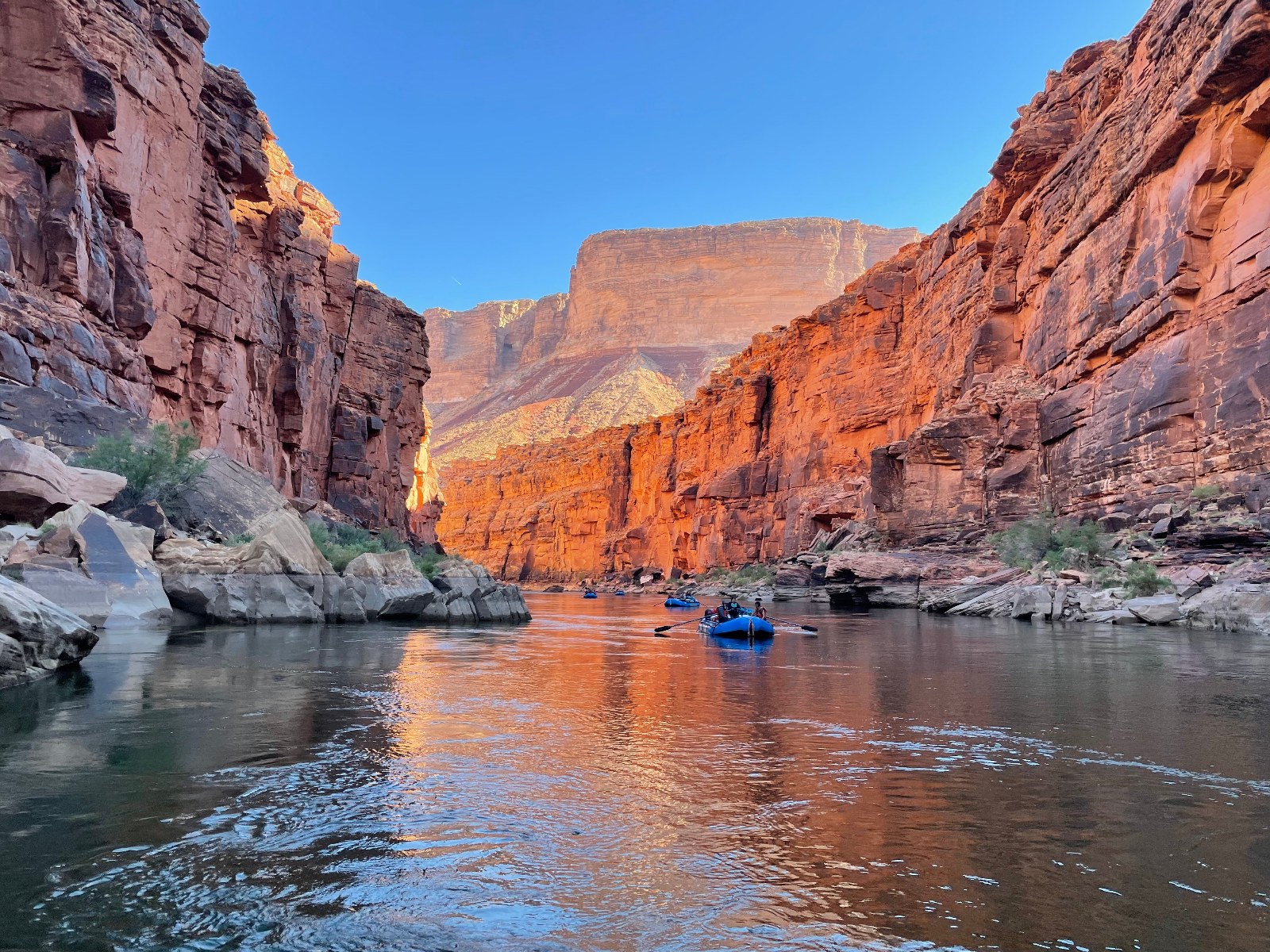
A full Grand Canyon run takes about two to three weeks and covers roughly 226 miles from Lees Ferry to Diamond Creek. You’ll paddle through some of the oldest exposed rock on the continent, around 1.8 billion years old in the Inner Gorge. The rapids are big, with Lava Falls and Crystal often named as the most demanding.
Getting on the water takes patience. Private trips go through a weighted lottery run by the National Park Service, and many kayakers join commercial or private rafting trips that carry their gear. Water releases from Glen Canyon Dam keep the river close to 50°F, even when desert air tops 100°F. That temperature gap surprises almost everyone, and it means wetsuits or drysuits are essential.
Futaleufú River, Chile
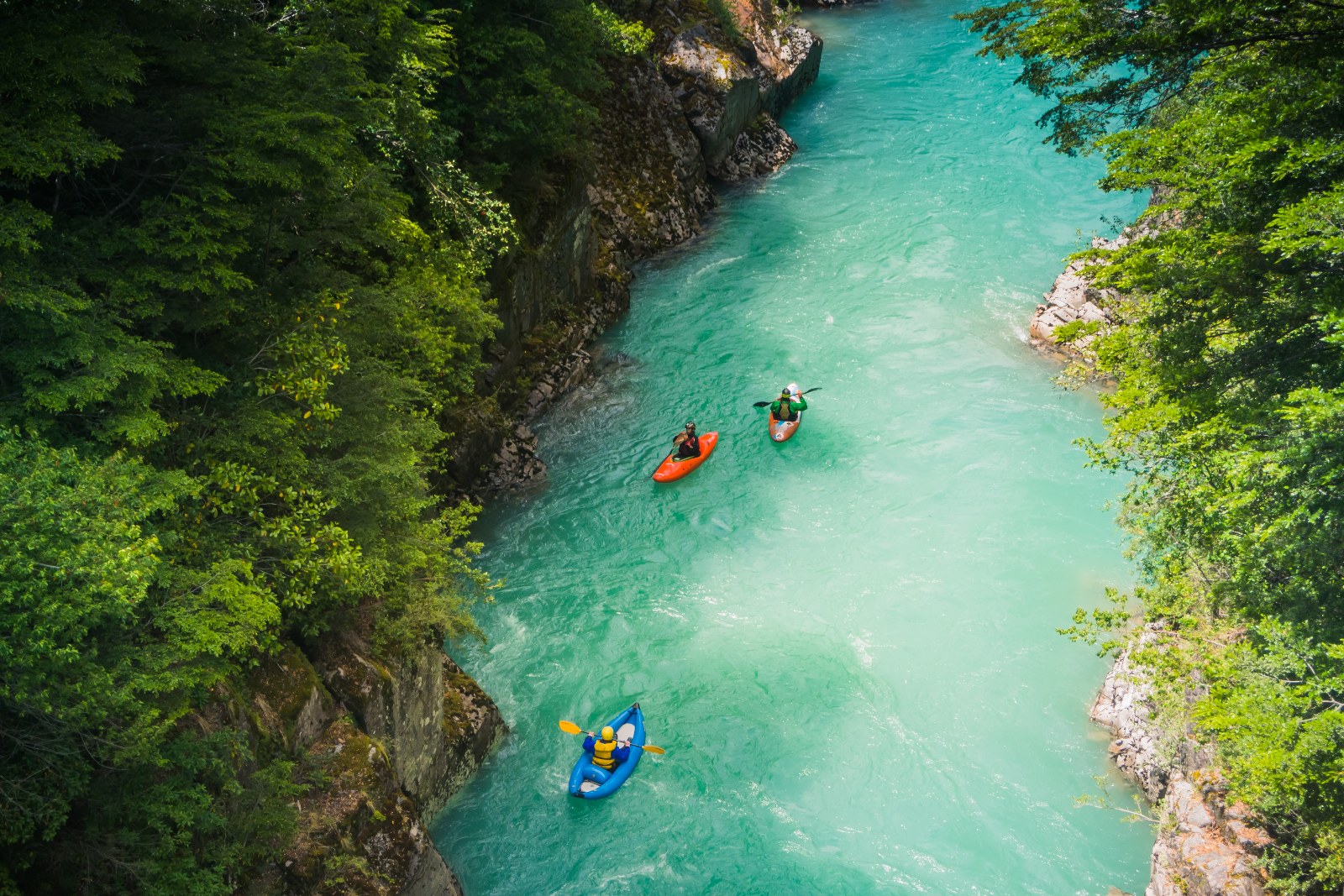
Paddlers call the Futaleufú one of the world’s great whitewater rivers, and rapid names like Terminator and Inferno Canyon explain part of the reason. The river runs turquoise-blue through the Andes in Chilean Patagonia, close to the Argentine border, with big Class IV and V rapids alongside easier sections.
The season runs from about December through March, during the southern summer. Many paddlers base themselves in the small town of Futaleufú, where outfitters run riverside camps with wood-fired hot tubs. Getting there is part of the trip, usually involving a flight to Puerto Montt or Chaitén and a long drive. The water is cold and the volume pushes hard, so this river suits paddlers with solid rolls and whitewater experience.
Zambezi River below Victoria Falls
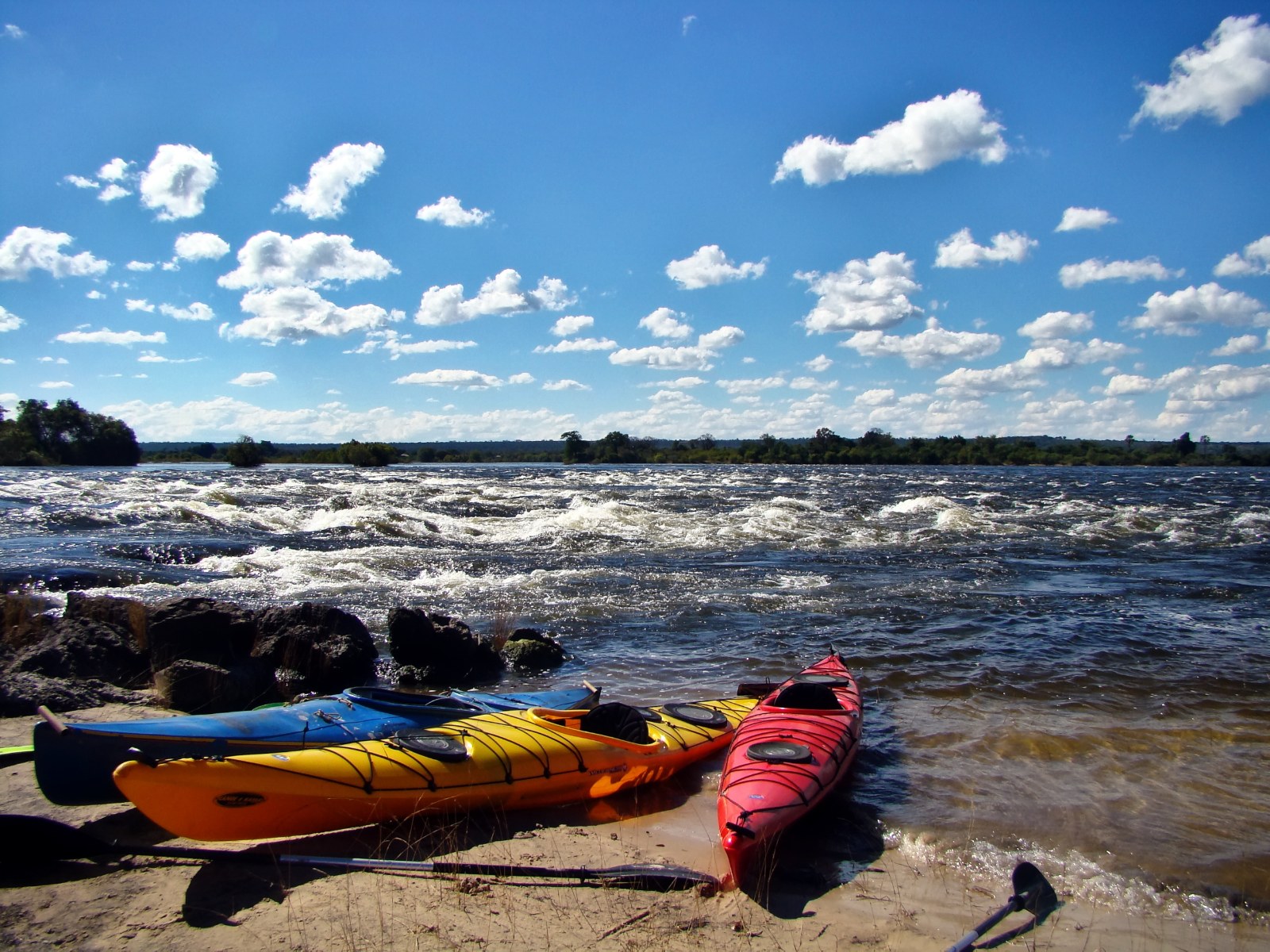
Below Victoria Falls, the Zambezi funnels into the Batoka Gorge and turns into high-volume whitewater. Rapids here carry names like Stairway to Heaven and Oblivion, and the river runs roughly between Zambia and Zimbabwe, with steep basalt walls on both sides.
The best season for kayakers is low water, roughly August through December, when the river exposes more of its rapids. At high water, some sections close entirely. Crocodiles do live in the river, though they tend to stay in calmer stretches; guides scout and know the river well. You’ll hike out of the gorge at the end of the day, and the climb is steep enough that some outfitters offer porters for your gear.
Lake Malawi National Park, Malawi
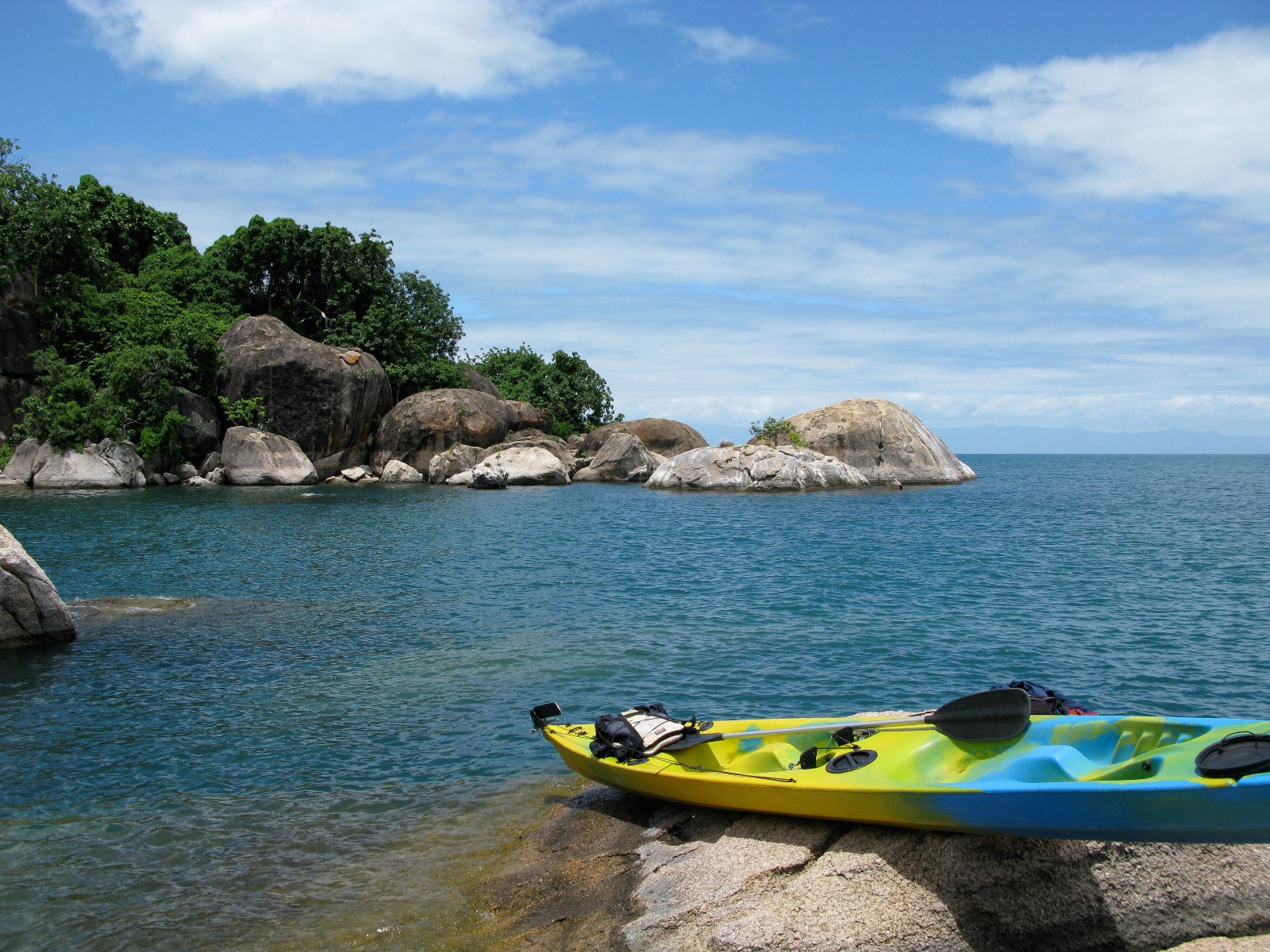
Lake Malawi National Park became the world’s first freshwater national park listed by UNESCO, in 1984, mainly to protect its fish. The lake holds hundreds of cichlid species, many found nowhere else, and their colors make snorkeling from your kayak feel like peering into an aquarium store.
Cape Maclear is the usual base, with lodges and kayak rentals on the beach. Guided trips often head to Mumbo or Domwe islands, where you can camp under the stars and wake to fish eagles calling overhead. The water is warm and calm much of the year, with waves building in the afternoons. Bring a mask; the fish come close to the surface near the rocky shorelines.
Tsitsikamma National Park, South Africa
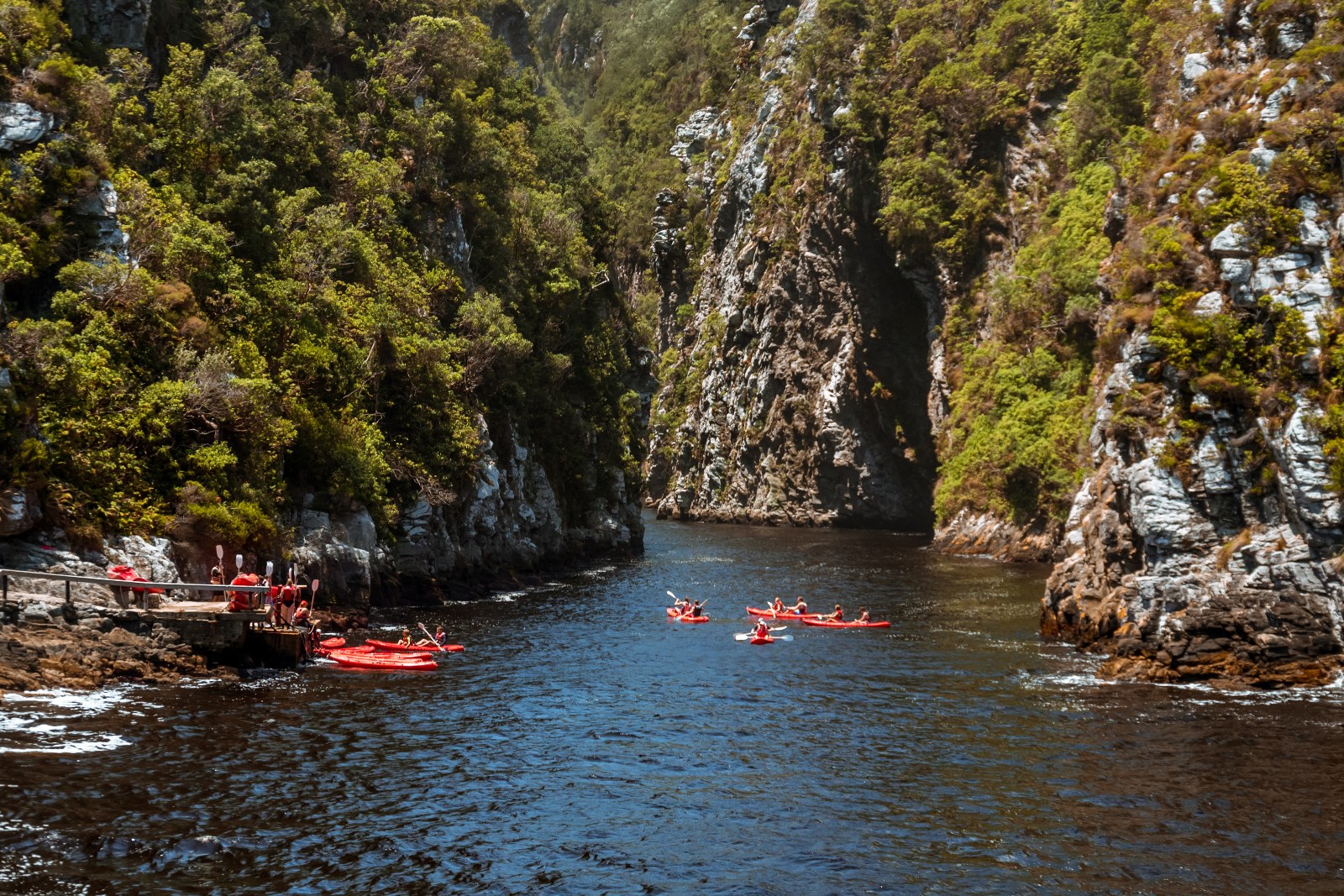
At Storms River Mouth, you paddle up a narrow gorge where the river meets the Indian Ocean. The trip starts below the park’s well-known suspension bridge and works upstream between steep cliffs until the gorge narrows too much for kayaks. Then many outfitters switch you to inflatable lilos so you can float further upstream through quieter pools.
Tsitsikamma sits along the Garden Route, and its marine area, established in 1964, is among the oldest marine protected areas in Africa. The coastline gets rough, so the river trip is your safest bet. Rainy weather can raise water levels or cancel tours, so build some flexibility into your schedule. You might see otters along the rocks, though they’re shy.
Ha Long Bay, Vietnam
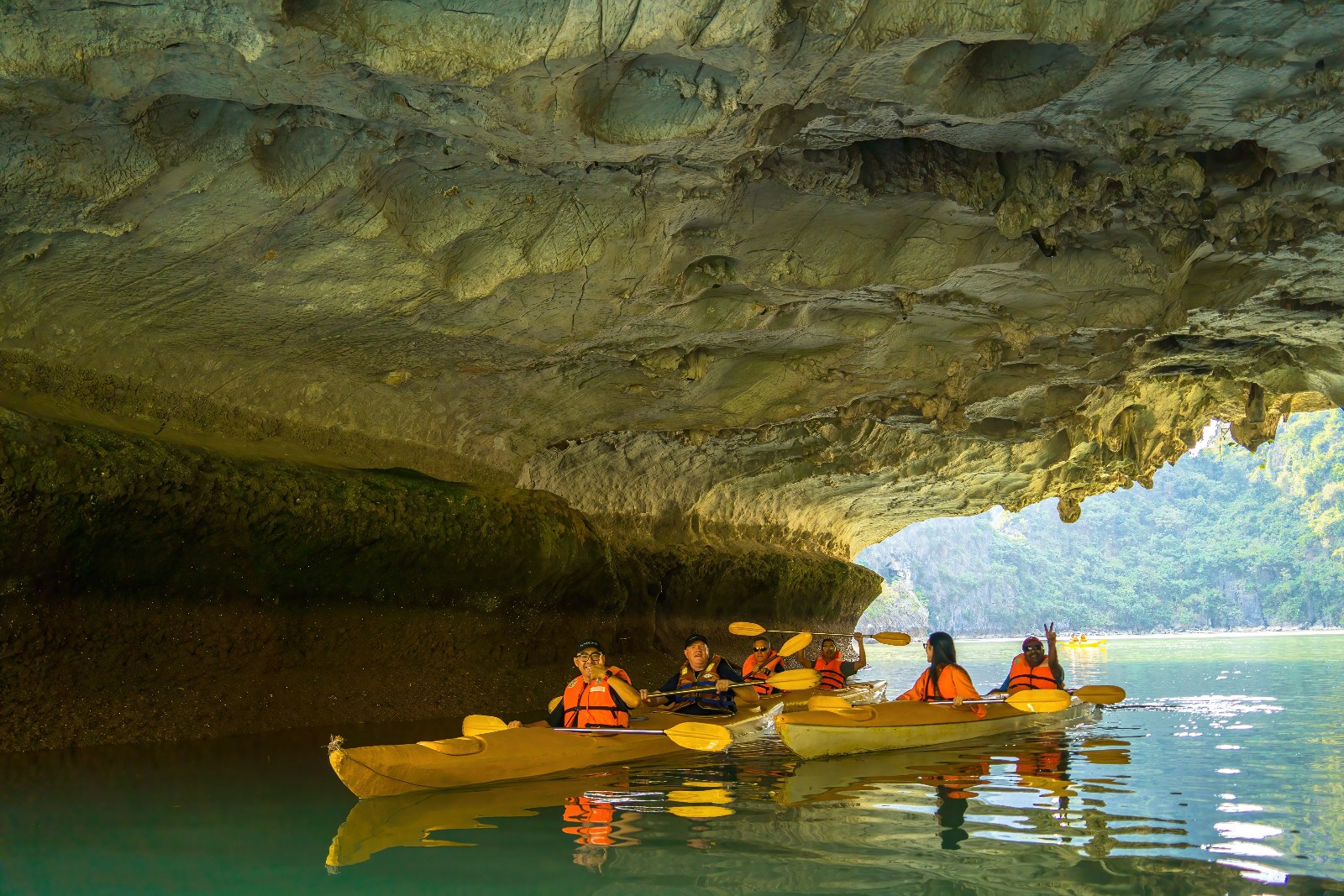
Ha Long Bay holds nearly 2,000 limestone islands and islets, and the best parts sit behind them. From a kayak, you can slip through low cave arches into enclosed lagoons that big cruise boats can’t reach. UNESCO listed the bay in 1994, and it’s one of Vietnam’s busiest tourist destinations.
Many paddlers head to Lan Ha Bay, south of Ha Long near Cat Ba Island, where fewer boats and quieter beaches await. Floating fishing villages still dot the water, though some residents have moved ashore. Most kayak outings happen as part of overnight cruises, with gear stored aboard. Plan for spring or autumn, when the skies tend to be clearer and the water calm.
Phang Nga Bay, Thailand
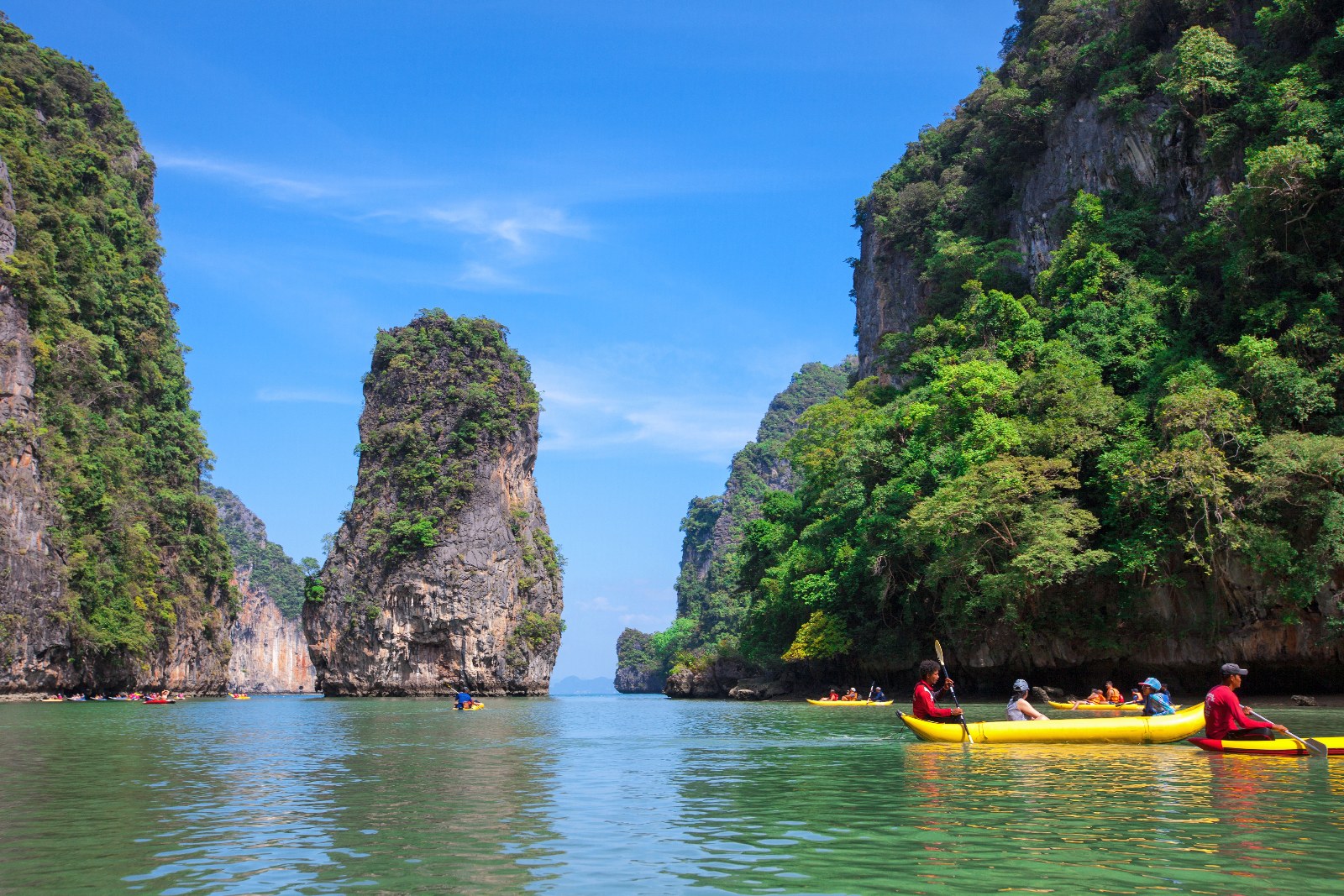
Hidden lagoons called hongs (Thai for “rooms”) are why you kayak Phang Nga Bay. These open-air pools sit inside limestone islands, reachable only through low sea caves at certain tides. Guides time the trips so you can lie flat in the kayak as you pass under the rock.
Sea canoe tours here go back to the late 1980s, when operators started exploring the caves. The bay also includes Khao Phing Kan, better known as James Bond Island after The Man with the Golden Gun filmed there in 1974. Expect crowds at the famous spots midday. Some outfitters run late afternoon trips to quieter hongs, with fireflies in the mangroves after dark.
Raja Ampat, Indonesia
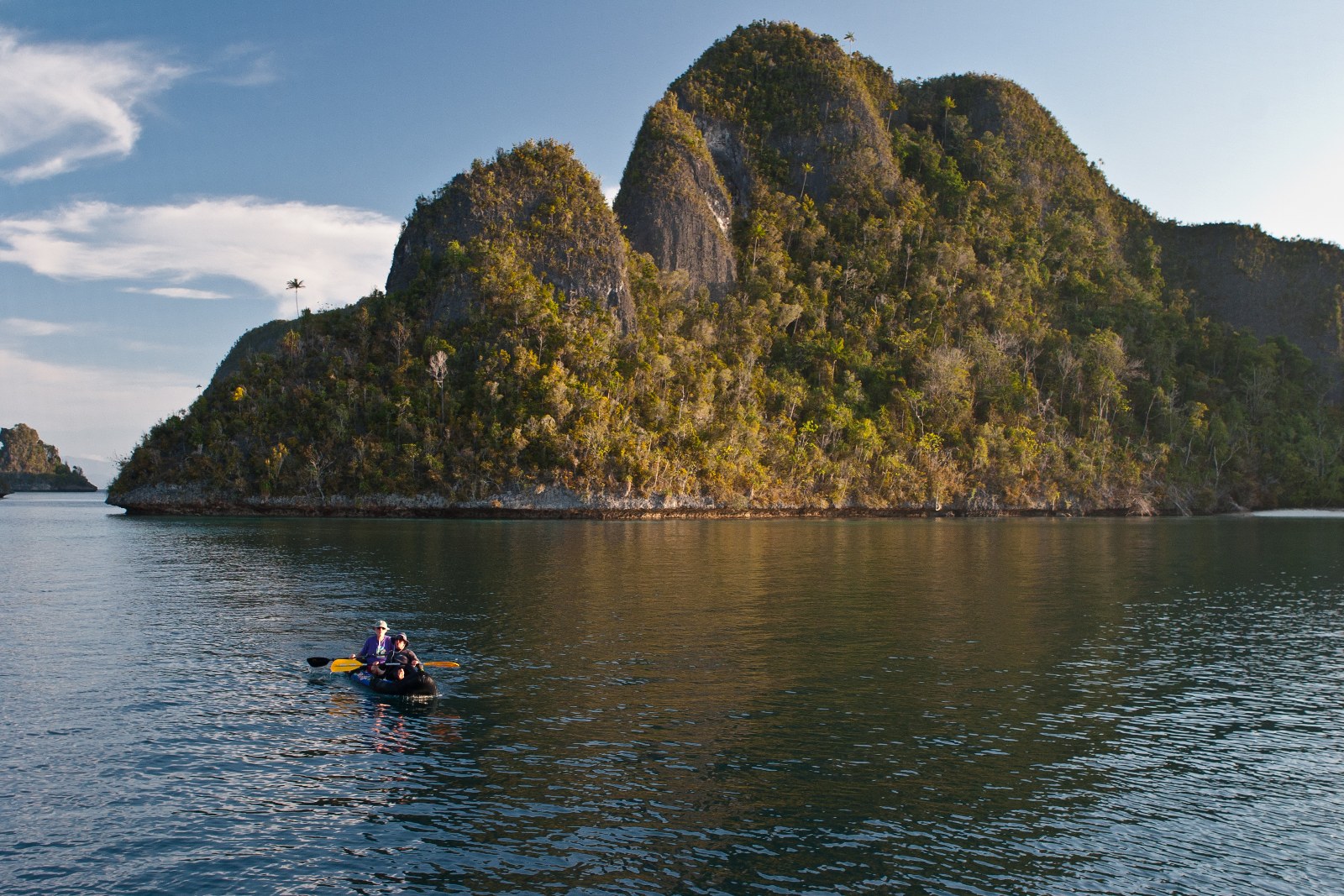
Raja Ampat holds about three-quarters of the world’s known coral species, which makes it one of the richest marine areas on the planet. The name means “Four Kings,” after the four main islands in this remote archipelago off West Papua. Reefs here grow close to the surface, so you’ll see coral and fish from your kayak without diving.
Kayakers often hop between family-run homestays on small islands, paddling through karst islands and mangrove-lined channels. You’ll need to fly into Sorong and take a ferry to Waisai. Facilities stay basic, but local villages have built a network of guesthouses that makes multi-day trips possible. The dry season runs roughly October through April, with calmer seas for paddling.
Komodo National Park, Indonesia
Paddling near islands where Komodo dragons live on shore adds a certain energy to beach breaks. The park covers Komodo, Rinca, Padar, and many smaller islands, and it protects the world’s largest lizards alongside coral reefs that draw manta rays and reef sharks.
Currents here run strong, especially in channels between islands, so most kayak outings stay in sheltered bays or join guided boat trips. Labuan Bajo on Flores serves as the main gateway, with operators running day and liveaboard trips. Pink Beach gets its color from crushed red coral mixed into the sand. Rangers must accompany any shore visits where dragons live, so plan landings with them.
Kerala Backwaters, India
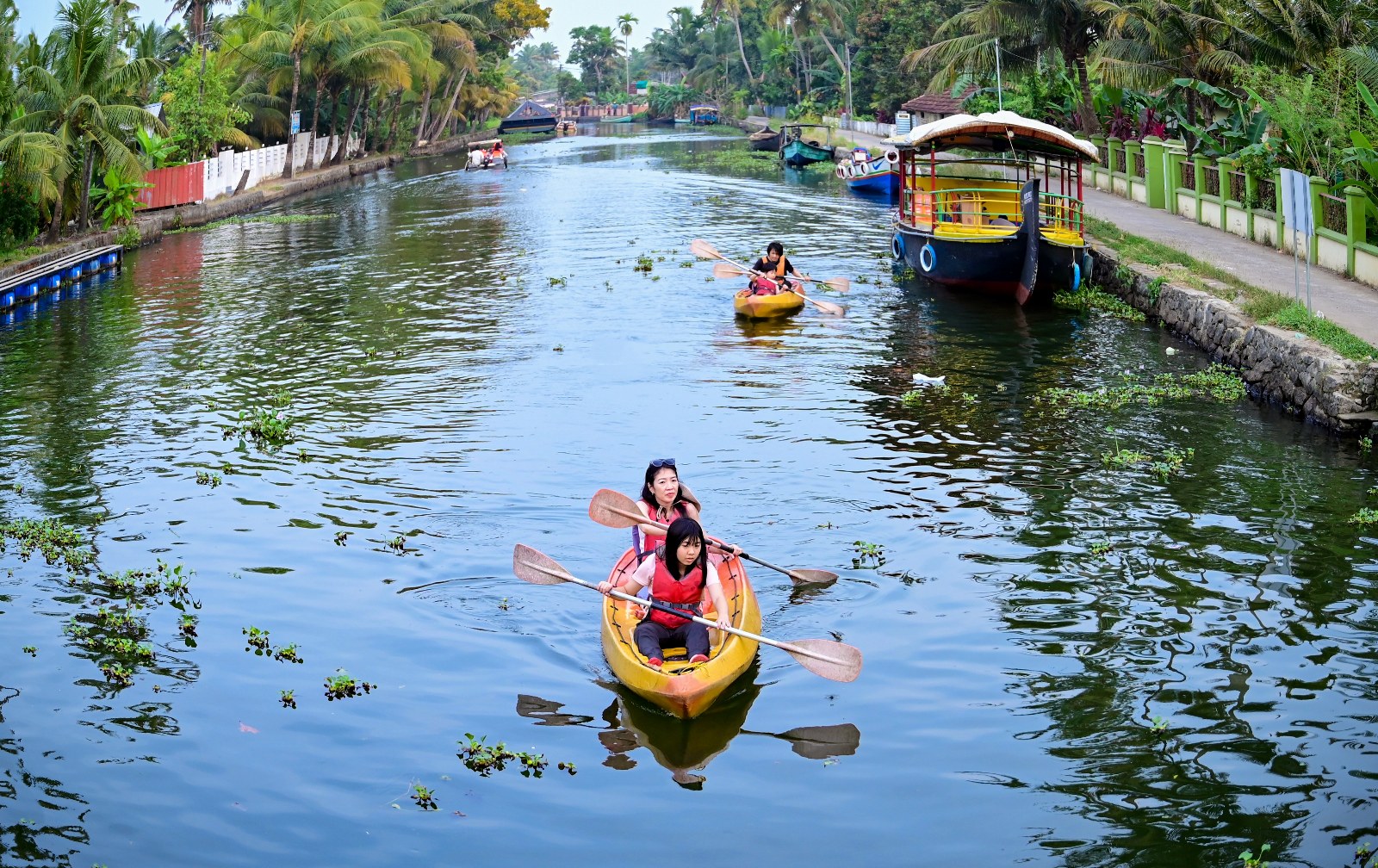
The Kerala Backwaters stretch more than 900 kilometers through lagoons, canals, and rivers in southwest India. Houseboats dominate tourist traffic, but narrow side canals are too tight for them, and that’s where kayaks shine. You’ll paddle past village homes, rice paddies, coconut palms, and people washing clothes along the banks.
Alappuzha (Alleppey) and Kumarakom near Vembanad Lake are the main bases, with guided morning trips that skip the midday heat. Kerala’s famous snake boat races also take place on these waters, especially around August. The best months to visit run from November to February, when temperatures cool and monsoon rains ease. Local guides help you navigate channels that look nearly identical.
Nitmiluk Gorge, Australia
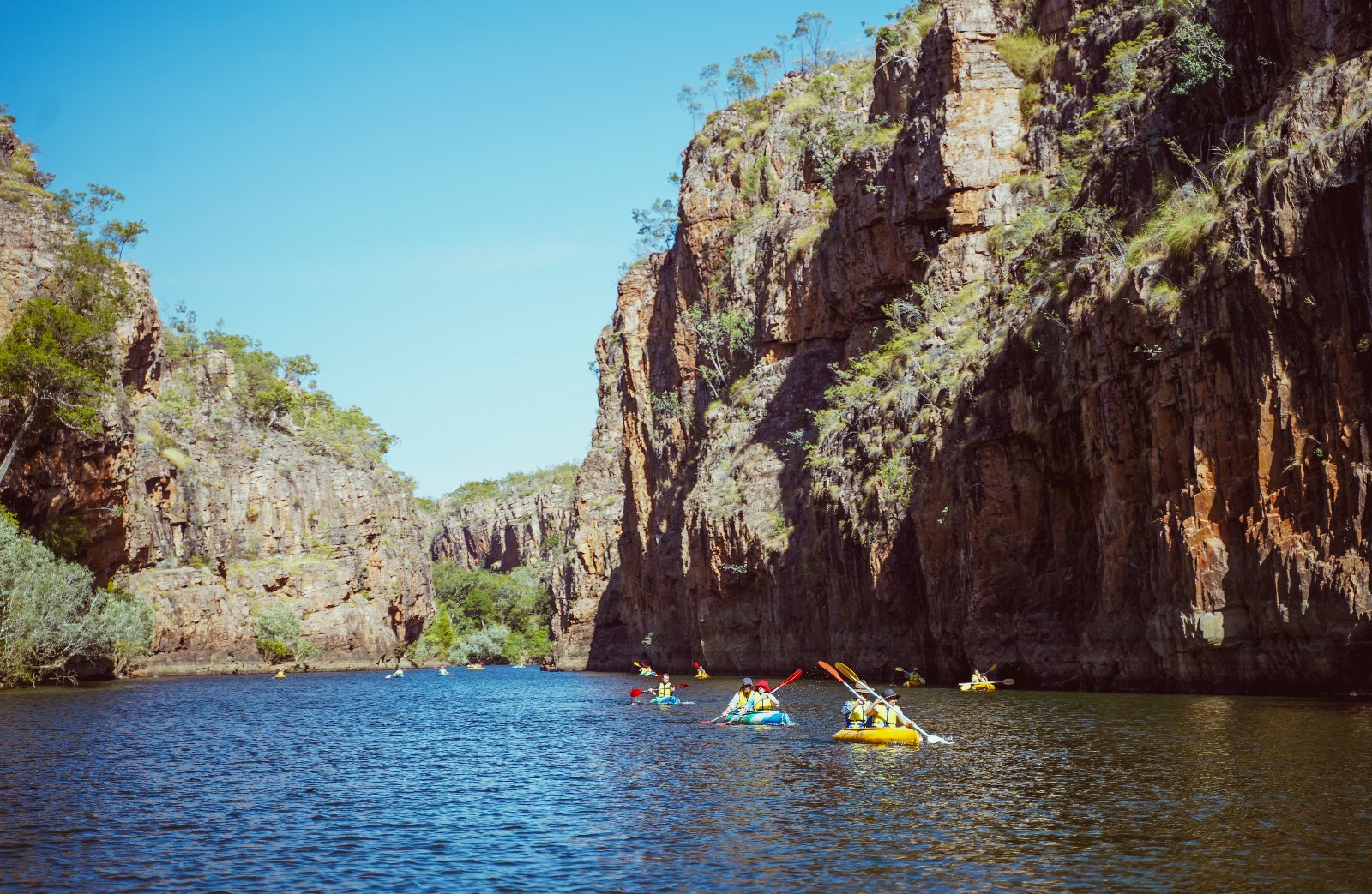
Nitmiluk Gorge in Australia’s Northern Territory is a series of 13 gorges carved by the Katherine River. Kayakers paddle between sandstone walls, carrying boats over rock bars between sections. The land belongs to the Jawoyn people, who jointly manage the park, and you’ll see rock art along the way.
The dry season, roughly May through October, brings lower water and calmer paddling. Freshwater crocodiles live in the gorge and usually leave people alone; park staff survey for saltwater crocodiles before opening the river each season. Multi-day trips allow you to camp at designated sites along the river. Daytime temperatures get hot, so start early and pack plenty of water.