
The houses on this list were built to keep people out. Their owners put up gates and long private drives, and they filled rooms with art that only invited guests would ever see. A century later, nearly anyone with a ticket can walk through the front door.
That reversal has a simple cause. The federal income tax arrived in 1913, estate taxes followed, and household staffs became harder to find and pay. Many heirs could no longer afford what their grandparents had built. Some estates fell to the wrecking ball; others went to nonprofits, universities, cities, and park services that opened them up.
What survives is a strange, uneven portrait of American ambition: copied European palaces, eccentric experiments, and homes tied to the country’s founding. Each one tells you how a particular kind of fortune wanted to be seen.
25. Hammond Castle, Gloucester
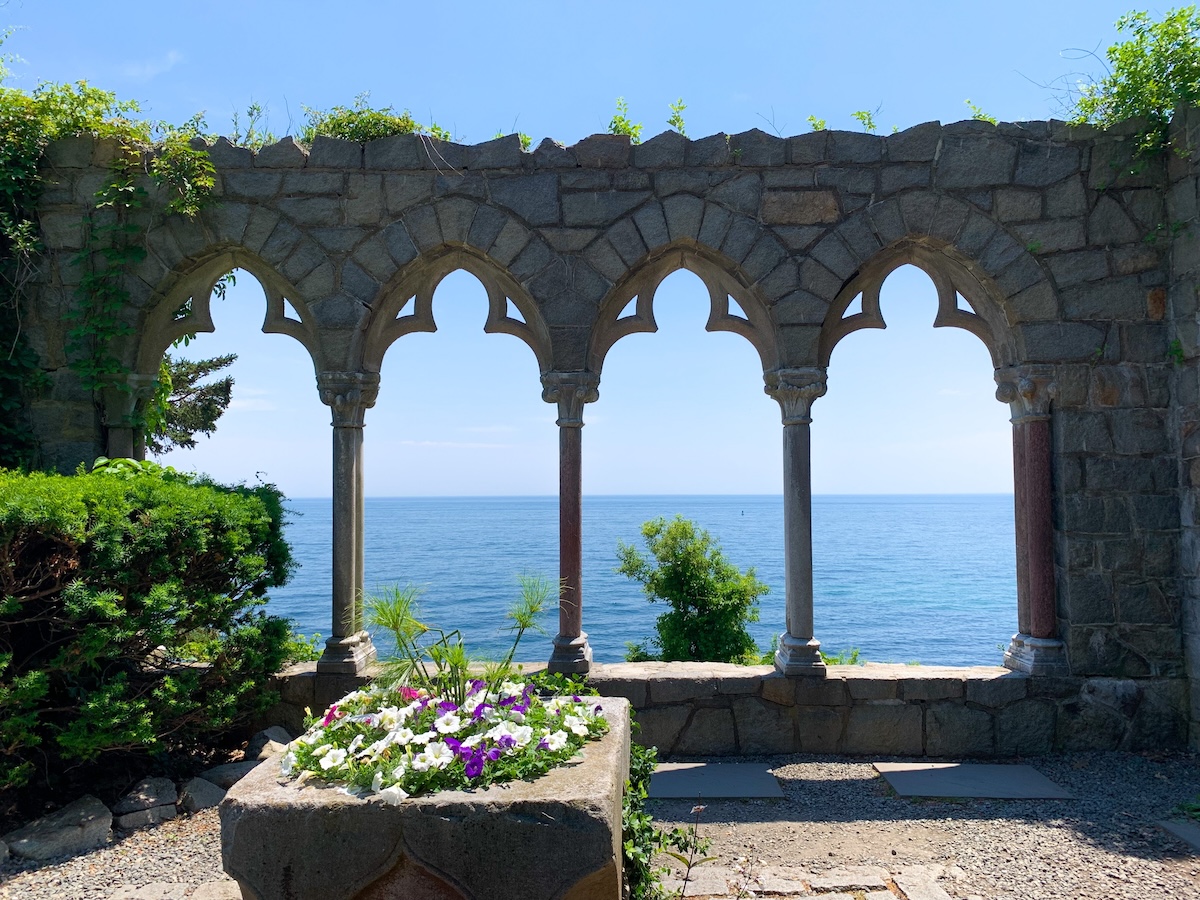
An inventor with more than 400 patents built this stone castle on the Massachusetts coast between 1926 and 1929. John Hays Hammond Jr. was a pioneer of radio remote control, and he designed the place as a home, a laboratory, and a stage for his collection of medieval and Renaissance artifacts. Some original building fragments came from old European structures and were set into the walls.
The showpiece is the Great Hall and its pipe organ, which Hammond kept adding to until it held thousands of pipes. He also built an indoor courtyard with a pool, plants, and a system meant to make it rain indoors on command. Outside, the castle faces Norman’s Woe, the reef Longfellow put in “The Wreck of the Hesperus,” so you get a shipwreck poem’s setting along with the drawbridge.
24. Swan House, Atlanta
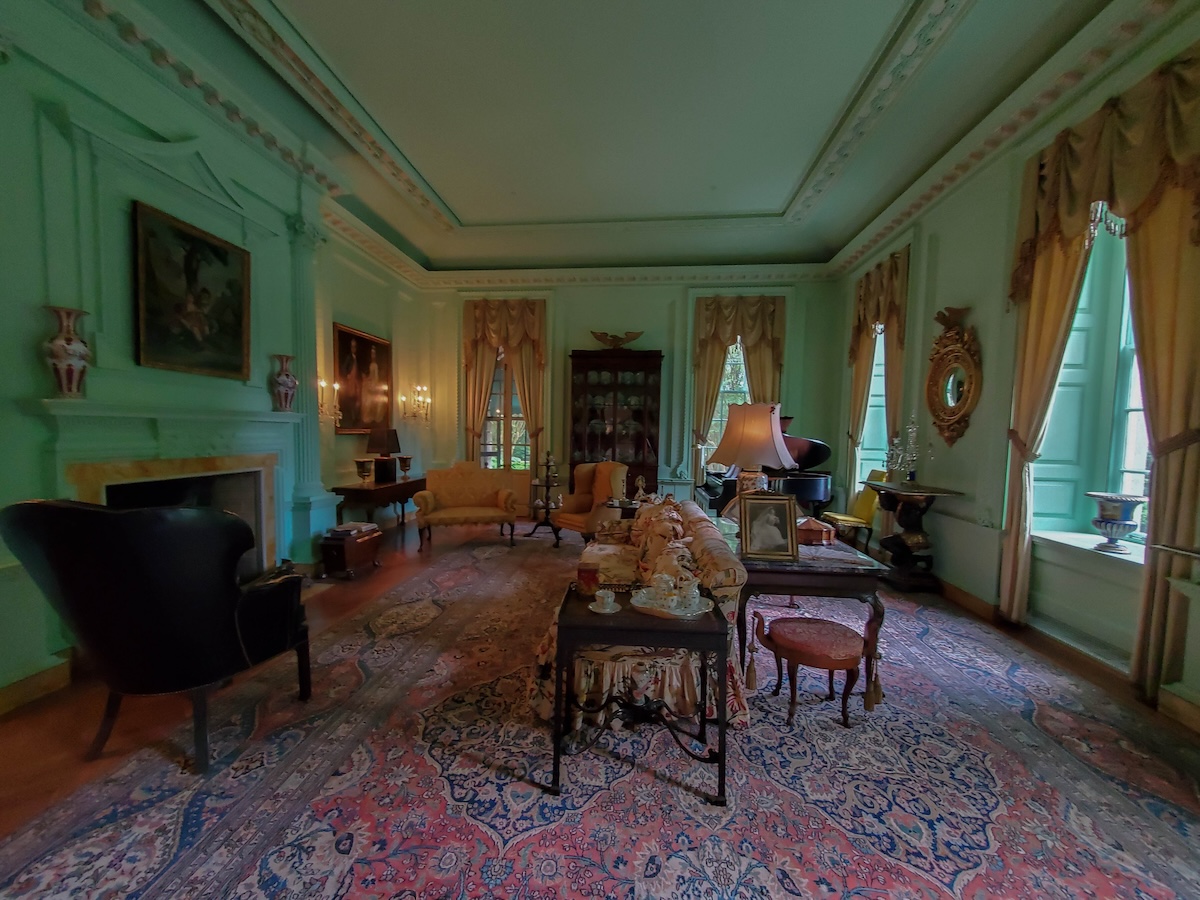
If Swan House looks familiar, you may have seen it as President Snow’s mansion in “The Hunger Games: Catching Fire.” The film crews picked it for good reason. Architect Philip Trammell Shutze designed the house in 1928 for Edward and Emily Inman, blending a formal Italianate front with cascading terraced gardens.
The swan motif runs throughout the decor, a nod to Emily Inman’s fondness for the bird. Today the house sits on the grounds of the Atlanta History Center in Buckhead, where it is furnished with many of the Inman family’s original belongings. Your admission also covers the museum’s galleries, the Smith Family Farm, and gardens spread across 33 acres, so plan for a full afternoon instead of a quick walk-through.
23. Mount Vernon
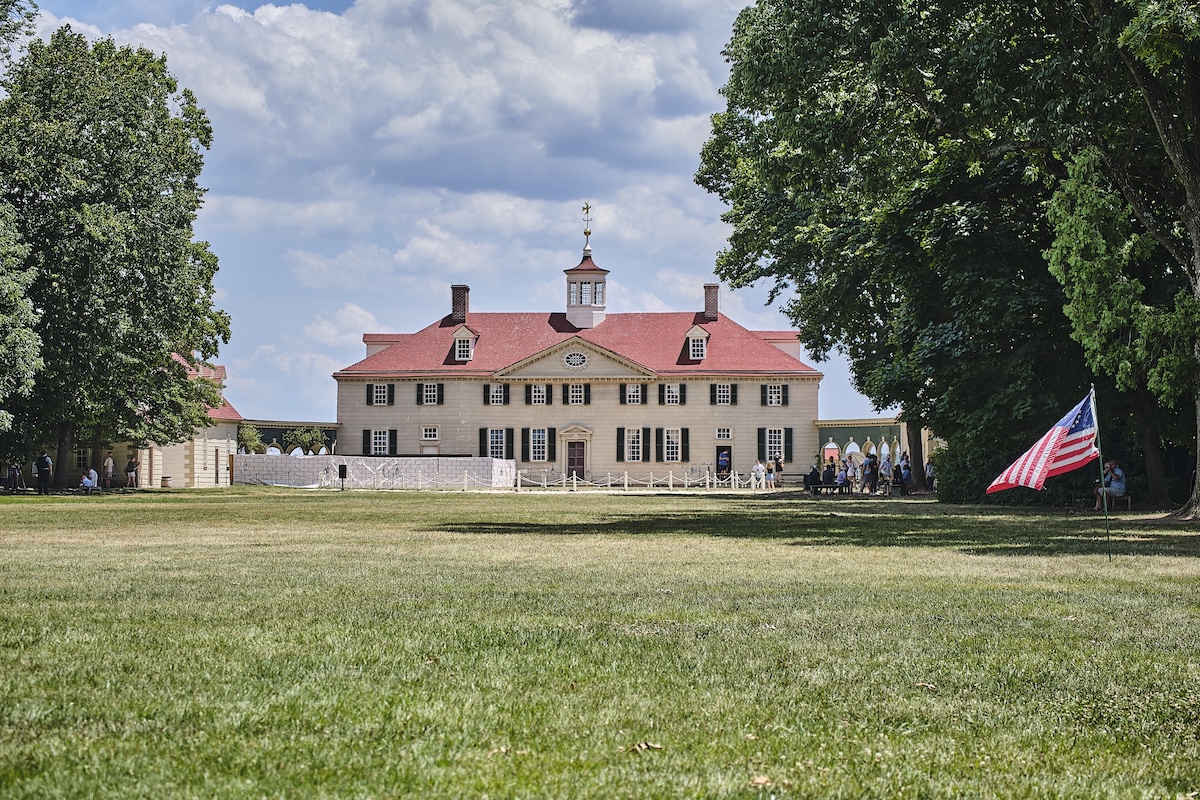
George Washington spent decades enlarging his Potomac River home, and the story of how it survived is almost as interesting as the man. By the 1850s the house was decaying, and neither Congress nor Virginia would buy it. A group of women organized as the Mount Vernon Ladies’ Association and purchased the estate in 1858, creating what became one of the country’s first historic preservation efforts.
Inside, you’ll find the key to the Bastille, sent to Washington by Lafayette, still hanging in the central passage. The estate gives serious attention to the people enslaved there, with exhibits, a memorial, and reconstructed living quarters. A short drive away, the rebuilt gristmill and whiskey distillery show Washington as a businessman; by 1799 the distillery was among the largest in America.
22. Joslyn Castle, Omaha
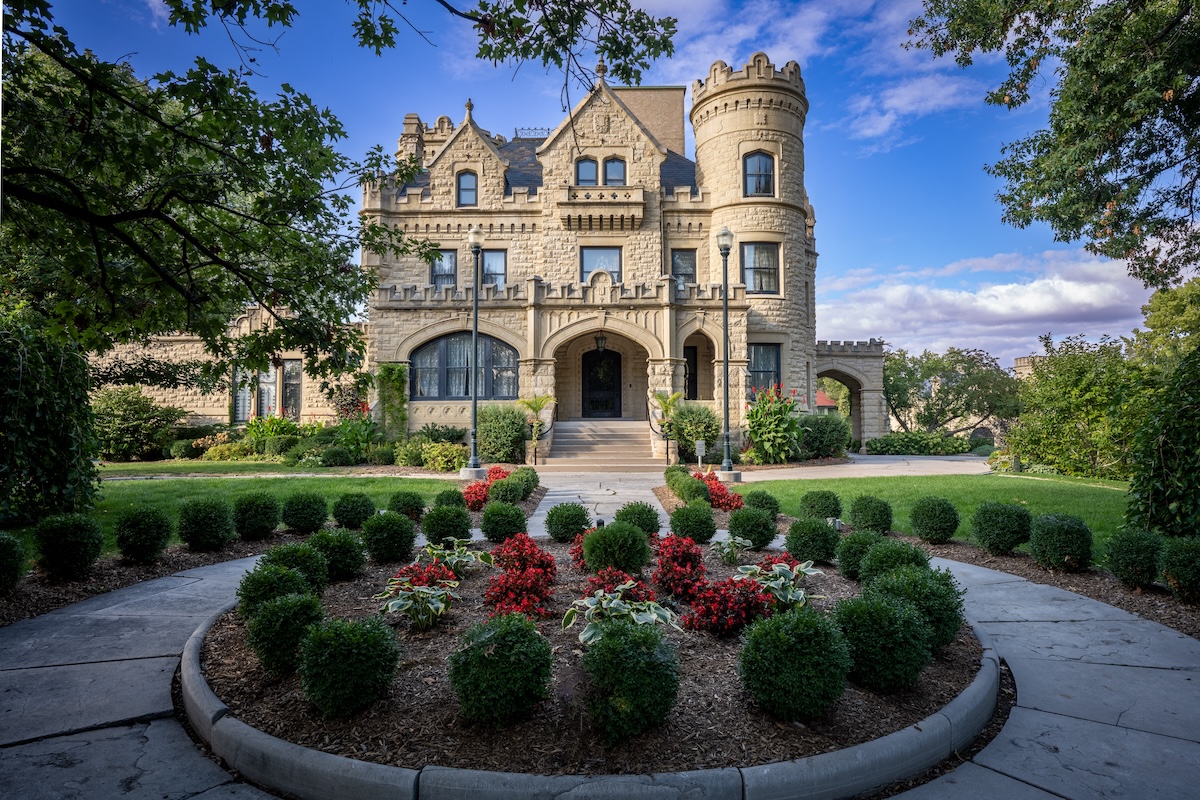
George Joslyn made his fortune in an unglamorous corner of publishing: he supplied preprinted pages to small-town newspapers through the Western Newspaper Union. That money paid for a 35-room Scottish Baronial castle, finished in 1903, which was one of the most lavish homes in Nebraska at the time.
The house has woodwork in a different species almost room by room, plus a music room and an elaborate conservatory. After George died, his wife Sarah turned her attention to philanthropy and founded what is now the Joslyn Art Museum in his memory. The castle itself is run by a nonprofit trust today, and the surrounding grounds in Omaha’s Gold Coast neighborhood host events, garden walks, and tours that cover both the family and the Gilded Age Midwest they lived in.
21. Pittock Mansion, Portland
The view gets top billing here. Perched about 1,000 feet above downtown Portland, the French Renaissance-style mansion looks out on the city and, on clear days, several Cascade peaks including Mount Hood. Henry Pittock, the longtime publisher of The Oregonian, moved in with his wife Georgiana in 1914.
For a house of its era, it was technically ambitious, with central vacuuming, an intercom system, and indirect lighting. It nearly disappeared anyway. After a 1962 storm damaged it and the family put it up for sale, demolition was a real possibility until the City of Portland bought the property in 1964. The grounds are free to visit, and hikers often reach the house on the Wildwood Trail through Forest Park.
20. Pabst Mansion, Milwaukee
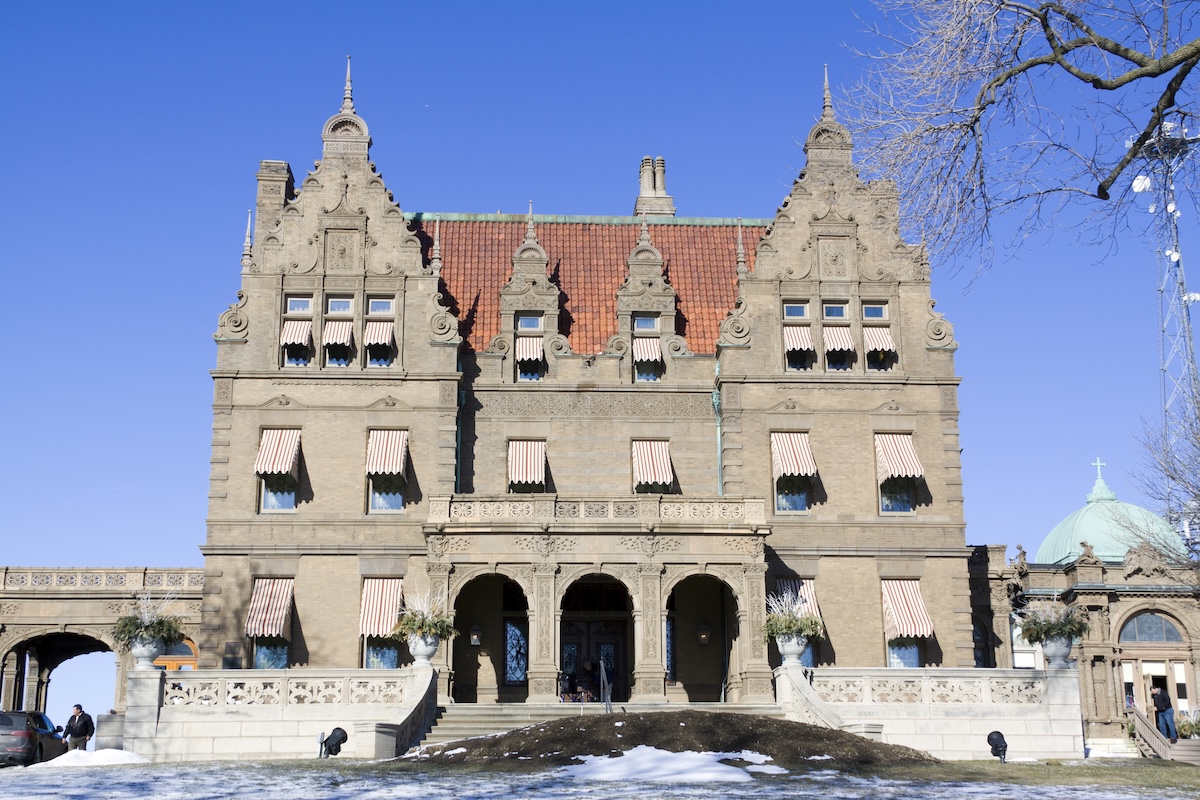
Beer money built it, and the Catholic Church kept it standing. Captain Frederick Pabst, head of what was then the world’s largest brewery, completed this Flemish Renaissance Revival mansion on Milwaukee’s Grand Avenue in 1892. After the family sold it in 1908, it became the residence of the city’s archbishops for more than six decades.
When the archdiocese moved out in the 1970s, the house came close to being razed for a parking lot before preservationists bought it in 1978. Restoration has continued for years, and the interiors now gleam with carved woodwork and period furnishings. The attached pavilion has its own history: Pabst displayed it at the 1893 World’s Columbian Exposition in Chicago before moving it home, and it later served as the archbishop’s chapel.
19. Vanderbilt Mansion, Hyde Park
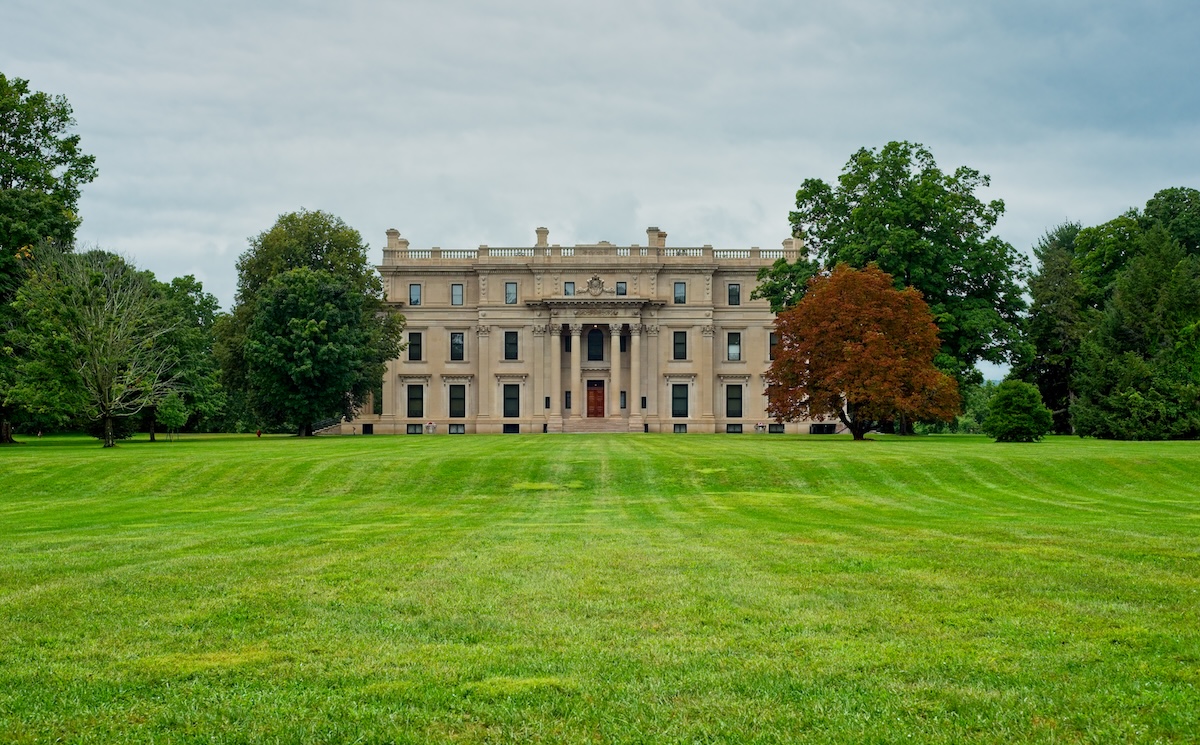
Among Vanderbilt houses, this one counts as modest, which tells you plenty about the family. Frederick Vanderbilt hired McKim, Mead & White to build the Beaux-Arts mansion, finished in 1899, and used it as a spring and fall retreat. It has 54 rooms.
The National Park Service runs the site, and the guided tour covers rooms filled with European antiques and the bedroom of Louise Vanderbilt, decorated to evoke a French queen’s chamber. The grounds stretch along the Hudson with long river views and formal gardens maintained by volunteers. Since Franklin Roosevelt’s home and presidential library sit just a few miles down Route 9, you can pair the two for a day spent on very different American dynasties.
18. Hillwood Estate, Washington D.C.
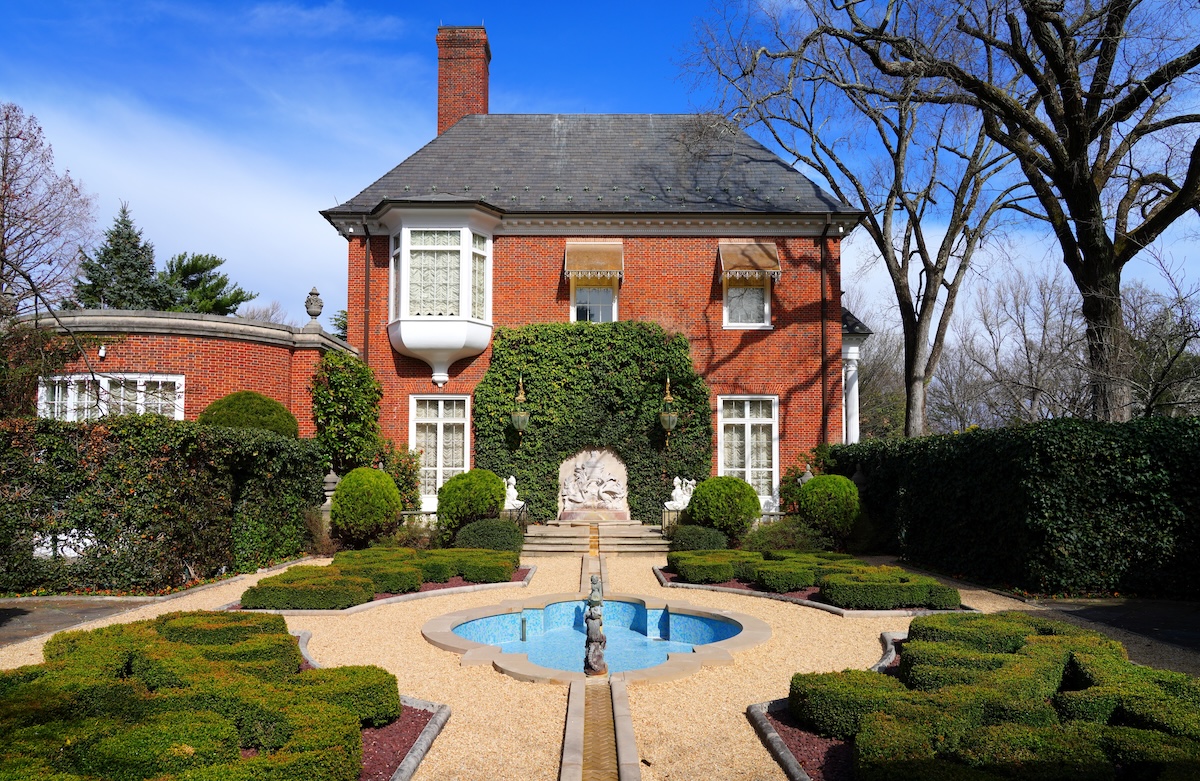
Marjorie Merriweather Post, heiress to the Post cereal fortune, bought this Georgian-style mansion in 1955 and filled it with the finest collection of Russian imperial art outside Russia. She began collecting during the 1930s, when her husband was U.S. ambassador to the Soviet Union and the government was selling off czarist treasures.
The house holds Fabergé eggs, icons, porcelain, and jeweled objects, alongside a strong collection of French decorative art. Post designed the place as a museum from the start and entertained there constantly. Outside, about 13 acres of gardens include a Japanese-style garden, a rose garden, and a greenhouse with thousands of orchids. Hillwood requires timed tickets, and its spring blooms draw serious crowds.
17. Winterthur Museum, Winterthur
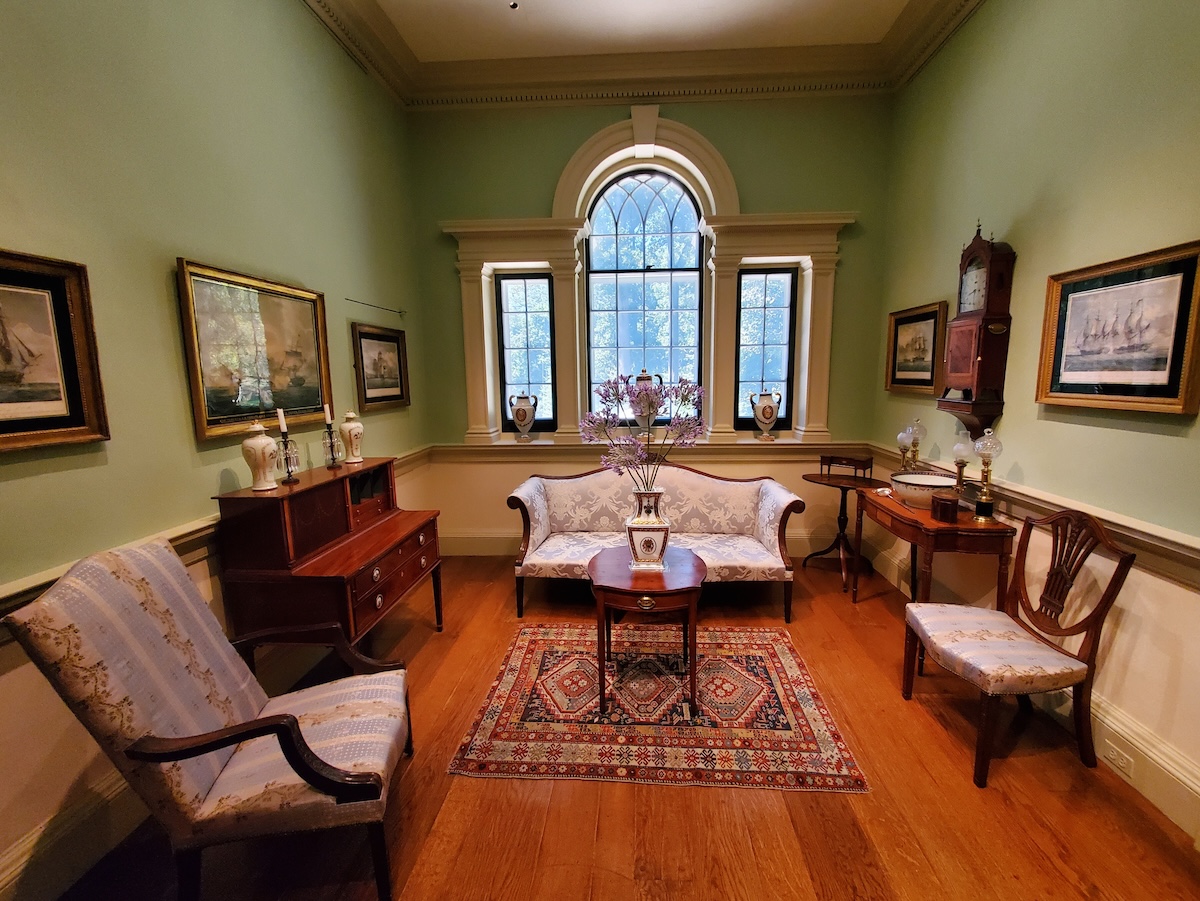
Henry Francis du Pont collected American decorative arts on a scale that turned his home into a 175-room museum. The Delaware estate holds around 90,000 objects made or used in America between roughly 1640 and 1860, displayed in period rooms that du Pont often assembled from woodwork salvaged out of older houses.
Du Pont was equally obsessive about his garden. He spent decades planning about 60 acres within the 1,000-acre estate so that something would be blooming in sequence from late winter into fall. Children gravitate to the Enchanted Woods, a fairy-tale garden with a faerie cottage and a giant bird’s nest. You’ll want to book a themed house tour in advance, since the period rooms are too many to see in one visit.
16. Glensheen Mansion, Duluth
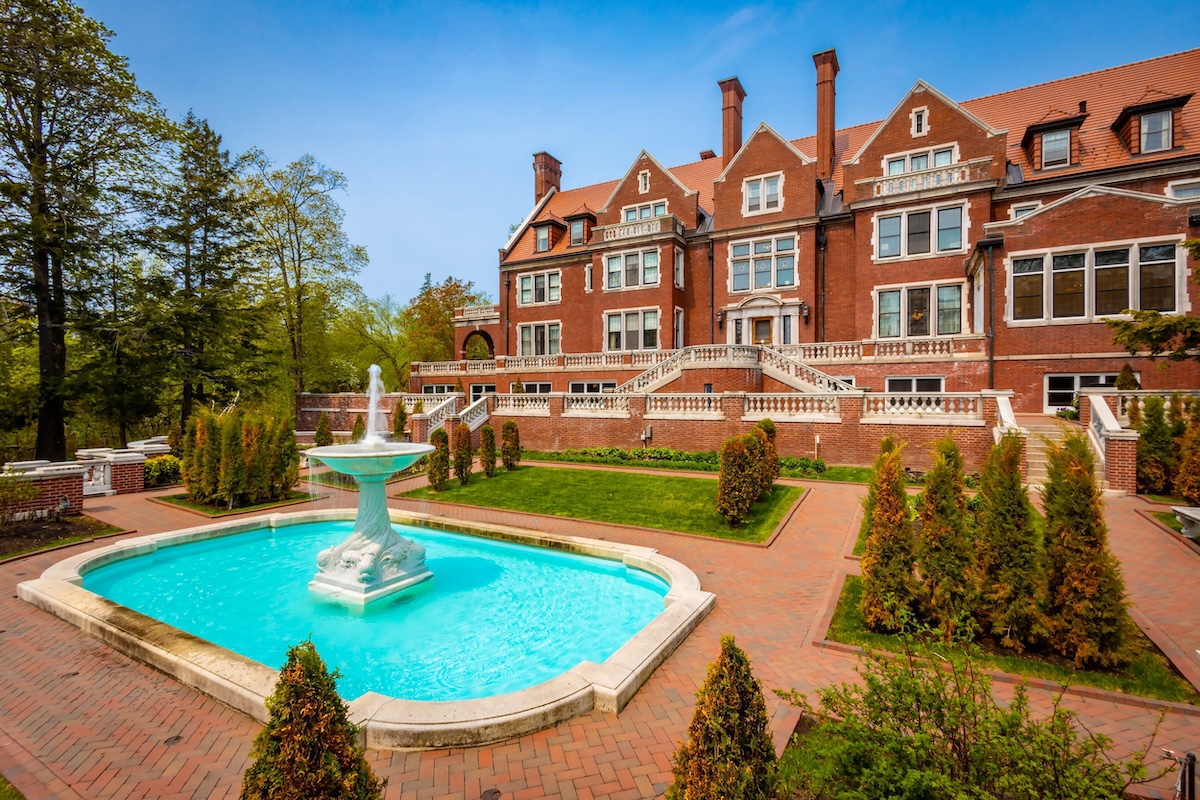
Glensheen carries two stories, one about wealth and one about a crime. Chester Congdon, a lawyer who made his fortune in Iron Range mining, finished the 39-room Jacobean Revival house on the shore of Lake Superior in 1908. Much of the original furniture remains, along with the terraced gardens and a boathouse.
In 1977, Elisabeth Congdon and her nurse, Velma Pietila, were murdered inside the house, and the case became one of Minnesota’s most notorious. For years, guides were told to avoid the topic. That has loosened, though tours still center on the family and the house. The University of Minnesota Duluth owns the estate, and the lakeside lawn is one of the better spots in town to watch freighters come in.
15. Winchester Mystery House, San Jose
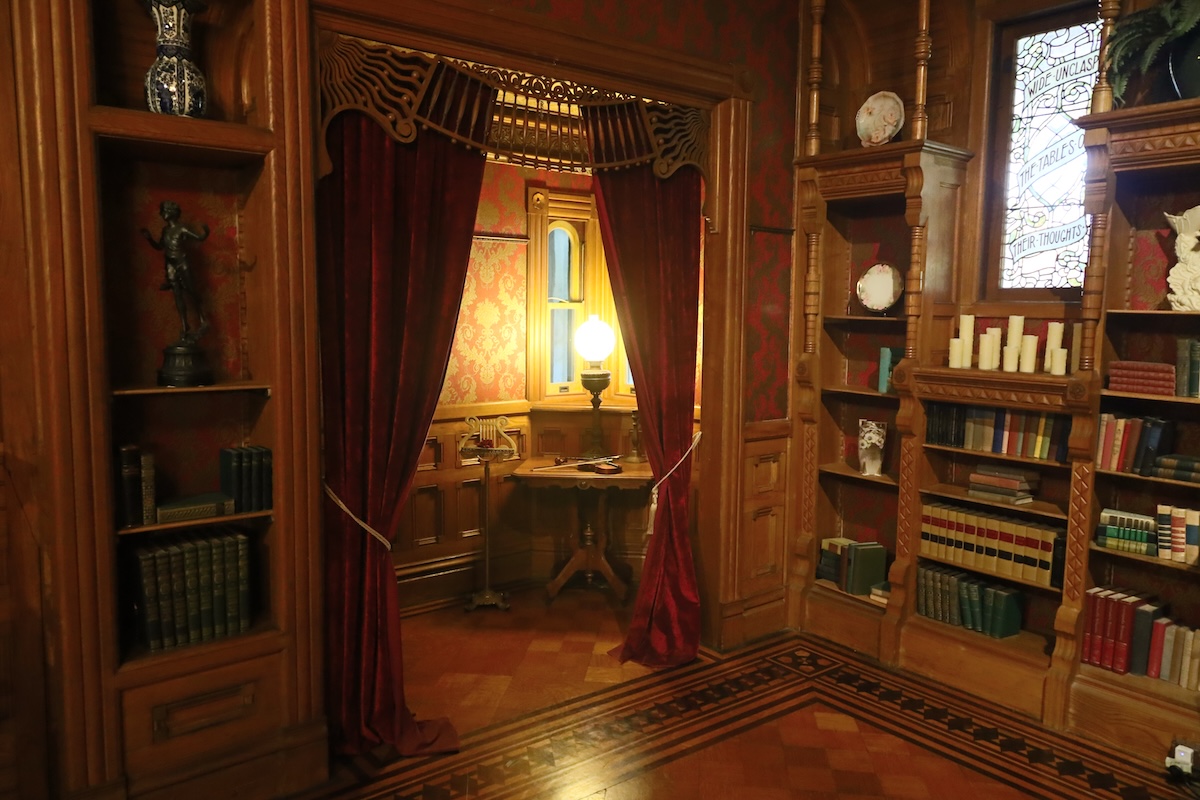
Sarah Winchester, widow of the heir to the Winchester rifle company, kept builders working on her San Jose home almost continuously from 1886 until her death in 1922. The result has about 160 rooms, staircases that run into ceilings, and a door on an upper floor that opens onto a straight drop.
The legend says spirits of people killed by Winchester rifles drove her to keep building. Historians are skeptical and point to a wealthy woman with time, money, and architectural interests that leaned experimental. The house plays up the ghost angle anyway, with flashlight tours around Halloween and Friday the 13th. Even on a standard tour, you’ll notice how much of it is clever engineering for its time, including indoor plumbing, gas lighting, and an elevator.
14. Ca’ d’Zan, Sarasota
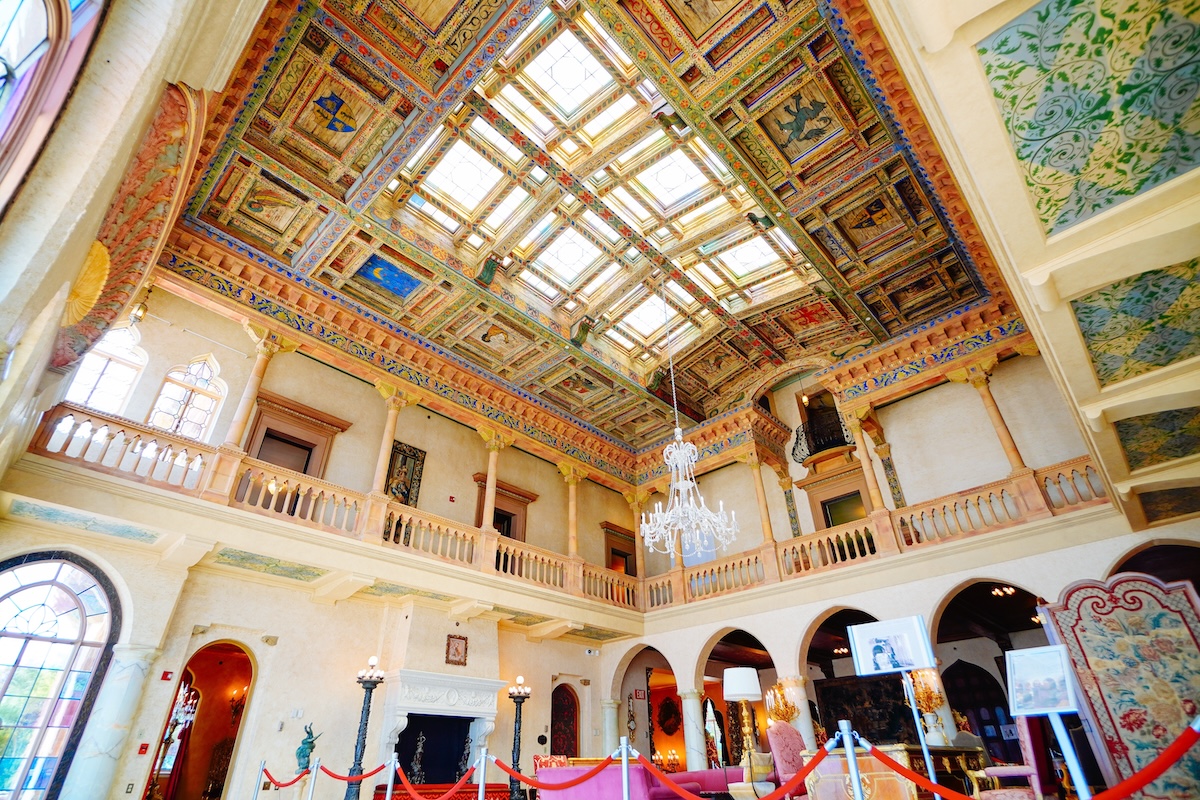
Circus king John Ringling and his wife Mable built Ca’ d’Zan, meaning “House of John” in Venetian dialect, on Sarasota Bay in 1926. Mable had a clear model in mind: the Gothic palazzos along Venice’s Grand Canal. She got her wish in terracotta, glazed tile, and colored glass.
The house has 56 rooms and a marble terrace that steps right down to the water. Its ceilings are painted with scenes, including one in the ballroom by Willy Pogany, the illustrator. The Ringlings lost much of their fortune soon after, and John left the estate to Florida when he died in 1936. Your ticket to the larger Ringling complex also covers an art museum strong in Rubens and a circus museum with a sprawling miniature big top.
13. Stan Hywet Hall, Akron
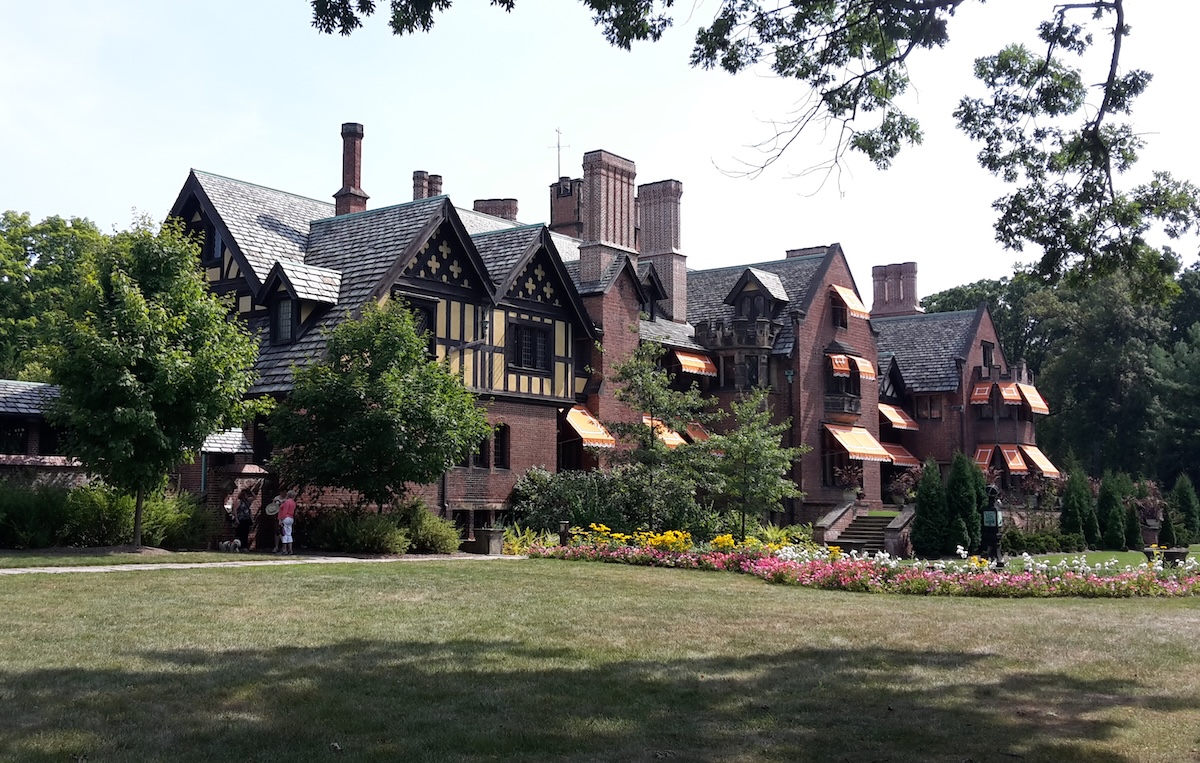
A tire fortune built this Tudor Revival manor, and a small meeting in its gatehouse changed millions of lives. Frank A. Seiberling, co-founder of Goodyear, completed Stan Hywet in 1915. The name comes from Old English for “stone quarry,” a reference to the site’s old quarry.
The main house spans around 64,500 square feet with a great hall, a music room big enough for concerts, and carefully restored gardens. In 1935, Henrietta Seiberling, the family’s daughter-in-law, introduced Bill Wilson to Dr. Bob Smith in the Gate Lodge, a meeting that led to the founding of Alcoholics Anonymous. The site hosts seasonal events like a big holiday light display, and the grounds cover about 70 acres.
12. Monticello, Charlottesville
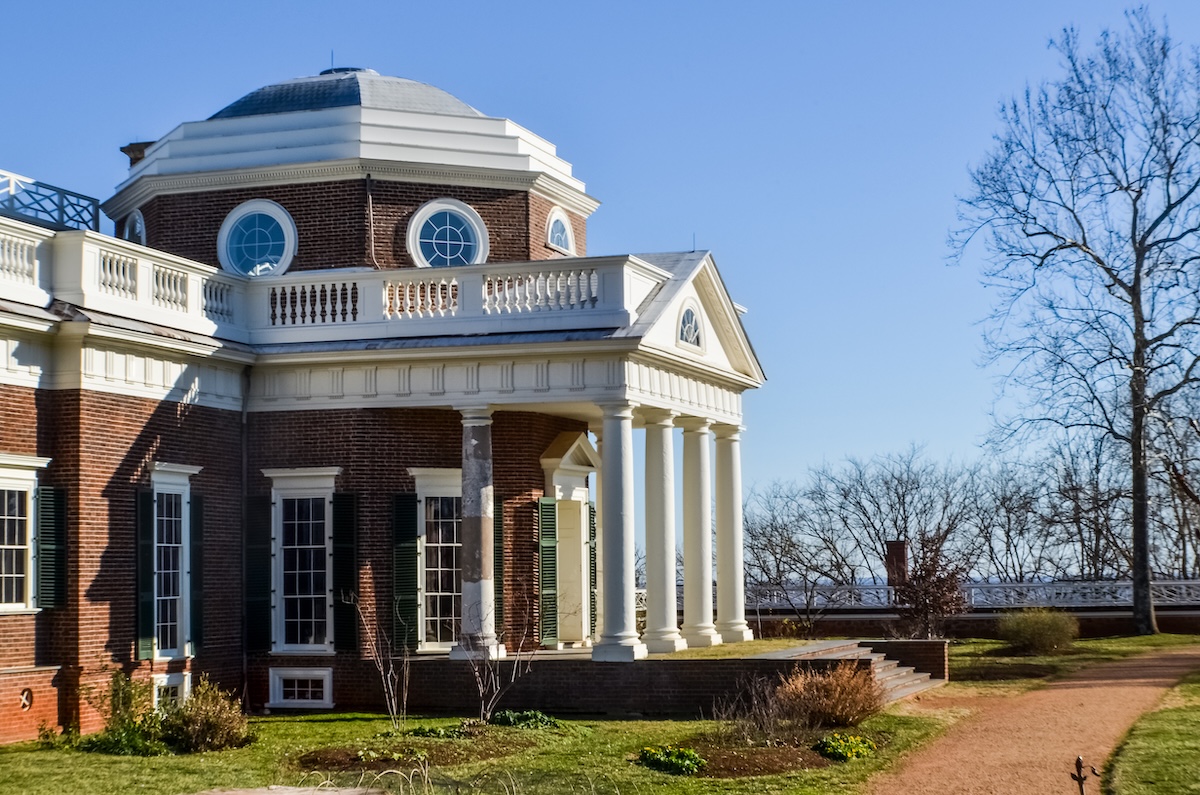
Thomas Jefferson treated his hilltop home as a decades-long experiment. He started it in 1769, tore much of it down, and rebuilt it with the dome you see on the back of the nickel. The interiors reflect his gadgets: a two-faced Great Clock in the entrance hall and a dumbwaiter built into the dining room fireplace.
The estate also confronts the fact that Monticello ran on the labor of more than 400 people Jefferson enslaved over his lifetime. Tours along Mulberry Row cover where they lived and worked, and an exhibit tells the story of Sally Hemings. Monticello and the nearby University of Virginia, which Jefferson founded, share a joint UNESCO World Heritage listing.
11. Lyndhurst Mansion, Tarrytown
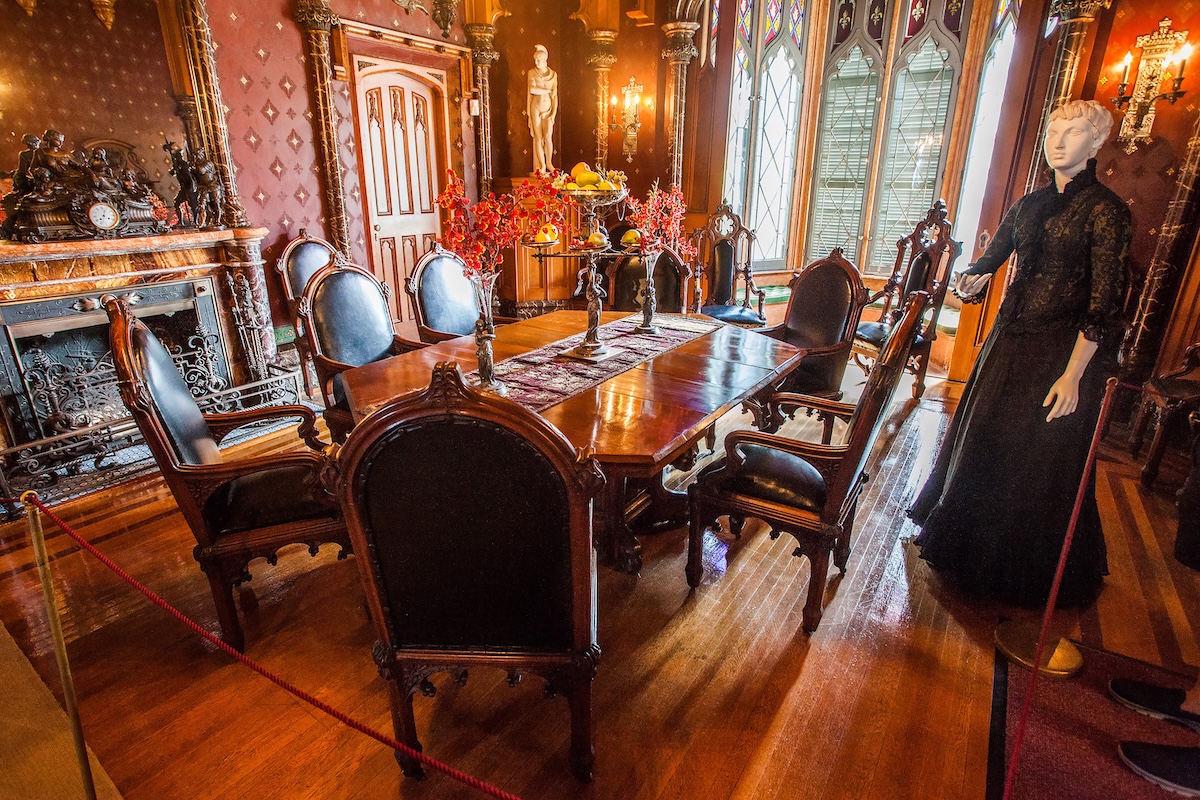
Lyndhurst looks like the Hudson Valley’s idea of a Gothic novel, with pointed arches, turrets, and stained glass. Architect Alexander Jackson Davis designed it in 1838 for former New York mayor William Paulding, and he expanded it decades later for a second owner. Railroad baron Jay Gould bought it in 1880, and his family kept it until it passed to the National Trust for Historic Preservation.
The mood suits Hollywood, which used it as Collinwood in the “Dark Shadows” films of 1970 and 1971. On the grounds, you can see the remains of Gould’s enormous greenhouse, once among the largest in the country, plus a rose garden. Lyndhurst is a short trip from Sleepy Hollow, which makes it a natural October stop.
10. Filoli, Woodside
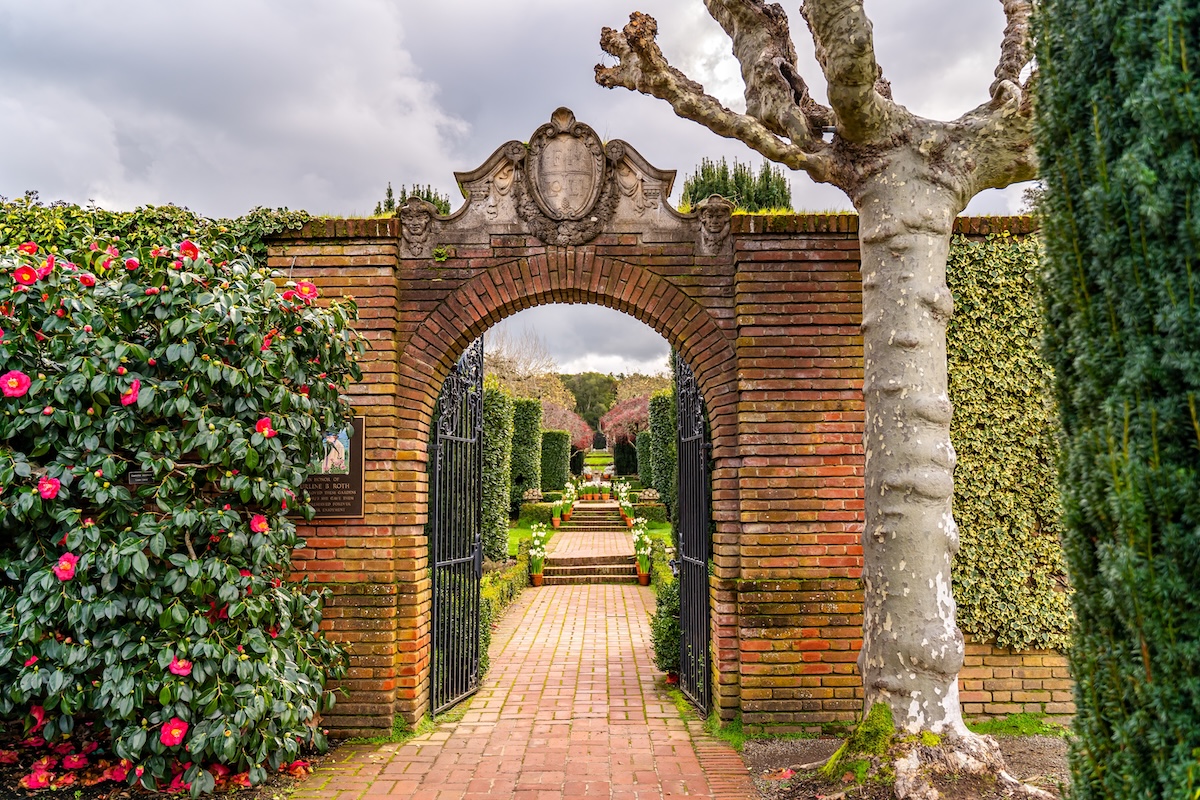
William Bourn named his estate with a personal creed: “Fight for a just cause; Love your fellow man; Live a good life.” Take the first two letters of each verb and you get Filoli. Bourn, who controlled a gold mine and San Francisco’s water company, completed the Georgian Revival house in 1917.
Most people come for the 16 acres of formal gardens, laid out as a series of outdoor rooms with hedges, parterres, and a walled garden. The estate’s spring tulip display draws crowds. The house has its own screen credit: TV viewers in the 1980s saw it as the Carrington mansion in “Dynasty.” Filoli sits about 30 miles south of San Francisco on 654 acres, with hiking trails beyond the gardens.
9. Marble House, Newport
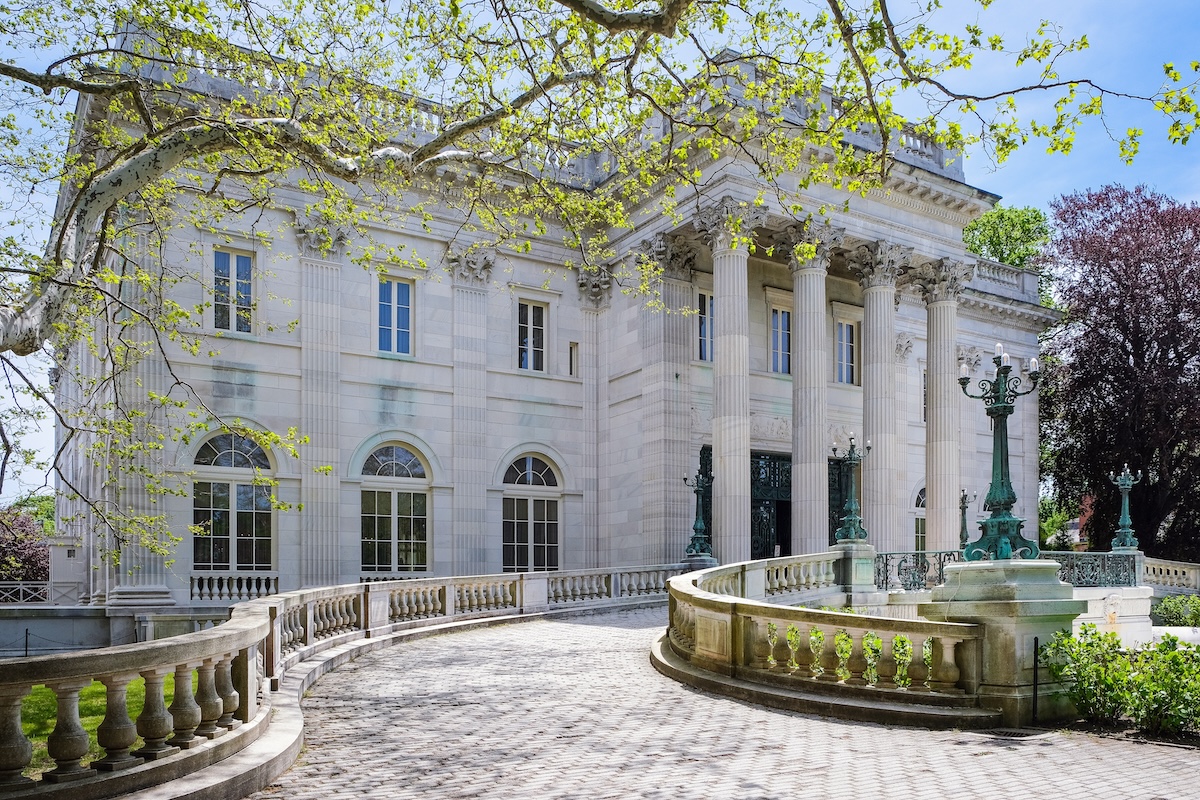
William K. Vanderbilt gave this house to his wife Alva for her 39th birthday, and it cost a reported $11 million in the early 1890s, $7 million of it for marble. Alva then divorced him in 1895, kept the house, and later used it to host rallies for women’s suffrage.
The Gold Ballroom is the showstopper, covered in gilded carvings and mirrors, while the dining room uses pink Numidian marble and bronze chairs so heavy that footmen helped guests sit. Alva added a Chinese Tea House on the cliffs overlooking the ocean, which now serves refreshments in summer. Marble House is run by the Preservation Society of Newport County, and the Cliff Walk passes right behind it.
8. Nemours Estate, Wilmington
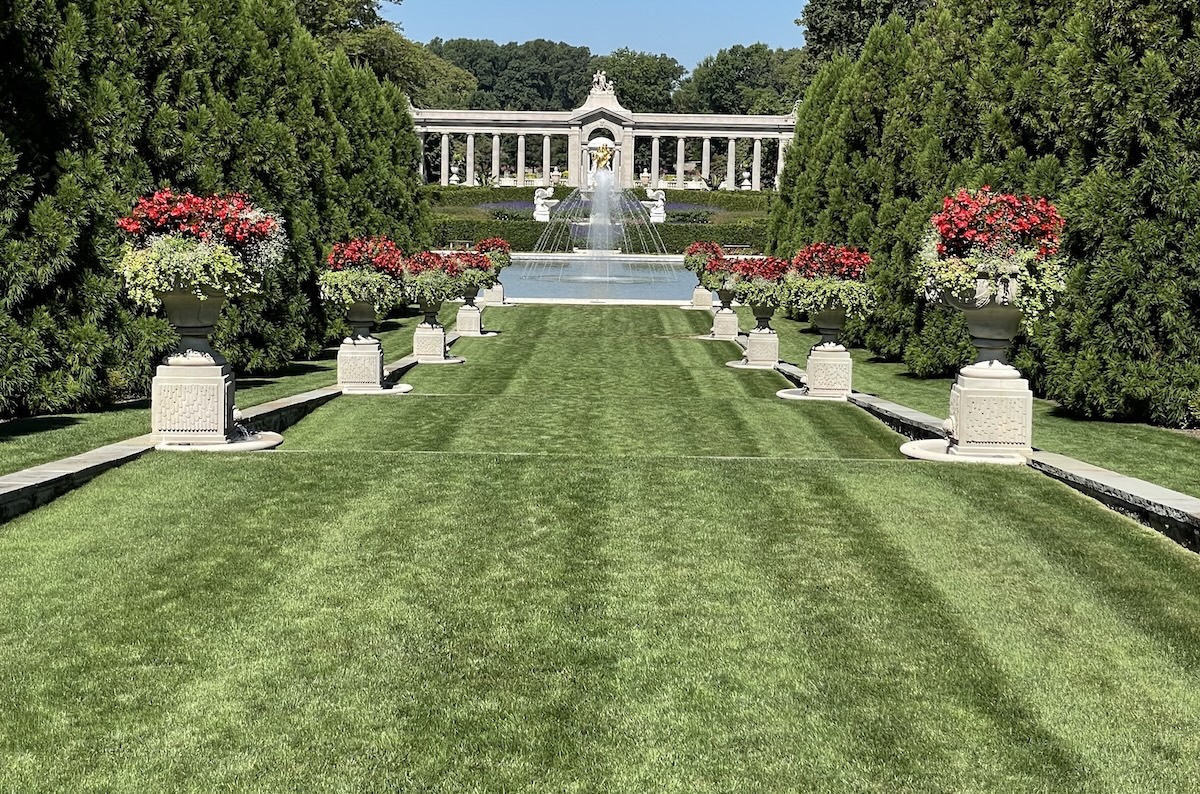
Alfred I. du Pont named his Delaware estate after the French town his ancestors came from, and he built it in the style of a Louis XVI château. The 1910 mansion has 77 rooms, with fine art, antique furniture, and a collection of vintage cars in the garage.
The gardens are the main event. They form one of the largest formal French gardens in North America, with a long reflecting pool flanked by allées, fountains, and a sunken garden. Du Pont also left his fortune to found what is now Nemours Children’s Health, so the estate shares the property with a children’s hospital. Nemours tends to run on a seasonal schedule, so check opening months before you go.
7. Boldt Castle, Alexandria Bay
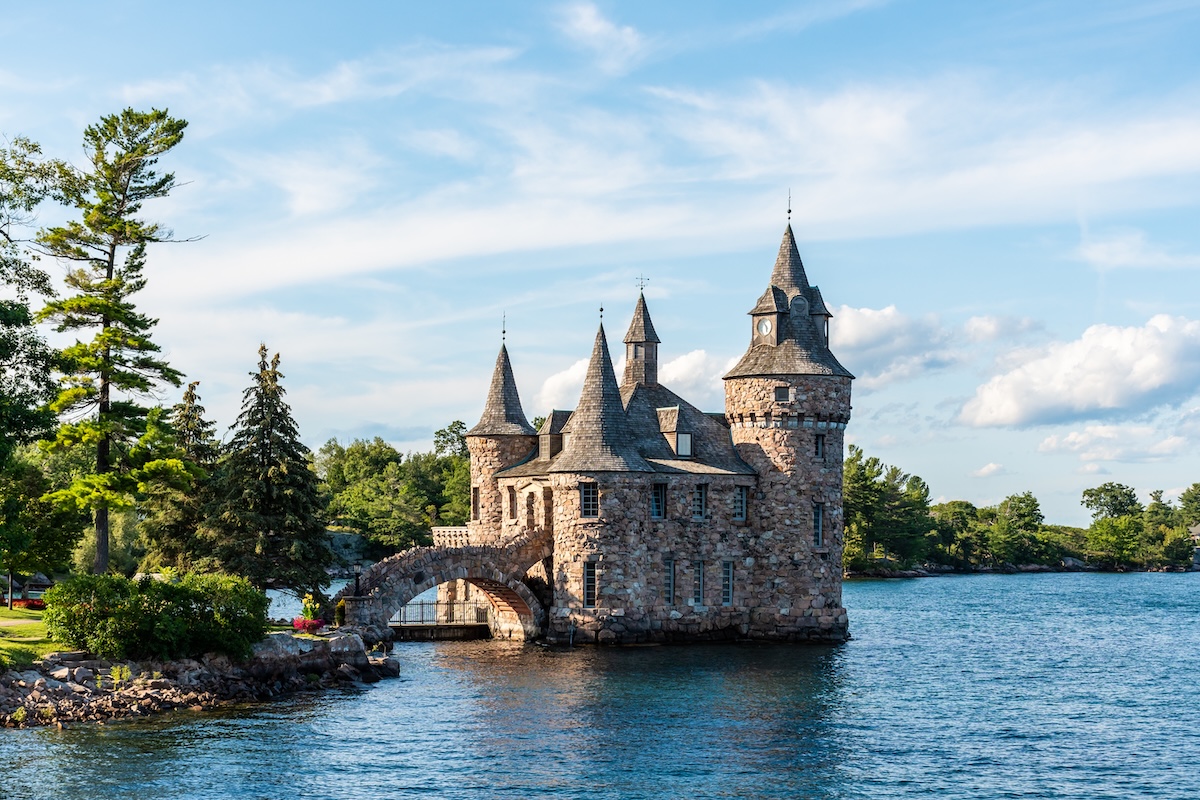
George Boldt, the hotelier behind New York’s Waldorf-Astoria, began building a six-story castle on Heart Island in the Thousand Islands as a gift for his wife, Louise. When she died suddenly in 1904, he halted work and never returned. The castle stood unfinished and abandoned for decades.
In 1977, the Thousand Islands Bridge Authority took it over and has spent millions completing and restoring the interiors, adding the finished rooms that Boldt never saw. You reach it by boat from Alexandria Bay, and a ferry also runs to the yacht house on nearby Wellesley Island. Local legend credits Boldt with popularizing Thousand Island dressing, a claim with several rival origin stories.
6. Vizcaya Museum and Gardens, Miami
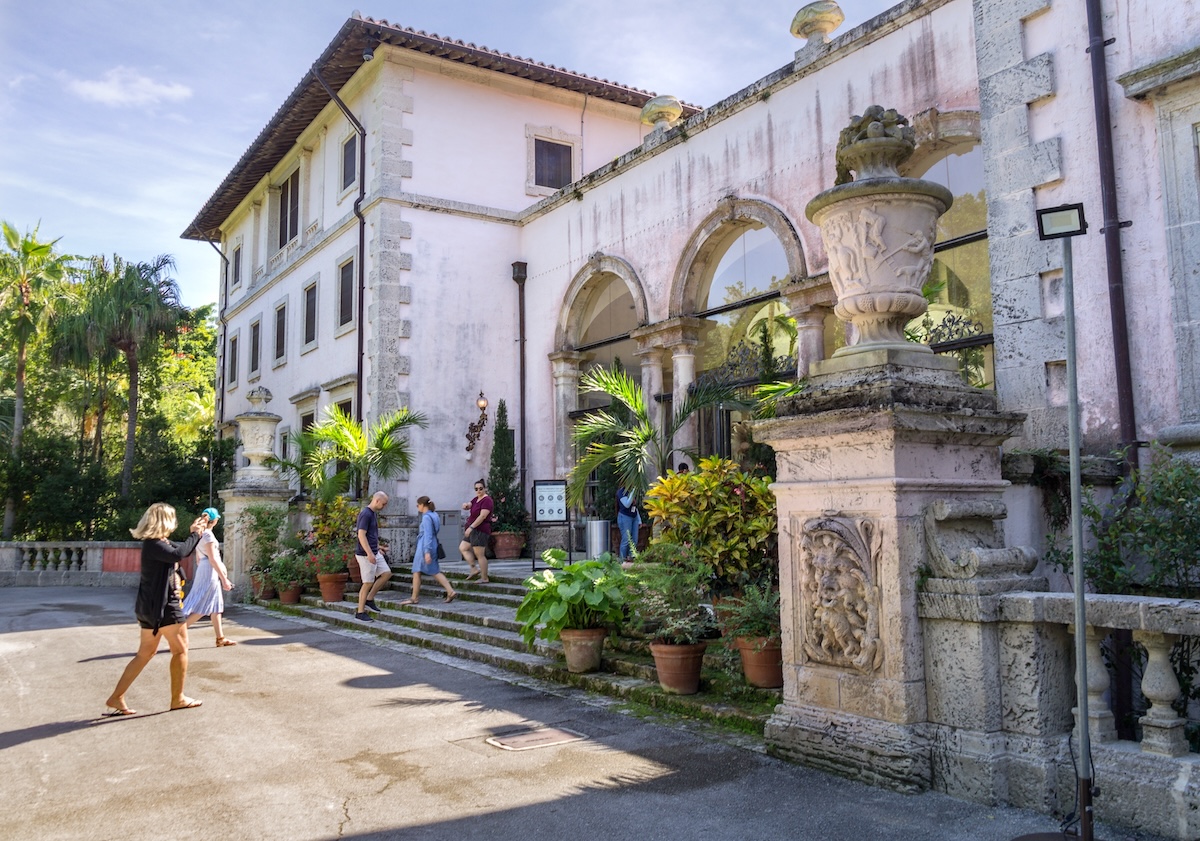
James Deering, a farm equipment heir, built Vizcaya on Biscayne Bay in 1916 as a winter home modeled on Italian Renaissance villas. He packed it with European antiques collected across centuries, arranged to look as if the house had been added onto over generations.
The bay is part of the design. A carved stone barge sits just offshore as a breakwater, decorated with sculptures. The formal gardens blend Italian and French styles with tropical plants, grottoes, and fountains suited to the Miami climate. Hurricanes have battered the estate more than once, with damage in 1926 and again during Hurricane Andrew in 1992. Plan a morning visit to avoid the afternoon heat, since much of what you’ll see is outdoors.
5. Oheka Castle, Huntington
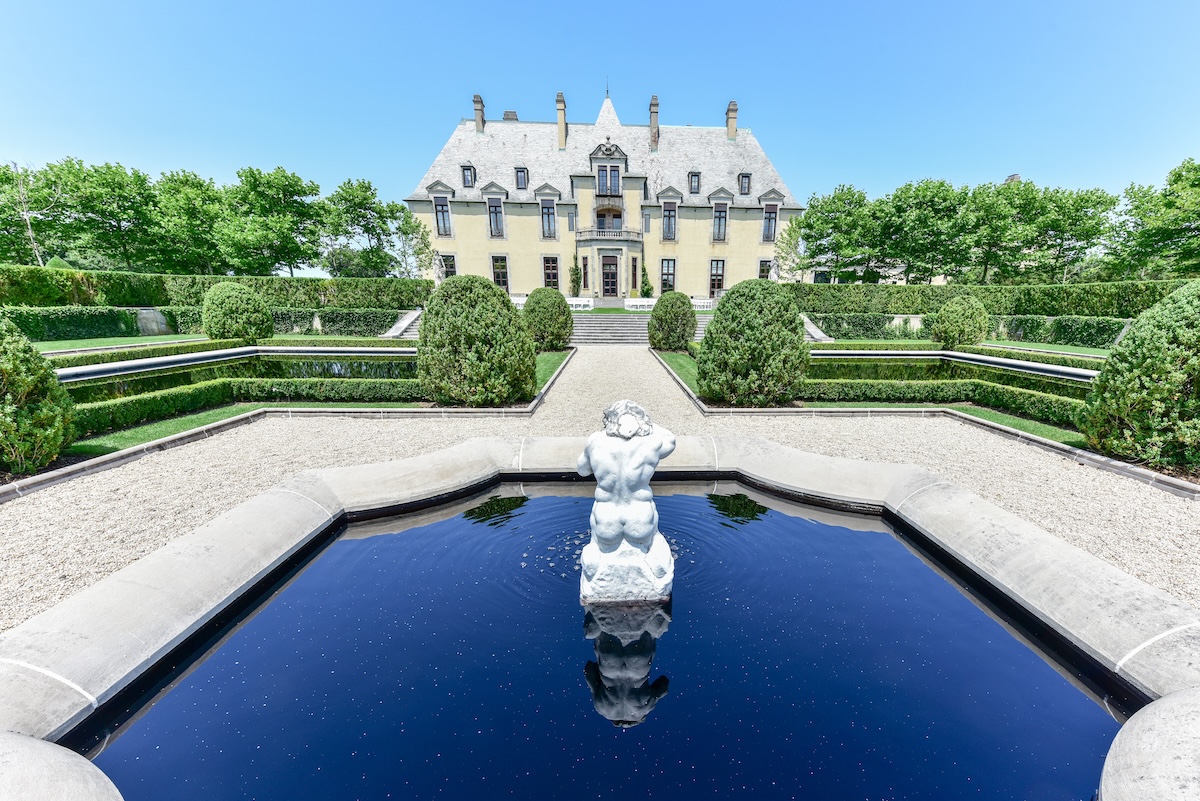
Financier Otto Hermann Kahn built Oheka, named with the first letters of his three names, as a 127-room French-style château on Long Island’s Gold Coast. When it was completed in 1919, it was the second-largest private home in America. Kahn even had a hill built so the house would sit higher.
After his death, Oheka went through a run of owners and fell into ruin, sustaining vandalism and fire damage. A developer bought it in 1984 and spent years restoring it. It now operates as a hotel and wedding venue, with guided tours offered to the public. Fans of old movies may recognize it from the opening footage of “Citizen Kane,” which used images of the estate to evoke Xanadu.
4. Meadow Brook Hall, Rochester
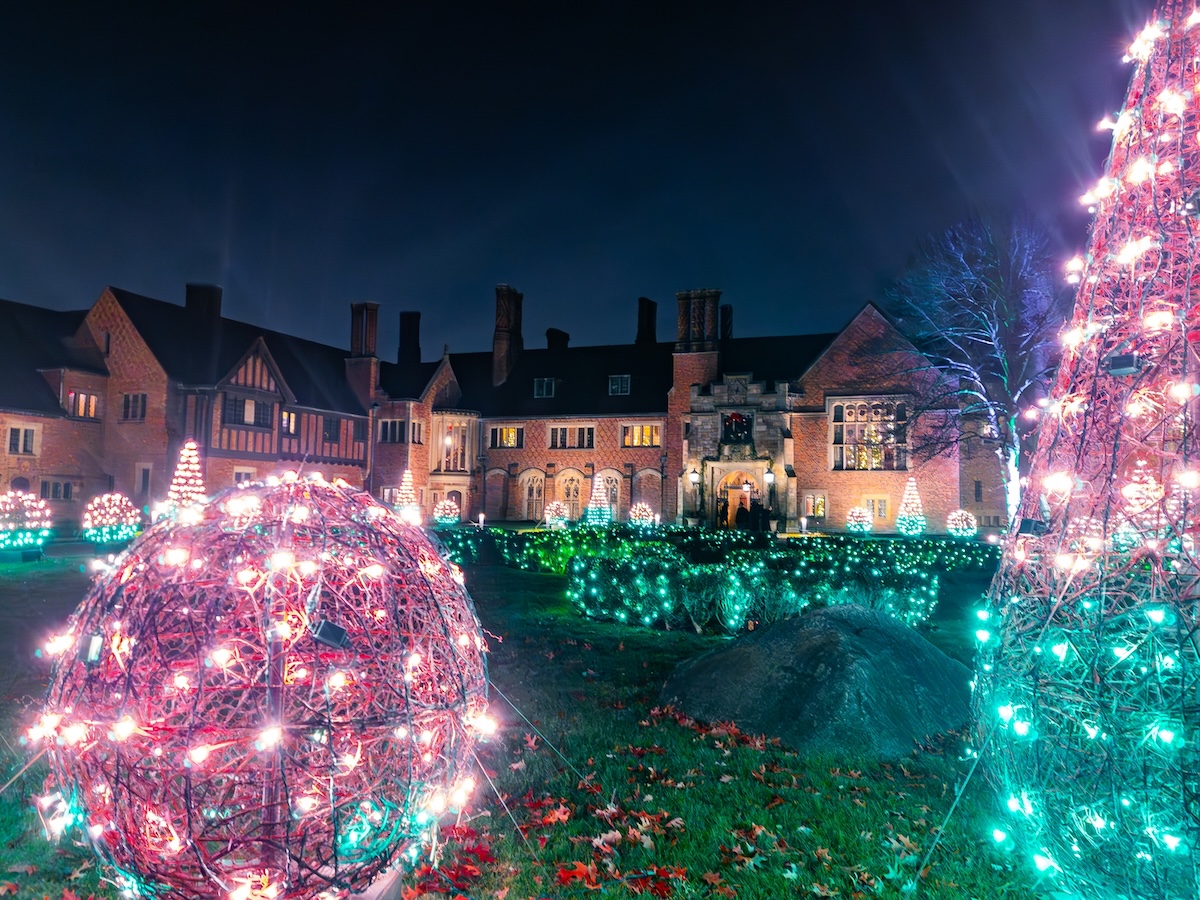
Matilda Dodge Wilson, widow of auto pioneer John Dodge, completed Meadow Brook Hall in 1929 at a cost of about $4 million. The 110-room Tudor Revival mansion in Michigan’s Rochester Hills is one of the largest homes in the country and shows off fine carved woodwork and decorative plaster.
Wilson later gave the estate and a large sum of money to establish what became Oakland University, which now runs the house. You can see many of the family’s original furnishings, and the grounds include Knole Cottage, a playhouse built for her daughter Frances. The holiday walk-throughs are a local tradition, with each room decorated by a different designer.
3. Hearst Castle, San Simeon
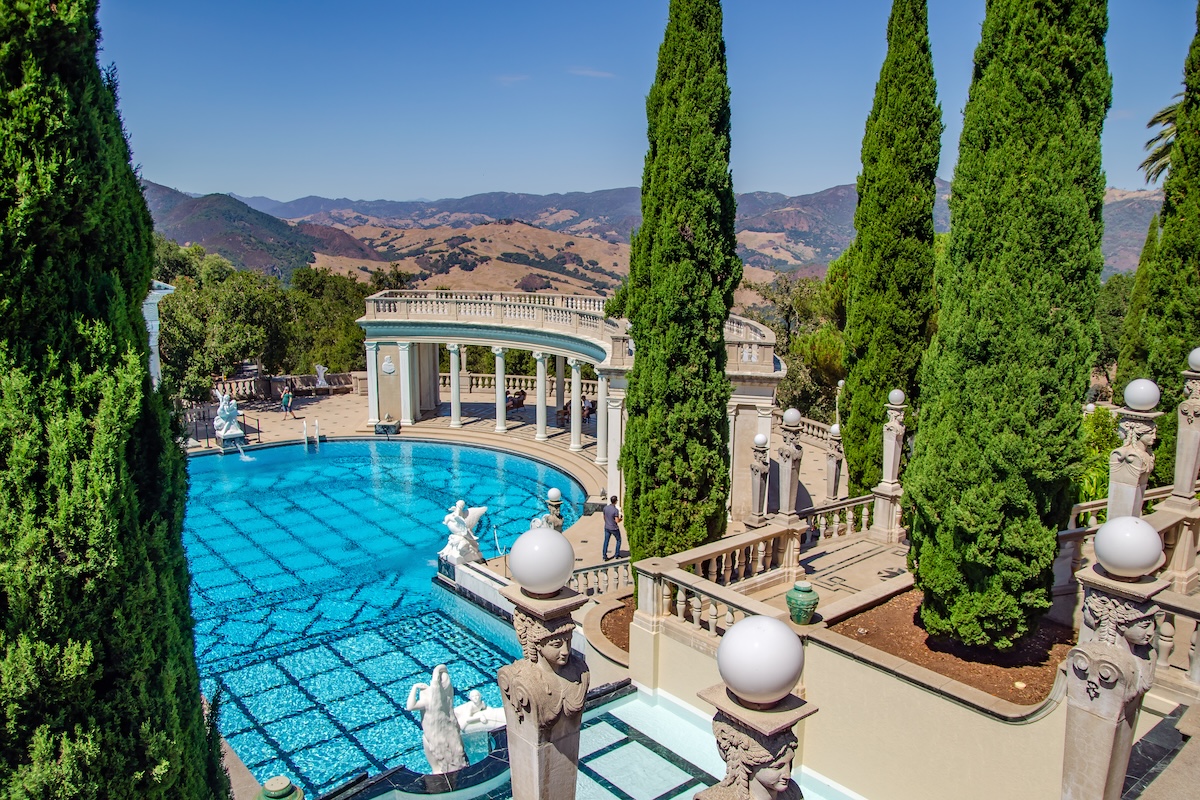
Publisher William Randolph Hearst and architect Julia Morgan worked on this hilltop estate for nearly 30 years, starting in 1919. The main house, Casa Grande, has about 115 rooms, and the full estate includes guest cottages and gardens. Hearst entertained Hollywood stars here in the 1920s and 30s.
The Neptune Pool, framed by an ancient Roman temple facade, is the most photographed spot on the property, while the indoor Roman Pool shimmers with blue and gold tile. Hearst also kept a private zoo. Zebras descended from his herd still graze along Highway 1 near the castle. California State Parks runs the site, and buses take visitors up the winding road from the visitor center.
2. The Breakers, Newport
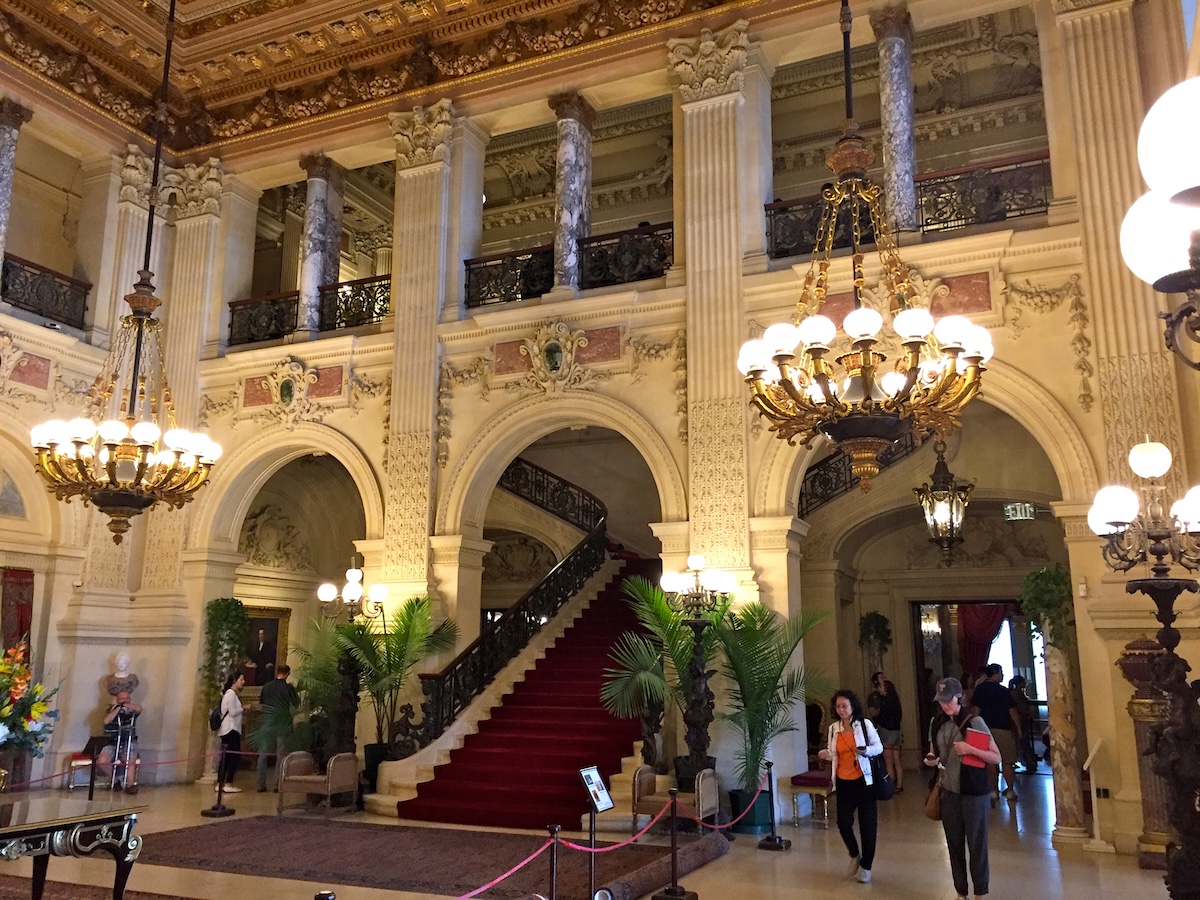
Cornelius Vanderbilt II, grandson of the railroad magnate, built The Breakers as a summer “cottage” in 1895. Architect Richard Morris Hunt modeled the 70-room mansion on Italian Renaissance palaces, and it remains the grandest house in Newport.
The two-story great hall rises about 50 feet, and the dining room has massive alabaster columns and crystal chandeliers. Vanderbilt worried about fire after his previous house burned, so Hunt kept the original structure largely fireproof with steel and limited wood. Run by the Preservation Society of Newport County, The Breakers offers an audio tour, and its grounds look out onto the Atlantic. Combo tickets with other Newport mansions save money if you plan to see more than one.
1. Biltmore Estate, Asheville
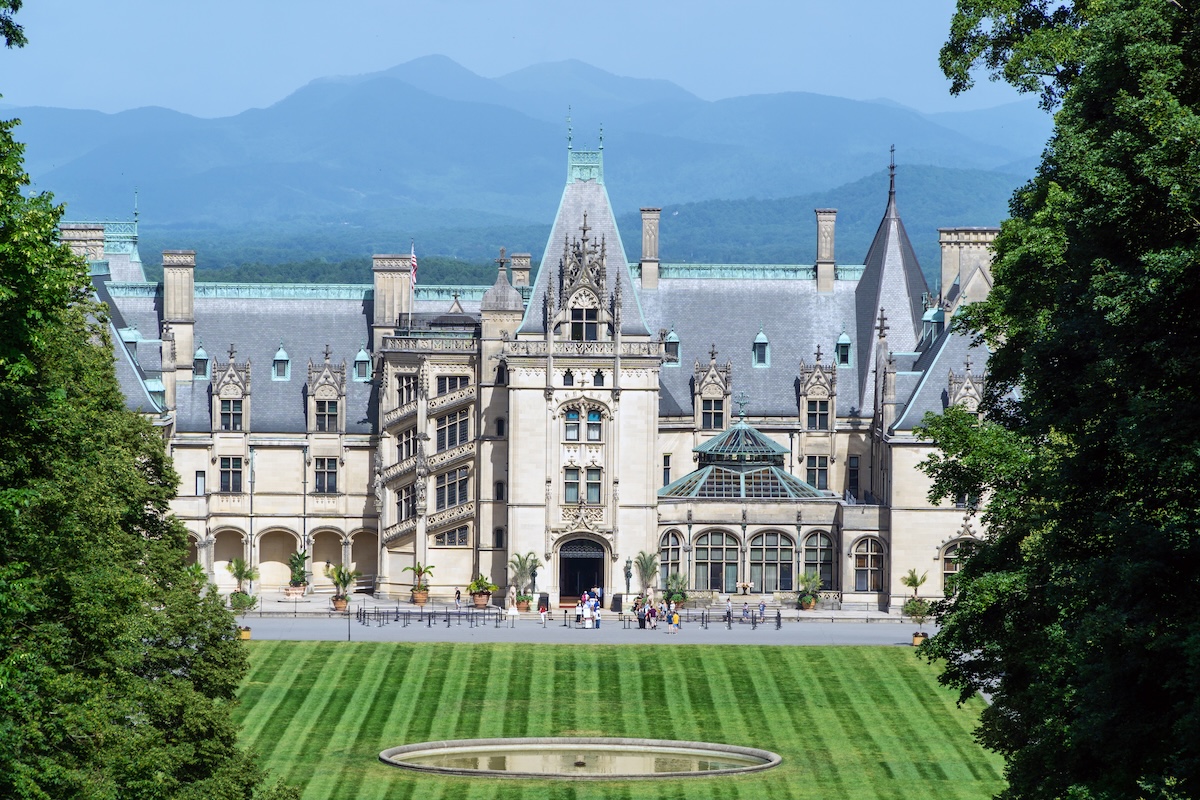
George Washington Vanderbilt II completed Biltmore in 1895, and it remains the largest privately owned house in the United States, with 250 rooms and over 175,000 square feet. Hunt designed it as a French Renaissance château, and Frederick Law Olmsted planned the grounds.
Vanderbilt’s descendants still own and operate the estate. The house showcases his library of over 10,000 volumes, a banquet hall with a 70-foot ceiling, and the indoor pool and bowling alley. The 8,000-acre property also includes a winery, hotels, and an equestrian center. Biltmore’s Christmas decorations, with candlelight evening tours, run from early November into January, and tickets for December weekends sell out early.