
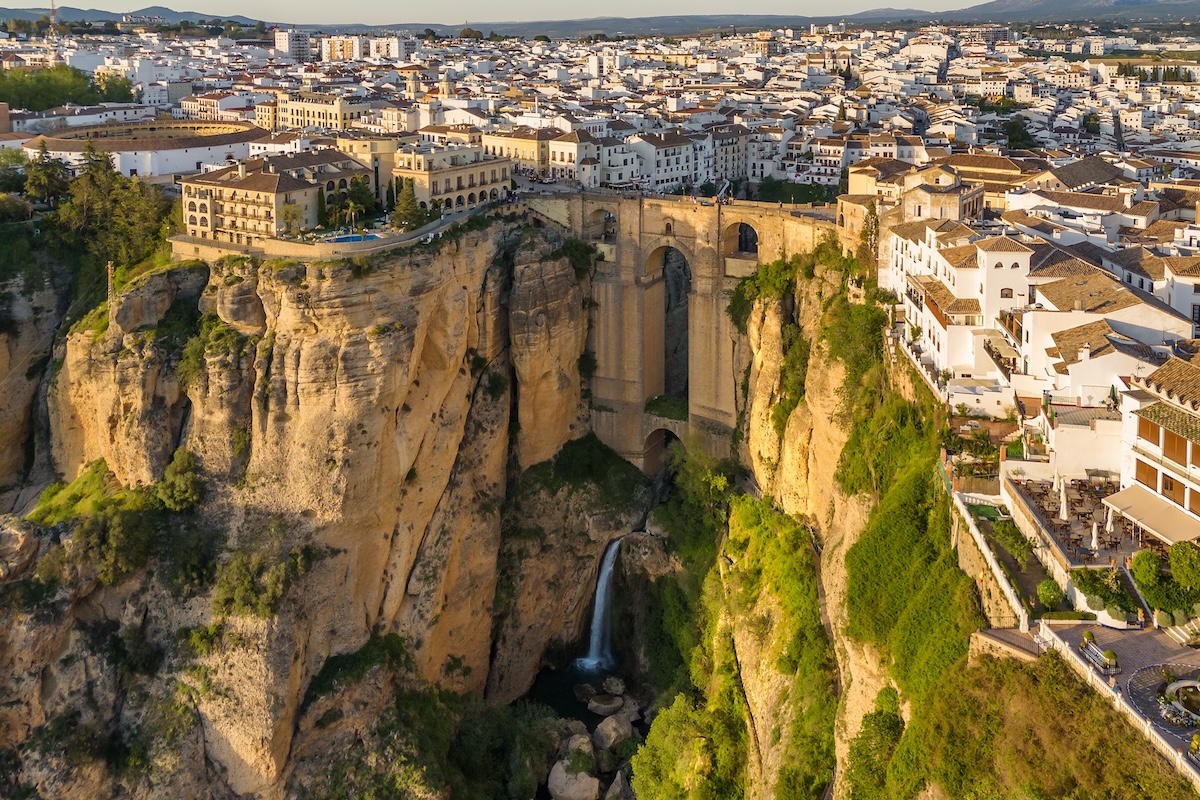
Most people show up in this town with one thing in mind: snapping that iconic photo of the bridge soaring over the gorge. You wander across the Puente Nuevo, peek at the dizzying drop, and maybe think you’ve checked the box. But that’s barely scratching the surface.
Ronda rewards anyone willing to take things slow. This compact hilltop city—sometimes called the City of Dreams—layers Moorish ruins on top of old Roman bones, fills its plazas with chatter instead of car horns, and pairs every cliffside view with a nearby tapas bar that’s tough to leave. Sure, you can day-trip from Malaga or Seville, but if you hang around after the buses roll out, stroll the hushed streets, and watch the sunset hit those mountains, you’ll see a whole different side of the place.
How The Gorge Shapes The Town
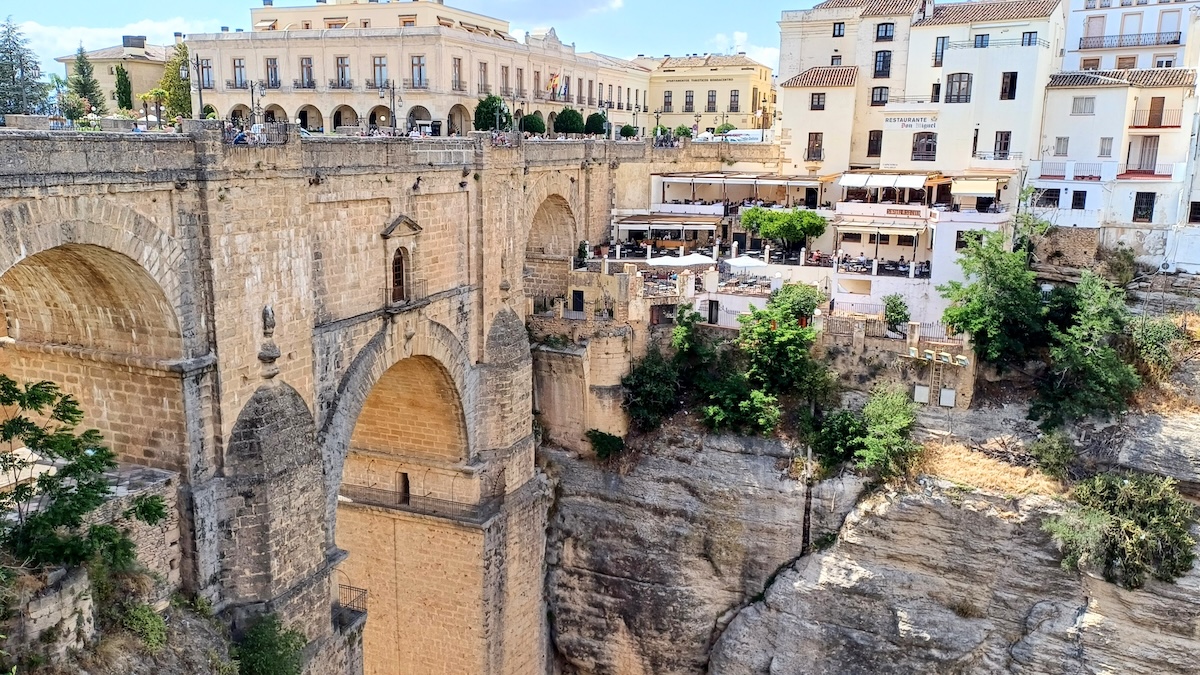
El Tajo isn’t just a backdrop. The gorge, about 120 meters deep and carved by the Guadalevin River, splits Ronda in two and shapes every route through town. You can’t really avoid it—sooner or later, you’ll find yourself at a railing or a mirador, staring into the drop.
The Puente Nuevo, finished back in 1793, connects the two sides. Stand on it and you’ll look straight down into the chasm, with whitewashed houses clinging to the cliffs across the way. The old Moorish quarter sits to the south, while the newer commercial area stretches north toward the bullring and alameda gardens.
It’s wild how many different viewpoints you’ll stumble across. The Mirador de Aldehuela, right by the bridge, gives you a head-on look into the gorge. Over in the Jardines de Cuenca—those terraced gardens on the old town side—you get a view from below. If you don’t mind a bit of a hike, you can follow the path down toward the old mills at the bottom, then look up and take in the full height of the bridge and cliffs together.
The gorge even keeps Ronda cooler than you’d expect. Even in July, when it’s baking above 35°C, a breeze often drifts up from the river. Early mornings and late evenings—when the light turns soft and the crowds fade away—are when the gorge really shows off.
Wander Between The Old And New Quarters
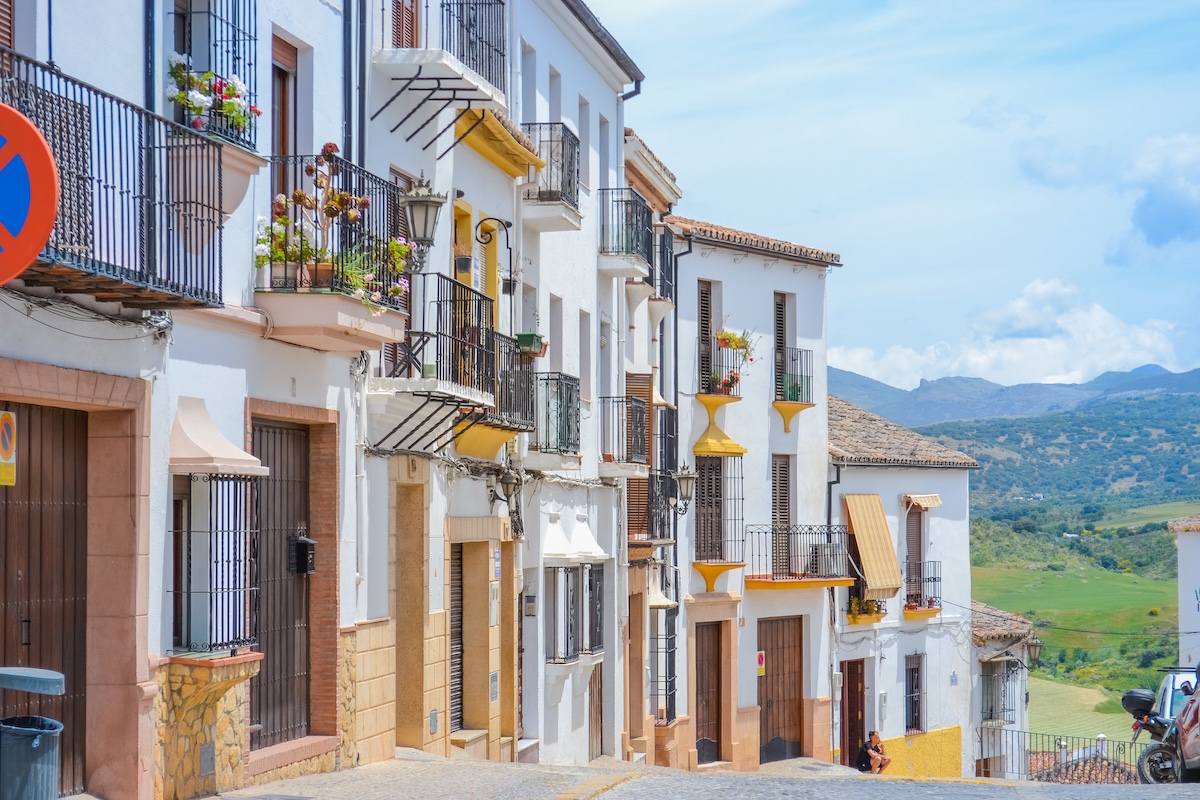
Ronda splits into two neighborhoods joined by the Puente Nuevo, and honestly, just walking between them is the easiest way to get a feel for the town’s layers. You can see both quarters on foot in a few hours, but if you’ve got the time, a full day lets you soak up the mood at your own pace.
La Ciudad, the old town, gives off a vibe that’s nothing like the newer side. The streets twist and narrow, mostly cobbled, with whitewashed walls broken up by little courtyards or the occasional church front. You’ll stumble across the Mondragón Palace, the old Arab baths by the river, and the collegiate church on Plaza Duquesa de Parcent. That plaza might just be the quietest and prettiest spot in town—shaded, ringed by old stone buildings, and usually free from crowds. Most walking tours kick off here or by the bridge, winding through these streets before heading across.
El Mercadillo is the newer quarter—though “new” here still means 18th century for a lot of it. Carrera Espinel is the main pedestrian drag, packed with local shops, cafes, and bakeries. Calle La Bola isn’t far off and has a similar feel. The vibe shifts here: it’s busier, more about daily life, especially around Plaza del Socorro where folks hang out on terraces in the evenings. The bullring, the Real Maestranza, sits at the western edge of this side.