
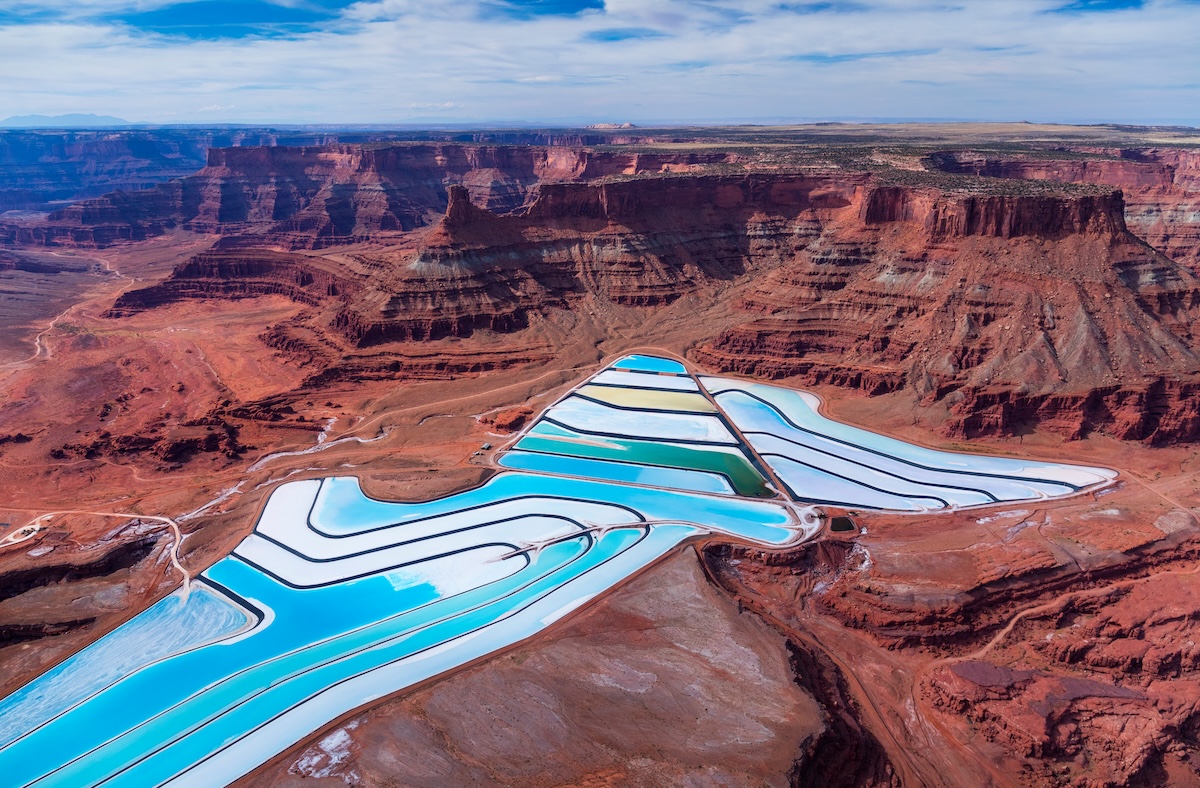
Somewhere between Moab and Canyonlands, the red desert floor suddenly gives way to something your brain just can’t process right away. Bright blue rectangles—almost neon—sit in tidy rows against rust-colored rock and dry sand. They look like swimming pools dropped in the middle of nowhere. These aren’t natural, and they’re definitely not a mirage. These are the Potash Ponds of southeastern Utah, and they’ve been stopping road trippers in their tracks for decades.
The Moab Potash ponds are part of an active mining operation, so you can’t walk right up to them or dip a toe in. Still, you can spot them easily from public roads and overlooks. The electric blue against canyon country is one of the most photogenic sights around Moab. Whether you’re just passing through on a red rock road trip or spending a week hiking nearby parks, the ponds are worth a quick detour and a few minutes of genuine disbelief.
What Travelers Are Actually Seeing
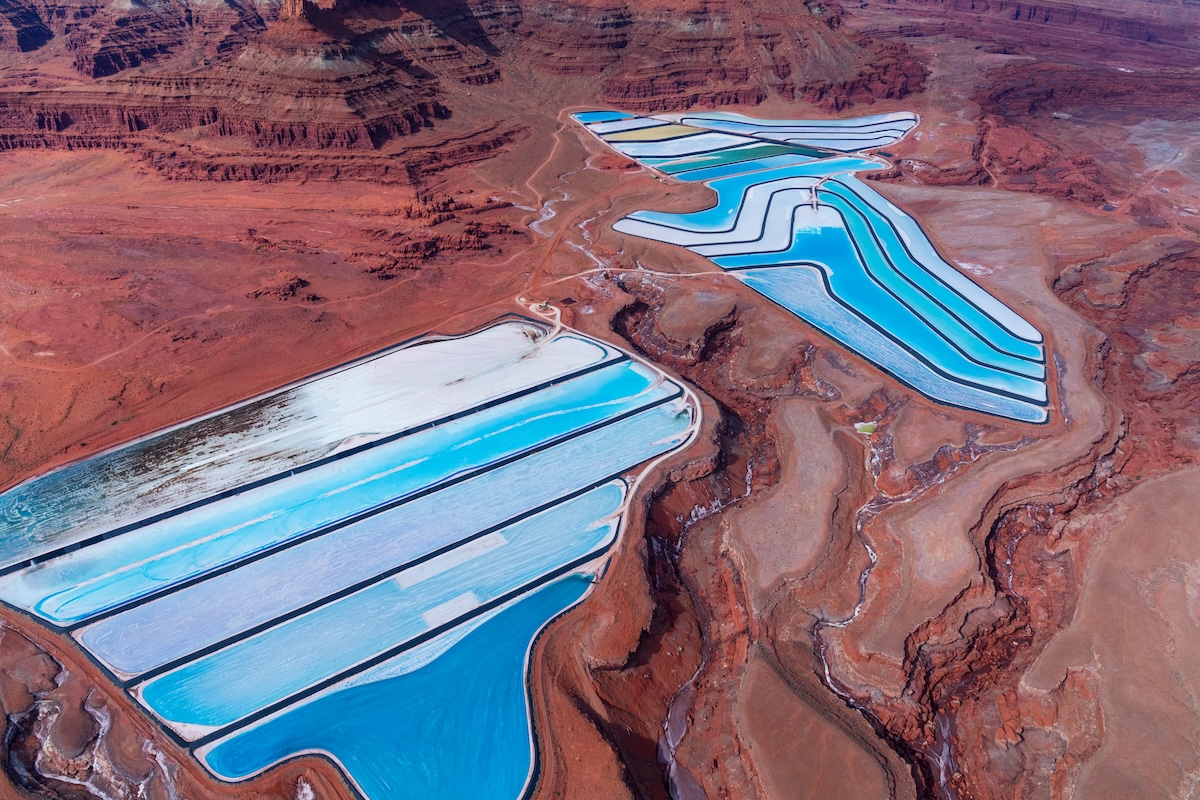
Those bright blue pools are solar evaporation ponds run by Intrepid Potash, Inc. The company pumps potash brine—a salty, potassium-rich solution—from deep deposits in the Paradox Basin up to the surface. Workers spread the brine across massive, shallow ponds and let the desert sun do the hard work.
The vivid color? That’s not natural. Workers add a blue-green dye to the water so it absorbs more sunlight and speeds up evaporation. Over about 300 days, the water slowly vanishes, and potassium chloride crystals form on the pond floor. Crews then collect and process those crystals into potash, which mostly ends up as agricultural fertilizer. About 93 percent of the world’s potash goes into fertilizer blends.
As the water evaporates, the ponds shift color. New pools start off bright blue. Older ones turn green, turquoise, or even rusty brown as minerals concentrate. You get this patchwork of color that changes with the seasons, the angle of light, and where each pond is in its drying cycle.
From a distance, the whole thing looks surreal—almost fake—just sitting quietly beside the Colorado River with sandstone cliffs looming behind it. If you get close, it’s a fenced-off industrial site. You’re looking at a working mine, not a tourist spot, which honestly makes it even stranger and more memorable.
Best Ways To View The Ponds
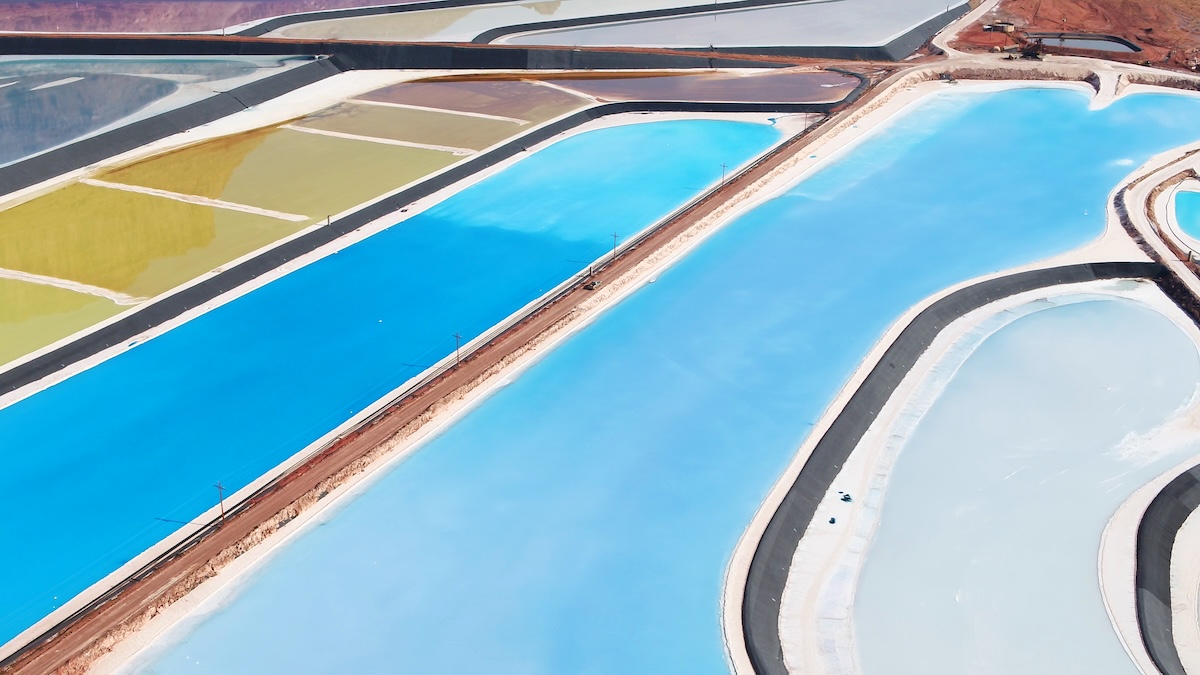
Potash Road—officially State Route 279—is probably the classic ground-level route. It’s a 17-mile scenic byway starting just north of Moab off US-191. The pavement hugs the Colorado River, weaving between towering sandstone walls. You’ll pass petroglyphs, rock climbing spots, and even some dinosaur tracks before you finally spot the evaporation ponds near the road’s end. The bright blue pools jump out at you from behind the fence. Pull over only where there’s enough shoulder and it feels safe—some spots are pretty tight.
If you want that overhead, jaw-dropping perspective, head to Dead Horse Point State Park. The overlook sits about 2,000 feet above the river, and when the sky’s clear, those potash ponds sprawl across the canyon floor like pieces in a mosaic. Mornings are especially good—the blues almost glow against all that red rock. There’s a day-use fee for the park, but the viewpoint is just a short stroll from the parking lot.
Doing both in one half-day loop is the move. Start with Potash Road for the close-up and riverside views, then climb up to Dead Horse Point for the big panorama. The contrast is worth it, and you’ll drive through some of Utah’s most stunning canyon country along the way.
Just a heads up: the ponds are private property. Stick to public roads and overlooks. Drone rules can be strict near the mine, so double-check the latest regulations before you try to launch anything.