
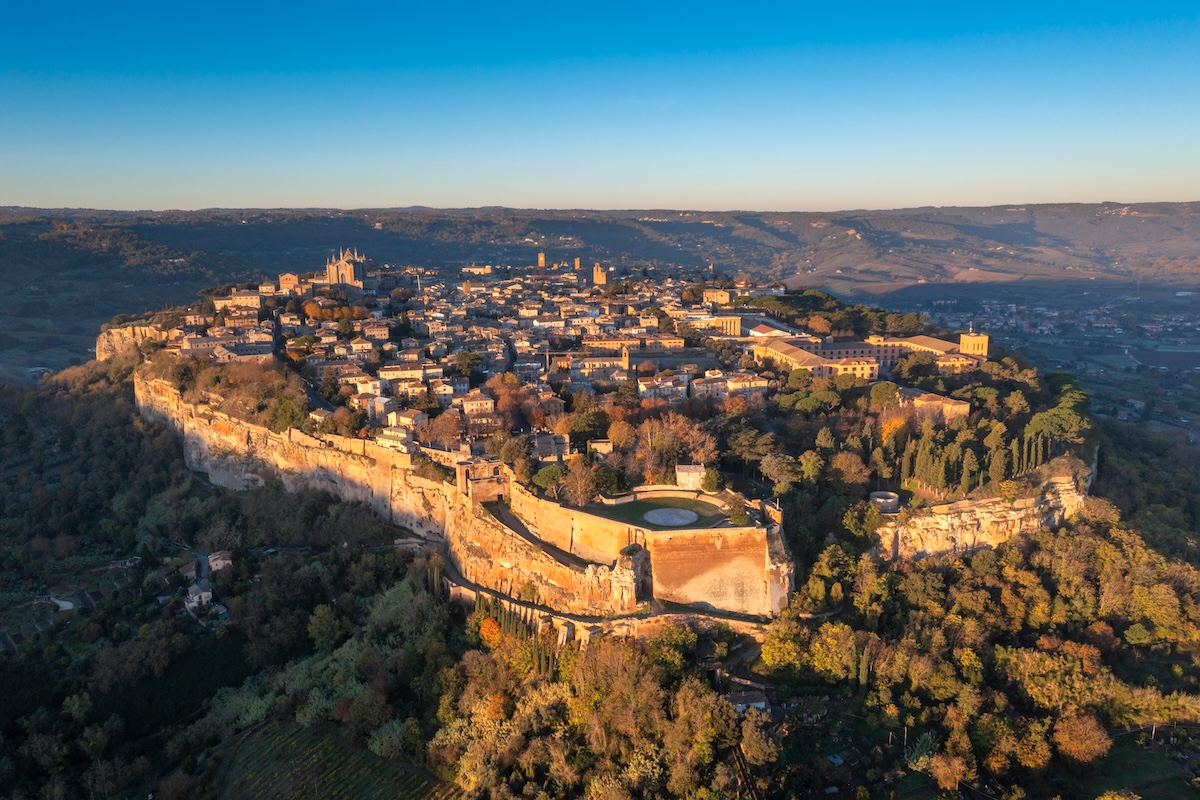
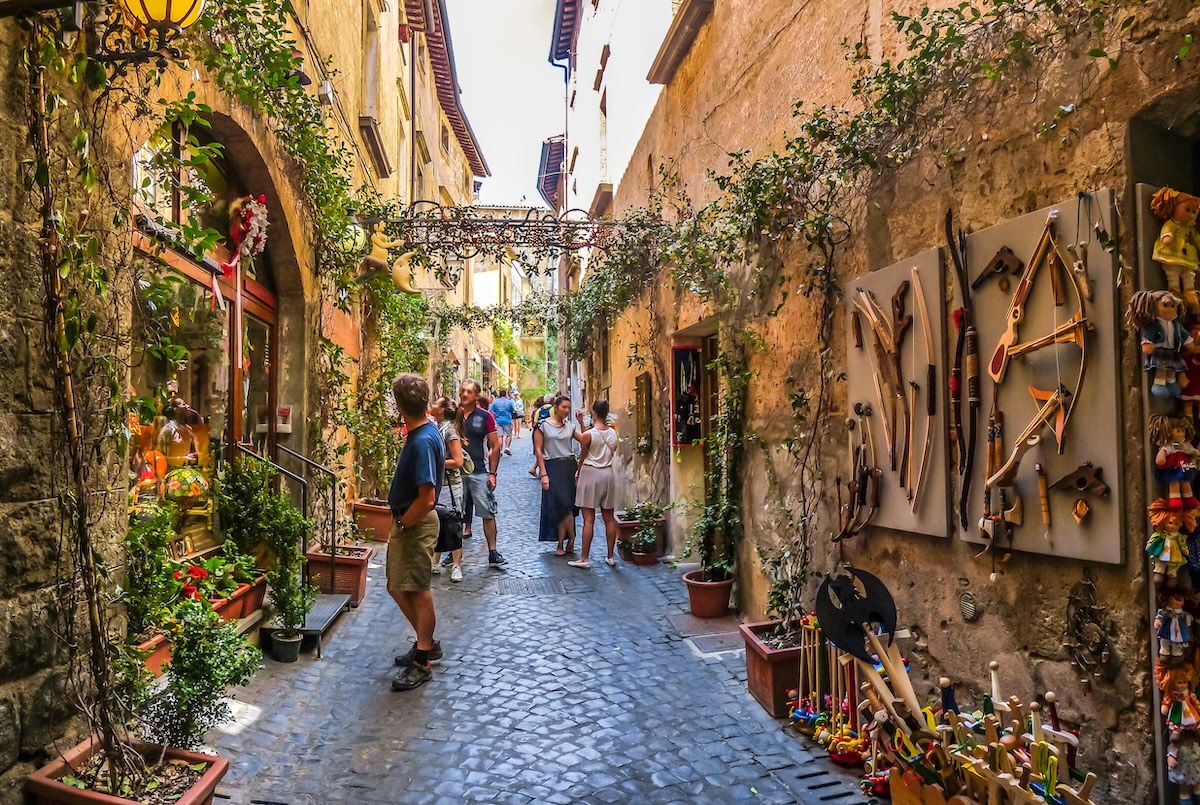
Perched on a flat summit of volcanic rock, surrounded by cliffs that drop sharply into the valley below, this medieval hill town has drawn travelers for centuries with its dramatic setting and layered history. Narrow cobblestone streets wind past ancient stone buildings, leading to hidden piazzas and breathtaking viewpoints. Beneath your feet, an entire underground city lies carved into soft tufa rock over thousands of years.
Orvieto offers a perfect blend of art, history, and authentic Umbrian culture without the overwhelming crowds found in more famous Italian destinations. The town’s cathedral ranks among Italy’s finest examples of Gothic architecture, while Etruscan tombs and medieval wells reveal the area’s deep past.
You can explore underground caves and tunnels, taste local wines from vineyards on the surrounding hillsides, and enjoy traditional Umbrian cuisine in family-run trattorias. Orvieto remains a working community, where daily life continues much as it has for generations.
The Duomo and Its Dazzling Gothic Facade
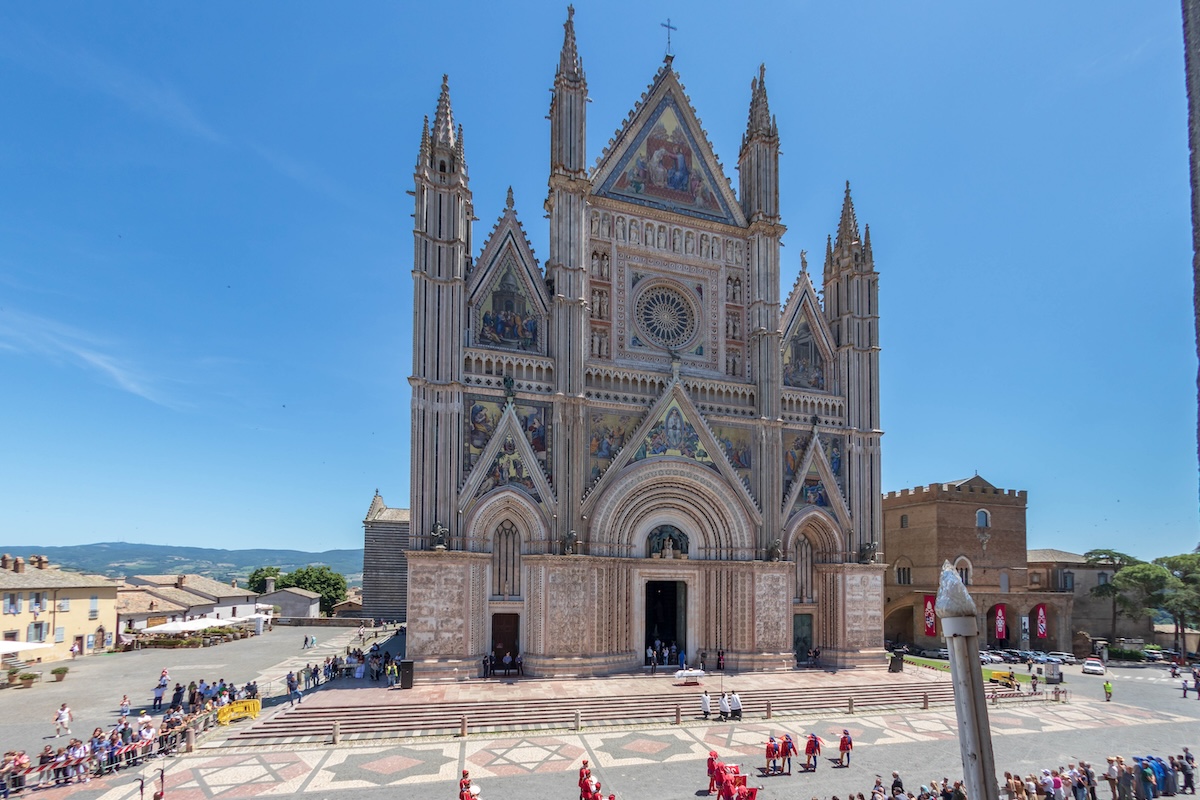
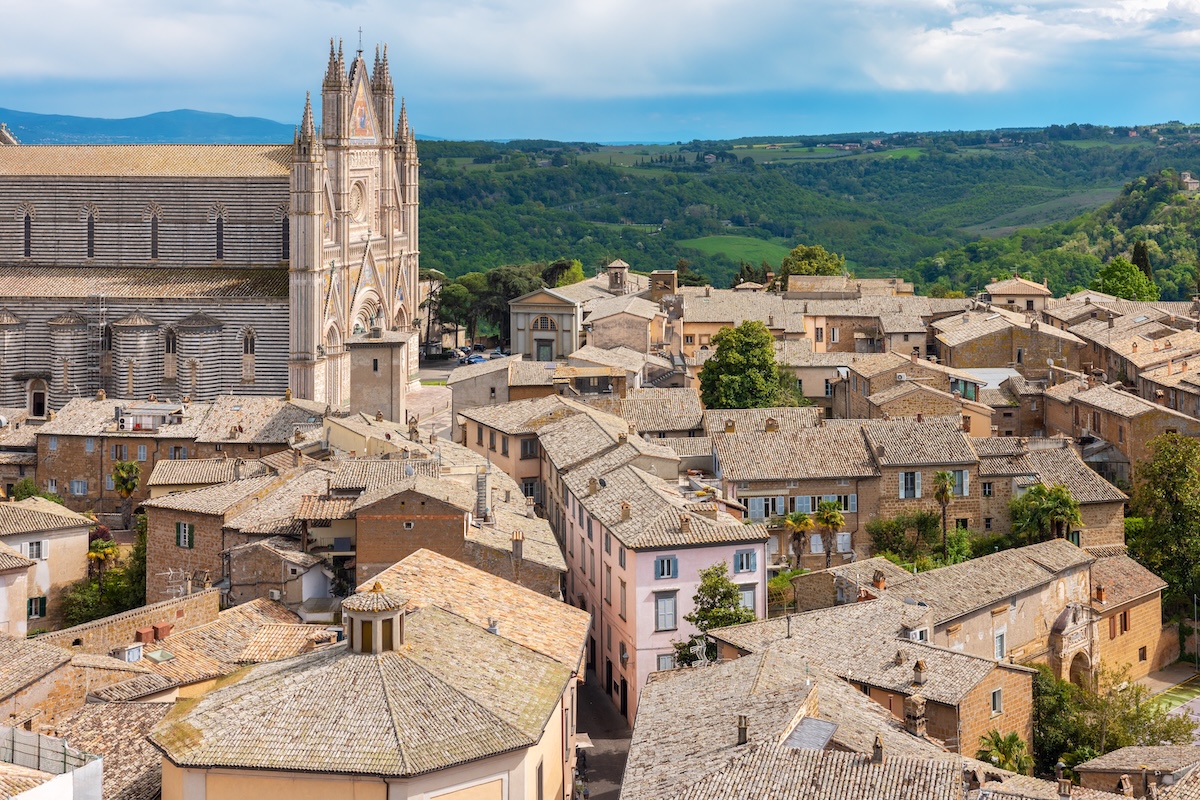
When you first catch sight of Orvieto’s cathedral, the brilliance of its facade can stop you in your tracks. Alternating bands of white travertine and dark basalt create bold horizontal stripes across the entire exterior. Four slender spires rise above the entrance, framing three bronze doors and a magnificent rose window.
Golden mosaics cover the facade, depicting biblical scenes that catch the sunlight throughout the day. Intricate carvings fill the lower sections with detailed biblical narratives created by medieval sculptors. Look closely and you’ll notice the precision in every carved figure and decorative detail on the marble pillars.
Inside, Luca Signorelli’s renowned frescoes fill the San Brizio Chapel, offering his dramatic interpretation of the Last Judgment. These 15th-century paintings later influenced Michelangelo’s work in the Sistine Chapel. The cathedral combines French Gothic influences with distinctive Italian artistic sensibilities. Construction began in 1290, and craftsmen continued embellishing the masterpiece for more than three centuries.
A Hilltop City Built on Volcanic Tufa
You’ll spot Orvieto from miles away, with its medieval towers and buildings rising from a massive plateau of golden volcanic rock. This natural platform sits about 1,000 feet above the valley floor. Compressed volcanic ash and pumice, known as tufa, formed it. The soft stone gave the ancient Etruscans an easy material to carve, creating caves and tunnels that still honeycomb the cliff today.
The sheer walls surrounding the city made it nearly impregnable throughout history. Walk along the rim and peer down at the vertical drops that protected Orvieto’s residents for centuries. The same tufa forming these cliffs also provided building material for many structures in the old town.
From the plateau’s edge, you’ll get sweeping views across Umbrian farmland, vineyards, and distant hills. The volcanic foundation offers more than dramatic scenery. It also enriches the area’s fertile soil, supporting the wine production that plays a central role in the region’s economy and culture.
The Underground World Beneath the Streets
When you walk Orvieto’s medieval streets, you’re actually strolling above a massive subterranean city carved into the volcanic tufa cliff. More than 1,200 caves, tunnels, and chambers honeycomb the rock beneath your feet, with some dating back 2,500 years to the Etruscan civilization.
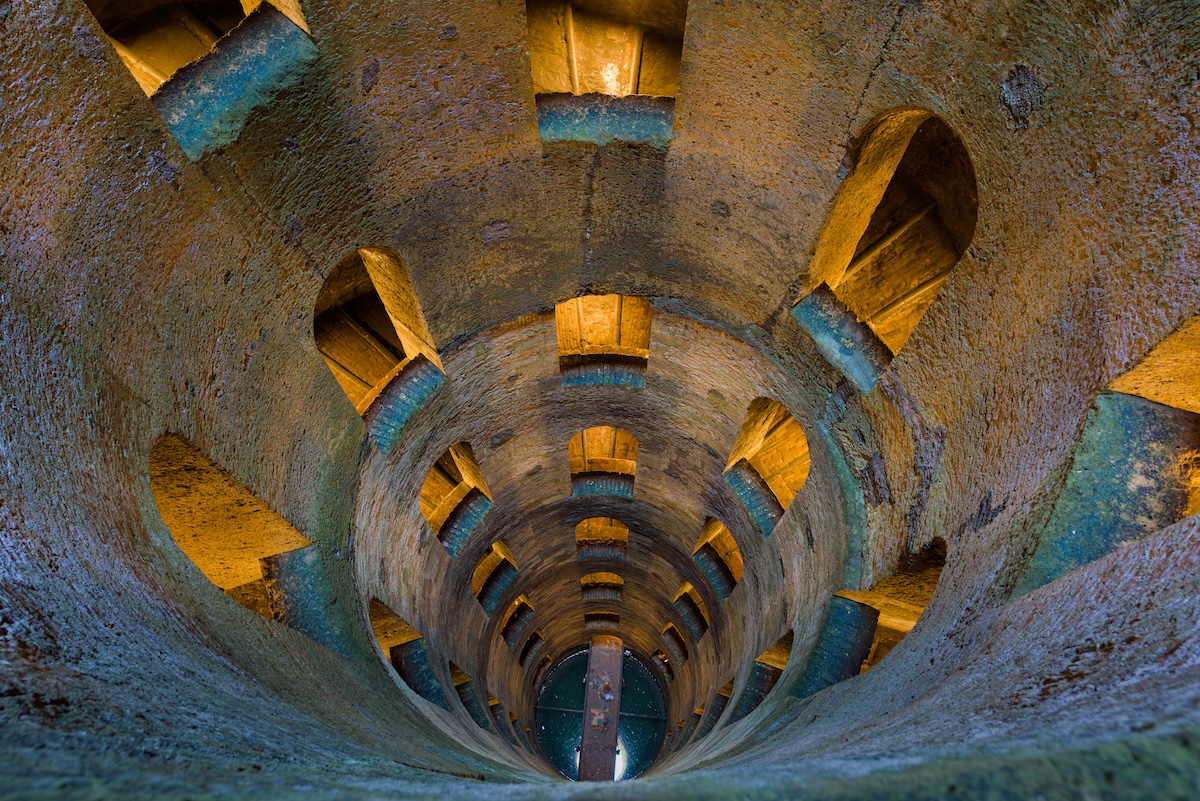
The Etruscans began this underground network by digging wells to reach water deep within the porous rock. Over the centuries, residents expanded these spaces into workshops, storage cellars, pigeon coops, and emergency refuges during sieges. Guided tours take you down staircases into cool, dimly lit chambers where ancient families once pressed olive oil, raised livestock, and hid from invaders.
The soft tufa made excavation relatively easy with hand tools, so each generation carved out new spaces as needs changed. Some tunnels connect to medieval wells that plunge more than 150 feet deep. Others reveal niches where families stored wine and grain at consistently cool temperatures. This underground maze helped Orvieto survive wars, droughts, and political upheaval across millennia.
Local Wine, Slow Food, and Umbrian Flavors
Orvieto’s white wines have shaped the region’s identity for centuries. You’ll find crisp, mineral-rich Orvieto Classico in nearly every restaurant. Local vineyards terrace the volcanic hills around town, and nearby wineries welcome visitors for tastings of these wines with regional cheeses and cured meats.
The town’s trattorias serve rustic Umbrian dishes rooted in the farming traditions of the surrounding countryside. Try handmade pasta such as umbricelli tossed with truffle shavings, or a rich wild boar ragu that’s cooked slowly for hours. Many ingredients come straight from nearby farms, so there’s a clear link between what’s on your plate and the land around you.
Peppery, golden-green Umbrian olive oil sits on every table and anchors much of the local cooking. You’ll find it drizzled over bruschetta, stirred into sauces, or served with bread for dipping. Seasonal ingredients and old family recipes still shape the food here, offering an authentic taste of central Italian cuisine.