
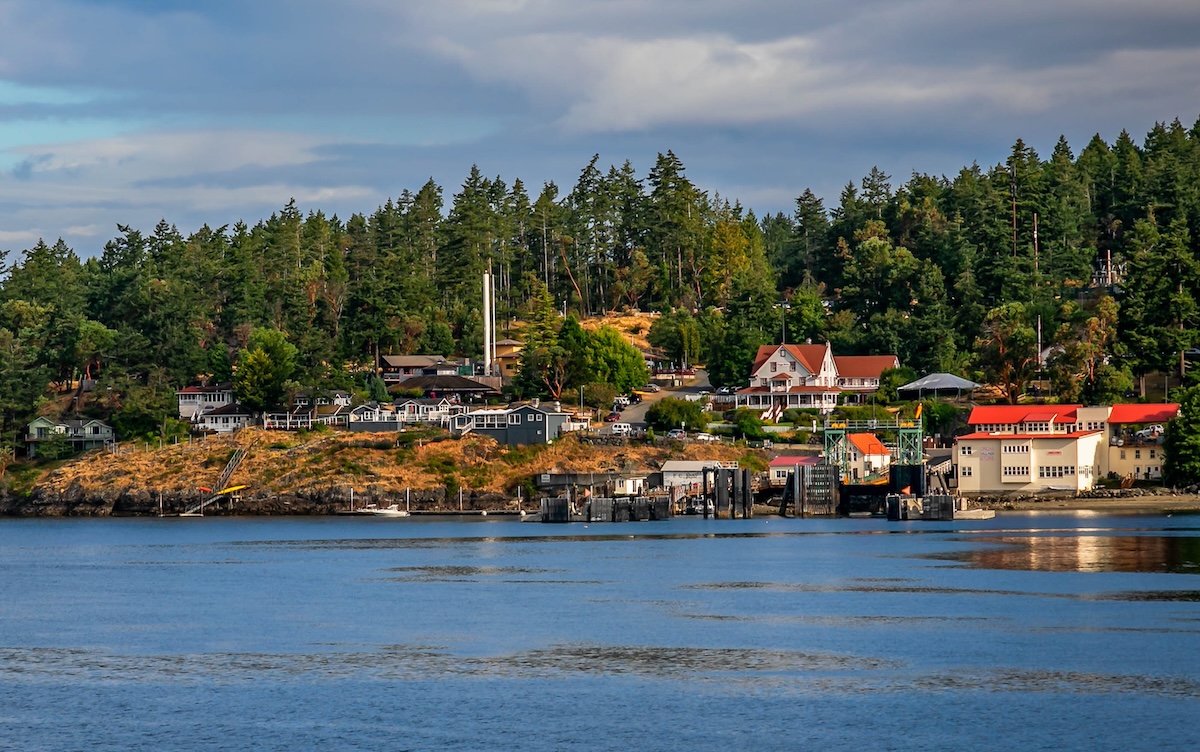
This beautiful island sits at the northern edge of Washington’s San Juan archipelago, reachable by ferry from Anacortes in about an hour. The crossing alone sets the tone. You watch the mainland fade away, pass a scatter of forested islands, and end up somewhere that feels surprisingly distant from the I-5 corridor, even though Seattle is just 90 miles south.
At about 57 square miles, Orcas is the biggest island in the San Juans—shaped like a horseshoe, full of hills, winding two-lane roads, and roughly 5,000 people who stick around all year. No stoplights here. The rhythm comes from ferry arrivals, tides, and the handful of village cafés that open and close on their own terms.
Orcas packs a lot into a small space. Moran State Park sprawls across more than 5,000 acres and includes the highest point in the San Juans. Eastsound village gives you a walkable mix of restaurants, galleries, and coffee shops. Deer Harbor offers quiet marina views and launches for whale-watching boats. You can hike to a summit in the morning, paddle a calm bay after lunch, and eat farm-fresh food for dinner—rarely driving more than 20 minutes between any of it.
Landscape And First Impressions
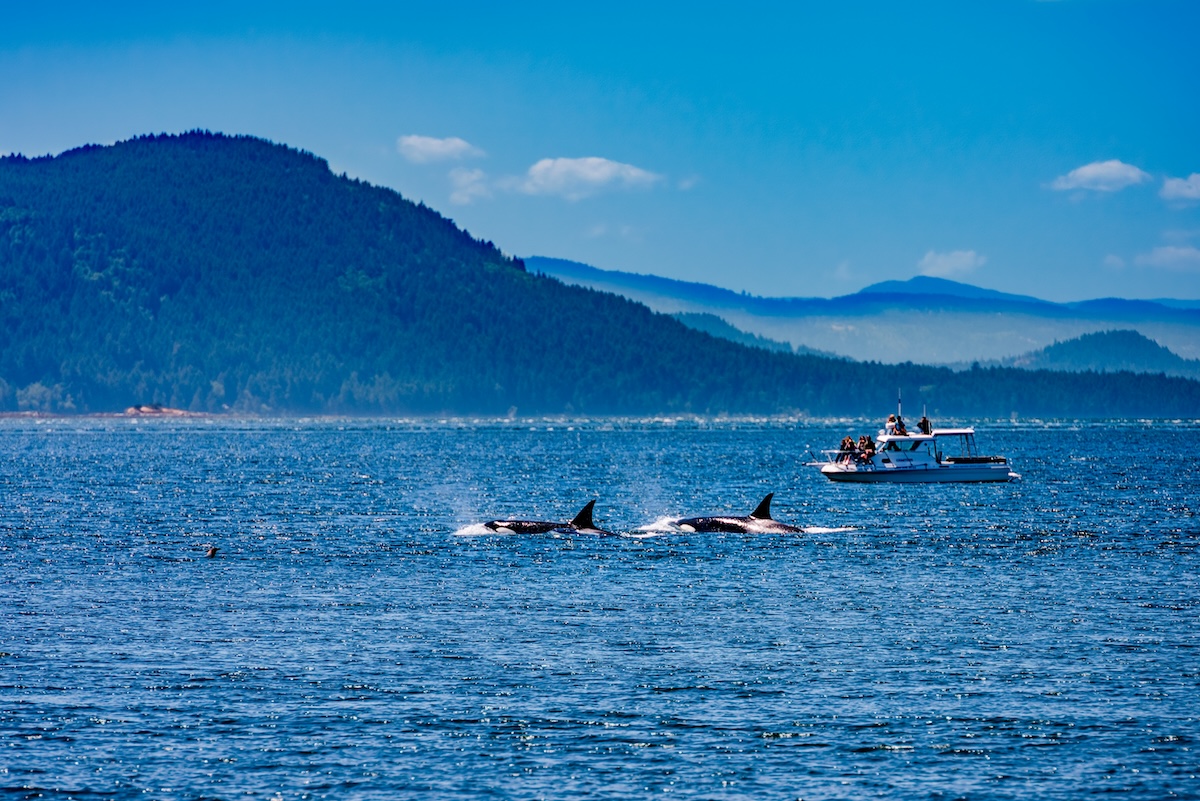
When the ferry rounds the point into the Orcas Island landing, the dense forest along the shore is the first thing that hits you. Douglas fir, western red cedar, and Pacific madrone crowd right down to the water, broken up only by rocky outcrops and the occasional gravel beach. The roads climbing away from the terminal cut through thick trees, with sunlight flickering in as you drive.
Orcas stands out as the most mountainous island in the San Juans, and you notice it right away. The terrain rises and dips constantly, with Mount Constitution looming to the east at 2,409 feet. On clear days, that mountain silhouette frames nearly every view from the eastern half of the island, and the Cascade Range stretches along the horizon beyond the water.
The shoreline shifts depending on where you are. Around Deer Harbor on the west side, the water stays calm and protected—perfect for kayaking. Up north near Eastsound, a wide bay opens out, backed by low bluffs. The eastern shore, near Rosario and Olga, feels rougher, with rocky beaches and stronger currents.
The island feels so removed partly because of its geography and partly because of what’s missing. There’s no bridge. Cell service drops out here and there. Narrow roads, some unsigned, wind through woods and fields, and you share them with cyclists and deer. News? You lose track of it pretty fast. Within a few hours, the island’s pace starts to seep in, and whatever rush you brought from the mainland just fades out.
Towns, Harbors, And Daily Life
Eastsound is the heart of island life and business. About 15 minutes north of the ferry dock, it hugs the shore of East Sound bay. The village is compact and easy to walk—main street is lined with restaurants, a bookstore, a few galleries, and a market that’s surprisingly well-stocked. Brown Bear Baking draws a morning crowd, and The Barnacle is a solid pick for seafood. You can run errands, grab coffee, and browse local pottery without ever moving your car.
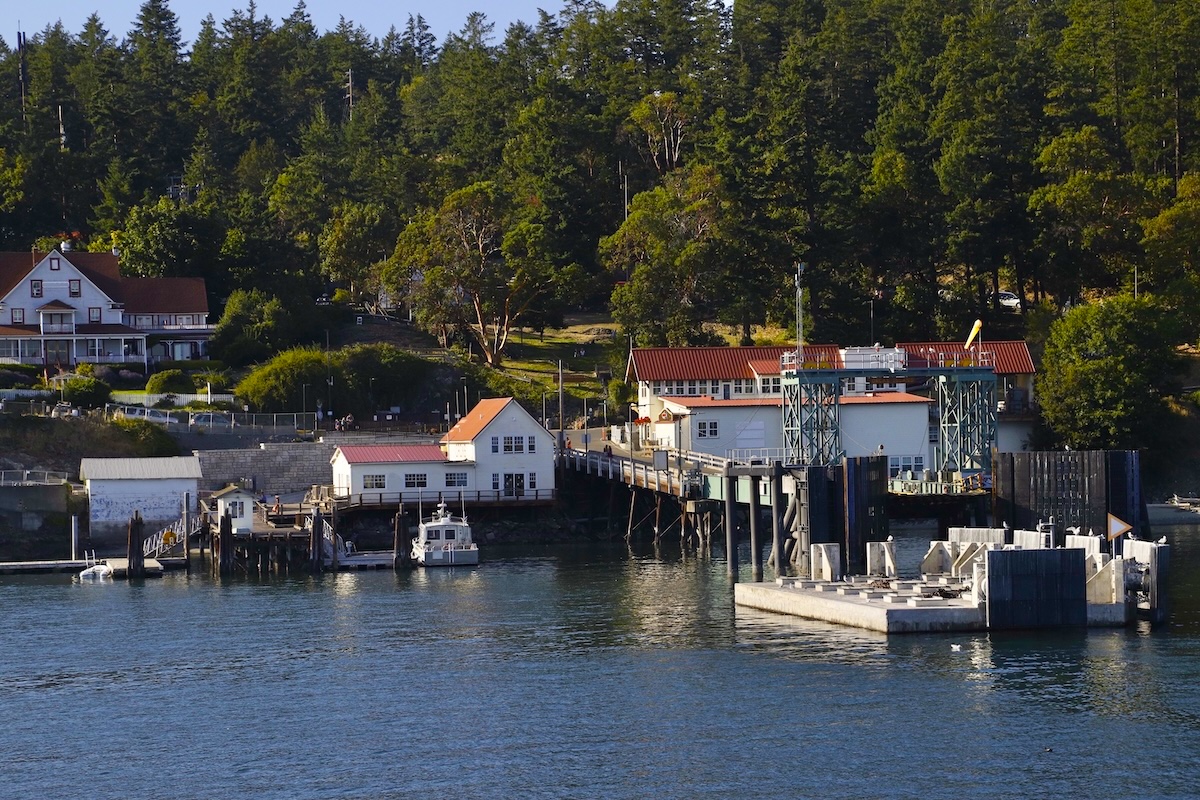
Deer Harbor sits on the west side, centered around a small marina where whale-watching boats and sailboats share the docks. It’s a quieter vibe than Eastsound, with fewer shops and more water views. If you want to book a kayak or wildlife tour, this is a good place to start. The harbor faces west, so sunsets here can be pretty great.
Other small clusters pop up in Olga, where the Olga Artworks cooperative fills a converted strawberry-packing barn, and at Orcas Landing, which is basically the ferry dock plus the historic Orcas Hotel. West Sound has a little store and boatyard but not much tourist traffic.
Daily life on Orcas moves at its own speed. Shops close early, restaurants might not take reservations, and some only open a few nights a week. You get used to this pace fast. People stop to chat at the post office, and the Saturday farmers market in Eastsound turns into a real gathering—less like a chore, more like a ritual.
Outdoor Highlights
Moran State Park really anchors any outdoor adventure on Orcas Island. Sprawling across more than 5,000 acres, it mixes old-growth and second-growth forest, five lakes, a handful of waterfalls, and over 30 miles of trails that wind through the trees. At 2,409 feet, Mount Constitution stands as the highest point in the San Juan Islands. Some folks drive to the summit, but hiking up from Mountain Lake is a classic—it’s a steady, moderately steep trek that usually takes about two hours one way. On a good day, the stone tower at the top dishes out sweeping views: San Juans, Mount Baker, the Cascades, even Vancouver Island if the weather’s on your side.
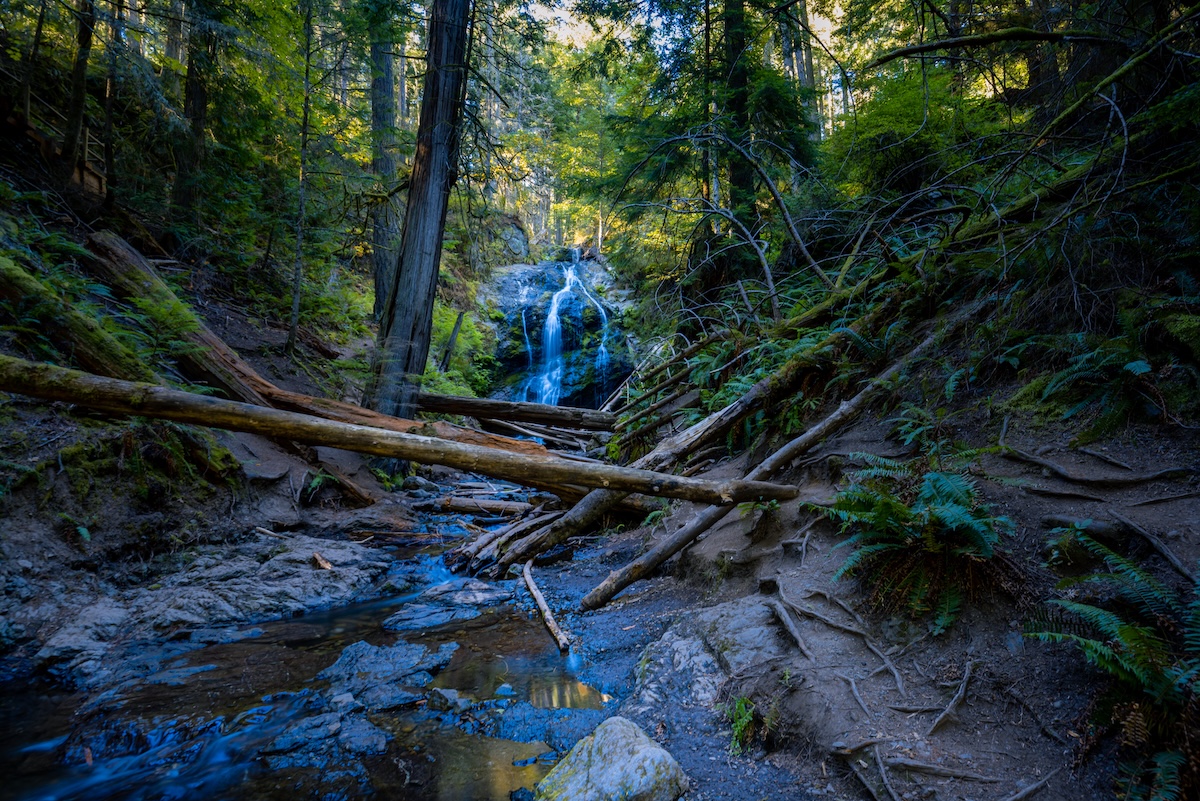
If you’re not up for a big climb, there are plenty of shorter hikes. The Cascade Lake loop is flat, easygoing, and perfect for families—just under three miles, and you’re never far from the water. Cascade Falls is a quick one, maybe 15 minutes each way, but you end up at this lovely, multi-tiered waterfall wrapped in moss and ferns. Want a middle ground? The Twin Lakes loop gives you a bit more elevation without the crowds or commitment of Mount Constitution.
Beaches on Orcas? Well, they’re not exactly everywhere, and you won’t find much sand. Obstruction Pass State Park, tucked down at the southern tip, has a short trail that drops you onto a pebbly stretch with views out toward Blakely Island. Crescent Beach, closer to Eastsound, is easier to get to and works for wading, though it’s still more rocks than sand. If you’re picturing a classic sandy beach, you’ll have to adjust—this is the Pacific Northwest, after all. But the upside? Solitude. On a weekday morning, you might just have the whole shoreline to yourself, which feels pretty rare these days.