
Most hotels are just a place to sleep. But every so often, you check into one where the floorboards have creaked beneath travelers’ feet for two centuries. Suddenly, the hotel itself becomes the reason for the trip.
Across the country, some hotels opened before their states even existed. A few hosted presidents, outlaws, and novelists. Others survived fires, floods, and decades of neglect. Some still have taverns where stagecoach passengers once stopped for a drink.
Many of these old hotels still welcome overnight guests. From colonial inns to gold rush landmarks, here is the oldest hotel in every state where you can still book a room.
Alabama: St. James Hotel, Selma (1837)
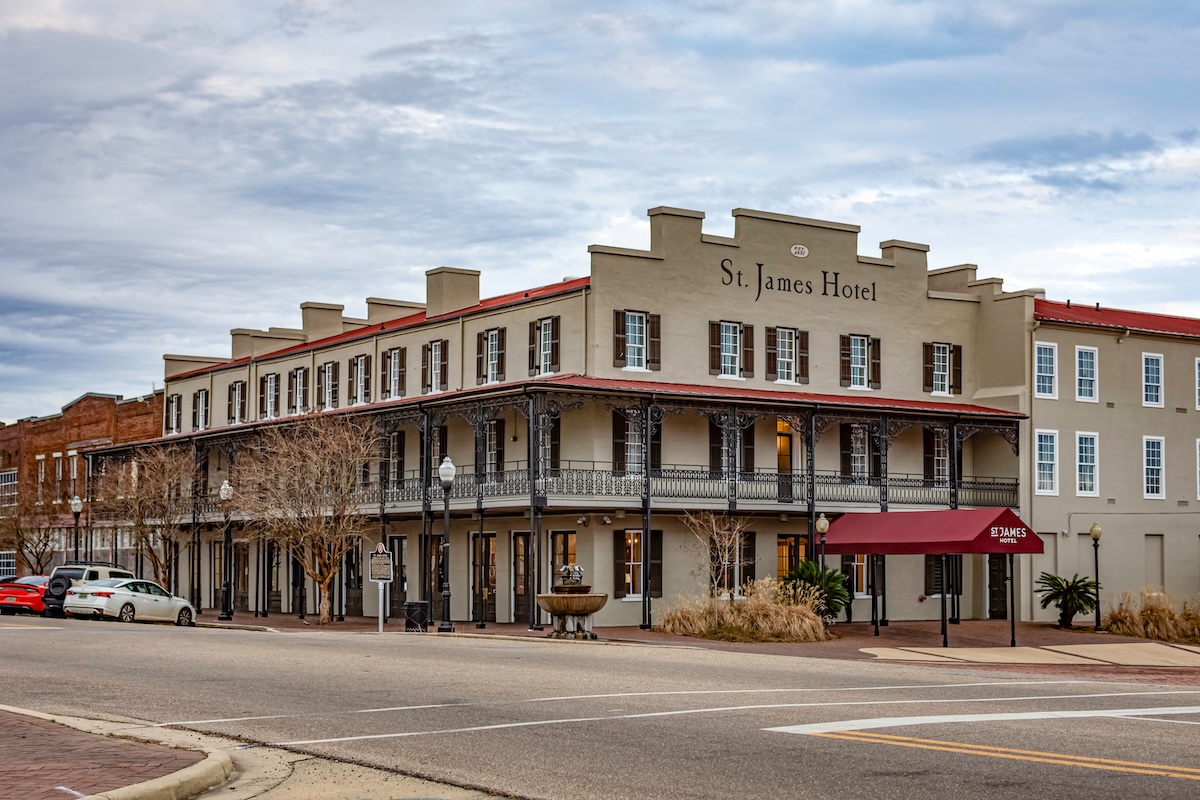
Selma’s St. James Hotel sits on Water Avenue above the Alabama River. It ranks among the few antebellum riverfront hotels left in the South. The hotel opened in 1837, when cotton barges made Selma a busy trading town. Union troops occupied it after the city fell in 1865.
Local lore says Jesse and Frank James once stayed here, giving the bar plenty of conversation material. Walk a few blocks to the Edmund Pettus Bridge, a landmark of the 1965 voting rights marches. Together, these sites let you trace two very different chapters of American history in a single afternoon.
Alaska: The Alaskan Hotel & Bar, Juneau (1913)
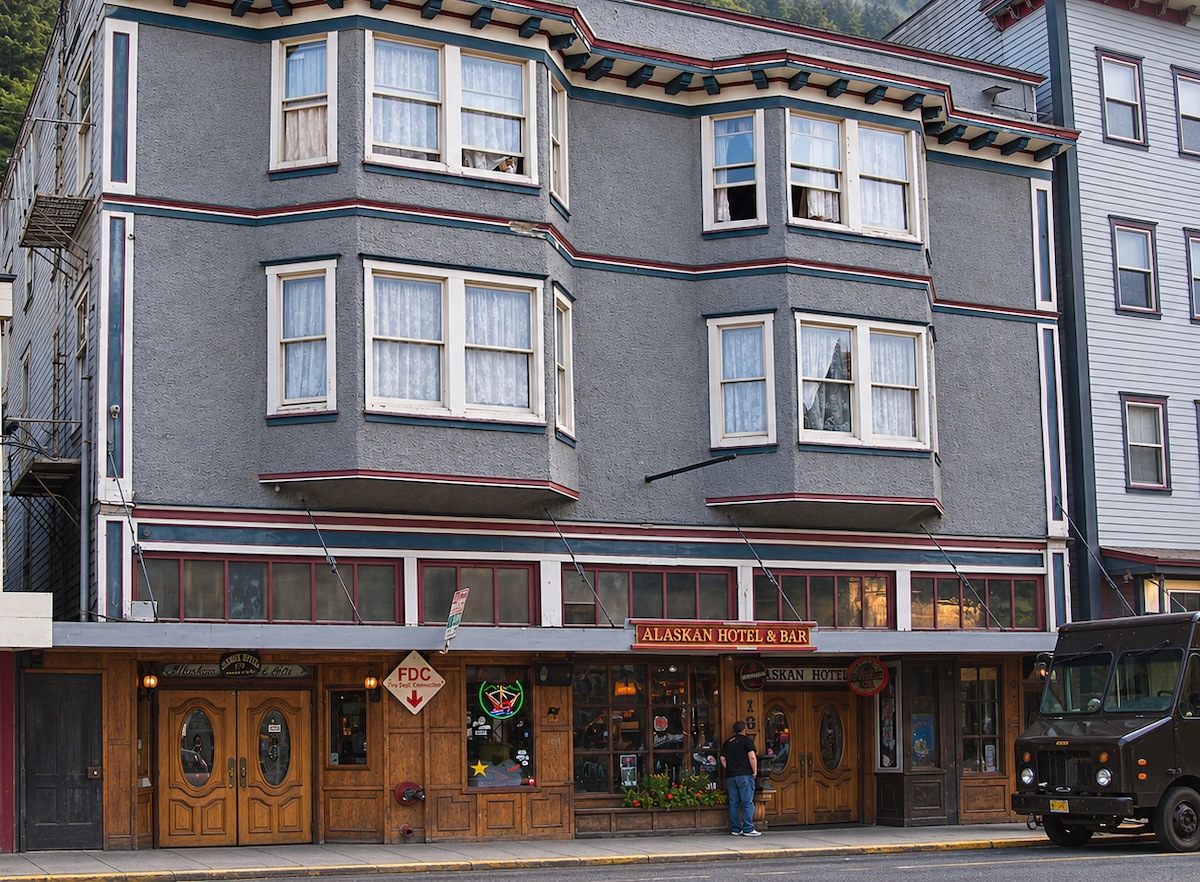
Juneau’s oldest operating hotel opened on Franklin Street in 1913, when gold mining still drove the local economy. The Alaskan Hotel & Bar shows off its Victorian bones, from antique furnishings in the rooms to the dark wood of the downstairs saloon.
The bar is a local favorite for live music, drawing a mix of residents and cruise passengers. Rooms are compact and cost much less than those at Juneau’s newer properties, making the hotel a convenient base for the Mount Roberts Tramway and Mendenhall Glacier. Expect some street noise on weekend nights. That’s part of staying in the heart of downtown.
Arizona: Historic Grand Canyon Hotel, Williams (1892)
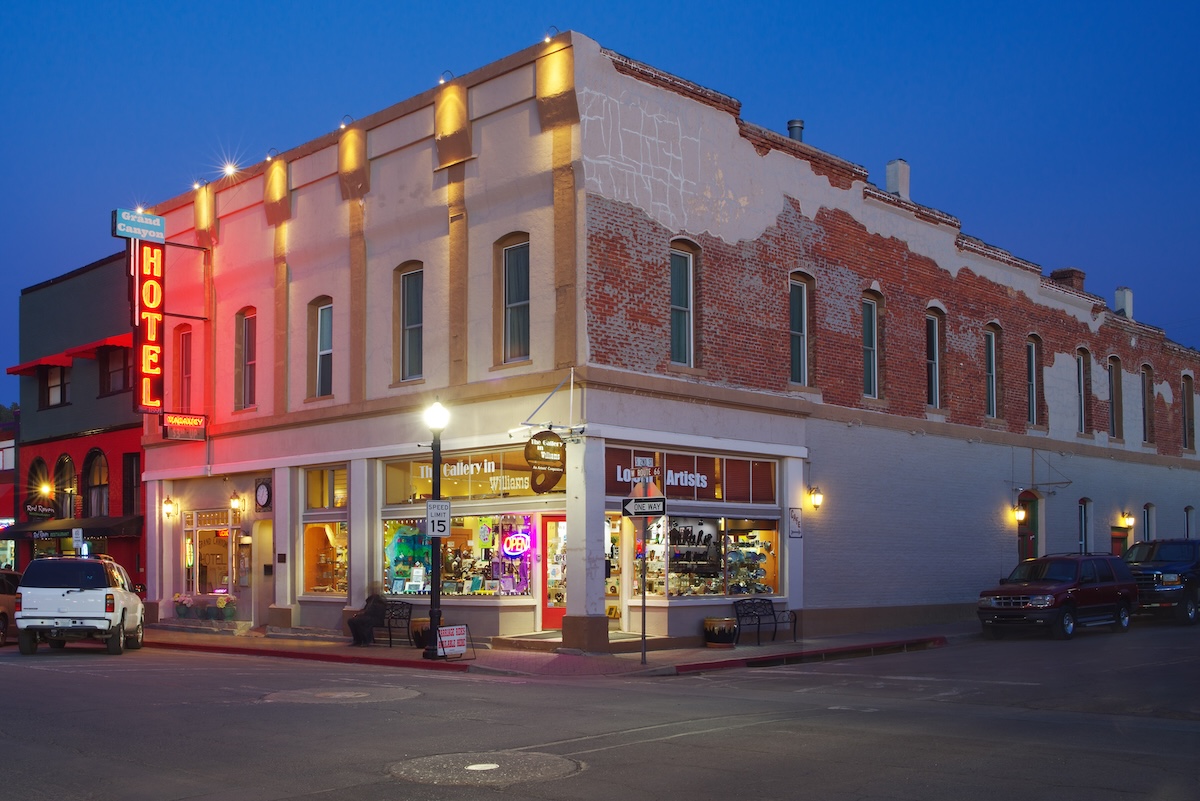
Williams was a lumber and railroad town long before it became a Route 66 stop. Its Historic Grand Canyon Hotel dates to 1892 and served early tourists heading north to the canyon rim, making it Arizona’s first hotel for Grand Canyon visitors.
After decades of other uses, the building reopened as a hotel in 2005, with hostel-style rooms alongside private ones. Rates stay budget-friendly, and the hotel is a short walk from the Grand Canyon Railway depot. Ride the vintage train to the South Rim in the morning, then stroll the neon-lit stretch of Route 66 after dinner.
Arkansas: Capital Hotel, Little Rock (1877)
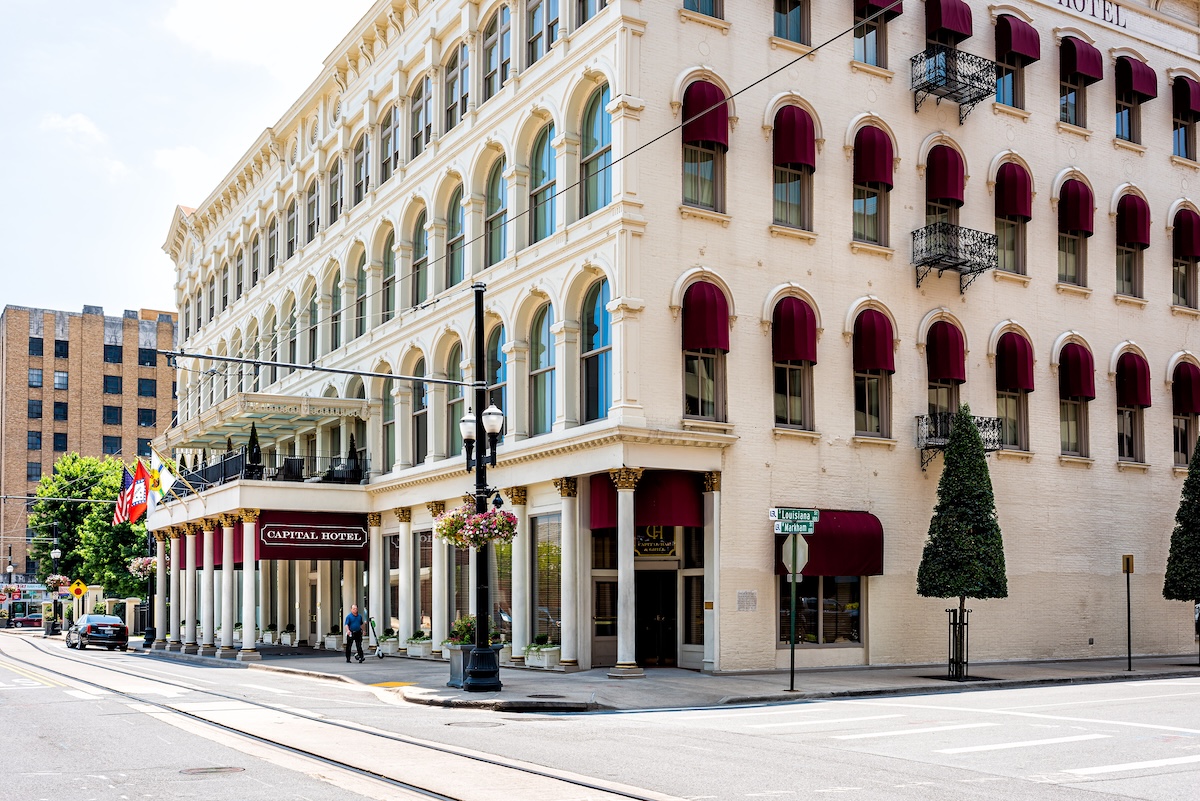
Little Rock’s Capital Hotel began as an office building in 1872 and started welcoming overnight guests in 1877. Its cast-iron facade is one of the few of its kind still standing in Arkansas. Ulysses S. Grant passed through during the hotel’s early years.
Locals call the lobby and bar the “front porch of Arkansas,” since lawmakers and business leaders have met here for generations. Expect a polished luxury stay, with a marble lobby and a respected restaurant. The River Market district and Clinton Presidential Center are close by, so you can explore downtown largely on foot.
California: Holbrooke Hotel, Grass Valley (1853)
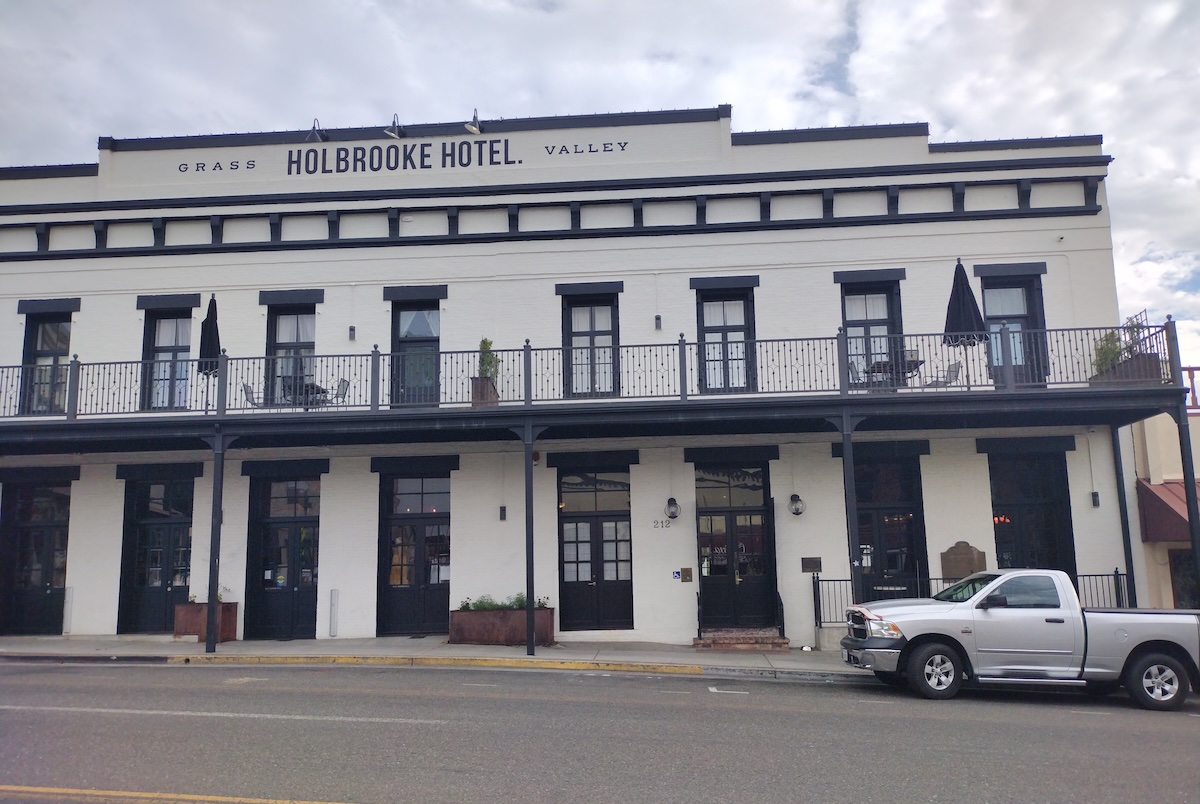
Gold Rush fortunes built Grass Valley, and the Holbrooke Hotel opened in 1853 to serve miners and investors pouring into the Sierra foothills. Its guest register reportedly includes Mark Twain and several presidents, among them Ulysses S. Grant and Grover Cleveland.
The Golden Gate Saloon downstairs claims to be among the oldest continuously operating saloons west of the Mississippi. A recent restoration updated the rooms while preserving the brick walls and period character. You’re close to Empire Mine State Historic Park, where you can tour one of California’s richest hard-rock gold mines and see the owner’s elegant cottage.
Colorado: The Cliff House at Pikes Peak, Manitou Springs (1874)
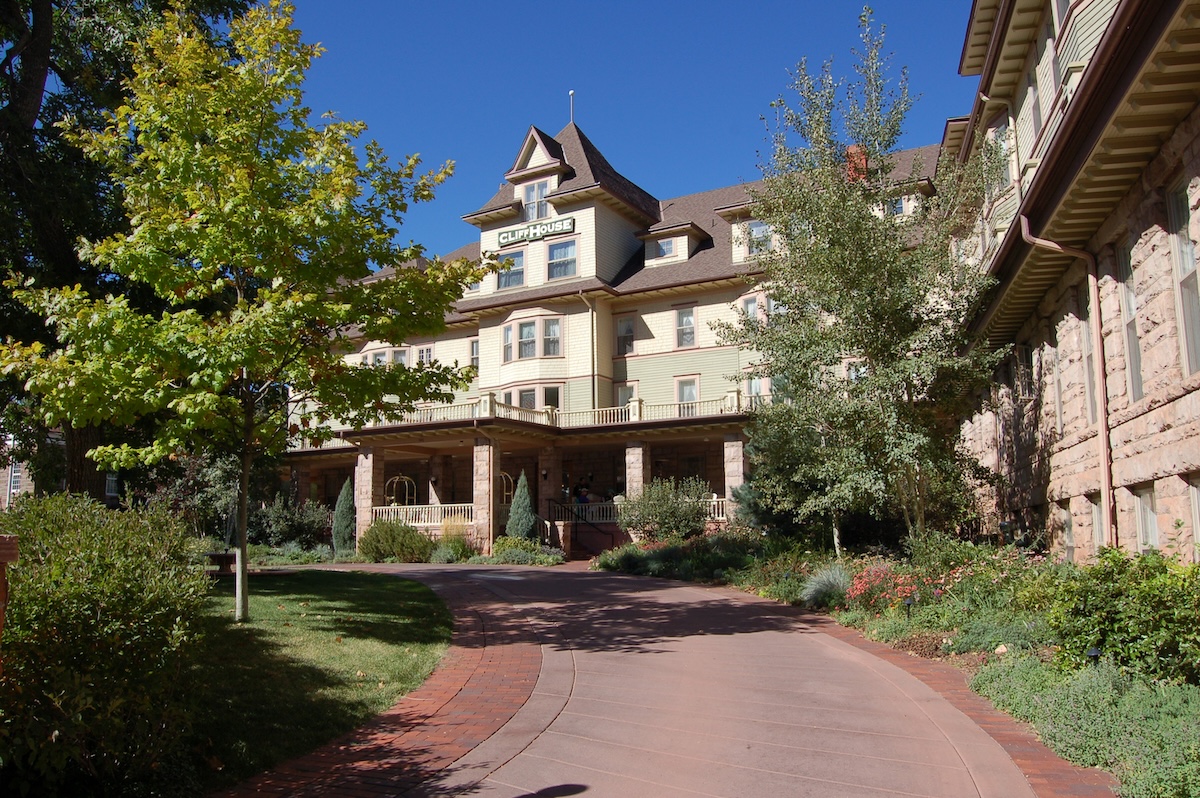
Mineral springs drew health seekers to Manitou Springs, and the Cliff House opened in 1874 as a modest boardinghouse for them. It grew into a grand Victorian resort that hosted Theodore Roosevelt and Thomas Edison during its heyday.
A fire gutted the building in 1982, and it sat empty until a full restoration brought it back in 1999. Today, you can sleep in rooms named for famous guests, many with gas fireplaces. Sample the free mineral springs scattered around town, then drive the Pikes Peak Highway or ride the cog railway to the 14,115-foot summit.
Connecticut: Griswold Inn, Essex (1776)
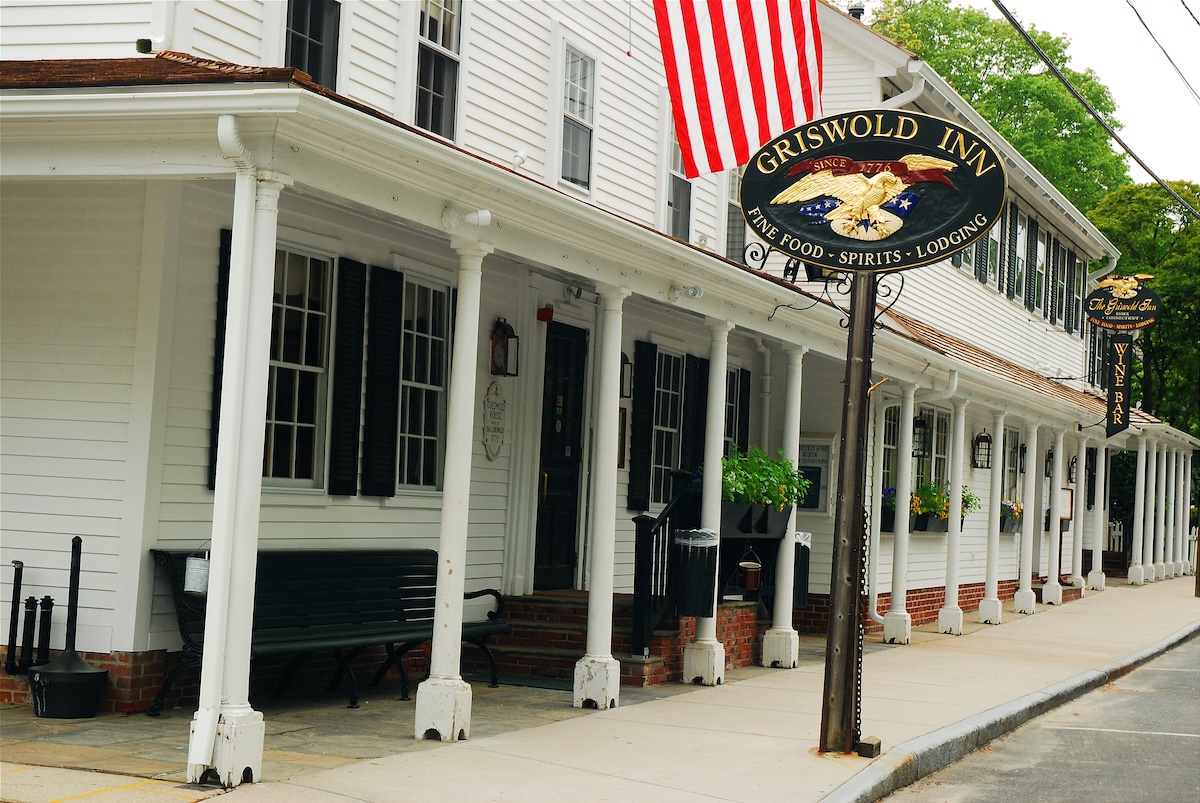
The “Gris,” as regulars call it, opened in 1776 in Essex, a shipbuilding village on the Connecticut River. It witnessed the British raid on Essex during the War of 1812, when redcoats burned dozens of ships in the harbor.
The Tap Room is the heart of the place, a barroom built from a former schoolhouse and lined with maritime art and antique firearms. Live music plays most nights, including traditional sea chantey sessions. Rooms spread across several historic buildings. Walk to the Connecticut River Museum or board the Essex Steam Train for a river excursion.
Delaware: Hotel du Pont, Wilmington (1913)
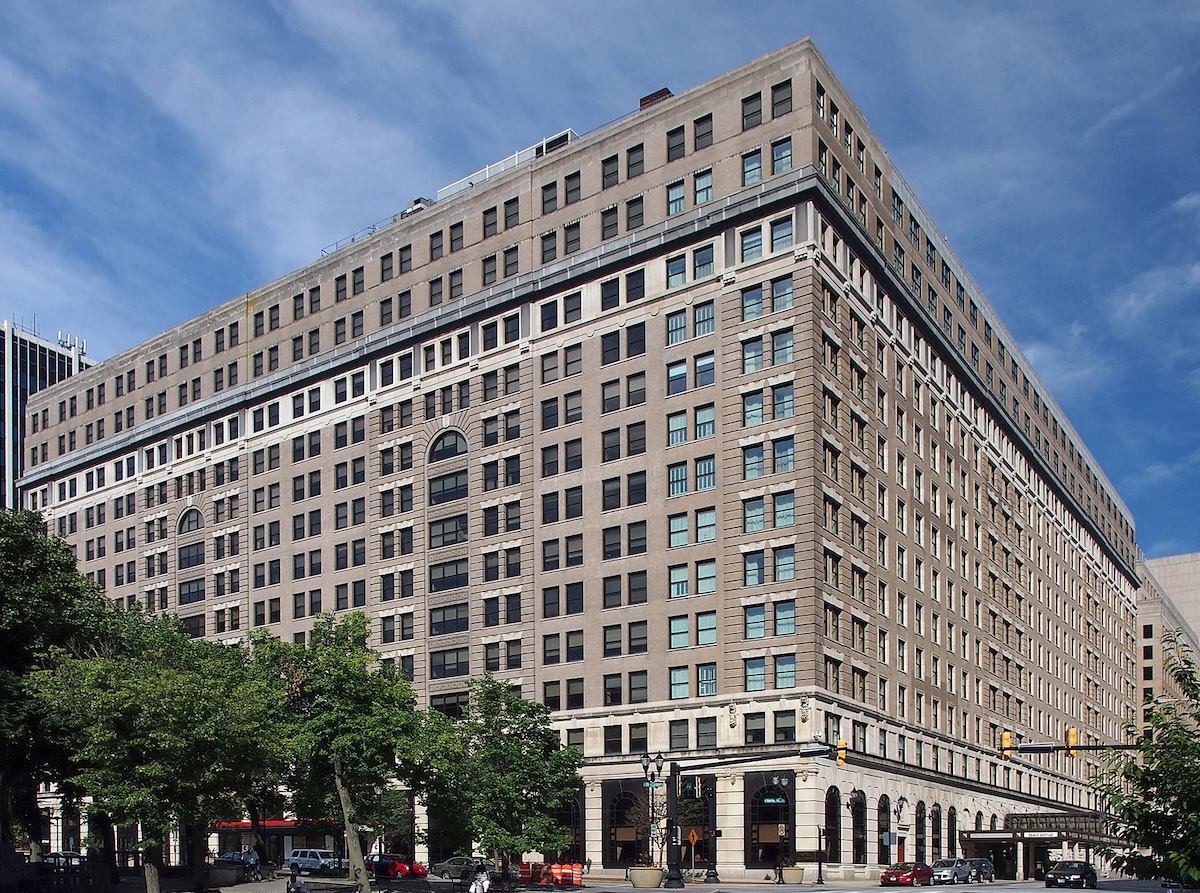
Delaware’s grande dame opened in 1913. The DuPont company built it to give Wilmington a world-class hotel worthy of its corporate guests. Craftsmen spent years on the Italian Renaissance interiors, including carved ceilings and gilded details.
The hotel displays a notable art collection with works by three generations of the Wyeth family. Dine in the Green Room, catch a show at the attached theater, and sleep in spacious, traditionally styled rooms. Nearby, the Winterthur and Nemours estates and the Brandywine River Museum of Art round out a weekend in the Brandywine Valley.
Florida: St. Francis Inn, St. Augustine (1845)
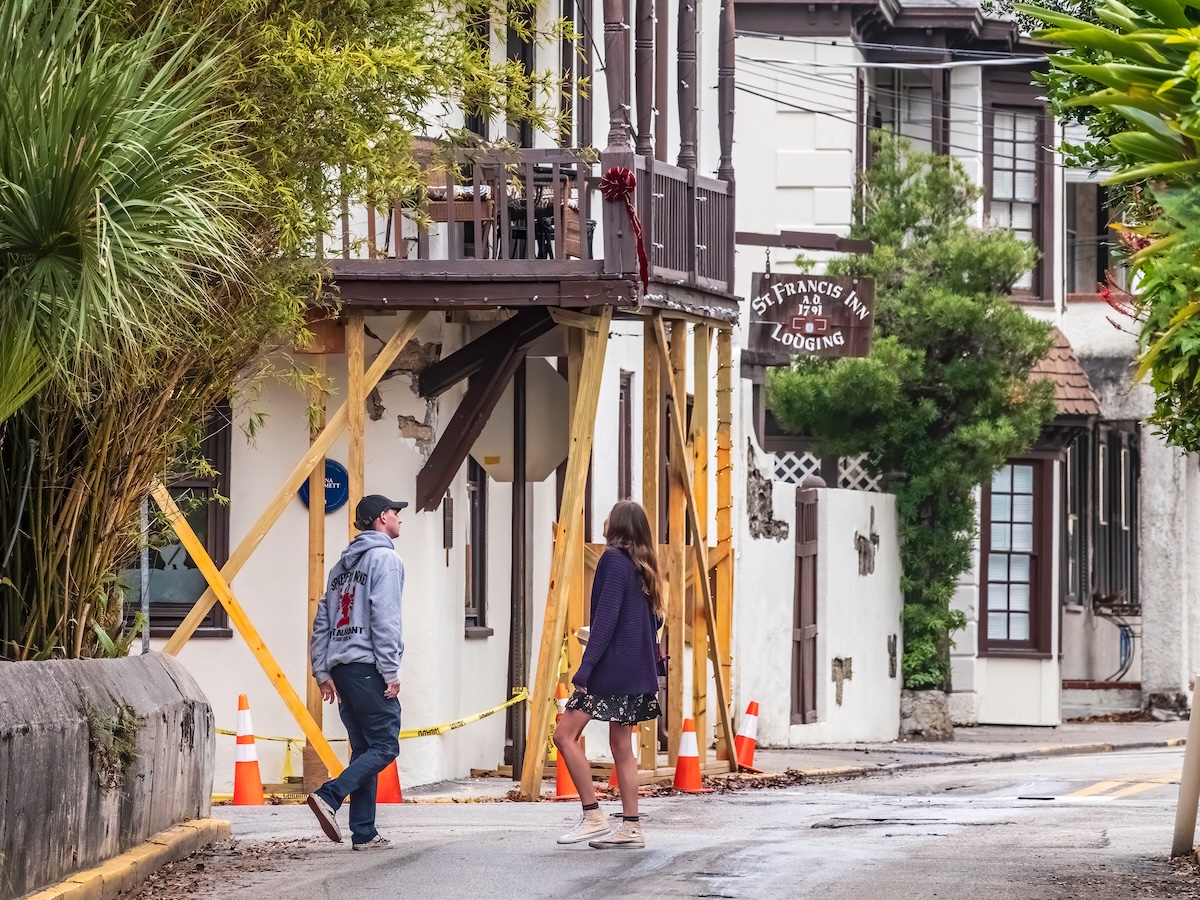
America’s oldest European-founded city makes a fitting home for Florida’s oldest inn. The coquina-and-stucco building went up in 1791 under Spanish rule and began taking paying guests in 1845.
Today, the inn operates as a bed-and-breakfast with a walled courtyard garden, a pool, and rooms filled with period antiques. Breakfast and evening treats are included. You’re on a quiet lane in the historic district, a short walk from the Castillo de San Marcos, the shops of St. George Street, and the Bridge of Lions spanning Matanzas Bay.
Georgia: The Marshall House, Savannah (1851)
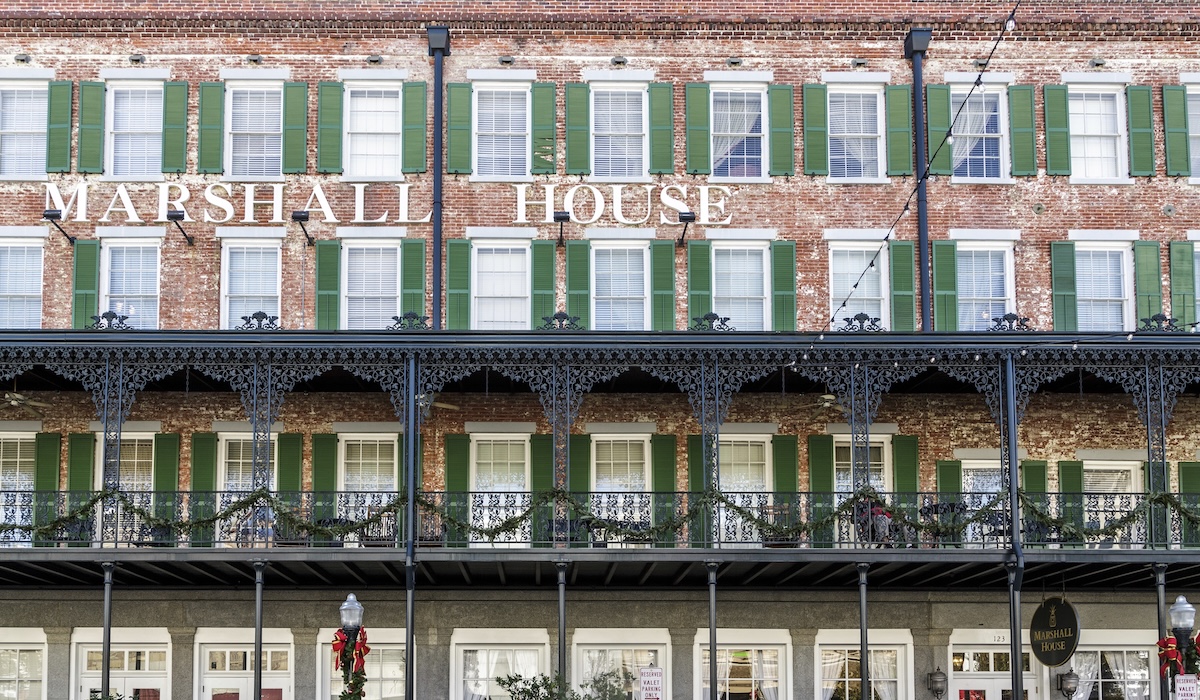
Savannah’s oldest hotel opened on Broughton Street in 1851. After Sherman’s troops took the city during the Civil War, the building served as a Union hospital. Yellow fever outbreaks also brought patients through its doors.
That history fuels Savannah’s ghost-tour scene, and many guests book here hoping for a spooky story. Restored rooms feature original heart pine floors, exposed brick, and clawfoot tubs. Step outside and you’re on one of the city’s main shopping streets, a few minutes from the oak-shaded squares and cobblestone River Street waterfront.
Hawaii: Volcano House, Hawaii Volcanoes National Park (1846)
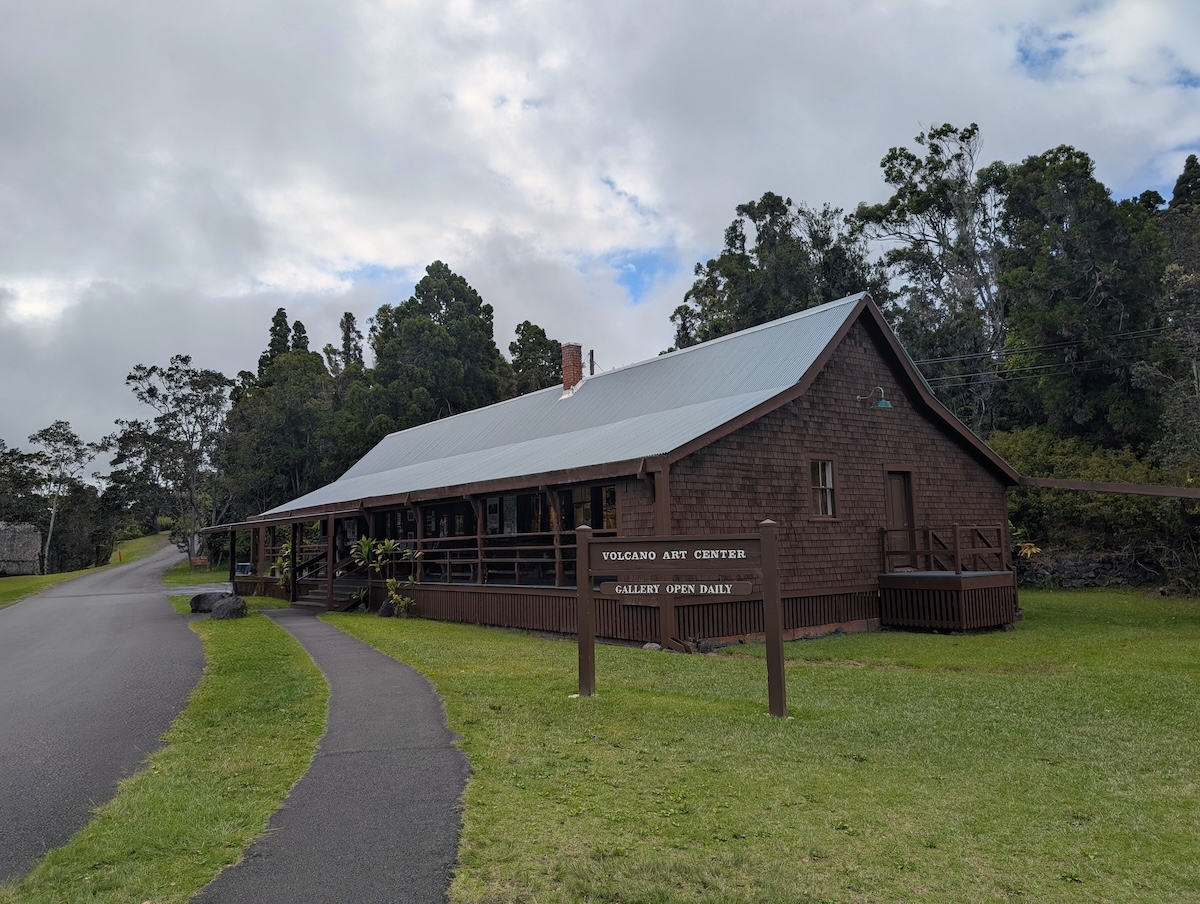
Hawaii’s oldest hotel began in 1846 as a grass-thatched hut perched on the rim of Kilauea caldera. Mark Twain visited in 1866 and wrote vividly about the glowing crater he saw from the lodge.
The current building dates to 1941 and operates inside the national park, so you wake up with the caldera outside your window. Ask for a crater-view room and watch for the red glow after dark when the volcano is active. Pack layers: at roughly 4,000 feet, nights get cool, and the lobby fireplace has reportedly burned for well over a century.
Idaho: Idaho Hotel, Silver City (1863)
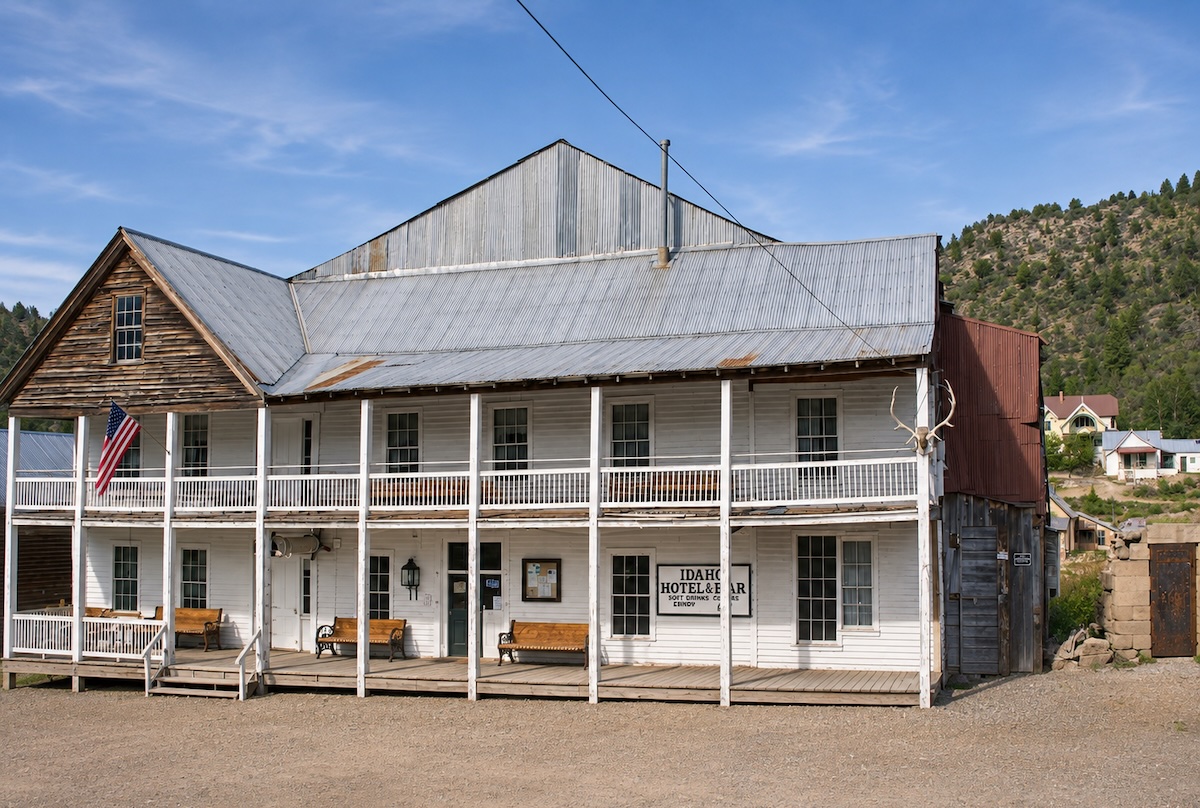
Silver City boomed after silver strikes in the Owyhee Mountains, and the Idaho Hotel was part of the frenzy. The building first stood in nearby Ruby City. Workers moved it to Silver City in pieces during the 1860s.
Staying here means stepping into a near-ghost town reached by a rough dirt road. The hotel welcomes overnight guests only in the warmer months. Expect a rustic experience, with period furnishings and few modern conveniences. Wander among dozens of preserved 19th-century buildings, and you’ll see why history buffs and photographers love the town.
Illinois: Historic Rose Hotel, Elizabethtown (1813)
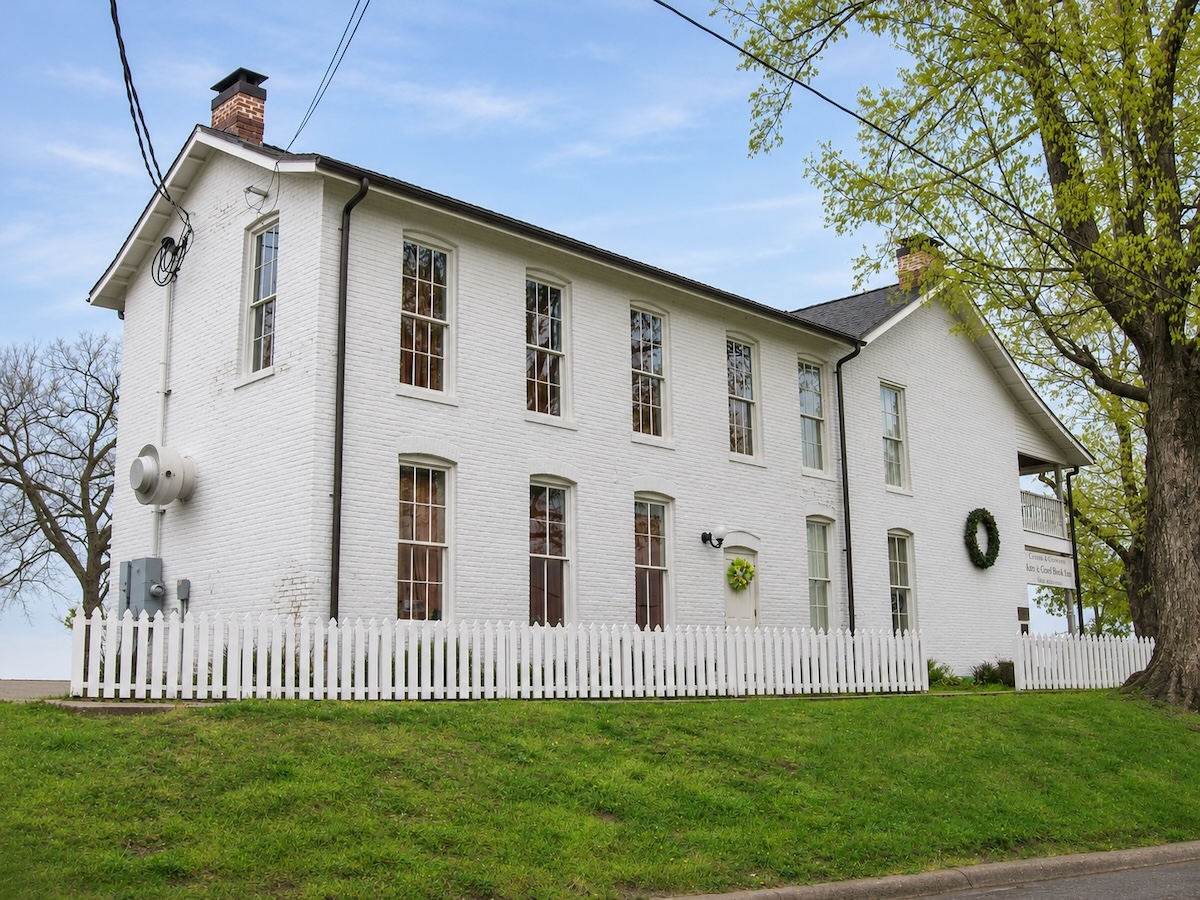
Built as McFarland’s Tavern in 1812, the Rose Hotel welcomed travelers by 1813, before Illinois became a state. It stands on a bluff above the Ohio River, where flatboats and steamboats once tied up below.
The state of Illinois owns the building, which operates as a bed-and-breakfast with a handful of guest rooms. A gazebo on the lawn offers sweeping river views, especially at sunset. Southern Illinois’ Shawnee National Forest is nearby, including the sandstone formations of Garden of the Gods, so plan a day of hiking.
Indiana: Historic Broadway Hotel & Tavern, Madison (1834)
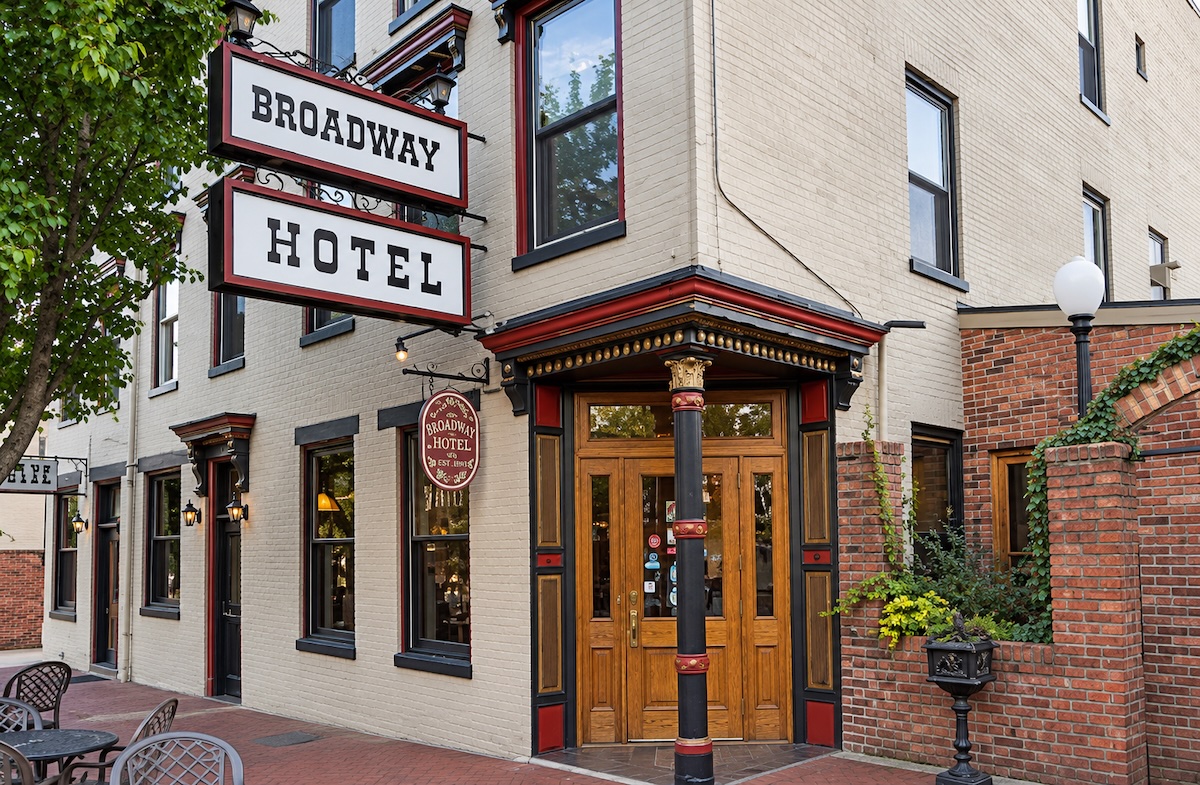
Madison’s riverfront historic district holds one of the Midwest’s largest collections of 19th-century buildings. The Broadway Hotel has welcomed guests there since 1834. Its tavern claims a long run as one of Indiana’s oldest continuously operating bars.
Rooms upstairs have period touches, while the tavern remains a local hangout serving pub food and cold drinks. Walk to the Ohio River, tour the Lanier Mansion, or browse antique shops along Main Street. Clifty Falls State Park, with its waterfalls and wooded gorges, sits just outside town.
Iowa: Hotel Julien Dubuque, Dubuque (1843)
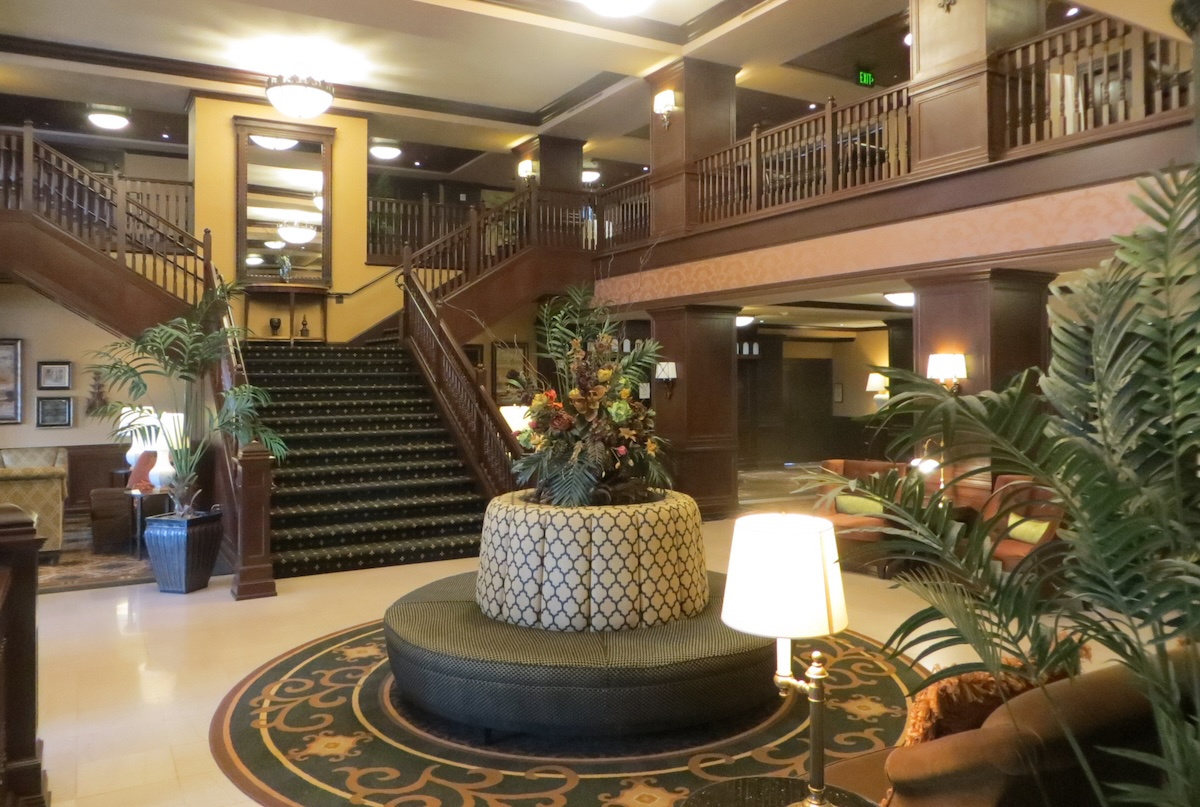
A hotel has stood on this Dubuque corner since the 1840s, and the current Hotel Julien carries on that legacy. Local legend holds that Al Capone used it as a hideout during Prohibition, and one suite bears his name.
A major renovation completed in 2009 restored the building’s grandeur while adding a spa and modern amenities. You’re steps from the Mississippi River and the Fenelon Place Elevator, a short funicular billed as one of the world’s steepest. The National Mississippi River Museum & Aquarium makes a good rainy-day stop.
Kansas: Cottage House Hotel, Council Grove (1871)
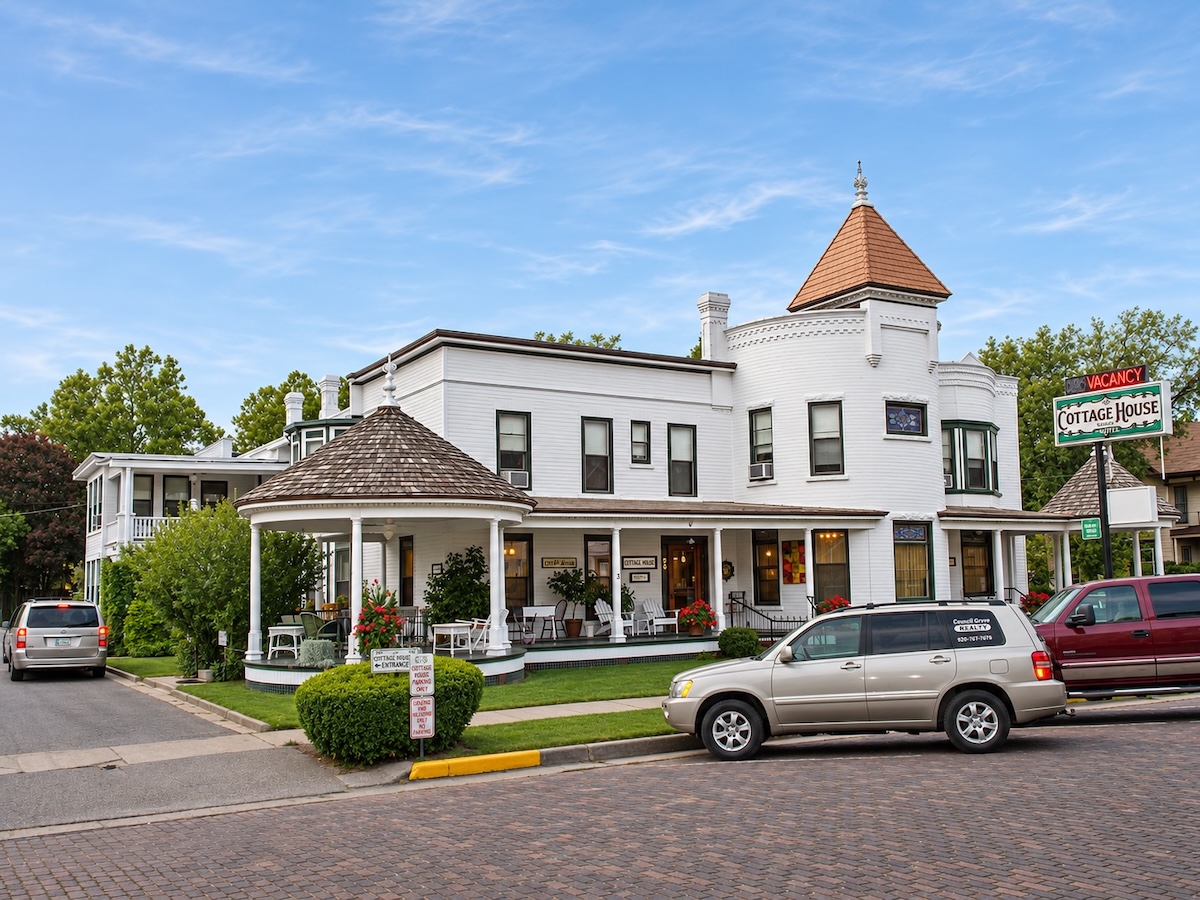
Council Grove was a key stop on the Santa Fe Trail, where wagon trains organized before crossing the plains. The Cottage House started as a modest home, then grew through several additions into a Victorian hotel with turrets and a wraparound porch.
Rooms feature antique furniture and period wallpaper, and rates stay friendly to road-trippers. Walk to the stump of the Council Oak, where a treaty with the Osage was signed in 1825, and visit the Kaw Mission State Historic Site. Grab a meal at the Hays House, which opened in 1857 as a trading post and restaurant.
Kentucky: Old Talbott Tavern, Bardstown (1779)
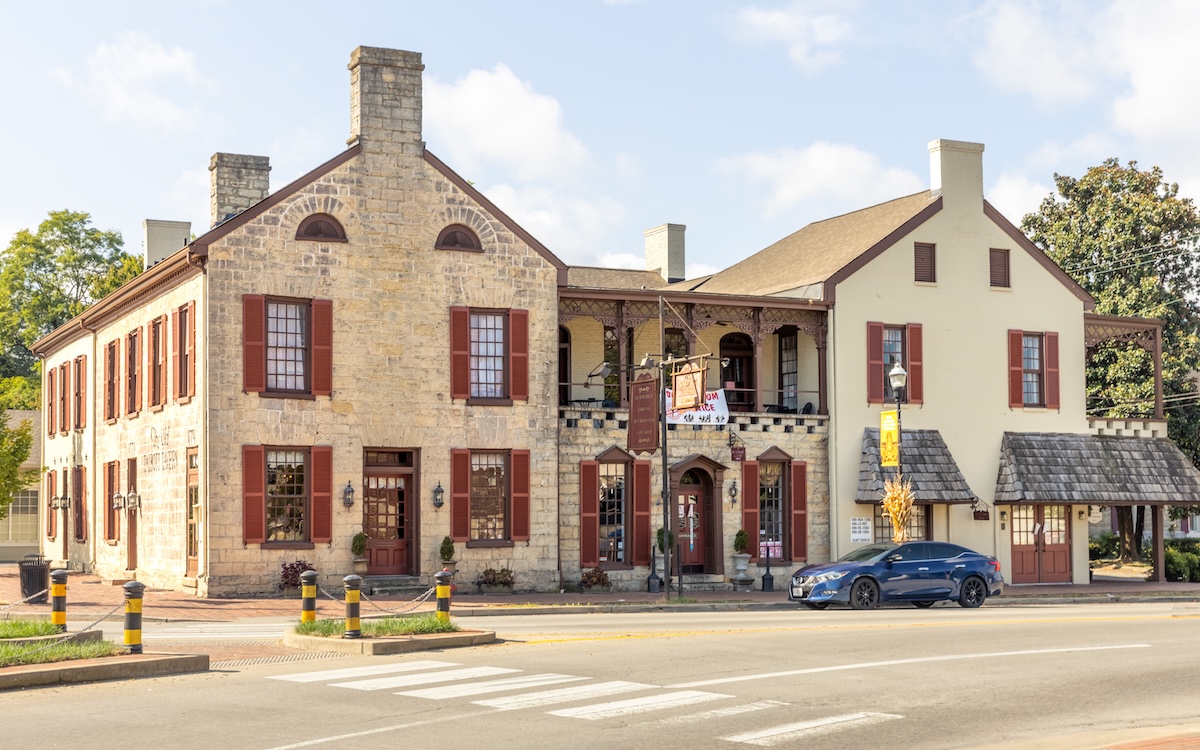
The Talbott Tavern opened in 1779 at a frontier stop on the stagecoach route west. Its guest list reportedly includes Daniel Boone, a young Abraham Lincoln with his family, and the exiled French king Louis Philippe.
People often attribute bullet holes in an upstairs mural to Jesse James. Today, you can book one of a few guest rooms and eat Southern fare in the stone-walled dining room. Bardstown calls itself the Bourbon Capital of the World, so you’re surrounded by distilleries, including Heaven Hill and several stops on the Kentucky Bourbon Trail.
Louisiana: Old Castillo Hotel, St. Martinville (1835)
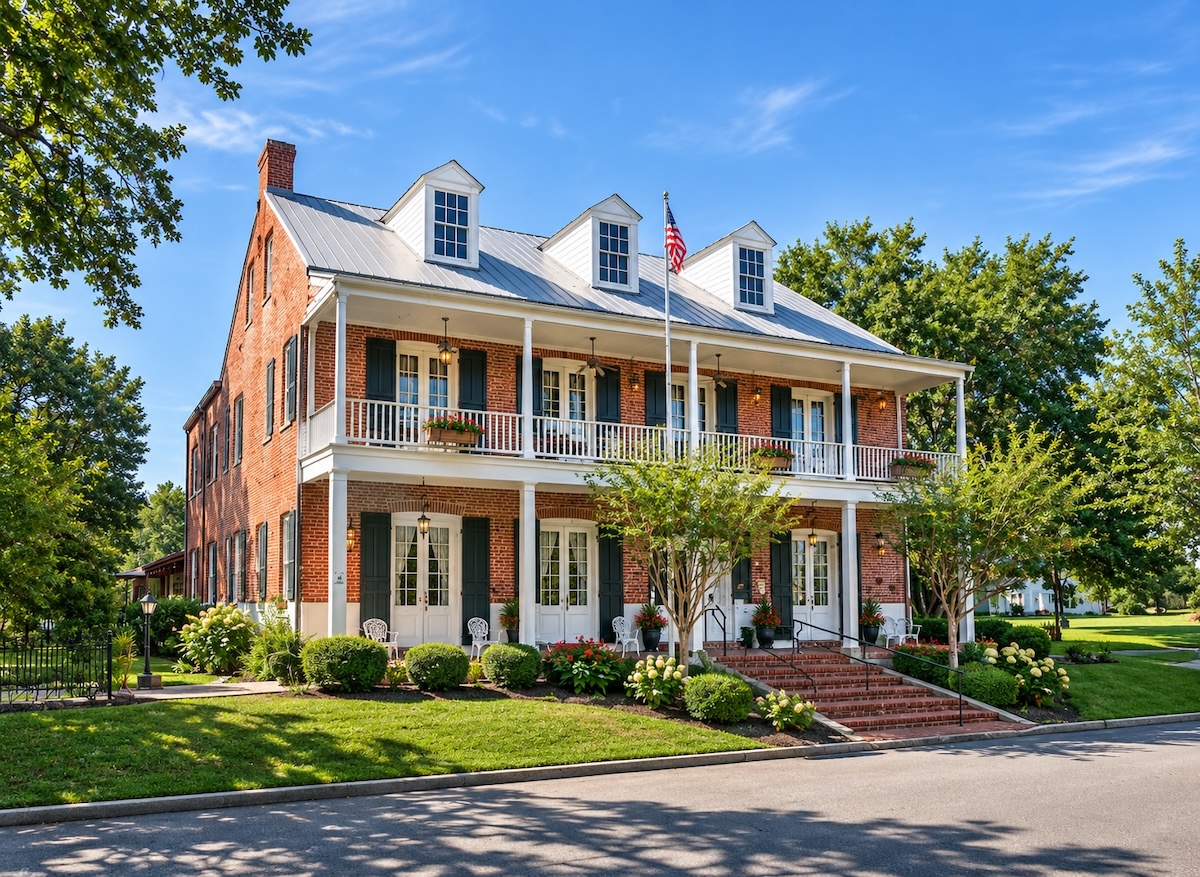
Set on the banks of Bayou Teche, the Old Castillo began around 1835 as an inn for steamboat passengers. The Sisters of Mercy later ran it as a girls’ school for decades, before it returned to hospitality.
Rooms feature antiques and the high ceilings typical of Acadiana architecture. The famed Evangeline Oak, linked to Longfellow’s poem about the Acadian exile, stands right next door. You’re in the heart of Cajun country, with zydeco music, boudin, and swamp tours in nearby towns like Breaux Bridge and Lafayette.
Maine: Seaside Inn, Kennebunk (1756)
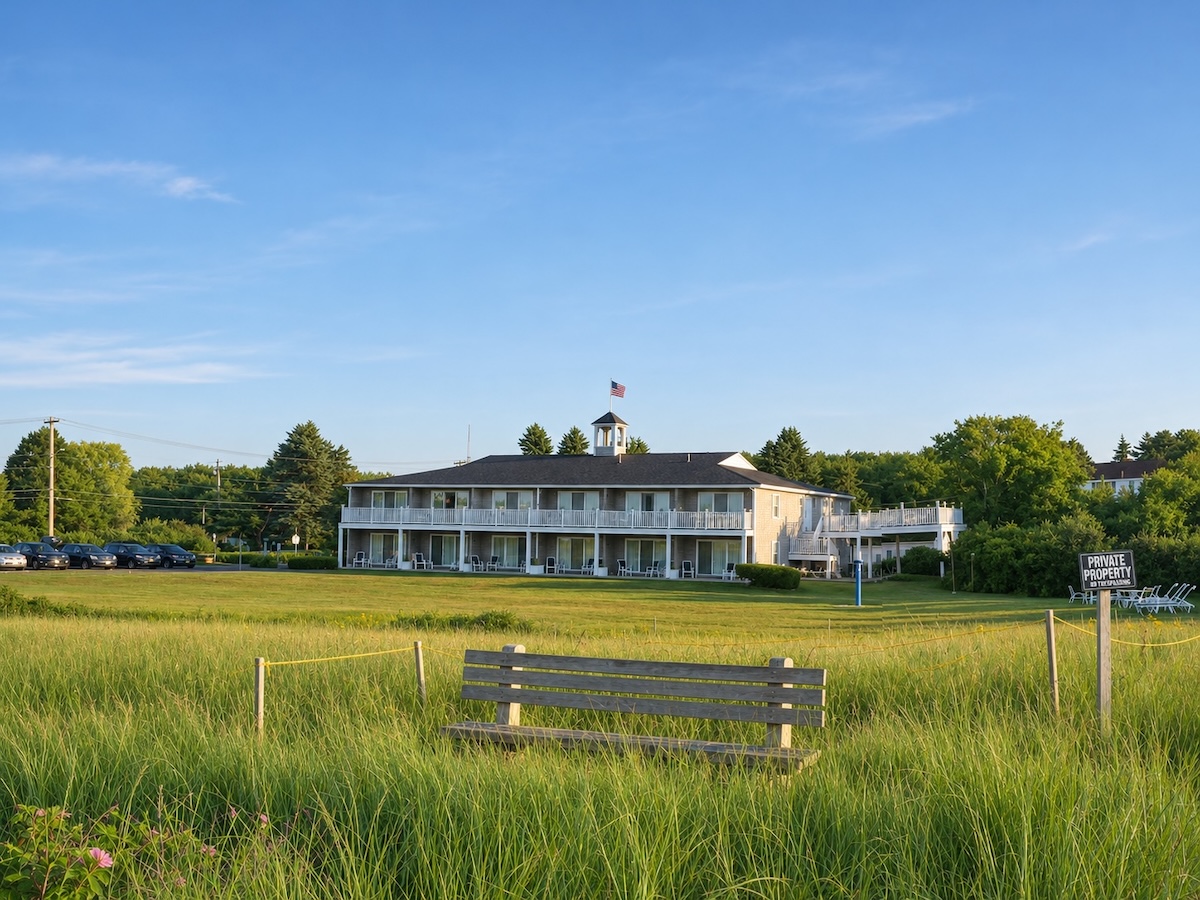
The Gooch family began hosting travelers on this stretch of Kennebunk coastline in 1756, and their descendants carried on the tradition for generations. The Seaside Inn ranks among the country’s longest-running family hospitality businesses.
The present inn sits across from a sandy beach, so you can watch waves roll in from your room. Breakfast is included, and the vibe is relaxed and unfussy. Kennebunkport’s Dock Square is a short drive or bike ride away, with lobster shacks, galleries, and harbor cruises filling summer days.
Maryland: Maryland Inn, Annapolis (1772)
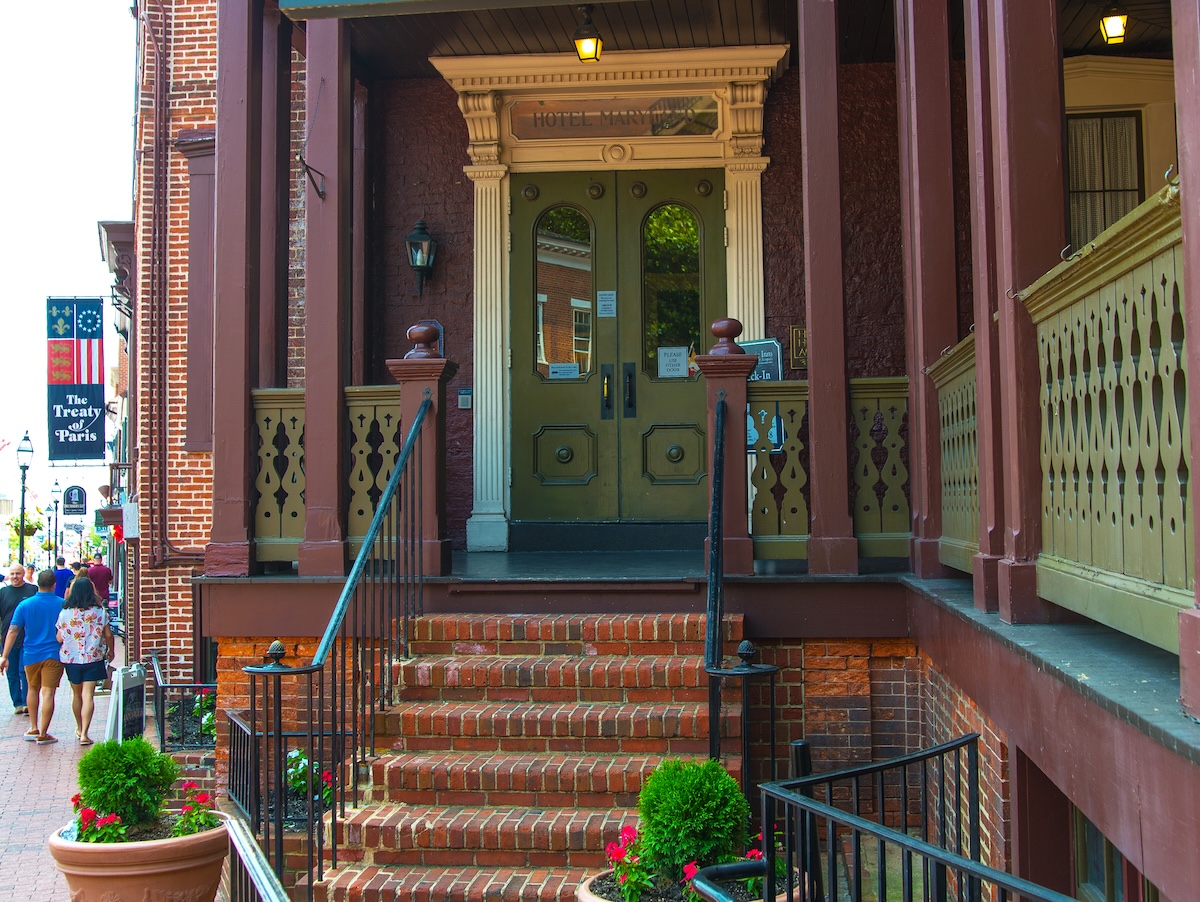
The Maryland Inn opened in 1772 on Church Circle, a few steps from the Maryland State House, where the Continental Congress met. Its triangular footprint follows the street plan laid out when Annapolis was a colonial capital.
Rooms combine Colonial charm with updated comforts, and the inn shares amenities with neighboring historic properties. Walk to the U.S. Naval Academy, the City Dock, and dozens of 18th-century brick buildings. Sailing season brings the harbor to life. A crab feast is the classic way to end the day.
Massachusetts: Longfellow’s Wayside Inn, Sudbury (1716)
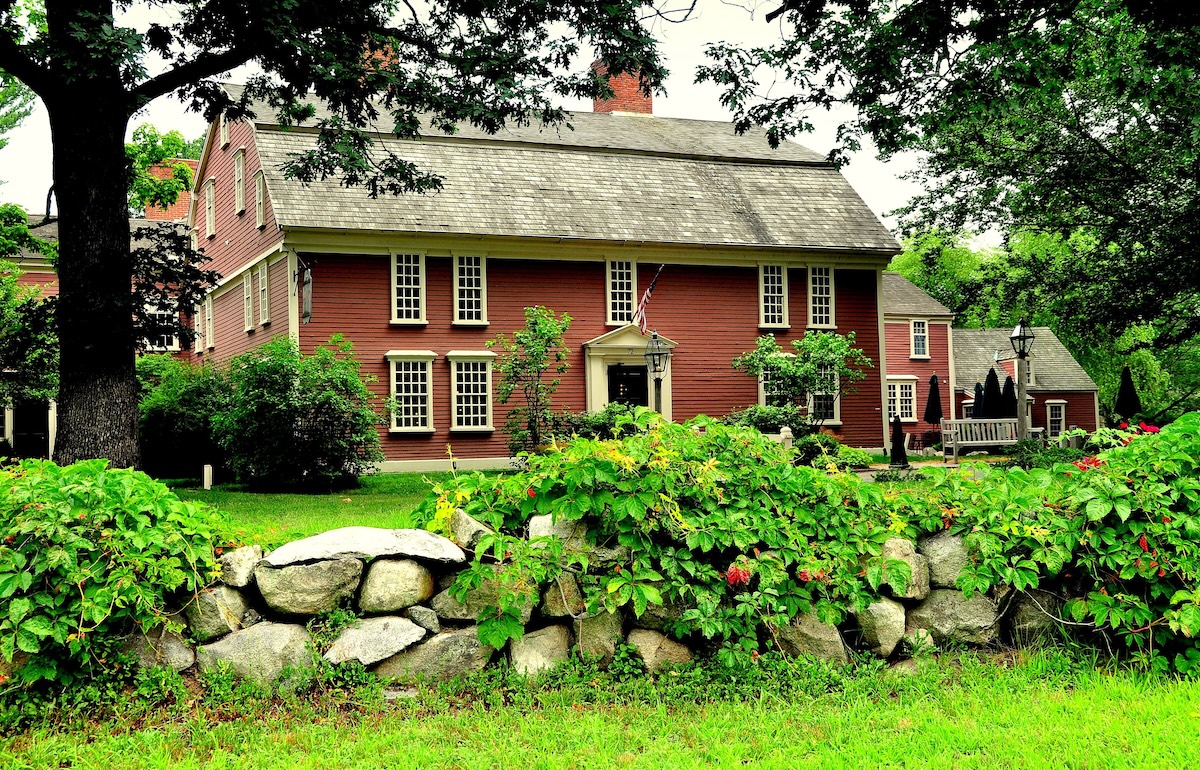
Howe’s Tavern opened in Sudbury in 1716 and claims the title of America’s oldest operating inn. Henry Wadsworth Longfellow made it famous with his 1863 collection “Tales of a Wayside Inn.”
Henry Ford bought the property in 1923 and added a working gristmill, the Martha-Mary Chapel, and a schoolhouse. The inn offers a small number of guest rooms, and its dining room serves New England classics like roast turkey and Indian pudding. Stroll the grounds, then visit Minute Man National Historical Park in nearby Concord and Lexington.
Michigan: National House Inn, Marshall (1835)
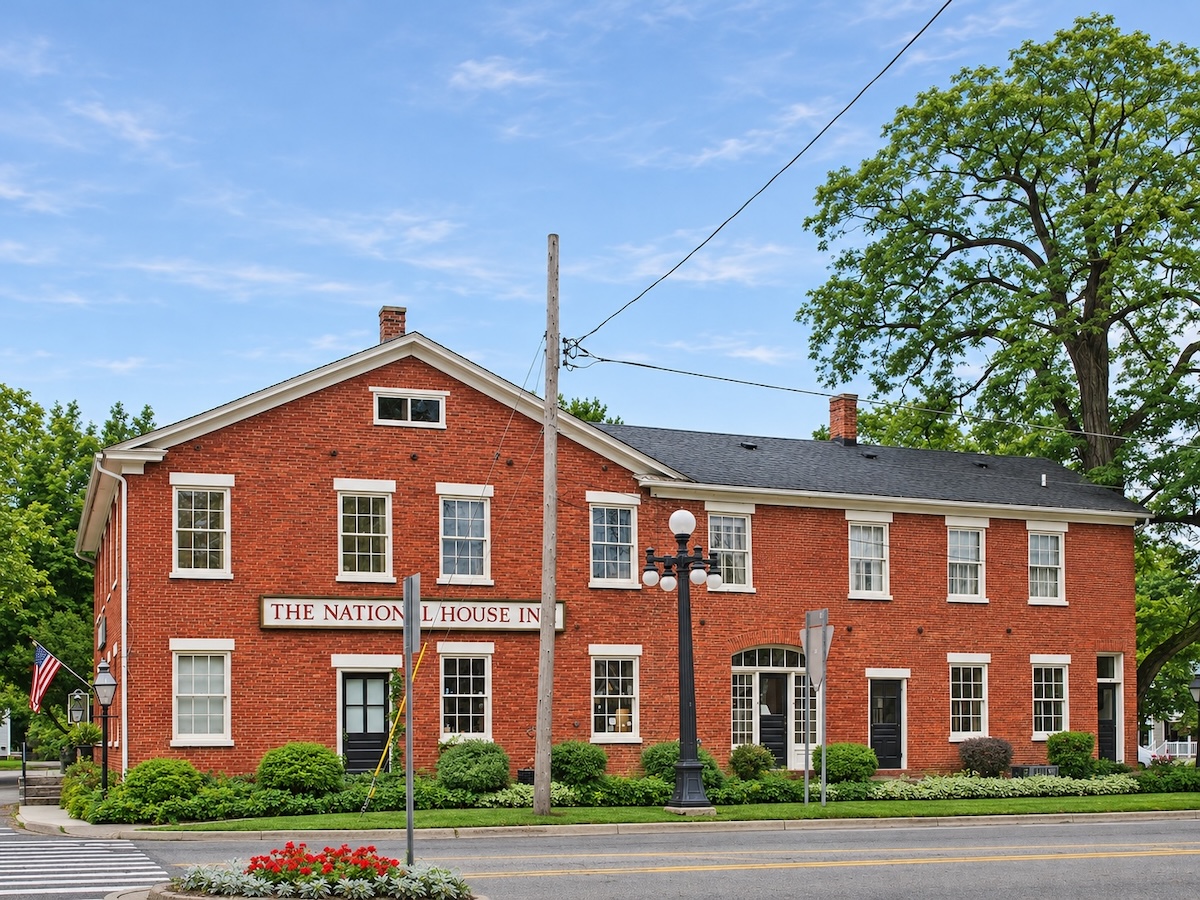
Michigan’s oldest operating inn opened in 1835 as a stagecoach stop on the road between Detroit and Chicago. Local tradition says the building later served as a station on the Underground Railroad.
Today, it operates as a bed-and-breakfast, with antique-filled rooms and a full breakfast each morning. Marshall is known for its remarkable 19th-century architecture, and much of the town forms a National Historic Landmark District. Walk past the Honolulu House and other ornate homes, and plan your trip for the September home tour if you want to see inside.
Minnesota: The Anderson House Hotel, Wabasha (1856)
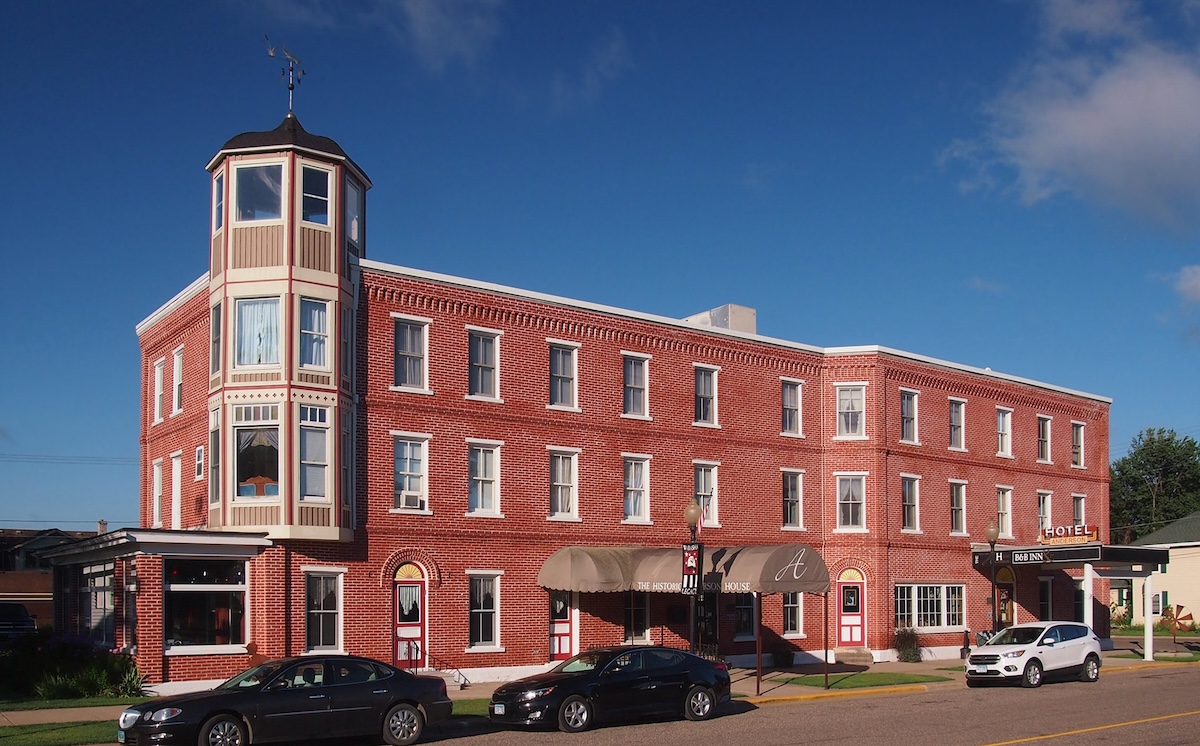
The Anderson House has welcomed guests since 1856, near the Mississippi River in Wabasha. For years, it was famous for a quirky perk: you could request a resident cat to keep you company overnight.
The rooms feature Victorian decor, and the brick building anchors a downtown filled with 19th-century storefronts. Bald eagles winter along this stretch of river, and the National Eagle Center sits a few blocks away. The scenic Great River Road runs right through town, making Wabasha a natural stop on a Mississippi drive.
Mississippi: White House Hotel, Biloxi (1895)
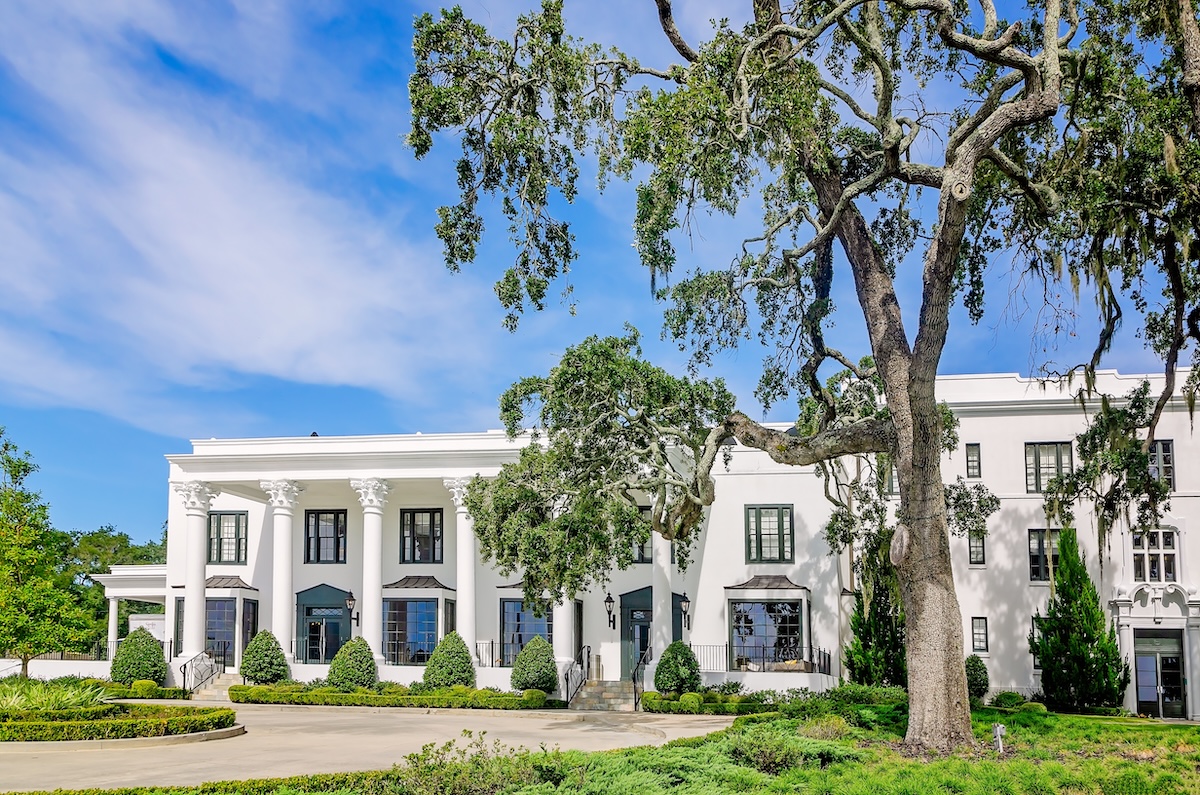
Biloxi’s White House Hotel began as a Gulf-front home, then became a resort hotel in the 1890s. Families came for sea breezes and fresh seafood. It thrived for decades before closing and falling into disrepair.
Hurricane Katrina battered the building in 2005. A long restoration brought it back as a boutique hotel with views of the Mississippi Sound. You can lounge by the pool, walk the beach, and visit casinos a short drive away. The Biloxi Lighthouse and the Ohr-O’Keefe Museum of Art make worthwhile daytime stops.
Missouri: The Saint George Hotel, Weston (1845)
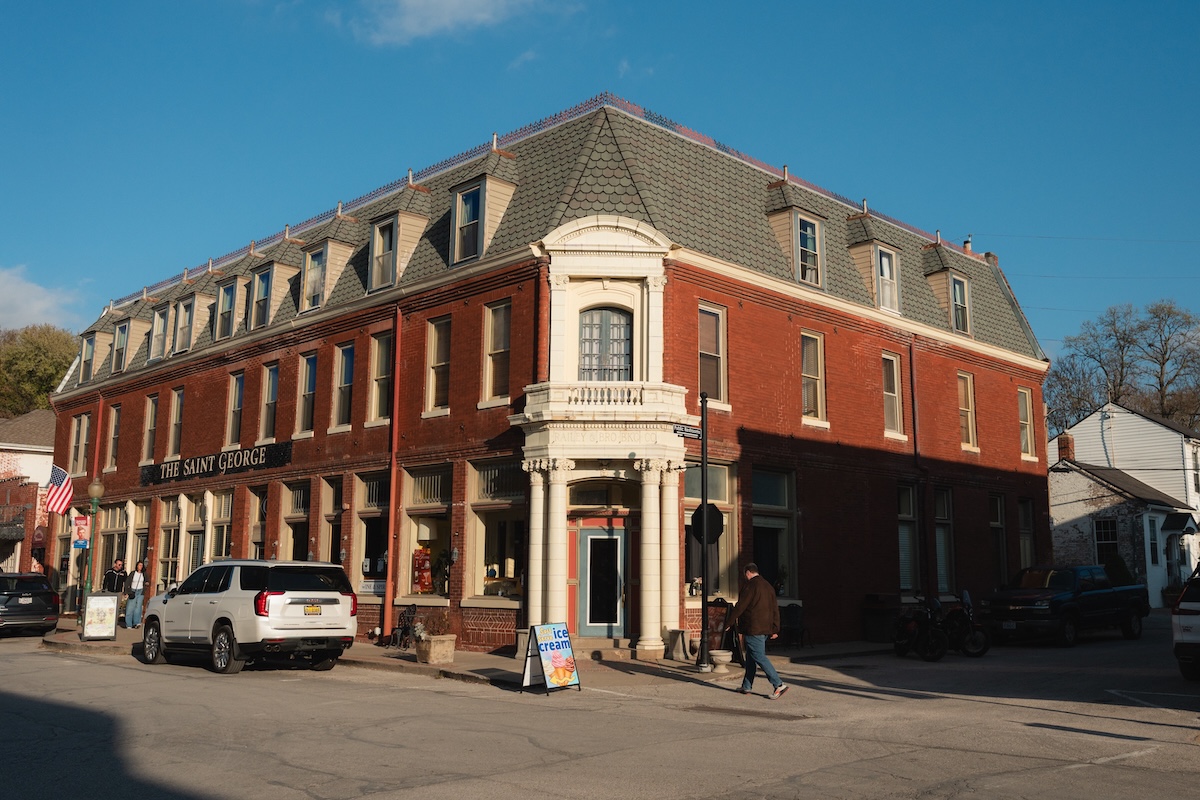
Weston boomed as a Missouri River port in the 1840s, and the Saint George Hotel dates from that prosperous era. The town’s fortunes faded after floods shifted the river, helping preserve its historic main street.
The hotel offers restored rooms in a walkable downtown full of antique shops and tasting rooms. Weston has a long drinking heritage: McCormick Distilling has operated here for generations, and the town is home to wineries and a historic brewery with underground cellars. Kansas City is under an hour away, so you get small-town quiet with big-city options nearby.
Montana: Grand Union Hotel, Fort Benton (1882)
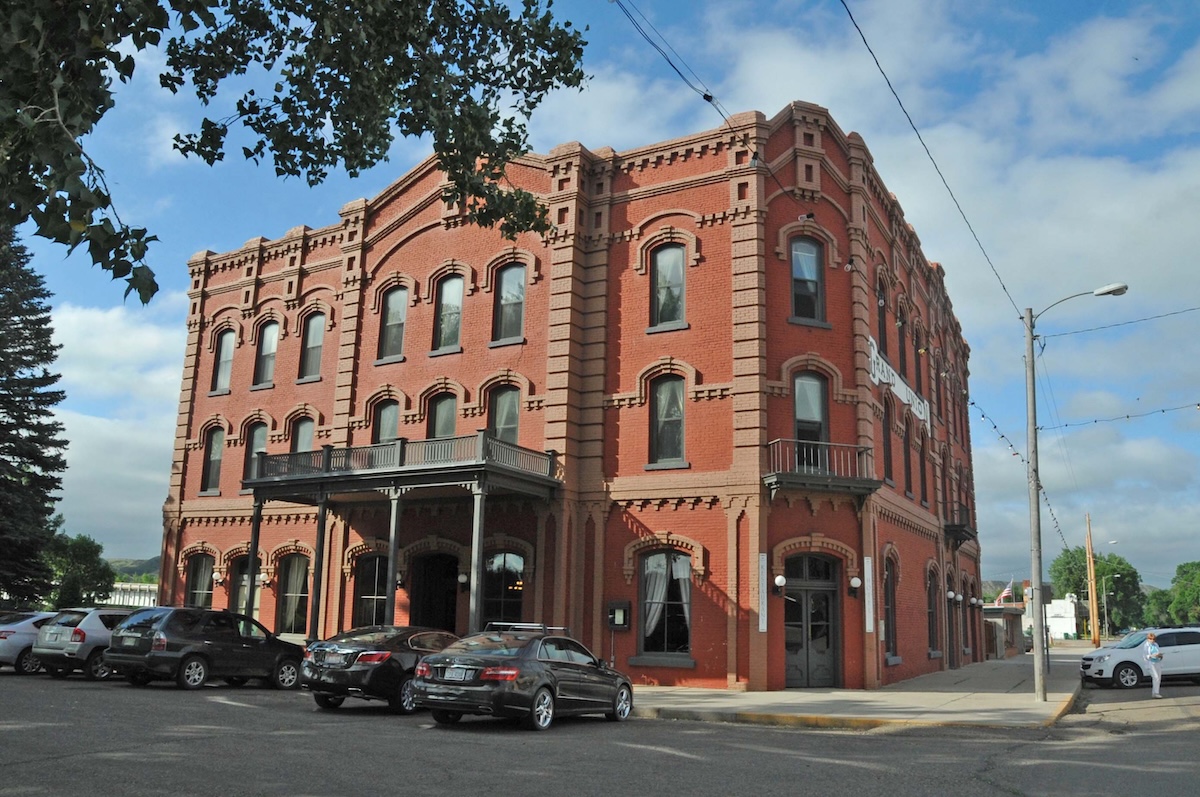
Montana’s oldest operating hotel opened in Fort Benton in 1882, when the town served as the head of steamboat navigation on the Missouri River. Steamboats unloaded passengers and freight here for gold camps across the territory.
The Grand Union reopened in 1999 after a restoration. It has a stately lobby and a restaurant serving regional dishes. Walk the levee along the river and explore the Museum of the Upper Missouri. Fort Benton also serves as a launch point for canoe trips through the Upper Missouri River Breaks, a stretch Lewis and Clark described in their journals.
Nebraska: Phelps Hotel, Big Springs (1885)
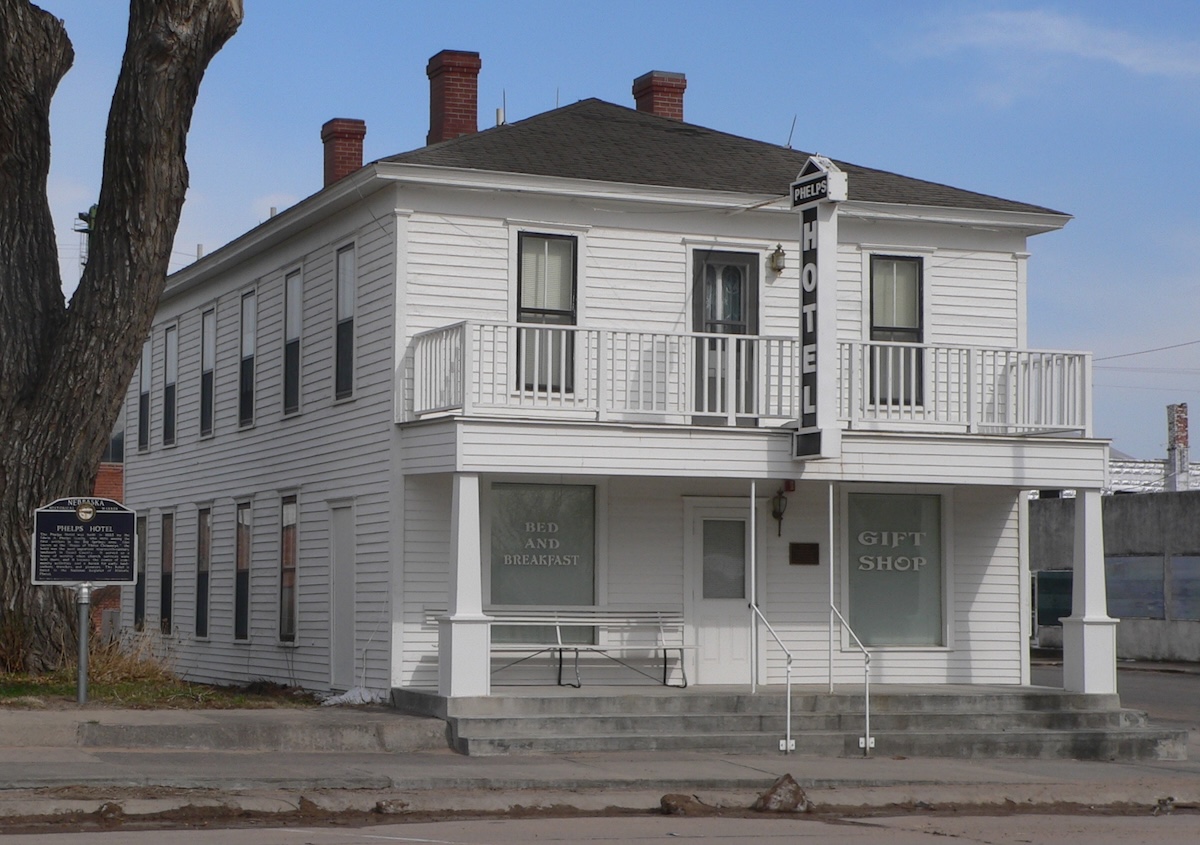
Big Springs sits along the old Oregon Trail corridor and the Union Pacific line. The Phelps Hotel opened in 1885 to serve railroad travelers. Its brick walls have outlasted decades of prairie storms and economic swings.
Today, the hotel operates on a small scale, and a stay here feels like a quiet step back in time. It’s a short hop off Interstate 80, which makes it a handy overnight break on a cross-country drive. Nearby Ash Hollow State Historical Park preserves wagon ruts and the spot where trail emigrants descended into the North Platte valley.
Nevada: Gold Hill Hotel & Saloon, Gold Hill (1861)
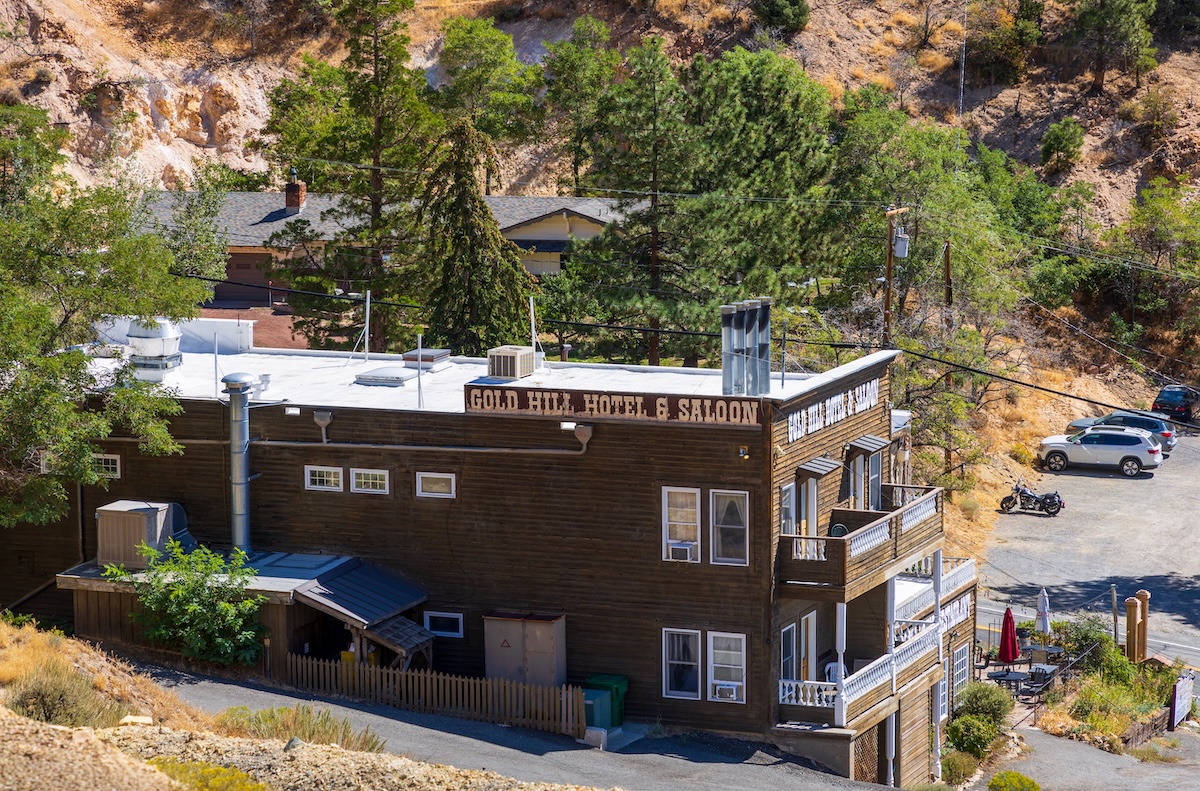
The Comstock Lode silver rush built Gold Hill, and this hotel dates to the early 1860s, making it Nevada’s oldest. Miners, mill workers, and speculators crowded the saloon during the boom years.
Rooms range from cozy historic quarters to newer lodging on the property, and the saloon still serves drinks with plenty of Old West atmosphere. Virginia City is just up the road, with its boardwalks, museums, and old mine tours. You can also ride the restored Virginia & Truckee Railroad, which runs between the two towns.
New Hampshire: The Inn at Hancock, Hancock (1789)
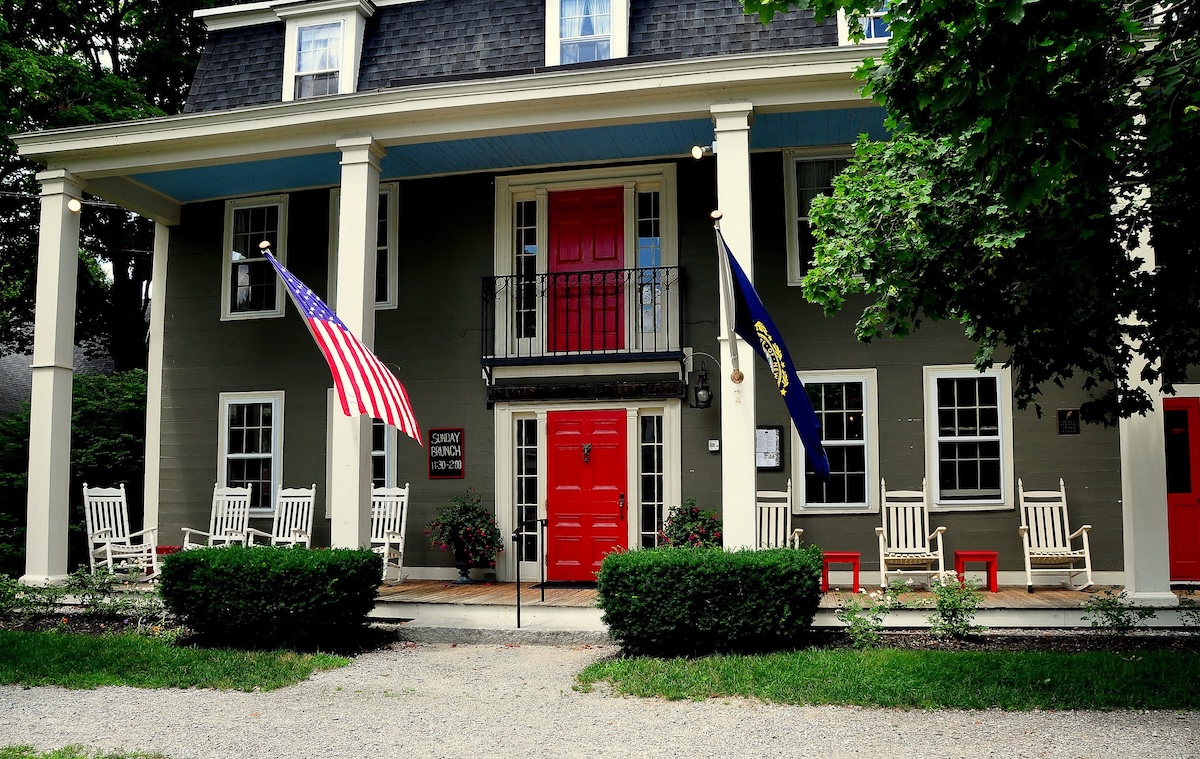
New Hampshire’s oldest continuously operating inn opened in 1789 in the village of Hancock, in the shadow of Mount Monadnock. Stagecoach travelers between Boston and Vermont stopped here for meals and beds.
Look for the folk-art murals in one guest room, which people attribute to itinerant painter Rufus Porter. The town center looks like a postcard, with a white church and a classic general store. Rooms fill fast during fall foliage season, and hiking Mount Monadnock, one of the country’s most-climbed mountains, is a must if you’re up for it.
New Jersey: Nassau Inn, Princeton (1769)
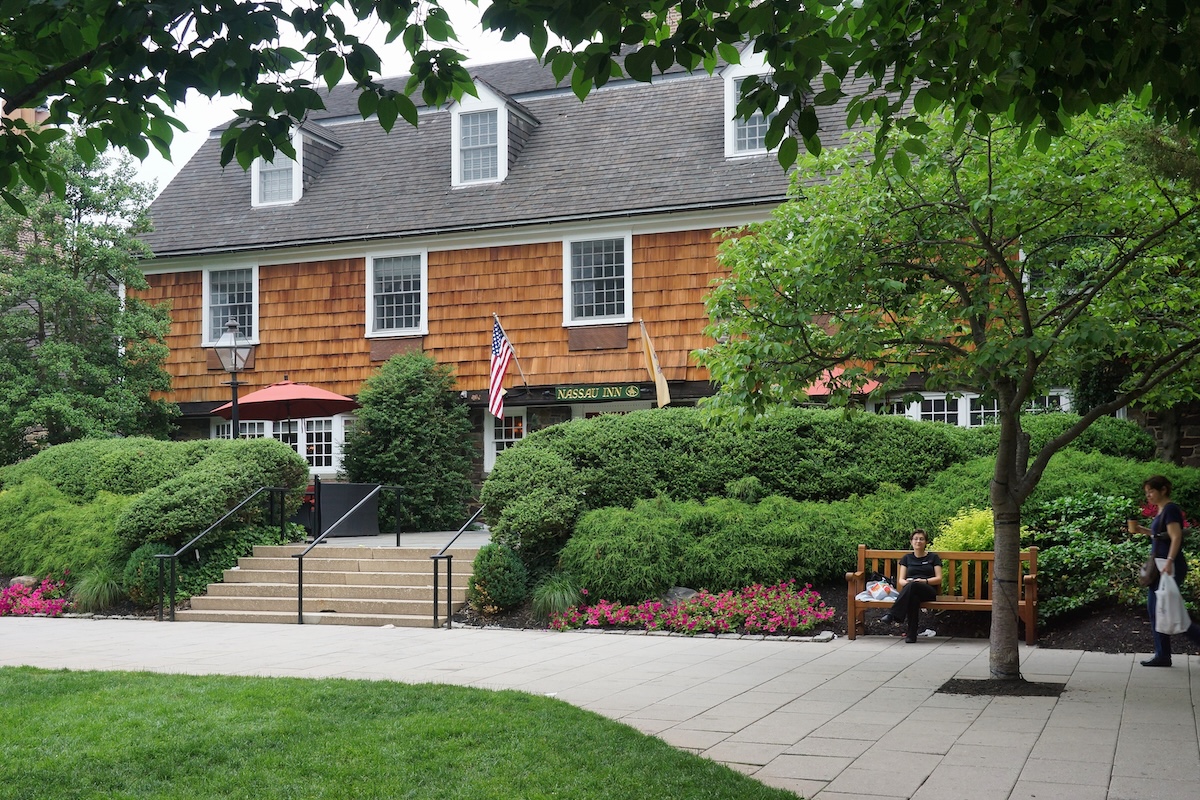
The Nassau Inn traces its roots to 1769, when a tavern near Princeton’s Nassau Hall served travelers and revolutionaries. The modern inn moved to Palmer Square in 1937 and carries that heritage forward.
Its Yankee Doodle Tap Room features a Norman Rockwell mural over the bar and draws alumni and locals. You’re steps from Princeton University’s campus, where you can tour Gothic quads and the Princeton University Art Museum. Palmer Square’s shops and restaurants make it easy to fill an evening on foot.
New Mexico: St. James Hotel, Cimarron (1880)
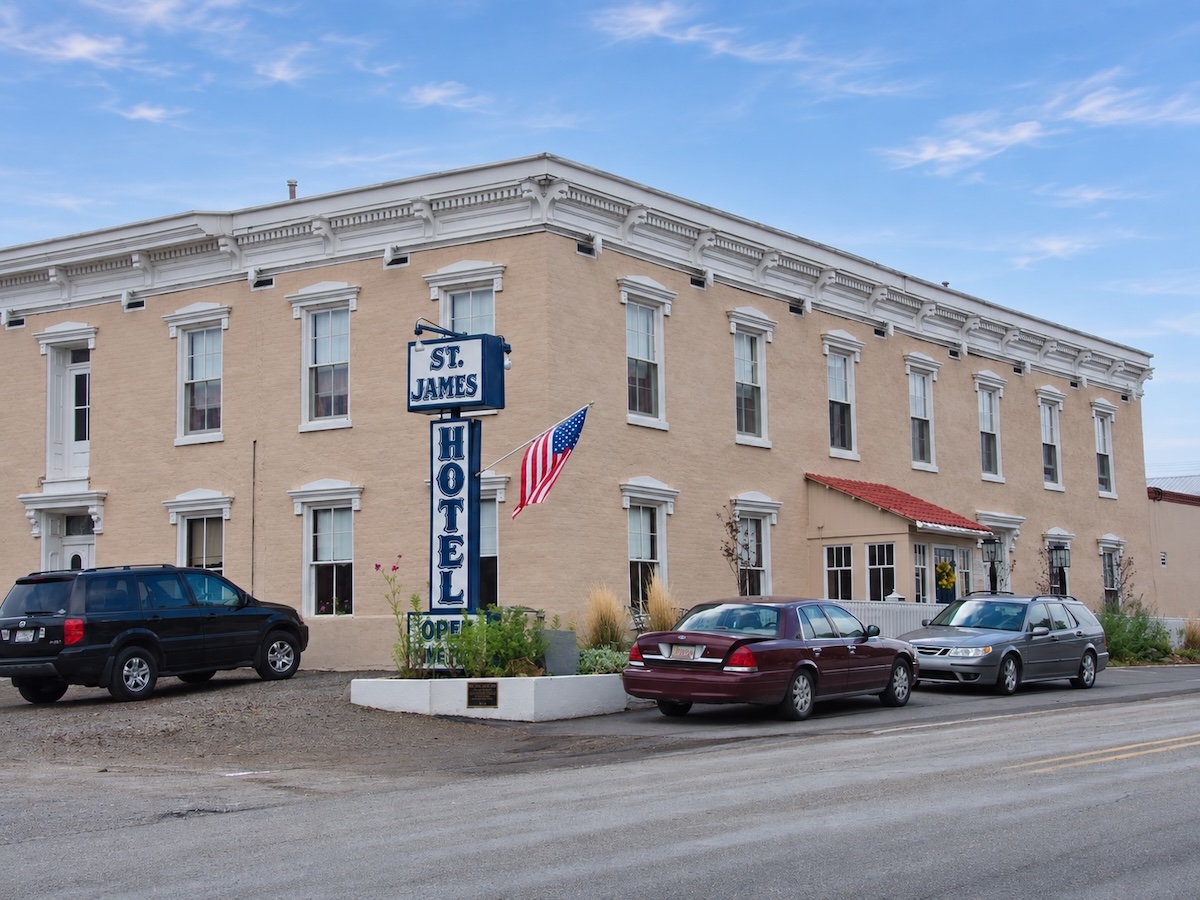
Henri Lambert, a French chef who once cooked for Abraham Lincoln, opened this hotel in Cimarron along the Santa Fe Trail. By 1880, it had become a full-fledged hotel and a magnet for cowboys, gamblers, and gunslingers.
Bullet holes in the dining room ceiling recall the town’s violent past, and the hotel has a reputation for ghost sightings. Historic rooms carry the names of famous visitors, including Buffalo Bill Cody and Annie Oakley. Cimarron Canyon State Park and the Philmont Scout Ranch are nearby, and Taos is a scenic mountain drive away.
New York: Beekman Arms & Delamater Inn, Rhinebeck (1766)
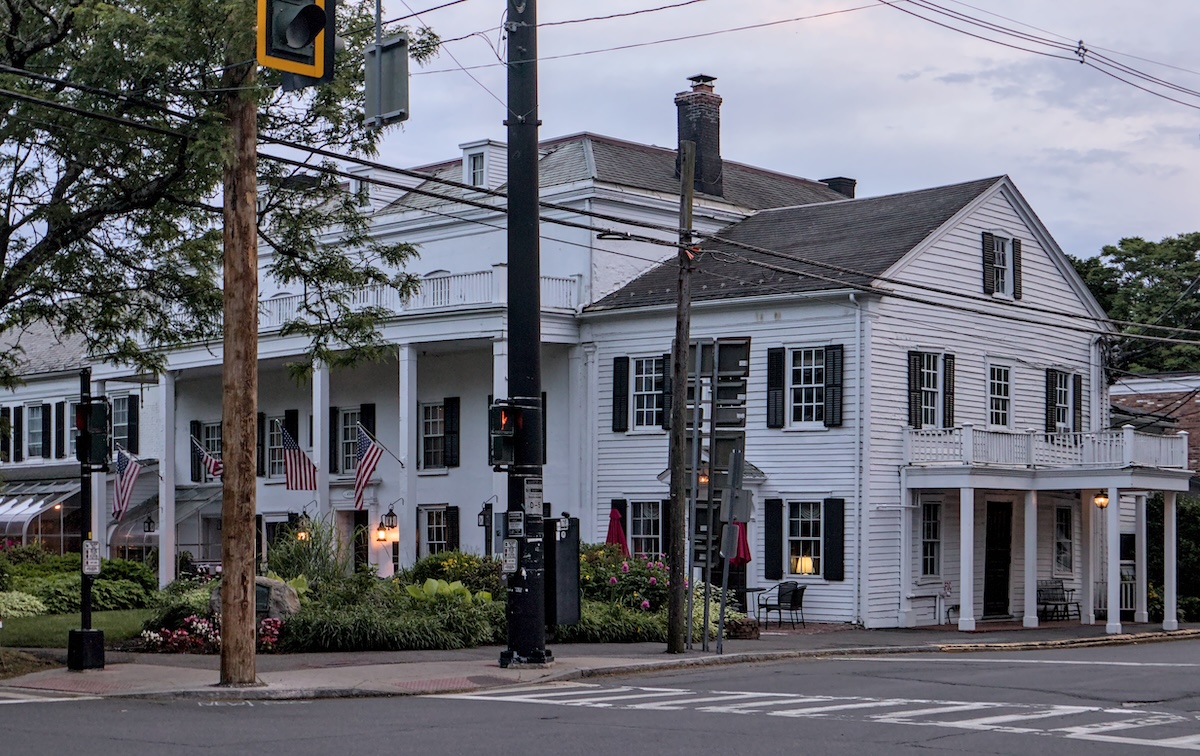
Beekman Arms claims the title of America’s oldest continuously operating inn. It has served guests in Rhinebeck since 1766. George Washington is said to have stayed, and Franklin D. Roosevelt closed his campaigns with speeches from the front porch.
Rooms are split between the original inn and the Delamater Inn, an 1844 Gothic Revival home with board-and-batten siding. The tavern’s low-beamed ceilings and fireplaces set a cozy mood. The Hudson Valley surrounds you with farm-to-table restaurants, the FDR Presidential Library in Hyde Park, and the Vanderbilt Mansion.
North Carolina: The NuWray Hotel, Burnsville (1833)
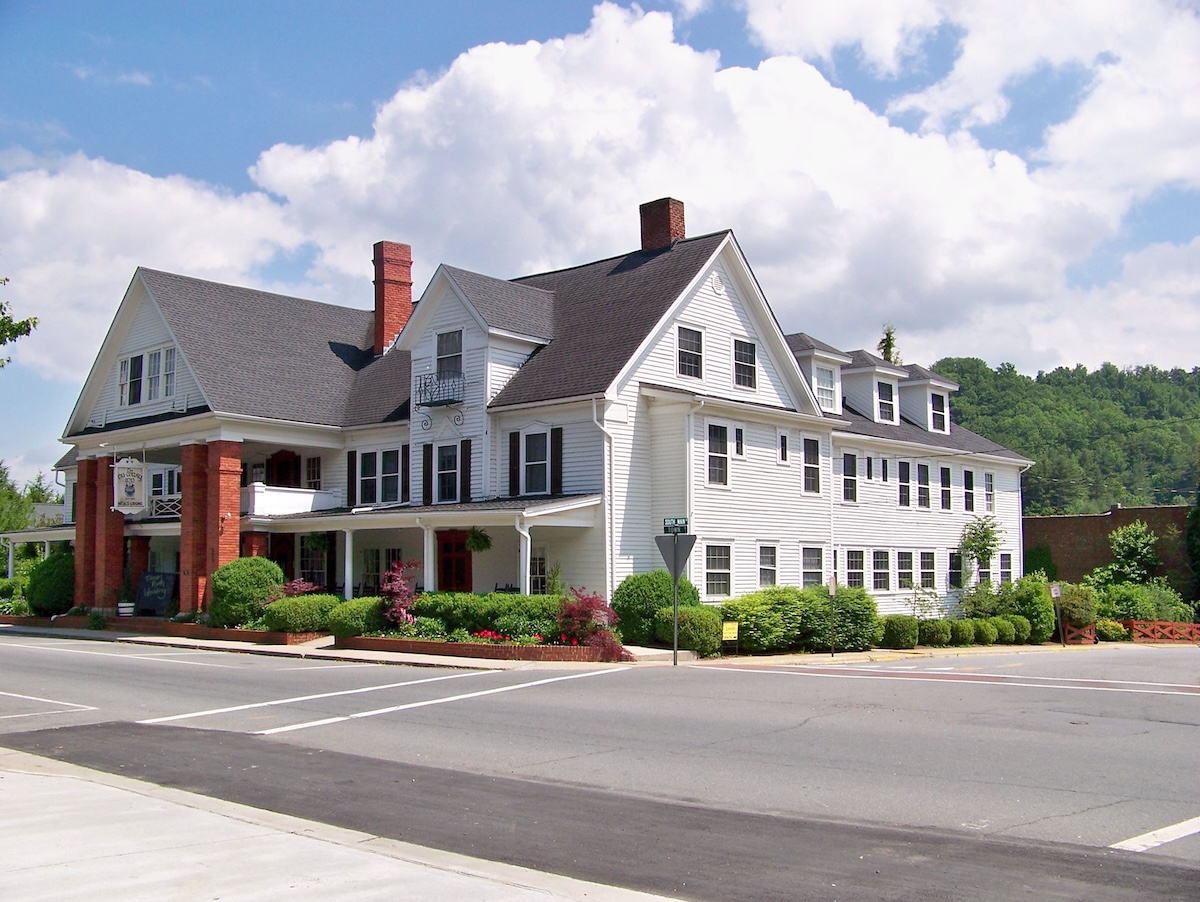
The NuWray has anchored the town square in Burnsville since 1833, making it North Carolina’s oldest hotel. It hosted travelers crossing the Blue Ridge for generations and earned a reputation for hearty Southern meals.
After years of closures, a recent restoration brought the hotel back with updated rooms and a restaurant. Burnsville serves as a gateway to Mount Mitchell, the highest peak east of the Mississippi at 6,684 feet. You’re also near the Blue Ridge Parkway and the craft studios of the Penland area.
North Dakota: Rough Riders Hotel, Medora (1885)
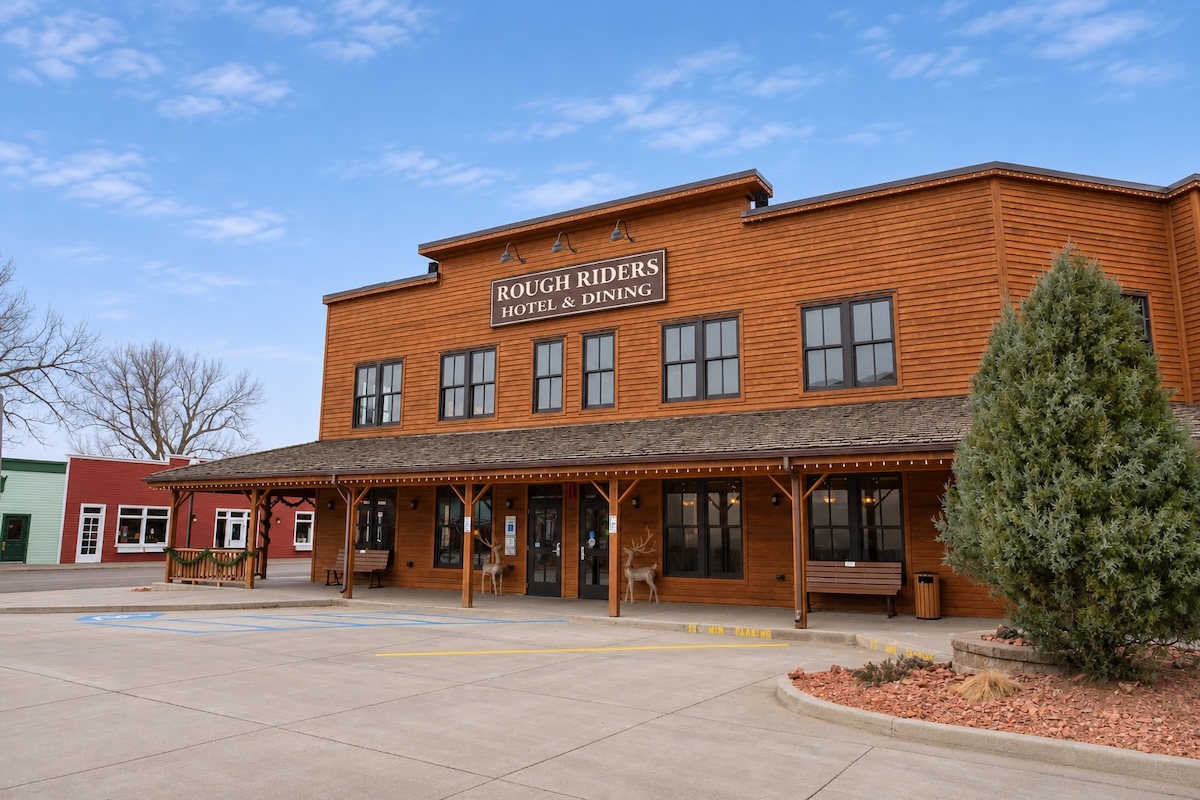
Medora’s Rough Riders Hotel dates to the mid-1880s, when a young Theodore Roosevelt ranched in the Badlands and visited town. The hotel later took its name from the cavalry unit he led in the Spanish-American War.
An expansion added modern rooms, while the original section keeps its frontier character. You’re at the doorstep of Theodore Roosevelt National Park, where bison, wild horses, and prairie dogs roam painted canyons. Summer evenings bring the Medora Musical, an outdoor show in an amphitheater carved into the hills.
Ohio: The Golden Lamb, Lebanon (1803)
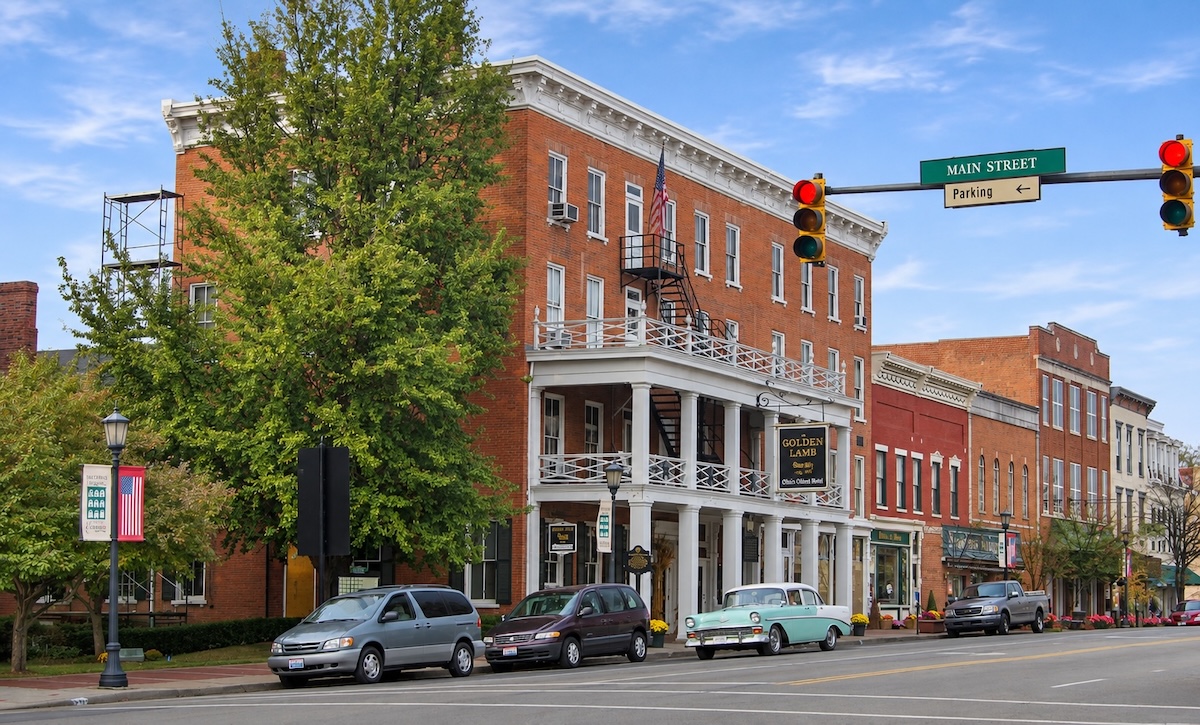
Ohio’s oldest business opened as a tavern in 1803 and has hosted travelers ever since. Twelve U.S. presidents have stopped here, along with Charles Dickens and Mark Twain.
Guest rooms bear the names of famous visitors and feature antiques, including Shaker pieces. The dining rooms serve classic dishes like roast turkey and the inn’s signature sauerkraut balls. Lebanon’s downtown is lined with antique shops, and Kings Island amusement park and Cincinnati are both a short drive away.
Oklahoma: Skirvin Hilton, Oklahoma City (1911)
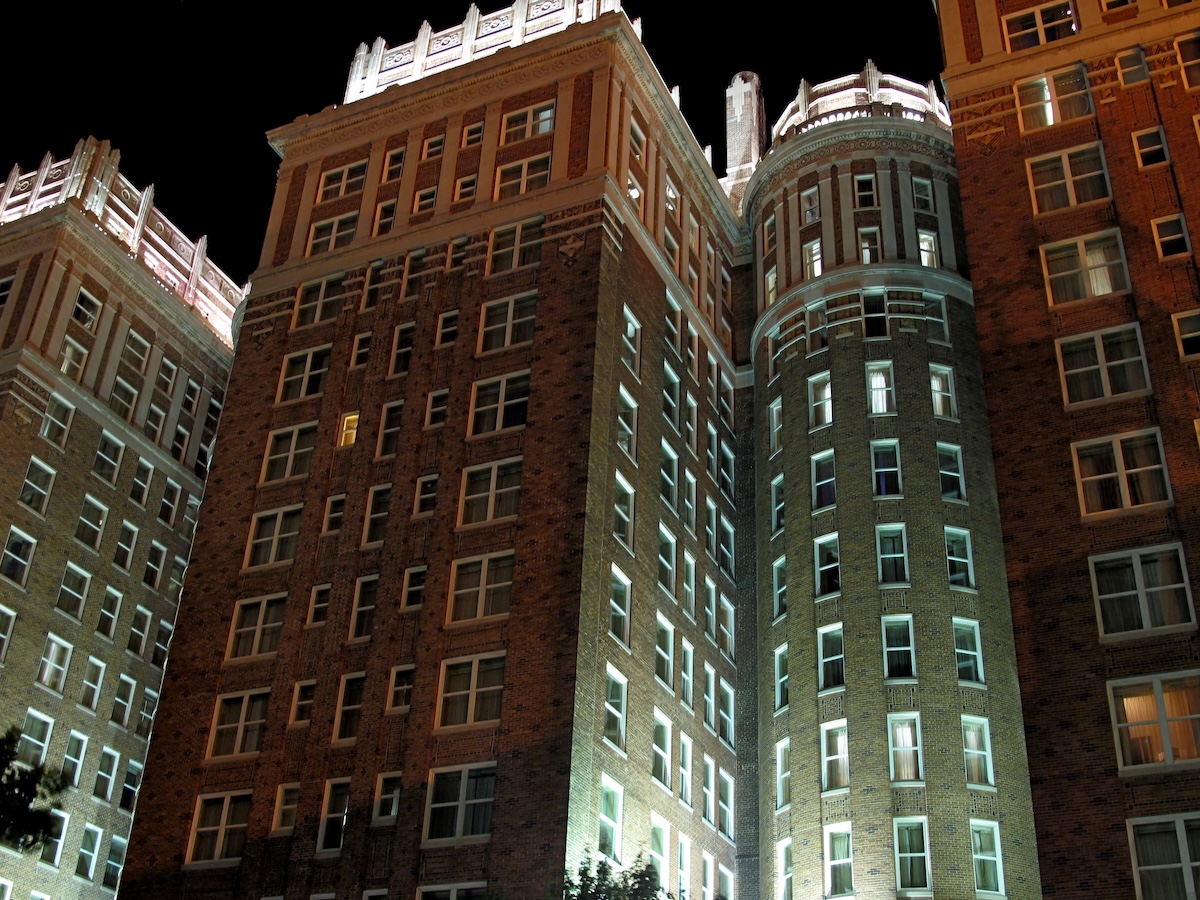
Oilman William Balser Skirvin opened his namesake hotel in 1911, just four years after Oklahoma became a state. It became the city’s social center, hosting politicians and celebrities through the oil boom decades.
The hotel closed in 1988 and sat empty for nearly two decades. After a major restoration, it reopened in 2007. Ghost stories about a maid named Effie add some intrigue to your stay. You’re close to Bricktown’s canal, restaurants, and ballpark, as well as the moving Oklahoma City National Memorial & Museum.
Oregon: Wolf Creek Inn, Wolf Creek (1883)
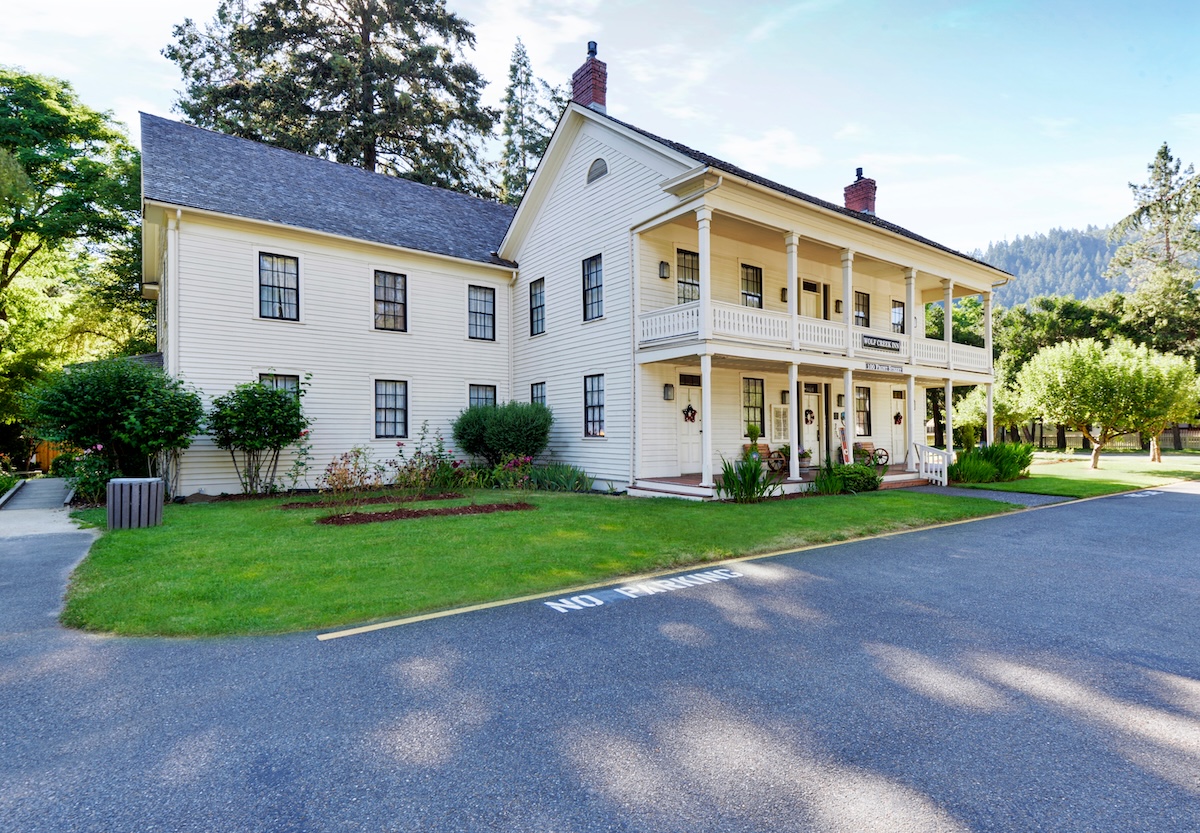
Oregon’s oldest hotel opened in 1883 as a stagecoach stop on the route between Portland and Sacramento. Jack London reportedly finished a novel here, and Clark Gable is said to have stayed while on a fishing trip.
The state of Oregon owns the inn, which operates as a state heritage site with restored period rooms and a restaurant. It sits just off Interstate 5, making it an easy stop on a West Coast drive. The Rogue River, known for whitewater rafting and salmon fishing, is a short drive away.
Pennsylvania: Logan Inn, New Hope (1727)
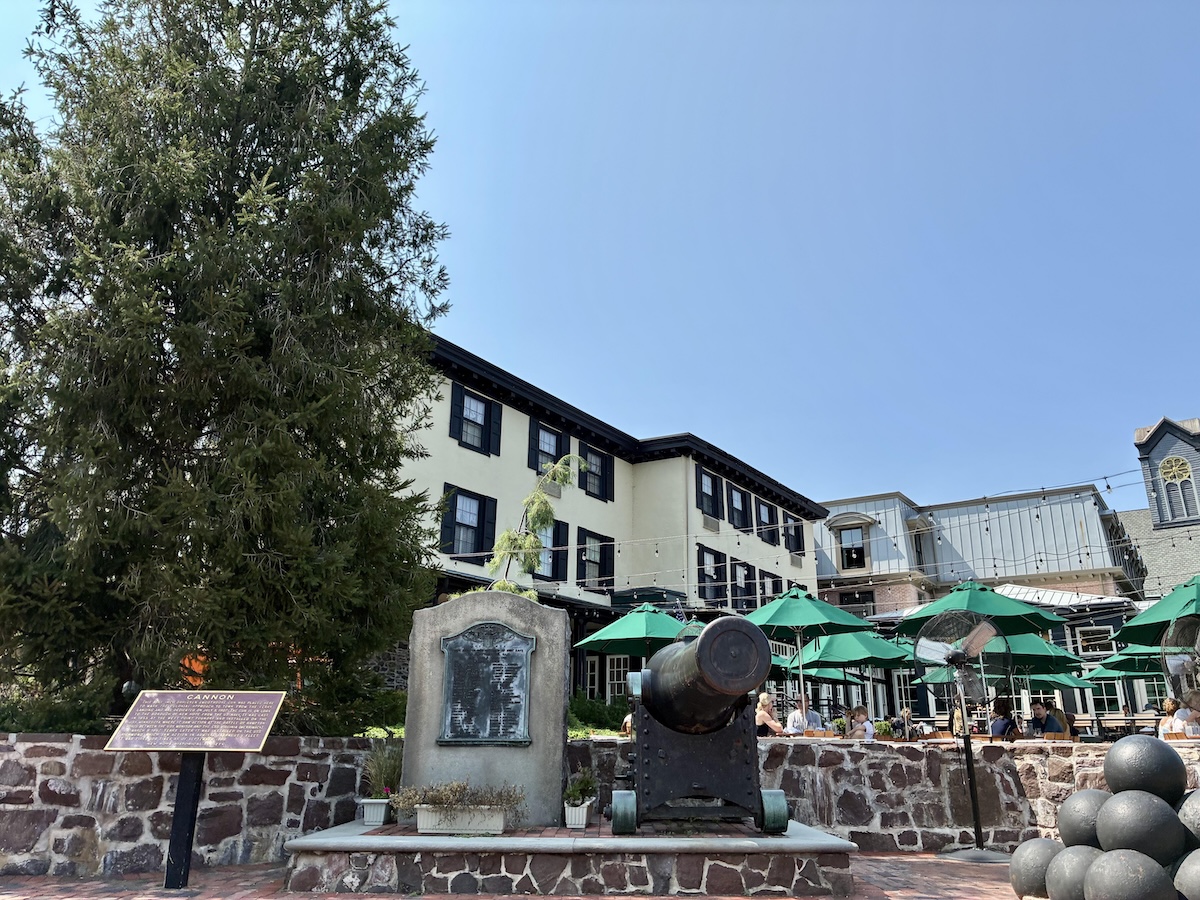
The Logan Inn began as the Ferry Tavern in 1727, serving travelers crossing the Delaware River into New Jersey. It’s among the oldest continuously operating inns in the country.
Rooms mix colonial details with modern comforts, and the tavern and patio are popular spots for a drink. New Hope is an artsy river town known for galleries, a lively theater scene, and quirky shops. Walk across the bridge to Lambertville, or ride the New Hope Railroad steam train through Bucks County countryside.
Rhode Island: The General Stanton Inn, Charlestown (1740)
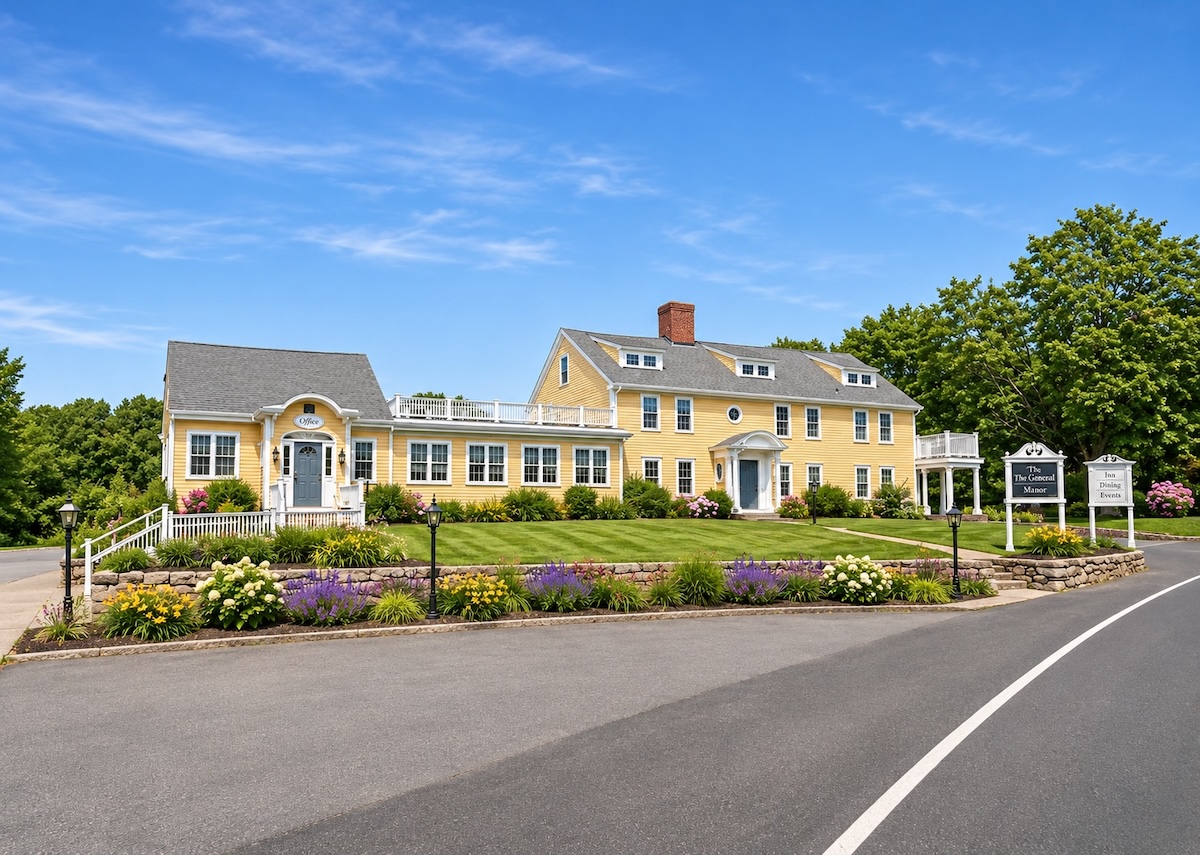
Joseph Stanton, a colonial landowner, opened his home as an inn around 1740 along the Post Road between New York and Boston. Later generations of the Stanton family made it a full-time stop for travelers.
Today, the inn offers guest rooms and a tavern with wide-plank floors and hand-hewn beams. Charlestown sits on Rhode Island’s southern coast, so you’re minutes from salt ponds and sandy beaches like East Beach. Watch Hill and Mystic, Connecticut, are within easy reach for a day of shopping and seafood.
South Carolina: Mills House, Charleston (1853)
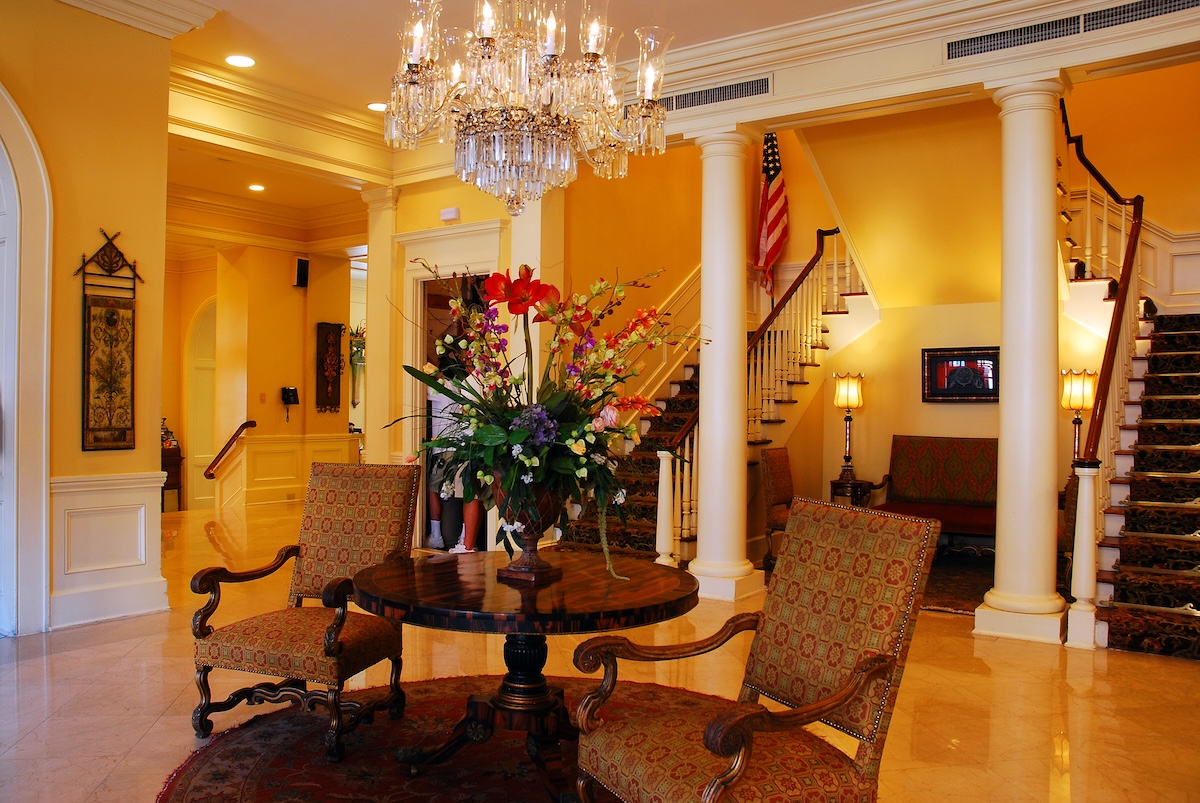
Charleston’s Mills House opened in 1853 and quickly became the city’s most fashionable hotel. Robert E. Lee stayed here in 1861 and reportedly watched a great fire sweep the city from a balcony.
Workers replaced the original building in the 1970s with a faithful reconstruction that kept its pink facade and iron balconies. The courtyard pool and bar offer pleasant escapes from the heat. You’re on Meeting Street in the historic district, within walking distance of the French Quarter, Rainbow Row, and the Battery.
South Dakota: Alpine Inn, Hill City (1888)
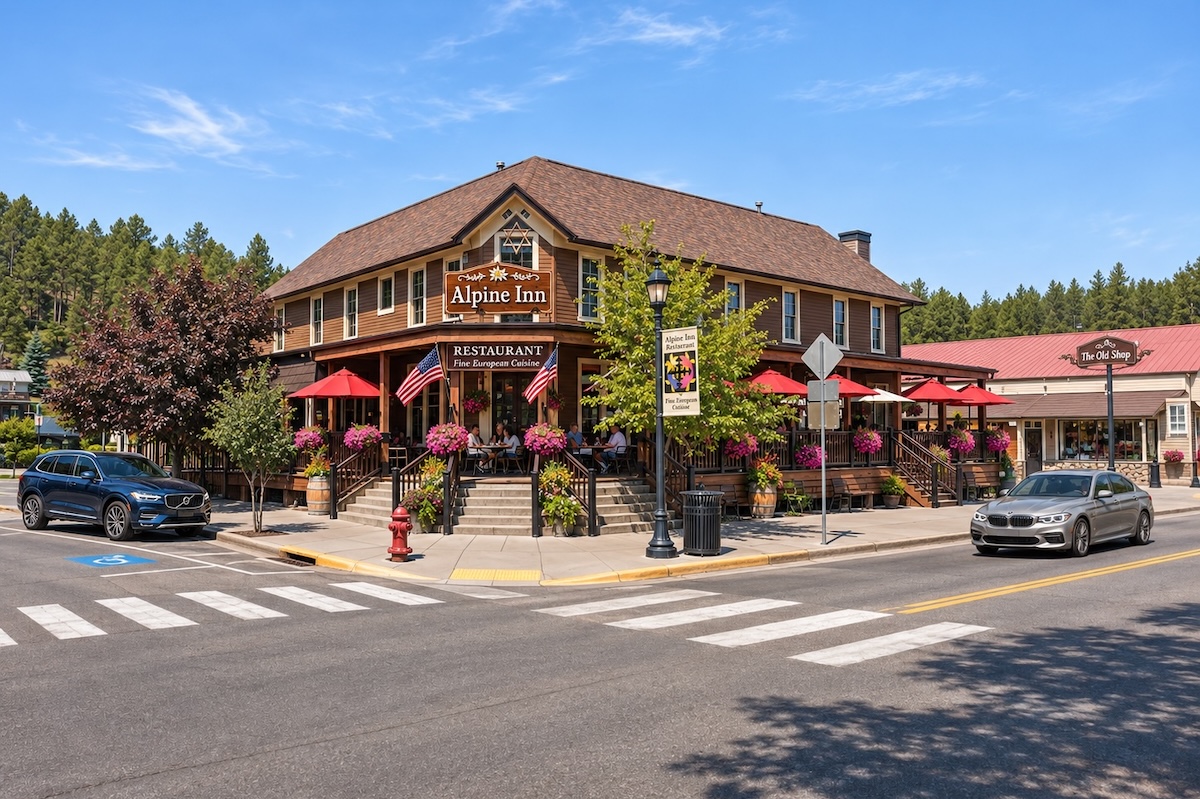
Originally the Harney Peak Hotel, the Alpine Inn served miners and railroad workers in the Black Hills during the 1880s. The building now houses a beloved restaurant, and the inn historically offered guest rooms upstairs.
The dinner menu is famously short, built around a single filet mignon offering, and lines form on summer evenings. Lunch leans German with schnitzel and sandwiches, and the desserts are a draw on their own. Hill City sits close to Mount Rushmore, Crazy Horse Memorial, and Custer State Park, so you’ll be well positioned for Black Hills sightseeing.
Tennessee: Hale Springs Inn, Rogersville (1824)
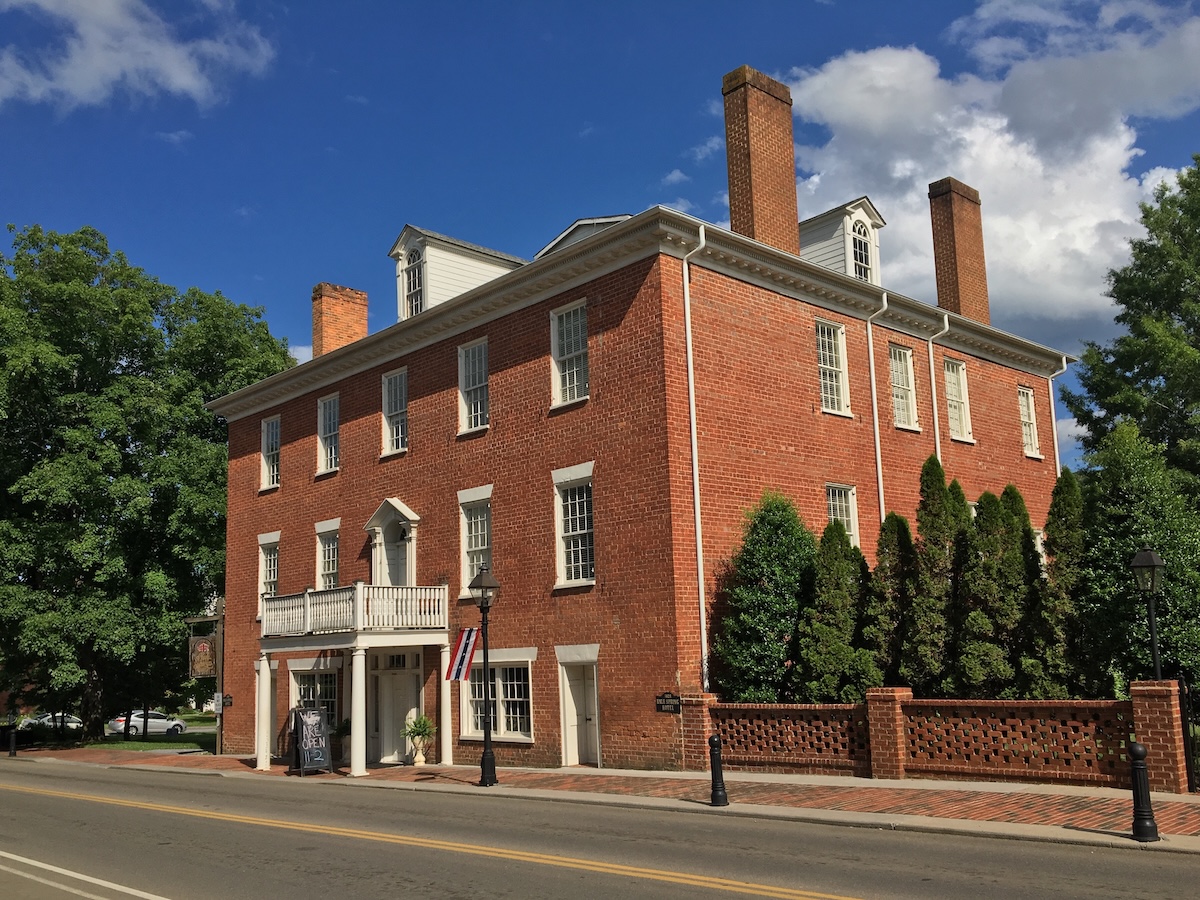
Tennessee’s oldest continuously operating inn opened in 1824 in Rogersville, one of the state’s oldest towns. People say Presidents Andrew Jackson, James K. Polk, and Andrew Johnson stayed here.
Rooms feature four-poster beds and period antiques, and a garden courtyard offers a quiet spot to relax. The inn’s restaurant serves Southern-inspired dishes in a historic dining room. Rogersville’s downtown historic district is compact and walkable, and the Great Smoky Mountains lie a scenic two-hour drive south.
Texas: Excelsior House Hotel, Jefferson (1858)
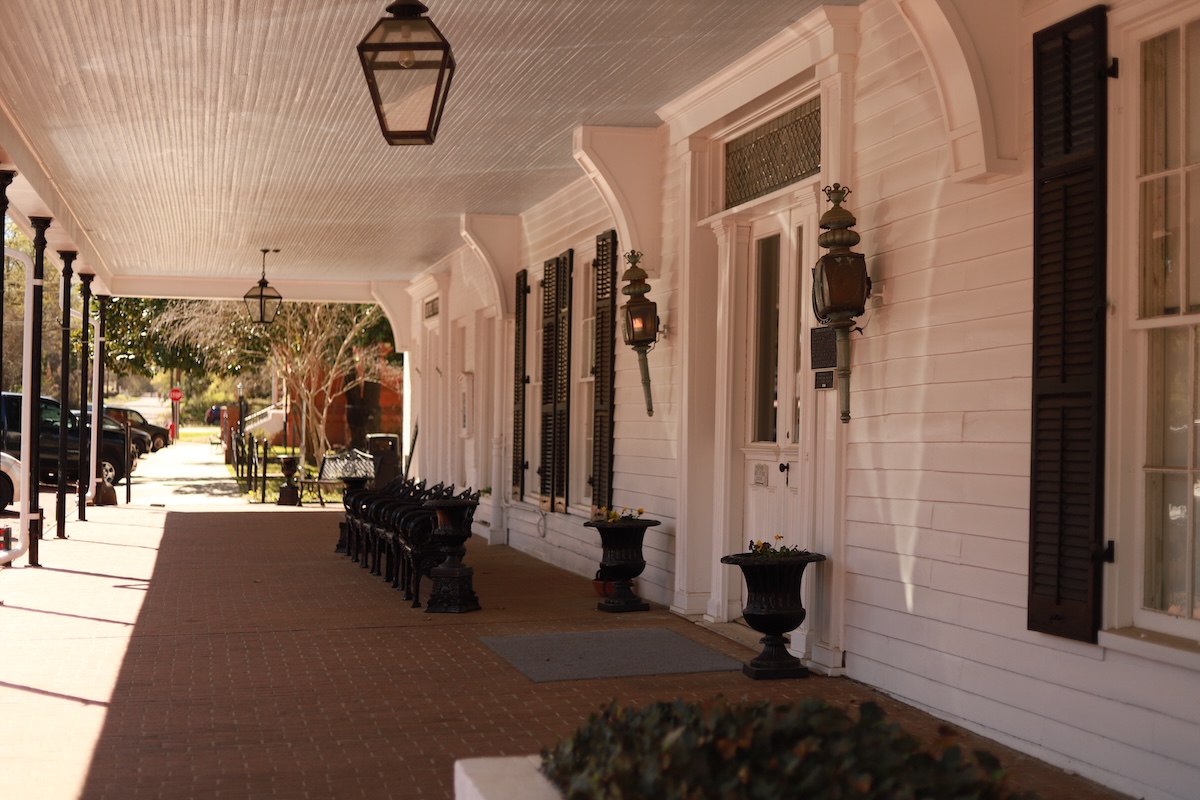
Jefferson was a booming river port in the 1850s, and the Excelsior House opened in 1858 to serve steamboat passengers. Guests reportedly included Ulysses S. Grant, Rutherford B. Hayes, and Oscar Wilde.
Lady Bird Johnson’s family ties to the area brought further attention, and a local garden club has preserved the hotel for decades. The plantation breakfast, with orange blossom muffins, is a tradition worth booking. Jefferson’s brick streets lead to antique shops and historic homes, and Caddo Lake’s cypress swamps are a short drive away.
Utah: Moore’s Old Pine Inn, Marysvale (1882)
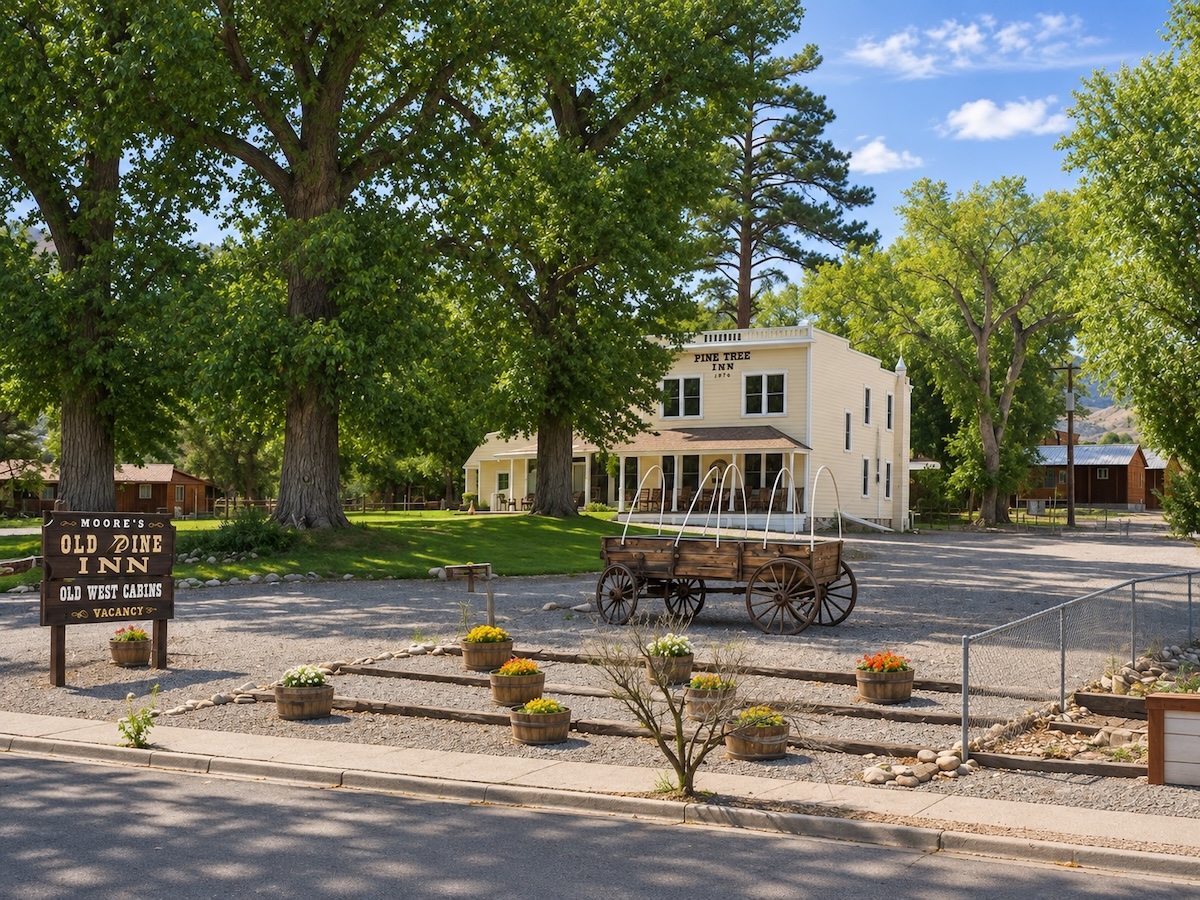
Mining strikes in the Tushar Mountains helped Marysvale grow, and Moore’s Old Pine Inn opened in 1882. Legend has it that Butch Cassidy and Western novelist Zane Grey both passed through.
Today the inn welcomes guests to cozy rooms and cabins, and outdoor adventurers love it. Marysvale sits along the Paiute ATV Trail, a vast network of backcountry routes through central Utah’s mountains. In winter, nearby Eagle Point offers skiing. Come fall, golden aspens brighten the surrounding hills.
Vermont: The Equinox Golf Resort & Spa, Manchester (1769)
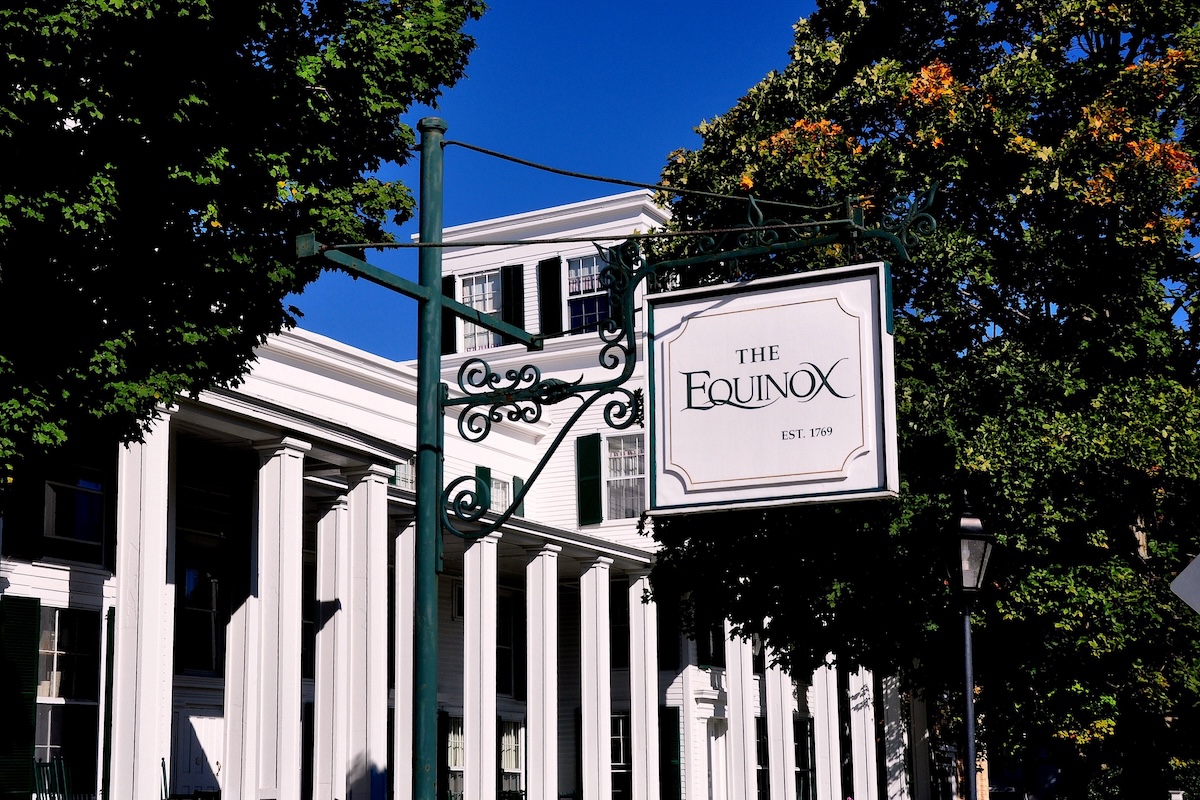
The Equinox traces its roots to the Marsh Tavern, which opened in 1769 and hosted meetings of the Green Mountain Boys. Mary Todd Lincoln and her sons stayed over the years, as did other presidential families.
Today it’s a full resort with a golf course, a spa, and Vermont’s original falconry school, where you can handle hawks. Mount Equinox rises behind the property, with hiking trails and scenic drives. Manchester’s outlet shops and Hildene, Robert Todd Lincoln’s summer home, are both a short drive away.
Virginia: Red Fox Inn & Tavern, Middleburg (1728)
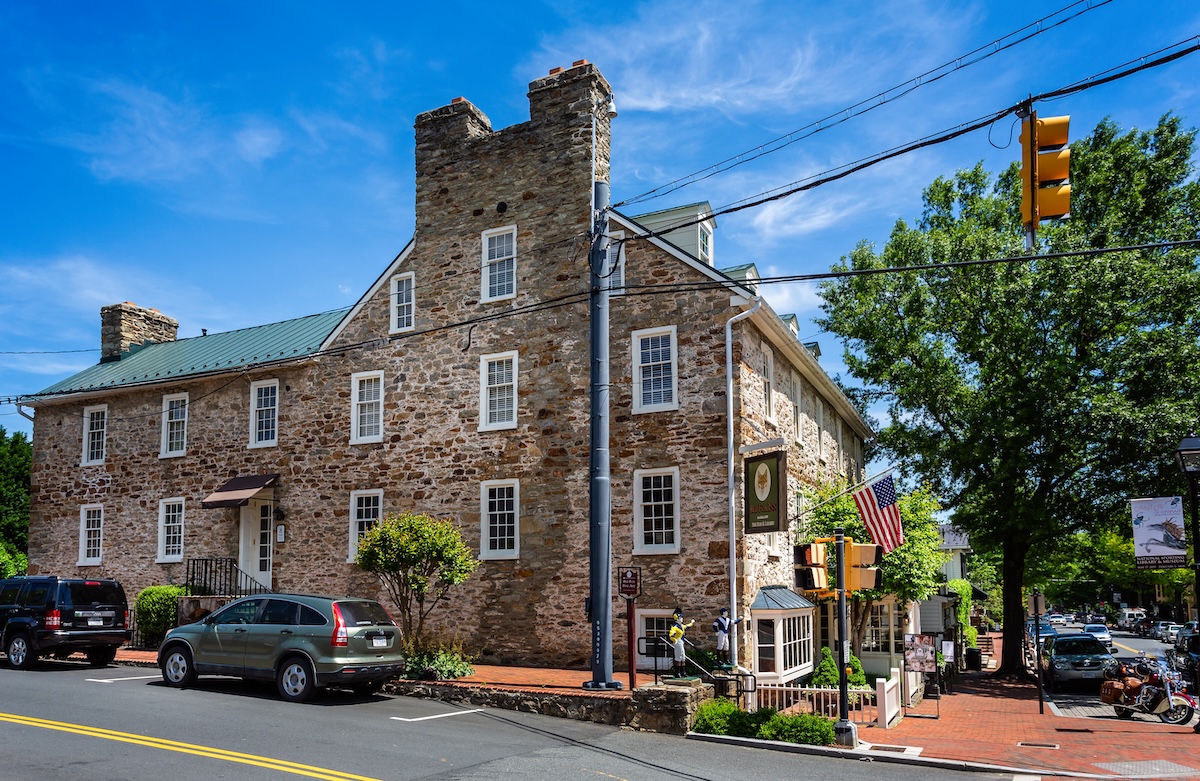
The Red Fox Inn began in 1728 as Chinn’s Ordinary, a stopping place on the road through Virginia’s hunt country. Confederate cavalry leader John Mosby and his Rangers feature in the inn’s Civil War history.
John F. Kennedy held press conferences here on weekends in Middleburg, and the tavern still draws a horsey local crowd. Rooms have colonial charm, with canopy beds and antiques. Spend your days touring nearby wineries, browsing Middleburg’s boutiques, or watching a steeplechase race in spring or fall.
Washington: Hotel de Haro, Roche Harbor (1886)
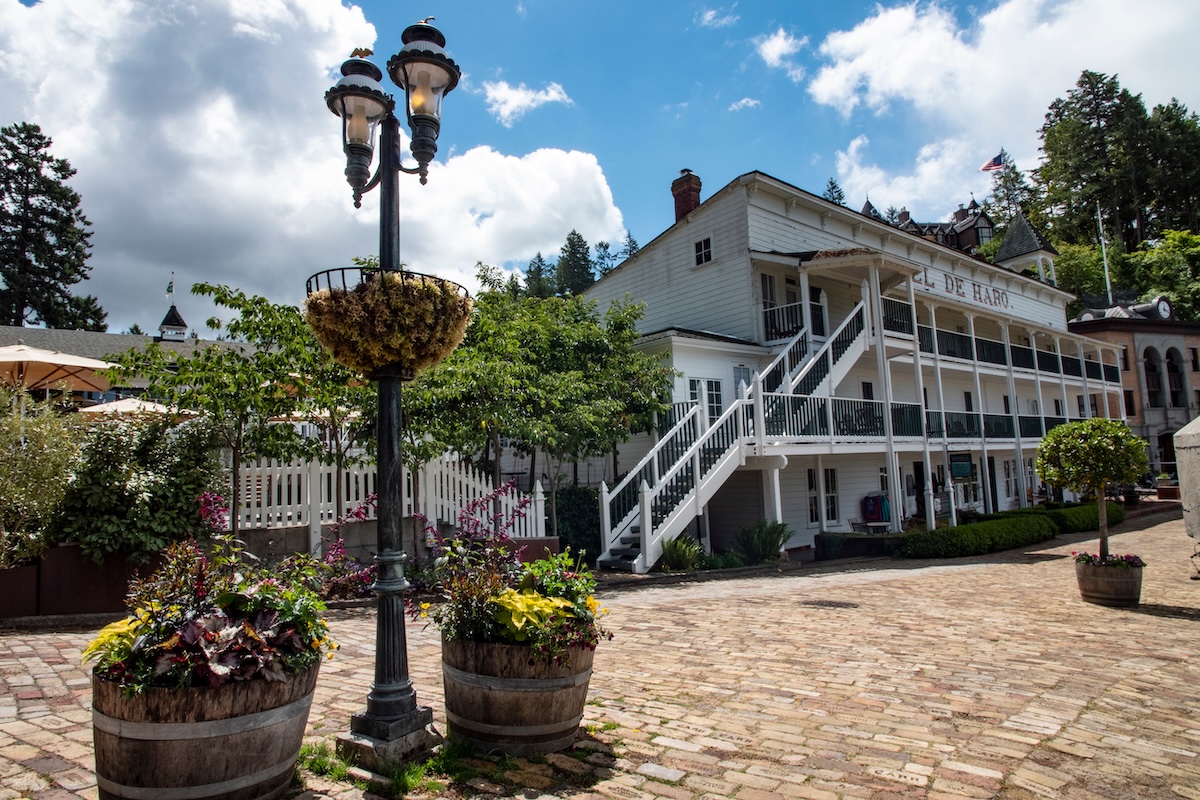
Lime-works owner John S. McMillin built Washington’s oldest hotel in 1886 at Roche Harbor on San Juan Island. Theodore Roosevelt visited, and his signature reportedly remains in the guest register.
Rooms are simple and historic, with shared baths in some cases, while the surrounding resort offers modern lodging. The harbor fills with yachts in summer, and locals have made the evening flag ceremony a tradition. Look for orcas from Lime Kiln Point State Park, or visit the sculpture park near the marina.
West Virginia: The Greenbrier, White Sulphur Springs (1809)
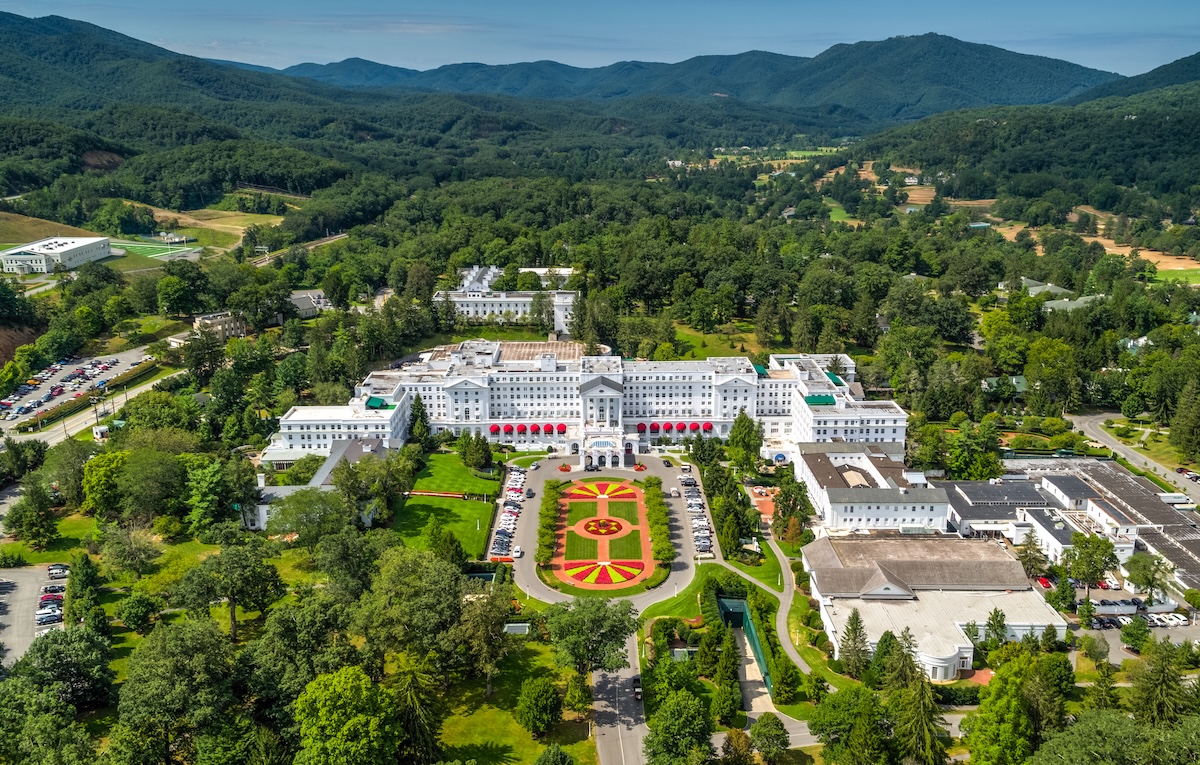
Visitors have soaked in the sulphur springs here since the late 1700s, and the resort began offering lodging in the early 1800s. The current main hotel opened in 1913, replacing the famed “Old White” building.
The Greenbrier hid a Cold War secret: a massive bunker built to shelter Congress. Officials revealed it in 1992, and it’s now open for tours. Dorothy Draper’s bold interiors give the resort its colorful style. You can golf championship courses, take a mineral bath at the spa, and try falconry or carriage rides on the vast grounds.
Wisconsin: Stagecoach Inn, Cedarburg (1853)
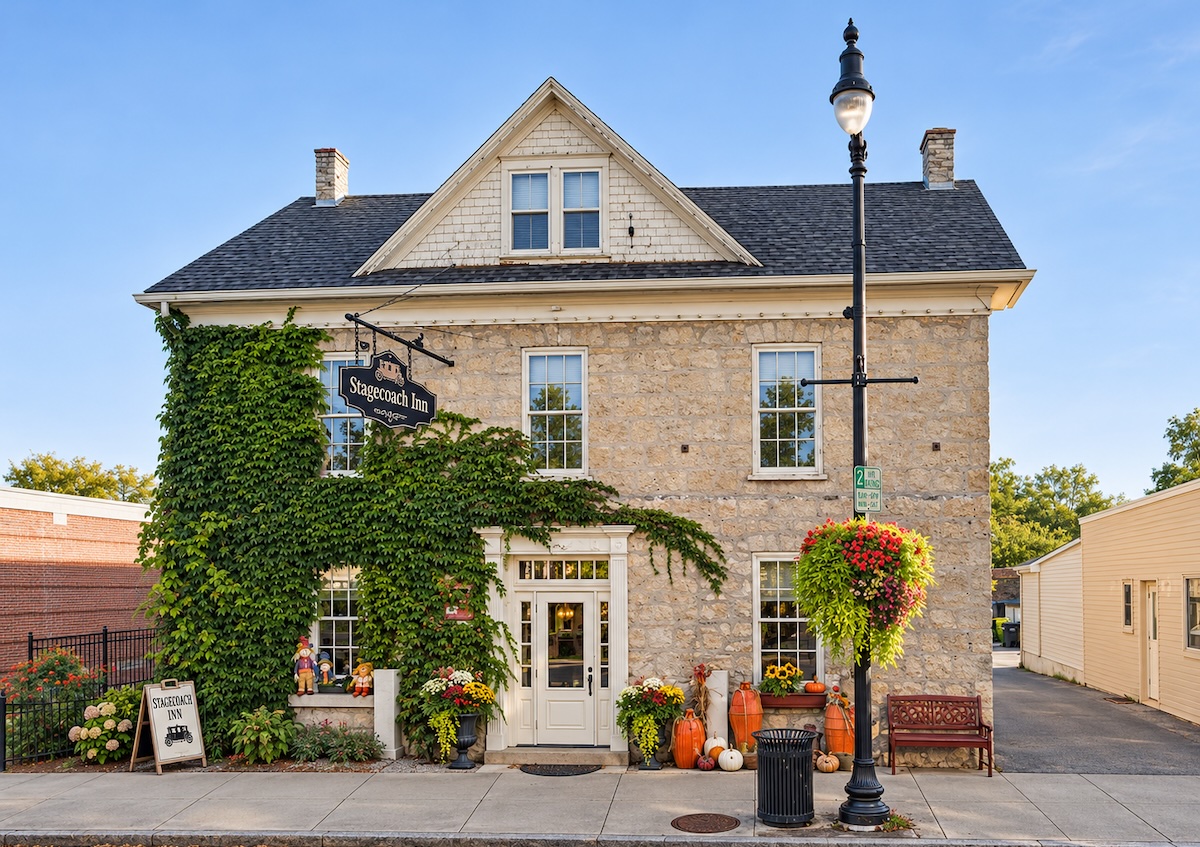
Builders used local stone to construct Cedarburg’s Stagecoach Inn in 1853 in the Greek Revival style. It served travelers on the stagecoach route between Milwaukee and Green Bay.
Now a bed-and-breakfast, the inn offers cozy rooms with antiques and a pub on the ground floor. Cedarburg’s downtown is a historic district, with shops, a winery in an old mill, and covered-bridge country nearby. Milwaukee is just 20 miles south, so you can pair a quiet stay with a day trip to the lakefront.
Wyoming: Historic Occidental Hotel, Buffalo (1880)
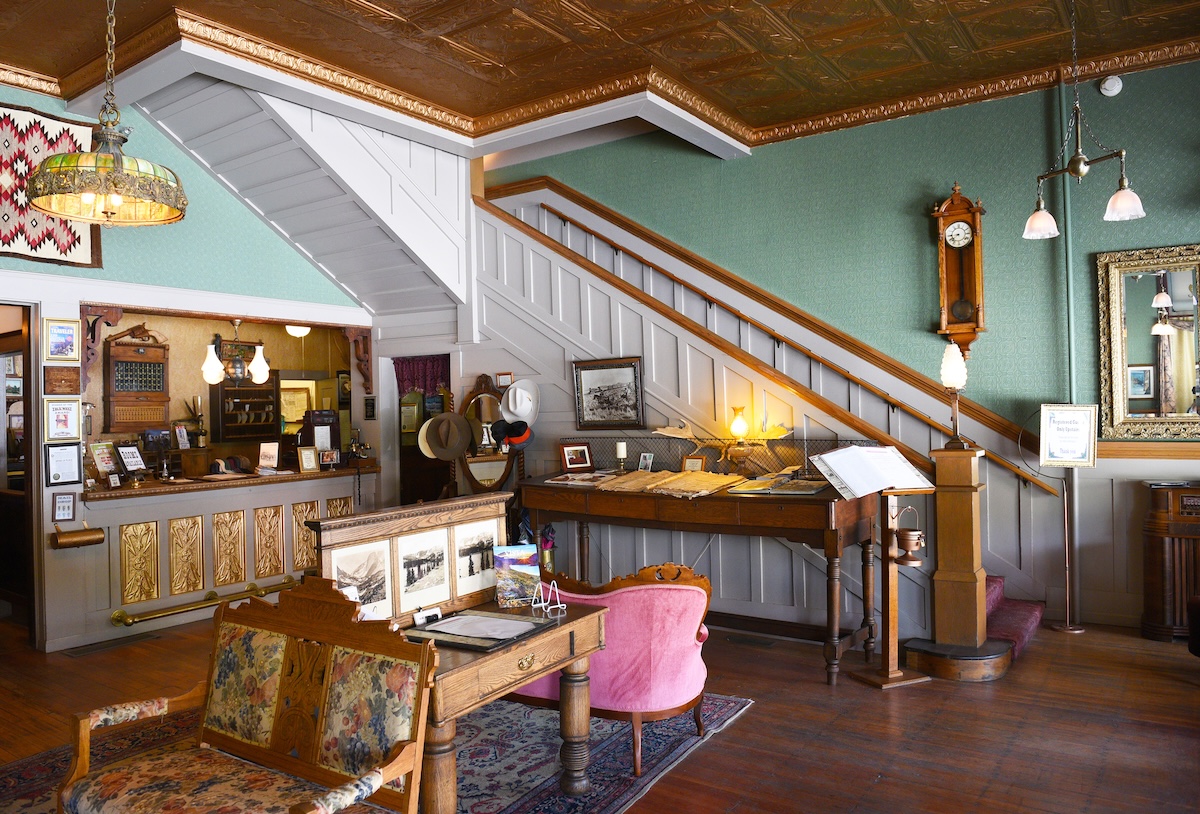
Buffalo’s Occidental Hotel opened in 1880 as a log cabin, then grew into a grand frontier hotel. Owen Wister set scenes from his novel “The Virginian” here. Butch Cassidy, Theodore Roosevelt, and Calamity Jane are also part of its lore.
The saloon still has its original back bar and pressed-tin ceiling, with bullet holes visible overhead. The rooms bear the names of famous guests and feature period furnishings. The hotel sits at the foot of the Bighorn Mountains, and the Cloud Peak Skyway scenic byway makes for a stunning drive west toward Ten Sleep.