
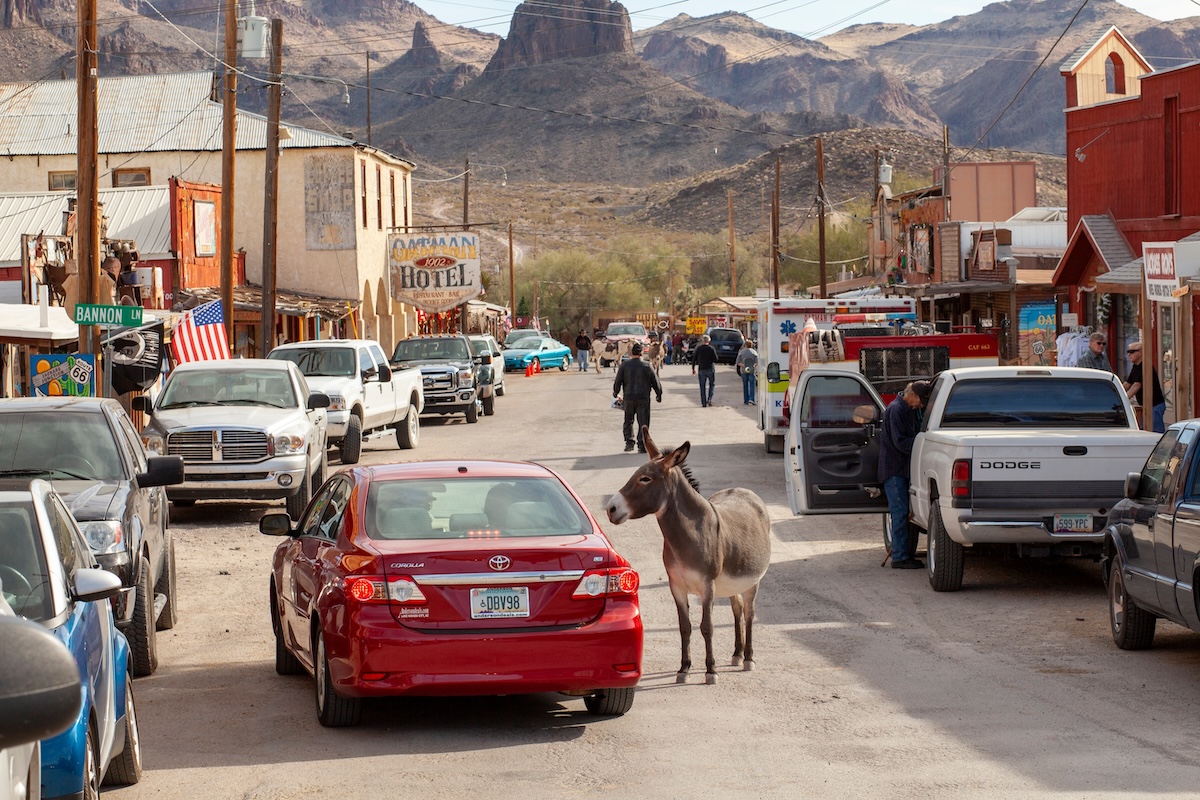
Somewhere in Arizona’s Black Mountains, about 30 miles southwest of Kingman, a former gold mining camp sits along a crumbling stretch of Historic Route 66. Oatman has a population of roughly 100 people, a herd of wild burros that wander Main Street like they own it, and daily gunfight reenactments staged on wooden sidewalks. It’s not a museum. It’s not a theme park. It’s a real town that never quite emptied out.
You get to Oatman by driving one of the wildest sections of the old Mother Road—a narrow, twisting strip of asphalt that climbs through Sitgreaves Pass with sharp turns and sudden drop-offs. The scenery alone makes the detour worth it. Then you round a bend, and there it is: dusty storefronts, a two-story hotel with walls covered in signed dollar bills, and burros nosing tourists for carrots right in the middle of the street.
If you’re driving between Kingman and Needles, maybe heading to or from Lake Havasu City, or plotting out a longer Route 66 road trip, Oatman is one of those stops that only takes an hour or two but lingers in your memory for years.
Why Oatman Is One Of Route 66’s Most Memorable Stops
Oatman got its name from Olive Oatman, a young woman captured during an att
Most ghost towns along Route 66 have either vanished or turned into something slick and commercial. Oatman is neither. You walk the same Main Street miners used in 1916, past weathered wooden storefronts that now hold gift shops, a saloon, and a tiny museum. The buildings look beat up and authentic, not rebuilt or polished up for tourists.
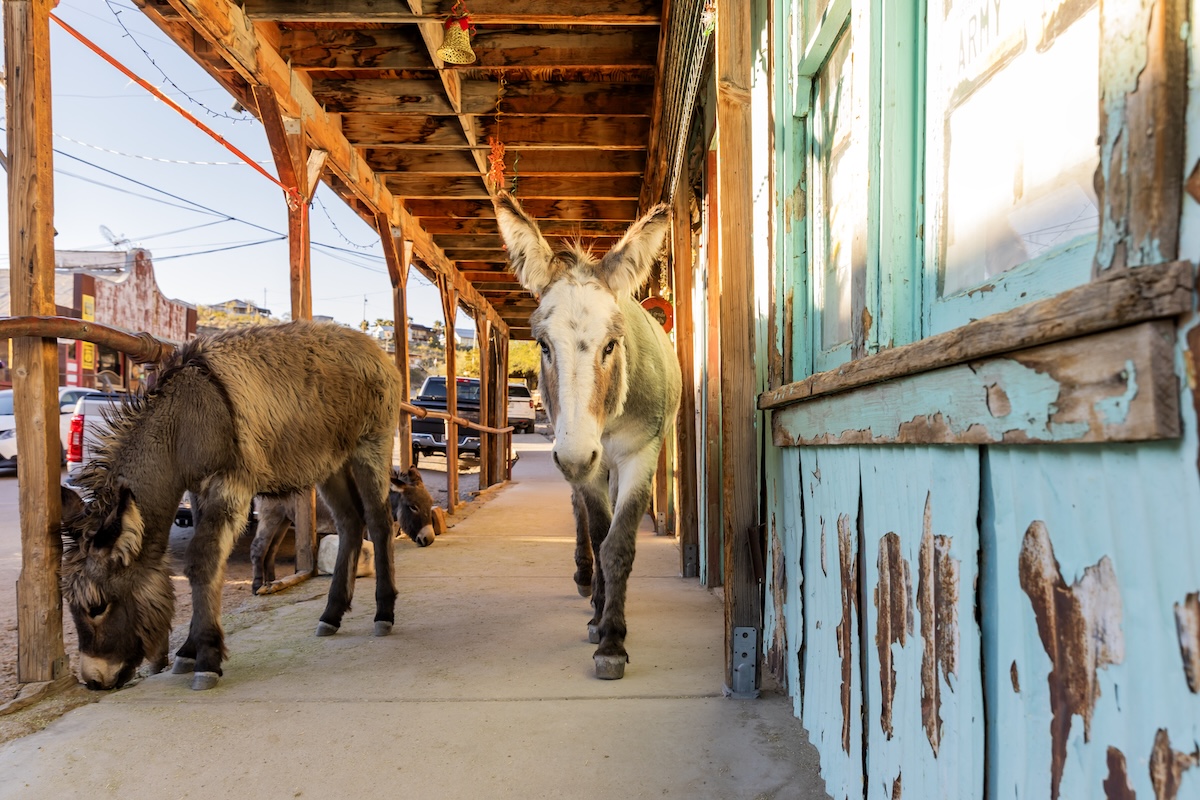
The wild burros grab your attention first. These animals descend from the pack burros miners let loose after the gold ran out. Now they just roam through town, nudge your pockets, and pose for photos. Local shops sell feed you can give them. One burro has even been named honorary mayor.
Every day, a local troupe puts on gunfight reenactments right in the street. They ham it up just enough to keep kids entertained and adults grinning. The shootouts are loud, quick, and they’re a blast to watch from the shade of a porch.
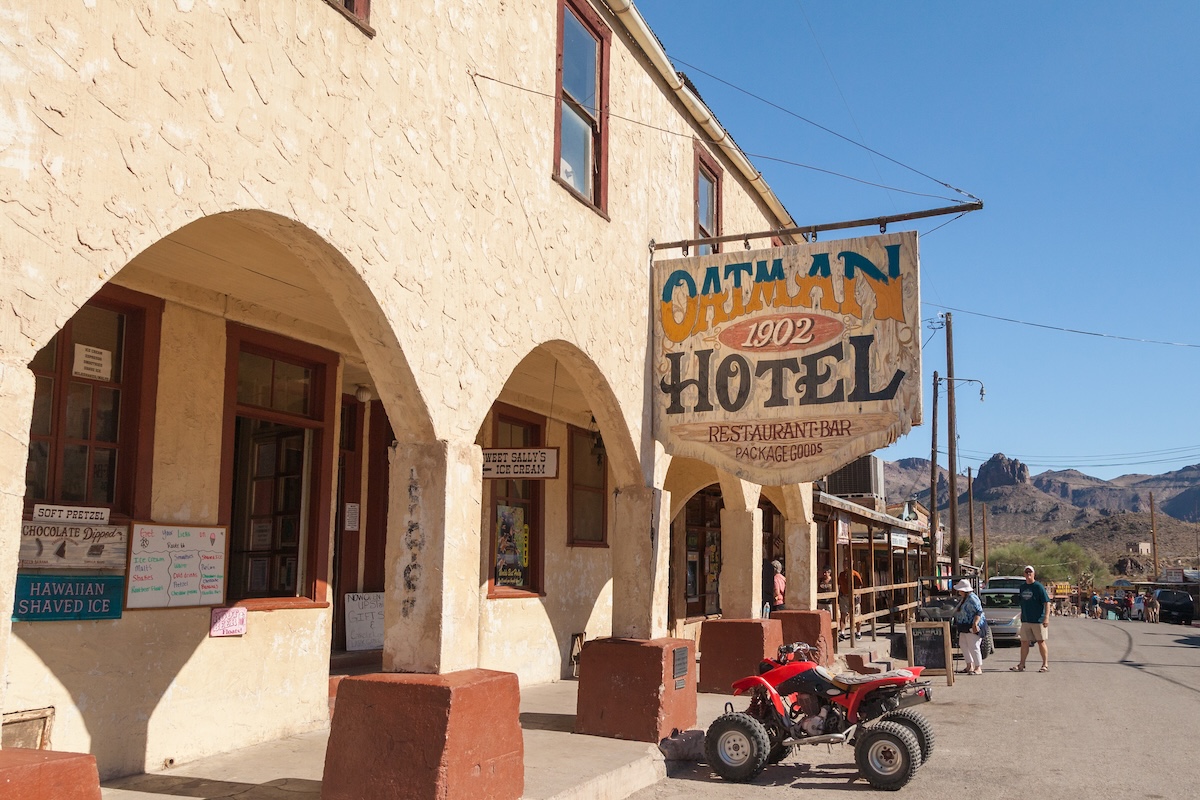
The historic hotel—built in 1902 as the Durlin Hotel—stands out as the town’s landmark. Inside, thousands of dollar bills paper the walls, a tradition miners started when they’d tack up their drinking money for safekeeping. Clark Gable and Carole Lombard supposedly spent their honeymoon night here in 1939. Maybe that’s true, maybe not, but it’s a good story either way.
The Mining Story Behind The Town
Oatman got its name from Olive Oatman, a young woman captured during an attack on her family in 1851 while they traveled through the Arizona Territory. She lived among the Yavapai and then the Mohave for five years before her release near the area that would end up bearing her family’s name. Early prospectors in the Black Mountains of Mohave County named one of their claims after her way back in the 1860s.
The town itself didn’t really form until much later. In 1915, prospectors Ben Taddock and Jim Eardley hit a rich gold vein that became the Tom Reed Mine. Word got out quickly. In just a year, a mining camp turned into a boomtown with about 3,500 people, tents, and wooden buildings scattered up the hillsides.
The United Eastern Mine came next, and along with the Tom Reed, the district pumped out more than $40 million in gold during its peak years—well over $700 million in today’s money. Miners showed up from all over the West. Hotels, saloons, and boarding houses sprang up along the main street.
By the early 1920s, gold mining in Oatman ranked among the biggest operations in the region. But then the veins dried up. During World War II, the federal government shut down non-essential mines, and most people packed up and left. Oatman almost faded away.
Route 66 kept the place on the map. Travelers rolled through on the Mother Road, and a few folks stuck around to serve them. That thin thread connecting mining and highway traffic is probably the only reason you can still stroll through Oatman today instead of just reading about it somewhere.