
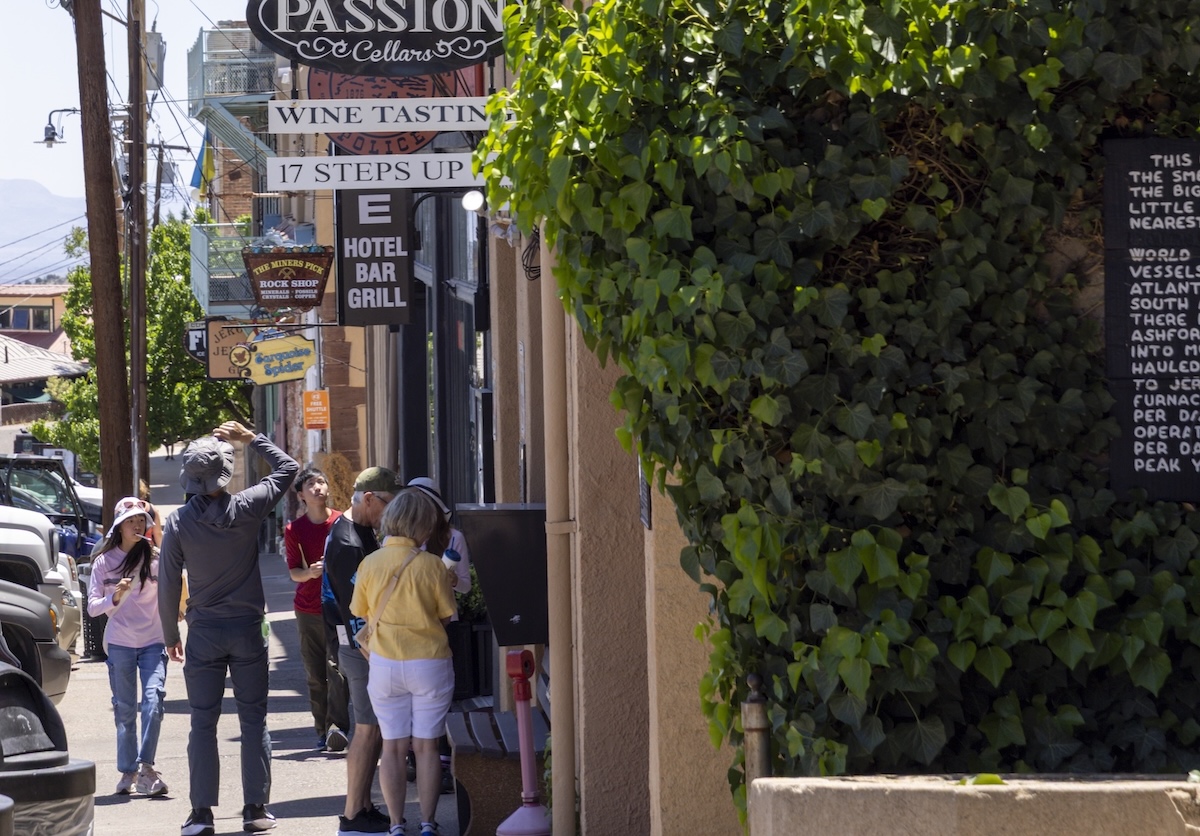
Once a booming mining settlement and later nearly abandoned, this town has reinvented itself as one of the most charming destinations in the Southwest. History, creativity, and spectacular scenery all come together here
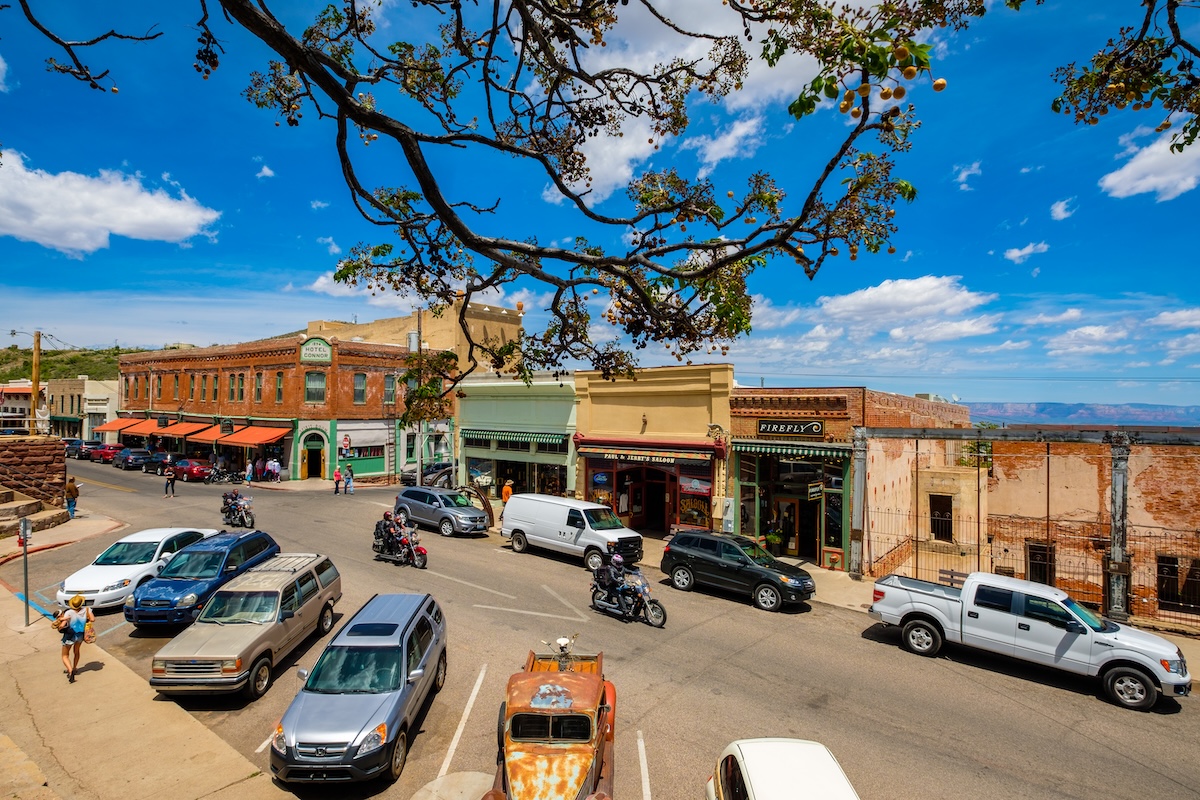
The town clings to a steep 30-degree slope above the Verde Valley, with old brick storefronts and mining-era buildings stacked along switchback streets that seem to defy gravity. Today, around 450 people call Jerome home—nothing like the 15,000 who crammed into this copper camp during its heyday.
Most people swing by Jerome as a day trip from Sedona, Prescott, or Cottonwood. The town sits right in central Arizona, wedged between those bigger spots, so it’s a natural stop if you’re road-tripping through the Verde Valley. What you’ll find is a compact, walkable historic district packed with galleries, tasting rooms, quirky little museums, and cafés. The views go on forever. The place feels like part ghost town, part art colony, and—honestly—totally its own thing.
Getting There On State Route 89A
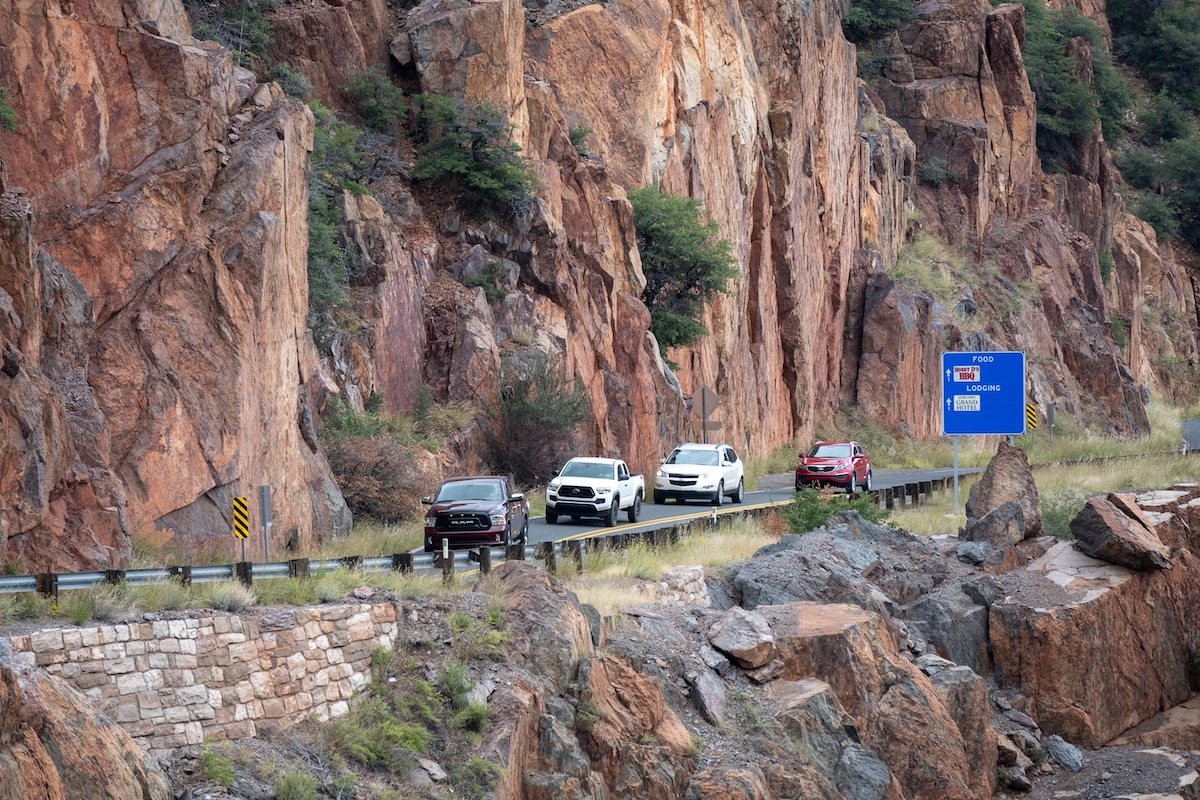
State Route 89A is basically your only way into Jerome, and the drive sets the mood straight away. Coming from Sedona, you head southwest through Cottonwood and Clarkdale, about 28 miles altogether. The road climbs out of the valley, winding through scrubby hills, and then suddenly those first rooftops appear, almost hanging on the slope above. If you’re coming from Prescott, it’s roughly 35 miles northeast, crossing over Mingus Mountain. That route’s got some wild switchbacks and tops out above 7,000 feet before dropping you down into town.
Either way, the scenery’s legit. The Prescott approach feels steeper and more dramatic, with thick pine forest opening up to big views as you descend toward Jerome. From Sedona, it’s a bit more mellow—rolling through the Verde Valley wine corridor before the road kicks up. Parking can be a pain, especially on weekends, so showing up before mid-morning helps a lot. Street spots line the main drag, and there’s a small public lot in the center of town. Once you’ve parked, pretty much everything you’d want to see is within walking distance—though, fair warning, “walking distance” here usually means uphill.
From Copper Camp To Former Ghost Town
Jerome started out as a scrappy mining camp back in the 1870s, but things got wild once investors realized just how much copper hid in Cleopatra Hill. William Clark, a Montana senator and mining tycoon, snapped up claims that turned into the United Verde Mine. That operation—run by the United Verde Copper Company—pushed Jerome into the ranks of the top copper producers in North America. James Douglas came along and opened the Little Daisy Mine nearby; his family mansion, now the Douglas Mansion at Jerome State Historic Park, still draws more visitors than anywhere else in town.
At its peak, Jerome churned out more than a billion dollars in copper, gold, silver, and zinc. The population exploded, saloons and brothels took over the streets, and folks called it the “Wickedest Town in the West.” Fires tore through the old wooden buildings over and over, so the Jerome Volunteer Fire Department had their hands full. Eventually, people got tired of rebuilding and switched to brick and concrete. Fighting flames on those steep hills? Not something I’d want to try, honestly.
By 1953, both the United Verde Company and the Little Daisy Mine closed their doors, and Jerome’s population plummeted to about 50 people. The place nearly emptied out, picking up that eerie ghost town vibe. But in the 1960s and ’70s, artists, writers, and small business dreamers started showing up, lured by low rents and those killer views. Now, Jerome’s creative spirit feels just as strong as its mining roots—galleries, wine bars, and quirky little shops fill the old buildings that once echoed with the noise of a copper boomtown.