
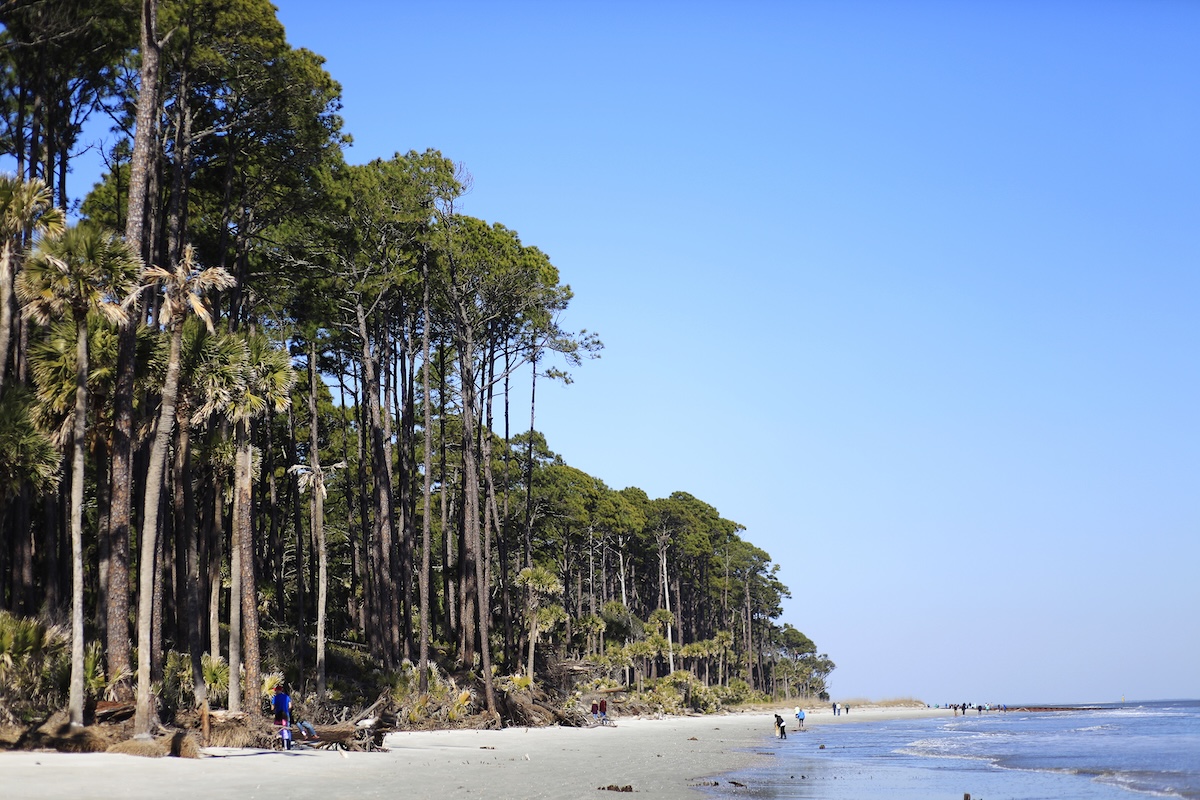
Somewhere along the South Carolina coast, tucked between the resort islands and the mainland, there’s a 5,000-acre barrier island that feels almost untouched. No high-rises. No boardwalk shops. Just five miles of open beach, a forest packed with palmetto and live oak, and a 19th-century lighthouse poking above the trees. That’s Hunting Island State Park. More than a million people visit every year, making it South Carolina’s most popular state park—though it doesn’t feel crowded.
About 15 miles east of Beaufort, Hunting Island is easy to reach by car. It works for a quick day trip, a weekend of camping, or a stop on a longer Lowcountry road trip. The park packs a surprising amount of variety into a single place. You can walk from a semitropical maritime forest to salt marsh to open Atlantic beach in just a few minutes. Eight different ecosystems sit side by side, supporting loggerhead sea turtles, alligators, painted buntings, and dolphins just offshore.
What really sets Hunting Island apart from glitzier beach spots? Balance. You get honest-to-goodness coastal scenery without the overbuilt vibe, solid outdoor activities that don’t require a ton of experience, and a historic lighthouse you can actually climb. Here’s what to know before you head out.
Beaches And Coastal Views
The main beach runs for about five miles along the Atlantic side of the island. It’s wide, undeveloped, and dunes topped with sea oats line the shore instead of condos. A recent beach renourishment project brought back sand that storms had swept away over the years, so the shoreline feels generous again.
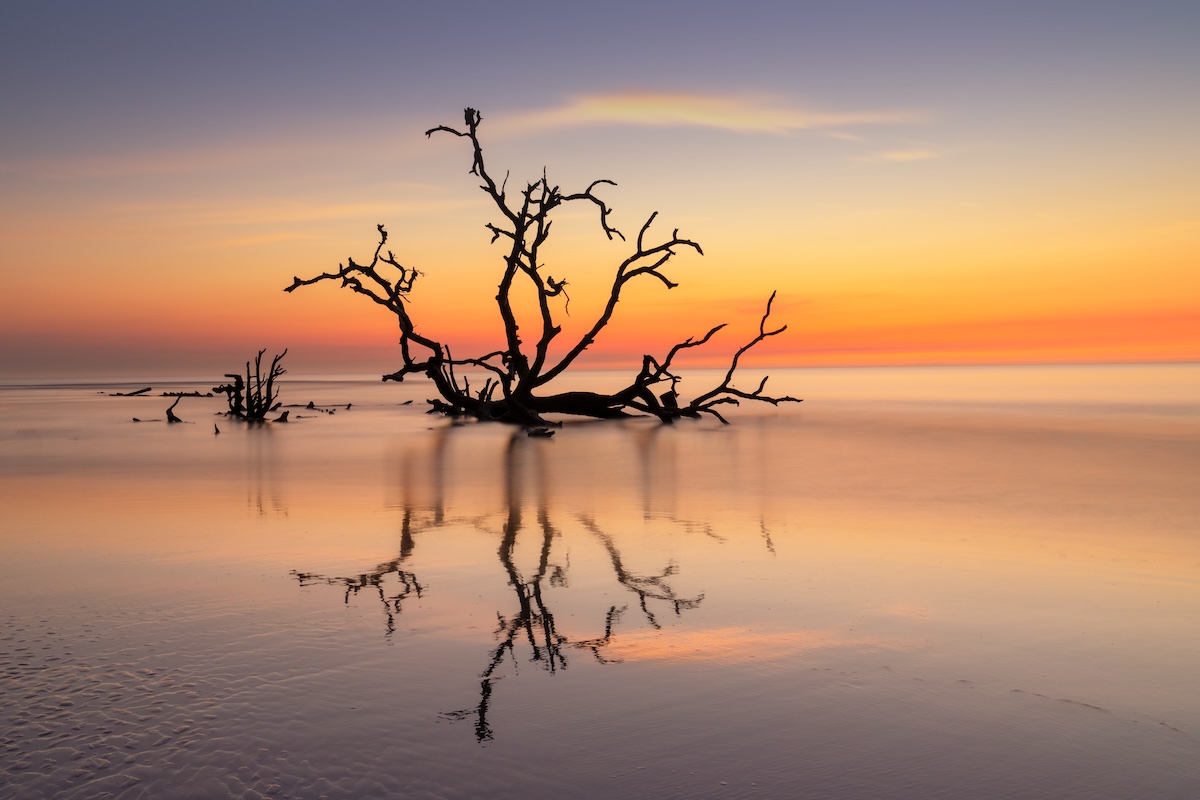
If you walk south, you’ll stumble onto Boneyard Beach. Over time, the forest has surrendered to the ocean here, leaving behind sun-bleached trees standing in the surf. It’s easily one of the most photographed places on the South Carolina coast, and it looks different every time the tide rolls in or out.
The water’s warm enough for swimming from late spring through early fall. You’ll often see folks fishing from the park pier—redfish, flounder, and whiting show up depending on the season. After storms, you might find some decent shells, and in spring, horseshoe crabs scuttle along the waterline.
On the island’s western side, salt marsh and tidal creeks open up the views beyond the beach. The Marsh Boardwalk gives you a half-mile path through maritime forest out to the marsh’s edge, and the sunset light out there is honestly worth the short stroll. If you want to get out on the water, kayak and boat tours leave from nearby St. Helena Island, and sometimes you’ll spot dolphins up close.
Lighthouse And Historic Character
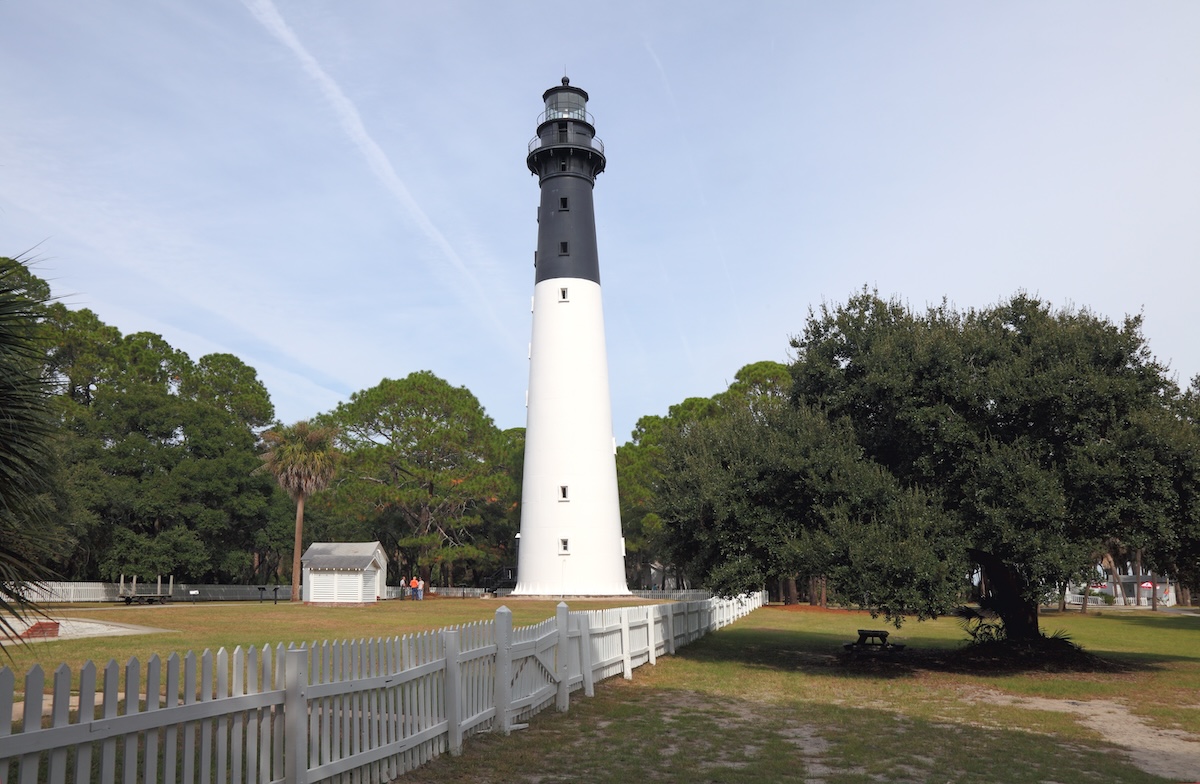
The Hunting Island Lighthouse first went up in 1859, guiding ships along the coast between Charleston and Savannah. The original brick tower didn’t make it through the Civil War. They tried again in 1875, this time using cast iron panels so the lighthouse could be taken apart and moved if needed. Sure enough, in 1889, crews hauled it about a mile inland to escape the creeping shoreline. That’s where it still stands—weathered but stubborn as ever.
If you’re up for it, you can climb all 167 steps to the top. It’s the only lighthouse in South Carolina that usually lets the public make the climb. The spiral stairs are tight and pretty steep, so take your time—no shame in pausing for breath. The view at the top is a knockout: Atlantic waves, marshland, the whole sweep of the barrier island. On a clear day, you might spot Fripp Island and Harbor Island off in the distance.
Workers tackled a $4.75 million restoration, fixing structural cracks, leaks, and shoring up the staircase. The lighthouse reopened after that, and honestly, the climb feels worth it, even if your legs complain later. The tower landed a spot on the National Register of Historic Places in the early 1970s.
The park has been a state park since the late 1930s, shaped in part by Civilian Conservation Corps crews. You can feel that legacy—it’s more about conservation than flashy tourism. Beaufort, just a quick 20-minute drive away, brings its own vibe with old-school architecture, waterfront restaurants, and streets made for wandering. The two together? Hard to beat for a day trip or a lazy weekend.