
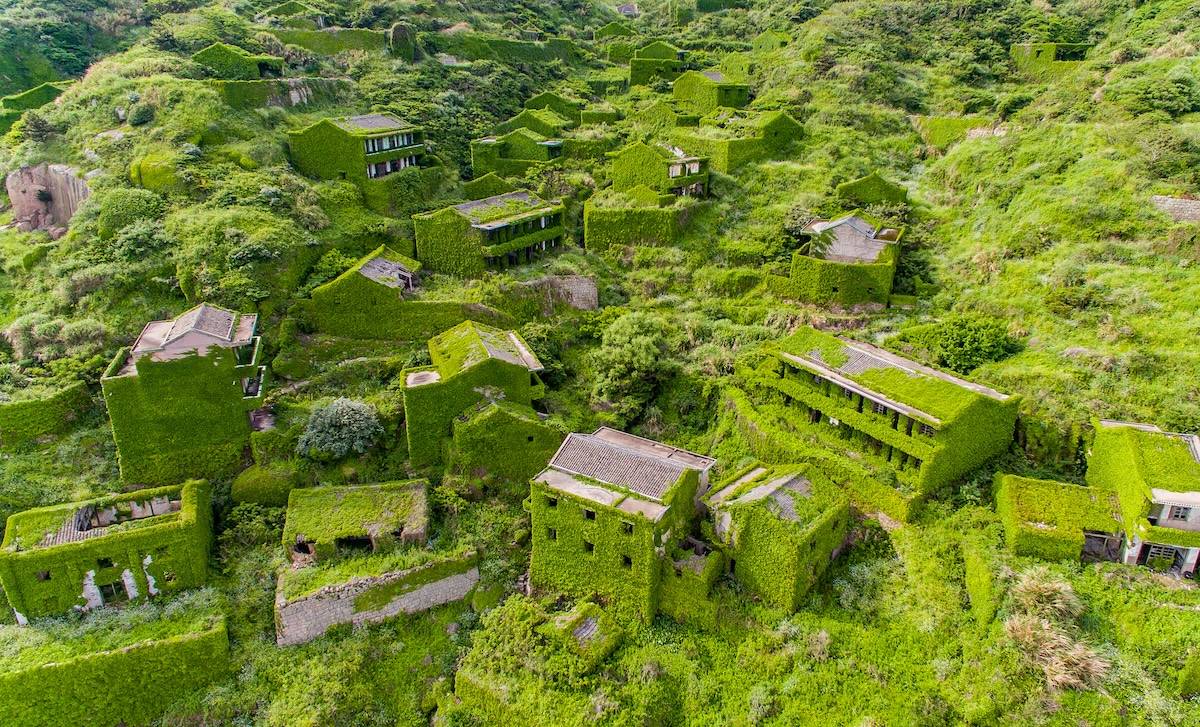
Somewhere on a small island, entire rows of houses are slowly vanishing under a thick coat of ivy. Rooftops just melt into the hillside. Walls almost disappear behind curtains of creeping vines. Windows peek out from dense green like half-closed eyes. This is Houtouwan, China—an abandoned fishing village on Shengshan Island that’s become one of the most photographed ghost towns in the world.
About 40 miles east of Shanghai in the Shengsi Archipelago, Houtouwan sits on the northern face of the island, its concrete buildings spilling down a steep slope toward the water. The village once supported around 2,000 to 3,000 people. Now, no one calls it home. What pulls people in these days is the sight of nature steadily swallowing an entire settlement, stone by stone, stair by stair.
If you’ve ever wondered what happens when people just leave a place behind, well, Houtouwan might be one of the clearest—maybe even strangest—answers out there.
A Village Reclaimed By Nature
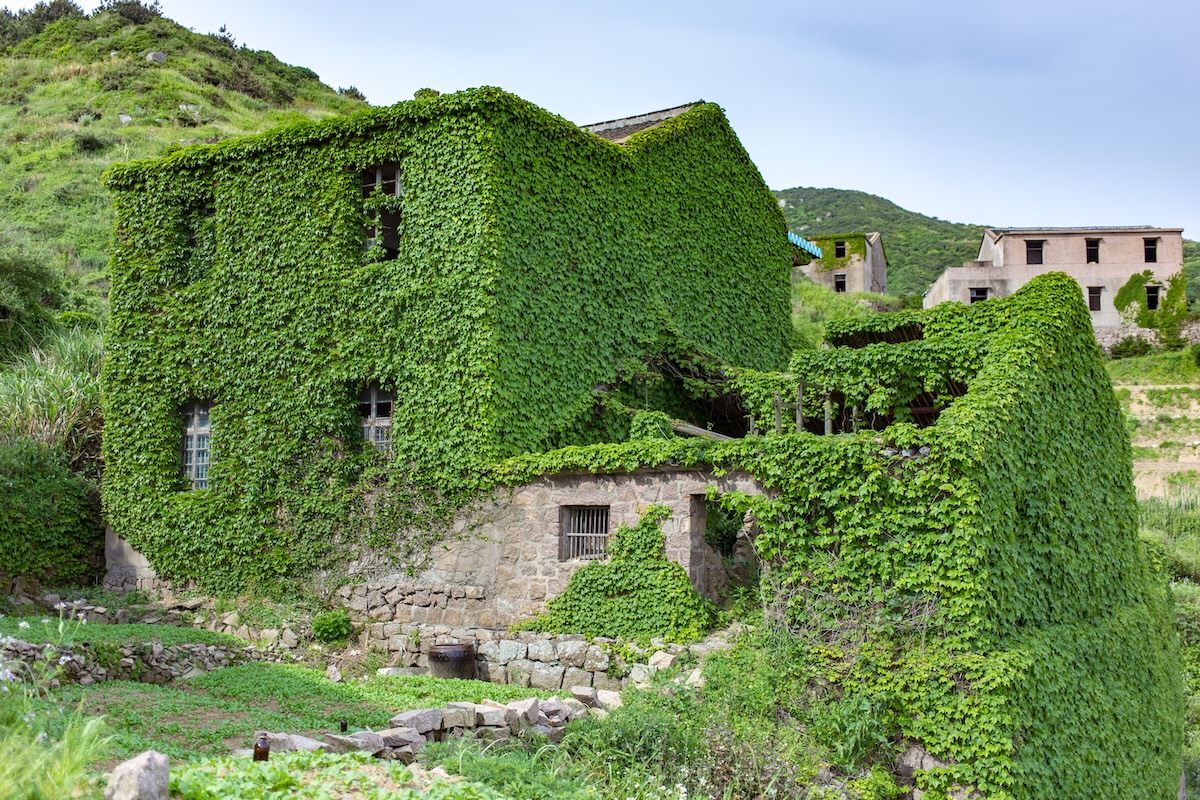
The first thing that hits you when you crest the hill above Houtouwan? Color. Everything is green. Ivy and creeping plants smother the old houses so thoroughly that it’s sometimes hard to tell where the hillside ends and the buildings begin. Moss softens the edges of stairways. Ferns muscle their way through cracks in the concrete. The whole effect isn’t really spooky—it’s just quietly stunning.
You can wander along narrow paths winding between the old structures, though footing gets tricky and the terrain is steep. Honestly, wear shoes with some grip. The best time for photos is usually between 7 and 9 in the morning, when mist hangs over the ruins and the vines look their richest. By midday, the contrast kind of fizzles out.
What makes the scene so weirdly compelling is how dense it all is. This isn’t just one ruin with a few weeds. It’s a whole village—dozens of buildings, all packed together, every one wrapped in the same thick green. The old schoolhouse still has textbooks visible through its windows, now framed by moss. Crumbling steps near the waterline just trail off toward the sea.
The vegetation isn’t tropical jungle. It’s coastal growth—persistent, slow, the kind of plants that just kept going after the last residents left. The result feels less like catastrophe and more like a quiet, ongoing process. Nature just… didn’t stop.
From Fishing Community To Empty Streets
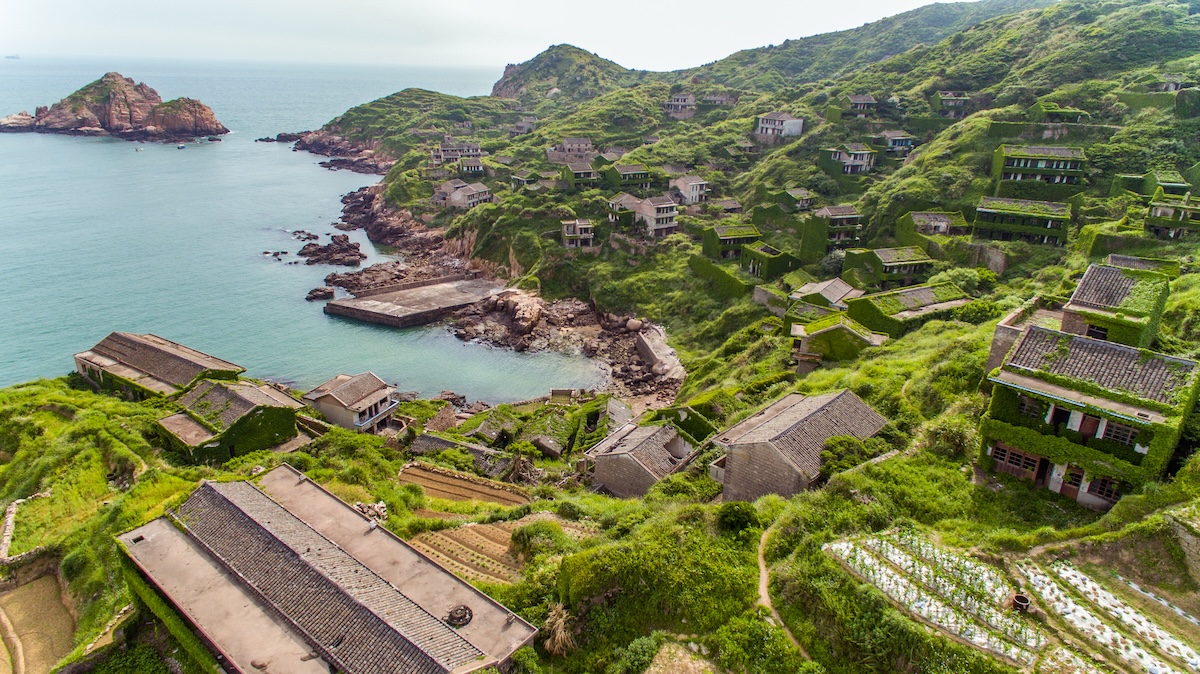
Houtouwan started in the 1950s as a fishing village on Shengshan Island, tucked into the Shengsi chain—nearly 400 islands off Zhejiang Province. The East China Sea, right at their doorstep, kept the village busy for decades. Fishing boats crowded the small harbor, and families squeezed into concrete houses stacked up the hillside. Processing sheds buzzed along the shore.
By the 1980s, the place had hit its population peak. After that, things just faded. Fish stocks dropped, so folks had to travel farther and farther out to sea just to scrape by. The island’s remoteness made everything harder—basic supplies, getting kids to school, finding any job that wasn’t fishing. No easy way to the mainland, either. Bit by bit, families packed up and left for cities where work and school weren’t such a hassle.
By the early 2000s, nobody really lived in Houtouwan anymore. The last few people moved out. Not long after, greenery started creeping over everything.
You can still get to Houtouwan by taking a ferry from Shengsi County, then crossing Shengshan Island. These days, more visitors show up, and nearby Gouqi Island even has places to stay. But Houtouwan itself? No shops, no running water, nothing to buy or do except wander, look around, maybe snap a few photos.
If you make the trip, you won’t find the usual ruins. It’s more like a village paused halfway, the buildings still upright but slowly melting into the wild green around them. Strange, beautiful, and just a little bit haunting.