
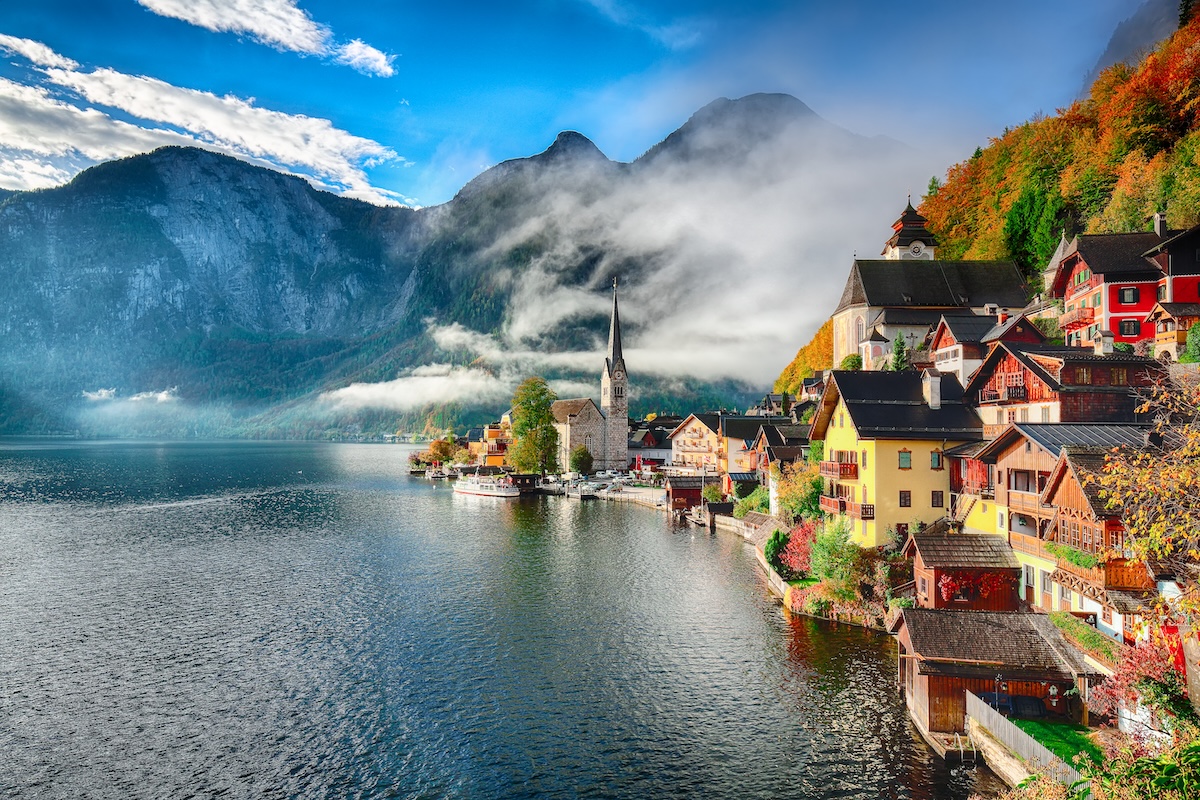
If you’ve seen the postcard, you know the scene: pastel houses stacked up the hillside, a pointed church spire, and still water mirroring the whole thing. Hallstatt hugs a skinny strip of land between a deep alpine lake and the steep face of the Dachstein massif, about 70 kilometers southeast of Salzburg in Upper Austria’s Salzkammergut region.
On peak summer days, up to 20,000 visitors sweep through, which is wild considering only about 700 people actually live here. That’s a huge difference, and it really shapes how your trip will feel. If you manage to get here before 8 a.m. or come between October and April, Hallstatt can feel incredibly quiet, almost like you’ve stumbled into someone’s private world. But if you turn up at midday in July, the main square quickly starts to resemble a theme park entrance.
What really sets Hallstatt apart is how its landscape, history, and tiny scale all blend together. People have mined salt here for over 7,000 years, and the whole area is a UNESCO World Heritage site. Still, you can walk from one end of the village to the other in just half an hour. That small size lets you see the lake, wander old lanes, grab a good meal, and still catch the ferry back to the train station before the crowds get too thick.
Why The Setting Feels So Distinctive
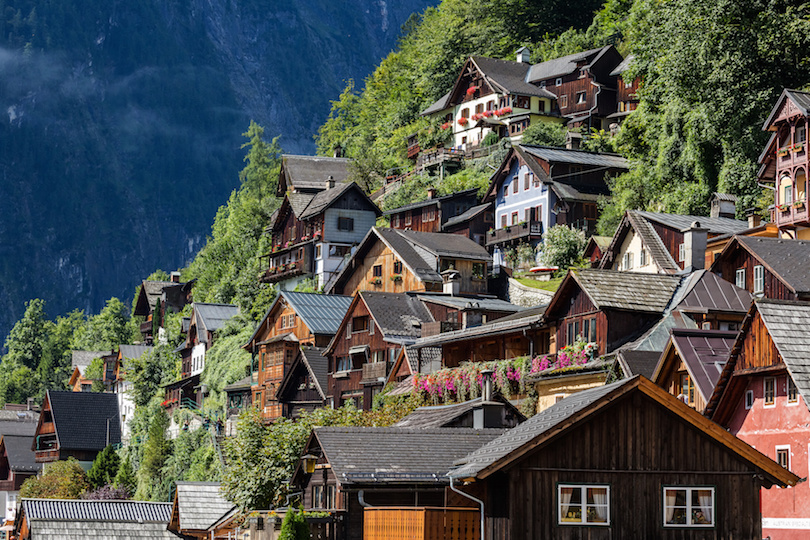
Hallstätter See sits at about 508 meters above sea level, stretching six kilometers through a valley boxed in by limestone peaks. On calm mornings, the water runs deep and clear, reflecting the Dachstein range almost perfectly, and if you look near the shore, you can see straight to the bottom. When you cross over by ferry from the train station on the opposite bank, you head right toward the village’s face, and that approach just hits differently than any photo.
The mountains behind Hallstatt shoot up fast—some over 2,900 meters—and their closeness makes the whole place feel enclosed, almost snug compared to other lakeside towns with more open views. Winter brings snow to the upper ridges, but the lake itself stays ice-free, and in summer, the water warms up enough for a surprisingly pleasant swim.
The village’s layout is pretty much forced by the land. There’s barely any flat space, so houses stack up in tight rows, all connected by staircases and twisting, narrow paths instead of regular streets. Cars aren’t really allowed in the center, and most people end up wandering on foot through lanes just wide enough for two people to squeeze by. The Marktplatz—the tiny main square—serves as the main gathering spot, though it fills up quickly.
If you slip down the side alleys, you’ll find quieter corners with open lake views. The whole vertical, compressed setup means every turn gives you a new angle—sometimes the lake opens up, sometimes you’re hemmed in by stone walls. It’s architectural density on a tiny scale, and honestly, you won’t find that in any big city.
Walking Through The Old Village
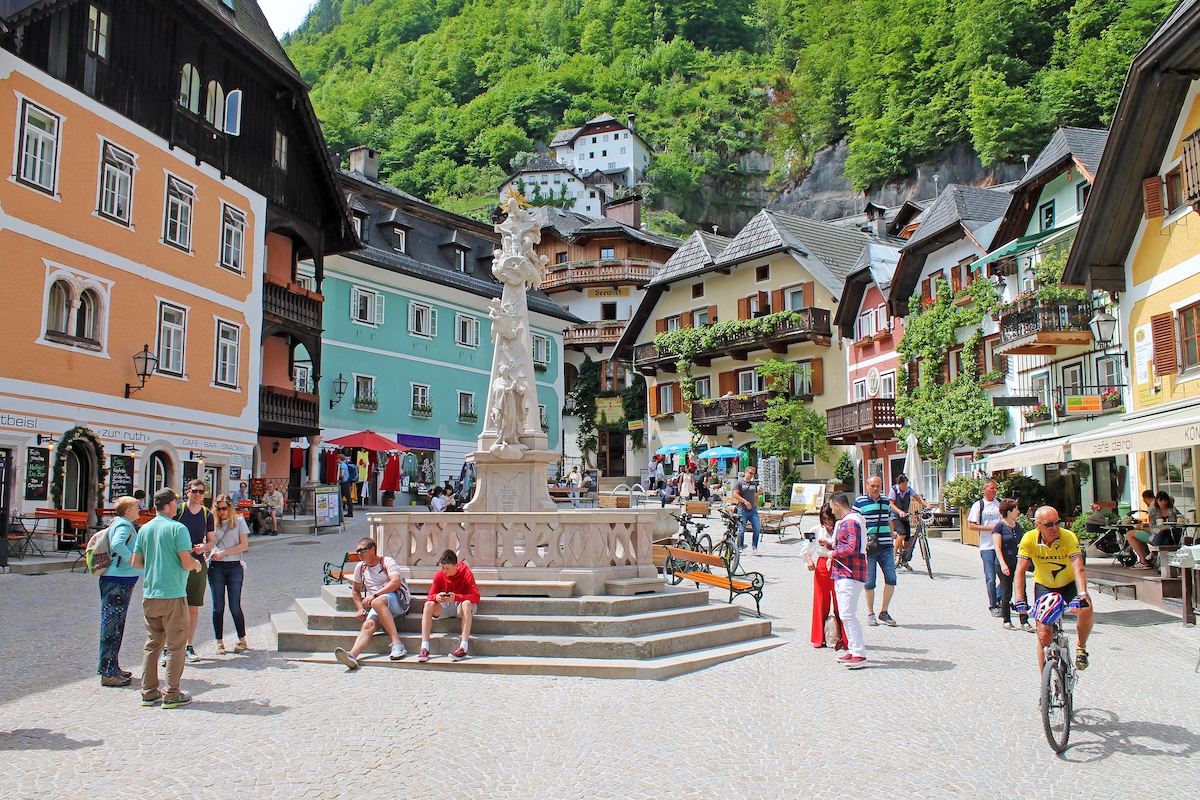
The oldest streets wind up the hillside from the lakefront, weaving through timber-framed and painted stone houses—some of them have stood here since the 16th or 17th century. Marktplatz sits at the center, with its little fountain and a quirky triangular shape. From there, you can wander south toward the Catholic parish church and the Beinhaus, a bone house stacked with over 600 painted skulls. It’s one of Hallstatt’s stranger, more memorable stops.
If you head north, the path gets narrower and fewer people stick around. Keep an eye out for carved wooden balconies, geranium-packed window boxes in summer, and stone stairways that snake up to higher lanes with perfect views across the lake. That “Classic View”—the one splashed across a thousand postcards? It’s about a 10-minute stroll south from the main square, along Dr.-Morton-Weg.
Most cafés in Hallstatt are tiny, sometimes a bit cramped, and a few have terraces right by the lake. You’ll find the usual Austrian favorites: coffee and cake, fresh trout, Kaiserschmarrn. The Rudolfsturm restaurant, perched near the salt mine, serves meals with a side of stunning valley views. Prices are on the steeper side—no surprise, given all the tourists.
Shops along the main street sell salt products, hand-painted ceramics, and the usual souvenirs. Between storefronts, signs pop up reminding everyone that folks actually live here all year. That push and pull between tourism and daily life gives the place a complicated, sometimes messy charm. It’s not just a postcard scene—there’s real life happening here, too.