
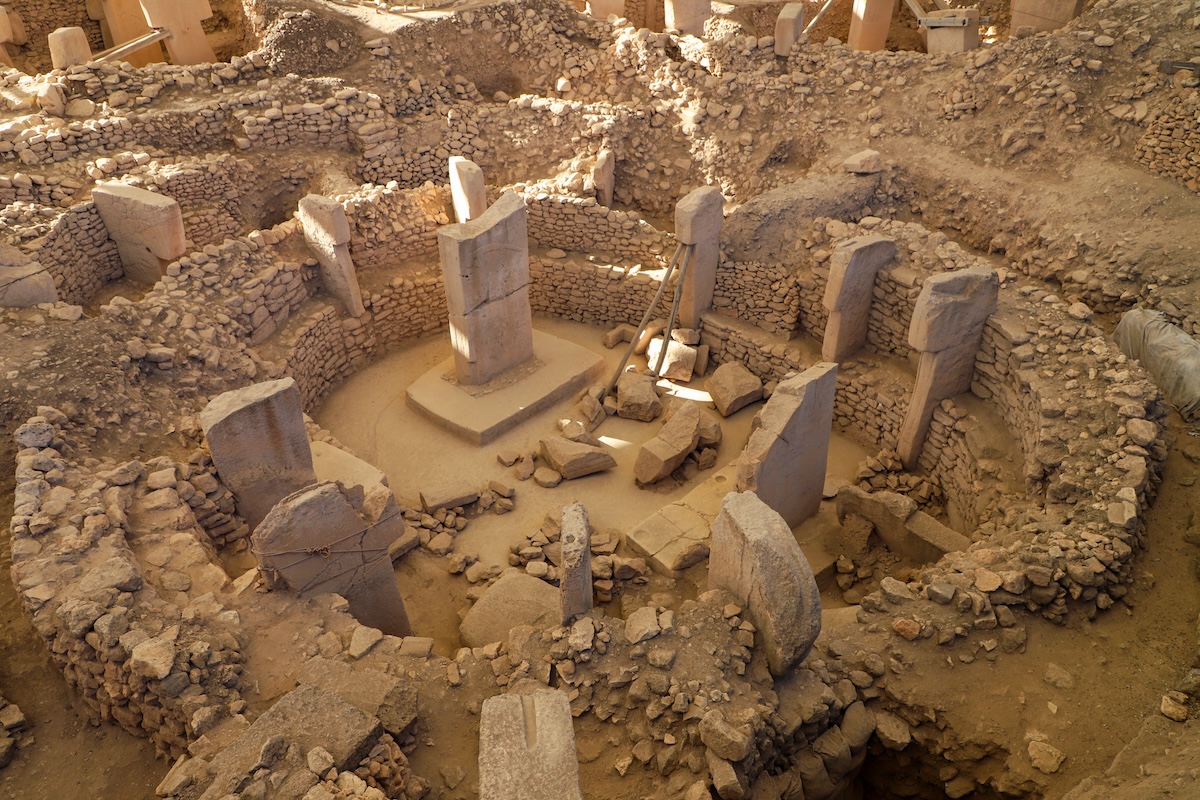
Perched on a dry limestone ridge in southeastern Turkey, this place doesn’t exactly scream “history-changing.” The hilltop feels pretty unassuming, the steppe is almost eerily quiet, and only a small slice of the 20-acre mound is exposed. But beneath the surface—and under those protective shelters—you’re staring at something roughly 12,000 years old. That’s about 6,000 years before Stonehenge, and a full 7,000 years before anyone even dreamed up the Egyptian pyramids.
You’ll spot it as “Göbeklitepe” on Turkish signs and maps. UNESCO added it to the World Heritage list in 2018, which, honestly, feels overdue. Archaeologists have only dug up about 10 percent of the place so far, and geophysical surveys hint that at least 20 more massive enclosures are still hidden underground. What’s visible now? Giant T-shaped limestone pillars, arranged in impressive circles and carved with wild animals and abstract human features. The site goes all the way back to the Pre-Pottery Neolithic, starting around 9500 BCE, and people kept it active for about 1,500 years before moving on.
How It Changed Ideas About Early Civilization
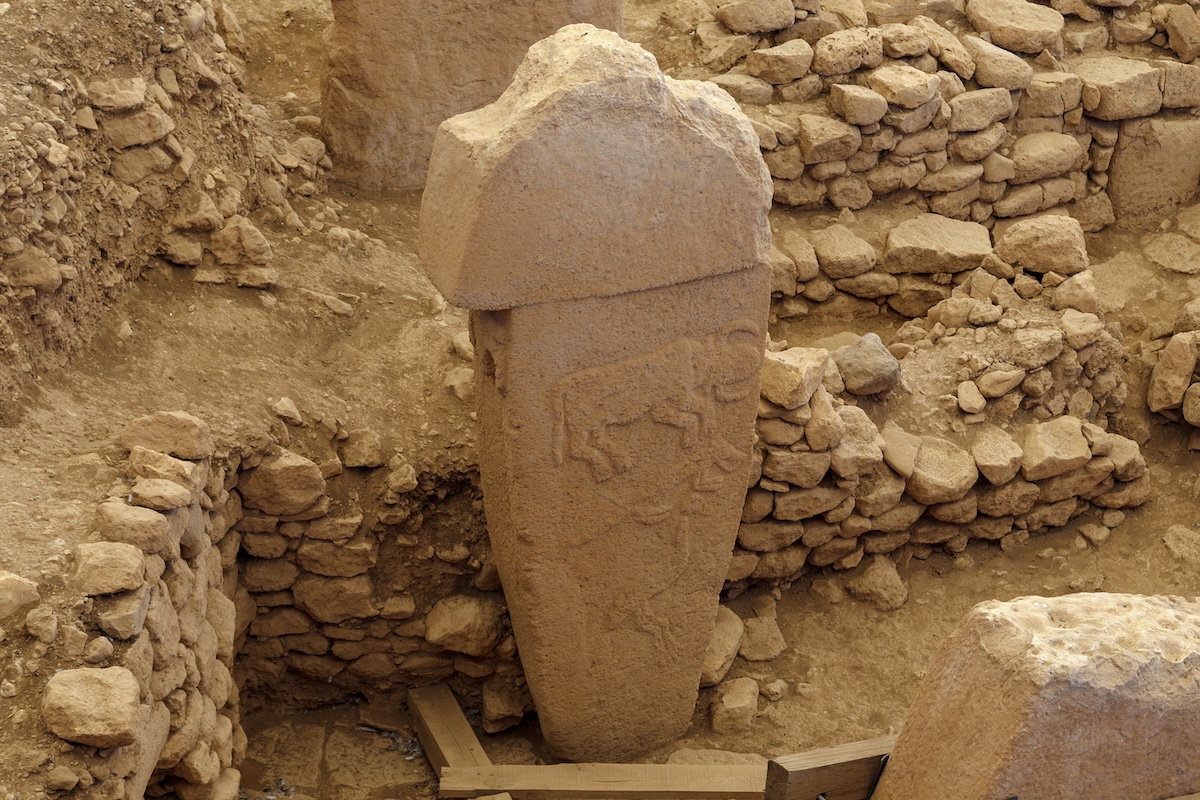
Before Gobekli Tepe, the usual story went something like: humans figured out farming, settled down, then started building monuments. Gobekli Tepe blew up that timeline. Hunter-gatherers—folks who hadn’t domesticated crops or animals, at least as far as we can tell—built these massive stone structures.
Klaus Schmidt, a German archaeologist, realized what was hiding here in 1994 and kicked off excavations the next year. His team’s discoveries forced everyone to rethink things. Building those huge, coordinated stone circles took planning, teamwork, and a shared vision—qualities scholars used to reserve for settled, farming societies.
The debate’s far from settled. Some recent finds—domestic buildings, cereal processing tools, carved cisterns for rainwater—hint that people might’ve lived here at least part-time. That muddies the old idea of Gobekli Tepe as just a ritual site for nomads passing through. If you visit, you’ll see interpretive signs that nod to this ongoing back-and-forth.
One thing’s obvious: the builders weren’t just wandering foragers. They quarried limestone pillars weighing several tons, dragged them uphill, and set them up in carefully planned patterns. They managed this before the wheel, before pottery, before metal tools. The site hugs the northern edge of the Fertile Crescent, surrounded back then by wild wheat, barley, and plenty of gazelle—a landscape that could support some pretty ambitious projects even without formal farming.
The Stone Pillars And Enclosures
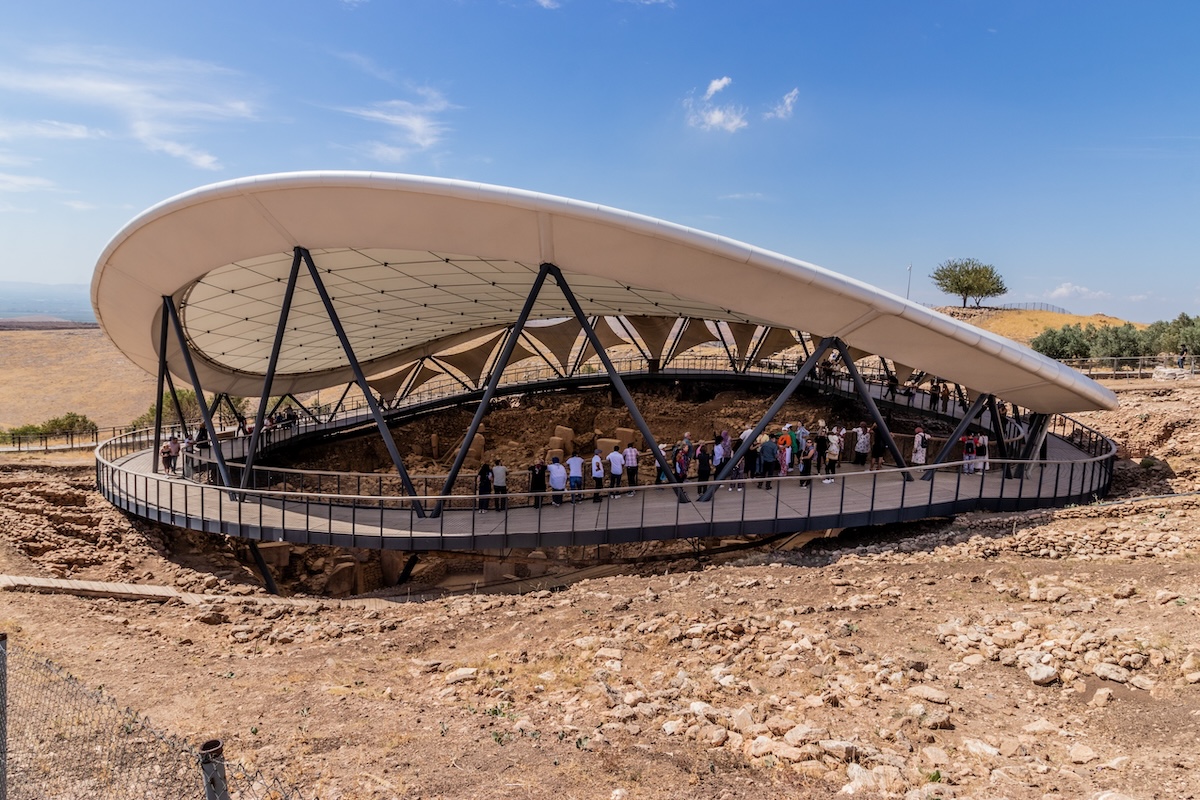
The first thing that hits you under Gobekli Tepe’s protective canopy is just how massive everything feels. Those T-shaped limestone pillars—some shoot up nearly five meters—stand in circles, with two big ones anchoring the center of each ring. Archaeologists call the main enclosures A through D, but honestly, ground surveys hint there are plenty more still hiding underground.
Workers carved each pillar right from the local bedrock, hacking away with flint tools before hauling them upright. The T-shape? Most folks see it as a stylized human. If you get close, you’ll spot arms and hands etched low along the sides, fingers meeting where a belly would be. A few pillars even sport belts, loincloths, or maybe a fox pelt draped over.
The animal carvings stick with people the longest. Foxes, boars, snakes, cranes, vultures, scorpions, wild bulls—they all crowd the stone, some popping in high relief, others almost fading into the surface. Enclosure D, which has weathered the years better than the rest, shows off the sharpest details. Pillar 43 especially grabs attention with its wild mix of vultures, a headless figure, and a mysterious disc that researchers still argue about.
These carvings aren’t just for show. Whoever made them had a plan—animals repeat, patterns emerge, and the whole thing feels intentional, like a language we can’t quite translate. Each enclosure tells its own story with different images. Some pillars focus on a single bold creature; others cram in a whole chaotic crowd.