
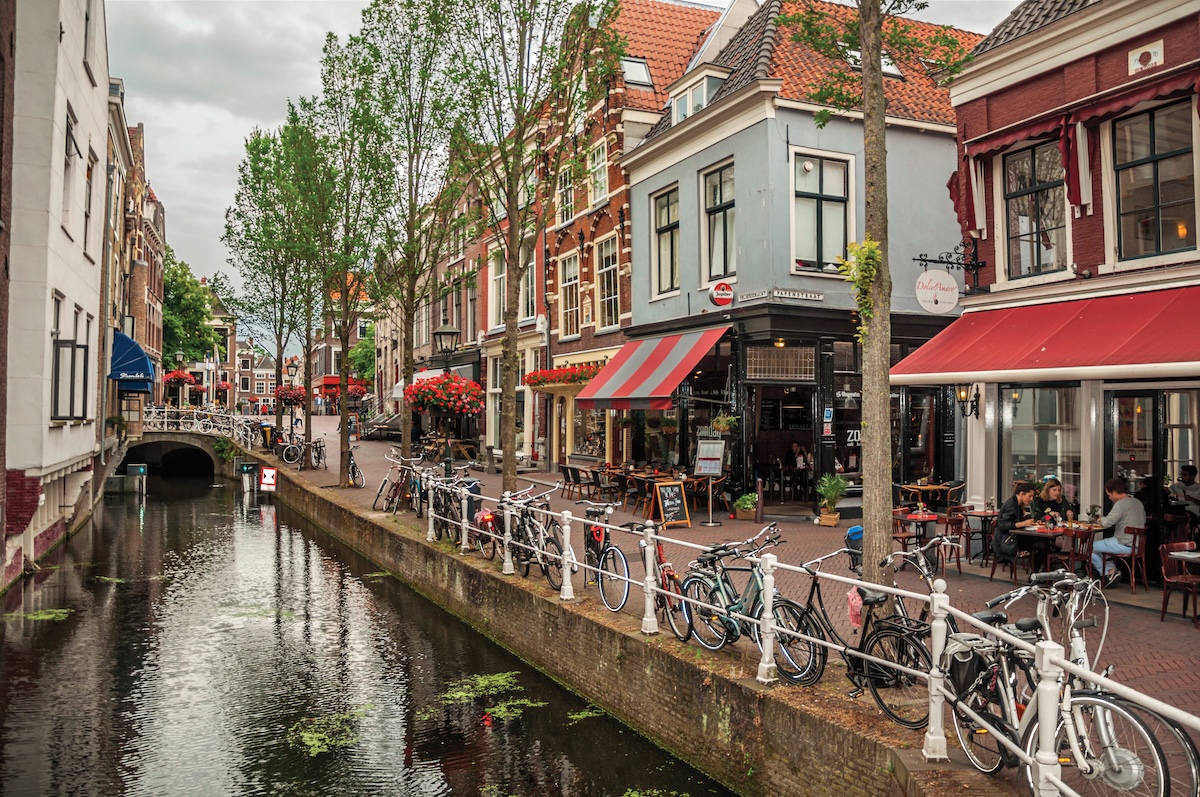
Some cities wear their history lightly, weaving it into everyday streets where students bike past centuries-old canals and artisans still practice crafts that made the place famous hundreds of years ago. You might find yourself standing in a market square where a painter once set up his easel, or watching pottery being glazed with techniques perfected over generations. The past isn’t preserved behind velvet ropes here. It’s part of the present.
Delft offers you this rare blend of living history and contemporary energy, compact enough to explore on foot yet rich enough to hold your attention for days. This small city in the Netherlands carries surprising cultural weight, from its connection to one of the world’s most celebrated painters to its iconic blue-and-white ceramics.
You’ll discover a place where Gothic church towers rise above tree-lined waterways, where university students fill cafes along cobblestone streets, and where traditional craftspeople work alongside cutting-edge researchers. Delft invites you to slow down and notice the details.
Vermeer’s Delft
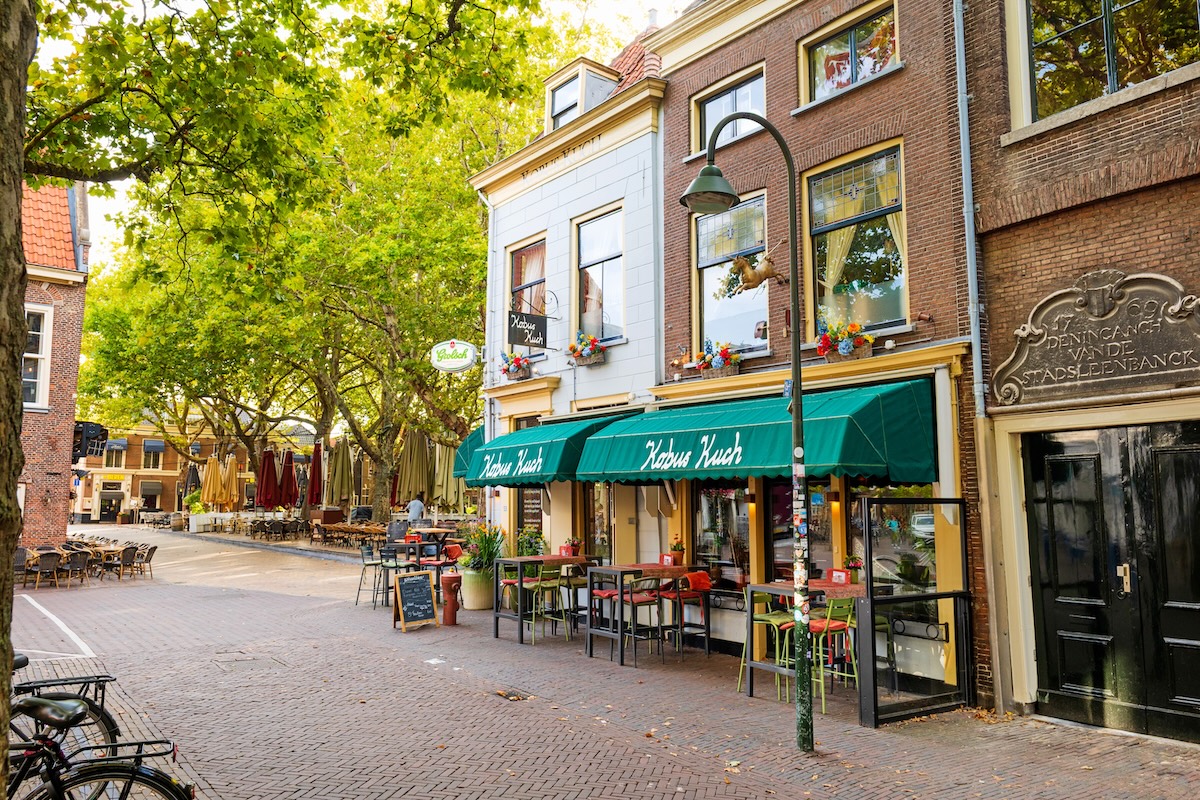
Johannes Vermeer spent his entire life in Delft, and the city shaped his art as much as his paintings shaped the world’s view of this historic place. You can still walk streets that appear in his most famous works, including View of Delft, which captures the city’s skyline with remarkable precision. The soft light filtering through Delft’s canals and brick facades has the same quality that made Vermeer’s interiors so captivating.
The Vermeer Centrum offers an intimate look at his techniques and daily life in 17th-century Delft. You’ll discover how he used camera obscura technology and mixed pigments to achieve those trademark glowing effects. Although none of his original paintings remain in the city, the museum recreates his working environment and explains his connection to Delft’s merchant class.
Walking through the Oude Kerk, where Vermeer is buried, gives you a tangible connection to the artist. The church appears in several of his paintings, and standing in its nave helps you understand the scale and atmosphere of the Golden Age city he knew so well.
Delft Blue Pottery
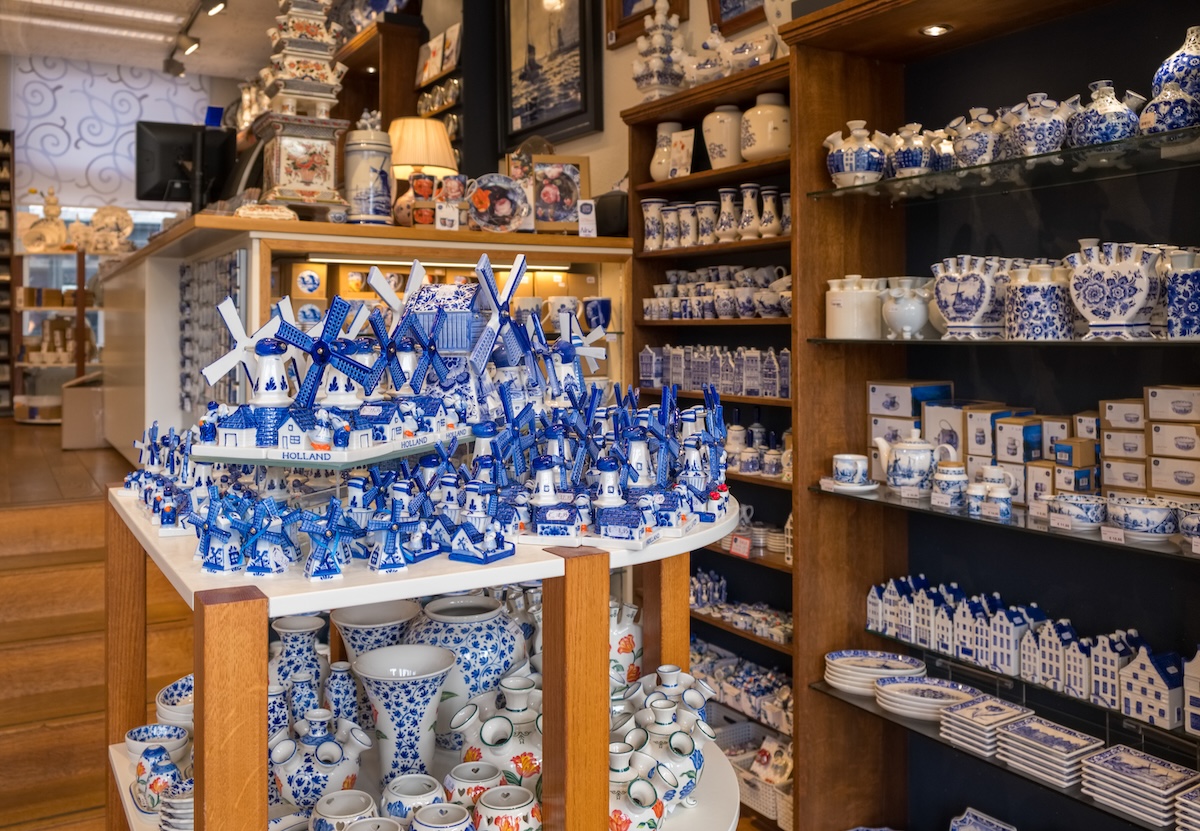
You’ll find the city’s most recognizable export in workshops and museums throughout the historic center. The distinctive blue-and-white ceramics known as Delftware emerged in the 17th century, when Dutch artisans adapted Chinese porcelain techniques to local materials. What started as an imitation became something entirely its own.
The hand-painted pottery features intricate patterns, from windmills and tulips to biblical scenes and geometric designs. You can watch skilled painters apply cobalt oxide to white-glazed earthenware at working studios like Royal Delft, the last remaining factory from the Golden Age. Each piece needs multiple firings and meticulous brushwork.
The tradition shows how global trade routes shaped local craftsmanship. When Dutch merchants brought Chinese porcelain back in the 1600s, demand soared, but supply couldn’t keep pace. Delft’s potters stepped in to fill the gap, creating their own interpretation that became wildly popular across Europe. Today, you’ll see historical pieces in museums alongside contemporary designs that keep these centuries-old techniques alive.
Canals, Bridges, and Historic Streets
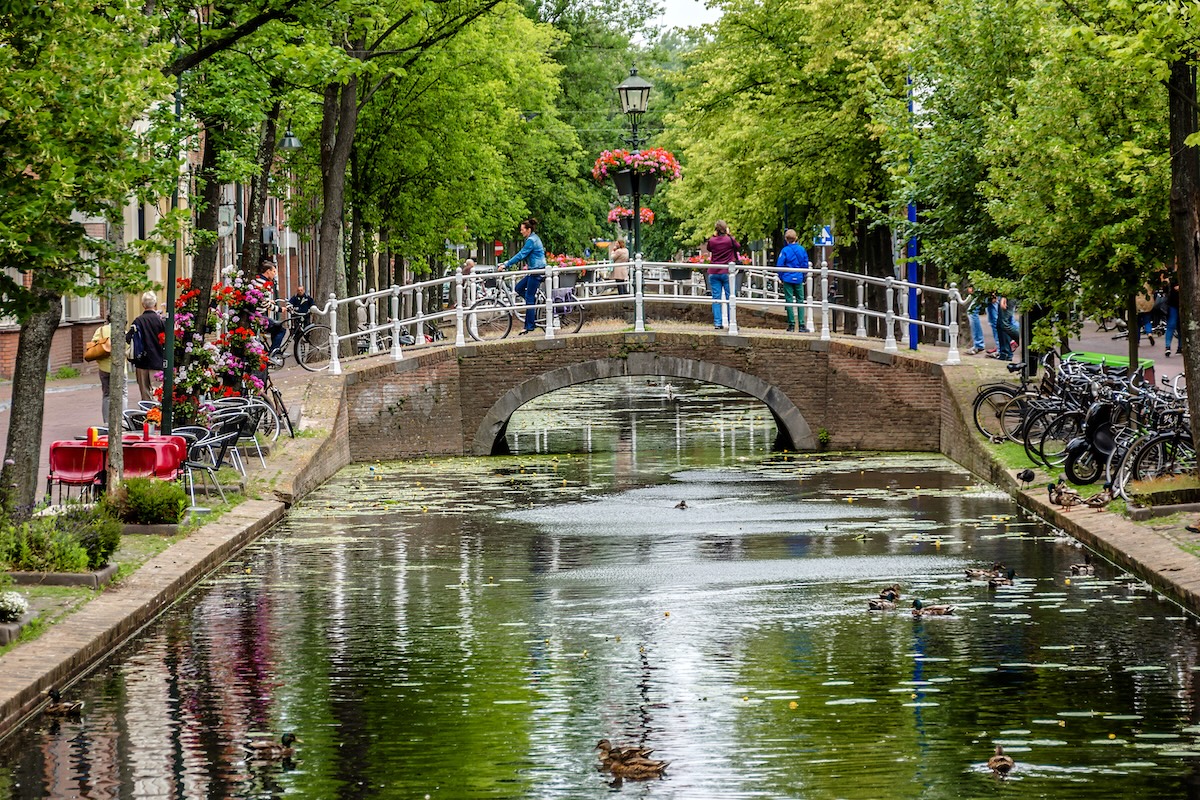
You’ll find Delft’s old town remarkably easy to explore on foot, with waterways crisscrossing the compact center. Leafy trees line the canals, providing shade in summer and framing the gabled houses in every direction. These aren’t just scenic features. They’re working waterways that have shaped the city’s layout for centuries.
The brick bridges connecting one street to another give you perfect vantage points for photos and people-watching. You can pause on nearly any of them to take in views of the narrow townhouses with their distinctive stepped gables. The architecture along the canals reflects Delft’s prosperity during the Dutch Golden Age.
Between the main canals, you’ll discover intimate lanes and alleys that invite wandering without a fixed destination. Voldersgracht and Oude Delft rank among the most photogenic stretches, where historic buildings lean slightly toward the water. The streets have few modern intrusions, preserving an atmosphere that feels authentic rather than manufactured for tourists.
The Markt and Delft’s Great Churches
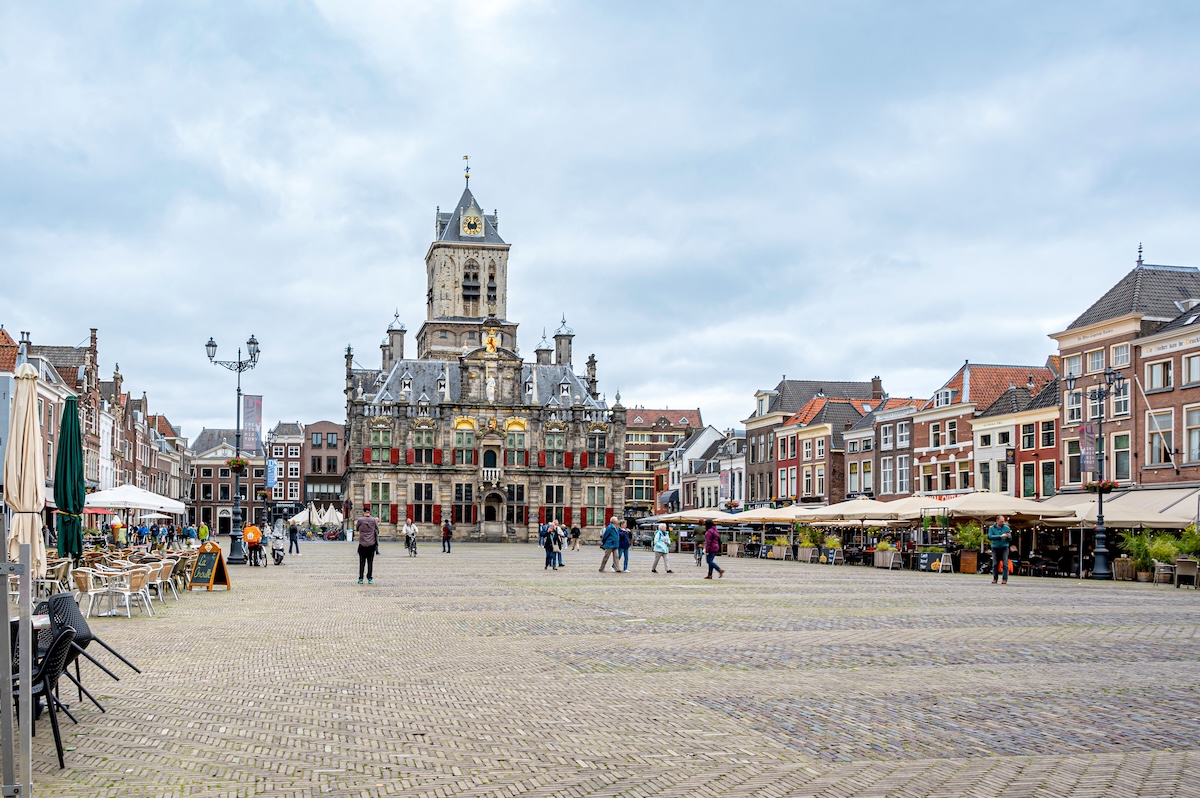
When you step into the Markt, you’ll find yourself at the heart of Delft’s historic center. The square opens up before you, with the towering Nieuwe Kerk on one side and the ornate Renaissance city hall on the other. The scene has barely changed in centuries.
The Nieuwe Kerk holds a special place in Dutch history. Inside, you can visit the royal crypt where members of the House of Orange-Nassau rest, including William the Silent, the founder of the Dutch nation. The church’s soaring tower offers views across the city if you’re willing to climb its 376 steps.
A short walk away, the Oude Kerk leans noticeably to one side, its tower tilting because of unstable foundations. This medieval church predates its “newer” counterpart by about 150 years and contains beautiful stained glass and the tomb of painter Johannes Vermeer. Together, these two churches frame Delft’s role in religious life and national identity, connecting the city to Dutch royalty and centuries of civic tradition.