

Munich is also home to some impressive castle palaces, notably the Baroque Schloss Nymphenburg and the 14th century Residenz. Whether you’re interested in architecture, history or German royalty, you can plan to see some of the other castles near Munich that are definitely worth a visit.
8. Prunn Castle[SEE MAP]
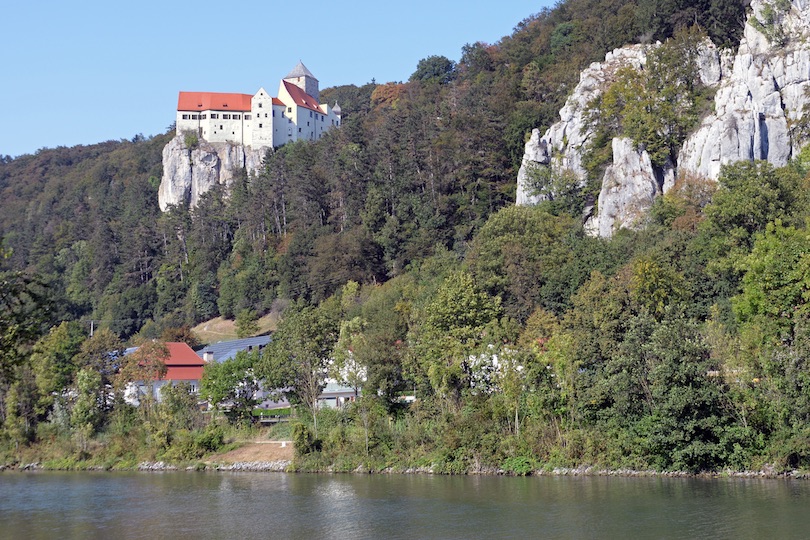
If you head 120 km (75 miles) north of Munich, you’ll reach Burg Prunn. Built in the early 13th century, this castle was designed in the late Gothic style. The castle’s design is impressive, but equally impressive is its location.
Prunn Castle is situated on an outcrop that overlooks the Altmühl River Valley below. From the castle, you will be treated to spectacular views. One of the best things about touring Prunn Castle is that it still retains its medieval decor.
On the ground floor, a large hall remains exactly in the Gothic style of the 13th century. The castle is also from where the Prunner Codex hails, a historic manuscript of a classic German epic.
7. Schloss Herrenchiemsee[SEE MAP]
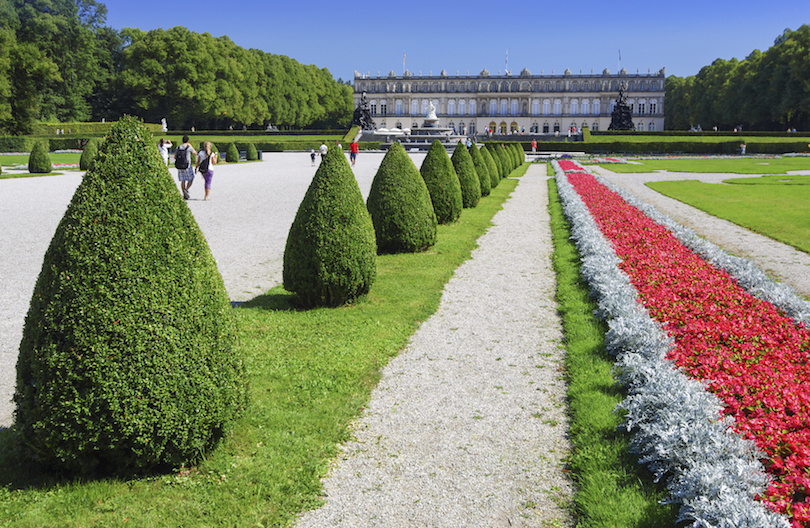
Roughly 90 minutes from Munich is Chiemsee, a beautiful lake. In the middle of that lake is an island where you can find the remarkable Schloss Herrenchiemsee. Built by King Ludwig II in an attempt to replicate the beautiful Palace of Versailles, this castle palace is the epitome of opulence.
On a tour of the interior, prepare yourself for state bedchambers dripping in gold decor, world-famous portraits and an unparalleled collection of porcelain. Just like at Versailles, the gardens of Schloss Herrenchiemsee are phenomenal, and you won’t want to leave before taking a stroll through the English and French inspired lawns.
6. Trausnitz Castle[SEE MAP]
 Gliwi / Wikipedia
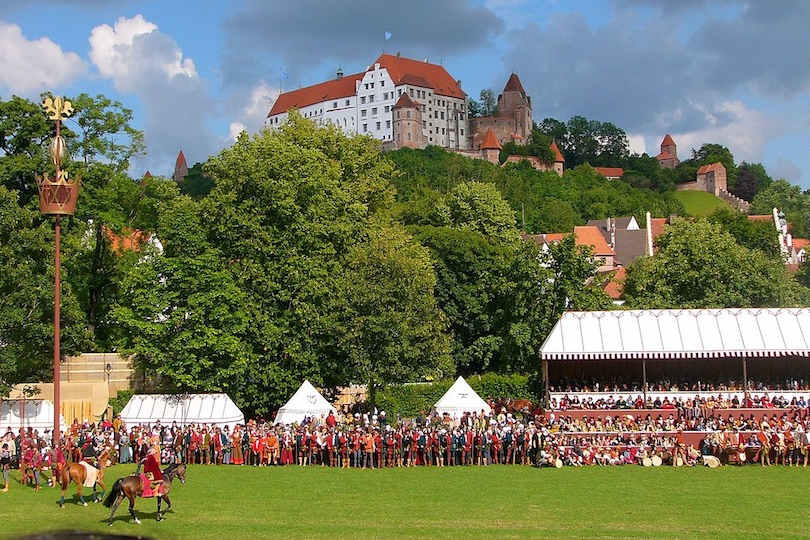
Northeast of Munich in the Bavarian town of Landshut is Trausnitz Castle, a medieval structure dating back to the 13th century. For several hundred years, Trausnitz Castle was the seat of Bavarian monarchy.
Several major remodels over the years have given the castle a German Renaissance style, a Florentine influence and even an opulent upgrade in the 19th century.
Today, notable areas to explore within Trausnitz include the Knights Hall, which is still used for banquets, the unfinished room known as the White Hall and the Tower Terrace, or Söller, which you can climb for vistas over the town of Landshut below.
5. Nuremberg Castle[SEE MAP]
 Hajo Dietz / Wikipedia
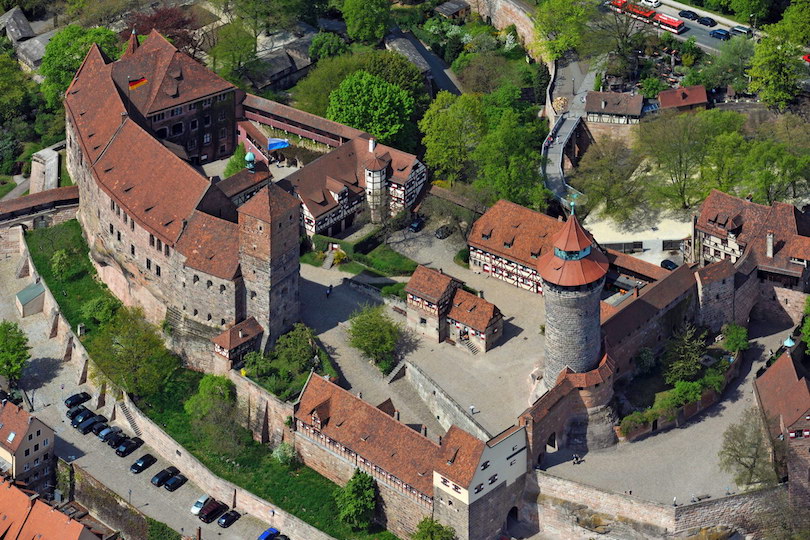
The city of Nuremberg is best known for hosting criminal and military trials following the Second World War, but the medieval destination is also home to an incredible castle. Parts of the huge castle date back to the 12th century, and today the Nuremberg Castle dominates the old city center.
Visiting the castle means taking a peek into the history of the Holy Roman Empire and the role that the city of Nuremberg played in the Middle Ages. The stunning Romanesque double chapel is a centerpiece of the castle, but you won’t want to miss other parts like the deep well, which was previously the only source of water for the castle.
4. Linderhof Palace[SEE MAP]
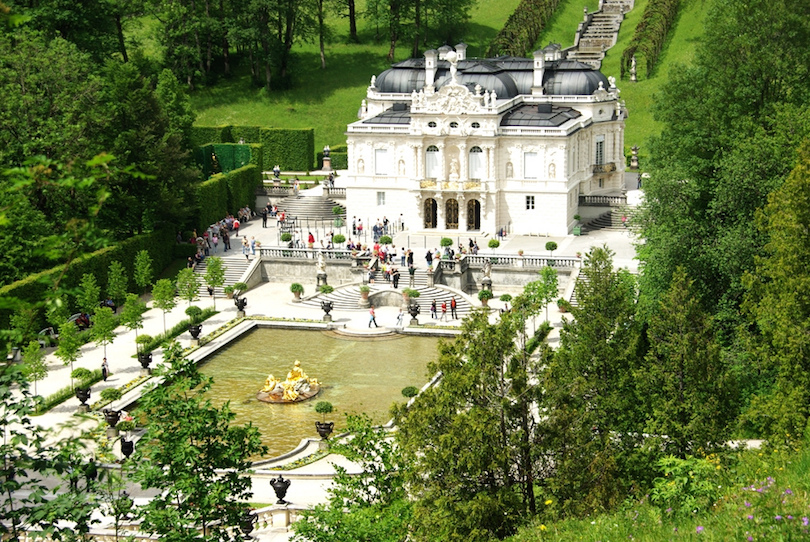
About 100 km (60 miles) from Munich, right outside of a town called Oberammergau, is Linderhof Palace. This is yet another of King Ludwig II’s fantastical palaces, and it is one of the few that was completely finished and used by the king.
Linderhof Palace was again modeled after the French castles so in vogue in the 19th century, and this structure is no less ornate than others built at the time.
The facade is decidedly Baroque, but many of the interior touches are over-the-top Rococo. That means lots of embellishments, heavy textiles and opulent materials. While the palace has much to admire, the gardens are also very stylized and worth an extensive tour.
3. Hohenschwangau Castle[SEE MAP]
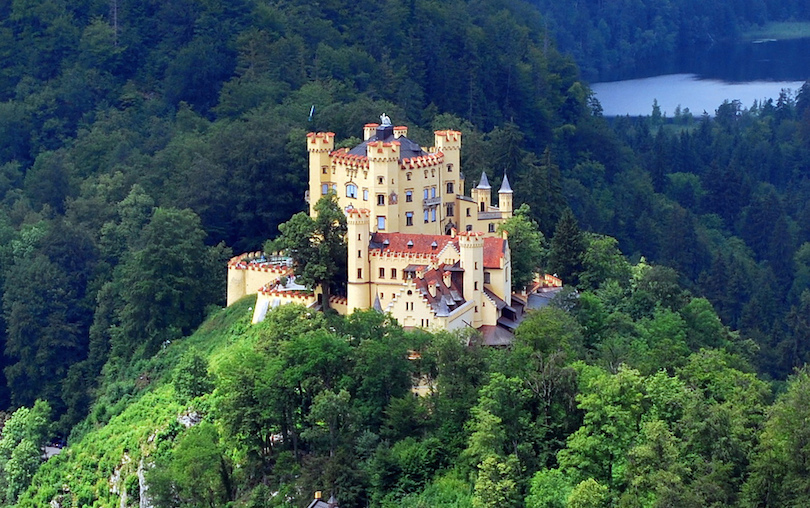
If you head southwest from Munich, you’ll eventually reach the border with Austria. Less than one mile before crossing the border you’ll find one of the most beautiful castles near Munich: Hohenschwangau Castle.
Since this castle is just opposite the world famous Neuschwanstein, many visitors don’t give it the recognition it deserves. However, Hohenschwangau Castle is definitely worth a visit, especially if you’re already in the area.
This 19th century castle was the home of King Ludwig II when he was a child, and it boasts many interesting features. Of note is the exterior Swan Fountain as well as the beautiful salons and ballrooms.
2. Burghausen Castle[SEE MAP]
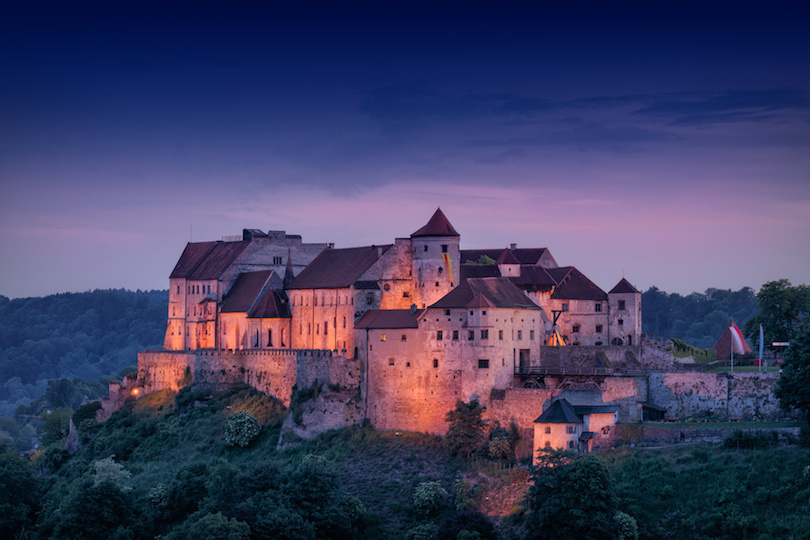
Head 90 minutes east of Munich, and you’ll find Burghausen Castle right on the border with Austria. Overlooking the Salzach River, this beautiful castle is one of the longest castle complexes in the world. Burghausen Castle was constructed in the 11th century, although the site had been used as far back as the Bronze Age.
Self-guided tours of Burghausen Castle offer lots of freedom, so you can explore most of the rooms on your own. Be sure to visit each of the six courtyards, and make time to admire the incredible Gothic art collection in the State Gallery.
Ask for directions to the viewing platform on the roof, which provides sweeping views of the river and across the border into Austria.
1. Neuschwanstein Castle[SEE MAP]
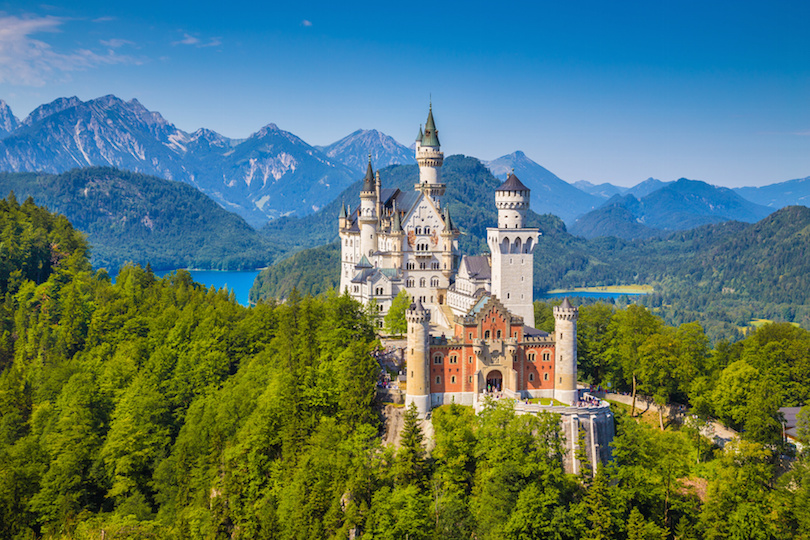
Near Hohenschwangau Castle is Schloss Neuschwanstein, a castle that is perhaps one of the best known tourist attractions in the world. Legend says that Walt Disney used the stunning castle as the inspiration for his own Disney castles. Schloss Neuschwanstein was built in the 19th century thanks to King Ludwig II, who used personal rather than government funds for construction.
The design is inspired by the Romanticism movement, and it was a sort of homage to the operas of Wagner. The palace rooms are spectacular and dripping with high-quality features. Some of the most extravagant spaces to admire include the colorful Hall of the Singers and the king’s bedroom.