
Castles in Japan may not fit the Western concept of an ancient citadel, but although they look completely different than castles in Europe, they were built for much the same reasons. They began to appear in the Land of the Rising Sun during the 15th century when the country was dissolving into warring states. Later, they were built as places of governance and as homes for feudal lords, or daimyo.
At one time, there were as many as five thousand castles in Japan; today, there are around 100, with only a dozen that have survived from the feudal era. These structures of wood and stone offer visitors a rare glimpse of Japan’s feudal past.
12. Kanazawa Castle
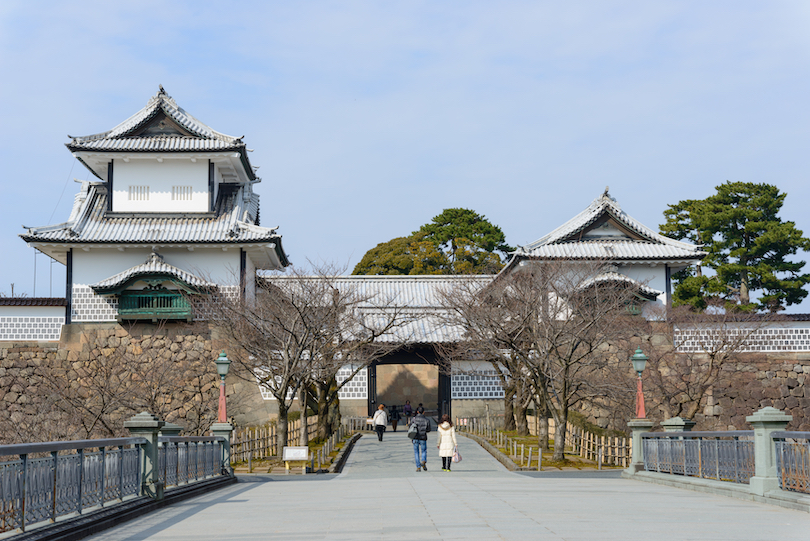
The timeline of the Kanazawa Castle begins in the late 16th century. Battles and fire have led to the grounds featuring a mix of 19th century designs and modern renovations. Today, they’re a great example of traditional techniques, materials and design creating a portal back several centuries.
Exploring the grounds is a great way to understand the sheer size of the castle complex. You’ll discover many old buildings, such as the long storehouse and a duo of turrets. These stand alongside reconstructed gates, such as the old main entrance, not to mention the beautiful Gyokuseninmaru Garden.
11. Kumamoto Castle
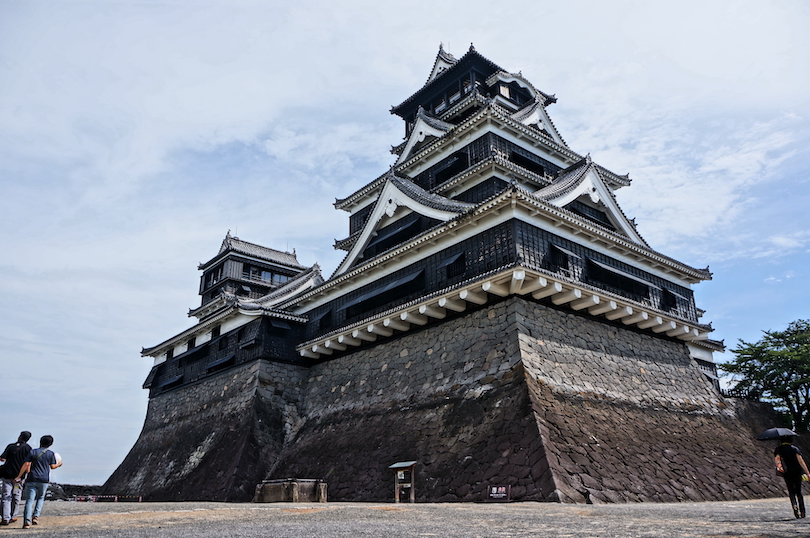
Completed in 1607, Kumamoto Castle stands in the center of the Chausuyama Plateau. In the 400 years since, the castle has become enveloped in a dramatic story of feuding feudal lords and samurais. The latter was immortalized in the battle between 20,000 samurai soldiers and Meiji rulers.
While a few of the original buildings have survived through each battle, and earthquake, the castle keep is a modern reconstruction. Its exterior is an accurate replica of the original, with its open interior now telling the stories of the castle’s past.
The surrounding grounds are amazing to explore, including views of the castle tours, the Honmaru Goten Palace and the 800 cherry trees.
10. Okayama Castle
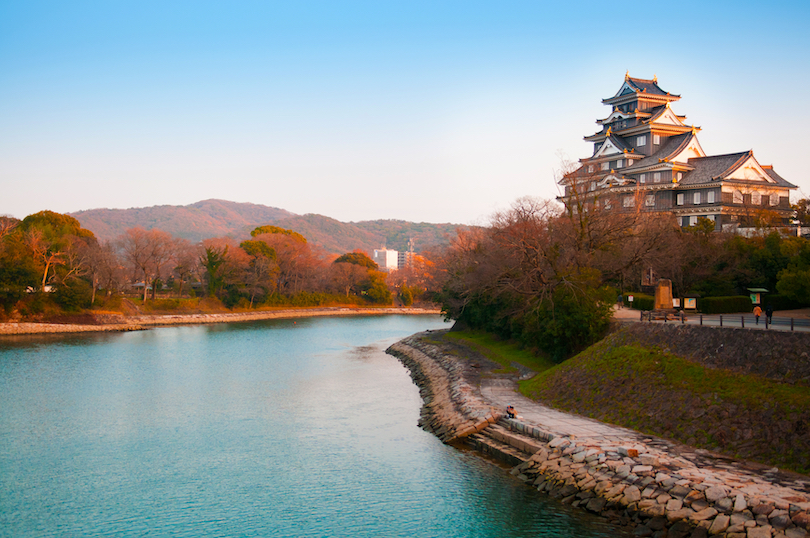
Known as Crow Castle thanks to its dark exterior, Okayama Castle was originally constructed in 1597. It survived until the Second World War, but was faithfully renewed two decades later.
Today, you can wander along the Asahi River and explore the Korakuen Garden within sight of the celebrated castle. Continue to explore the surrounding complex that features the singular original building, Tsukimi Yagura, from 1620. Before finishing up with pottery class crafting Bizen-yaki.
At last, you’ll enter Okayama Castle itself to discover the 6-story keep laden with exhibits. This showcases the history and development of the complex.
9. Shimabara Castle
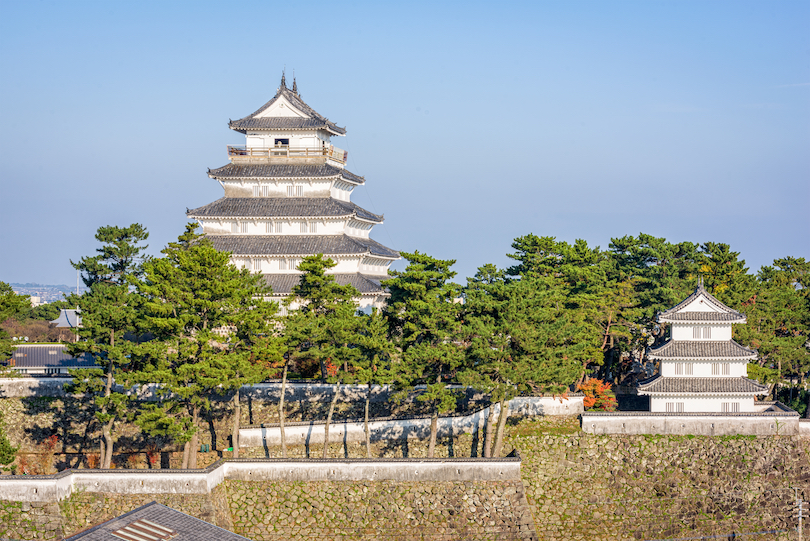
The original Shimabara Castle from the 17th century began to descend into chaos. This is because the high tax used to construct the white-walled castle helped cause a regional rebellion.
Later destroyed, the castle was brilliantly rebuilt in the 1960s. The five-story keep is home to the Castle Tower Museum. Here, you can discover the castle’s Christian connection, ruins from the original along with traditional weapons and armor.
From the top floor, you can bask in the sightly views of Mount Unzen and Kumamoto. Other highlights include the art-centric Seibo Memorial Hall, the Folk Museum and the kokeshi dolls in the west turret.
8. Osaka Castle
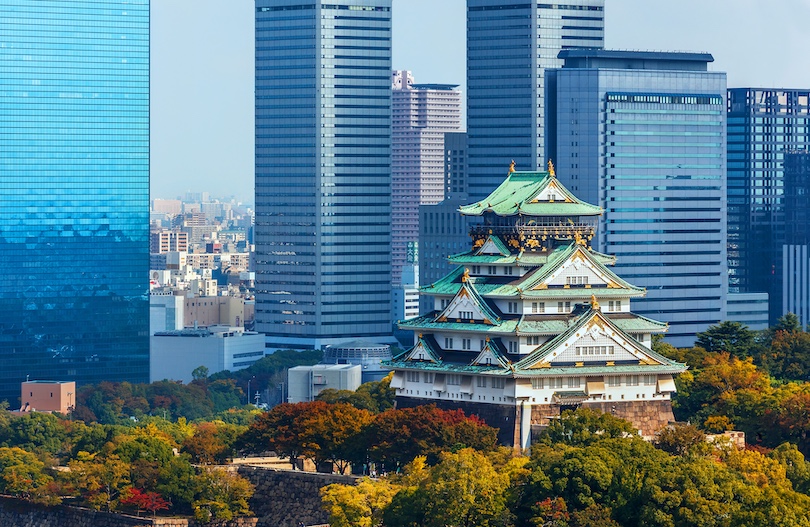
The story of the Osaka Castle is a roller coaster that features rich bloodlines that ended overnight and an assortment of ruling kings. Today, what we see is the 17th century version of this complex that remarkably survived the air raids of WWII.
The central tower boasts an imposing presence and has been renovated to have modern luxuries. These include its own elevator so you can enjoy the impressive views, several stories up.
Around the tower are a number of citadels, ancient gates, walls and moats. The Nishinomaru Garden is a sight to behold with over 600 cherry trees.
7. Shuri Castle
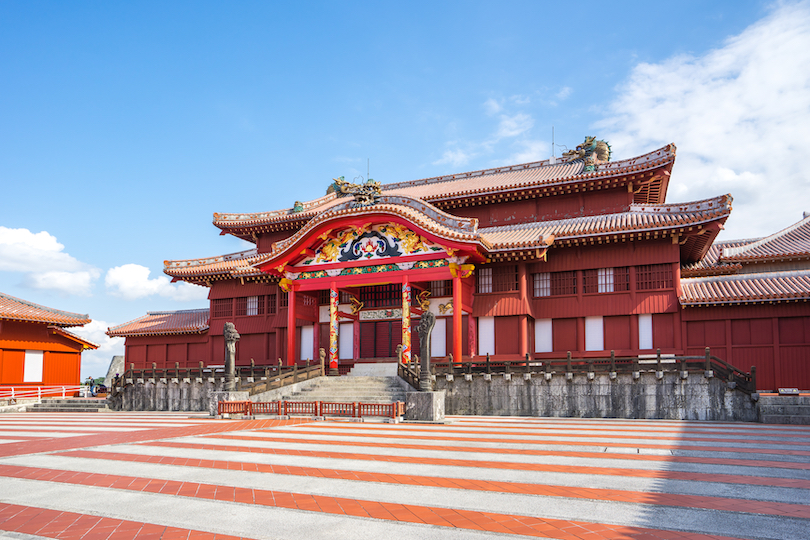
Overlooking Naha, the Shuri Castle is a symbol of Okinawa. For over 450 years, the castle was the seat of Ryukyu kings and was a centerpiece of the entire kingdom. Today, it remains in great condition, embellished with both Japanese and Chinese influence.
The castle and complex date back to the 1200s and while much has been destroyed and rebuilt over the centuries, there remains a lot of historic significance.
Some of the highlights include the ceremonial Una Plaza, Seiden State Hall (the island’s largest wooden building) and the Tamaudun Mausoleum. But you can’t leave without seeing the Stone Gate, built in 1519.
6. Nagoya Castle
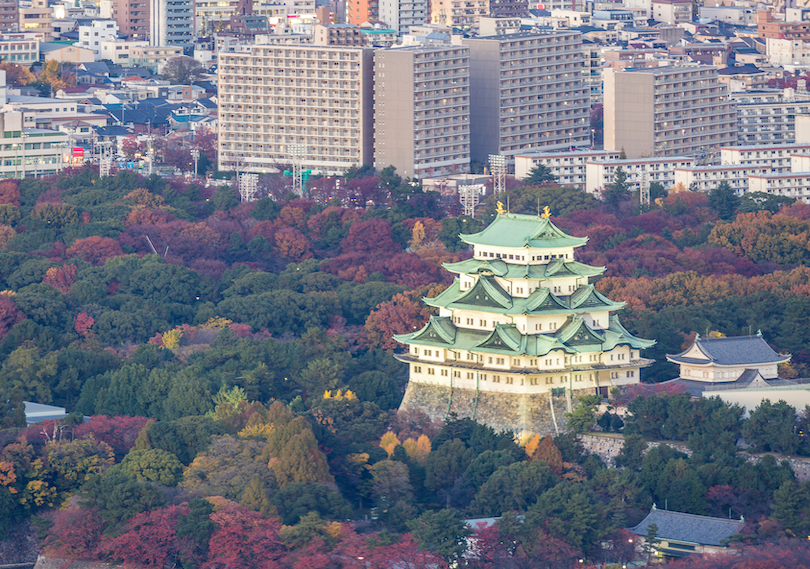
Constructed during the Edo Period in 1612, the Nagoya Castle would become one of the largest in Japan. At its height, the surrounding town turned into a thriving metropolis and the fourth biggest city in the country.
The Second World War changed this. But faithful reconstruction is slowly returning Nagoya Castle to its old glory. Traditional material and techniques can still be found here, with its captivating facade and interior brilliance showcase the renowned Shoin architectural style.
Nagoya’s main keep, a highlight of Japanese castles, is currently under reconstruction and won’t be open to visitors until at least 2028.
5. Hirosaki Castle
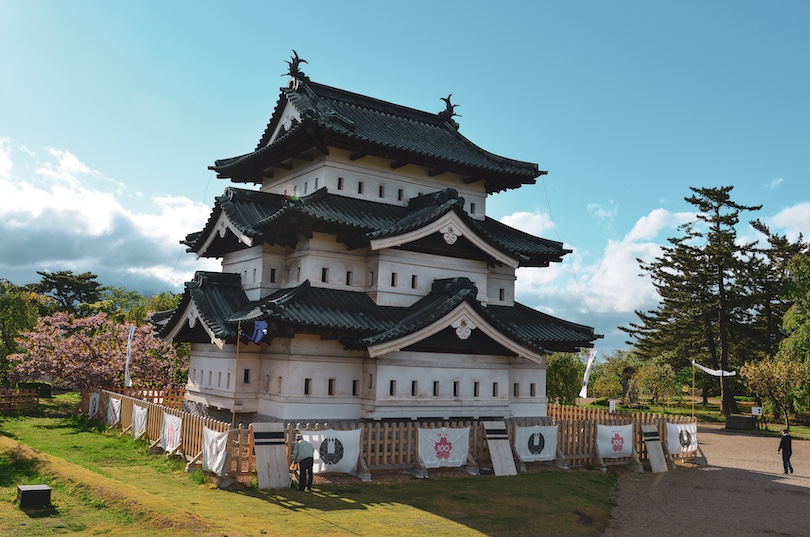
A hilltop castle in northern Japan, Hirosaki Castle is known for its five original turreted gates, fortified moats and sprawling grounds. Completed in 1611, the original five-story donjon was destroyed by fire in 1627. A three-story watchtower was then re-structured to serve as the primary keep.
The surrounding grounds, gates and moats draw even more attention than the keep, and offering visitors a relaxing, garden setting. Planted with more than 2,500 cherry trees, the grounds play host to one of Japan’s largest cherry blossom festivals each spring.
4. Hikone Castle
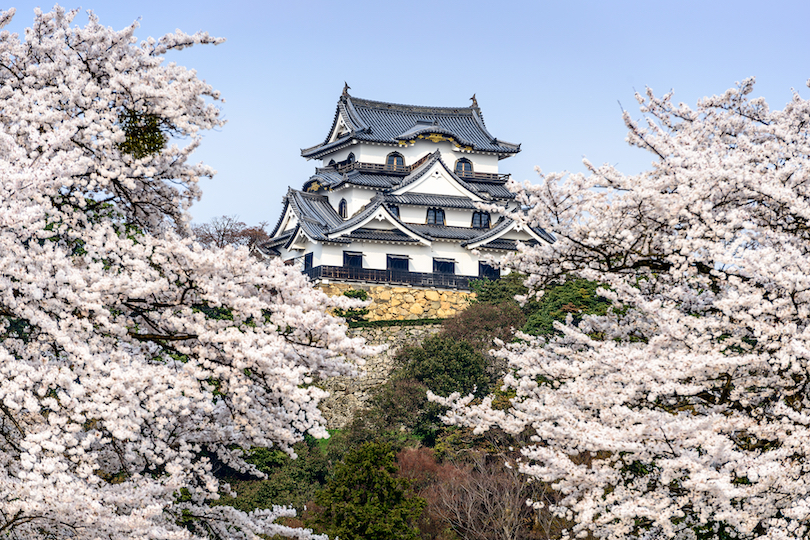
Hikone Castle offers visitors a real insight into how Japan’s castle complexes looked during their heyday. The original gardens, gates and guard houses have been as carefully preserved as the main keep. The Hikone complex contains structures and materials gathered from other castles in the country.
After 20 years of construction, the hilltop castle was completed in 1622. The castle remained under control of the Ii daimyo feudal lords until 1868. The nearby Hikone Castle Museum displays Ii dynasty treasures, including armor and musical instruments.
3. Matsue Castle
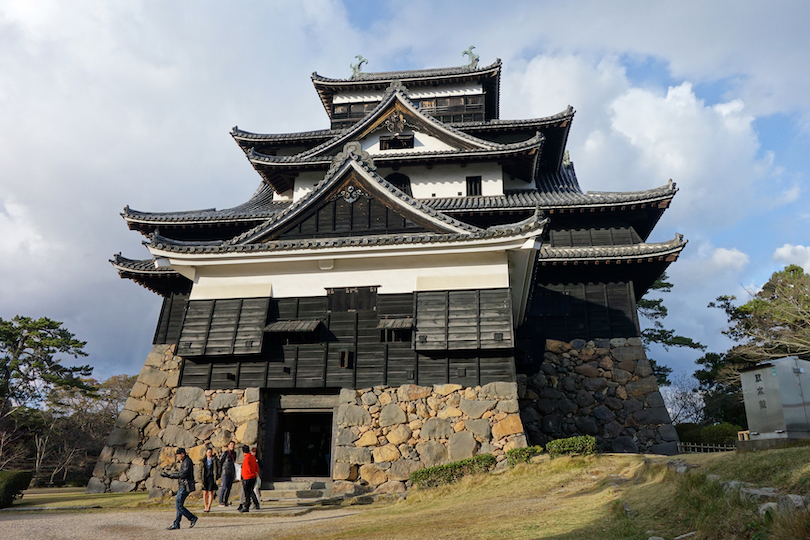
The only castle remaining in the San’in Region on the southwest coast of Japan’s main island, Matsue Castle is unique it that it never saw military action, although it was constructed in a defensive, watchtower style. Built in 1611, the hilltop fortress was completed after the last great feudal war.
Most of the castle complex was dismantled in 1875, and only the main keep and the ishigaki, or stone walls, are extant. During the 1950s, reconstruction of the fortress began. The castle’s nickname, “The Black Tower,” reflects the keep’s striking ebony color. Visitors can tour the keep and the grounds, and there are boat tours offered around the outer moat as well.
2. Matsumoto Castle
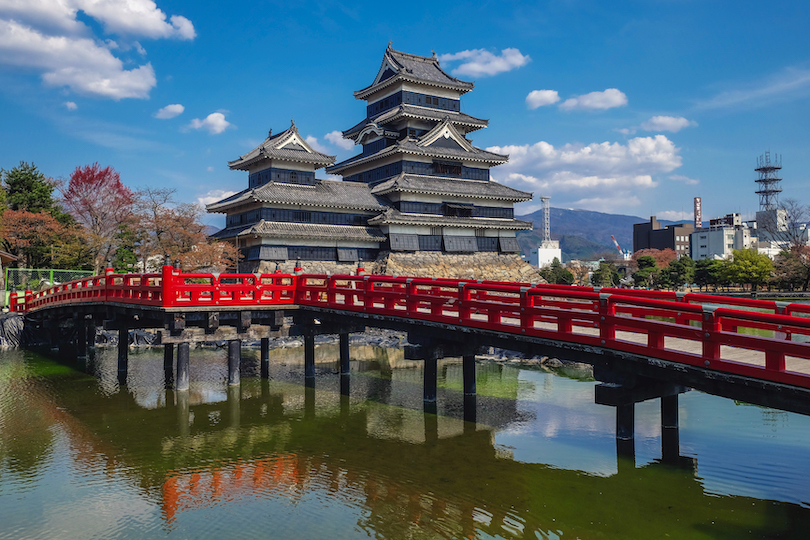
Located in a mountainous region to the northwest of Tokyo, Matsumoto Castle is set on a structure of stone surrounded by a large moat. Constructed in 1590, the multi-storied castle is trimmed in black, earning the fortress its nickname: Crow Castle.
The castle’s main keep, or donjon, is the oldest in Japan and offers sweeping views of the Hijiri Kōgen mountains. Although Matsumoto is a hirajiro, a flatland castle, it was built for fortification. There are openings to fire arrows or drop stones on invaders throughout the keep.
1. Himeji Castle
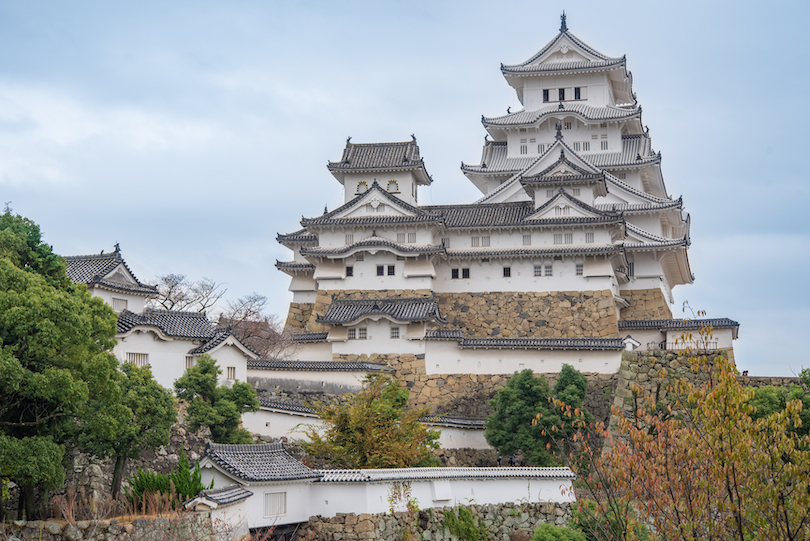
Considered the most impressive of extant feudal-era castles in Japan, Himeji Castle is located west of Kōbe, the capital of the Hyōgo Prefecture. The fortress is commonly called the White Heron Castle because the castle’s white-plastered towers resemble a snowy egret in flight.
Built in 1601 on the site of an earlier castle, the hilltop castle consists of 83 structures centered on the Tenshu-gun, a complex of keeps and connecting buildings. The primary keep is a six-story structure that’s visible from nearly any location in Himeji City. The castle has been featured in several films, including the James Bond adventure film “You Only Live Twice” and “The Last Samurai,” starring Tom Cruise.