
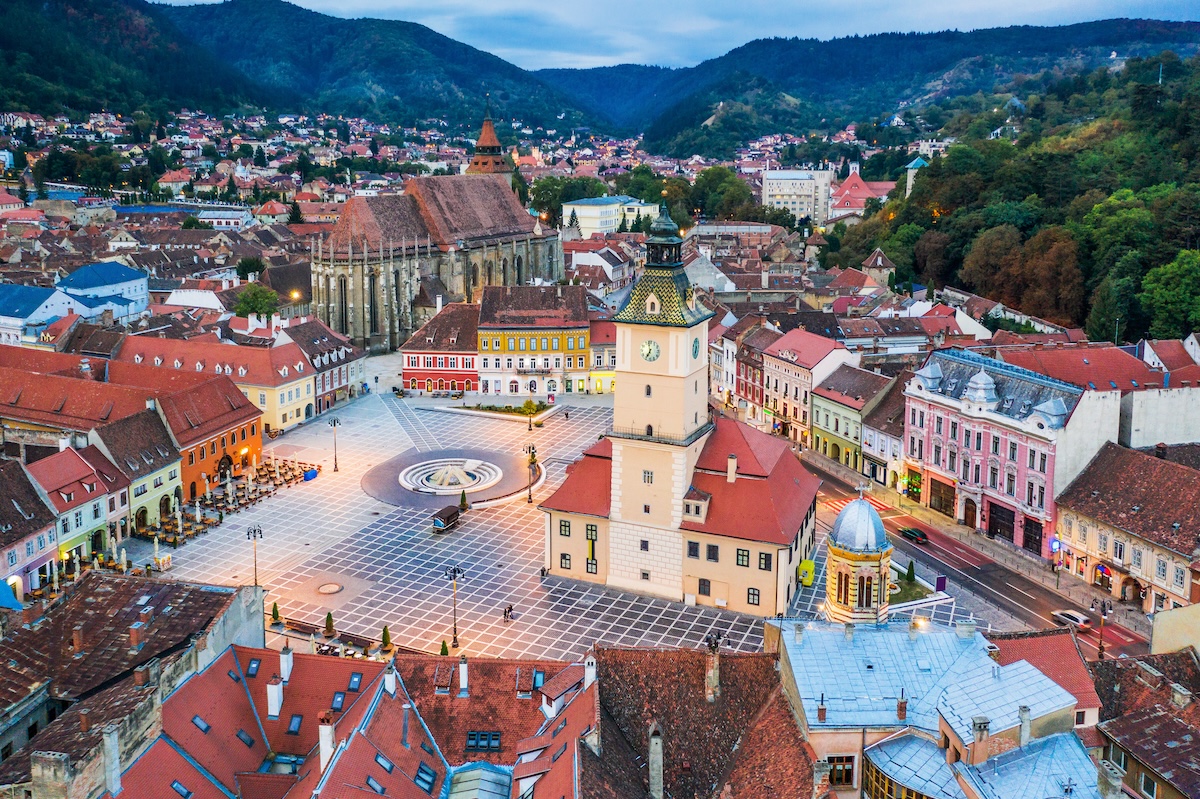
Tucked between mountain peaks and medieval streets, you’ll find a city where Gothic spires pierce the skyline and cobblestone lanes wind through centuries-old Saxon architecture. Coffee drifts from cafes housed in buildings older than most nations, while cable cars climb toward alpine trails just minutes from the historic center.
Brasov, Romania offers you a rare combination of preserved medieval charm and immediate access to the Carpathian wilderness. This Transylvanian city works as a destination in its own right, while also giving you a starting point for exploring the region’s legendary castles and mountain villages.
Spend your mornings wandering one of Central Europe’s best-preserved old towns, then use the afternoon to hike mountain trails or visit nearby fortresses. Brasov’s compact center lets you experience its architectural heritage and natural surroundings without the crowds that overwhelm other European historic cities.
Medieval Saxon Old Town
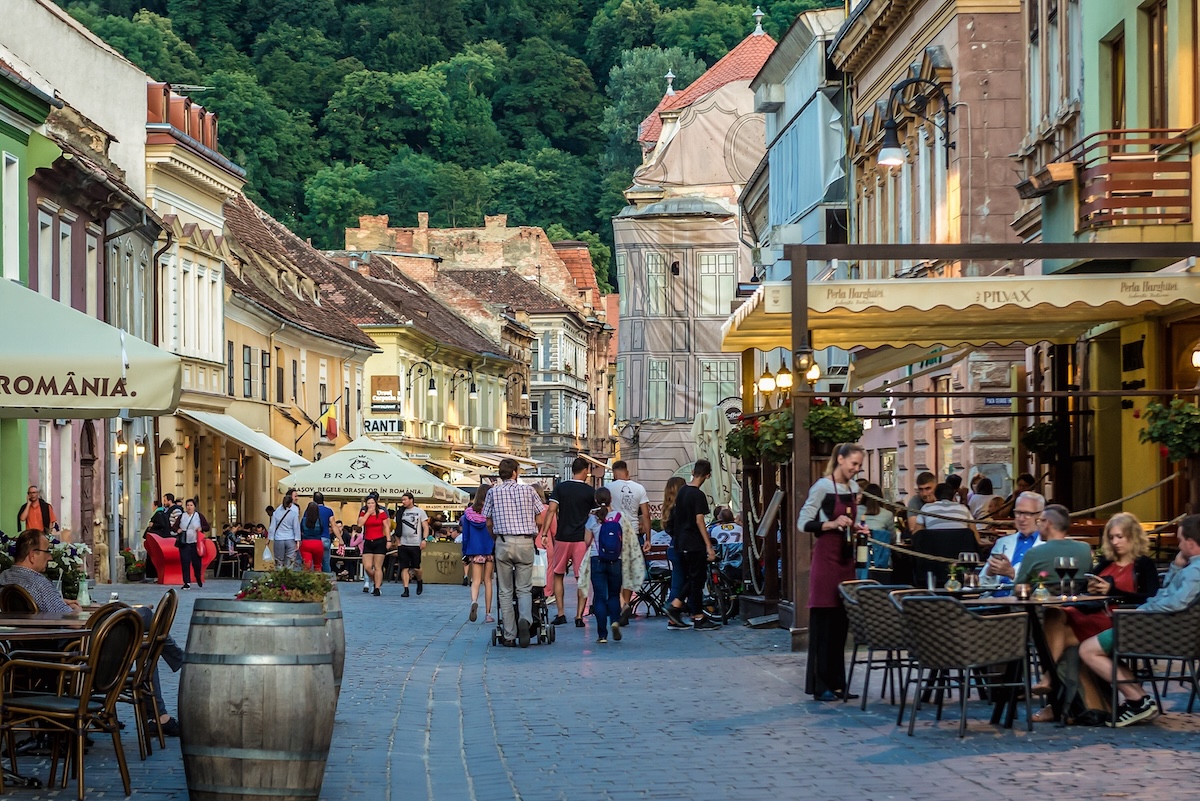
As you wander through Brașov’s historic center, you’ll feel as if you’ve stepped back in time. Narrow cobblestone streets wind between rows of pastel-colored merchant houses. The Saxons who settled here in the 13th century built a thriving trading hub, and their architectural legacy still shapes the city’s character.
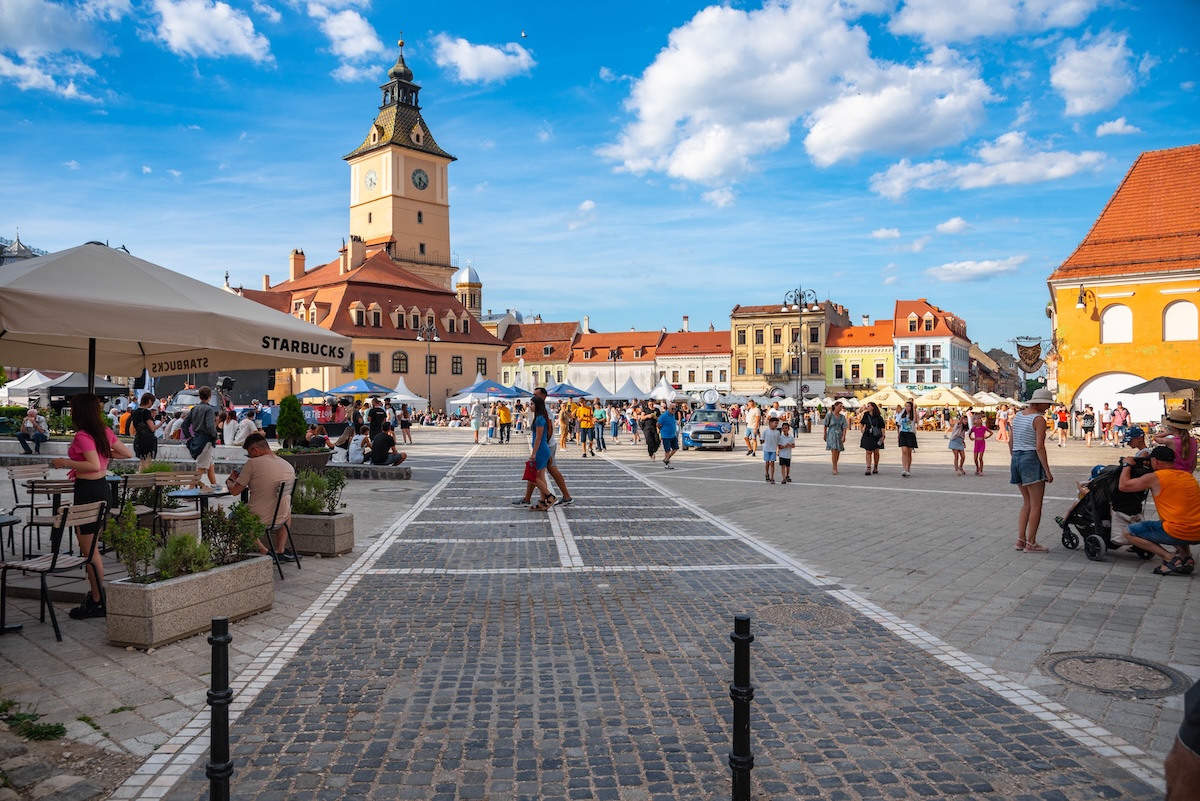
The old town’s defensive past remains visible in the surviving watchtowers that once guarded the settlement from invaders. Council Square (Piața Sfatului) forms the heart of this historic district. Baroque facades and Renaissance-era buildings surround it, occupying spaces where merchants once conducted business. Explore the lanes branching from the main square, and you’ll find quiet corners with wrought-iron signs and Gothic windows.
The fortifications around parts of the old town reflect a community that valued security and prosperity equally. As you walk these streets, you’ll notice how carefully the medieval layout survives. Traders used the same pathways and public spaces centuries ago, though cafes and shops now fill them.
The Black Church and Gothic Heritage
The Black Church stands as Brașov’s architectural crown jewel. Its dark exterior recalls the devastating fire of 1689, which nearly destroyed the structure. The Great Fire blackened the limestone walls with smoke, giving the church its distinctive name and appearance, which still captivates visitors.
Builders worked on this Lutheran church from 1385 to 1477. It ranks among the largest Gothic structures in Eastern Europe, with soaring vaulted ceilings and an impressive length of 89 meters. Inside, you’ll discover an unexpected treasure: the largest collection of Anatolian carpets outside Turkey. Medieval merchants donated more than 100 prayer rugs. The church also houses a massive 4,000-pipe organ that still fills the space with music during regular concerts.
A visit reveals layers of Brașov’s past as a Saxon settlement and important trade hub, where German craftsmen, Hungarian nobles, and Romanian communities met. Pointed arches, ribbed vaults, and elaborate stone carvings show the architectural ambitions of medieval Transylvania’s merchant class.
Gateway to Transylvania’s Castles and Villages
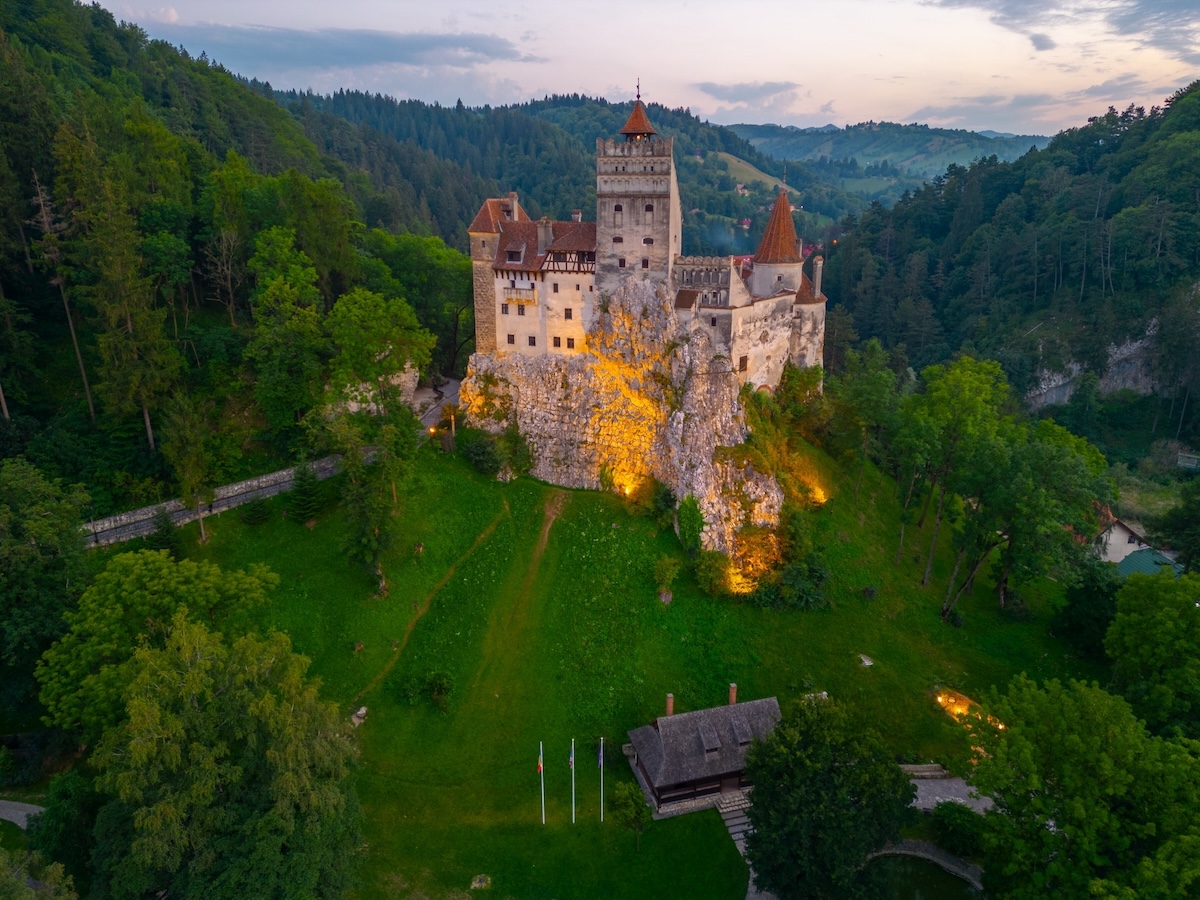
Brașov puts you within easy reach of some of Transylvania’s most storied landmarks. Bran Castle, often linked to Dracula legends, sits just 30 kilometers away and makes for a compelling half-day trip. You can also visit the fortified Saxon churches scattered through nearby villages, where centuries-old defensive walls still surround places of worship built by medieval settlers.
The surrounding countryside offers more than castle visits. Traditional villages like Viscri and Prejmer give you a glimpse into rural Transylvanian life, where horse-drawn carts still share the roads and locals maintain centuries-old customs. These communities preserve a slower pace that feels worlds away from modern tourism.
With Brașov as your base, you can explore these sites without constantly packing and unpacking. Day trips reach most major attractions, and you’ll return each evening to the city’s restaurants and comfortable accommodations. The region’s folklore and history feel more tangible when you see the landscapes that inspired them, from mountain passes to remote valleys where old traditions persist.