
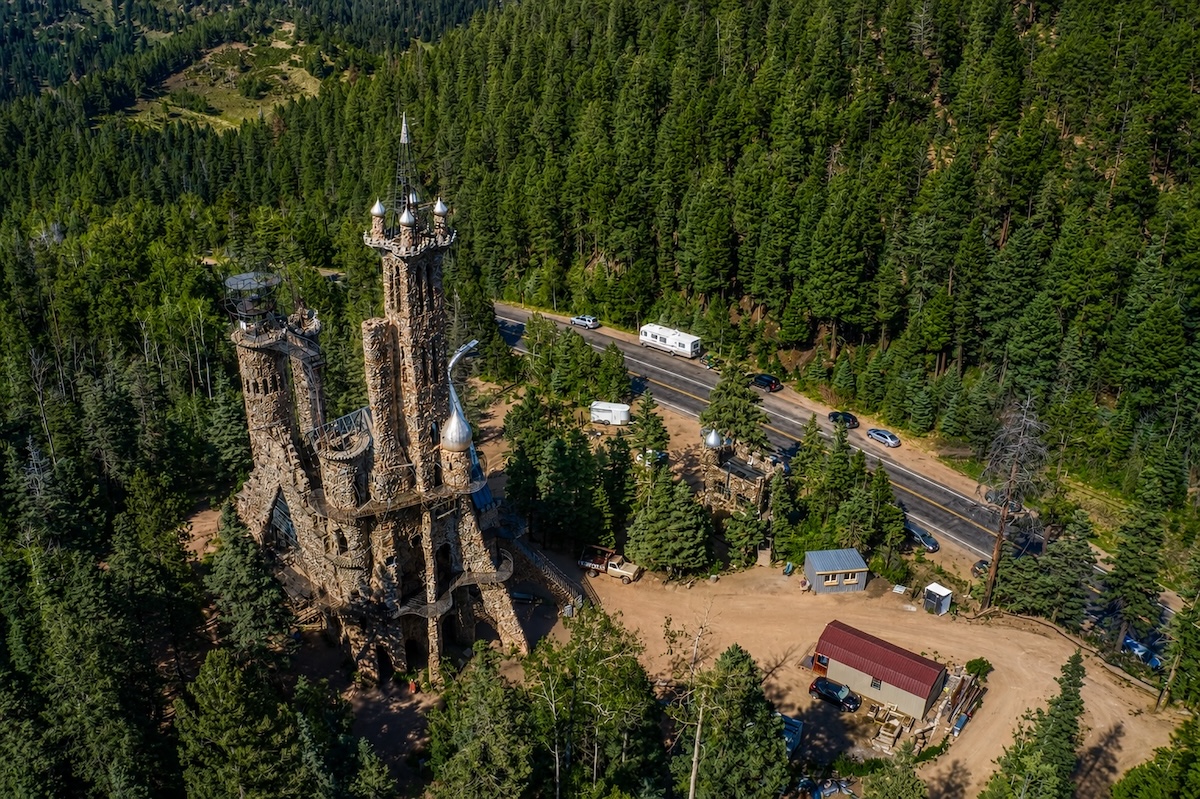
Somewhere in the Wet Mountains of southern Colorado, a handmade stone castle rises 160 feet above the forest floor. No formal blueprints, no corporate sponsor, no velvet ropes—just a wild idea made real. Bishop Castle stands out as one of the most unusual roadside landmarks in the American West. It sits quietly off Highway 165 near the small town of Rye, waiting for anyone curious enough to veer off the main road.
If you’re plotting a route through southern Colorado and want something a little different from scenic overlooks or gift shops, this is the stop. The castle’s free, open from sunrise to sunset all year, and runs on donations. You can wander through stone archways, climb narrow iron staircases, and stand on open-air walkways with the San Isabel National Forest stretching out below. It doesn’t feel like a polished tourist attraction—more like stumbling into someone’s lifelong obsession, made real and left for anyone to explore.
Just a heads up before you go: the staircases are steep, the railings are handmade, and the heights are no joke. Wear sturdy shoes. Keep a close grip on younger kids. The whole thing feels raw and unpolished, which is what makes it so memorable.
A One-Man Vision In Southern Colorado
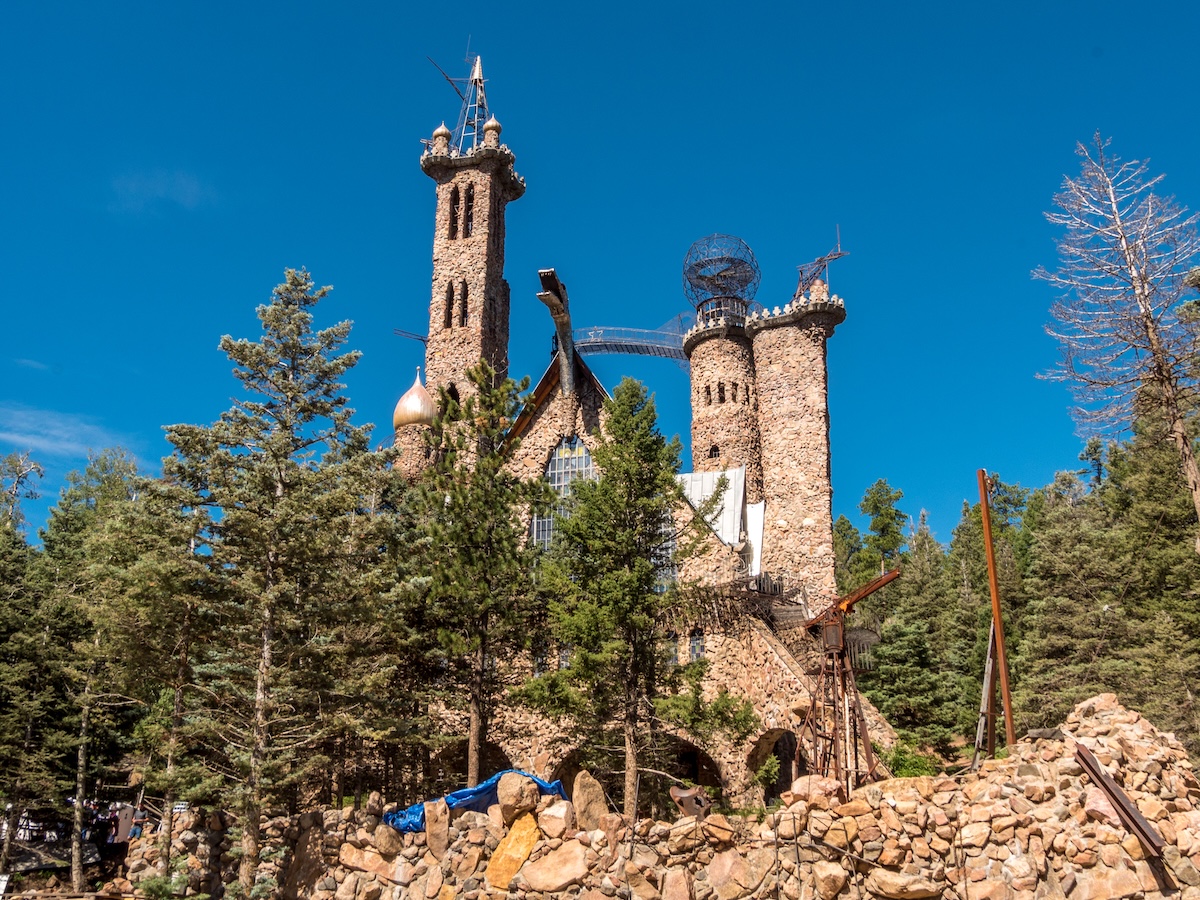
Back in 1959, Jim Bishop bought two and a half acres near Rye for $450. He was only fifteen. By the late 1960s, he started stacking native stone for what was supposed to be a simple cottage. Over the next five decades, that cottage morphed into a multi-story castle with towers, buttresses, arched openings, and a huge iron dragon head made from old stainless steel hospital trays.
Bishop did all this without cranes, loans, or a single formal architectural plan. He hauled and set over 1,000 tons of rock by hand. The ironwork throughout the castle shows off his skills as a metal fabricator. He liked to call the project “a poor man’s Disneyland,” a monument to hardworking people everywhere.
Jim Bishop died in 2024, but the castle is still open. His son Daniel acts as caretaker now, and he’s planning to keep adding to the place. The philosophy hasn’t budged: no admission fee, no corporate involvement, no blueprints.
The drive from Colorado Springs takes about ninety minutes. Highway 165 winds through forested mountain terrain that feels quieter and less traveled than the usual front-range routes. You’ll pass through Rye, then the road narrows as you enter San Isabel National Forest, and suddenly the castle pops up on your left. If you want to stretch your legs, nearby trailheads offer hiking access. The mix of a weird, one-of-a-kind landmark and solid mountain scenery makes this detour pretty hard to regret.
Handmade Stone Towers And Walkways
The first thing that hits you is the texture. Every wall, archway, and staircase—one person placed them, bit by bit, over decades. The stonework feels dense, deliberate, built from rocks hauled out of the nearby forest. Mortar lines show up in that irregular, hand-laid way you just can’t fake. This isn’t some movie set. It’s real work, sweat and all.
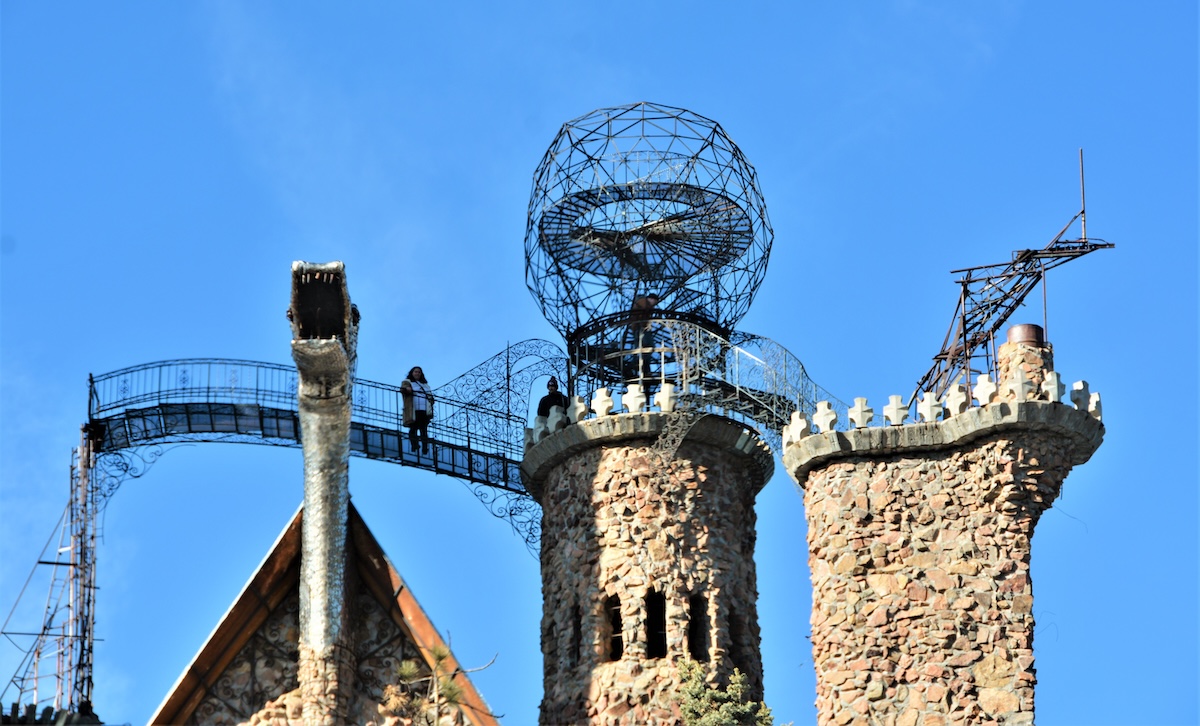
Towers shoot up at different heights, linked by iron walkways and some seriously steep spiral stairs. The tallest spire? About 160 feet, give or take. You can climb most of it, weaving through ground-level chambers and squeezing up tighter passages until you hit open-air platforms. Up top, the views stretch out over the Wet Mountains—pine forests filling the valleys, the kind of scenery that makes you stop for a minute.
Near the top, a hulking metal dragon perches above the stone walls, its head jutting out over the edge. Someone built it from salvaged scraps, and sometimes they’ll light a fire inside its mouth for effect. Stained glass windows pop up in a few rooms, throwing bursts of color into the otherwise rough stone-and-steel vibe.
Climbing here isn’t for everyone. The stairs jump around in height and width, and the handrails? Some feel solid, others not so much. Wind gets wild the higher you go. If heights or shaky footing aren’t your thing, you can still wander the lower levels and really get a sense of how massive this place is. Photographers love it, especially late in the day when the stone glows against the shadowy treeline. There’s just something about that light.