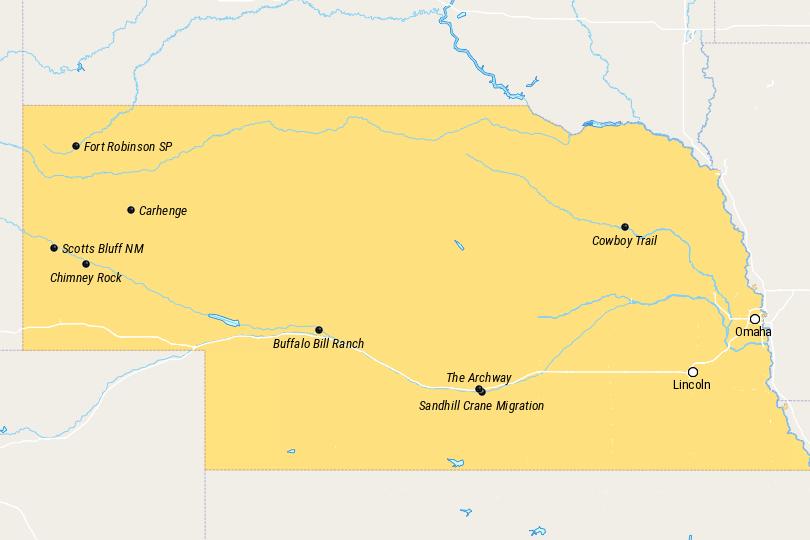
Although it is nicknamed the Cornhusker State, Nebraska has a lot more than just corn to offer. Located in the Great Plains, Nebraska boasts towering dunes, wide open plains, dramatic rock formations and bustling cities. In addition to the capital of Lincoln, there are a range of scenic spots you won’t want to miss.
Don’t forget to add in that cowboy culture and heritage to experience the full appeal of Nebraska. From ranches to urban destinations to unusual roadside attractions, this list of best places to visit in Nebraska has something that will delight everyone.
10. Chimney Rock
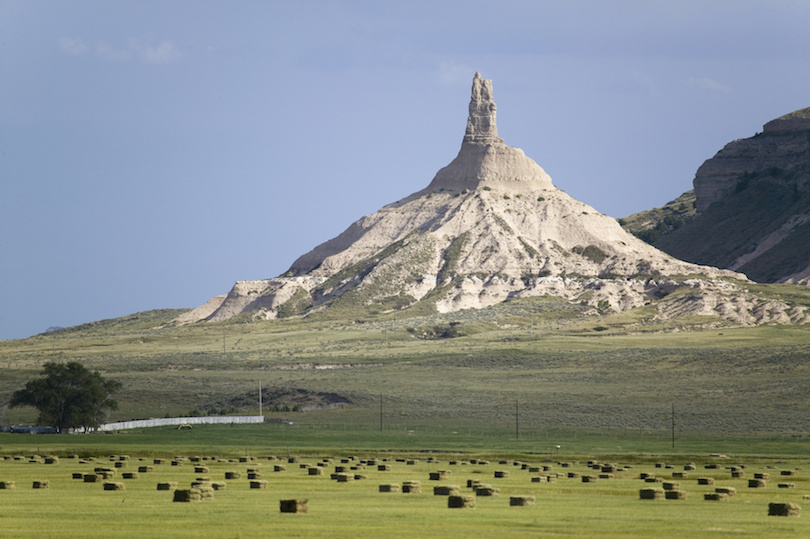
When travelers headed west through the Great Plains in the 19th century, there was one incredibly important landmark they watched for: Chimney Rock. The sandstone formation is more than 300 feet tall, and it is located in the North Platte Valley.
In addition to being a critical landmark on western journeys, Chimney Rock held significant for Native Americans and even Mormons. As a result, Chimney Rock National Historic Site is not to be missed. Today, the site boasts a Visitor Center and Museum, and you can get a map that shows the best hiking trails and views all around the bluffs.
9. Carhenge
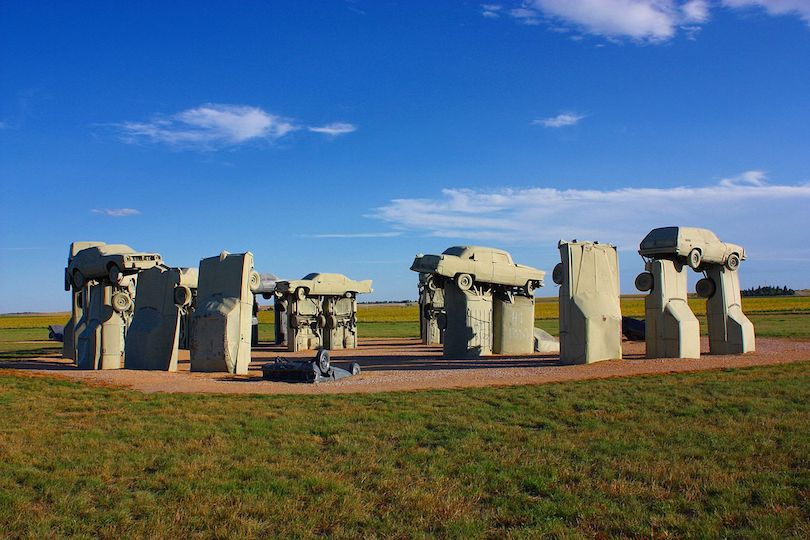
Carhenge is the very unexpected monument located in the Sandhills. Drive just north of Alliance, and you’ll see cars stacked and arranged in an unusual design. If the name sounds like Stonehenge, that’s because it is arranged to replicate the iconic British landmark made from stone.
Carhenge is made entirely from vintage cars that were made in the United States, but it has all been painted gray to look more like Stonehenge itself. If you like modern art, you’ll appreciate this quirky statement piece. If you’re a vintage car enthusiasts, you’ll love the use of cars in the monument. Even if you’re just passing through a want a great photo, Carhenge is worth a stop.
8. Sandhill Crane Migration
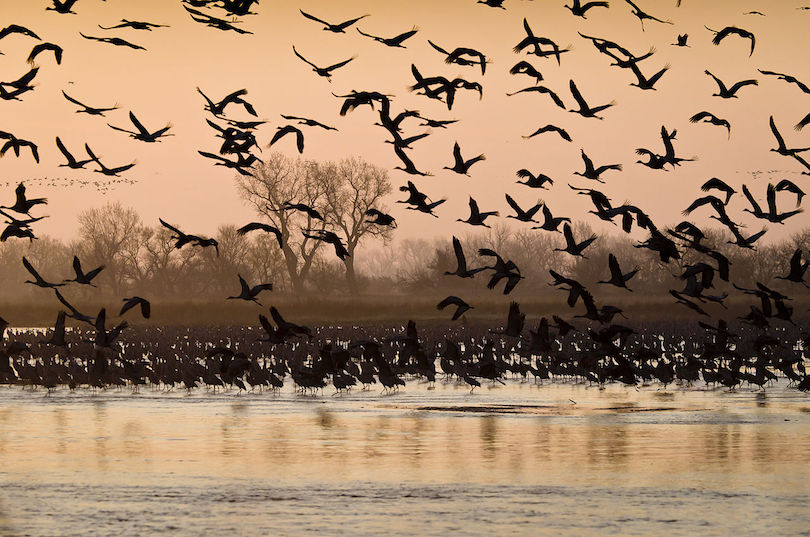
Every year in the Platte River Valley, there is an unusual event that brings in countless visitors from all across the United States. The sandhill crane migration takes place in the spring and the fall. In the spring, the sandhill cranes fly north, and they fly south in in the fall.
While this airborne migration is typical of many types of birds, what makes this unbelievable is the size. More than 80 percent of all sandhill cranes make the migration following the same path. For 80 miles in Nebraska, birds fly along what is known as the flyover, which stretches all the way from Grand Island to Kearney.
7. Cowboy Trail
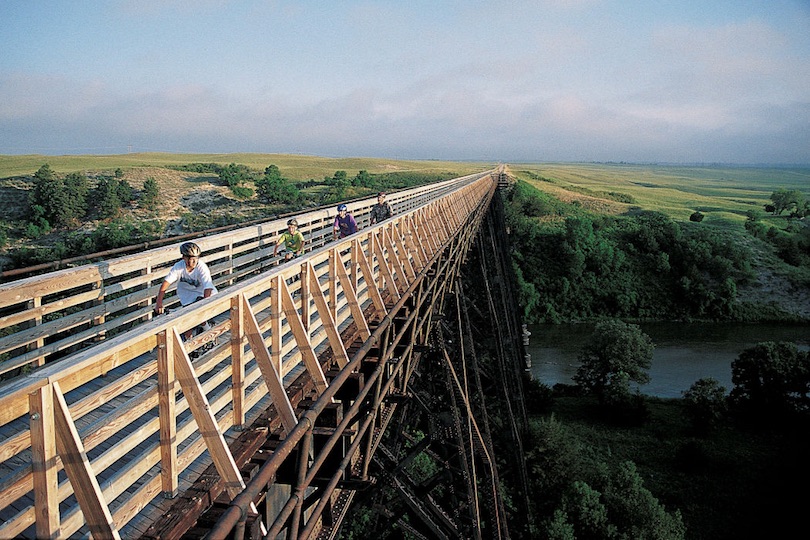
In the Niobrara River Valley, in what is known as the state’s Outback Area, is the Cowboy Trail. This trails was made right where the abandoned Chicago and Northwestern Railway Corridor used to run. Today, the rails-to-trails pathway stretches for almost 200 miles.
It is a hub for recreational opportunity in the state, and visitors can hike or cycle along the finely crushed gravel and limestone path. There are a staggering 221 bridges that line the trail, but the so-called Valentine Bridge is a whopping quarter-mile long and makes for an impressive photograph background.
6. Buffalo Bill Ranch
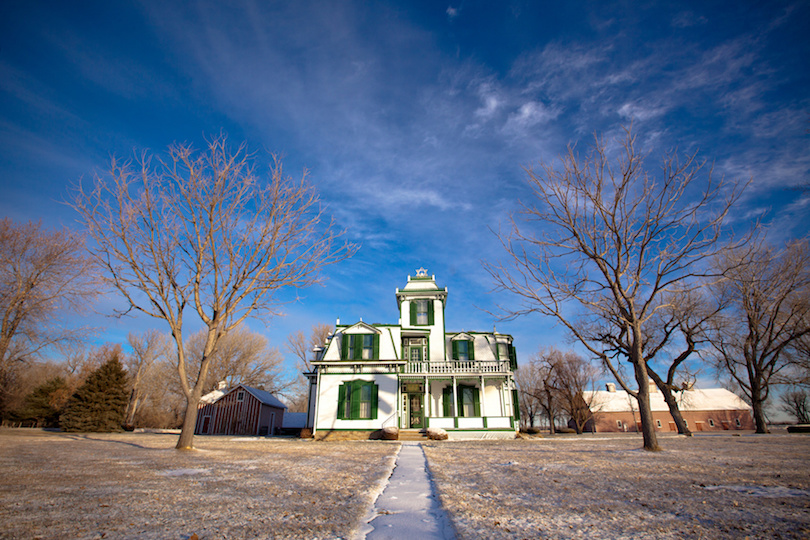
The man who became known as Buffalo Bill in the 19th century toured the world with a western-themed show. Buffalo Bill’s real name was William F. Cody. Cody’s home was in North Platte, and it is now known as the Buffalo Bill Ranch Historical Park.
Today, you can tour his 19th century mansion called the Second Empire. You can also admire the staggering amount of Buffalo Bill memorabilia, much of which revolves around his famed Wild West Show. To top it all off, the state park boasts camping, hiking and picnic spots.
5. Fort Robinson State Park
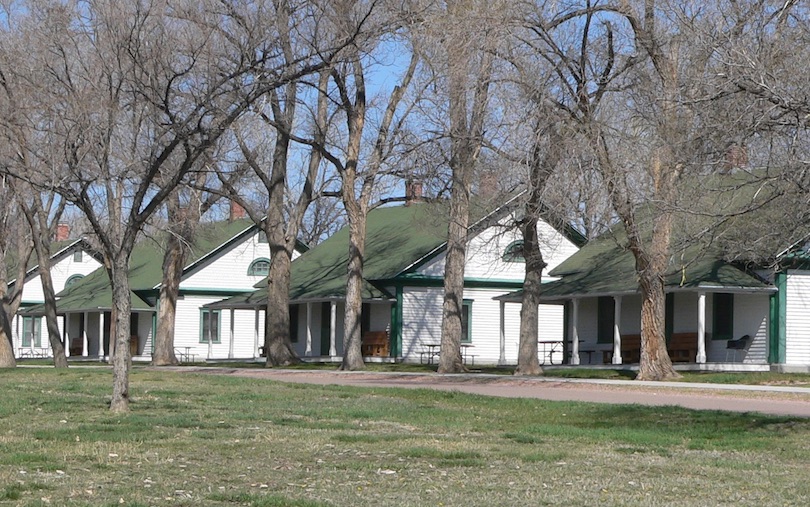
In the far northwestern part of the state is Fort Robinson State Park, a sprawling park where the history and scenery of the Old West truly comes to life. During the late 19th century, Fort Robinson was used as a military outpost, and now it is the best way to explore the very rural side of the region.
To start, leave your own vehicle behind and explore the vast park on a horse-drawn carriage, on horseback or in an open-air four-wheel-drive Jeep. After an hour or two at the exceptional Trailside Museum, head back outdoors to spot the longhorn herds or the stunning buffalo herds.
4. The Archway
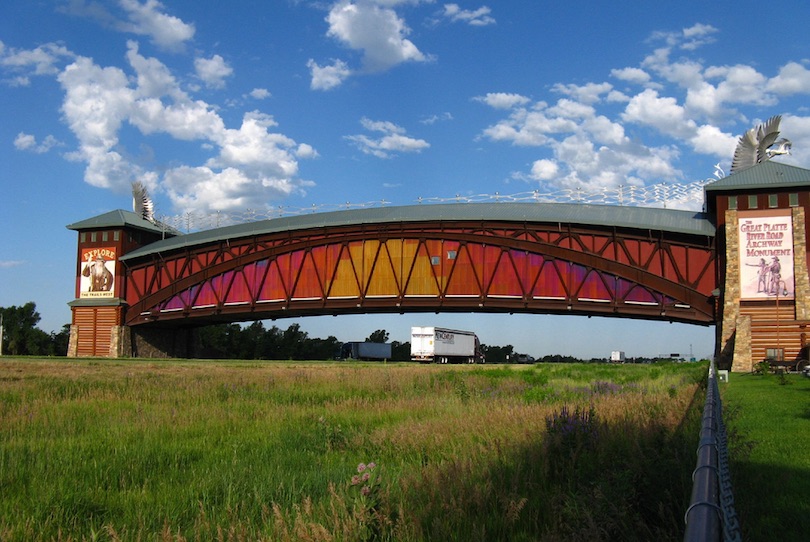
Just outside of the city of Kearney is the Great Platte River Road Archway Monument, better known as simply the Archway. The arch itself stretches over the busy Interstate 80, and it honors and represents the difficulties and importance of the Westward Expansion.
The Archway is a striking monument on its own, but it also includes a museum. When you enter the Archway, start the self-guided audio tour to become a part of the story. You’ll learn about the Mormon Trail, hear about pioneers along the Oregon Trail and find out why people were so eager to travel through to California.
3. Scotts Bluff National Monument
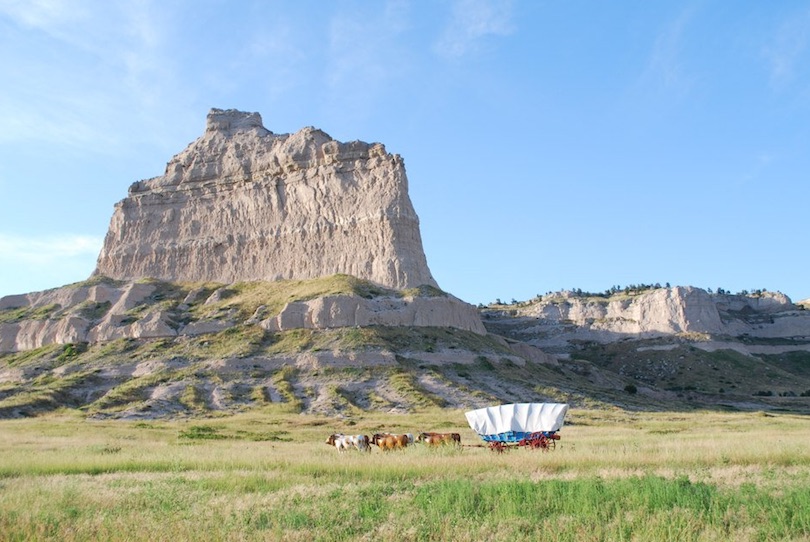
Just like Chimney Rock, Scotts Bluff was an important natural marker for those traveling through to the Western United States. While the name makes it sound like a single bluff, the landmark is actually a collection of several bluffs that rise dramatically from the flat landscape.
Severals trails wind through the area, offering you the chance to hike and see the bluffs from multiple angles. One of the most popular is called Overlooks Trail, and it lets you look out over North Platte Valley and admire the natural beauty of the region from a spectacular vantage point.
2. Lincoln
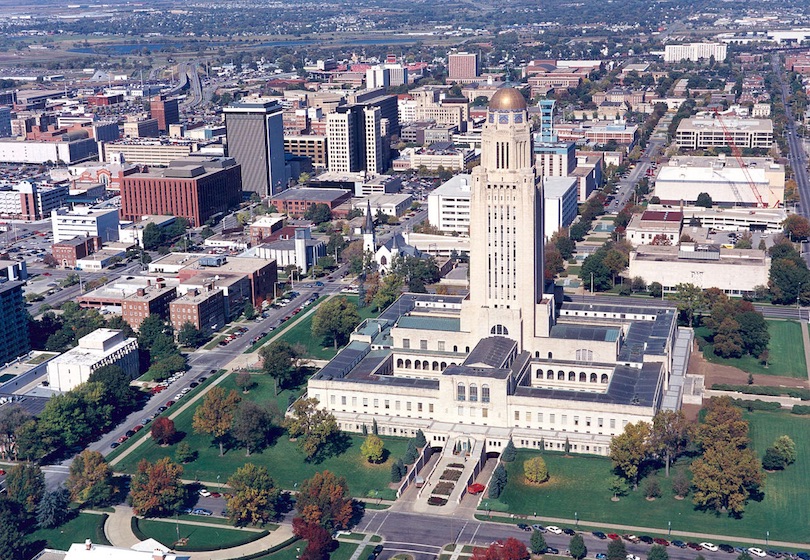
Lincoln is one of the busiest and most interesting places to visit in Nebraska, not to mention its role as the capital. The capitol building should definitely be on your itinerary, and guided tours are offered multiple times a day in the art deco building. Best of all, tour participants get to use the 14th floor observation deck, which offers one of the best views in the entire city.
The University of Nebraska is located in Lincoln, and their sporting events are by far the biggest events in the city. On football game days, try your best to find a ticket and catch the game at Memorial Stadium, where more than 80,000 fans can gather and cheer on the Huskers.
1. Omaha
Omaha is the most populated city in Nebraska, and it is a place with a reputation for charm and hospitality. Embrace the historic city of Omaha by checking out the Old Market, where the streets are still made from brick and horse-drawn carriages can take you from one shop to the next.
In the warmer months, it’s also where you will find the farmer’s market. Culture lovers will find that Omaha offers a large number of choices. One of the top picks is the Joslyn Art Museum, where you can admire a world-class collection containing pieces by everyone from Degas to Renoir. Enjoy views of the skyline at Gene Leahy Mall, one of the many public green spaces right in downtown Omaha.