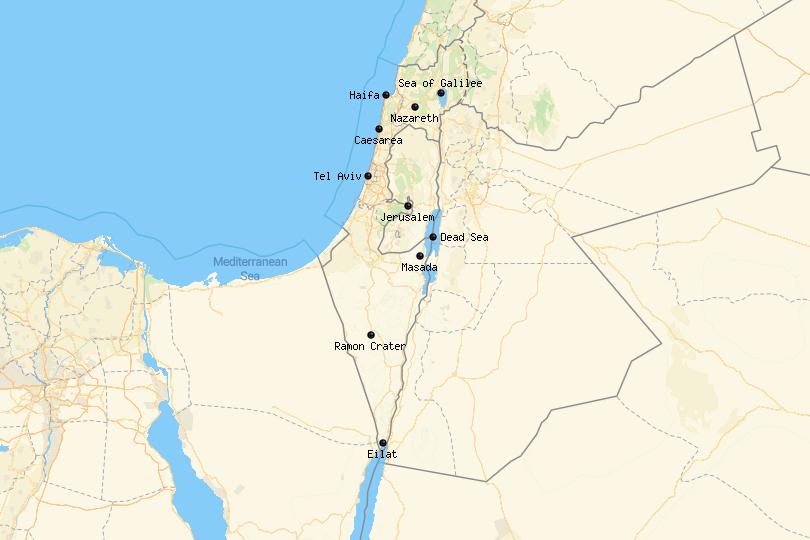
For a country the size of New Jersey, Israel is startlingly diverse. Almost anywhere you travel in this Middle Eastern country, you’re sure to come across historic religious sites mentioned in the Bible. You’ll also come across ancient Roman ruins as well as other archaeological ruins dating back thousands of years.
If old things aren’t your cup of tea, Israel has some great beaches, good outdoor opportunities, and a sophisticated cultural scene. An overview of the best places to visit in Israel:
10. Nazareth
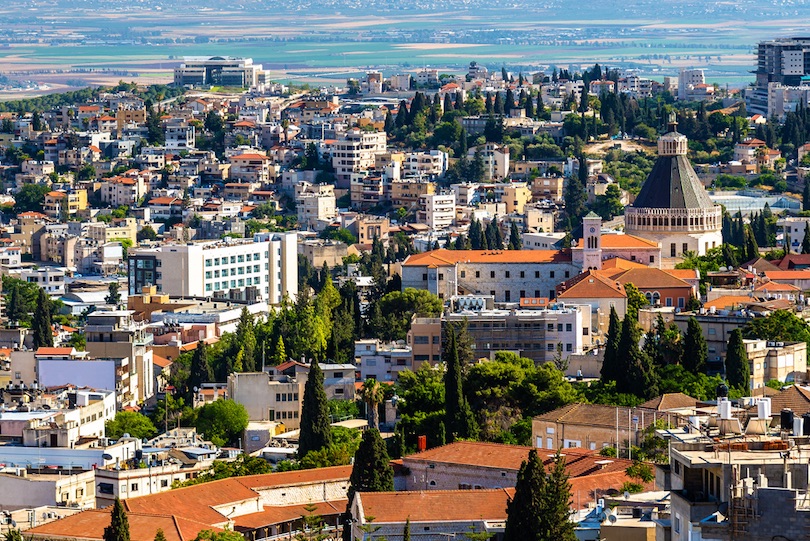
Nazareth, the largest city in Galilee, is known as the Arab capital of the country because its residents are predominantly Arab citizens of Israel. Nazareth is a pilgrimage destination for Christians because the Bible says it was the home of Joseph and Mary and hence the childhood home of Jesus.
This ancient city is where the angel Gabriel appeared to tell Mary she would give birth to Jesus. Because of this, Nazareth is sometimes called the cradle of Christianity. Its Old City boasts the Church of the Annunciation, the largest Catholic church in the Middle East. Take time, too, to walk the picturesque streets and visit the colorful local market.
9. Caesarea
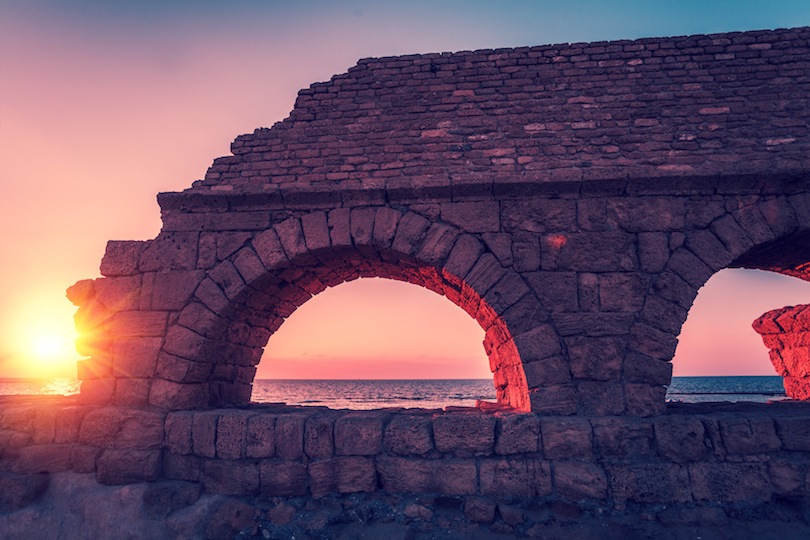
Caesarea is both ancient and new. It was founded by Herod the Great in honor of Caesar Augustus, who gave him the city. In 1952, it became the only city in Israel to be governed by a private corporation. Antiquities park is where you’ll find ruins from Herod’s extensive building campaign.
You’ll also find more ruins by walking through the old city or maybe you’ll want to take in a re-enactment of horse races in the hippodrome. The new Caesarea is modern and upscale. Maybe you’ll want to sunbathe on the sandy beaches, play golf or take in the annual jazz festival.
8. Ramon Crater
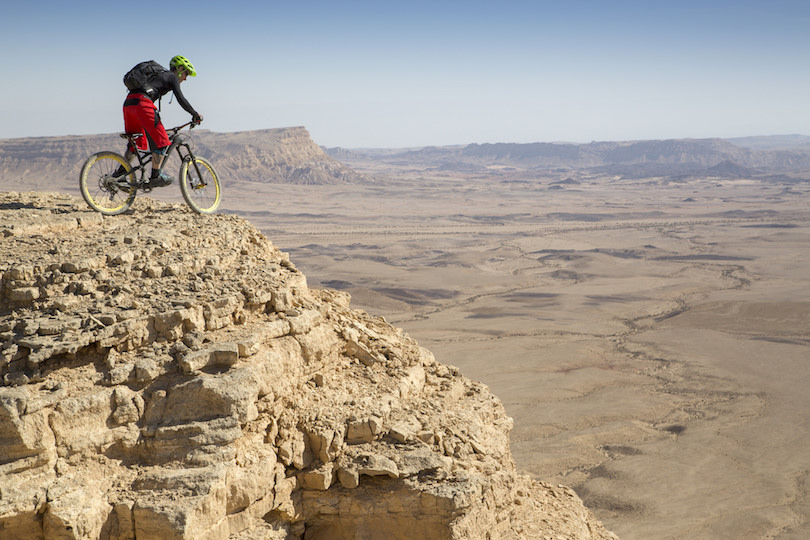
Ramon Crater is the largest of three erosion craters found in the Negev Desert. The geological landform is believed to have started forming millions of years ago when the ocean began receding. It was a few more million years before it became the crater it is today.
Ringed by mountains, the colorful crater is more than 450 meters (1,500 feet) deep and nearly 40 km (25 miles) long. The world’s largest erosion crater is accessible to the public; you can ogle the varying terrain as you hike, bike or drive through it. Campers may enjoy staying at a campsite run by Bedouins.
7. Haifa
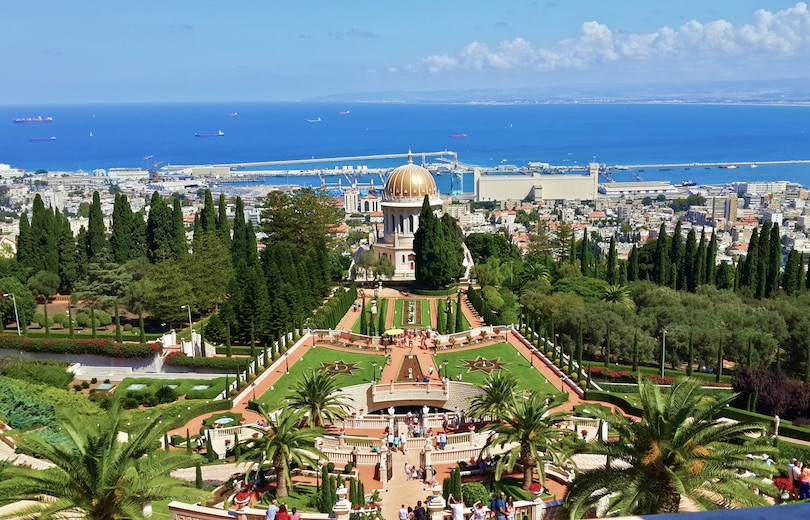
Israel may be a Jewish state, but it is another religion that draws visitors to Haifa, the country’s third largest city. Located on the Mediterranean, this pretty city’s biggest tourist attraction is the Baha’i World Center with its shrine of the Bab and beautiful gardens.
Haifa is primarily a port and industrial city, but it offers a variety of things to do. The Israel Museum of Science, Technology and Space is its most visited museum. The arts are important, too, with Ein Hod, home to about 100 artists and craftsmen. Haifa has nice beaches and is a good place to surf and sail.
6. Sea of Galilee
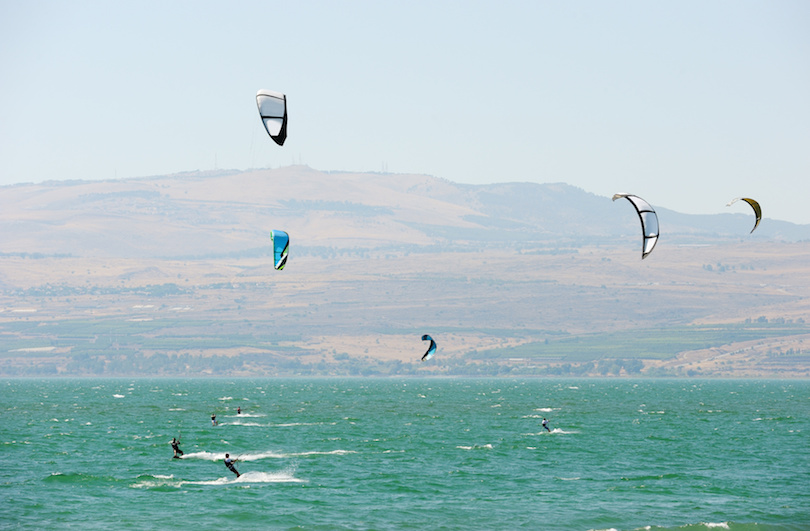
The Sea of Galilee of Galilee is the lowest freshwater lake on earth, and the second lowest lake in the world – the lowest being the saltwater Dead Sea. Jesus’ Sermon on the Mount was supposedly given on a hill overlooking the sea.
It’s a popular destination for Christian pilgrims who want to see where Jesus walked on water. The 65-km (40-mile) long Jesus Hiking Trail that visits places where Jesus worked his ministry is another draw. People also come from all over the world to be baptized at the spot the lake flows into the Jordan River.
5. Tel Aviv
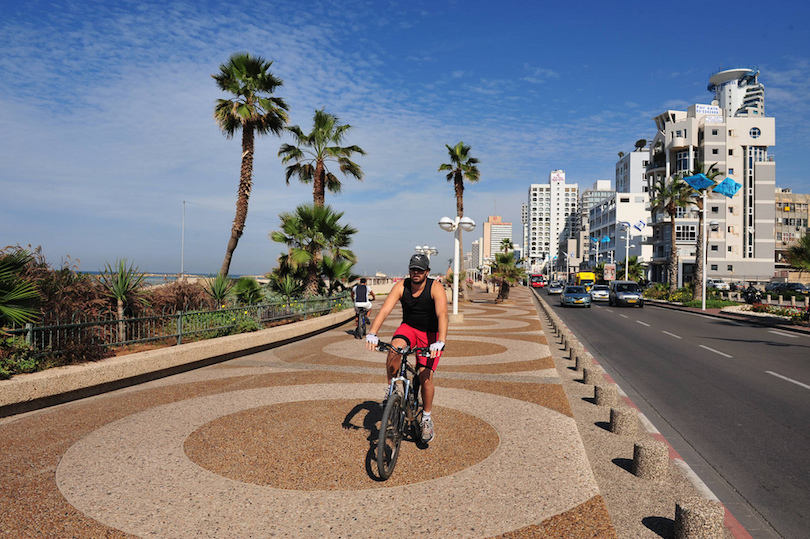
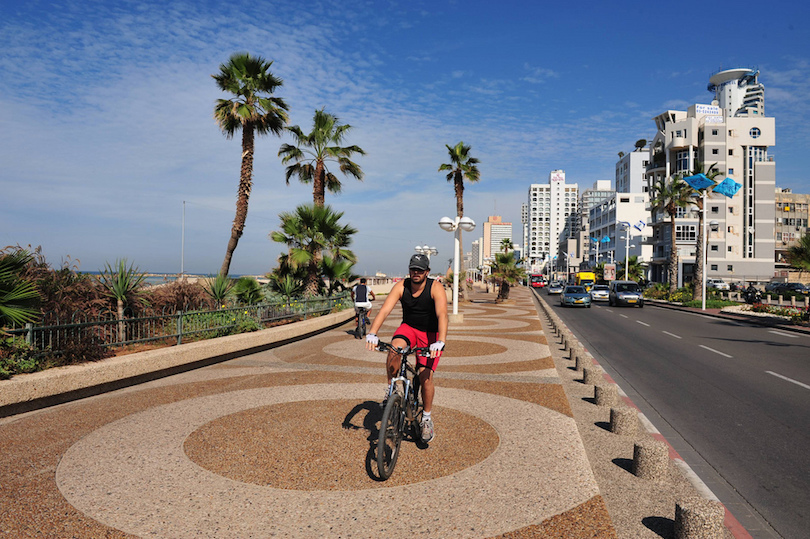
Tel Aviv, Israel’s second largest city, is the country’s financial hub. But that doesn’t mean you should skip coming here because there’s lots see and do, especially if you’re into nightlife. Tel Aviv is known as a party city, as one that doesn’t sleep.
The city is home to the national opera and philharmonic orchestra. Several travel publication surveys rank the city among the best place to visit in Israel; it’s also famous for being LGBT friendly. Its Mediterranean beaches are some of the world’s best. The city has several outstanding museums, including Beth Hatefulsoth that tells the story of Jewish persecution over the ages.
4. Eilat
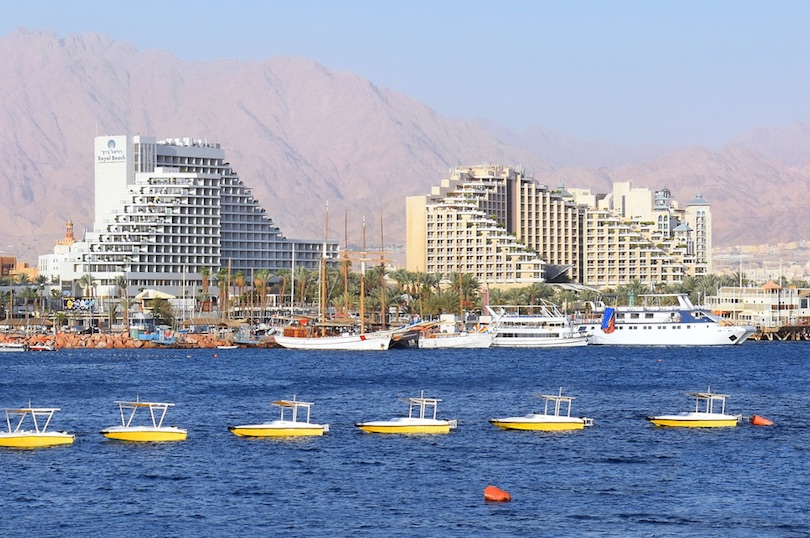
Eilat is an ancient city on the Red Sea that’s served as a port city since the days of King Solomon. Eilat is Israel’s southernmost city. Its sumptuous beaches and an arid climate contributes make it a major resort city. It has some of the best diving in the world, likely due to the beautiful coral reef located here.
If you dive, expect to see an astounding array of sea life. Other attractions include King City, a high-tech Bible-based family theme park; bird watching – Eilat is on the main migration route between Europe and Africa; and Timna Valley Park, home to Solomon’s Pillars and the world’s oldest copper mine.
3. Dead Sea
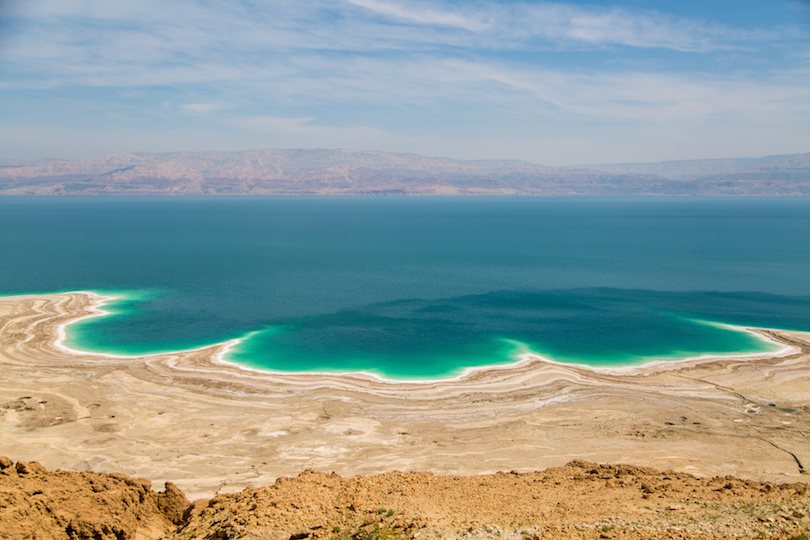
The Dead Sea got its name for a reason. It’s almost 10 times as salty as the ocean, making it a harsh environment for anything to grow in. And at 400 meters (1,400 feet) below sea level, it’s the lowest elevation on land.
For thousands of years; the salt and minerals from its water are used in cosmetics. Dead Sea water and mud have medically proven benefits, putting severe skin diseases and joint problems into long-term remission. All the luxury hotels along the coast have health spas, which are often booked solid for months ahead.
2. Masada
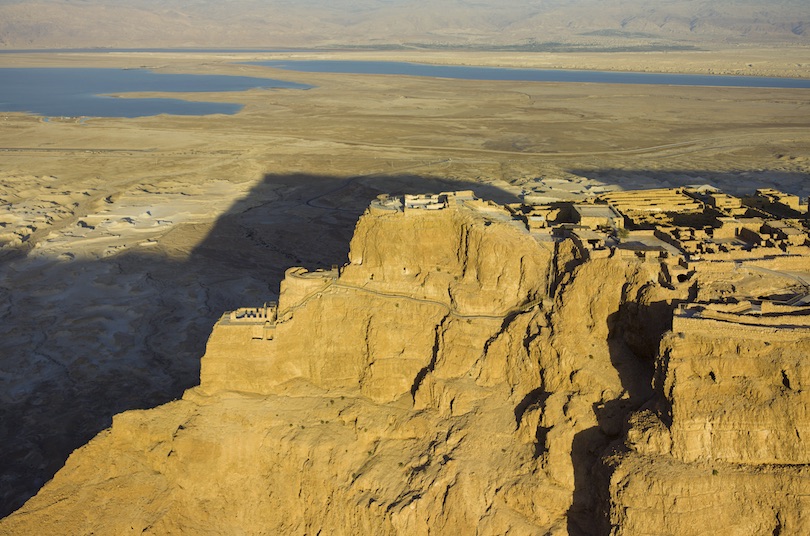
Situated on a high plateau in southern Israel overlooking the Dead Sea, Masada was the last Jewish holdout to fall to Rome at the end of the First Jewish–Roman War. Masada was first fortified by Herod the Great in the late first century BC. In 66 AD, Sicarii Jewish patriots captured the fortress from the Romans, who tried to take it back seven years later.
Rather than live under Roman rule, the 900 Sicarii opted for mass suicide. Today Masada is a symbol of ancient Israel and one of the best examples of Roman fortifications remaining. There’s a cable car for those who don’t fancy taking one of the various different paths that lead up the hill.
1. Jerusalem
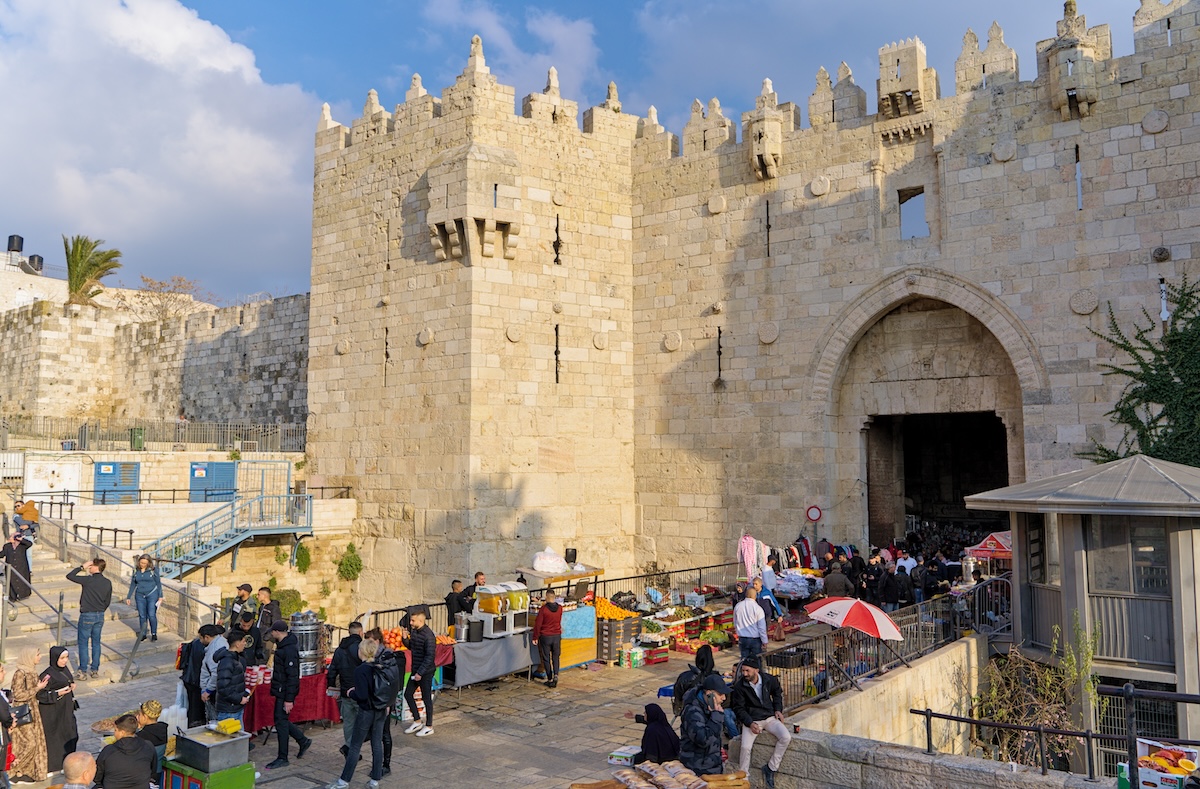
Regarded as a holy city to the three major religions of Judaism, Christianity and Islam, Jerusalem is one of the world’s oldest cities. Located high in the Judean Mountains, Jerusalem was formerly inhabited by the Jebusite tribe until King David of the Israelites captured it 3,000 years ago and made it his capital city.
Over the centuries, the city has been besieged, attacked and captured numerous times by opposing religious and political powers. In spite of time and warfare, Jerusalem’s many historic sites remain well preserved, making it one of the most beautiful and fascinating cities of the world.
Its historic Old City is divided into four quarters: Jewish, Christian, Armenian and Muslim. Here you can walk in Jesus’ footsteps on the Via Dolorosa’, pray at the Western Wall, see the Church of the Holy Sepulcher, where Christians believe Jesus is buried, and tour the Tower of David, a medieval citadel. Other important sites include the Dome of the Rock and the Al-Aqsa Mosque at the Temple Mount. Outside the Old City, popular attractions are the Garden Tomb, Hezekiah’s Tunnels, Jerusalem Botanical Gardens and the Biblical Zoo.