
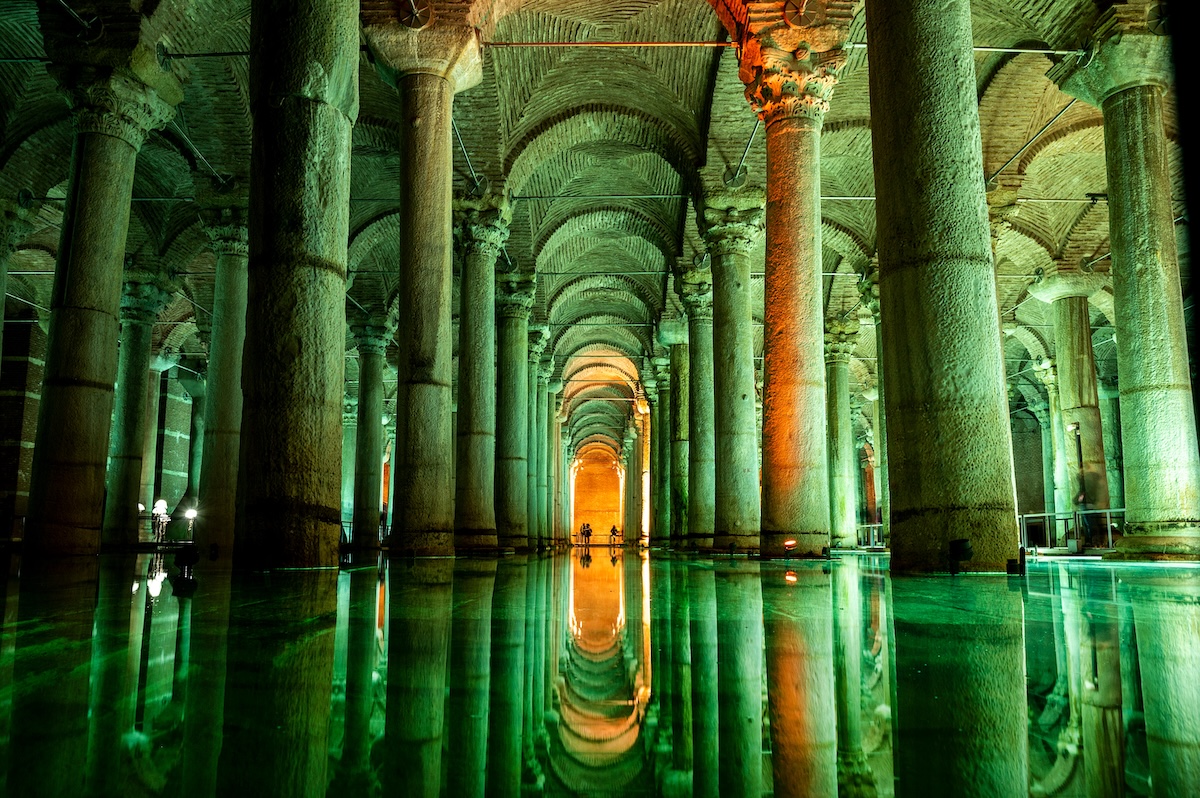
Beneath the lively streets of one of the world’s most storied cities, there’s a vast chamber that’s lingered in near-darkness for over 1,500 years. You make your way down a stone staircase and suddenly you’re surrounded by a forest of columns rising from shallow water, their reflections blurring the line between solid ground and shimmering pool. It’s cool, almost chilly, and the only sounds are the occasional drip of water and the quiet glow from scattered lights.
The Basilica Cistern in Istanbul gives you a rare look at Byzantine ingenuity and stands out as one of the most atmospheric historical sites in Turkey. Built in the 6th century under Emperor Justinian I, this underground reservoir once delivered water to the Great Palace and nearby buildings. These days, visitors wander along raised walkways, soaking in the subterranean wonder that’s fascinated people for generations.
You’ll wind your way past rows of ancient columns, catch sight of those mysterious Medusa head sculptures, and move through a space where history and ambiance tangle together in ways you just don’t expect.
An Underground Byzantine Reservoir
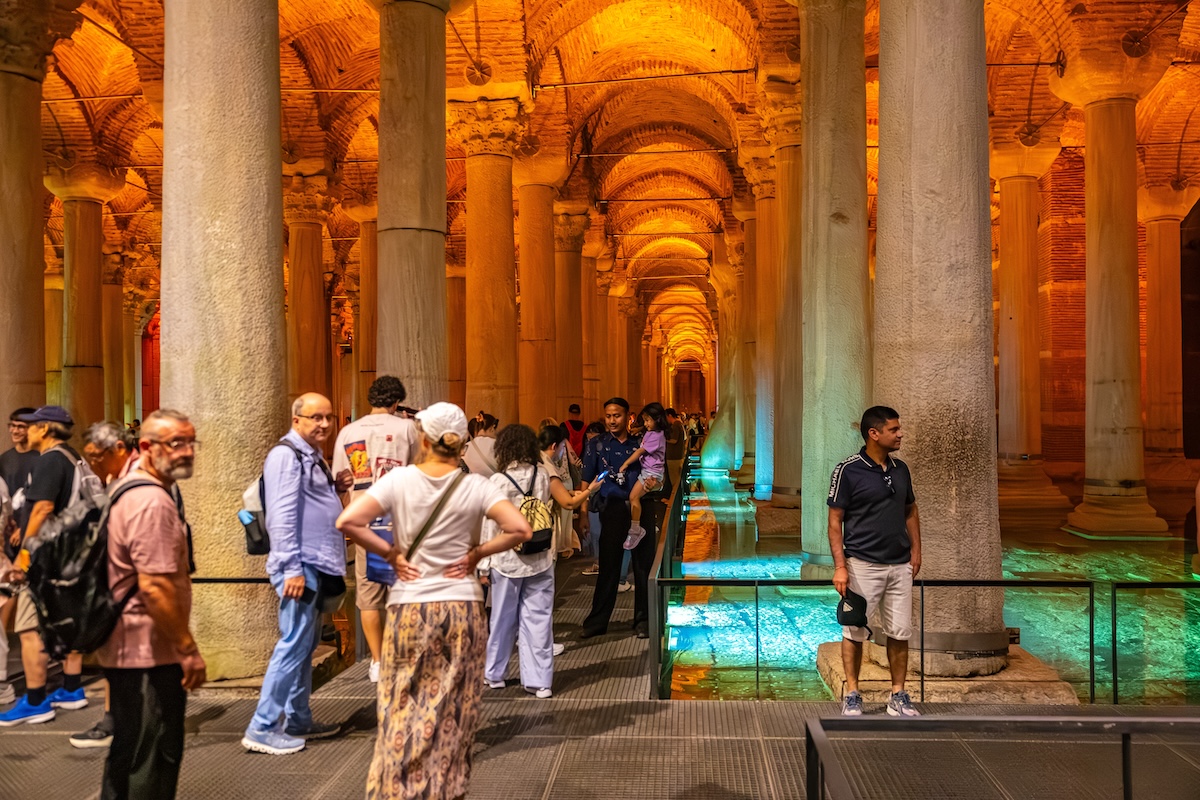
When you step into the Basilica Cistern, you’re walking into a jaw-dropping piece of 6th-century engineering. Emperor Justinian I wanted Constantinople to have a steady water supply, so he ordered this massive underground chamber—capable of holding up to 80,000 cubic meters of water, all channeled in through aqueducts from over 12 miles away.
This place became a lifeline for the Byzantine capital, storing enough water to keep the Great Palace and its neighbors going during sieges or droughts. You’ll wander among 336 marble columns, each nearly 30 feet tall, set in 12 rows that really do feel like a marble forest hidden beneath the city. They didn’t waste resources either; the Byzantines reused columns from older Roman buildings, which honestly just adds more character.
The cistern kept working for centuries—proof of just how solid Byzantine construction could be. Now, you can stroll along walkways just above the water, taking in the scale and ambition of this secret reservoir that once kept an empire’s capital alive.
Columns, Medusa Heads, and Atmospheric Design
Step down into the cistern and you’re met by a forest of 336 marble columns, each one stretching nearly 9 meters and vanishing into the shadows. Most of these columns came from older Roman sites scattered around the Byzantine Empire—builders just grabbed what they could find back then. The endless rows of columns almost pull you into a trance as your eyes try to follow them through the gloom.
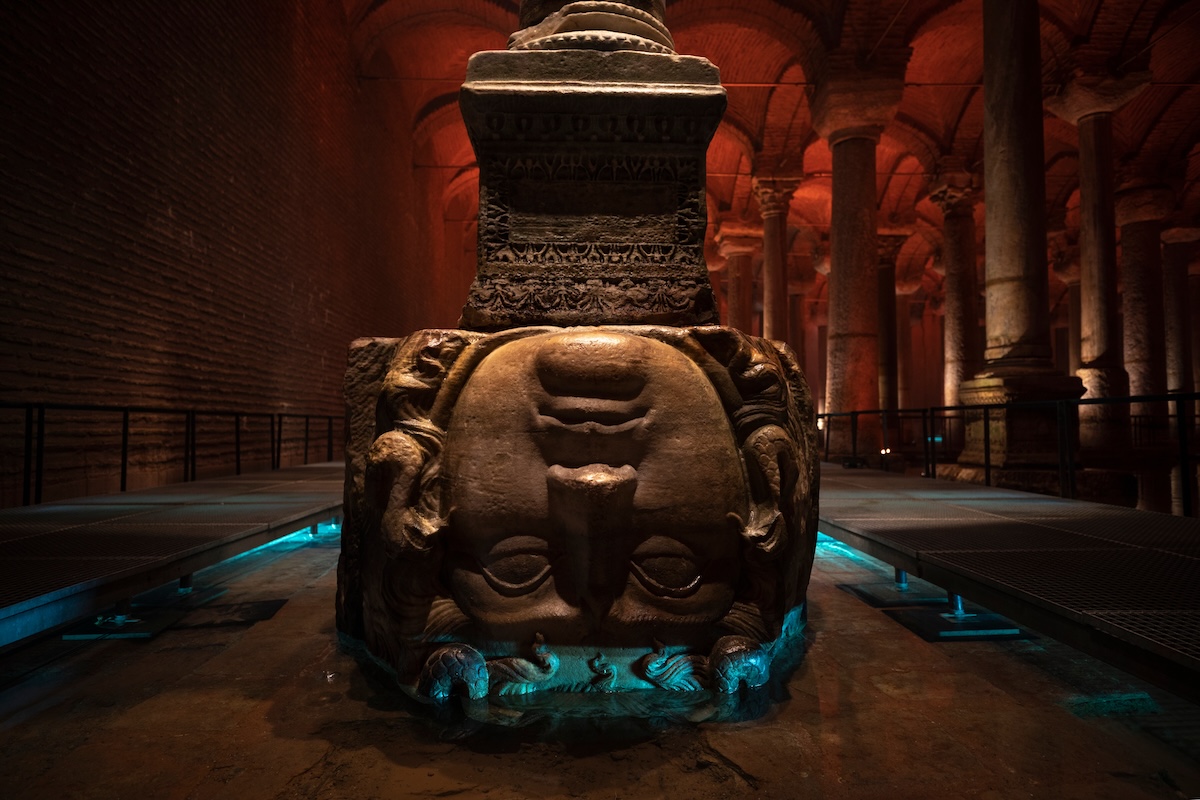
In the northwest corner, you’ll spot the cistern’s oddest treasures: two huge Medusa heads serving as column bases. One’s tilted sideways, the other’s upside down. Why? No one really knows. Maybe the builders just needed something the right size and didn’t care about the orientation—or maybe there’s some lost symbolism. It’s one of those details that sticks with you, even if it’s never explained.
The place feels more like an underground palace than a water tank. Dim lights skim across the shallow water, sending ripples of light up to the old brick ceiling. Drips echo everywhere, and some columns almost vanish into the darkness while others glow under spotlights. The whole setup feels carefully designed to play with your senses, adding to the cistern’s moody, mysterious vibe.