
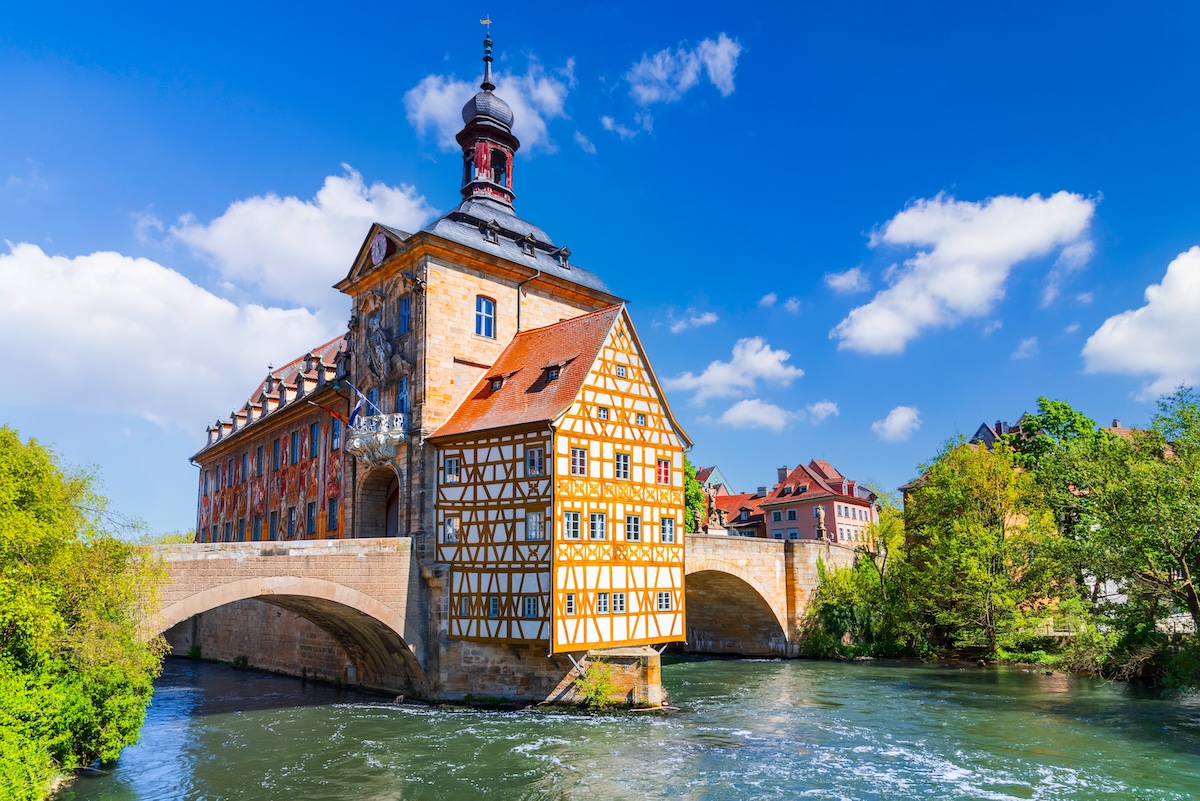
Picture a city where medieval bridges lead to an island lined with half-timbered houses. A place where bishops once ruled from a hilltop cathedral, and breweries still pour a beer that tastes like liquid smoke. Some European spots just hide in plain sight, offering layers of history and living traditions—minus the overwhelming crowds.
Bamberg sits in Bavaria’s Franconia region, a UNESCO-listed city where seven hills, centuries-old brewing culture, and medieval architecture come together to create one of Germany’s most distinctive urban landscapes. You’ll wander cobblestone streets that haven’t changed much since the Middle Ages, sip smoked beer in taverns that have served it for generations, and stroll through a town where people still grow vegetables in old-school gardening plots.
This isn’t a museum city frozen in time. Bamberg’s charm comes from how its history seeps into daily life, from the beer in your glass to the vegetables growing in neighborhood gardens.
UNESCO Old Town and Medieval Street Life
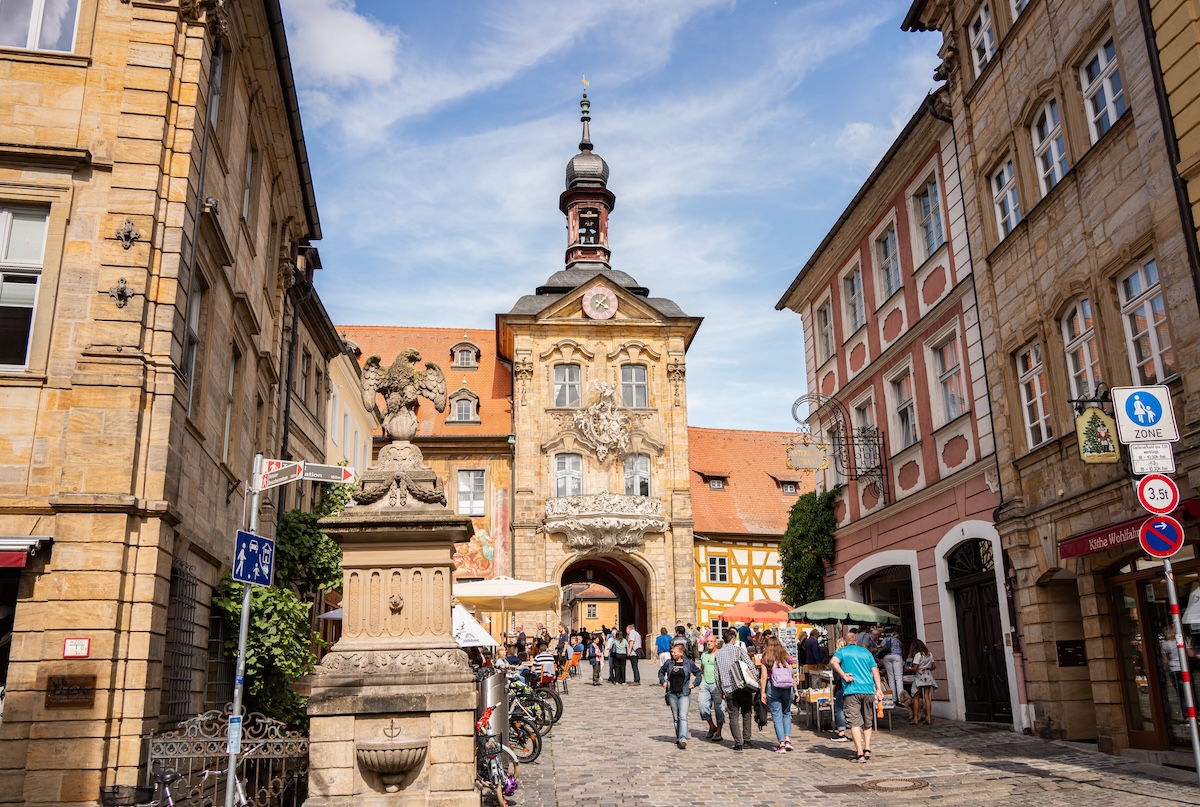
Wandering through Bamberg’s historic center, you step into one of Germany’s most complete medieval cityscapes. The narrow cobblestone lanes twist between half-timbered houses and baroque façades, creating a layout that’s survived for centuries. This rare preservation earned the town its UNESCO World Heritage badge back in 1993.
The streets still follow their original medieval patterns, buildings pressed close together, with sudden openings into quiet squares. The architecture tells stories from different eras—Gothic churches, Renaissance townhouses, and baroque touches. Walking here feels like moving through layers of history, with each corner revealing another detail that’s somehow still intact.
The Old Town’s authenticity really sets it apart. You can duck into alleyways that look almost the same as they did hundreds of years ago. The medieval atmosphere isn’t staged—it just never left. That gives you a far more genuine glimpse into how European cities once worked and felt.
The Hilltop Cathedral and Prince-Bishop Legacy
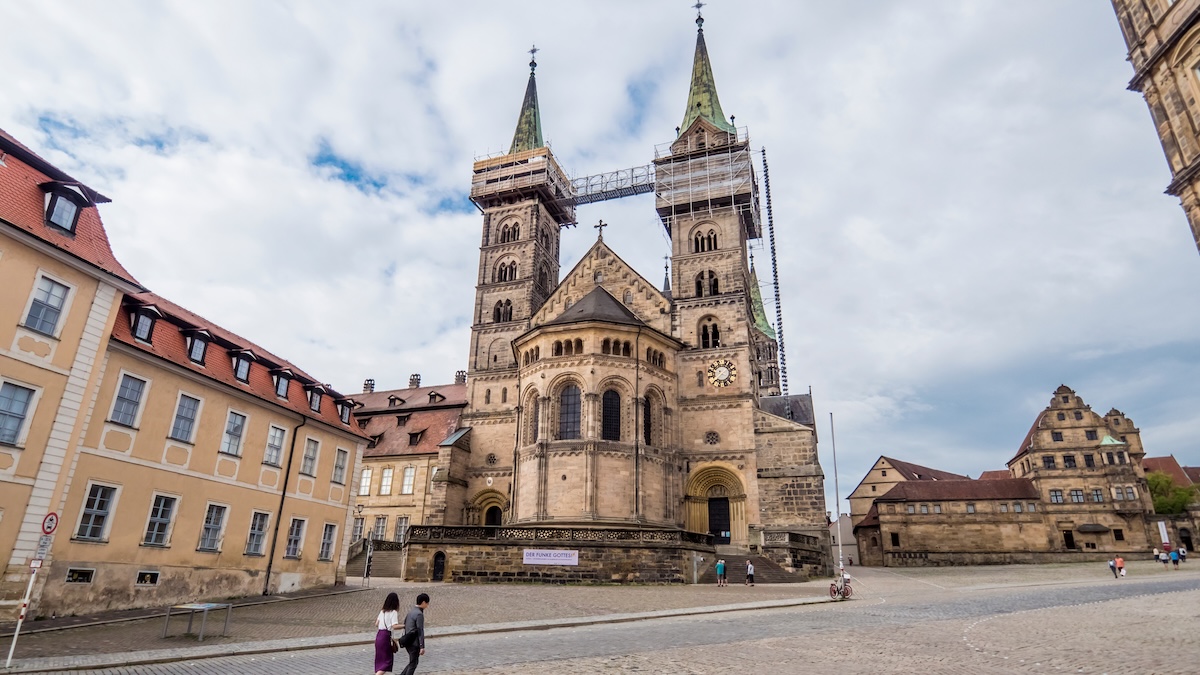
Bamberg Cathedral crowns the highest of the city’s seven hills, a massive Romanesque structure that’s dominated the skyline since the 13th century. It served as the seat of power for prince-bishops who ran the region for nearly eight centuries. The cathedral’s four towers and ornate sculptures are impossible to miss as you explore the historic quarter.
The prince-bishops went beyond building churches. They put up an entire complex around the cathedral, including the Old Court (Alte Hofhaltung) with its Renaissance courtyard and the New Residence (Neue Residenz), a baroque palace packed with ornate rooms and galleries. These buildings acted as more than administrative centers—they were statements of authority, blending imperial ambition with Catholic influence.
Walking through these spaces today, you’ll see Franconian artistry everywhere, from carved stonework to painted ceilings. The prince-bishops turned Bamberg into an ecclesiastical powerhouse that rivaled secular cities in wealth and culture. Their legacy lingers in almost every corner of the old town—a testament to centuries of religious and political power concentrated on one hill.
Rauchbier and Franconian Beer Culture
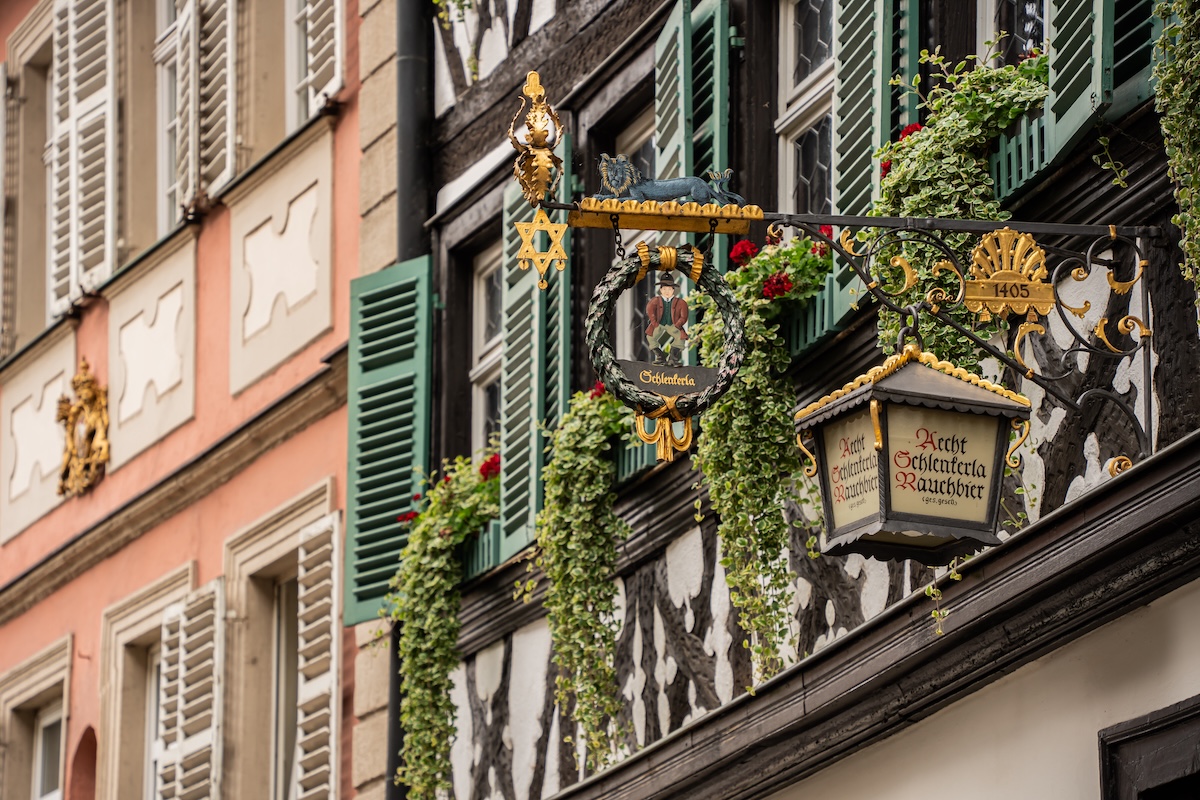
Visit Bamberg and you’ll run into a beer scene you won’t find anywhere else. The city’s signature rauchbier gets its smoky taste from malt dried over open beechwood flames, a method brewers here have used for centuries. You can try this specialty at historic breweries like Schlenkerla, where locals gather in wood-paneled taverns that have poured the same smoked beer for generations.
Bamberg has nine working breweries within its city limits, and the surrounding Franconian region adds dozens more. Beer culture here isn’t some tourist gimmick—it’s just part of daily life. Many locals have a favorite brewhouse, stopping in for a seidla (half-liter) after work or on weekends.
The brewing traditions stretch back hundreds of years, with recipes and methods passed down through families. Beyond rauchbier, you can sample other Franconian styles like ungespundetes lager and kellerbier, best enjoyed in traditional beer gardens under ancient chestnut trees. These beer gardens and taverns work as community gathering spots, where conversations flow as easily as the beer.
Little Venice and the Regnitz River
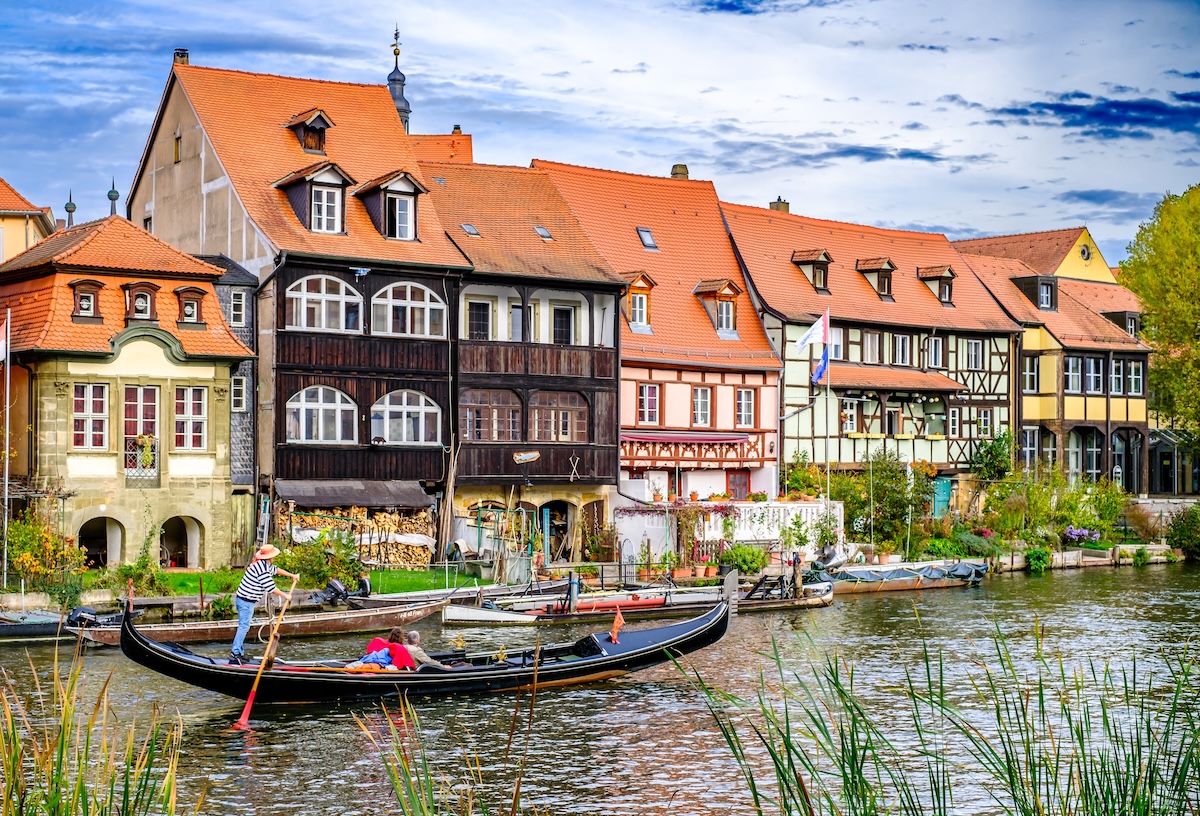
One of Bamberg’s most charming scenes sits along the Regnitz River, where a row of former fishermen’s houses leans toward the water. Locals call this area Little Venice because these colorful buildings perch right at the river’s edge, their foundations practically dipping into the water.
The houses date back centuries, when fishing families made their living from the Regnitz. You can still spot the original architecture—half-timbered facades and small gardens stretching down to the waterfront. The reflection of these homes in the river creates a postcard view, contrasting with Bamberg’s grander cathedrals and town halls.
Strolling along the riverbank gives you a different take on the city. The water steadily cuts through Bamberg, splitting around the island where the old town sits. Sometimes you’ll see locals relaxing by the water or small boats drifting past the historic houses. This quiet stretch shows you Bamberg’s working-class roots, a reminder that the city grew up around these waterways.