
Most American cities spent a century treating their rivers like back alleys. Factories dumped into them, highways walled them off, and downtowns turned their backs to the water as if embarrassed by it. Then, piece by piece, cities started tearing down the floodwalls in their heads and building paths along the banks instead.
What you get now is one of the better ways to learn a city in two days. A riverwalk hands you the town’s history in order: the mills, the floods, the cleanup, the comeback. You eat where locals eat after work, and you see the skyline from the angle the founders saw first.
The stretches below range from casino strips in the desert to quiet suburban paths in Illinois. Each one gives you enough to fill a Saturday and still want Sunday.
20. Laughlin Riverwalk
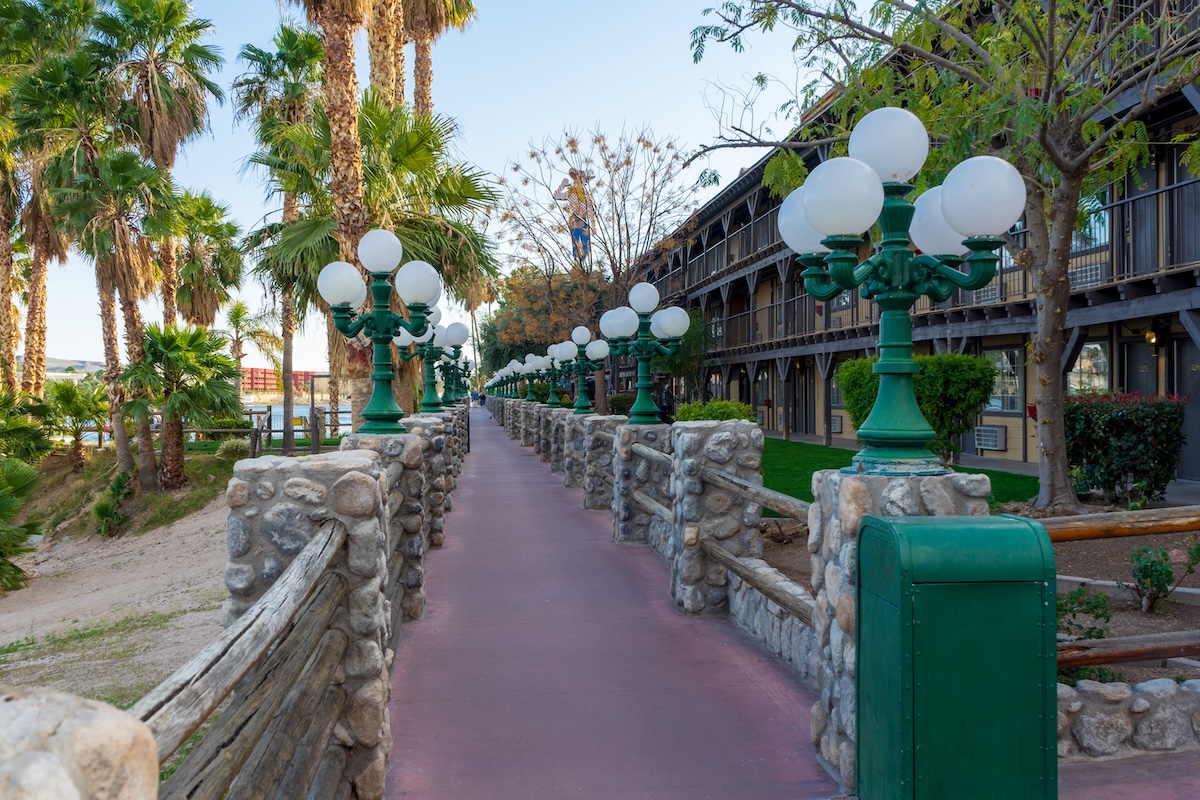
Laughlin is a casino town built on the banks of the Colorado River, and its riverwalk is the thread stitching those casinos together. The paved path runs roughly two miles along the Nevada shore, so you can wander from one resort’s buffet to another’s slot floor without ever touching a parking garage. Across the water sits Bullhead City, Arizona, close enough that water taxis shuttle people back and forth all day.
The river itself steals the show from the neon. It runs cold and fast out of Davis Dam just upstream, which makes it a startling bright green in a landscape of brown desert. Summer afternoons regularly push past 115 degrees, so most visitors walk at dusk or come in winter, when snowbirds from the Midwest fill the benches and the water taxis run past jet skis and paddle wheelers.
19. Truckee Riverwalk, Reno
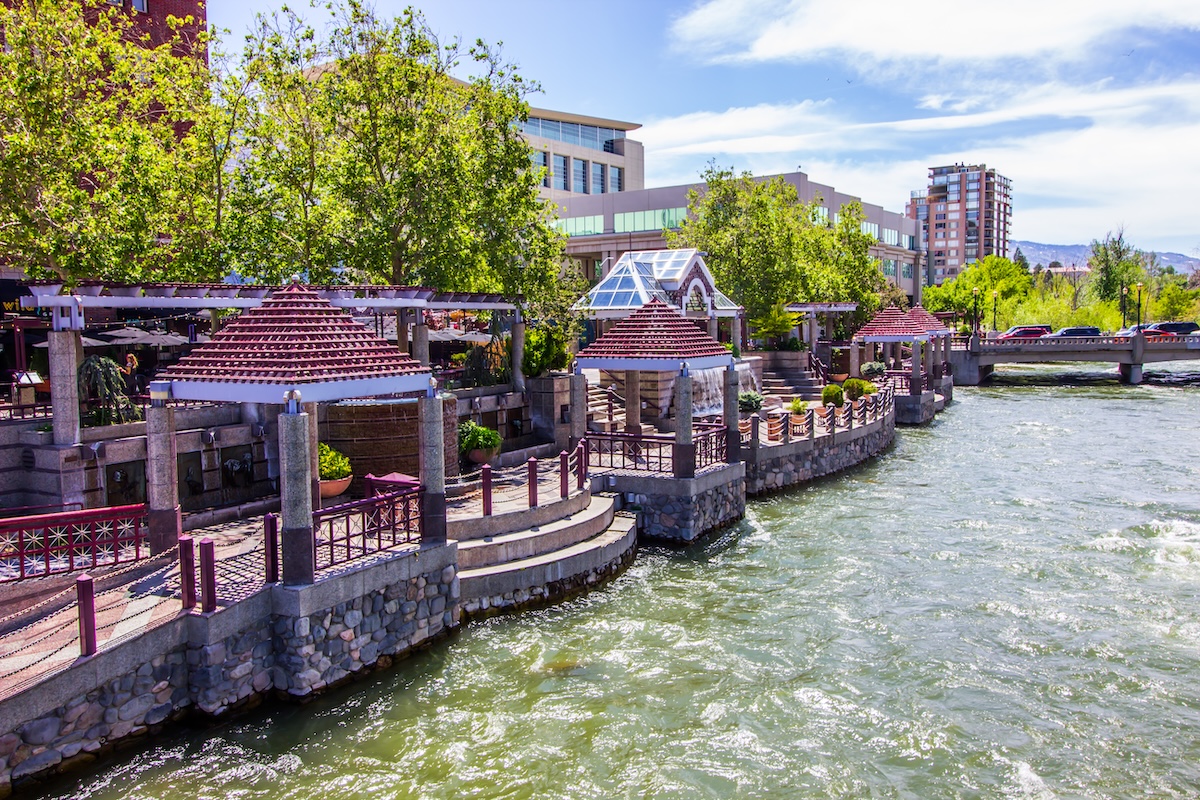
Reno’s river comes straight down from Lake Tahoe, and on hot days half the city seems to be floating on it. The Truckee Riverwalk runs through downtown, a few blocks from the famous Reno Arch, and its centerpiece is the Truckee River Whitewater Park at Wingfield Park, where kayakers practice on engineered drops while families splash in inner tubes.
The history here has a wry streak. During Reno’s era as the divorce capital of America, legend held that newly single women tossed their wedding rings off the Virginia Street Bridge into the current. Whether many did is debatable, but the story sticks. Nearby, the old Riverside Hotel, once the hub of that divorce trade, now houses artist lofts and studios. Come in summer for Artown, a month-long festival that spreads concerts and performances across Wingfield Park and the surrounding blocks.
18. Southbank Riverwalk, Jacksonville
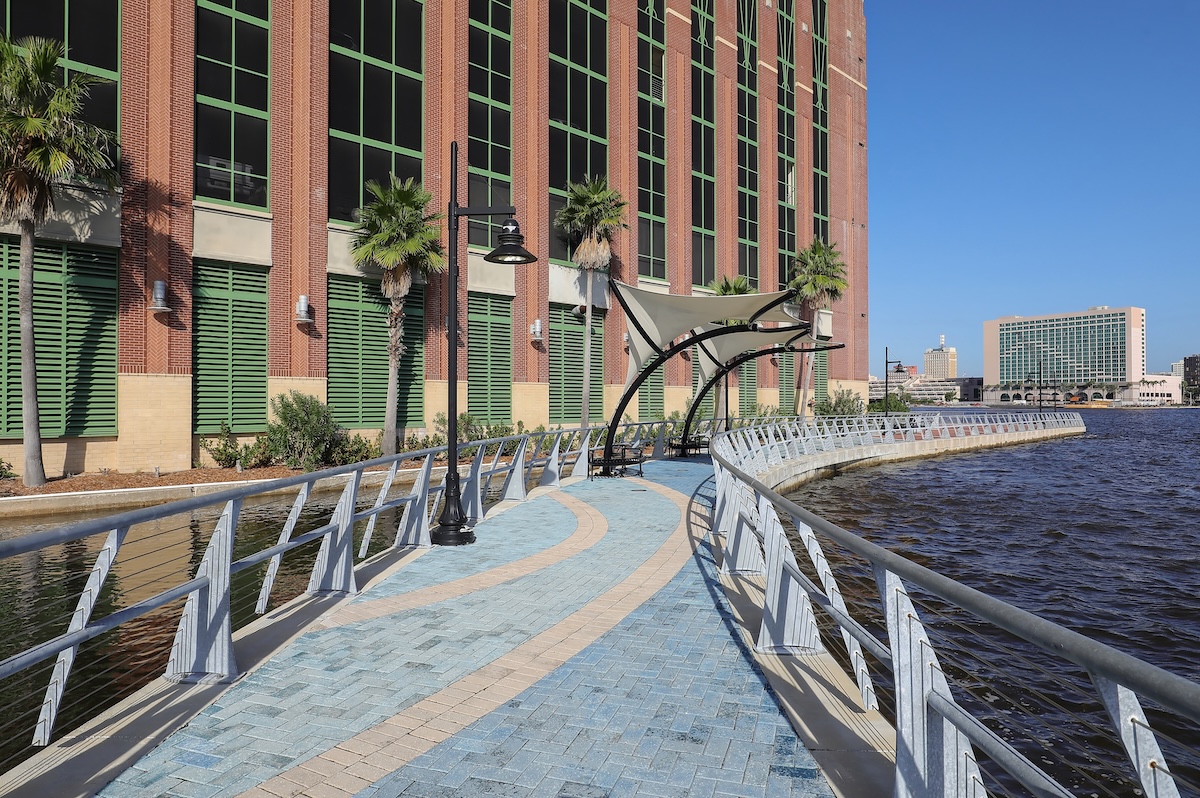
The St. Johns River is one of the few major American rivers that flows north, and Jacksonville’s Southbank Riverwalk gives you a front-row seat to its wide, lazy sweep through downtown. The boardwalk runs about 1.2 miles along the south shore, facing the skyline across the water and passing under the bright blue Main Street Bridge, a vertical lift span that has become the city’s unofficial logo.
Friendship Fountain anchors the walk. When it opened in 1965 it was billed as one of the largest and tallest fountains in the world, and it still throws water high enough to mist anyone sitting downwind. The Museum of Science and History sits right beside it, making this an easy half day with kids. Stay until dark, when the bridges light up and the reflections stretch across a river that’s nearly a mile wide in places.
17. Riverwalk Fort Lauderdale
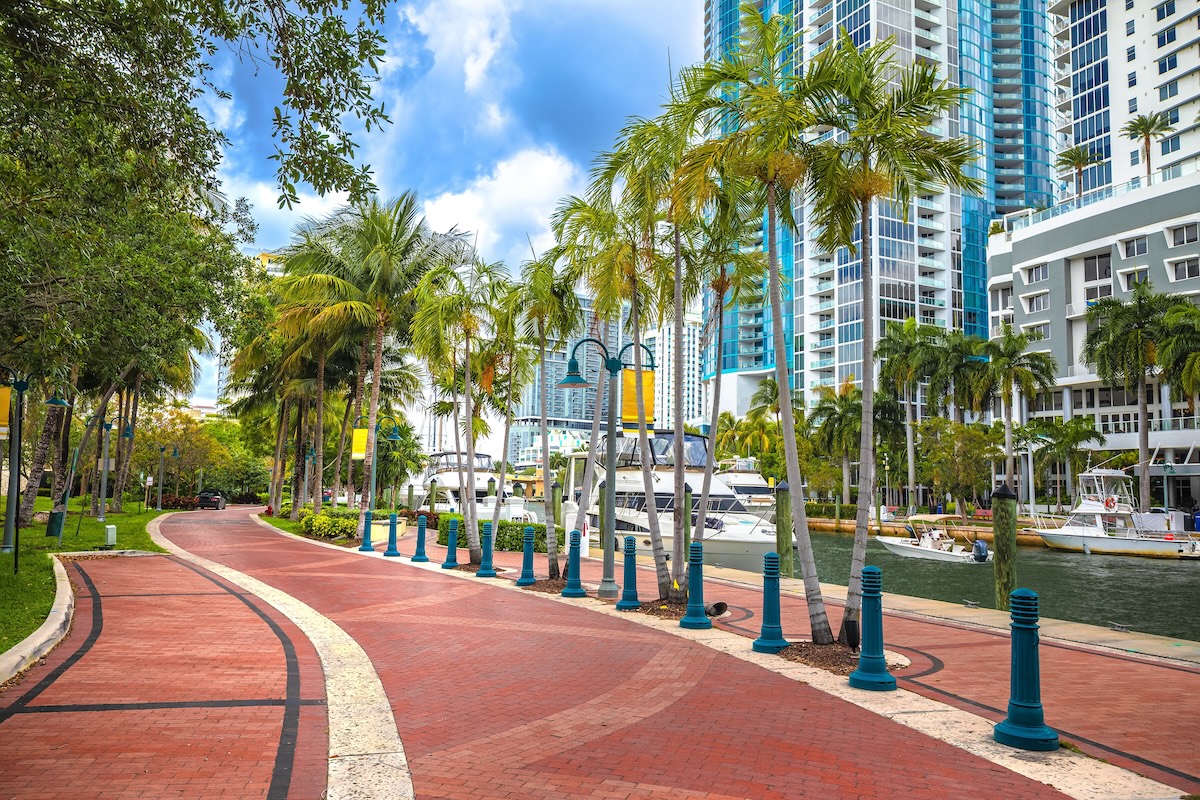
Fort Lauderdale’s riverwalk follows the New River, a narrow, twisting waterway where yachts worth more than most houses ease past at idle speed. The brick path runs along both banks near Las Olas Boulevard, linking parks, restaurants, and the Broward Center for the Performing Arts. You’ll spend half your time watching boat captains thread impossibly tight turns.
The city’s origin story sits right on the path. The Stranahan House, built in 1901 as a trading post where Frank Stranahan did business with Seminole traders, is the oldest surviving structure in Broward County and open for tours. It looks almost toy-sized against today’s towers. For an easy way to cover more ground, hop the Water Taxi, which runs from the riverwalk out through the Intracoastal canals and lets you get on and off at stops along the route.
16. Ohio Riverwalk, Cincinnati
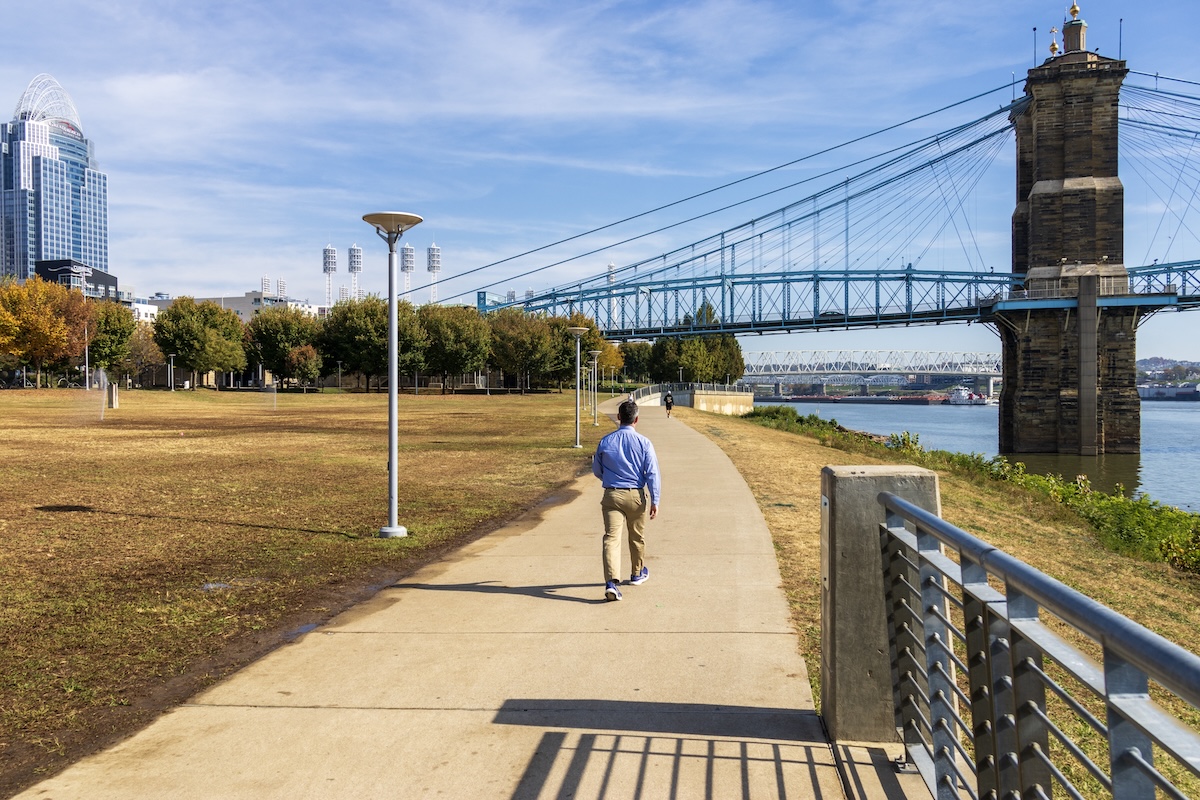
Cincinnati’s riverfront is dominated by a bridge that came first: the Roebling Suspension Bridge, finished in 1866 by John A. Roebling, the engineer who later designed the Brooklyn Bridge. Walk it today and you’ll notice the family resemblance in the stone towers. The riverwalk unfolds beneath and beside it through Smale Riverfront Park, with its swings, fountains, and a carousel tucked into a glass pavilion.
What makes a weekend here work is that two states share the view. Cross the pedestrian-only Purple People Bridge and you’re in Newport, Kentucky, with its own restaurants and the Newport Aquarium. Loop back over the Roebling and you’ve walked between Ohio and Kentucky in under an hour. Time a visit with a Reds game at Great American Ball Park, which sits right on the river, and the whole bank fills with red jerseys.
15. Historic Arkansas Riverwalk, Pueblo
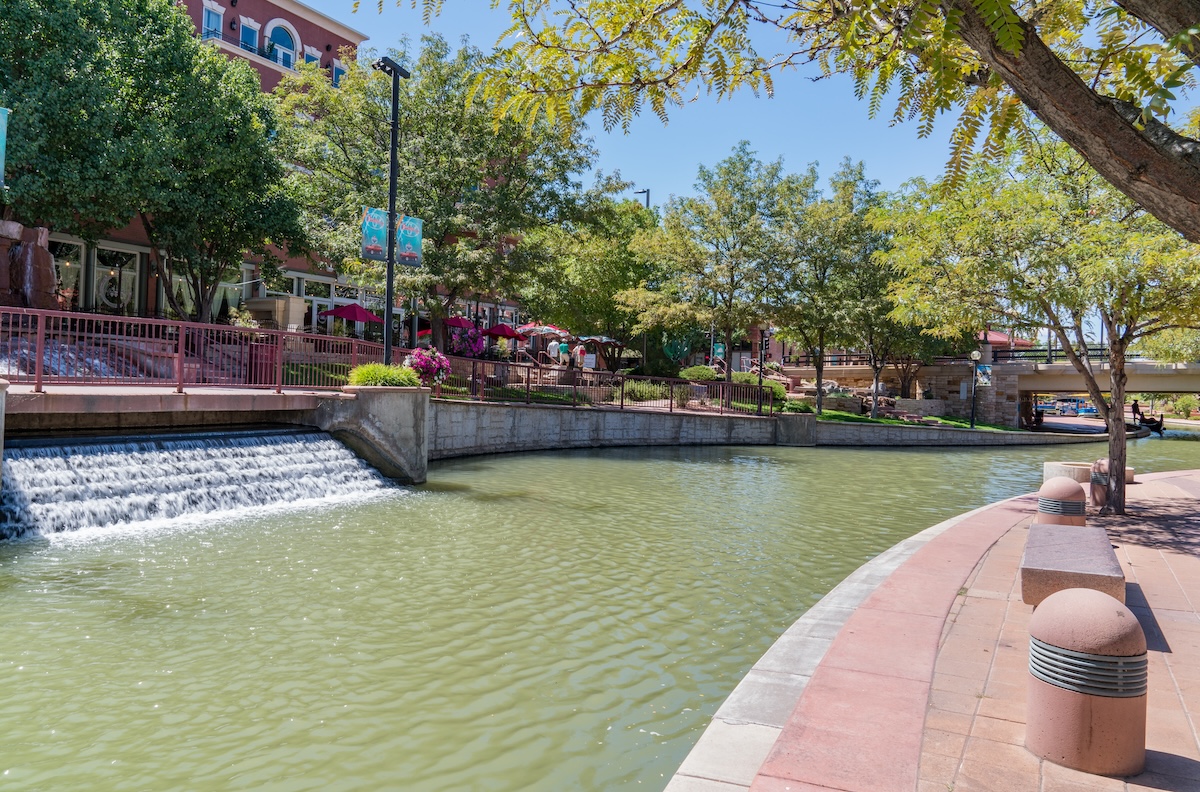
In 1921, the Arkansas River flooded downtown Pueblo, Colorado, killing hundreds of people and destroying much of the city. Afterward, engineers moved the river out of town and buried its old channel. Decades later, Pueblo dug part of it back out, and the Historic Arkansas Riverwalk, often called HARP, now follows a re-created waterway through the heart of the Union Avenue district.
The result is quieter and more intimate than you’d expect from a town of Pueblo’s size. Gondola-style boats give narrated rides past public art and gardens, and the path connects to restaurants serving the local Pueblo chile, a fleshy green pepper that residents defend with near-religious intensity. Plan around the Chile and Frijoles Festival each September, when roasters fill the air downtown with smoke and the whole city smells like breakfast burritos.
14. Providence Riverwalk
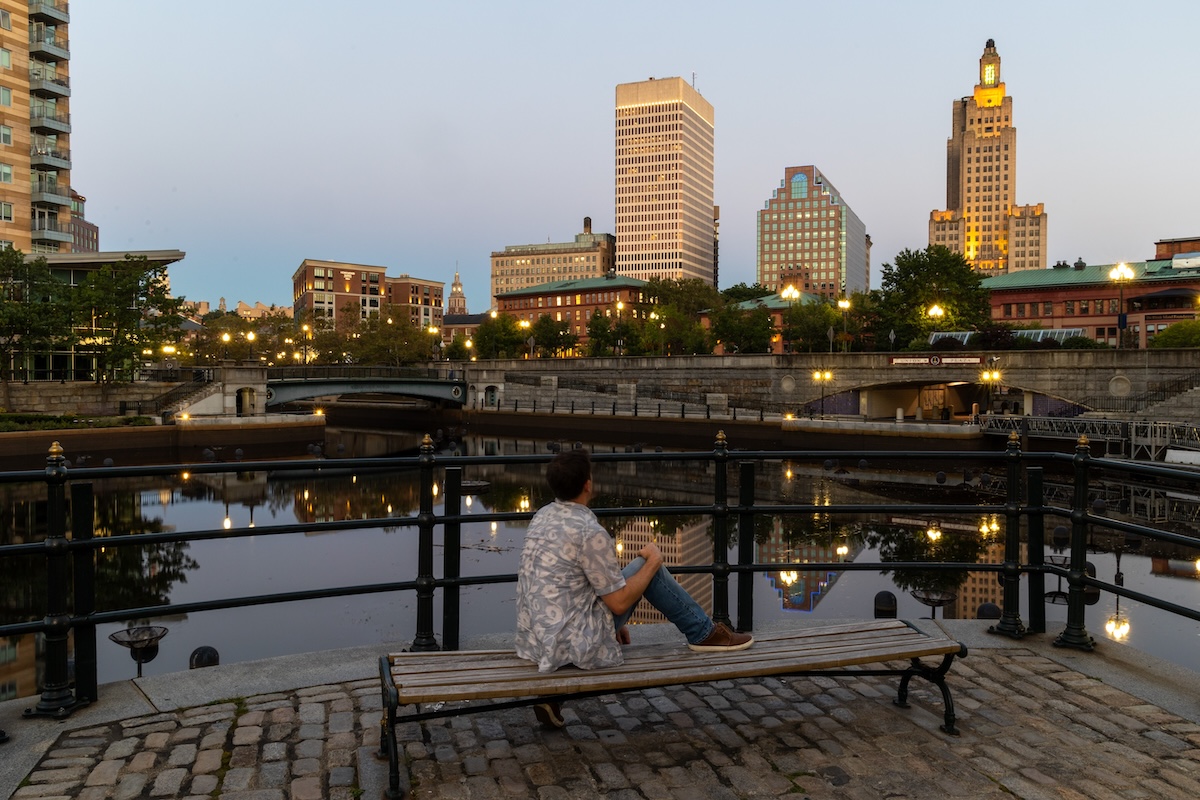
Providence did something drastic in the 1990s: it uncovered its rivers. The Providence, Woonasquatucket, and Moshassuck had been paved over so thoroughly that one stretch was buried under what was called the widest bridge in the world. The city peeled back the concrete, moved the river channels, and built a network of walkways, footbridges, and a stone amphitheater along the water downtown.
The reason to plan your weekend carefully is WaterFire. Created by artist Barnaby Evans in 1994, it sets roughly 80 bonfires burning in braziers floating down the center of the river, tended by black-clad volunteers in boats while music plays from speakers along the banks. Crowds of tens of thousands drift along the walkways, and the smell of cedar smoke hangs over Waterplace Park. Check the schedule before booking, since lightings run on select nights from spring through fall.
13. Richmond Canal Walk
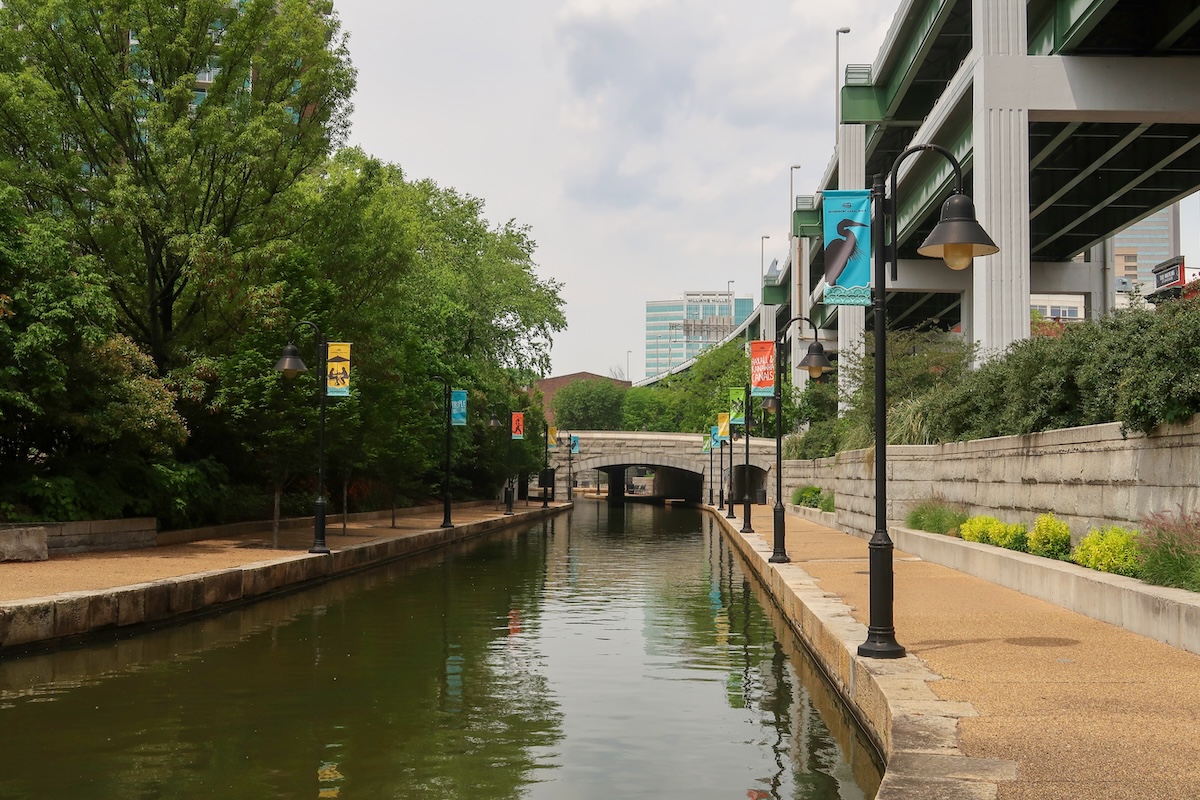
Richmond’s walk follows canals, a detail that tells you most of the city’s story. The James River and Kanawha Canal, a project George Washington championed, was meant to connect the Atlantic to the Ohio River. It never got that far, but it turned Richmond into an industrial powerhouse, and the Canal Walk now traces about 1.25 miles of the old Haxall and Kanawha canals through downtown.
Markers and medallions along the path cover four centuries, from Indigenous history to the Civil War, when the nearby Tredegar Iron Works forged cannons for the Confederacy. That site now houses the American Civil War Museum. Riverfront Canal Cruises run narrated boat trips on the water, and Brown’s Island hosts summer concerts. Walk a little farther and you’ll hear the James itself, roaring over rocks below the city with Class IV rapids running right through town.
12. Savannah Riverfront/River Street Walk
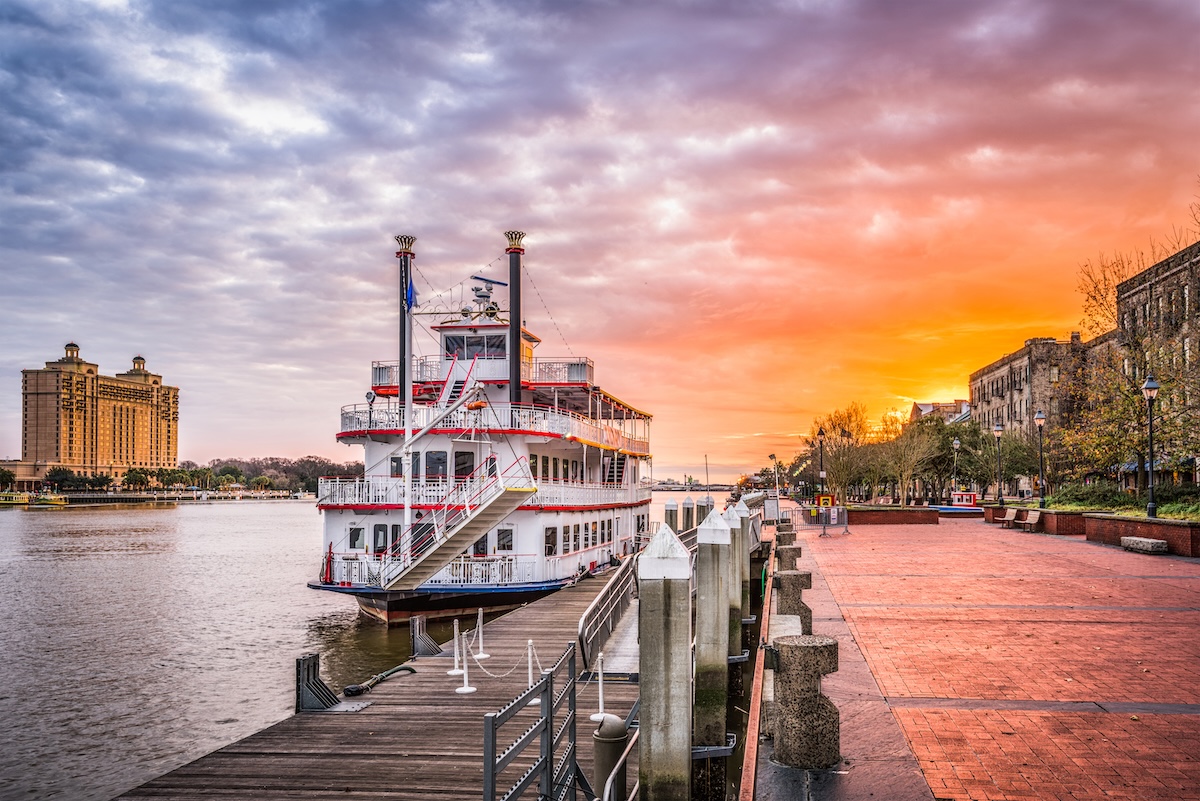
River Street’s cobblestones came from the bottoms of ships. Sailing vessels arriving empty to pick up cotton carried stones as ballast, then dumped them on the riverbank, and Savannah paved its waterfront with them. Walking on those uneven stones in sandals is a rite of passage, so bring shoes with some grip.
The old cotton warehouses now hold restaurants, candy shops pulling pralines in the windows, and bars where you can carry a drink in a to-go cup. Above, Factors Walk climbs through iron bridges and steep stairs where cotton brokers once worked. The best show is free: enormous container ships headed for the Port of Savannah glide past so close they block the sky. The Waving Girl statue honors Florence Martus, who greeted every passing ship with a cloth for more than 40 years.
11. Wilmington Riverwalk (North Carolina)
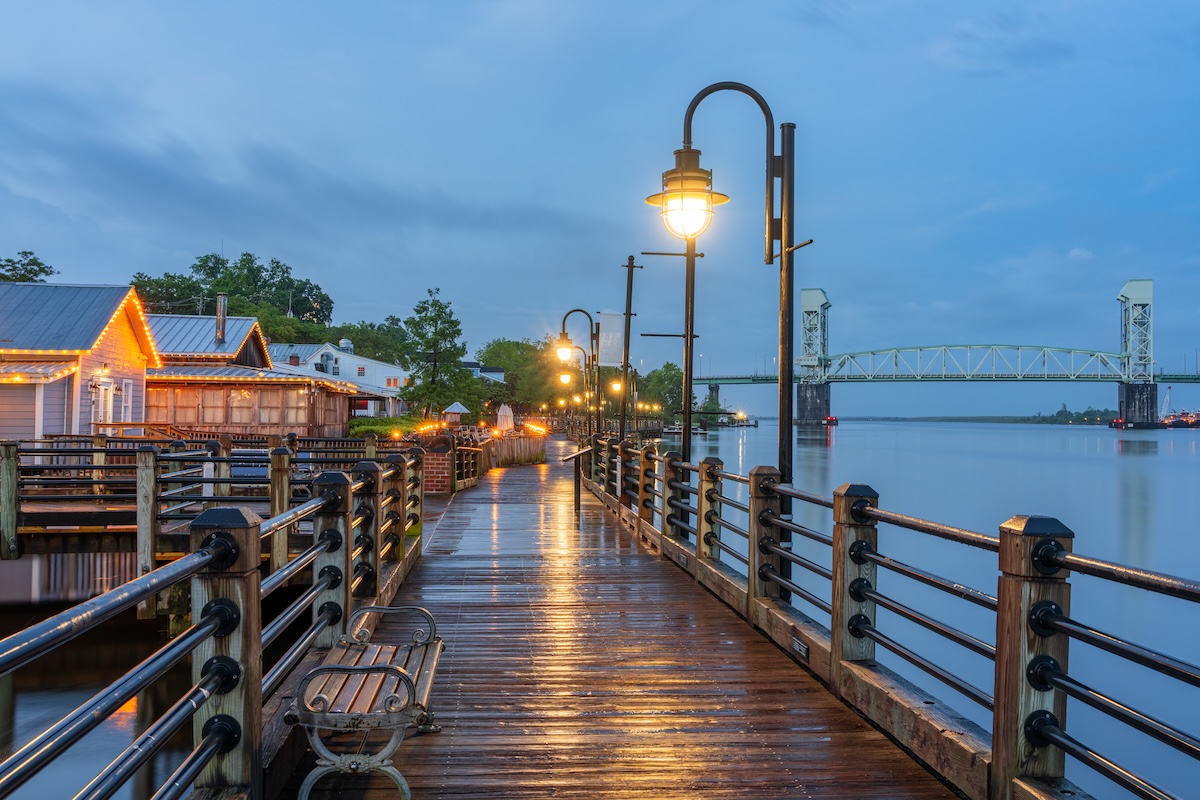
The most commanding sight on Wilmington’s riverwalk is a battleship. Directly across the Cape Fear River sits the USS North Carolina, a World War II veteran that fought in every major naval offensive in the Pacific, now a museum you can tour from bow to engine room. From the downtown boardwalk, its gray bulk looks parked in the city’s front yard.
The walk itself runs about 1.75 miles along the historic waterfront, with restaurants, shops, and horse-drawn carriage rides starting nearby. Wilmington’s downtown grid is lined with 19th-century buildings, and you’ll recognize some of them if you watched Dawson’s Creek or One Tree Hill, both filmed here. River cruises leave from the docks for sunset trips, and Saturday mornings bring the Riverfront Farmers Market, which sets up along Water Street from spring into December.
10. Bradenton Riverwalk
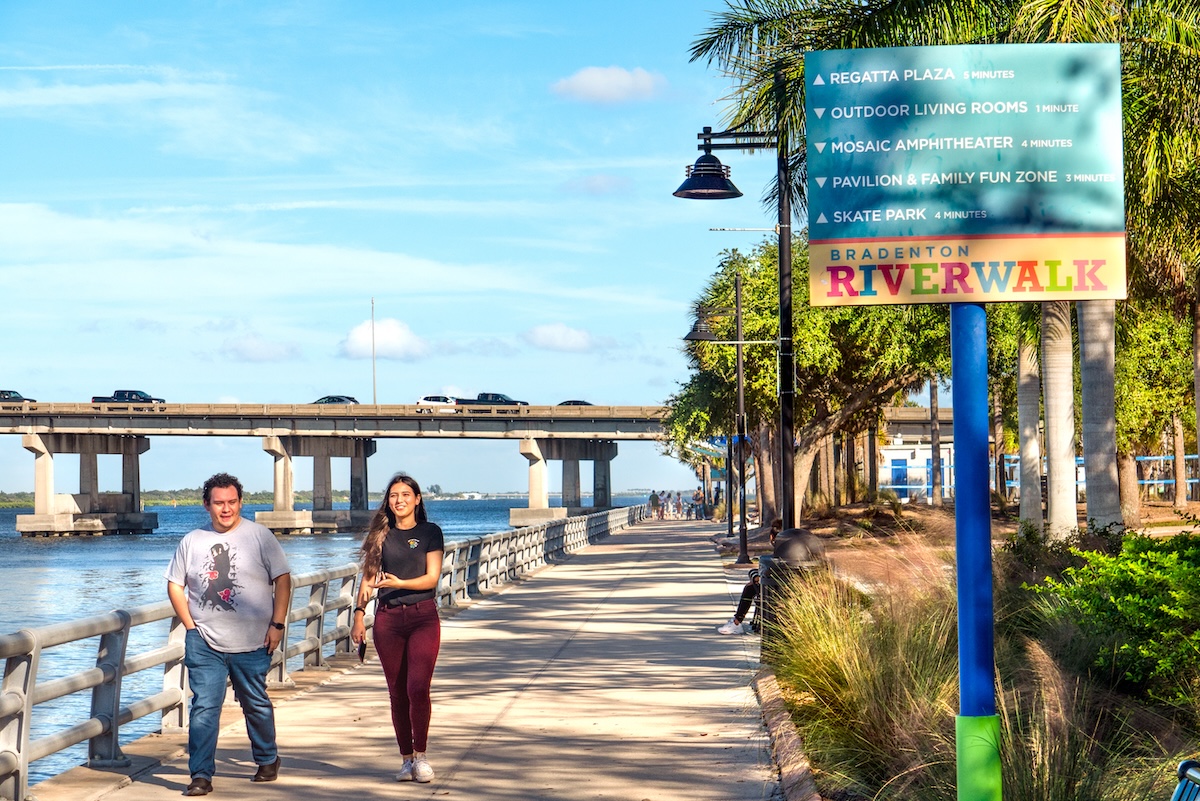
Bradenton built its riverwalk in 2012, and the city clearly had locals in mind. The path stretches about 1.5 miles along the Manatee River, and it’s packed with things residents use: a skate park, a splash pad, beach volleyball courts, a fishing pier, and an amphitheater. On a weekday evening it feels like the town’s living room.
The Manatee River is wide here, nearly a mile across, and the sunsets over the water draw crowds without any marketing. The riverwalk connects to Old Main Street, where restaurants and the Saturday farmers market fill the blocks near the Bradenton Area Convention Center. If you’re spending a full weekend, Anna Maria Island’s beaches sit about 20 minutes west, and the Gulf of Mexico pairs nicely with a slower morning on the river.
9. Naperville Riverwalk
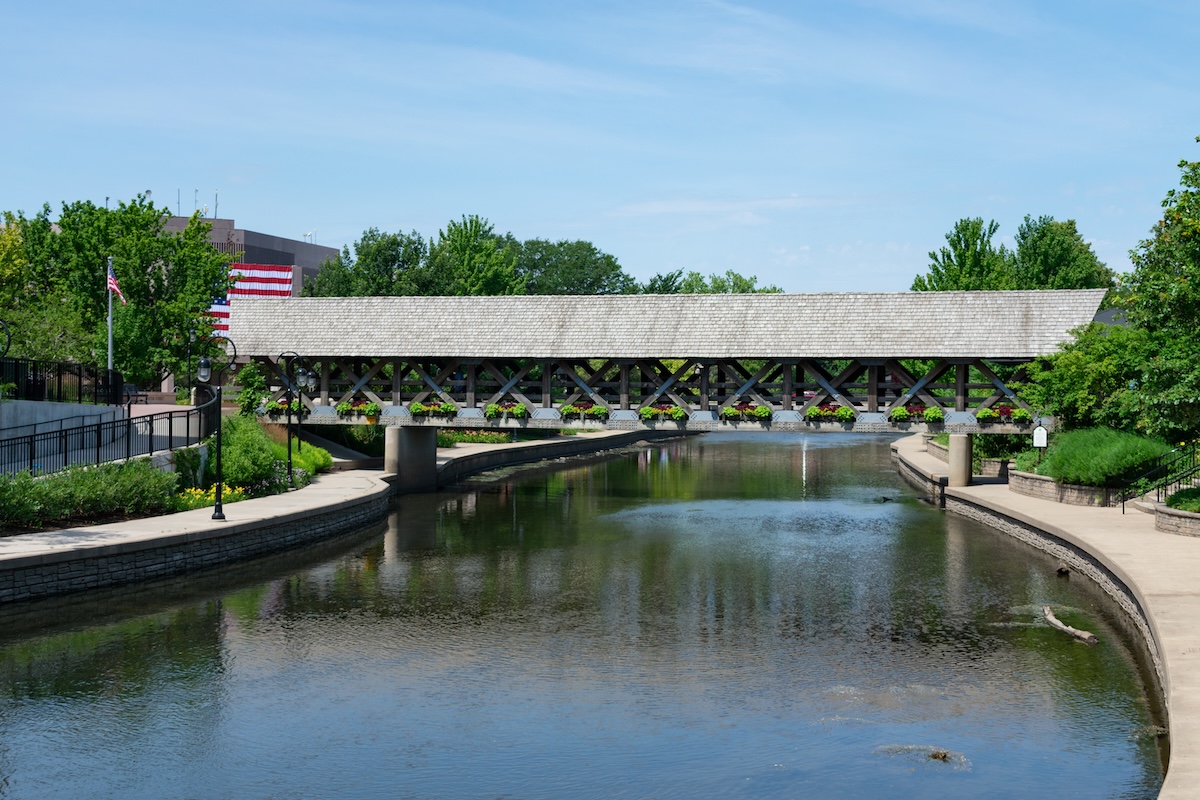
Naperville, a Chicago suburb, built its riverwalk in 1981 as a gift to itself for the city’s 150th birthday, with residents volunteering labor and money. The brick paths, covered bridges, and stone walls along the DuPage River have since grown to nearly two miles, and the town still treats the place with civic pride.
Two oddities make it worth the drive. Centennial Beach is a former limestone quarry turned into a giant public swimming hole, open each summer. Then there’s the Moser Tower, a 160-foot structure housing the Millennium Carillon, with 72 bells spanning six octaves. On summer evenings, carillonneurs play concerts you can hear across the whole riverwalk. Downtown Naperville sits steps away, with enough restaurants and boutiques to turn an afternoon stroll into dinner.
8. Chattahoochee RiverWalk, Columbus
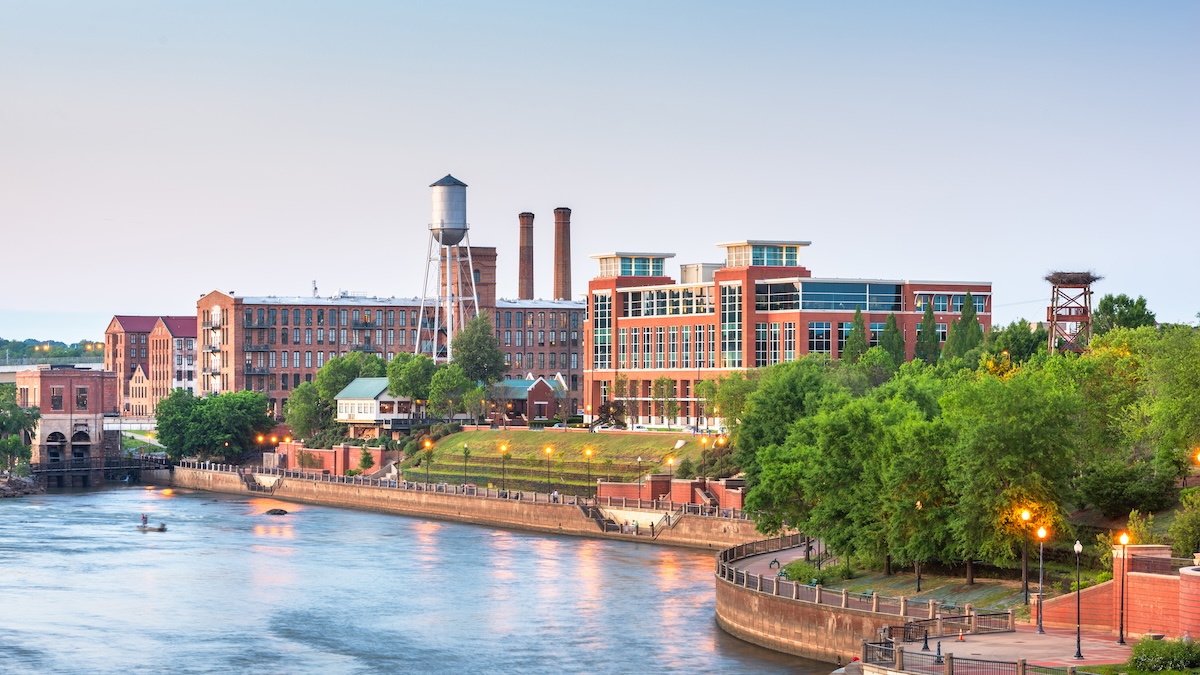
Columbus, Georgia, did something few cities would attempt: it removed two old mill dams to bring back the Chattahoochee’s natural rapids. The result, opened in 2013, is one of the longest urban whitewater courses in the world, running right past downtown. You can raft Class II to Class IV water in the morning and be eating lunch on Broadway by noon.
The RiverWalk itself stretches about 15 miles along the Georgia bank, popular with cyclists and runners. Across the river lies Phenix City, Alabama, and the two states are connected by a zipline that launches you from Georgia and lands you in Alabama, changing time zones mid-flight. Columbus runs on Eastern Time while Phenix City unofficially keeps Eastern too, so the clock trick is more legend than fact, but the ride over the rapids is real.
7. Augusta Riverwalk
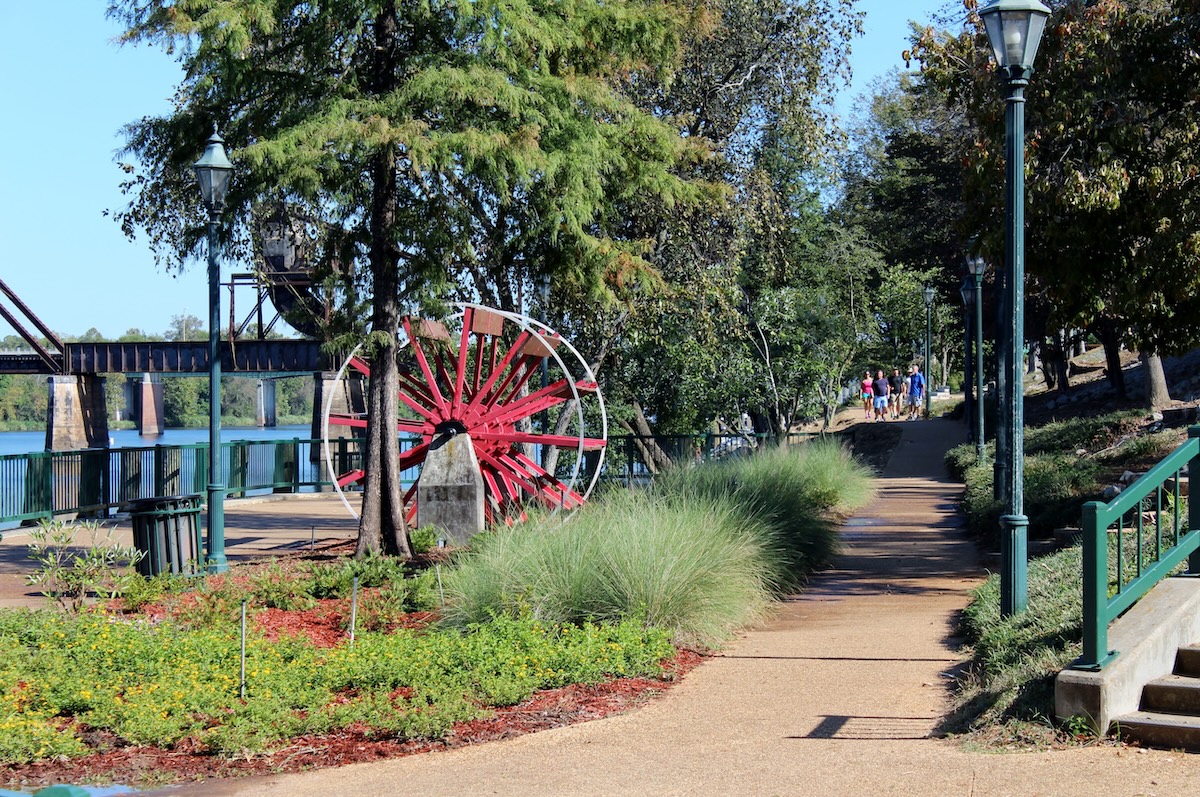
Augusta’s riverwalk sits on top of a levee, and that height gives it a split personality. The upper level runs along the crest, looking down over the Savannah River on one side and downtown rooftops on the other. Below, a lower brick walkway brings you to water level with docks, gardens, and the Jessye Norman Amphitheater, named for the opera star who grew up in the city.
Most people know Augusta for one golf tournament in April, when hotels triple their rates and the riverwalk fills with visitors in pastel polos. Come any other time and you’ll have the place largely to yourself. The nearby Augusta Canal National Heritage Area offers boat tours on a 19th-century canal that once powered textile mills, and the Morris Museum of Art, focused on Southern painting, sits right at the riverwalk’s edge.
6. Tennessee Riverwalk
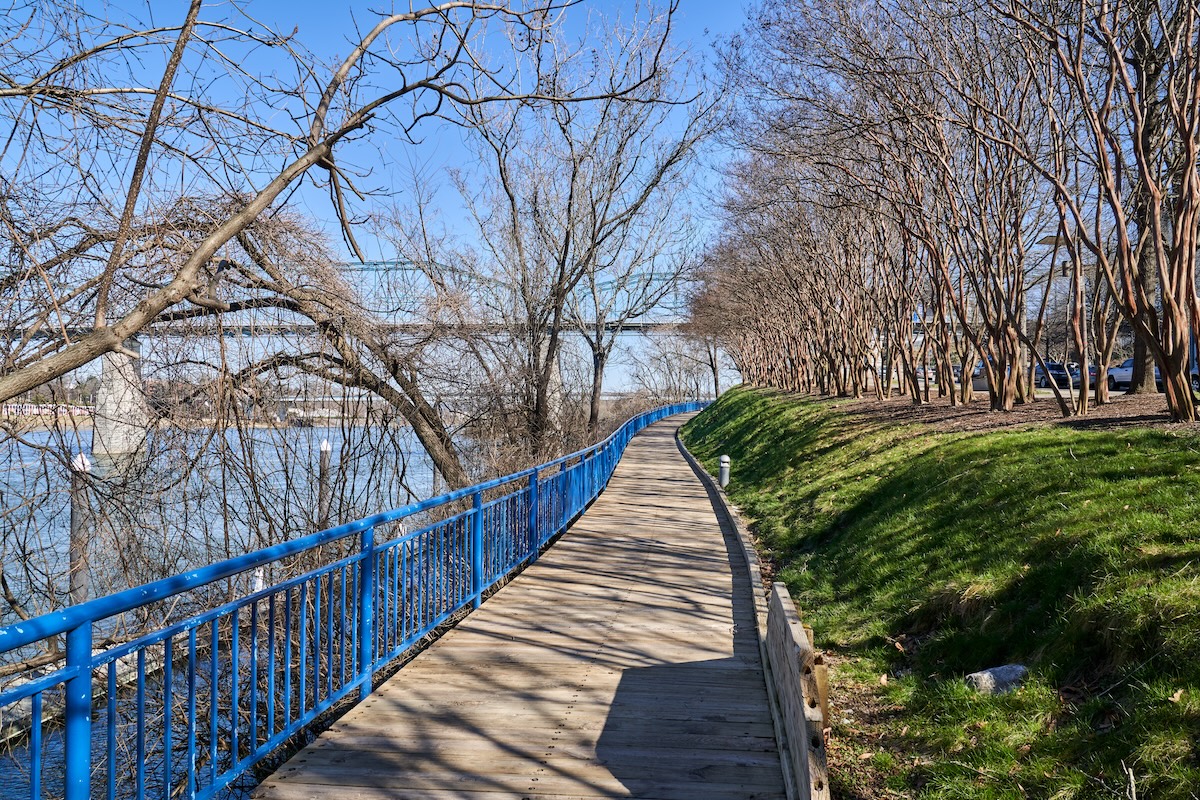
Chattanooga’s Tennessee Riverwalk runs about 13 miles, from Chickamauga Dam down to the base of Lookout Mountain, but most visitors start in the middle at a bridge. The Walnut Street Bridge, built in 1891 and converted to pedestrian use in 1993, is among the longest walking bridges in the world. It links downtown to the North Shore’s shops, restaurants, and Coolidge Park carousel.
The city’s turnaround gives the walk extra weight. In 1969, federal officials labeled Chattanooga the dirtiest city in America because of its air pollution. Today the riverfront is anchored by the Tennessee Aquarium, the Hunter Museum of American Art perched on a bluff, and miles of trail used by cyclists and kayakers. Pair the riverwalk with a ride up the Lookout Mountain Incline Railway, among the steepest passenger railways anywhere.
5. Milwaukee RiverWalk
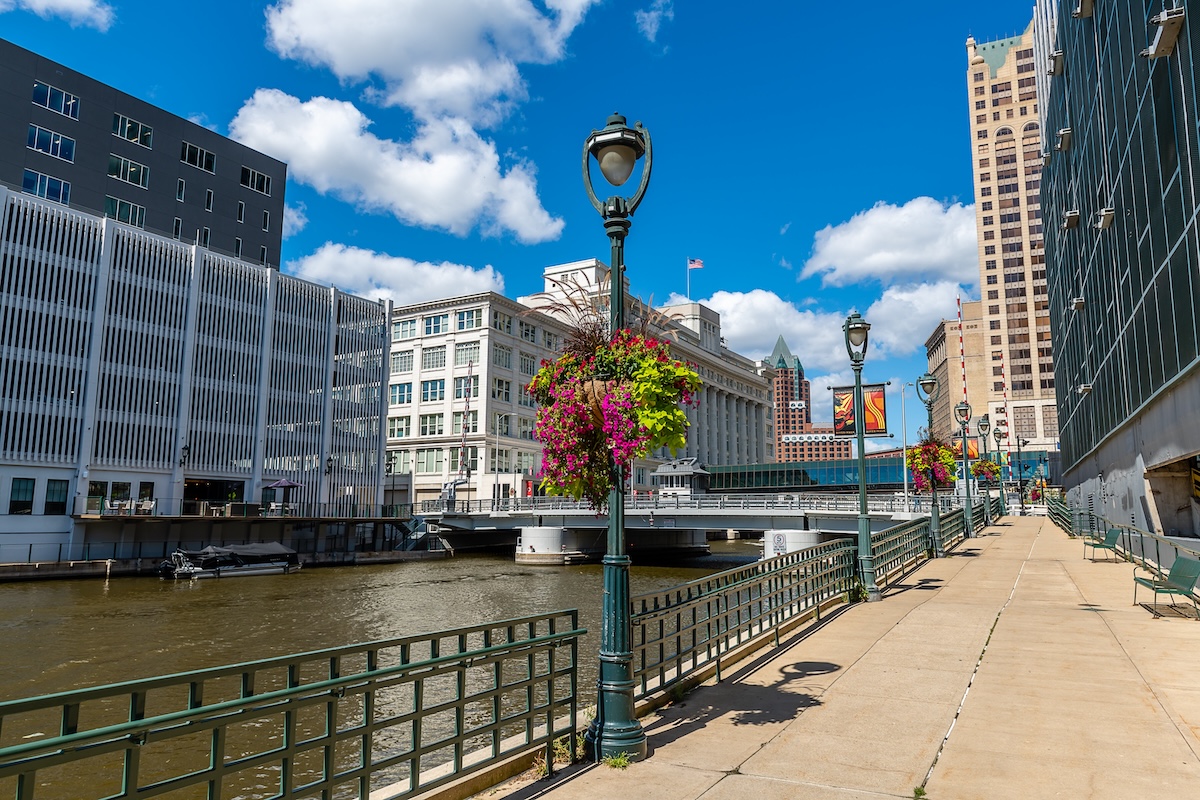
Milwaukee’s RiverWalk has a celebrity resident: the Bronze Fonz, a life-sized statue of Happy Days’ Arthur Fonzarelli giving a permanent thumbs-up near Wells Street. Tourists line up for photos, locals roll their eyes affectionately, and nobody has proposed removing him. The statue sets the tone for a riverwalk that takes itself seriously enough to be useful and loosely enough to be fun.
The path covers about three miles along the Milwaukee River, running through downtown, the Historic Third Ward, and Beerline B to the north. Breweries and bars spill onto patios over the water, a natural fit for a city whose name is shorthand for beer. Public art installations line the route, and kayak rentals let you see it from the river. Visit in summer, when Summerfest takes over the lakefront nearby and the whole city stays up late.
4. Detroit International RiverWalk
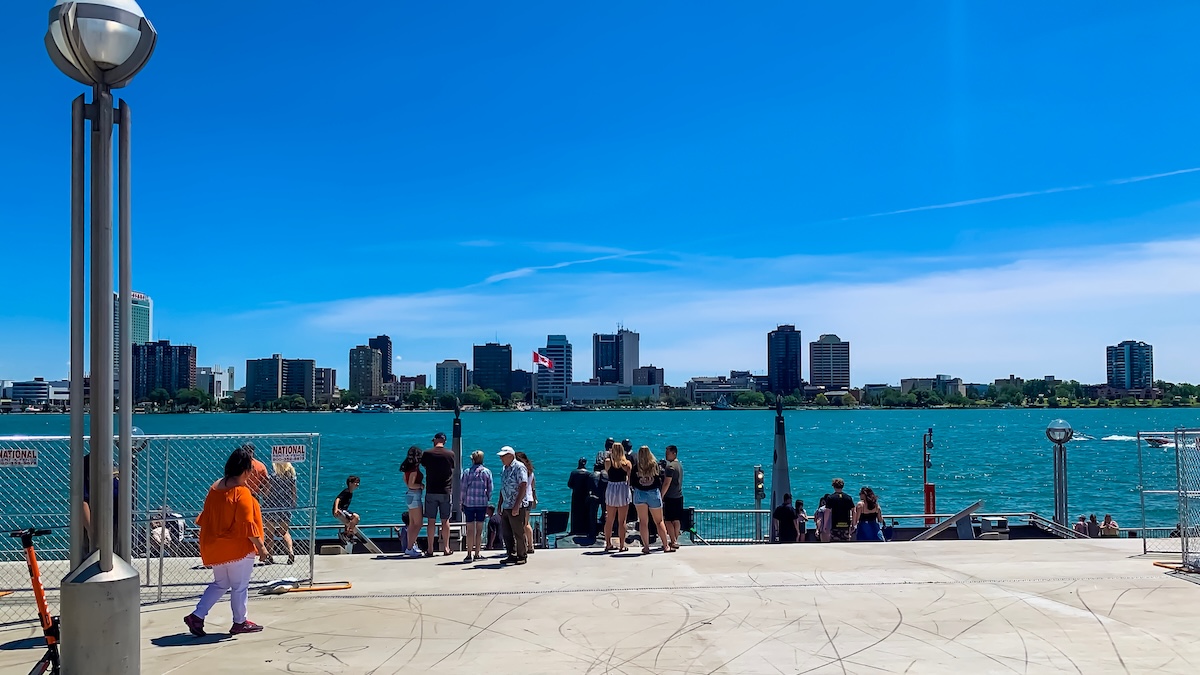
Look south from Detroit’s riverwalk and you’re looking at Canada. Windsor, Ontario, sits directly across the Detroit River, a geographic quirk that surprises most first-time visitors and gives the “International” in the name its meaning. The skylines face each other close enough to wave at.
The walk stretches roughly 3.5 miles from the Ambassador Bridge toward Belle Isle, and it has topped USA Today’s reader poll for best riverwalk in the country more than once. Its spaces are varied: Hart Plaza hosts festivals, Milliken State Park includes a lighthouse and wetlands, and the Dequindre Cut greenway branches off into the city through a former rail line. Late June brings the Ford Fireworks, one of the largest displays in North America, launched over the river for crowds on both shores.
3. Tampa Riverwalk
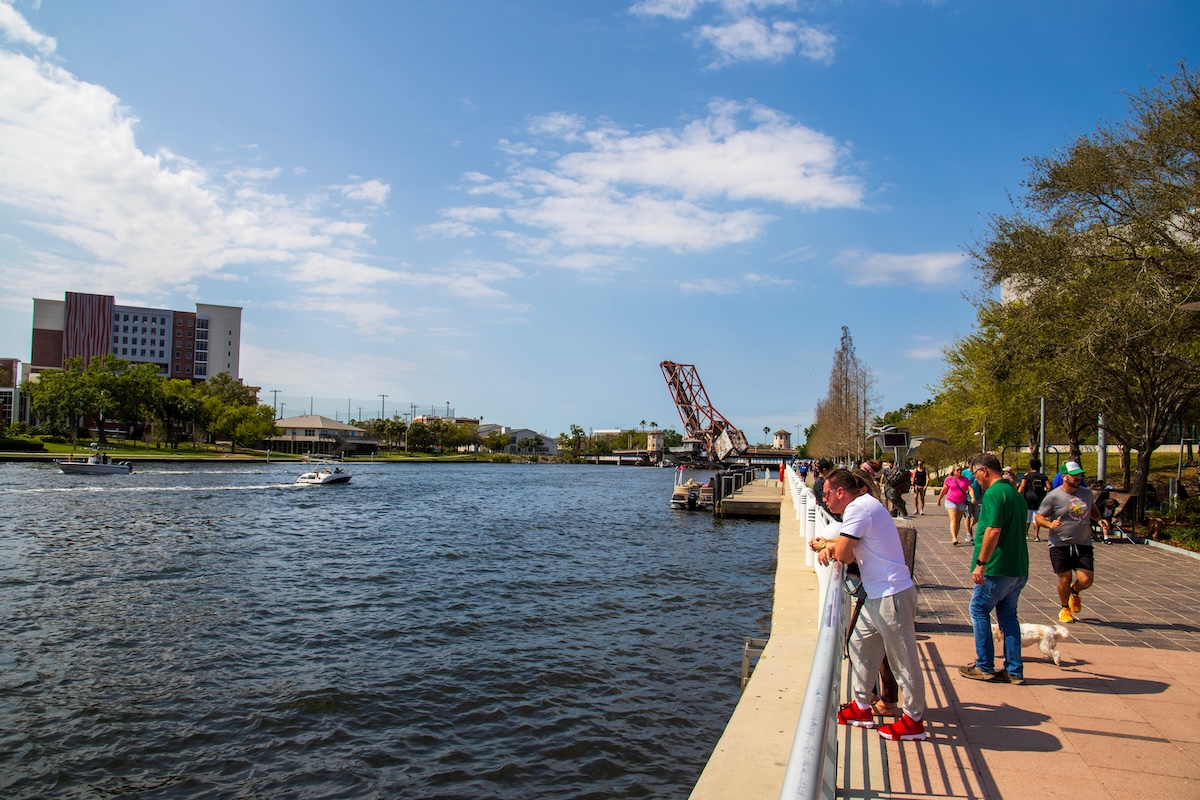
Tampa’s riverwalk runs about 2.6 miles along the Hillsborough River, and the view across the water is strange in the best way. Silver minarets rise from the old Tampa Bay Hotel, an 1891 Moorish Revival palace built by railroad tycoon Henry B. Plant. It now houses the University of Tampa and the Henry B. Plant Museum, and it looks like nothing else in Florida.
The walk connects most of downtown’s attractions, including Curtis Hixon Waterfront Park, the Tampa Museum of Art, and the Florida Aquarium. Water taxis and rental electric boats move along the river all day. Time a visit for January’s Gasparilla Pirate Festival, when a full-rigged pirate ship sails into downtown and thousands of costumed revelers invade the city in a tradition dating to 1904.
2. Chicago Riverwalk
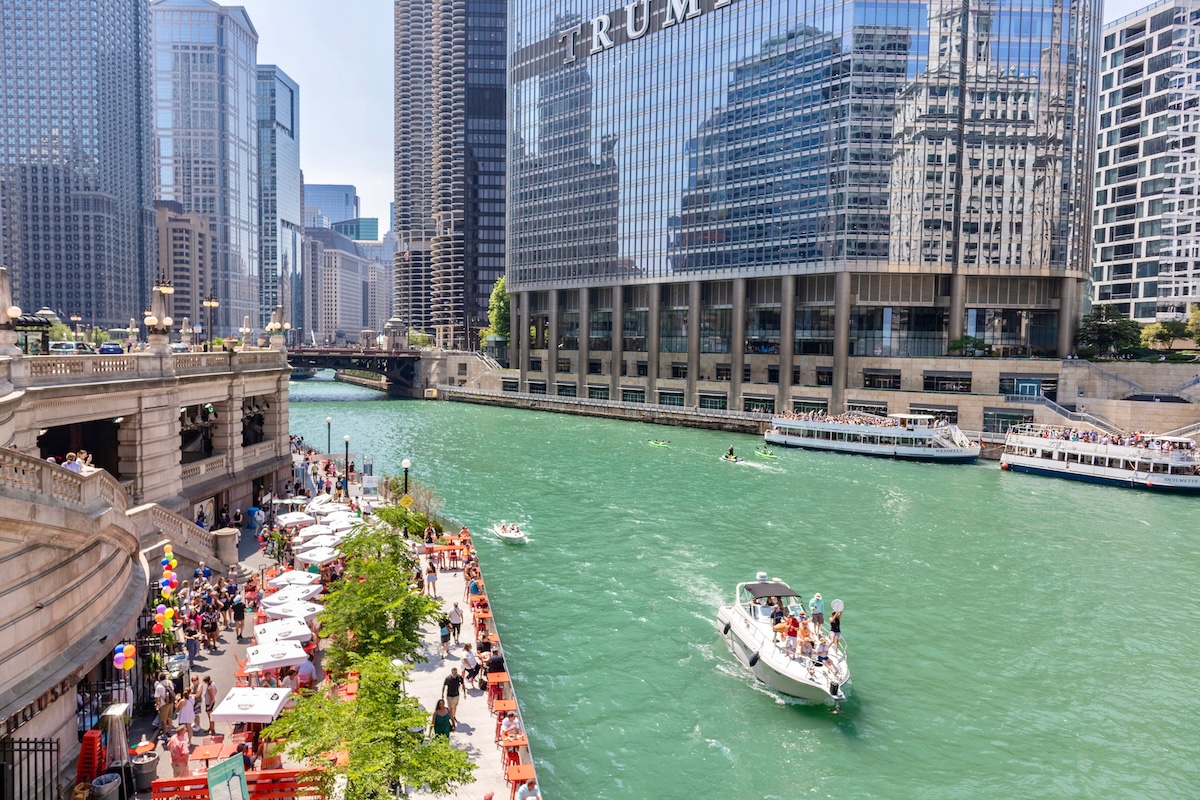
Chicago’s river runs backward, which is the best possible introduction to its riverwalk. In 1900, engineers reversed the flow of the Chicago River to push sewage away from Lake Michigan, a project so ambitious it was called an engineering wonder of its time. Today the river is clean enough for kayaking, and the riverwalk occupies the stretch along the Main Branch through downtown.
The path runs about 1.25 miles and is divided into themed sections with names like the Marina, the Cove, and the Jetty. Wine bars, cafes, and floating gardens line the water, with skyscrapers rising straight up on both sides. This is where the architecture boat tours depart, and they’re worth every dollar. In March, the city dyes the river a startling emerald green for St. Patrick’s Day, using a vegetable-based powder that turns orange before it hits the water.
1. San Antonio River Walk
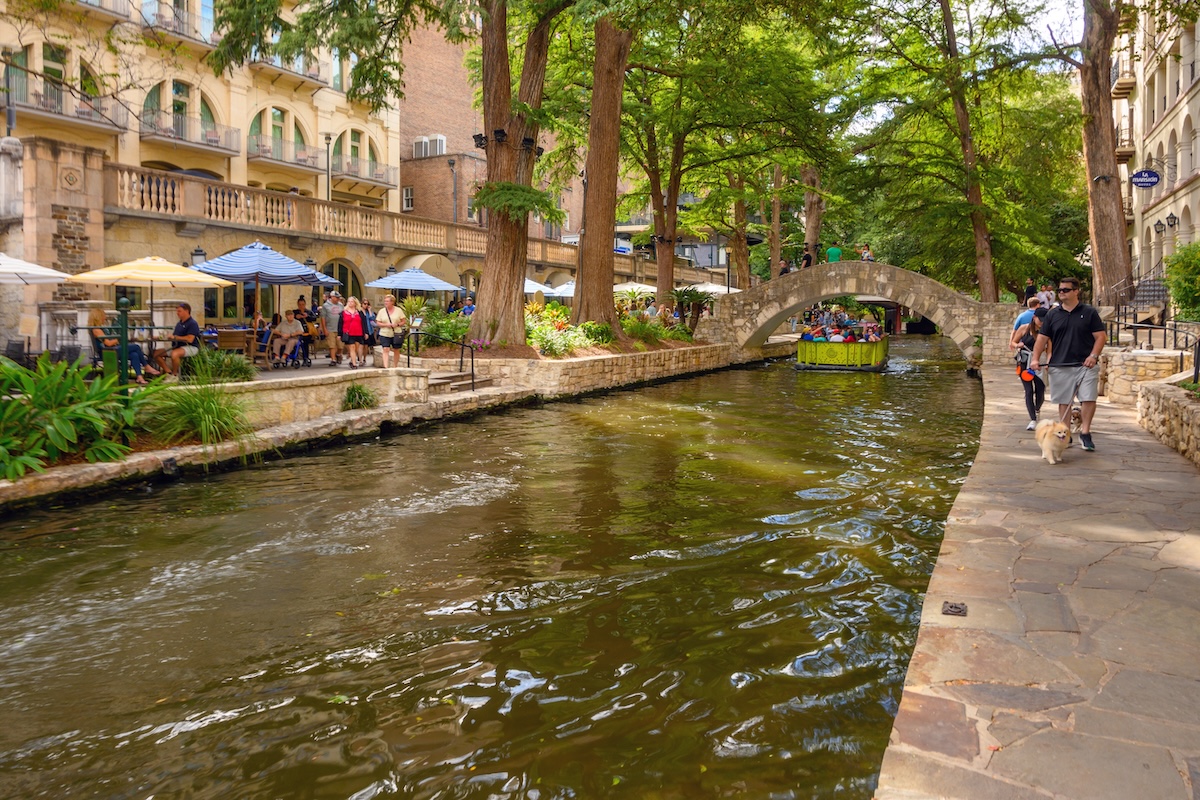
San Antonio’s River Walk nearly didn’t happen. After a deadly 1921 flood, city leaders considered paving over the downtown bend of the river as a storm sewer. Architect Robert Hugman pushed a different vision in 1929, and with Works Progress Administration help in the late 1930s, he built the sunken, tree-lined path that now defines the city.
Walking one story below street level, you pass restaurants, hotels, and mariachi bands under cypress trees, with river barges carrying passengers on narrated tours. The system has expanded to about 15 miles, with the Museum Reach heading north toward the Pearl and the Mission Reach heading south to the city’s Spanish colonial missions, a UNESCO World Heritage Site. The Alamo sits a short walk above the river, and you’ll want a full day just for the southern missions.