
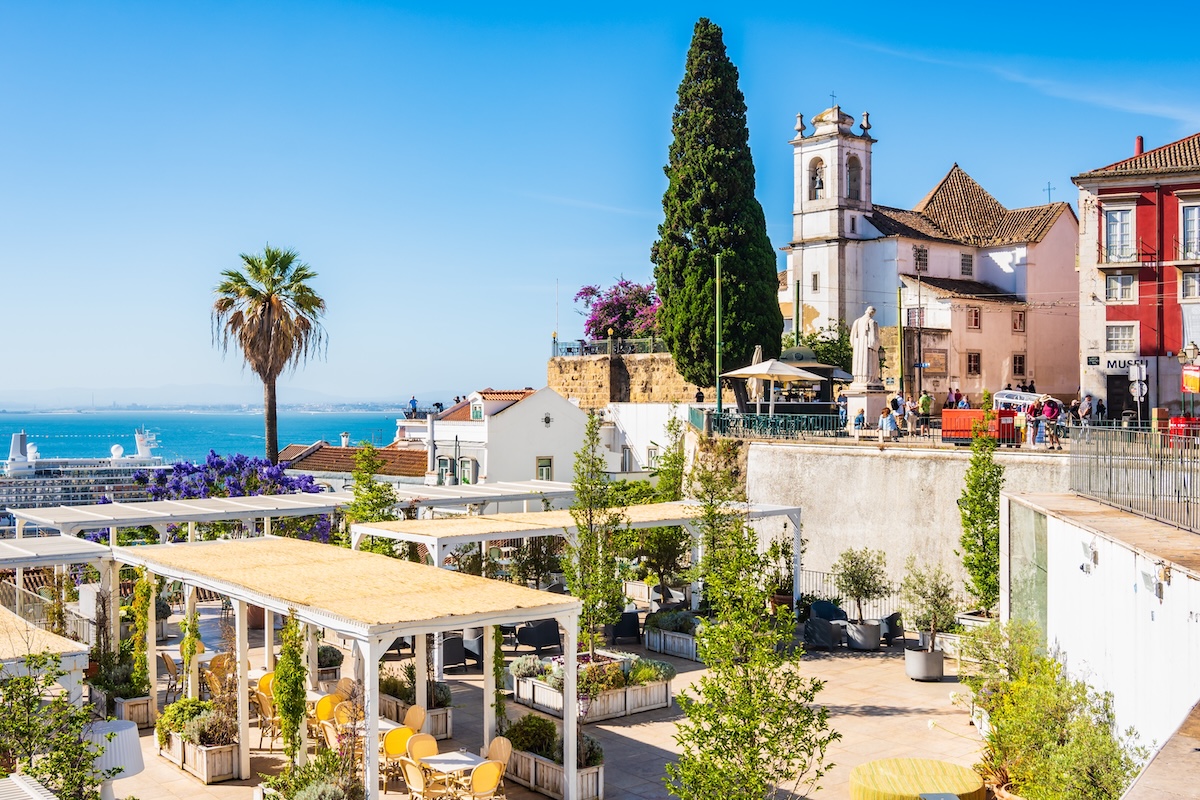
Somewhere in Europe, there’s a hillside where streets still follow paths laid out more than a thousand years ago. Laundry flaps between balconies, and after dark, a song drifts from a doorway. Somehow, this corner of an old city survived the disaster that flattened nearly everything around it.
That place is Alfama, Lisbon’s oldest neighborhood, tumbling down from São Jorge Castle toward the Tagus River. It came through the 1755 earthquake largely intact, so its tangled lanes still trace the shape of the medieval city.
You come for the views and fado, then stay for the way locals live their lives on these steep, tiled streets.
Medieval Streets and Hilltop Views
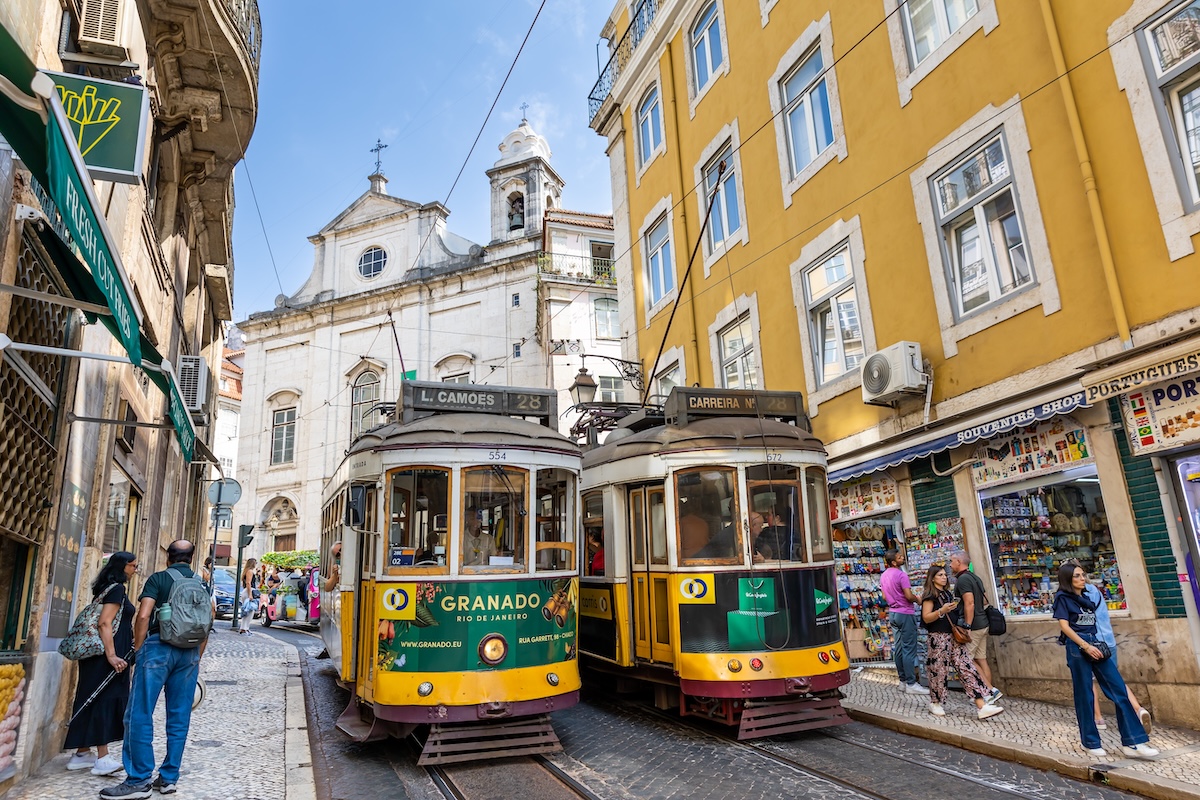
The best way to see Alfama is to get lost. Its narrow lanes and stairways preserve the layout of Lisbon before 1755. The district’s Moorish-era street plan never got the grid that rebuilt Baixa below, so alleys called becos twist, dead-end, and suddenly open onto tiny squares.
Wear shoes with grip. The cobblestones get slick, and some stairways climb dozens of steps between tiled facades in blues, greens, and yellows. Tram 28 rattles through parts of the neighborhood if your legs need a break, though it fills up fast by midmorning.
The viewpoints reward the climb. Miradouro de Santa Luzia frames terracotta rooftops and the river behind a bougainvillea-draped pergola. A few steps higher, Miradouro das Portas do Sol offers a wider sweep toward São Vicente’s white towers. Go near sunset, when rooftops glow orange and the Tagus turns silver.
Everyday Life Around Churches, Markets, and Festivals
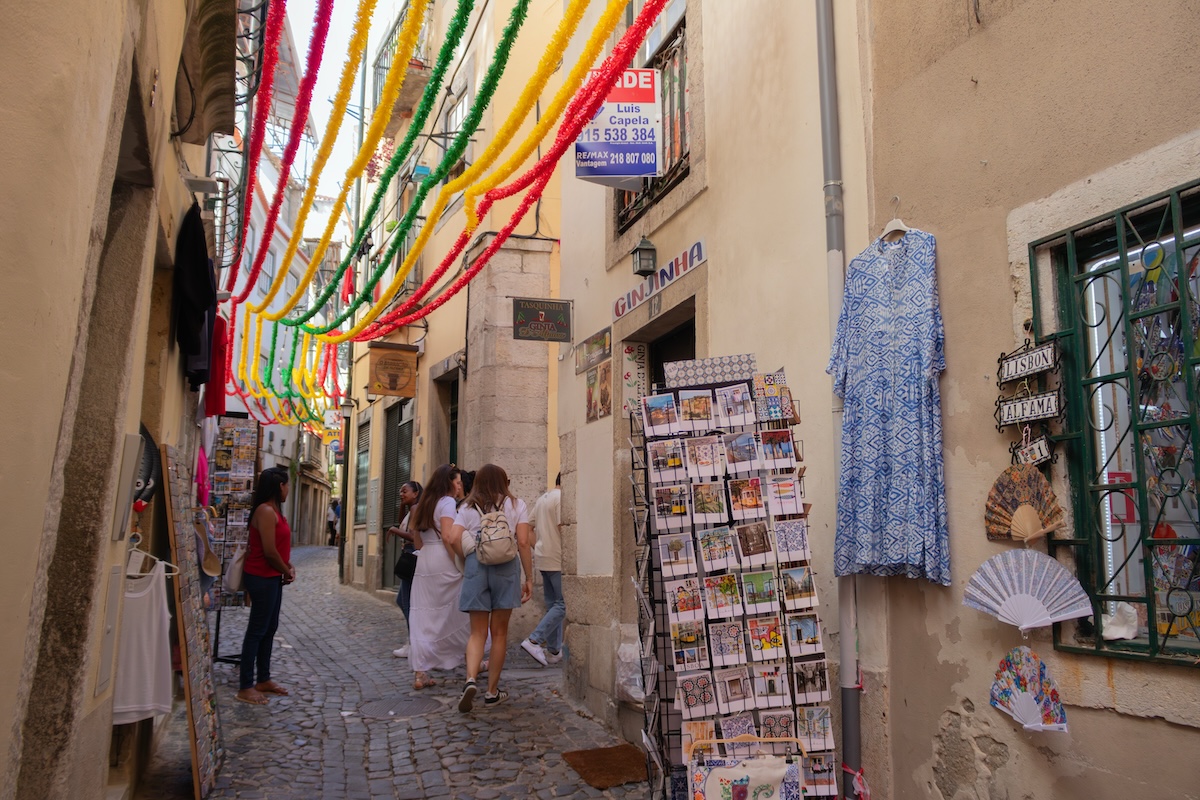
Alfama’s character comes through in the daily rhythms of its residents. Elderly neighbors chat from their windows, sardines sizzle on doorsteps, and local churches still shape everyday routines.
Start at Lisbon Cathedral, the Sé, a fortress-like Romanesque church that dates to the 12th century. Then head up to São Vicente de Fora. Its monastery cloisters feature azulejo panels, and the rooftop looks out over the river. On Tuesdays and Saturdays, the Feira da Ladra flea market fills nearby Campo de Santa Clara with vintage tiles, records, and odds and ends to haggle over.
Visit in June, and you’ll find Santo António in full swing. Paper garlands line the streets, pop-up grills and sangria stands appear, and music carries on late into the night, especially on June 12. Book your lodging months ahead, and expect crowds and noise well past midnight.