
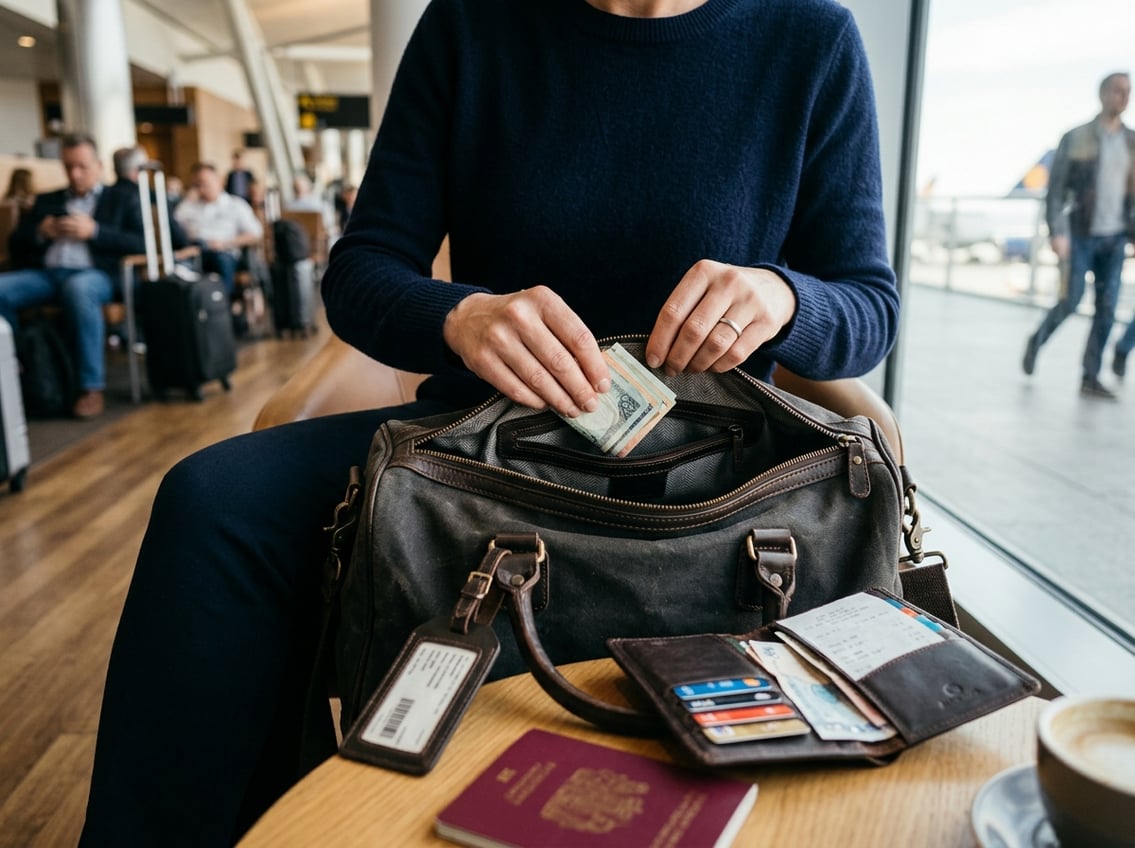
Travel has a way of piling little uncertainties on top of each other. You land somewhere new and suddenly you’re juggling an unfamiliar transit map, a currency you haven’t used before, and a phone battery that keeps dropping. Most trips go smoothly, but when they don’t, something ordinary often goes wrong: a lost wallet, a dead phone, or a wrong turn after dark.
The good news is that a few simple habits can make those moments manageable. Build them into your routine before you leave, and you’ll spend less time bracing for problems and more time enjoying where you are. A little preparation can make travel feel calmer, without demanding much thought once it’s in place.
Keep Copies of Important Documents
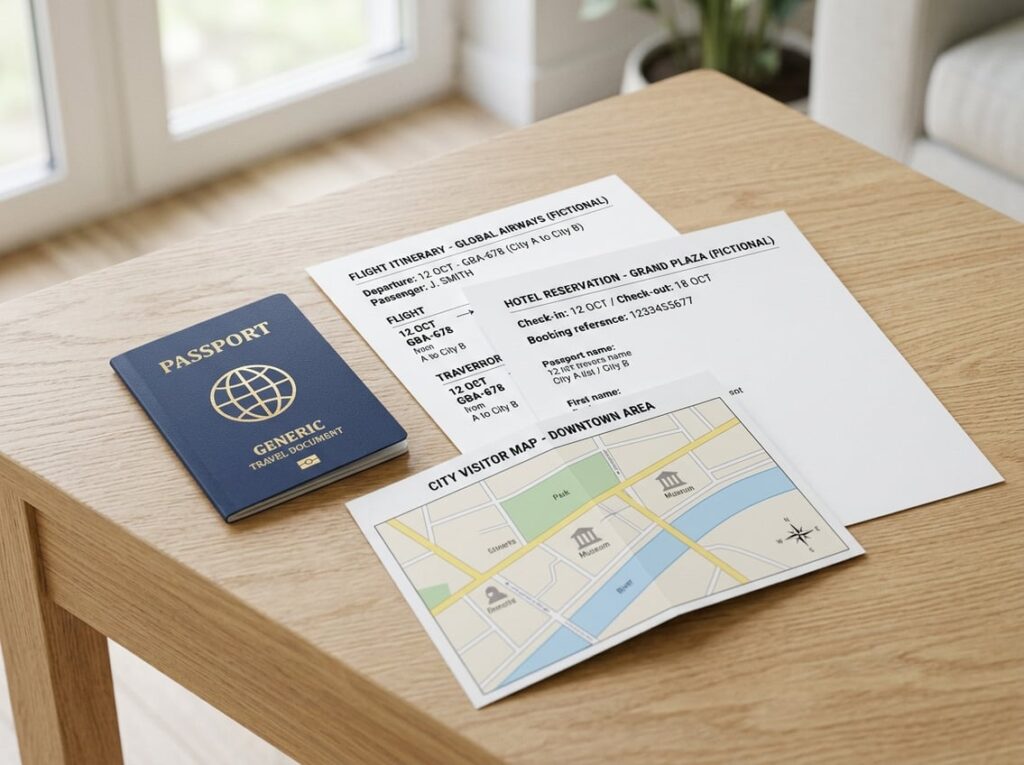
Copies of your passport, ID, and visas can turn a lost or stolen original from a crisis into a paperwork errand. A photo of your passport’s data page can speed up a replacement at a U.S. embassy or consulate, since staff can verify your details faster.
Store copies in two places. Keep one digital version in a secure cloud folder or encrypted app, and tuck a paper printout into a different bag from your originals. Add your driver’s license, travel insurance policy, and the front and back of any credit cards. You can also enroll your trip in the State Department’s STEP program, which helps officials reach you in an emergency abroad.
Keep a Backup Card Separate
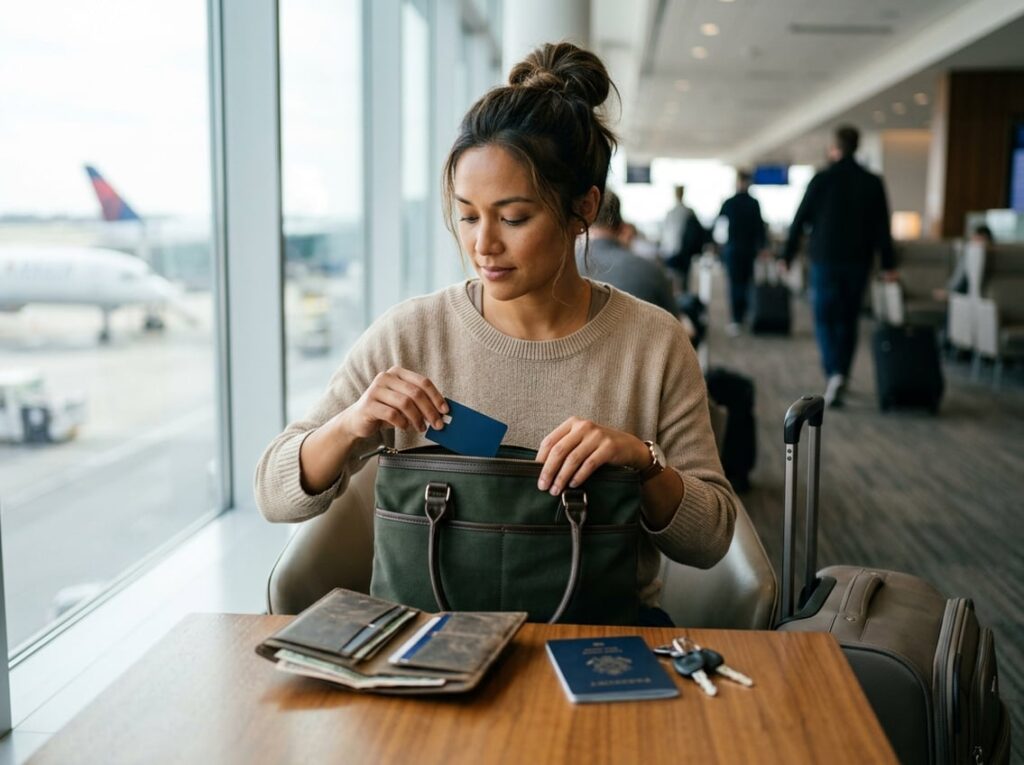
A second credit or debit card, stored away from your main wallet, can keep you funded if pickpockets strike or an ATM swallows your primary card. Tuck it into a zipped inner pocket in your luggage, a money belt, or the hotel safe.
Choose a card from a different bank or network, so one fraud freeze won’t lock you out of both. Visa and Mastercard have the widest acceptance worldwide. Before you leave, confirm that your card works abroad, check its foreign transaction fees, and save the issuer’s international phone number so you can report a loss quickly.
Share Your Itinerary With Someone You Trust

Share your travel plans with a friend or relative so someone at home knows where you’re supposed to be each day. If you go quiet, they’ll have a starting point for finding you.
Include flight numbers, hotel names and addresses, rental car details, and dates for day trips or hikes. A shared Google Doc or an app like TripIt makes it easy to update plans when they change. For remote outings, such as national park trails, tell your contact when you expect to return and when they should start calling rangers or local authorities.
Check Your Route Before Heading Out
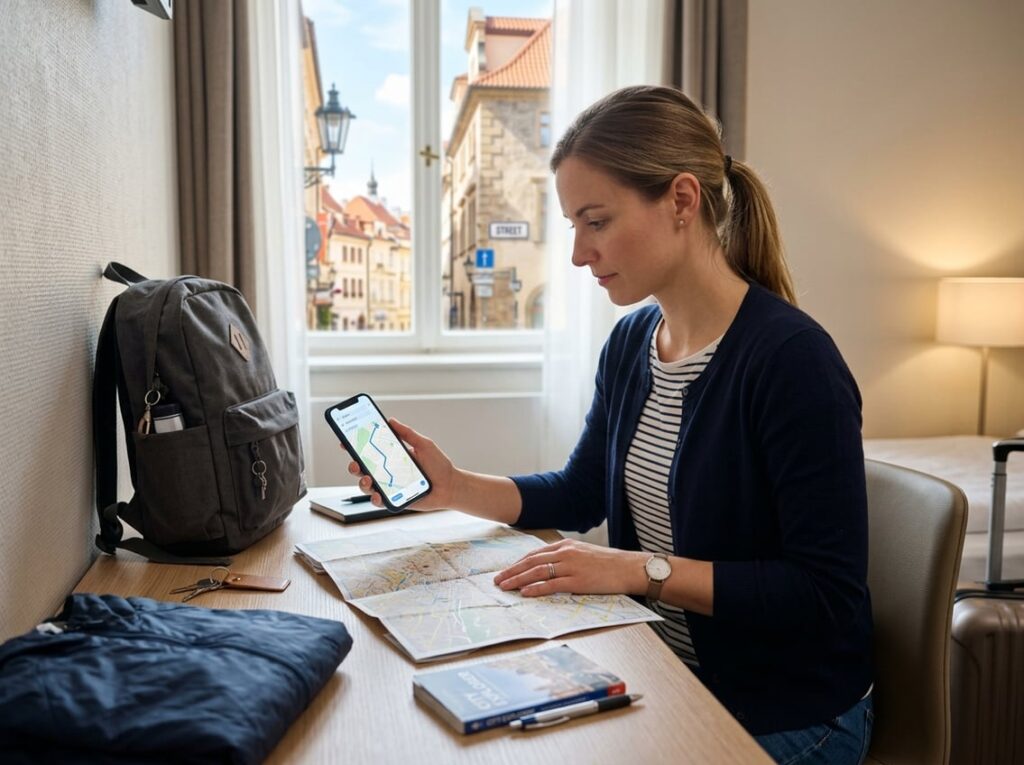
Look up your route before leaving the hotel, rather than standing on a street corner staring at your phone and looking like a lost tourist. A quick preview of turns, transit lines, and landmarks can give you confidence as soon as you step outside.
Note which subway exit to use and about how long the walk will take. Street View can help you recognize your destination when you arrive. At night, stick to well-lit main streets instead of shortcuts. Check whether buses or trains stop running early, too, so you’re not stranded after dinner.
Keep Your Phone Charged
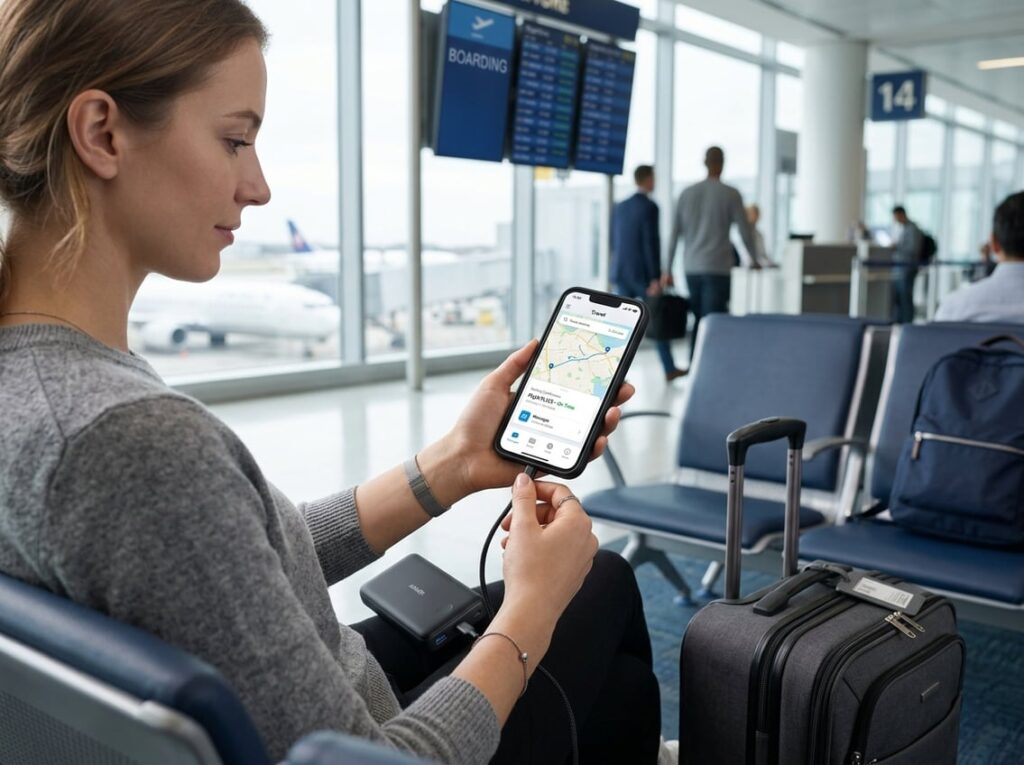
A charged phone is your map, translator, boarding pass, and lifeline to emergency help. When the battery dies, you lose all of those at once. Top it up whenever you can: at breakfast, in cafés, or on trains with outlets.
Carry a portable power bank of around 10,000 mAh, which can provide two full charges for most phones. TSA requires you to pack lithium power banks in carry-on bags. For international trips, bring a universal plug adapter, and turn on low-power mode during long sightseeing days to stretch your battery into the evening.
Save Important Information Offline
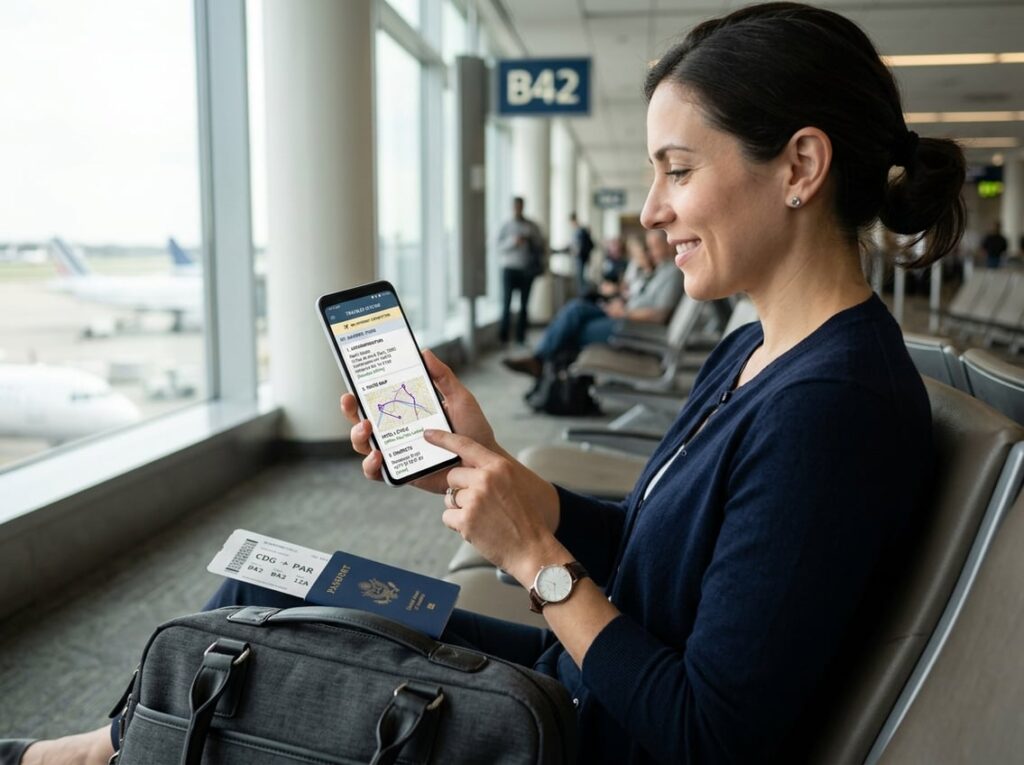
Offline copies of key details can keep you oriented when Wi-Fi drops or roaming data runs out. Google Maps lets you download entire city areas, and Maps.me works well for hiking trails.
Screenshot hotel confirmations, booking codes, and addresses. If possible, save the addresses in the local language so you can show them to a taxi driver. Download the Google Translate language pack for your destination, too. Keep emergency contacts on a paper card in your wallet, since a locked or broken phone can hide everything stored inside it.
Know How to Get Help Locally
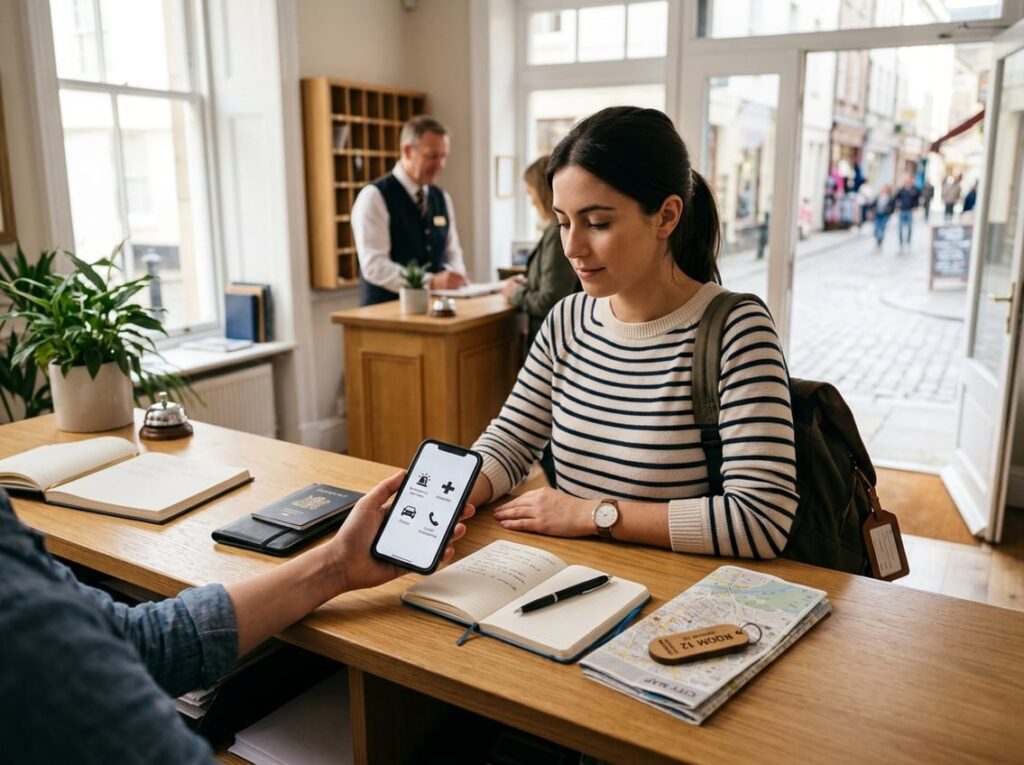
Look up local emergency numbers before you arrive to save precious seconds if something goes wrong. The number isn’t 911 everywhere: most of Europe uses 112, the U.K. uses 999, and Australia uses 000.
Save the nearest U.S. embassy or consulate and your travel insurer’s 24-hour assistance line. Ask your hotel’s front desk where to find the closest hospital and pharmacy, and whether a reputable taxi company operates nearby. Keep your hotel’s business card handy, too. Staff can translate or call for help on your behalf.
Check In With Someone Regularly

A quick daily message to someone back home creates a quiet safety net. Agree on a routine, such as sending a text each evening, so a missed check-in stands out right away.
Location-sharing features like Find My on iPhone or Google Maps sharing let a trusted contact see where you are without constant updates. Make a plan for what happens if you go silent: if you miss two check-ins, your contact calls your hotel, then the embassy. Solo travelers may find this especially useful on hikes, road trips, or nights out.
Keep Emergency Money Separate
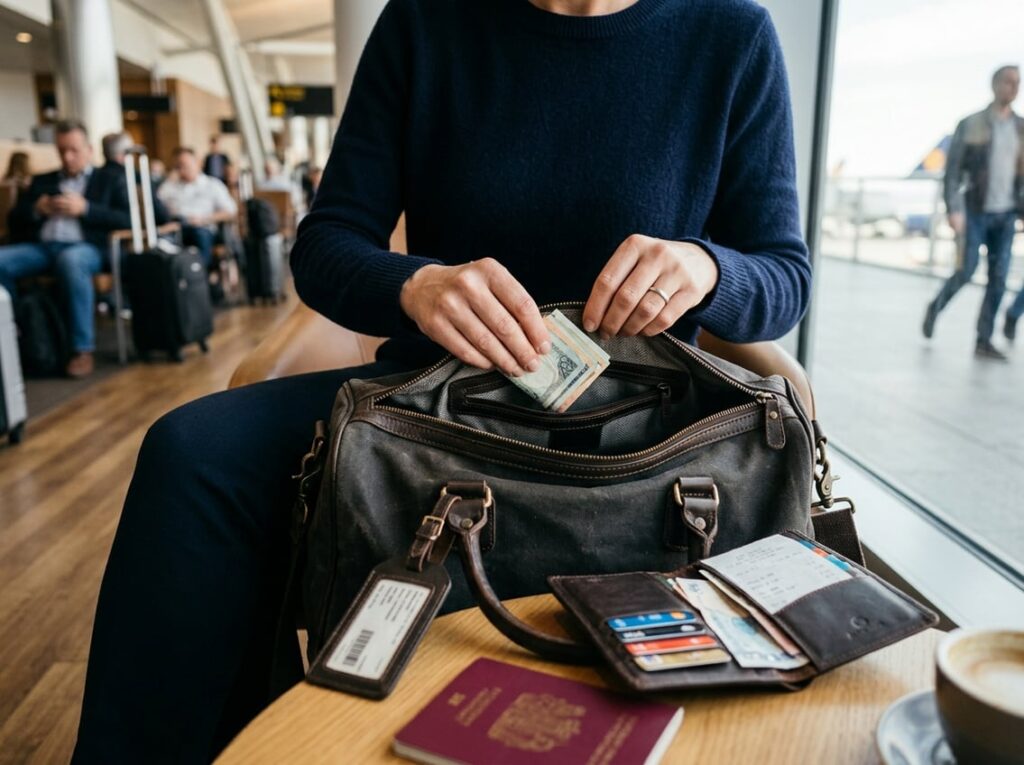
Stash some cash away from your wallet so a theft or card problem won’t leave you empty-handed. Around $100 to $200 in U.S. dollars or local currency can cover a taxi, a meal, and a night’s lodging in many places.
Split it between a few spots: a shoe insole, a toiletry bag, or a hidden luggage pocket. U.S. dollars are widely exchangeable, but local cash works right away for taxis and street vendors. Replace whatever you spend as soon as you reach a trusted ATM, ideally inside a bank branch.