
On Malaysia’s southwest coast, Malacca (Melaka) is a thriving city that has successfully paired its modern life with its rich colonial past. Founded by a fleeing Sumatran prince in the 1300s, Malacca became the domain of the Chinese, then the Portuguese and the Dutch before the British came along.
Add on a strong Indian population and you’ll begin to envision the elaborate cultural tapestry that has developed along the banks of the Melaka River.
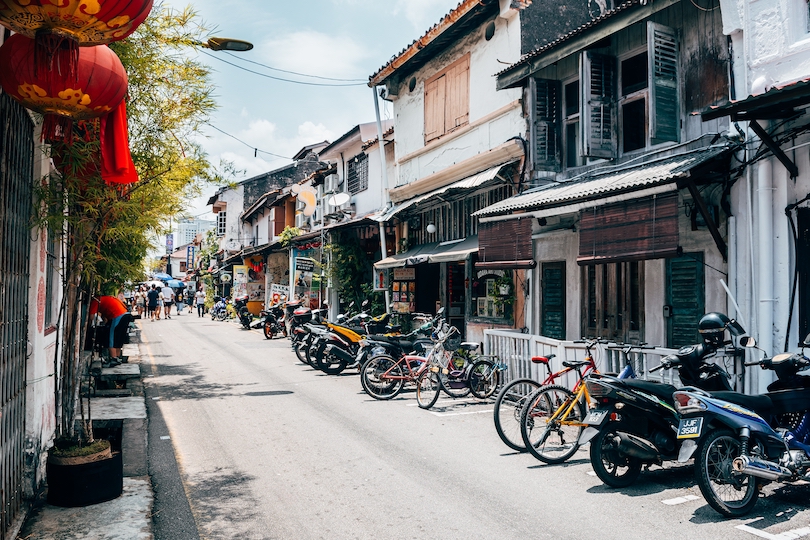
Malacca’s Old Town is infused with colonial architecture. But floating through it (and along Jonker Street) are the aromas from generational recipes that have made Malacca’s street food renowned throughout Malaysia. As you explore all these things to do in Malacca, you’ll find the best of both, with a helpful dash of colorful nightlife.
16. Francis Xavier Church
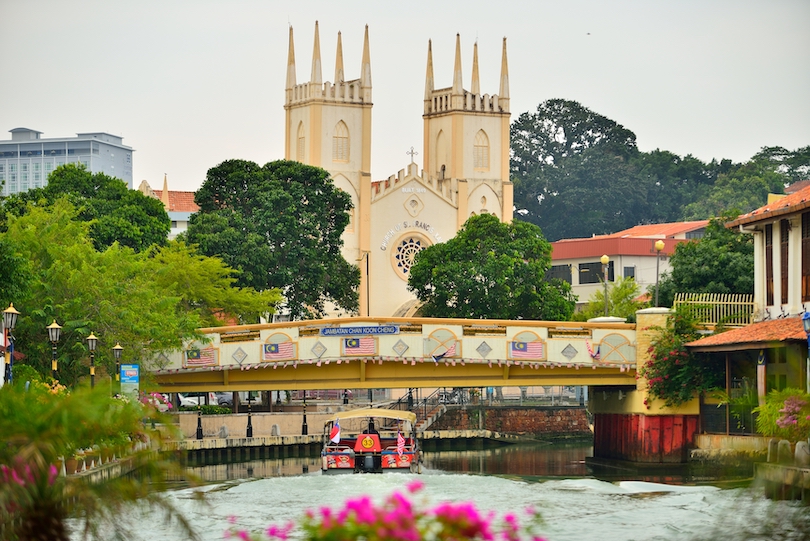
Built in the 1840s, Francis Xavier Church is dedicated to one of Malacca’s most celebrated residents. St. Francis Xavier, aka the Apostle of East Asia, played a major role in bringing Catholicism to the region in the 16th century.
For more than 150 years, the Neo-Gothic church has been one of the most captivating in Malacca. Its twin bell towers and intricate facade mark the entrance of the city’s largest church. In addition, you’ll soon spot a statue of Francis Xavier, himself.
As you wander inside, the stained glass windows send down shimmering colors from above. The church pews are delightfully painted and the interior white walls present a disarming feeling of peace.
15. Shore Sky Tower
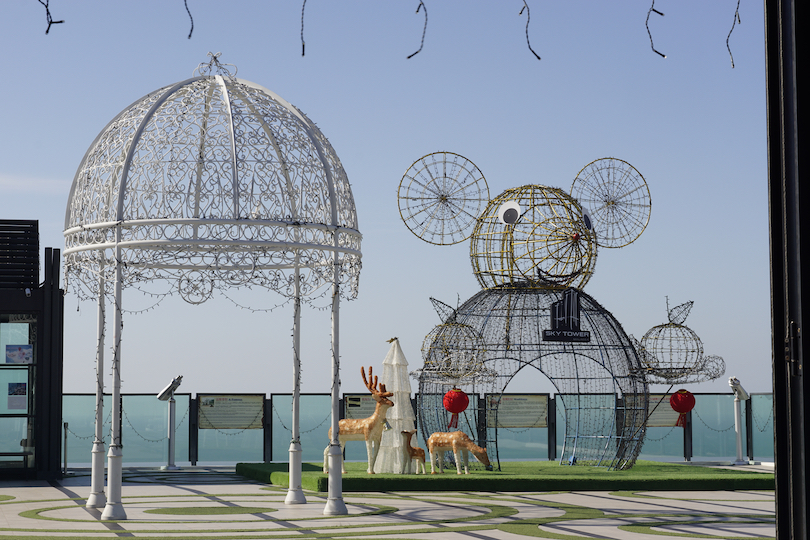
Are you after a way to see Malacca from above? Well, you may not find a better view of the coastal city from the top of the Shore Sky Tower.
With 43-stories, the tower may not hold a candle to some of Singapore’s biggest skyscrapers. But alas, it’s all relative. The Shore Sky Tower is the tallest in Malacca, and presents visitors with immense, 360-degree views.
Standing at 160 meters above street level, it sure isn’t a view for those with a fear of heights. But if you’re looking to conquer that, head out onto the Skywalk, which features a glass floor!
As you take in the view, look down upon Kampung Morten for a great example of old and modern Malacca.
14. Villa Sentosa
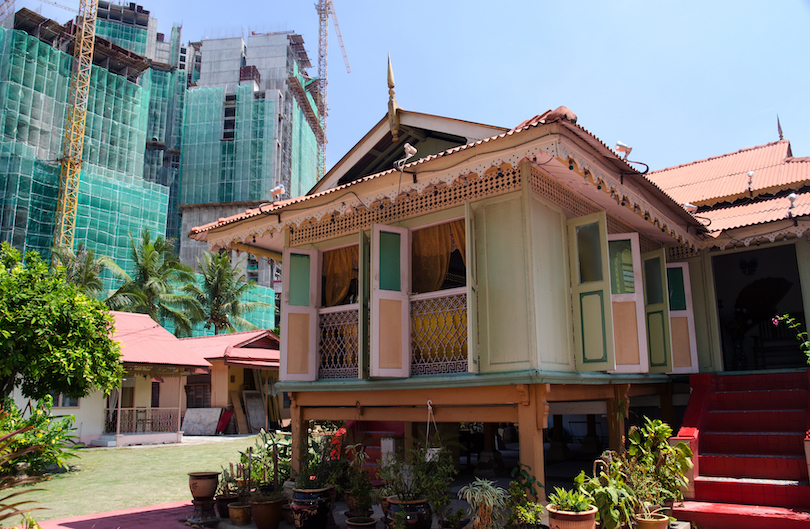
In the old village of Kampung Morten, Villa Sentosa is the oldest of the lot. Built in 1921, the traditional building is the perfect way to learn about and connect the wider, historic Malay community.
Kampung Morten is a living history. If seen from above, the village has over 50 red zinc rooftops surrounded by modern high-rises. It’s appropriate then that Villa Sentosa has gone on to become the Malay Living Museum.
It’s the most sightly home within the community. Visitors quickly become guests of the home as they’re welcomed by locals who show you around as you would your own home. You’ll hear old stories while admiring the period furniture and historic artifacts.
13. A’Famosa Resort
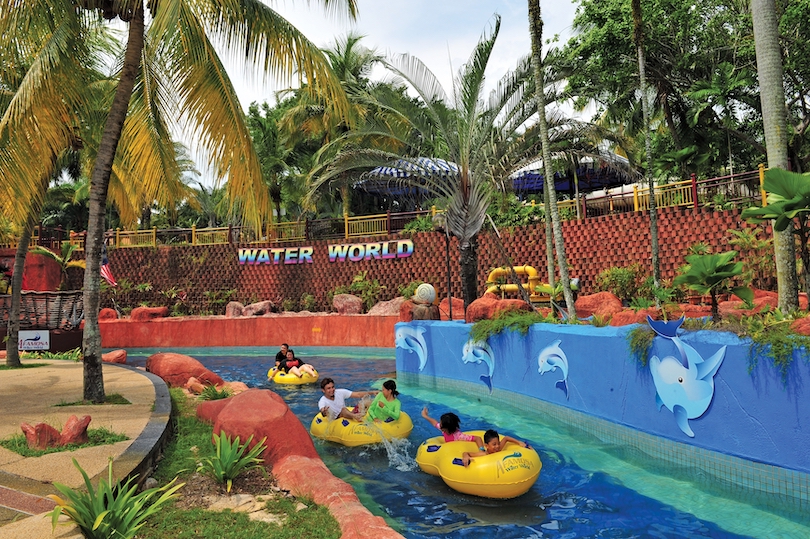
Ready to let your hair down and get your heart rate up? Well, make your way to Malacca’s beloved A’Famosa Resort. Named after the nearby 16th century Portuguese fort, A’Famosa is a blend of fun, family-friendly action. This, with a topping of adrenalin pumping water park action.
There’s so much to do here, you could realistically plan several days. Within the resort, travelers will find Malaysia’s largest water theme park, the Safari Wonderland, a sprawling 27-hole golf course and the desert, the Old West entertainment district.
The water park is the highlight, with a dozen major rides and a wave pool. The safari brings you up close to giraffes, orangutans and elephants. Finish up at the Old West to discover a world of cowboys, stunt shows and rustic saloons.
12. Melaka River Cruise
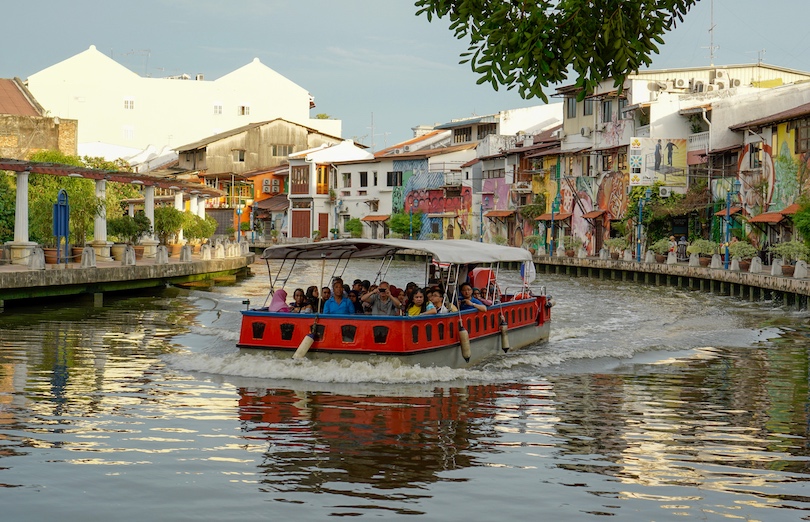
Kick back and relax on a Melaka River Cruise. With so many of the city’s highlights lined along the traipsing river, it’s a wonderful way to see Malacca’s history and interesting sights.
You’ll find boats making their way up and down the river throughout the day and into the evening. These pontoon-like boats depart from either the Spice Garden or Melaka River Square jetties.
Along the way, they pass under six traditional bridges and by such sights as Kampung Morten and Stadthuys. We preferred the 45-minute journey at sunset. This way we can hope to see the historic buildings awash with warm colors. As the sky turns black, the boat lights up with fluorescent colors to match the bright neon spread across the riverbanks.
11. Take a Trishaw Ride
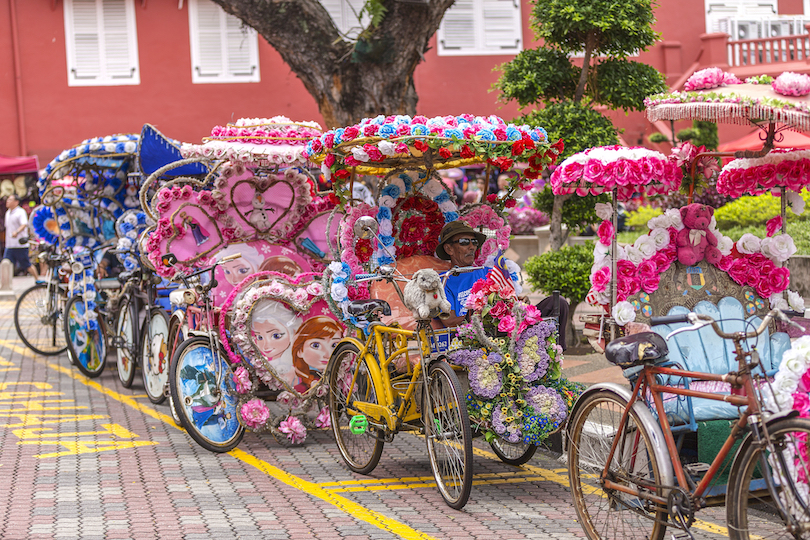
A fiesta on wheels, embarking on a trishaw ride, is an unforgettable way to experience the best of Malacca. These sparkling pedal-powered mobiles are head-turners in the best way possible and you’ll see them spread right throughout.
For less than USD10, you can jump on board these rolling party bikes and see some of Malacca’s best sites. Trips usually last for 30 minutes, but once you jump on board, you’ll become the boss. As your trishaw makes its way from landmark to landmark, don’t be afraid to change the itinerary. The same can be said for picking the next song.
Yes, this is all quite kitschy. But with a disco ball above your head, it’s an utterly bodacious and hilariously fun way to explore the town.
10. A Famosa
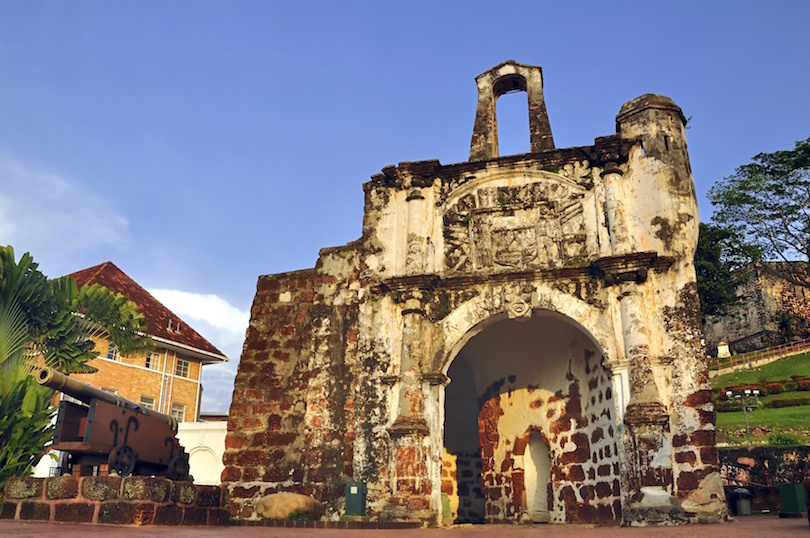
The remains of this Portuguese fortress are among the oldest remaining European structures in all of Asia. A Famosa (Porta de Santiago) was built on a seaside hilltop in the early 1500s to protect the newly conquered land from returning to a sultanate or being invaded by other European nations.
The hope was to create another Portuguese friendly port along the Spice Route to ease trade for merchant ships delivering between Asia and Europe. It later fell into Dutch hands, and was given to Britain to avoid being conquered by Napoleonic France.
Britain feared its power if it were conquered, so chose to destroy it instead of fortifying it further. A single small gate was preserved at the request of Sir Raffles, the founder of Singapore.
9. Masjid Selat
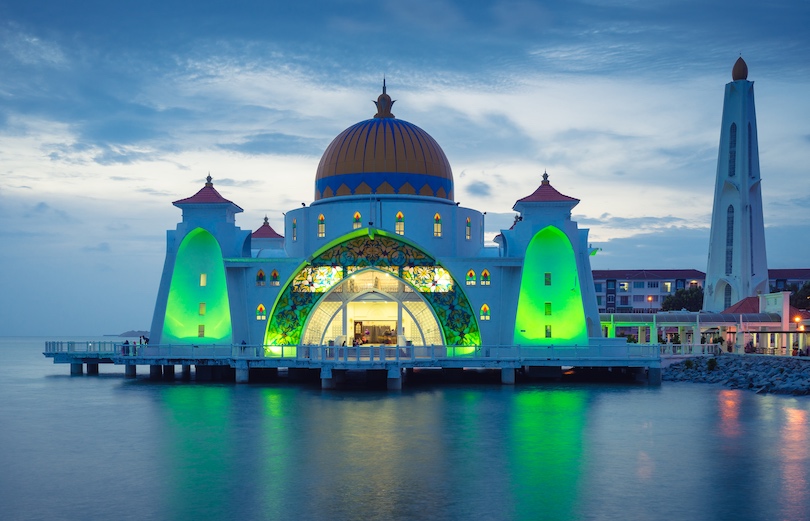
Masjid Selat (Malacca Straits Mosque) was created in the early 20th century with a mix of Middle Eastern and Malay architectural styles. Built on manmade Malacca island, it is designed to appear as if it is floating when water levels are high.
In traditional Moorish style, much of the outside is white with accents of vibrant color. In this case, large stained-glass archways of yellow and green are one of the main showpieces that accent the mosque.
The building is particularly beautiful at night, when a series of colored lights make it one of the most beautiful sights in all of Melaka. The mosque serves as an active and popular place of worship, but also allows public tours.
8. Malacca Sultanate Palace
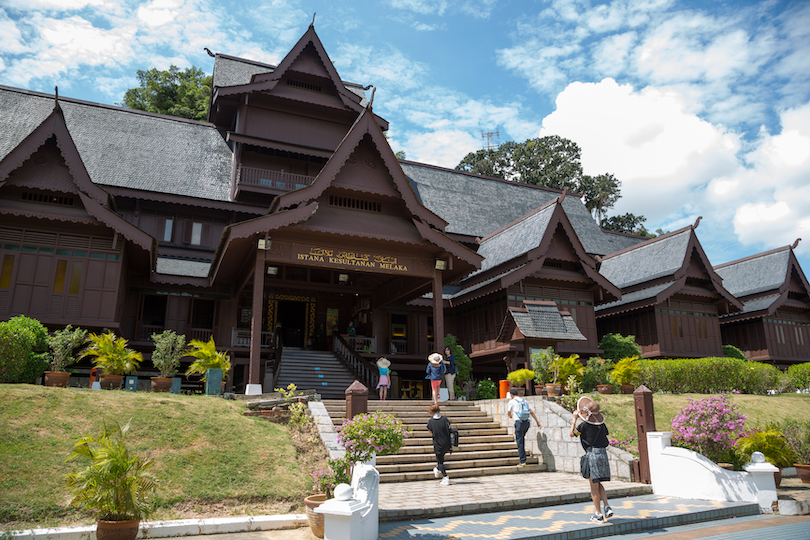
This is not the original, but a replica museum that was built in 1984 to showcase the region’s history. The building was built based on the historical descriptions of the palace of Mansur Shah, the sultan who ruled Melaka from 1456 to 1477.
The palace has a series of dioramas that depict what a typical day inside the palace probably looked like. Supplicants, guards and vendors flank the main hall, waiting to pay tribute to the sultan and make requests. A scale model of the building and more than 1300 period items make up the rest of this historical museum.
7. Stadthuys
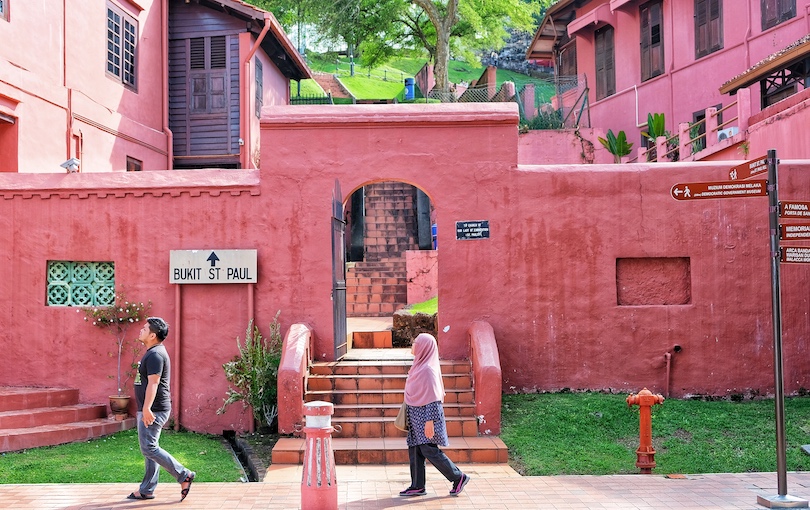
This old Dutch city hall is painted the same red as Christ Church and most of the other remaining Dutch Colonial buildings in Melaka. It went from the offices of the Dutch governor and deputy governor under Dutch rule to a free English school under British rule.
Today it is home to the History and Ethnography museum, believed to be one of the premier museums in the region. It includes traditional costumes and artifacts that showcase the many different periods in Melakan history.
6. Menara Taming Sari
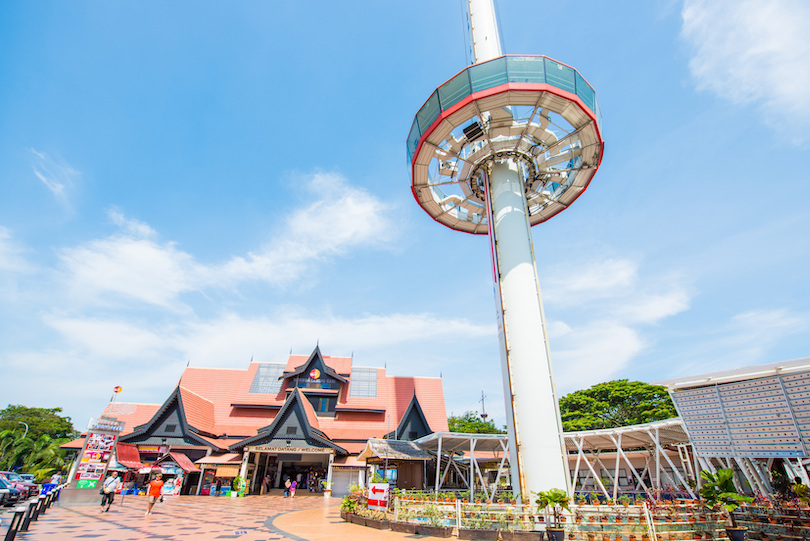
This revolving tower is reminiscent of the space needle in Seattle, and serves a lot of the same purpose. Part ride, part sightseeing excursion, the Menara Taming is a great way to get an overall look at both historical Malacca as well as the new and upcoming changes to city.
The gyro tower is a seven minute long ride and holds eighty people at a time. At the base of the tower are a number of other activities to try, such as pony rides, carnival rides and electric car rentals. Package deals are available to buy a ticket to the tower in combination with several other attractions in Melaka.
5. Cheng Hoon Teng Temple
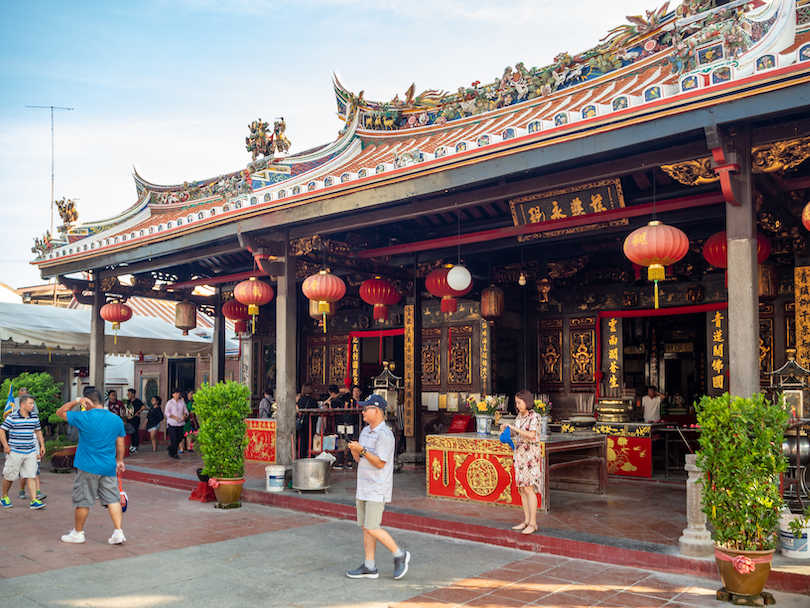
Dating from 1646, the Cheng Hoon Teng Temple is the oldest functioning temple in Malaysia. It practices the three traditional Chinese doctrines of Taoism, Confucianism and Buddhism.
The temple is located along Harmony street, home to many other mosques and temples, and greets visitors with an ornate gate bedecked with Chinese lions. The temple itself is made up of several prayer halls, the main one dedicated to Kuan Yin, the goddess of mercy. Smaller halls honor the gods of wealth, propogation and prosperity, as well as providing a home for ancestral tablets.
4. Baba and Nyonya House Museum
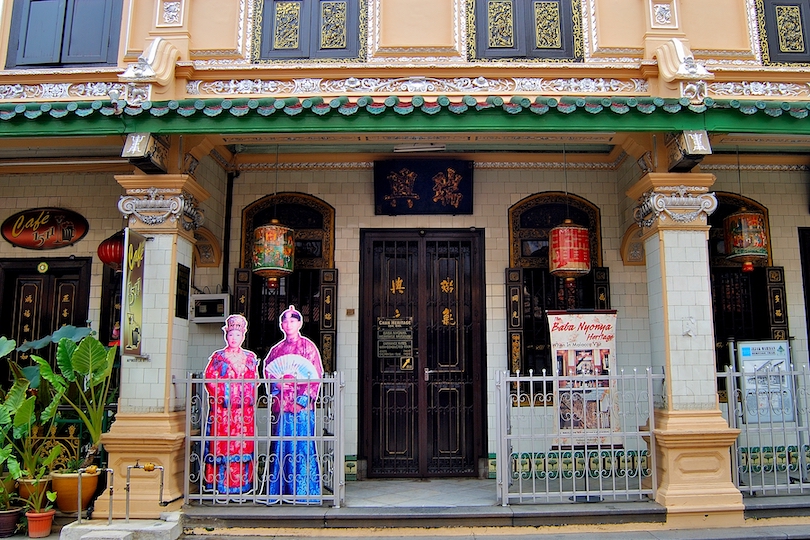
Created from a mansion on millionaire’s row, this museum was established by Chan Kim Lay, a fourth generation inhabitant of this home to celebrate the complex and wonderful combination of Chinese and Malay culture, also known as Baba Nyonya.
The museum features a number of crafts and handiwork, including woodworking pieces, porcelain and furniture. Large, painted tapestries hang on walls with elaborately carved frames and a story of Chinese and Western cultures blending into a Malay world is told through the pieces in this traditional home.
3. St. Paul’s Church
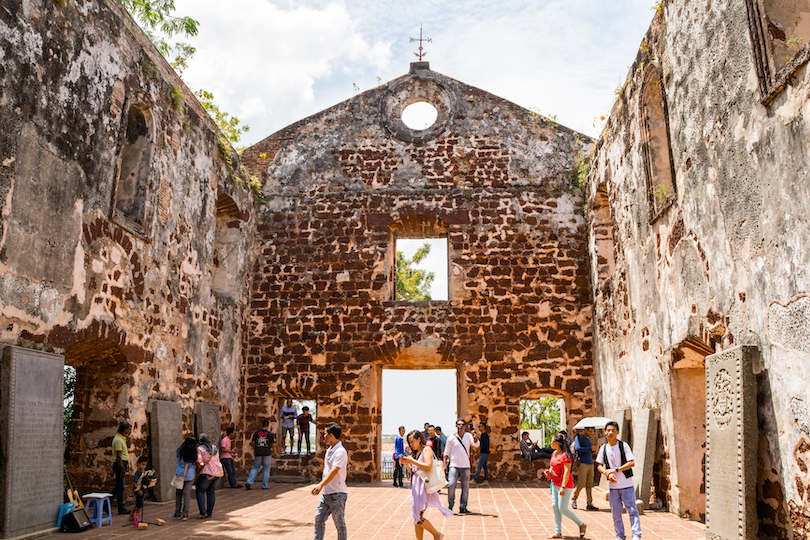
Originally built by a Portuguese captain in 1521 as a simple chapel, St. Paul’s Church offers views over Melaka from the summit of Bukit St Paul. St. Francis Xavier, one of the founders of the Jesuit order, used the church as his base for his missionary journeys to China and Japan.
In one of those journeys, Xavier fell sick and eventually died in China in 1552. His body was temporarily interred here for nine months before being transferred to Goa, where it remains today. Visitors can look into his ancient tomb inside the church, and a marble statue of the saint gazing over the city.
2. Jonker Street
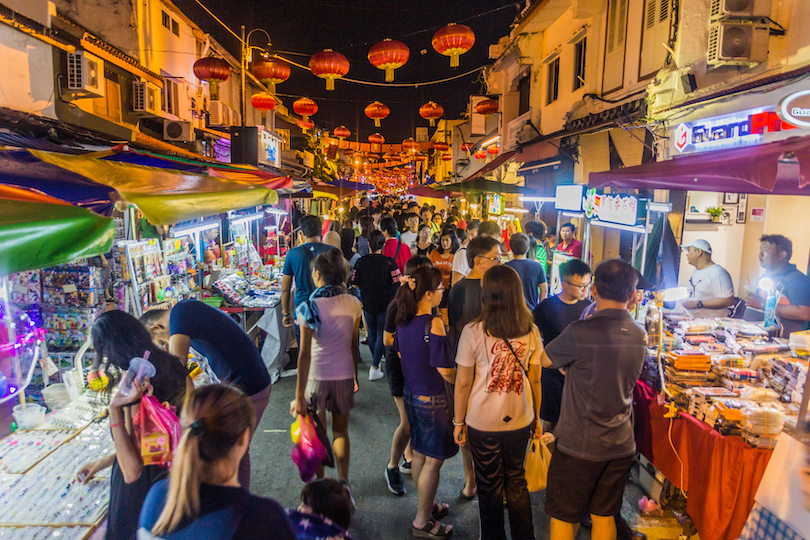
This street is the center of Chinatown of Melaka. It began in Dutch Colonial times as the home to many of the servants of Dutch nobility. However, after the Dutch left, it became the home of the nobles themselves.
Many seventeenth-century manors remain here, along with a large number of shops, restaurants and other amenities. When the large Chinese presence moved in, decorative accents like a large Chinese-style archway were added. The street is blocked off every Friday, Saturday and Sunday evening to become a pedestrian-only night market.
1. Christ Church
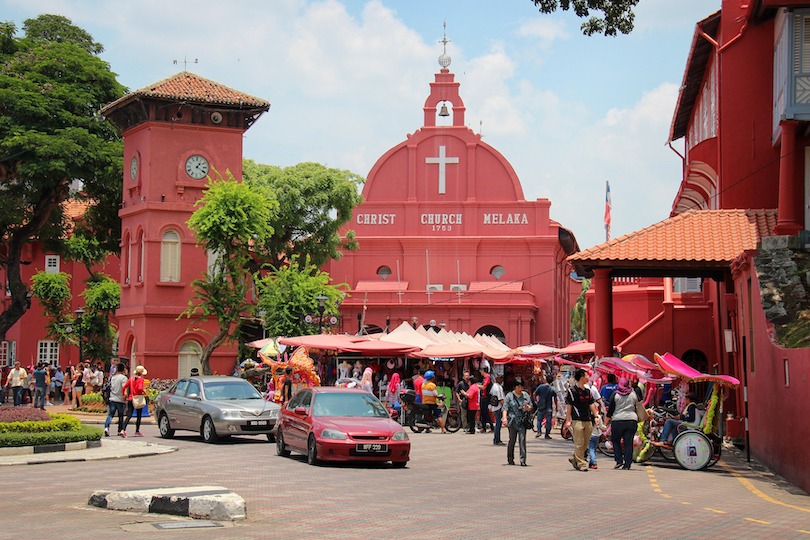
A stone’s throw from Jonker Street, the Christ Church, is the most beloved in Malacca. In a city littered with old, historic religious buildings, the dusty red colors of the Christ Church place it on an unreachable pedestal.
Christ Church was created in the eighteenth century to replace the aging Portuguese church, and remains one of the most iconic buildings from the Dutch Colonial era in Malacca. Originally white, this building was painted red in the early 1900’s. Now the oldest Anglican church in Malaysia, it’s a centerpiece of the wider Red Square.
As you explore Christ Church, you’ll come to admire the single bell affixed to its top. Head through the trio of archways into the church itself to uncover the historic Dutch tombstones laden with glimmering silver and Dutch coat of arms.