

Mud, considered a nuisance in many areas of the world, has been considered to be a chief building material in other areas of the globe. Clay soil is found in abundance on this planet, providing its inhabitants with sturdy homes. The remarkable thing about mud brick structures is their durability, with some mud buildings lasting for a thousand years.
10. Taos Pueblo
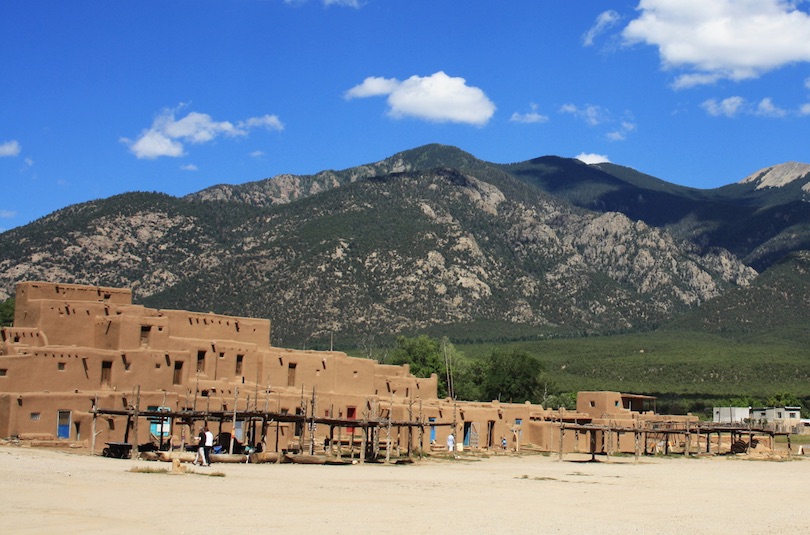
Taos Pueblo is an ancient dwelling in New Mexico, continuously inhabited for about 1,000 years by the Pueblo native people. The mud brick homes are made of sun dried mud bricks, which are coated with an adobe plaster. Southwestern adobe is made of clay soil called caliche, mixed with straw for added strength.
The walls are thick, and are re-plastered annually, as part of a village ceremony. The roofs are made of cedar trees, and ladders are used from the outside of the dwellings to reach the second flood.
9. Arg-e Bam
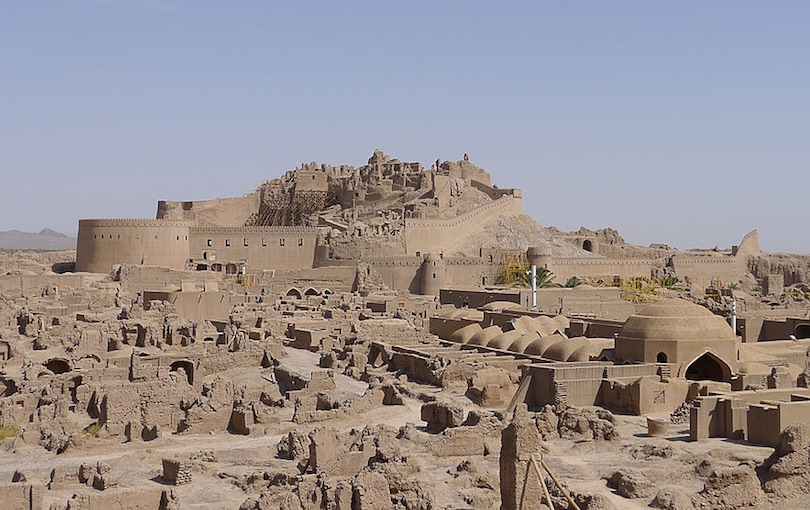
Bam had its beginnings as a prosperous trading center on the famous Silk Road, during the Sassanian period (224-637 AD). Bam produced silk and cotton garments for trade. Located in southeastern Iran, Bam was constructed entirely of mud bricks made of clay soil and palm tree trunks.
Thick walls, with 38 watchtowers protected the citadel, which covered 6 square kilometers, and contained a series of underground water canals, supporting about 12,000 people. Unfortunately, the 2003 earthquake in Bam destroyed more than half the city’s houses and the historic mud-brick citadel.
8. Djinguereber Mosque
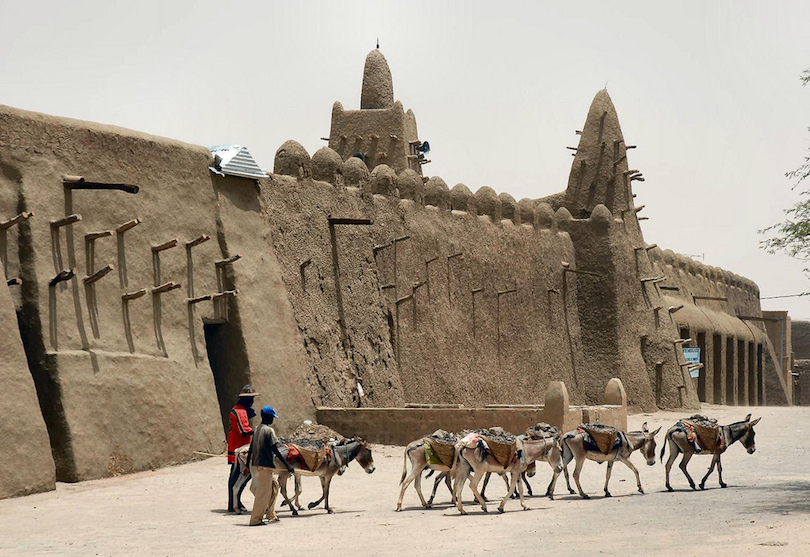
Earning its reputation for being difficult to access, Timbuktu is situated in Mali, West Africa. The Djinguereber Mosque was constructed in 1325, and boasts unusual looking minarets with timbers poking out, reminiscent of American southwest’s Viga structures.
Because Mali gets such sparse rain, the Djinguereber Mosque, made of mud and straw, maintains its form and strength from its constant sun baths. As are many of the world’s mud buildings, this one once sat on a busy camel-traveled gold and salt route.
7. Khiva Wall
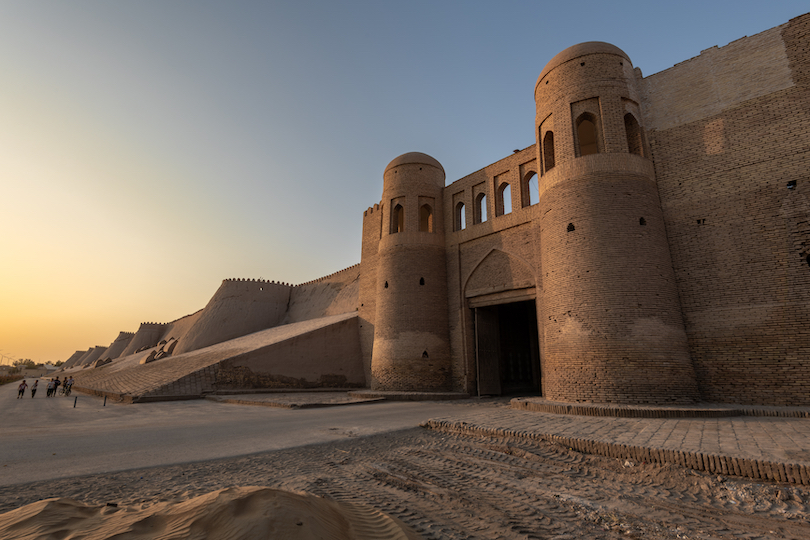
Another desert sanctuary, Khiva is actually a collection of mosques and madrasahs, found in the Kyzylkum desert of Uzbekistan. First constructed 2,500 years ago, purportedly by Shem, Noah’s oldest son, the ancient city was called Ichon-Qala (meaning within the wall).
Ichon-Qala is encompassed by Khiva’s Wall, a 10 meter (33 ft) high rampart made of high quality clay. The clay was mined from a lake shore in Ghovuk Kul. It is said that Mohammed built Medina using clay mined from the same location.
6. Chan Chan
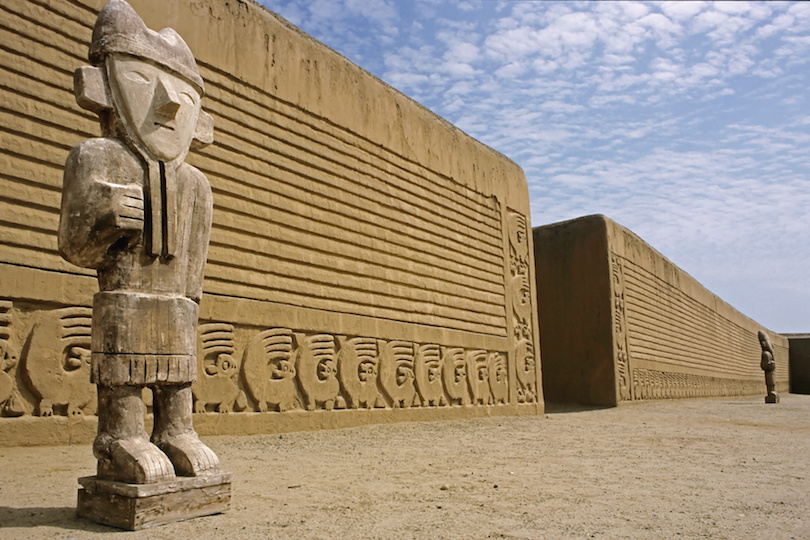
Chan Chan, located in the Moche Valley of Peru is a fascinating complex of adobe mud buildings, intended for the Chimu kings. Eleven citadels and a pyramid are enclosed within a 8 meter (26 ft high wall. Many of the structures appear to be perfectly preserved. In its heyday, Chan Chan contained large walk in wells.
The Chimu were adept metallurgists, potters and woodworkers. Lower class peoples lived outside the walls of Chan Chan, reserving the dwelling inside the wall for royalty and their servants. In 2006 archaeologists discovered warrior statues carved into the wall of the Sea Palace.
5. Bobo Dioulasso Grand Mosque
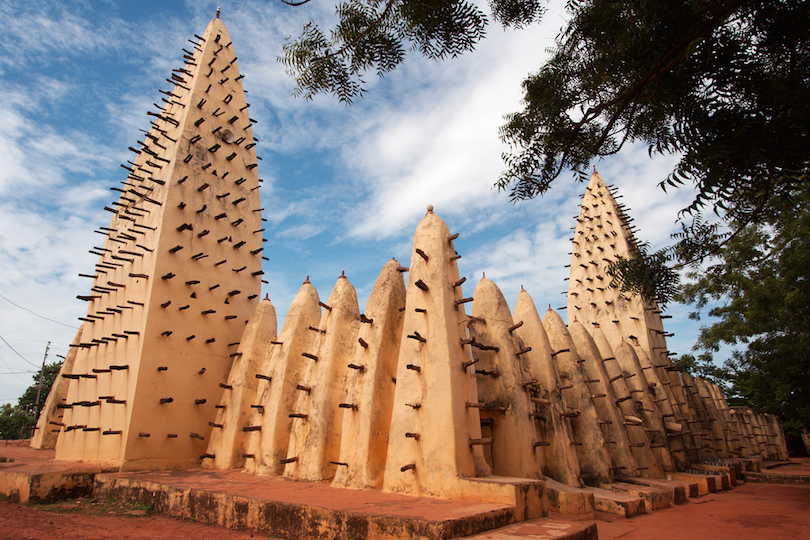
The Bobo Dioulasso Grand Mosque in Burkina Faso is a century old West African mosque, with timbers sticking out, similar in style to Djinguereber Mosque in Timbuktu. The timbers are in place allowing workers to scale the structure for adding extra layers of clay, as clay and timbers are the only materials from which this building is made.
The mosque sits on the edge of the old city, and because of a nearby highly polluted stream, is surrounded by nasty odors. Currently restoration is ongoing on the Old Mosque of Bobo, as locals call it, but not in traditional style, as cement is being used, instead of mud.
4. Siwa Oasis
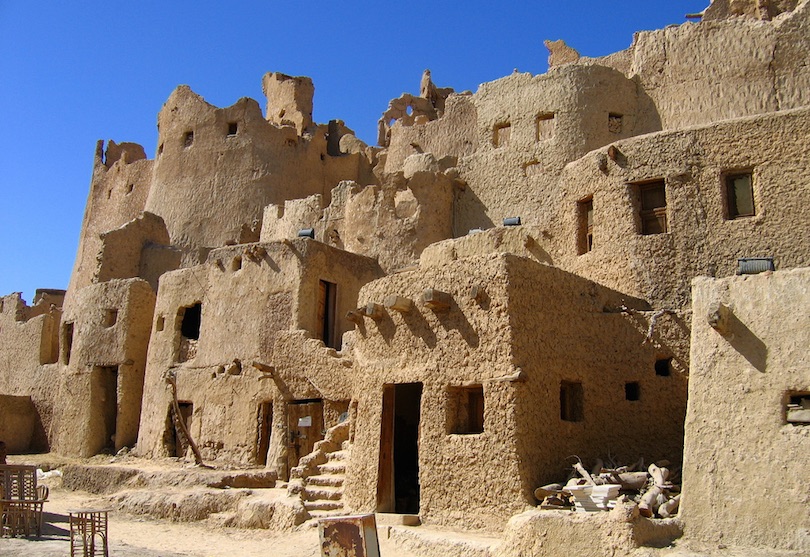
Fortified buildings made of karsheef – a local type of mud, make up the desert oasis of Siwa. Karsheef is made from the unique sand from the lake shore, high in salt content. Located on an old date trade route, in the western Egyptian desert, Siwa was an oasis vital to the trade route, as the natural springs and shade giving palm trees gave travelers respite from the desert.
With the collapse of the Roman Empire, Siwa began its decline. Today Siwa is populated by Siwan Berbers, of North African descent and is one of the top attractions in Egypt.
3. Great Mosque of Djenne
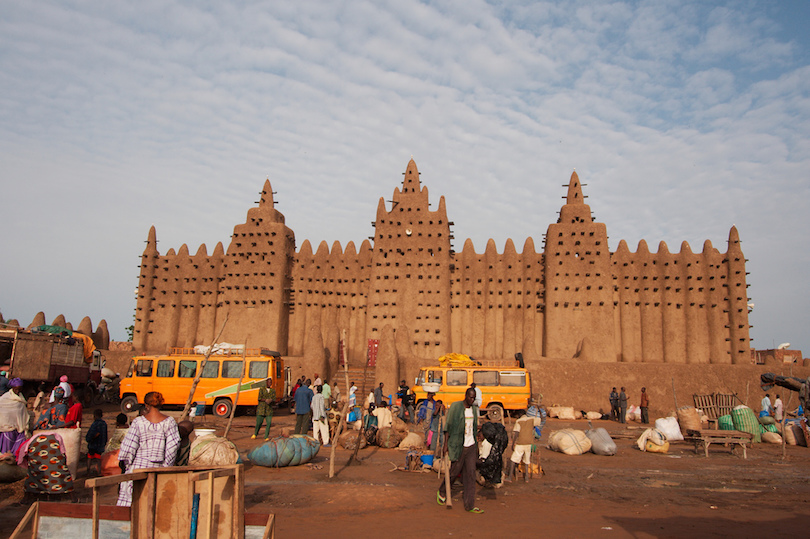
The largest mud building in the world, the Djenné Mosque is built in Sudanese style and located in Mali. The Djenné Mosque also has timbers jutting out for support and to make the annual replastering easier.
The first mosque on the site was built around the 13th century, but the current structure is about a century old. Djenné was at one time, ancient Timbuktu’s sister city. The city’s colorful and varied outdoor market is put on at the foot of this mosque and is a must-visit!
2. Ait Benhaddou
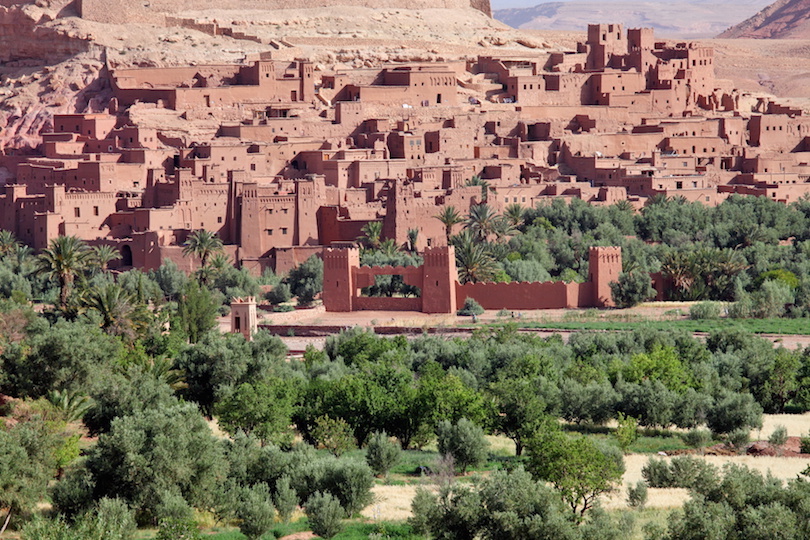
One of the top tourist attractions in Morocco, Ouarzazate is an incredible looking place; with its clay made kasbahs, it looks as if it were a made to order movie set. In fact you may already have seen Ouarzazate as many films have been made there (Lawrence of Arabia, Star Wars and Gladiator to name a few). Being on the edge of the Sahara Desert, Ouarzazate is a popular stopping point for travelers to and from other destinations, offering plenty of shopping and hotels.
Aït Benhaddou is one of Ouarzazate’s ancient walled cities. Inside the high mud walls are 6 kasbahs and a small number of homes, housing roughly 8 families. For the photographer, this dry region has few rivals, and it is said to be the most beautiful in the late afternoon and during sunset.
1. Shibam
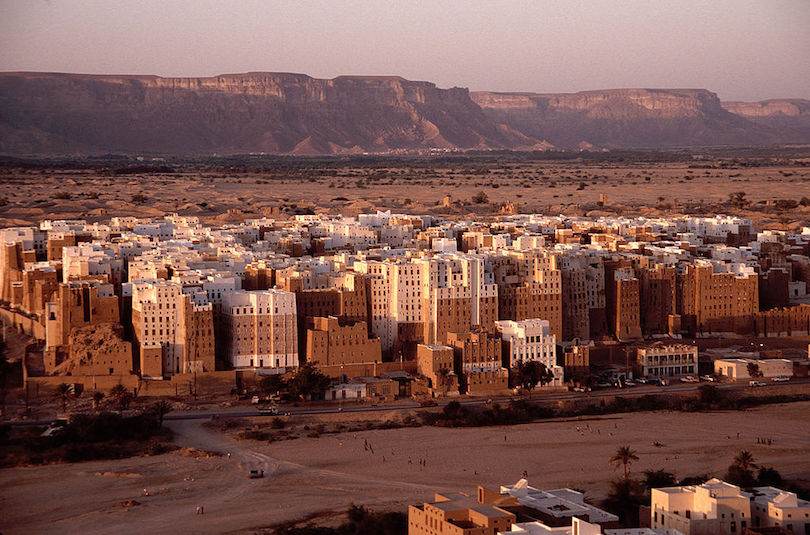
Nicknamed the “Manhattan of the desert”, Shibam is a town in Yemen featuring unique 16th century high rise apartment buildings. The tower houses, some 16 stories tall and up to 40 meters high and made out of mud bricks, were built to protect the citizens from Bedouin raids. The mud buildings have to be maintained and frequently renovated by the inhabitants in order to protected them from rain and erosion.