
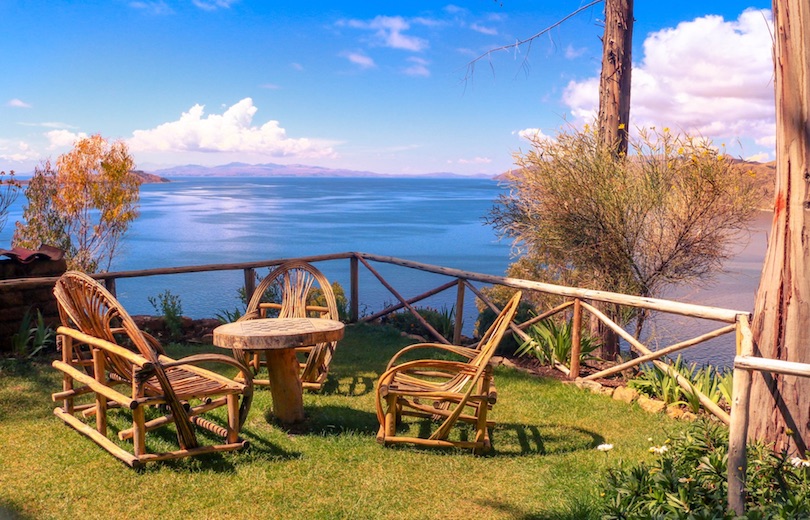
Although Bolivia has managed to fly under the tourism radar, this country has so much to offer visitors. It is home to the soaring Andes Mountains; Lake Titicaca, the highest navigable lake in the world; and parts of the amazing Amazon rainforest.
You’ll also find some interesting oddities in Bolivia, including the Salar de Uyuni — the largest salt flats in the world and a photographer’s dream (Google Uyuni salt flats and you’ll see truly epic pictures). Bolivia also offers accommodations for a wide range of budgets — from very affordable hostels to upscale, five-star hotels.
7. Casa Grande Hotel, La Paz
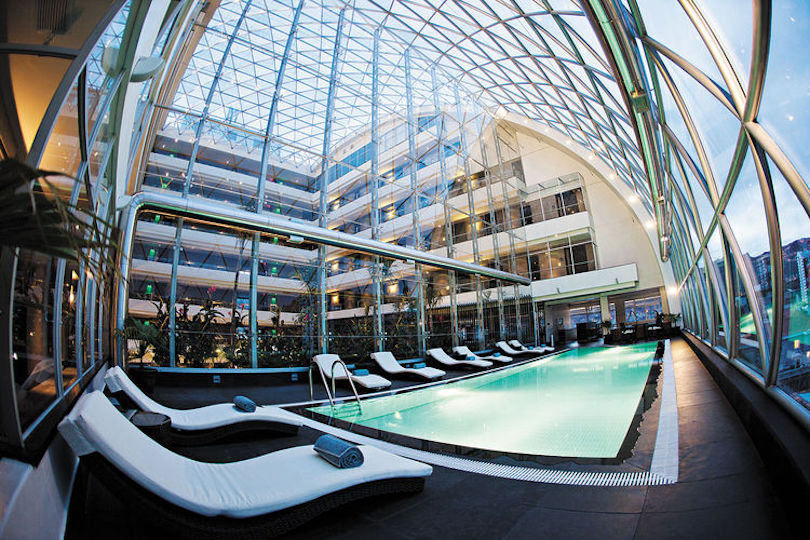
Casa Grande Hotel bills itself as the “most luxurious hotel” in La Paz. And this sleek contemporary hotel does have a lot to offer guests. Breakfast at Casa Grande Hotel, for instance, is complimentary, as is the Wi-Fi.
You’ll also find complimentary bottles of water in your room. This hotel also features a fitness center with dry and steam saunas, and you can enjoy views of the city from its heated indoor pool. In addition, all of this hotel’s 65 rooms boast either views of the mountains or of La Paz.
Guest comfort is also important at this hotel, so you’ll find pillowtop beds and a menu of different types of pillows that you can choose from. The Casa Grande Hotel also has a cafe, a bar and a restaurant with a glass atrium and a terrace.
6. Parador Santa Maria La Real, Sucre
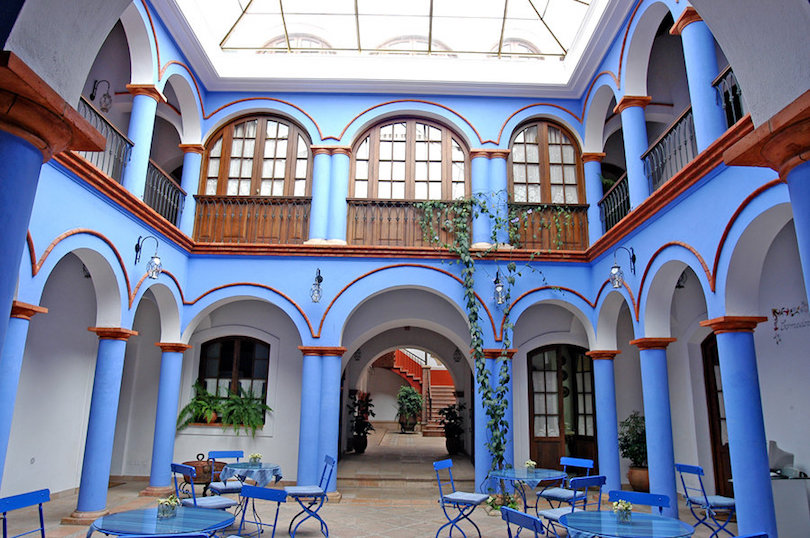
If your travel plans will include a stop in the beautiful colonial city of Sucre, you’ll definitely want to book a room at the Parador Santa Maria La Real. The stunning hotel is located in an elegant 18th century colonial-style building and is furnished with beautiful period pieces.
Yet, this hotel also boasts many modern amenities, including free Wi-Fi and a complimentary American-style buffet breakfast. The Parador also features a spa and a gym onsite, and there is even a “mysterious” room located under the hotel called the Museum Restaurant Watany where you can enjoy a truly unique dining experience.
5. Posada del Inca Eco-Lodge
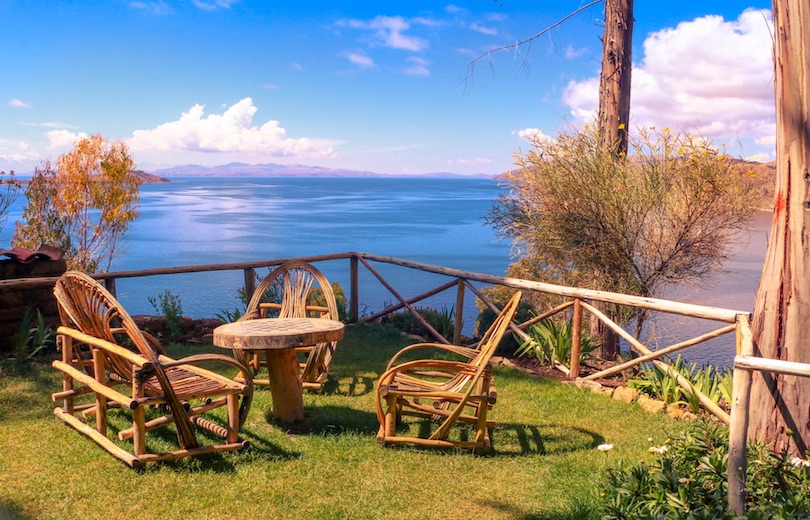
This small, charming hotel is situated on top of Sun Island, which is located in Lake Titicaca. To reach the lodge, you will have to first take a boat to the island. Then — because there are no roads on the island — you will need to make an approximately 45-minute trek up to the lodge. Fortunately, hotel porters are available to help you transport your luggage to the Posada del Inca Eco-Lodge.
Because of its location, this 20-room hotel — a restored hacienda — provides guests with a peaceful and unique getaway. Lake Titicaca’s high altitude can be hard on some visitors, so the Posada del Inca Eco-Lodge does offer its guests free coca tea. And if necessary, the lodge also has oxygen available.
4. Hotel de Su Merced, Sucre

The Hotel de Su Merced is a charming 23-room, three-story boutique hotel that is well located, within easy walking distance to Sucre’s main plaza. It is a small hotel that is known for providing friendly and welcoming service for its guests.
The hotel’s breakfast buffet is complimentary and features homemade pastries, bread and breakfast as well as fresh juices. WiFi is also free. The Hotel de Su Merced, which is situated in an 18th century building and furnished with many lovely antiques, boasts a courtyard and a rooftop terrace where you can enjoy views of Sucre.
3. Las Olas, Copacabana
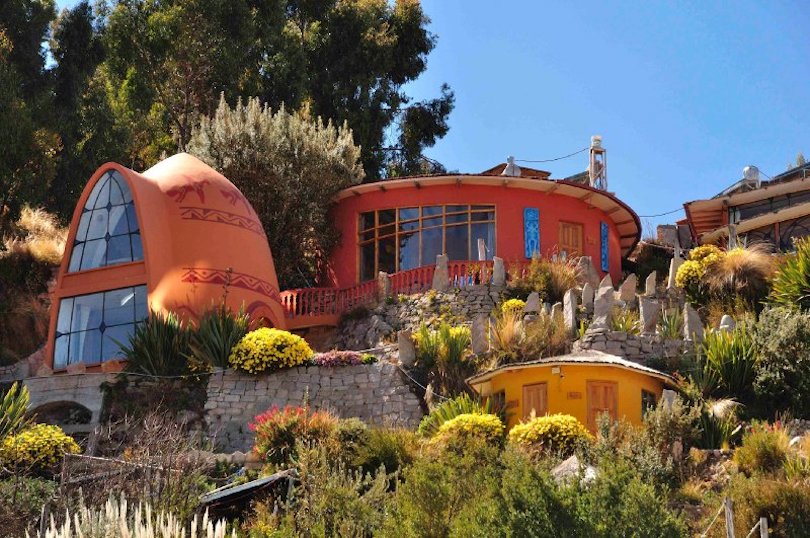
If you think you need to pay an arm and a leg for a room with a great view of Lake Titicaca, you’d be wrong. Las Olas is very affordable, but also offers very unique accommodations with lovely views.
There are a total of nine whimsical terracotta structures dotting the grounds of Las Olas. One for instance is called El Caracol — the Snail — and the two-story cabana, which can sleep up to four people, has a sea-shell-like appearance. Another is called El Tipi — the Tepee — and it is shaped like its name. The Tepee is large enough to accommodate between three to seven people. Each suite features a private bath, hammocks, a small kitchen area and a fireplace.
2. Atix Hotel, La Paz

Located in the zona sur district of La Paz, this chic hotel, which boasts a handsome facade of native Bolivian timber and Comanche stone, made Travel & Leisure’s 2017 Best New Hotels in the World. At check-in, you’ll be welcomed to the Atix Hotel with a complimentary drink. Breakfast in the morning is also complimentary, as is WiFi access.
Ona, the hotel’s restaurant, is considered one of the best in La Paz, and the Atix also features a rooftop bar. In addition to artwork created by Gaston Ugalde, a well-regarded Bolivian artist, each room also boasts panoramic mountain views that are provided courtesy of Mother Nature.
1. Hotel de Sal Luna Salada, Uyuni
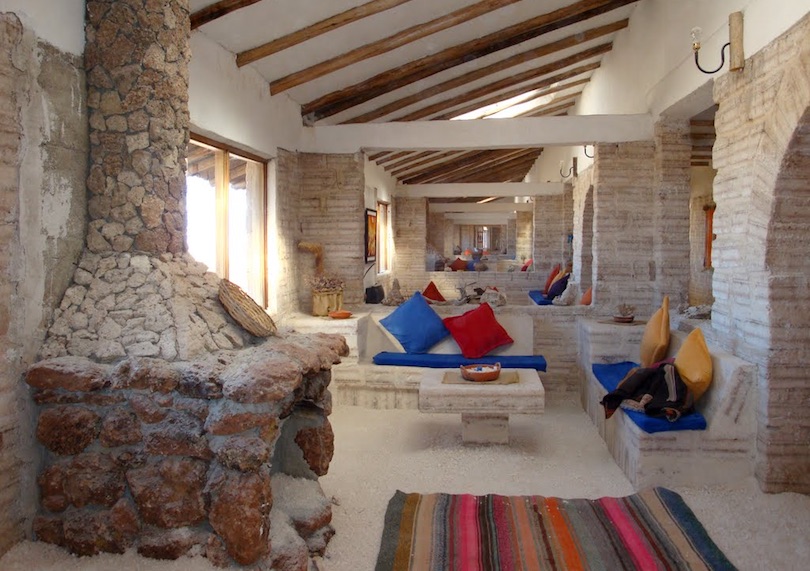
Visiting the world-famous Uyuni salt flats? Then you’ll definitely want to stay in the Hotel de Sal Luna Salada, which is constructed out of salt blocks and sits up on a hill, overlooking this amazing natural wonder.
Your buffet breakfast is included in the price of your room at this hotel, and there is also free WiFi available in the lobby. For those searching for a little extra pampering, the Hotel de Sal Luna Salada also boasts a spa. This hotel also features a game room and an on-site restaurant that serves Andean cuisine.